Create Simple Minimalist Candle Holders

DIY Elegant Carved Wooden Candle Holders: A Step-by-Step Guide for Stunning Holiday Decor
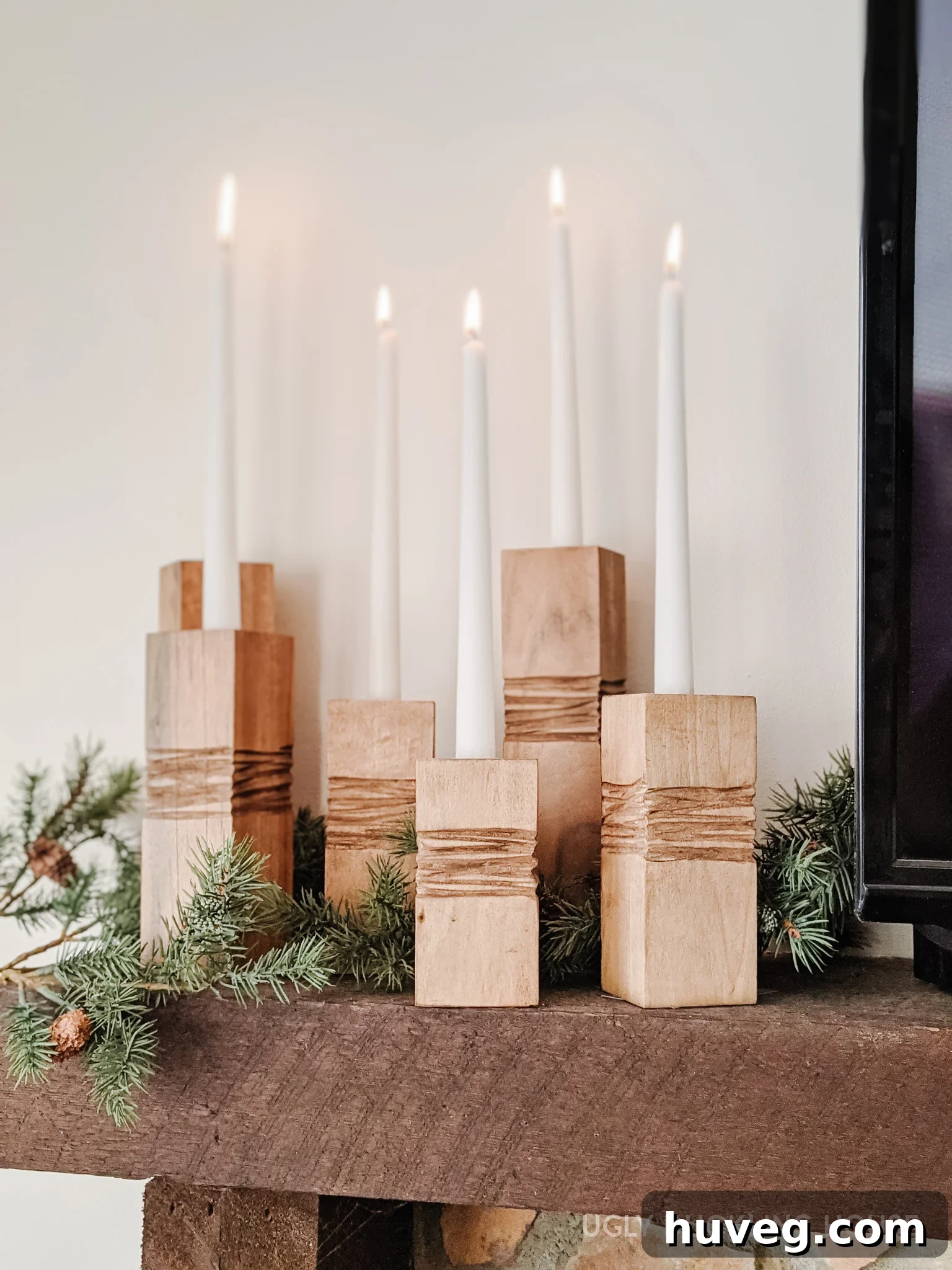
Transform your home with a touch of handmade elegance this holiday season! Instead of splurging on expensive, mass-produced candle holders, discover how to craft a stunning, custom set that will bring warmth, character, and unique charm to your festive displays. This year, I embarked on a delightful creative journey to design and build my own collection of beautiful wooden candle holders, achieving a sophisticated, bespoke look without breaking the bank. Whether you’re envisioning a cozy ambiance for your own home or searching for truly thoughtful handmade gifts, this comprehensive guide will walk you through every step to create a magnificent centerpiece or stylish accents.
For quite some time, I had a clear vision for a simple yet striking holiday mantelpiece: a cohesive grouping of wooden candle holders, each boasting varying heights, topped with graceful, long tapered candles, and complemented by a lush, aromatic cedar garland. While the past year certainly presented its share of unexpected challenges and wasn’t exactly as imagined (a sentiment I’m sure many of us share!), this particular DIY project unfolded perfectly, bringing my festive vision vibrantly to life. Even though my fresh garland temporarily gave way to a convenient faux one, the spirit of handmade beauty remains at the heart of this seasonal decor.
This post is proudly sponsored by Minwax. All opinions and creative ideas shared are 100% my own.
Essential Materials & Tools for Your DIY Candle Holders
Before diving into the exciting creative process, it’s essential to gather all the necessary materials and tools. Investing in quality products, especially for stains and finishes like those from Minwax, ensures a professional-looking and durable result for your handmade candle holders. Remember, safety is paramount when working with power tools and chemicals; always prioritize protective gear. This detailed list will help you prepare thoroughly for a smooth and enjoyable woodworking experience. Each item plays a crucial role in bringing your vision to life, from the initial wood preparation to the final touches of stain and protection, ensuring your DIY candle holders are both beautiful and long-lasting.
- Minwax Pickled Oak Stain: A versatile oil-based stain that provides a light, rustic, and slightly weathered base, ideal for layering and achieving nuanced wood tones. Get it here.
- Minwax Water-Based Stain (Vermont Maple): This water-based option offers a rich, warm tone, perfect for adding depth and custom color when layered over an oil-based stain. Find a retailer.
- Minwax Pre-Stain Wood Conditioner: An absolute game-changer for softwoods like poplar, preventing blotchiness and ensuring an even, consistent absorption of stain for a flawless finish. Purchase now.
- Minwax Wipe-On Polyurethane: A vital protective clear coat that safeguards your finished candle holders from wear and tear, providing long-lasting durability and a beautiful sheen. Shop for polyurethane.
- Wood Stock (1×3 Poplar or 3×3 Poplar Block): Poplar is an excellent choice for this project due to its smooth grain, affordability, and ease of carving and staining, but pine or even oak can also be used depending on your preference and budget. Opt for straight pieces for best results.
- Pencil: Indispensable for marking precise cuts, sketching carving guides, and identifying drill points for accuracy. Stock up on pencils.
- Miter Saw: Essential for achieving clean, accurate, and consistent cuts when sizing your wood blocks to varying heights. Safety first: ensure you’re comfortable and follow all safety guidelines. Explore miter saws.
- Orbital Sander: Used for smoothing all surfaces of the wood, preparing it for conditioning and staining, and ensuring a pleasant tactile finish. Have various grits available. Find orbital sanders.
- Sandpaper (various grits, especially #220): For initial rough sanding, refining surfaces, and light sanding after conditioning to remove raised grain and achieve ultimate smoothness. Buy sandpaper.
- Measuring Tape: Crucial for accurate dimensioning, ensuring your candle holders are cut to the exact desired heights for a balanced display. Grab a measuring tape.
- Safety Gear: Absolutely non-negotiable. Always wear safety glasses to protect your eyes, hearing protection when operating loud machinery, and a breathing mask to prevent inhalation of fine wood dust and stain fumes.
- Wood Glue: If you’re laminating thinner 1x3s to create thicker blocks, a strong wood glue is vital for a durable, seamless bond. Shop wood glue.
- Multi-Surface Glue: Useful for any optional decorative embellishments you might wish to add to your finished pieces, offering versatile adhesion. Explore glues.
- Angle Grinder: The star tool for this project, allowing you to create unique, organic, and rustic carved textures with relative ease and efficiency. Find angle grinders.
- 60-Grit 4-1/2″ Flap Discs: These abrasive discs provide aggressive yet controllable material removal for effective carving with the angle grinder. Different grits can yield different textures. Get flap discs.
- Drill or Benchtop Drill Press: For drilling perfectly sized holes for your candles. A drill press offers superior precision and control, but a steady hand with a power drill can also work. Compare drills.
- 7/8″ Spade Bit: Specifically chosen to accommodate the base of standard tapered candles. Always measure your candles to confirm the appropriate bit size for a snug fit. Buy a spade bit.
- Clamps: Essential for holding wood securely during the gluing process and for stabilizing pieces while carving or drilling, ensuring safety and precision. Shop clamps.
- White Tapered Candles: The elegant final touch to your beautifully crafted candle holders, ready to create a warm and inviting atmosphere. Find tapered candles.
Craft Your Own: DIY Easy-Carve Pillar Candlestick Holders
Elevate your home decor with this rewarding DIY project! Create a set of custom-carved wooden candlestick holders designed for elegant tapered candles. These beautiful pieces are not only perfect for setting a cozy ambiance in any room but also make incredibly thoughtful, unique, and last-minute handmade gifts for loved ones. Follow these detailed steps to bring a rustic yet refined touch to your living space, knowing that each holder is crafted with your own hands and creative vision. This guide is designed to be accessible for beginners while offering tips for experienced DIYers to achieve a high-quality finish.
-
1. Prepare Your Wood Blocks: Glue Up 1x3s (if using)
You have a couple of excellent options for acquiring your primary wood stock: either purchase pre-made 3×3 wood blocks, which are conveniently available in three-foot lengths at most hardware stores, or, for a more budget-conscious and hands-on approach, laminate several 1×3 pieces together. Choosing to glue 1x3s is a fantastic way to utilize wood scraps or achieve a specific wood type that might not be available in 3×3 dimensions, offering significant cost savings. If you opt for the latter, select straight pieces of poplar (or your preferred wood type, keeping in mind poplar is excellent for carving and staining). Apply a generous, even layer of quality wood glue along the entire joining surfaces of the 1x3s. Carefully align the pieces, ensuring they are perfectly flush, and then clamp them together firmly. It’s crucial to use plenty of clamps, spacing them closely to ensure even pressure across the entire length and prevent any gaps or air pockets from forming in the middle. This strong, gap-free bond is absolutely essential for achieving clean, precise cuts in subsequent steps and ensures the structural integrity of your finished candle holders. Allow the glue to cure completely, typically for at least 24 hours, according to the wood glue manufacturer’s instructions, before moving on. Patience here will pay off!
-
2. Cut 3×3 Blocks to Desired Sizes
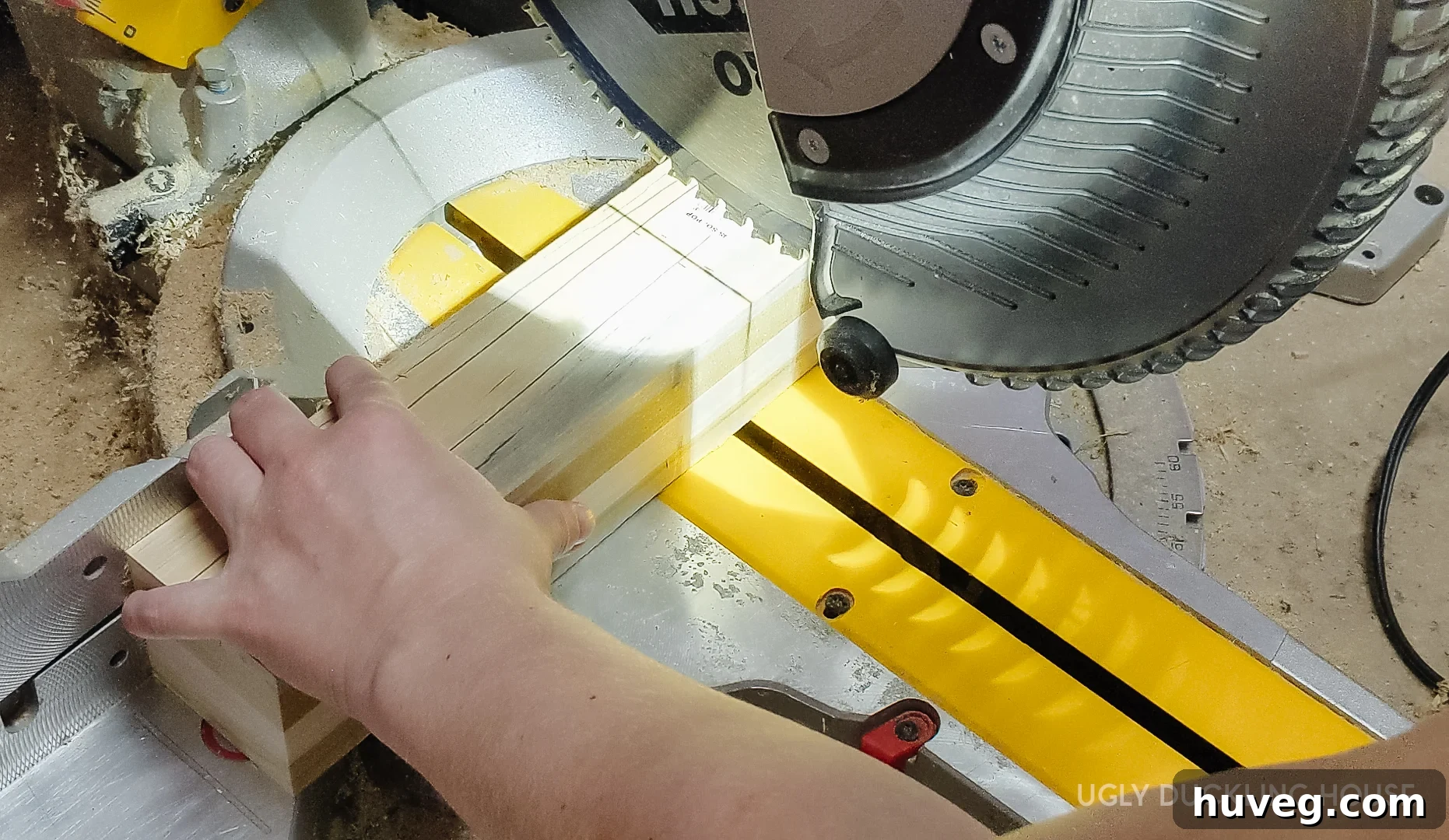
With your wood blocks securely prepared, it’s time to infuse personality into your candle holders by cutting them to varying heights. This deliberate variation in size is key to creating visual interest and a dynamic, appealing display, avoiding a monotonous, uniform look. Using a miter saw, carefully measure and cut your 3×3 blocks. For my own set, I found that three distinct heights – a tall 10-inch pillar, a medium 8-inch pillar, and a shorter 6.5-inch pillar – created a beautifully balanced arrangement. However, don’t feel constrained by these specific measurements; feel free to get creative and customize the dimensions to suit your aesthetic preferences and the specific location where they will be displayed. A great tip: don’t discard smaller cut-off pieces! For instance, a leftover 5-inch cut-off from my blocks found new life as a charming extra-short holder, demonstrating that every piece of wood can be utilized and contribute to the set. Always ensure your measurements are accurate and your cuts are perfectly straight and square for the best results. Most importantly, prioritize safety by wearing your safety glasses and hearing protection when operating the miter saw, and keep your hands clear of the blade.

Carefully cut your wood blocks to create varying heights for a visually appealing display. -
3. Mark Each Candle Holder for Carving
This step is where the unique character of each candle holder truly begins to take shape. Using a simple pencil, you will mark the areas where you intend to create your distinctive carved textures. For a natural, free-form, and organic look that emphasizes the handmade aesthetic, I chose to make markings on all four sides of each wood pillar. My initial approach involved ‘eyeballing’ the placement, starting a little further up than the halfway point on the pillar. This allowed for a more rustic, less rigid guide. Once I was satisfied with the placement and general pattern on the first pillar, I used it as a template to mark all the other blocks of the same size. This ensured a cohesive yet subtly varied look across the entire set. However, remember that absolute perfection isn’t the goal here; the beauty is in the individuality. Feel completely free to experiment with different patterns: perhaps a single prominent band, multiple thinner stripes, or even abstract, meandering lines. These pencil markings will serve as your essential guides when you bring out the angle grinder, so ensure they are clear enough for you to follow confidently.
-
4. Carve! Add Unique Texture and Detail
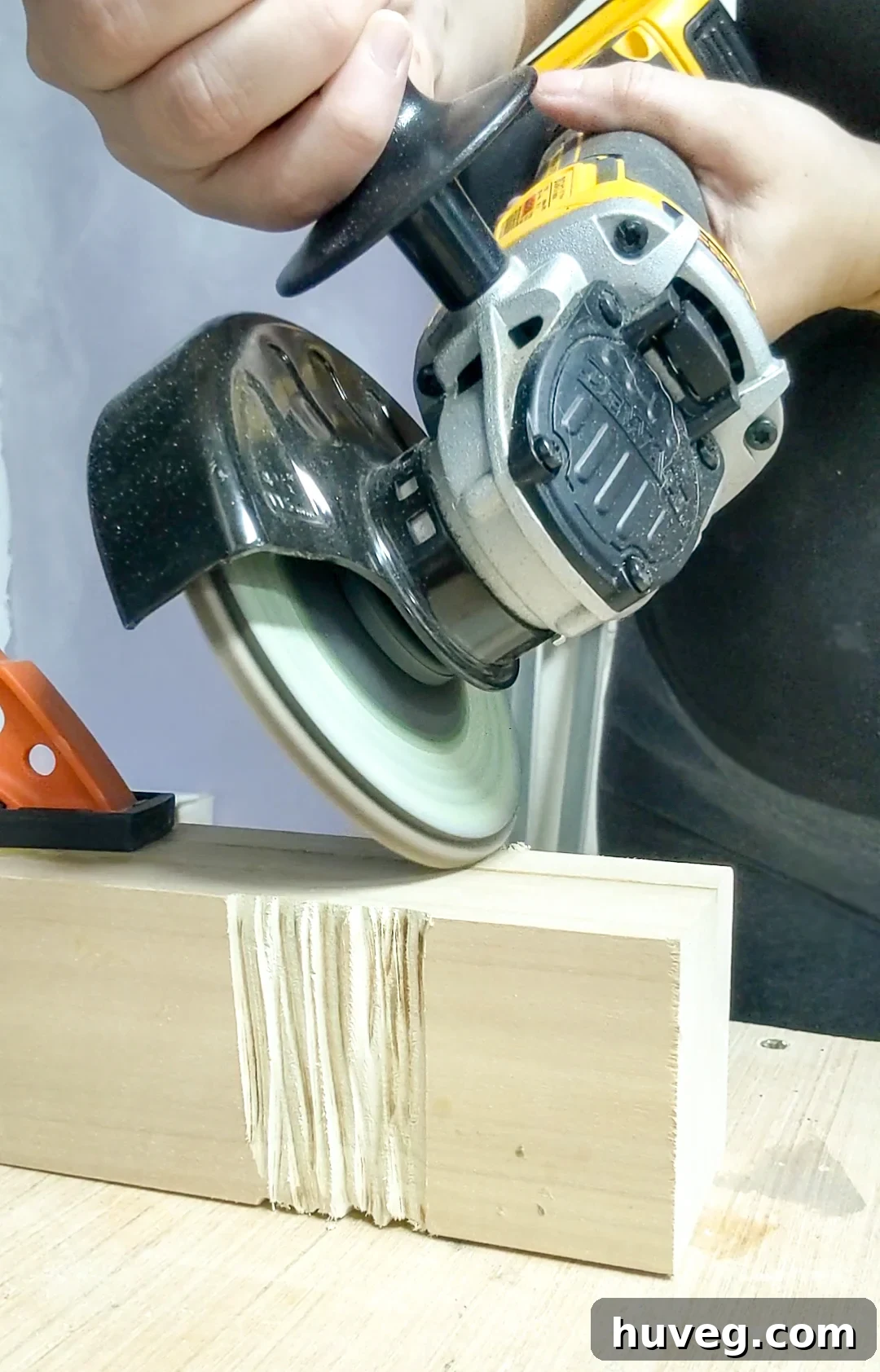
Now for the most exciting and transformative part: the carving! Equip your angle grinder with a 60-grit flap disc. While other grits can certainly be used to achieve different levels of aggression and texture, the 60-grit provides an excellent balance for creating noticeable yet controllable carved patterns. Begin by carefully carving the top and bottom edges of your marked sections. Aim to keep these lines as straight as possible, ensuring they meet cleanly around the entire pillar. This establishes a defined boundary for your textured area and gives a clean, intentional look to the carved sections. Once these primary edges are established, move into the middle area between your boundaries. Here, you have artistic freedom! Employ various directions, pressures, and sweeping motions to create a more organic, free-form, and tactile stripe pattern. Don’t be afraid to let your hand guide the tool naturally; the beauty of this project truly lies in its forgiving nature – minor imperfections or varied depths only enhance the handmade charm and character. Avoid striving for factory-perfect, uniform lines; instead, embrace the unique textures and subtle variations that emerge from your hand-carving. As always, maintain a very firm grip on the angle grinder, control its movement, and wear your full safety gear, including a robust breathing mask to protect against fine wood dust, safety glasses, and hearing protection.
Embrace imperfections in carving to achieve a truly unique, organic aesthetic. -
5. Pre-Treat Your Wood for Even Stain Application
This step is an absolute game-changer for achieving a professional, uniform, and beautiful stain finish, especially when working with softwoods like poplar. Poplar, while affordable and easy to work with, is notorious for exhibiting green streaks and an uneven absorption of stain, leading to blotchiness. To counteract this, pre-treating is essential. Start by thoroughly sanding all surfaces of your carved wood blocks with #220 grit sandpaper. This crucial step smooths the wood, removing any rough spots from carving or previous handling, and prepares the fibers to absorb the conditioner evenly. Next, liberally apply Minwax Pre-Stain Wood Conditioner. Although it appears milky white when applied, it dries completely clear. This conditioner works by sealing off the more porous areas of the wood, ensuring that when you apply your stain, it penetrates uniformly rather than soaking unevenly into certain spots. Apply a generous coat, allow it to sit for the recommended 5-15 minutes (always check the specific product instructions for optimal results), and then carefully wipe off any excess with a clean, lint-free cloth. Allow the conditioner to dry for approximately 15-30 minutes. An important note: wood conditioner can sometimes cause the wood grain to raise slightly, creating a slightly rough texture. To counteract this, perform a very light, quick final sanding with #220 grit sandpaper just before you apply your stain. This ensures the smoothest possible surface for stain application, guaranteeing a truly flawless and professional-looking finish.
-
6. Stain with Layered Colors for a Custom Finish
Achieving a unique, custom color for your DIY wooden candle holders is one of the most creatively rewarding aspects of this project. My preferred method, which yields a beautiful nuanced hue, involves layering different Minwax stains. Begin by applying a light, even layer of Minwax oil-based Pickled Oak stain. Use a brush or a clean rag to apply it, working in the direction of the wood grain. After a few minutes (depending on the desired intensity), wipe off any excess stain with a clean cloth, allowing the natural wood grain to remain visible beneath the tint. Let this initial oil-based layer dry completely according to the manufacturer’s instructions – usually several hours. The true magic happens with the second layer: once the Pickled Oak is fully dry, apply Minwax water-based stain in Vermont Maple over the top. While it might sound unconventional to layer a water-based stain directly over an oil-based one, this specific technique works remarkably well for creating depth, neutralizing any subtle green undertones often found in poplar wood, and achieving a beautifully balanced, lighter finish. The water-based stain dries quickly, allowing for relatively fast application. It’s important to note that if you were to skip the Pickled Oak base, the Vermont Maple color would appear much darker and more intense. The initial Pickled Oak layer acts as a barrier, preventing the darker stain from saturating the wood too deeply, thus retaining that desired nuanced hue. Always, always test your chosen stain combination on a scrap piece of wood first to ensure you achieve your desired color and effect before applying it to your finished pieces. Once both stain layers are dry, protect your beautiful work and ensure its longevity with a durable coat of Minwax Wipe-On Polyurethane. This clear protective finish will guard against spills, dust, and general wear and tear, keeping your candle holders looking stunning for years to come.
-
7. Precision Drilling for Candle Placement
Now that your beautifully carved and stained wooden pillars are dry and protected, it’s time for the final functional touch: drilling the precise holes for your candles. While it’s often recommended to drill candle placement before staining, my own creative process involved drilling after staining. This was largely due to my indecisiveness at the time; I wanted to visualize the fully finished look of the candlesticks before committing to either tapered candles or tea lights, which would naturally require different hole sizes. This approach worked perfectly well for me, but if you prefer, you can certainly complete this step before staining. To ensure your candle sits perfectly centered and upright, employ a simple yet incredibly effective marking technique: take a straight edge (like a ruler or a piece of scrap wood) and draw diagonal lines from one corner of the pillar’s top surface to the opposite corner. The exact point where these two lines intersect marks the precise center for your drill hole. For standard tapered candles, a 7/8-inch spade bit is generally the most appropriate size, providing a good fit. However, candle sizes can vary slightly, so always measure the base of your specific candles to confirm the optimal drill bit size. If you’re considering other candle types, such as votives or wider pillar candles, adjust your drill bit size accordingly to ensure a snug and safe fit. I also briefly considered adding decorative copper fittings (often found in the plumbing section of hardware stores, where 3/4-inch copper or PVC couplings can be excellent, affordable options) to the base of the candle holes for a stylish metallic accent. These can come either smooth or with a subtle line in the middle; I usually opt for the cheaper, smoother variant. Brass fittings are another elegant option, though finding a multi-pack to suit all my candle holders proved challenging. Ultimately, I decided that the plain, natural wood look suited my aesthetic best, but these metallic accents remain fantastic creative options for those seeking a wood-on-metal aesthetic. When drilling, especially with a hand drill, ensure the block is clamped securely to your workbench and strive for a perfectly vertical hole. A drill press, if available, offers superior precision and control for this step.
-
8. Secure the Tapered Candles
After all your meticulous work, it’s time to ensure your tapered candles sit perfectly in their new homes. You might find a common scenario: a 3/4-inch drill bit creates a hole that’s slightly too snug for your candles, while a 7/8-inch bit, though better, leaves the candle just a touch too wide, causing it to wobble. To perfectly secure your candles and ensure they stand straight, tall, and elegantly stable, we’ll use a clever and easy melted wax trick. Begin by lighting one of your tapered candles and allowing it to burn for a few minutes until a small pool of melted wax accumulates around the wick. Carefully extinguish the flame, then, using caution, pour a small amount of this melted wax directly into the drilled hole of your wooden holder. Work quickly but carefully, as the wax will start to cool. Immediately insert your tapered candle into the wax-filled hole. Hold the candle upright and perfectly straight while the melted wax cools and hardens around its base. This process creates a custom, secure fit that will firmly anchor your candle, preventing any leaning or wobbling. It’s a simple yet highly effective method to achieve professional stability. For those seeking alternatives, small metal inserts specifically designed for candle holders can be purchased, or a dab of multi-surface glue (ensure it’s heat-resistant and non-flammable once cured) can also help to secure the candle base, though the wax method is often preferred for its ease of adjustment and removal. Now, your beautiful DIY wooden candle holders are ready to be adorned with flickering flames, casting a warm and inviting glow across your space.
Embrace Imperfection: Tips for Your Carving Journey
If you’re embarking on your first woodworking or carving adventure, rest assured that this project is an ideal starting point because its inherent beauty truly lies in its organic, perfectly imperfect nature. There’s absolutely no need to strive for absolute precision; in fact, trying to achieve perfectly uniform carving marks can paradoxically make the finished piece look somewhat mass-produced or factory-made. The authentic charm and character of these handmade wooden candle holders come precisely from their unique, tactile, and organic feel – the slight variations and irregularities are what give them soul. Don’t be afraid to experiment with different patterns, pressures, and carving directions. Let your creativity flow freely! You can easily create entirely custom designs that reflect your personal style, or for a wider range of textual effects, consider exploring specialized carving bits with your angle grinder. These bits can produce incredibly diverse patterns and textures, much like I did on this hexagon planter project, to achieve various motifs and depths. The key is to enjoy the process and appreciate the unique artistry that results from your own hands.
Why Choose DIY for Your Candle Holders? Beyond the Savings!
I find immense satisfaction and genuine joy in undertaking DIY projects like these, and I’m convinced that you will too! Here are a few compelling reasons why opting for handmade candle holders is a decision you won’t regret, extending far beyond just the initial cost savings:
- Unleash Your Unbound Creativity and Personal Style: While this guide provides a clear and detailed tutorial, consider it a fantastic springboard for your own boundless imagination. The customization possibilities are virtually limitless! Do you envision chunky, robust pillars designed for larger pillar candles? Simply adjust your wood stock and drill wider holes. Perhaps delicate votive candles are more your style – drill accordingly. You can tie on festive ribbons for holiday flair, embrace a dramatically moody aesthetic by staining them black for Halloween or a modern minimalist look, or even integrate striking copper pipes into the design for a chic wood-on-metal industrial combination. Beyond a traditional fireplace mantel, a thoughtfully arranged group of these candle holders makes an absolutely killer Christmas tablescape, a serene and minimalist wedding centerpiece, or a charming, personalized addition to bookshelves, console tables, or even bathrooms. Each piece can reflect your individual taste, transforming a simple block of wood into a statement of your unique style.
- Incredibly Budget-Friendly and Resourceful: This project is truly as economical as you choose to make it. If you’re a seasoned DIYer or enjoy dabbling in woodworking, you very likely have various wood scraps lingering in your workshop or garage, just waiting to be given new life. This means you could potentially create this entire set for next to nothing, repurposing materials and reducing waste. Even if you need to purchase new wood, common options like poplar or pine are quite affordable. Furthermore, candles themselves are readily available and incredibly budget-friendly – check dollar stores, local thrift shops, or even discount retailers like Dollar Tree for amazing deals on tapered candles. The initial investment in quality tools, if you don’t already own them, is a one-time cost that opens up a world of future DIY possibilities, making it a wise long-term investment in your crafting journey.
- Exceptional Durability and Unbeatable Peace of Mind: Say a resounding goodbye to the frustrations of fragile glass candle holders that seem destined to shatter at the slightest bump or chip during storage. We’ve all been there: the dreaded sound of breaking glass or the discovery of damaged decor, especially if you have a lively household with a “toddler-nado,” curious pets, or simply an active lifestyle. These robust, solid wooden candle holders are built to last and can easily withstand the inevitable bumps and knocks of everyday life. The beauty of DIY wooden decor is its inherent resilience. Truly “easy” DIY candlestick holders aren’t actually easy if you’re constantly worrying about their upkeep, fragility, or potential for breakage, right? Their sturdy construction means less stress, less replacement, and more genuine enjoyment of your beautiful, handmade decor, giving you invaluable peace of mind.