The Unfolding Home: Murphy Bed Construction and Vertical Garden Design

Wednesday has arrived once again, signaling another exciting installment of our ongoing DIY saga! Welcome back to the Dueling DIY: Guest Room Gauntlet, where creativity clashes and home renovation dreams come to life through friendly competition. This series isn’t just about transforming a space; it’s about pushing boundaries, learning new skills, and, most importantly, motivating each other to achieve spectacular results. And let me tell you, this week’s update brings a wave of significant progress that I’m thrilled to share!
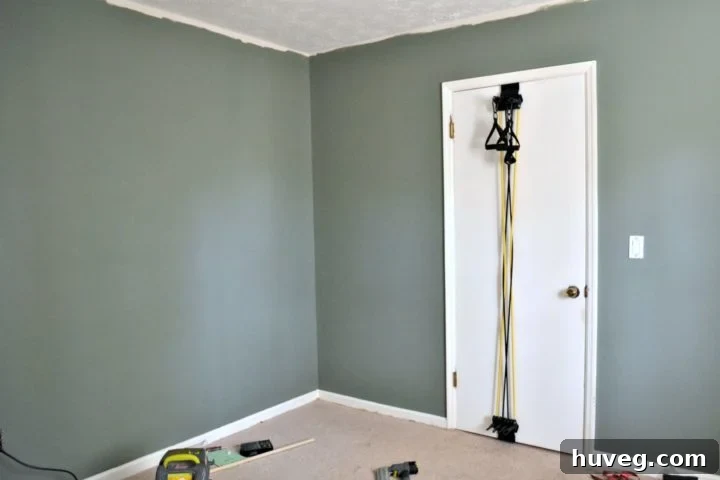
In our last guest room update, I candidly admitted that I hadn’t quite made the monumental strides on the Murphy bed build that I had envisioned. While painting the guest bedroom walls with the serene Sherwin-Williams Retreat certainly offered a visually impactful transformation – as paint so often does – the sheer length of my to-do list still felt incredibly daunting. It was clear that, despite the fresh coat of paint, I needed to significantly accelerate my efforts this time around.
The essence of a Dueling DIY challenge lies in its unique power to foster motivation. It’s a friendly rivalry, a creative race where one host’s progress inevitably spurs the other to greater heights. My recent glimpse into Charlotte’s incredible progress – she literally built a freestanding daybed from scratch – was exactly the catalyst I needed. Seeing her accomplishment truly lit a fire under me, transforming my momentum and project trajectory in ways I almost wouldn’t have believed just two weeks ago! The progress since then has been nothing short of amazing, and I’m eager to walk you through every step of this guest room transformation.
Guest Room Gauntlet: Major Milestones Achieved
Picture Ledge Installation Complete ✔️
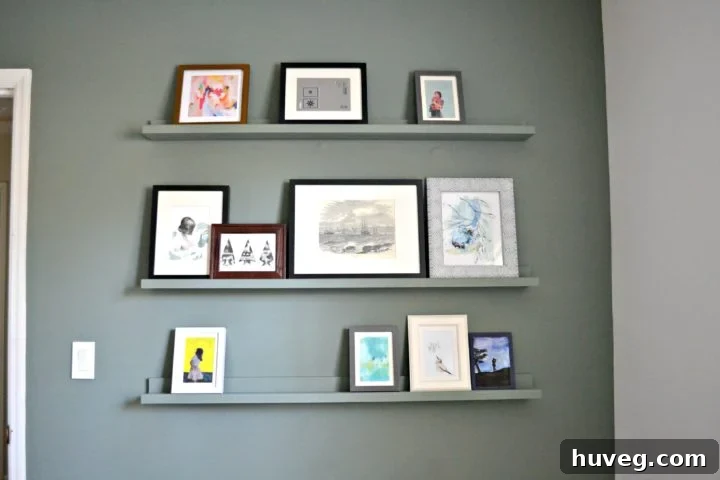
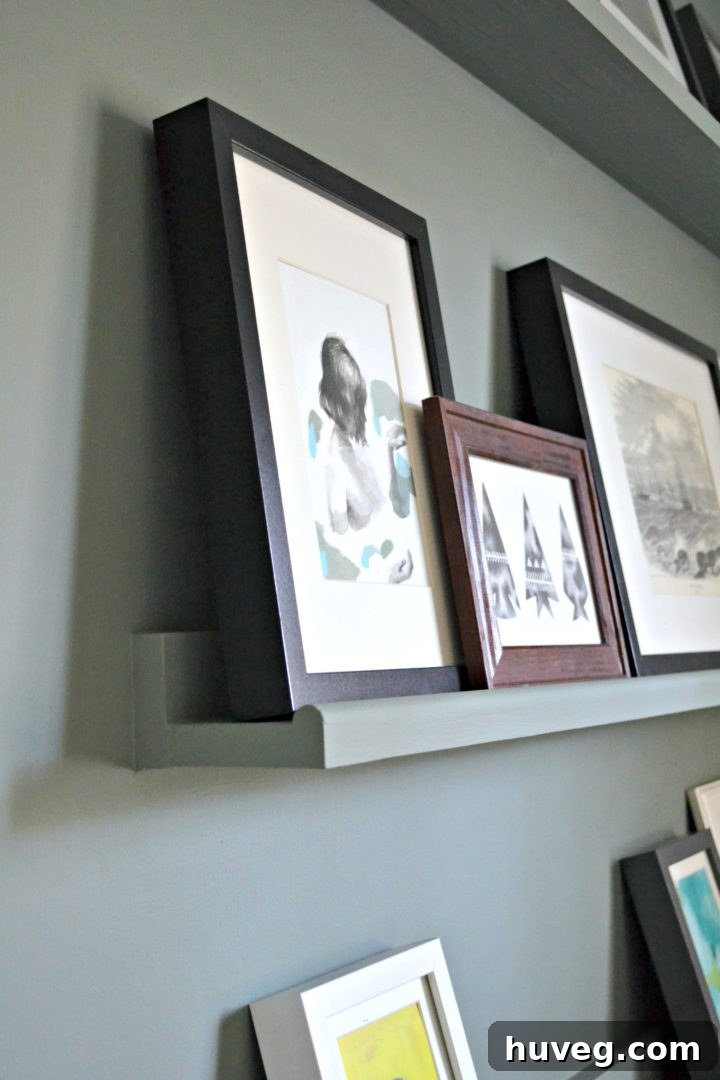
One of the first significant victories of this round was the completion of the picture ledge installation. Picture ledges are truly a brilliant solution for adding versatile decor to any room, offering the flexibility to easily swap out art, photos, or small decorative items without damaging your walls. They create a clean, modern aesthetic while maximizing vertical space.
Initially, I had planned for four ledges. However, as I meticulously spaced them out on the main wall, I quickly realized that the fourth would extend too low, potentially interfering with the placement of a desk beneath it. It’s crucial in DIY to adapt and adjust, so I made the practical decision to repurpose it. Rather than discarding it, the fourth ledge found its perfect home on the TV wall. Installing it directly beneath the television creates an ideal, clutter-free spot for remotes – a convenient detail for both the TV and the new ceiling fan. This small adjustment not only solved a placement issue but also added a thoughtful touch of organization to another part of the room, proving that flexibility in design can often lead to even better outcomes.
Murphy Bed Components Fabricated ✔️
While the picture ledges were a great achievement, I knew I couldn’t rest on my laurels. The competitive spirit of this DIY challenge, coupled with my own drive to create a truly functional and beautiful guest space, propelled me forward. The thought of Charlotte finishing her incredible daybed while my guest room remained without its primary sleeping solution was simply unacceptable. So, I plunged headfirst into gathering the remaining plywood pieces needed for the Murphy bed assembly.
Building a Murphy bed is a multi-faceted project, requiring careful planning and execution. The entire unit essentially breaks down into three large, distinct parts, each needing to be constructed separately before final assembly. What followed was an intense few nights of dedicated building. My workshop became a flurry of activity as I meticulously glued, nailed, and screwed every component into place, ensuring precision and structural integrity for this crucial piece of furniture. It was a true test of patience and skill, but seeing the large sections take shape was incredibly rewarding.
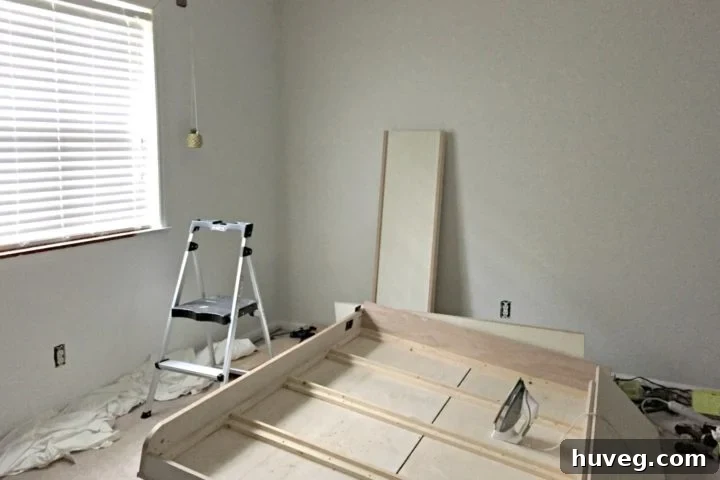
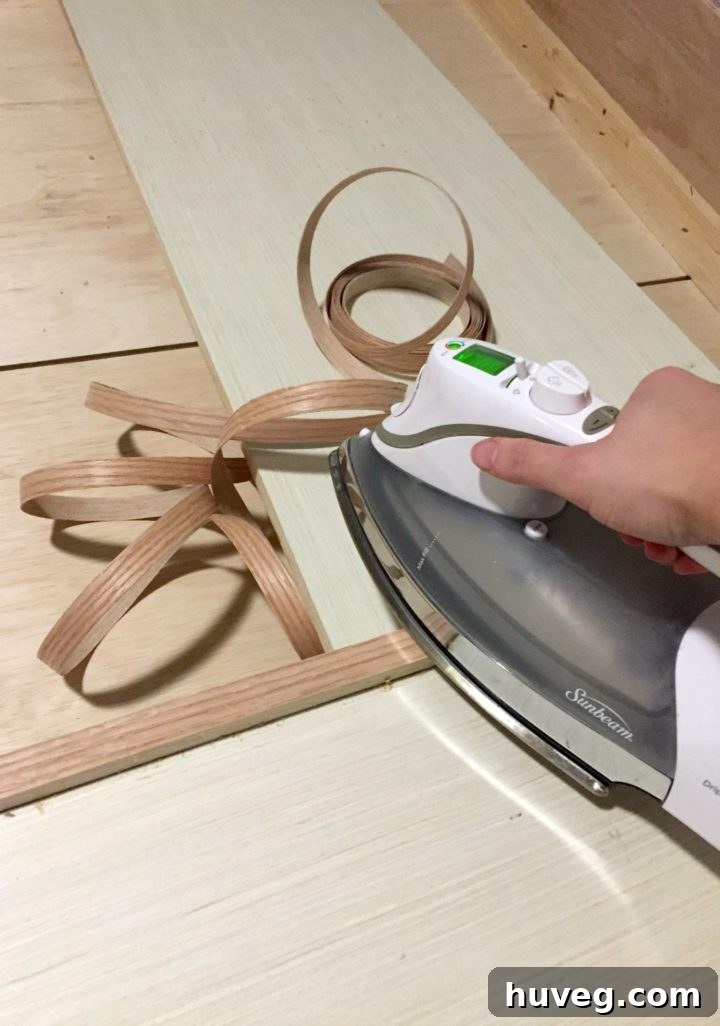
I managed to complete a critical step: adding the veneer edge banding to all the exposed plywood edges. This process, often done with a simple clothing iron, is vital for giving the plywood a finished, polished look and protecting the raw edges from wear and tear. It transforms the utilitarian plywood into a more refined surface, ready for its final finish. Just as I finished this task, another trip to the hardware store became necessary – but this time, it was for paint! This was a sure sign that the Murphy bed is incredibly close to being fully installed. Pre-painting various sections while they’re still on the floor is a strategic decision. Once the bed is mounted on the wall, many areas will become incredibly difficult, if not impossible, to reach with a paintbrush. This foresight ensures a comprehensive and flawless finish, saving a lot of frustration down the line.
Charming Hanging Plants by the Window ✔️
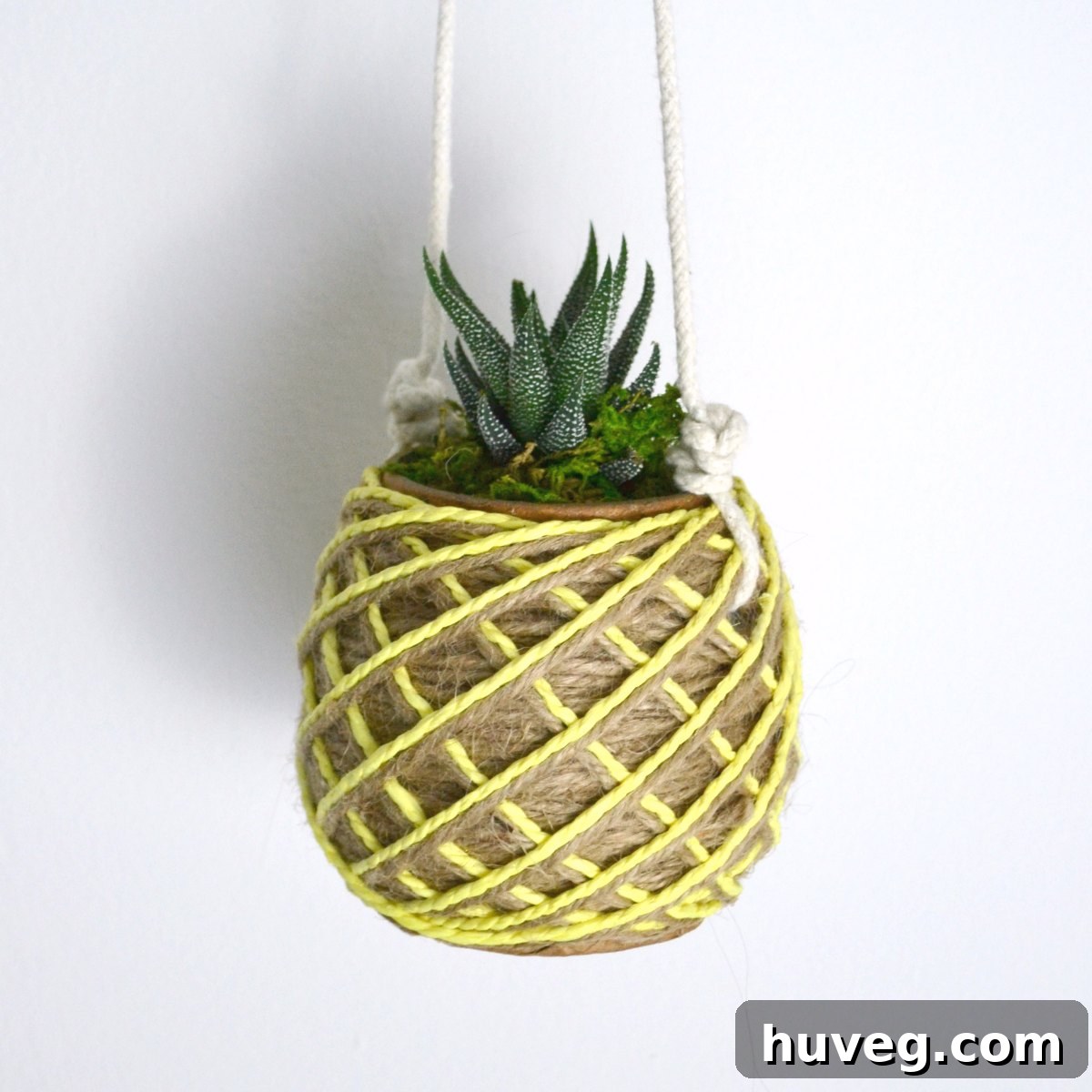
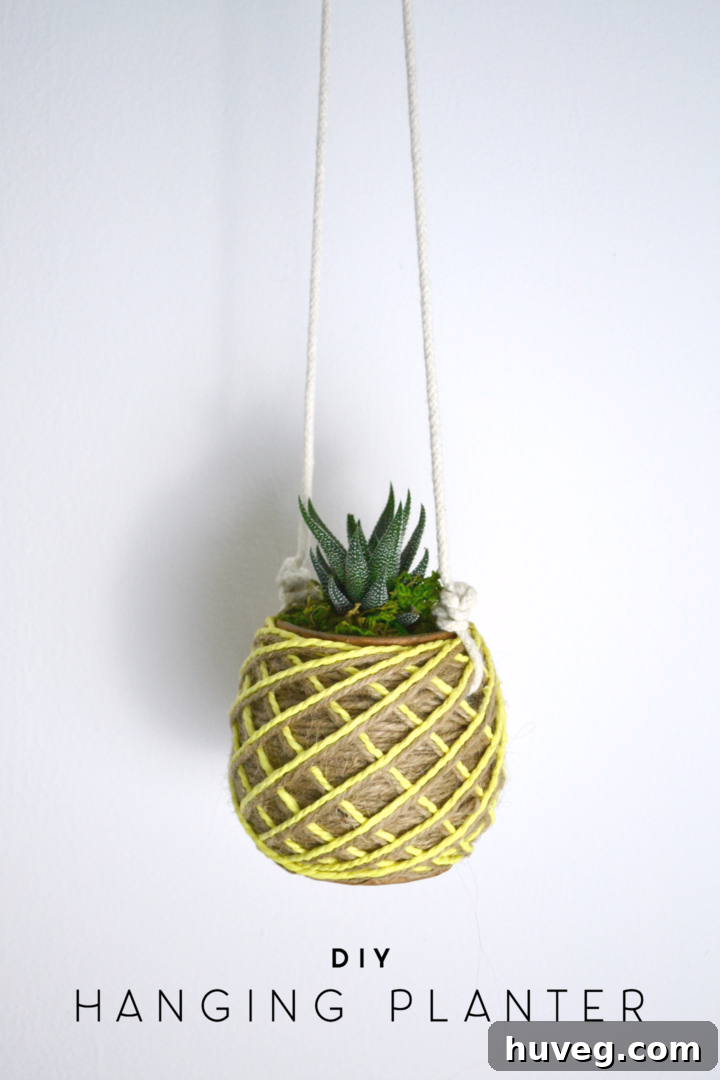
Every well-designed space benefits from a touch of nature, and the guest room is no exception. During one of my many trips to the store for Murphy bed supplies, I stumbled upon these absolutely adorable small planters, each adorned with vibrant neon thread. My original plan for hanging plants involved a more intricate macrame project, intended to hang from my custom-made curtain rods. However, these little gems instantly captivated me with their simplicity and burst of color. They offered a perfect, effortless way to infuse the room with a pop of life and cheer, without the added time commitment of a macrame build. Without hesitation, I switched gears and decided these charming finds would become my new hanging plant feature.
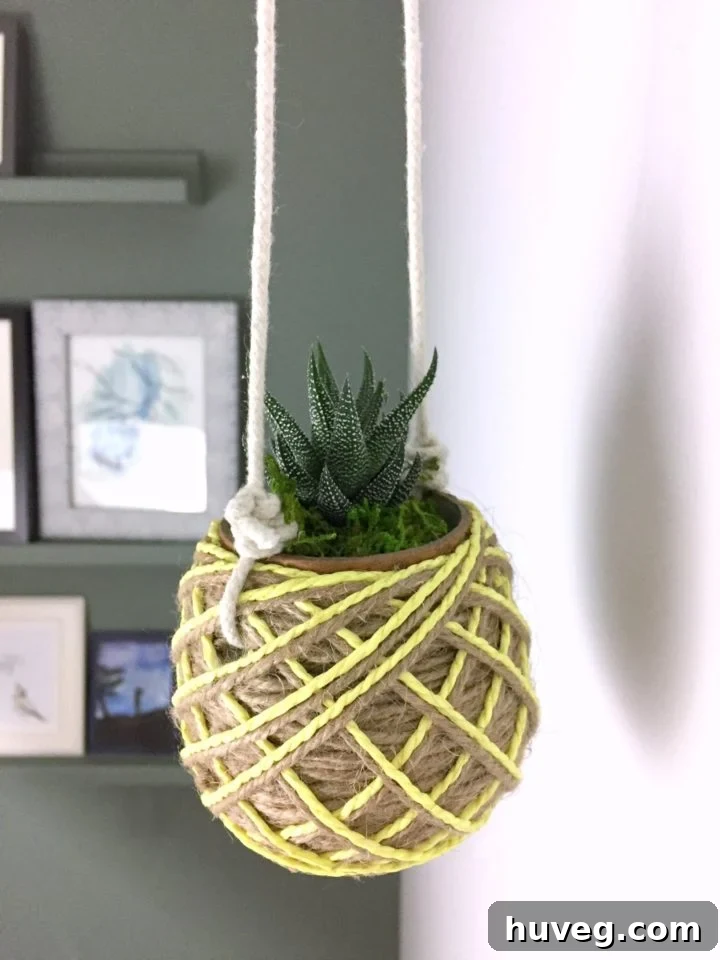
The transformation from regular pot to hanging planter was surprisingly straightforward. Because the process is so quick and rewarding, I thought it would be a fantastic idea to share the step-by-step tutorial with you all right here in this week’s update. It’s an easy project that anyone can tackle, adding a personal and colorful touch to any window space. Enjoy crafting your own!
DIY Project Spotlight: How to Transform Small Planters into Hanging Wonders
Adding hanging plants is a fantastic way to introduce greenery, color, and a sense of lightness to any room. This simple DIY project allows you to customize store-bought planters into beautiful suspended displays. Here’s how you can do it:
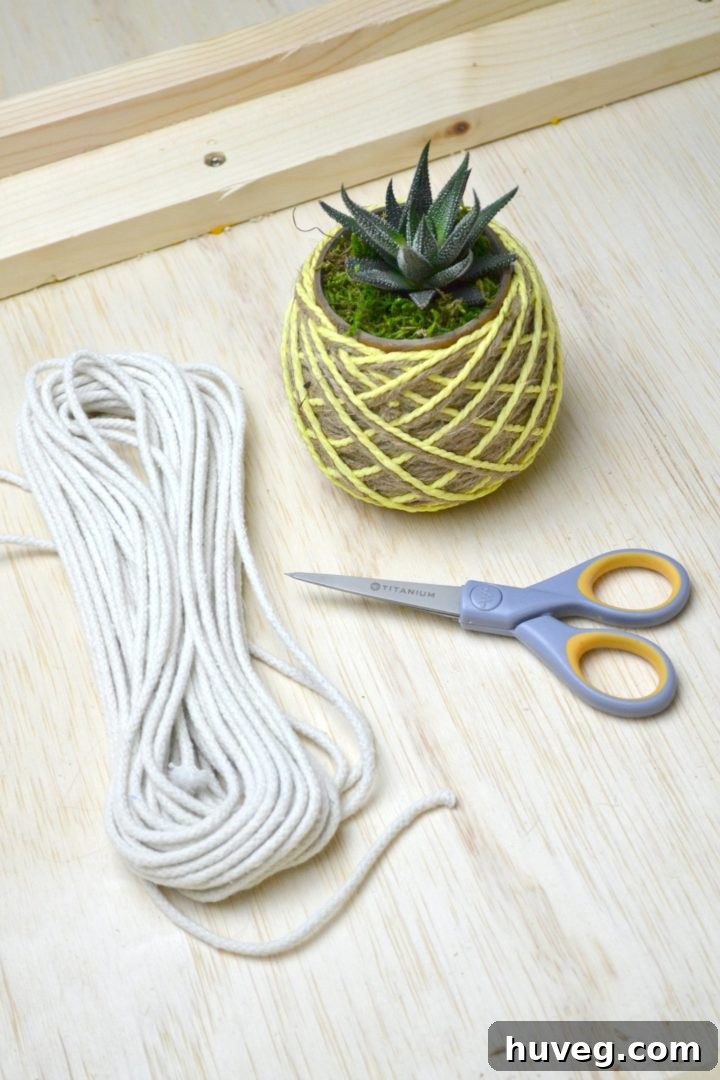
- Gather Your Essential Supplies: Before you begin, collect everything you’ll need. This includes a sturdy piece of twine or rope (choose a material that complements your decor and can support the plant’s weight), a sharp pair of scissors, and your chosen planter. The type of planter is key here:
- Simple Plastic or Cardboard Planters: These are the easiest to work with, as they typically don’t require specialized tools for creating holes.
- Wooden Planters: If your planter is made of wood, you will need a drill and an appropriate drill bit to create clean holes.
- Tougher Materials like Ceramic or Terracotta: For these, you’ll require a special masonry or diamond-tipped drill bit and a technique similar to this tutorial from my laundry room makeover, often involving water to keep the bit cool and prevent cracking. Always prioritize safety and wear protective eyewear when drilling.

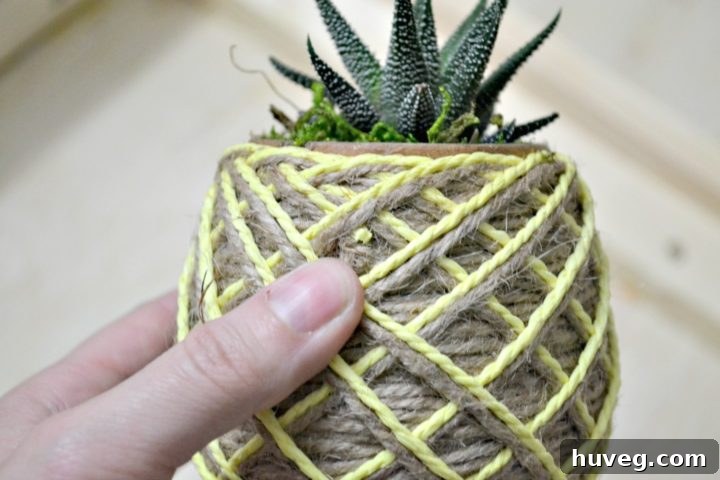
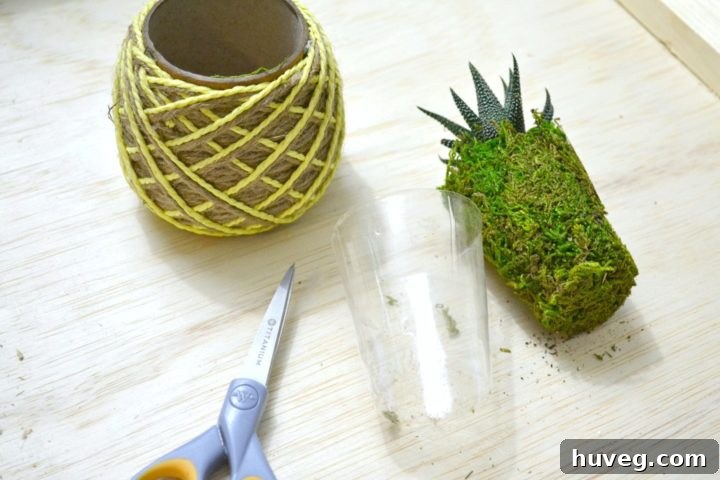
- Prepare the Planter and Mark Hole Placement: Since my chosen planters were simple plastic and cardboard, I could bypass the more complex drilling steps. Carefully remove the plant from its pot and separate any components (like an inner liner from an outer decorative sleeve). Identify the ideal spots for your hanging holes. These should be directly opposite each other on the planter’s rim to ensure the plant hangs evenly and securely. Precise placement is crucial for balance and aesthetics.
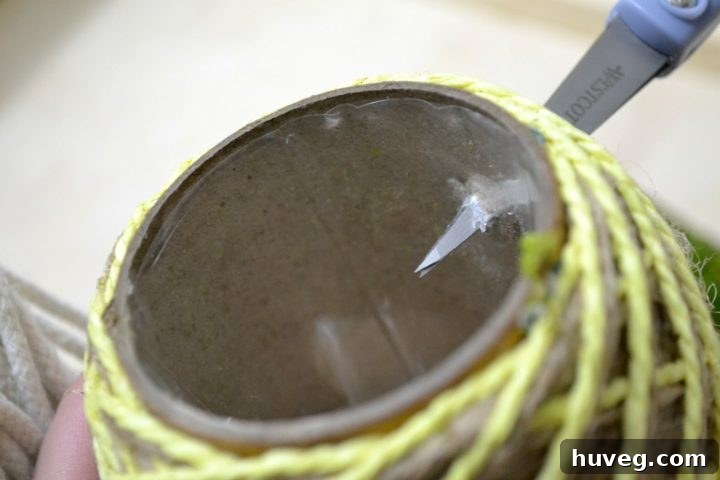
- Create the Holes: For plastic and cardboard planters, a very sharp pair of scissors is your best tool. Carefully poke a hole through one marked spot, gently twisting the blades to enlarge it to the desired size. If your planter has multiple layers, like my cardboard outer pot and plastic liner, repeat this process for each layer until you have a clean, continuous hole. Then, repeat the entire process on the opposite side of the planter. Take your time to avoid tearing the material unnecessarily.
- Feed the Rope Through: Now, using the same sharp scissors or a thin poking tool to guide it, carefully feed one end of your chosen rope through the first hole. Start from the outside of the planter and pull the rope through to the inside. This method ensures that the knots will be on the inside, creating a cleaner and more professional look from the exterior of the planter.
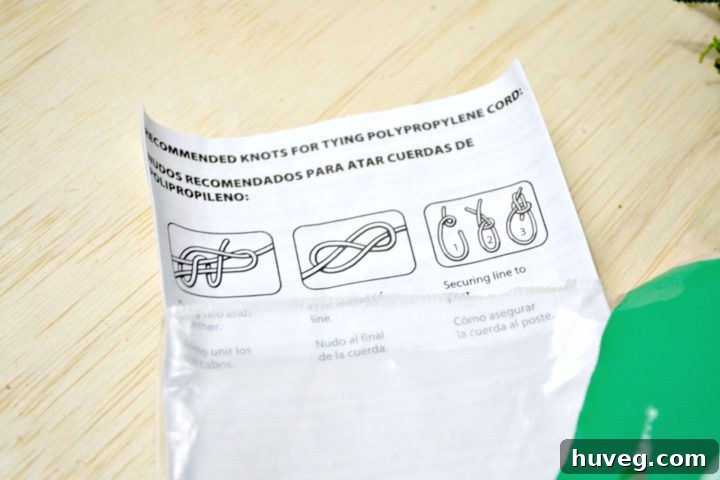
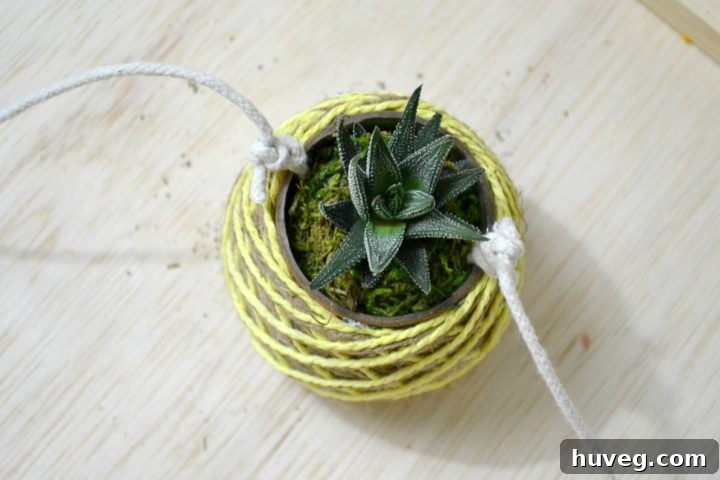
- Tie Secure Knots: With the rope now inside the planter, it’s time to secure it. For the most robust and reliable hold, I recommend tying two specific knots per side. You can often find diagrams on the rope packaging (refer to the middle illustration on the bag in the image for guidance). After tying these two specific knots, add a standard shoelace-style knot directly above them. This extra knot helps the initial knots stand firmly upright against the rim of the planter, preventing them from slipping or loosening over time. Strong knots are essential for the safety and longevity of your hanging plant.
- Measure and Secure the Second Side: Before tying the second side, hold the planter up by the first rope end and estimate the desired hanging length. Cut the rope, ensuring you leave a little extra length for tying the knots on the opposite side. It’s always better to have too much rope than too little! Repeat steps 4 and 5 for the second hole, ensuring the rope is pulled through cleanly and securely knotted on the inside.
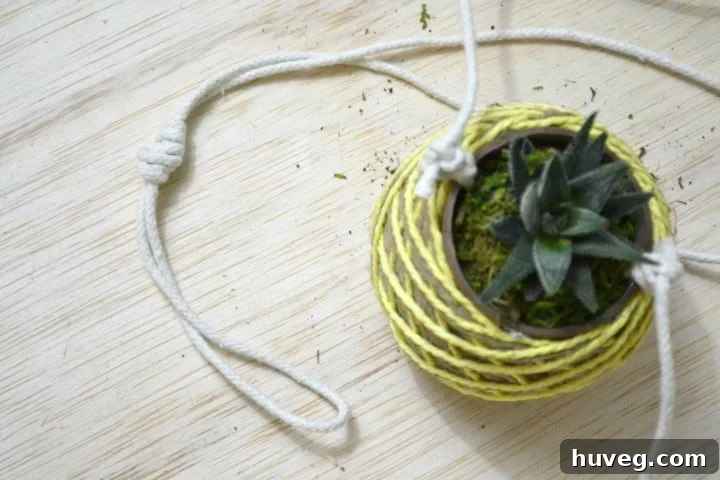
- Form the Top Hanging Loop: To create the main loop for hanging your planter, bring the two rope ends together and fold them so they are perfectly equal in length. Then, wind the combined rope around your finger three times, creating a small, coiled section. Carefully pull the very end of the loop through this wrapped section, tightening it firmly to form a robust and secure knot. This knot will be the primary point from which your planter will hang, so ensure it is taut and well-formed.
- Final Touches and Hanging: With all the knots securely tied and the loop formed, carefully trim any excess rope from the knots for a neat finish. Reinsert your plant into its newly converted hanging pot. Now, it’s ready to be hung! In my case, I intentionally created two different lengths of rope for my planters, allowing them to hang at varying heights beside the window. This approach creates a more dynamic and visually engaging display, adding depth and interest to the space. As an added bonus, it meant I didn’t have to obsess over perfectly matching lengths, making the process even quicker! I’m so pleased with the result that I might even grab two more planters to create a charming clustered arrangement by the window.
Looking Ahead: The Final Stretch of the Guest Room Gauntlet
That concludes this week’s comprehensive update on the Dueling DIY: Guest Room Gauntlet! I’m incredibly proud of the progress made, especially the significant strides on the Murphy bed construction and the delightful addition of the hanging plants. The guest room is truly transforming into a functional, stylish, and inviting space, one DIY project at a time.
By the next update, my primary goal is to have the Murphy bed fully installed and securely mounted on the wall – a major milestone that will define the functionality of this room. And if I’m feeling particularly ambitious and time allows, I may even embark on building the custom cabinet boxes that will flank either side of the Murphy bed, providing essential storage and a polished, built-in look.
Don’t forget to hop over to Charlotte’s blog to witness the fantastic new changes she’s implementing in her guest room. While I should probably offer some words of supportive encouragement to my fellow DIYer, I have to admit, I completely dominated this week’s challenge. And she knows it!
via GIPHY