The Final Vestige

The Final Farewell: Conquering Stubborn Wallpaper, One Window at a Time
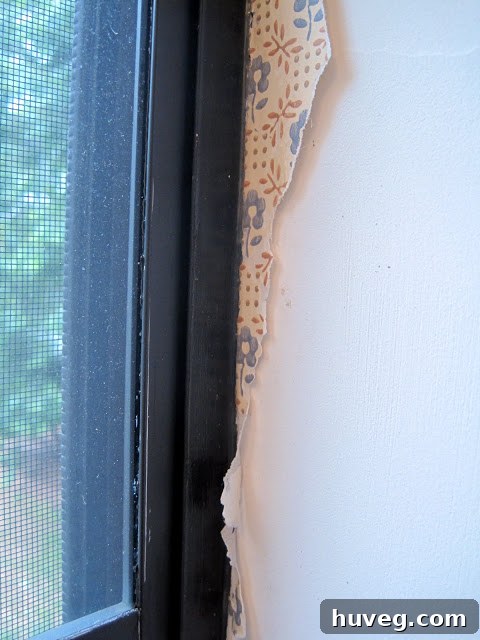
There’s a unique satisfaction that comes from ticking off a seemingly small, yet persistently annoying, item from your home improvement list. For me, that item was the last stubborn remnants of what I affectionately dubbed “PBW” – the primary bathroom wallpaper. For months, I’d been systematically vanquishing PBW from every surface, reveling in the fresh, clean aesthetic emerging beneath. However, one final, defiant stronghold remained: the wallpaper clinging stubbornly around the bathroom window. It was a visual reminder of a project almost complete, a tiny imperfection that whispered, “Not yet.”
Wallpaper removal is often depicted as a messy but straightforward task. You score, you spray, you scrape. But as any seasoned DIYer knows, the devil is often in the details, or in this case, the edges – especially those around architectural features like windows. This isn’t just about peeling paper; it’s about precision, patience, and sometimes, a little brute force intelligently applied. This final battle with the window wallpaper became a microcosm of the entire renovation journey, highlighting the small victories that make the bigger picture so rewarding.
The Foe: The Elusive Window Wallpaper and Its Allies (Caulk)
The reason the window was the last frontier for the PBW was simple: caulk. While I appreciate caulk’s essential role in sealing and finishing (and yes, I couldn’t resist that old joke), in this instance, it had become the wallpaper’s most formidable ally. The caulk line, applied years ago to seal the window trim against moisture, had effectively fused pieces of the wallpaper directly to the window frame. This created an impenetrable barrier, preventing any clean removal and leaving behind ragged, unsightly fragments. Every attempt to peel or pry had been met with resistance, the paper tearing unevenly and leaving behind a sticky, frustrating mess. It was clear that a more direct, surgical approach was required.
Windows are notorious hot spots for wallpaper challenges. Not only do you have the issue of caulk, but also the tight corners, delicate trim, and often, layers of paint and primer that can make removal a nightmare. The goal isn’t just to remove the paper; it’s to do so without damaging the underlying surface or the window itself. This requires a blend of the right tools, careful technique, and a healthy dose of determination. Recognizing that a standard wallpaper scraper wouldn’t cut it, I knew I needed something sharper, something more precise, to sever the bond between the paper and the caulk.
Arming Yourself: Essential Tools for the Wallpaper War
Before diving into any serious wallpaper removal project, especially one involving intricate areas like windows, it’s crucial to gather the right arsenal of tools. What started as a simple desire to remove a few scraps of paper quickly evolved into a full-fledged tactical operation requiring specific equipment. Here’s what you’ll typically need, building upon the basic scraper:
- Utility Knife or Razor Blade: This was my chosen weapon for the caulk dilemma. A sharp utility knife, or even a smaller craft knife, allows for precise cuts along caulk lines and in tight corners. Ensure it has a fresh, sharp blade for safety and efficiency.
- Wallpaper Scraper(s): While a wide scraper works for general wall areas, smaller, narrower scrapers (1-2 inches) are invaluable for trim and edges.
- Wallpaper Removal Solution: A good quality solution (or a mixture of hot water and liquid dish soap) helps penetrate and loosen adhesive.
- Spray Bottle: For evenly applying the removal solution.
- Steamer (Optional but Recommended): For particularly stubborn or multiple layers of wallpaper, a handheld wallpaper steamer can be a game-changer, softening both paper and adhesive effectively.
- Protective Gear: Gloves to protect your hands from chemicals and blisters, and safety glasses to shield your eyes from flying debris or drips.
- Drop Cloths/Tarps: Essential for protecting floors, furniture, and the window sill from water and debris.
- Sponge and Clean Rags: For wiping down surfaces and cleaning up residue.
- Caulk Removal Tool: While a utility knife can work, a dedicated caulk removal tool can make the job cleaner and safer, especially for larger caulk beads.
- Bucket: For water or disposal of wet paper.
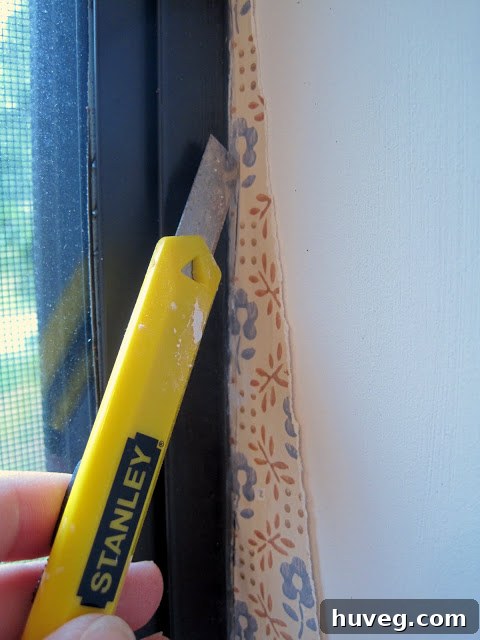
For my window challenge, the humble utility knife, even one that had “seen better days,” proved to be the hero. Its sharp edge was precisely what was needed to slice through the old, hardened caulk that had become so stubbornly attached to the wallpaper.
The Strategy: A Step-by-Step Guide to Conquering Wallpaper
Tackling wallpaper around a window requires a methodical approach to ensure both effectiveness and minimal damage. Here’s how I approached this particular challenge:
- Preparation is Key: First, I laid down drop cloths on the floor beneath the window to protect against water and falling debris. Any adjacent furniture was moved or covered. This prevents a bigger mess later.
- Score the Wallpaper (Carefully): For general wallpaper removal, scoring tools create perforations for the solution to penetrate. Around a window, however, you need to be extremely cautious. I only lightly scored the paper away from the window trim itself, focusing more on the larger sections that needed to be saturated.
- Apply the Solution: Using a spray bottle, I thoroughly saturated the remaining wallpaper sections with a commercial wallpaper remover solution. Patience is a virtue here; let the solution soak in for the recommended time (usually 10-15 minutes) to break down the adhesive. Reapply if necessary to keep the paper moist.
- The Art of Scraping: With the solution doing its work, I began to gently scrape away the loosened paper using a small wallpaper scraper. I worked in small sections, being careful not to gouge the wall underneath.
- Targeting the Window Periphery: This was the critical stage for the caulk-fused wallpaper. Holding the utility knife at a shallow angle, I carefully and slowly ran the blade along the caulk line where it met the window frame and the wall. The goal was to sever the caulk’s bond with the wallpaper without digging into the wood trim or the drywall. This required a steady hand and multiple passes, applying gentle, consistent pressure. The little utility knife, despite its age, performed admirably, making clean, decisive cuts.
Dueling with Caulk: A Precision Operation
The caulk itself needed to be removed to ensure a clean surface for repainting and, eventually, new caulk. Once the wallpaper’s bond was broken, the old caulk became easier to tackle. With the utility knife, I made another pass, this time directly cutting through the caulk line, both along the window frame and where it met the wall. Small, controlled strokes are vital here. You want to lift the caulk away in strips or pieces, rather than just scraping blindly.
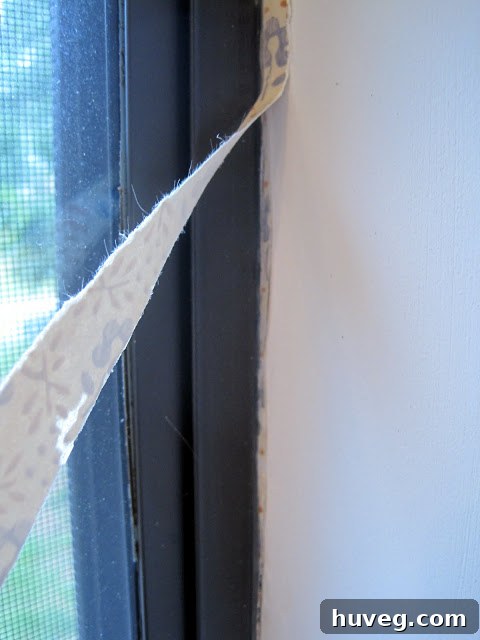
It was a slow and deliberate process, but in a matter of minutes, the last stubborn pieces of PBW, freed from the grasp of old caulk, were coming away. The satisfaction of seeing that final strip of paper peel away, leaving behind a clean (though certainly not perfect) surface, was immense. I was truly saying my final sayonara to ol’ PBW. The bathroom was finally free of its dated coverings, ready for its next transformation.
Post-Victory Cleanup: Preparing for a Fresh Start
Removing the wallpaper is only half the battle. What comes next is crucial for a lasting, professional finish. Once all the paper and most of the caulk were gone, I used a damp sponge and clean water to thoroughly wipe down the entire area, removing any residual adhesive and wallpaper paste. This step is often overlooked, but any lingering glue will cause problems for new paint or primer, leading to bubbling or poor adhesion.
After the surface dried, I inspected the window frame and surrounding wall for any damage. Small nicks from the scraper or knife can be filled with lightweight spackle, sanded smooth, and then primed. A light sanding of the entire area with fine-grit sandpaper ensures a smooth, uniform surface, ready to accept primer and paint. Priming is especially important after wallpaper removal, as it seals the wall, prevents residual paste from bleeding through new paint, and provides a uniform base for your chosen finish.
The Next Frontier: Re-Caulking Your Window for Lasting Beauty and Protection
Of course, the immediate aftermath of this victory meant that I had created a new item for my ever-growing home improvement to-do list: “re-caulk window.” In truth, it should have been on the list already. Old caulk often cracks, shrinks, or pulls away, compromising its seal. Re-caulking is not just about aesthetics; it’s a vital step in protecting your home. A proper caulk seal around a window prevents moisture intrusion, drafts, and can even improve energy efficiency.
When it comes to re-caulking, choosing the right product is important. For interior windows in a bathroom, a paintable acrylic latex caulk with silicone added offers flexibility, durability, and easy cleanup. Here’s a quick guide to a perfect caulk bead:
- Preparation: Ensure the surface is completely clean, dry, and free of old caulk residue.
- Apply Tape (Optional but Recommended): For crisp lines, apply painter’s tape above and below where you want your caulk bead to be, leaving a gap the width of your desired bead.
- Cut the Nozzle: Cut the tip of the caulk tube at a 45-degree angle, making a small opening. You can always cut it larger if needed.
- Apply the Caulk: Hold the caulk gun at a 45-degree angle to the joint. Apply steady, even pressure, moving smoothly along the seam. The goal is one continuous bead.
- Smooth the Bead: Immediately after applying, use a wet finger (or a caulk tool) to smooth the bead, pushing it into the joint and creating a clean finish. Remove excess caulk promptly.
- Remove Tape: If you used tape, pull it off immediately after smoothing the caulk, before it starts to skin over.
This critical step, born directly from the wallpaper removal process, will ensure that the window is not only visually appealing but also properly sealed and protected for years to come.
Beyond the Bathroom: Applying Lessons to Other Home Improvement Projects
This entire process, from battling stubborn wallpaper to meticulously re-caulking, is a perfect illustration of the seemingly endless tale that is home renovation. Each project, no matter how small, has its challenges, its frustrations, and ultimately, its moments of triumph. What starts as a simple task can uncover layers of unexpected work, demanding new skills and more tools. But it’s precisely this journey that makes DIY so rewarding.
Every time you overcome a hurdle – whether it’s a caulk-fused wallpaper, a stripped screw, or a crooked paint line – you gain confidence, knowledge, and a deeper appreciation for your home. It’s about learning to be resourceful, patient, and persistent. And it’s about the incredible satisfaction of looking at a space and knowing that your own hands transformed it.
Conclusion: The Triumph of Tenacity
The primary bathroom window, once a symbol of unfinished business, now stands clean, smooth, and ready for its next chapter. The “last of the PBW” is truly gone, replaced by the promise of a fresh, revitalized space. This small victory underscores a larger truth about home improvement: it’s a marathon, not a sprint. It’s filled with unexpected twists and turns, demanding tenacity and a willingness to learn. But with each step, each challenge overcome, you move closer to creating the home you envision. So, grab your tools, embrace the process, and get ready to celebrate your own triumphs, no matter how small they may seem.