The Bottomless Bother

Embarking on a home renovation project, especially in functional spaces like a laundry room, often uncovers hidden challenges. My own laundry room makeover, initially envisioned as a straightforward painting job, quickly transformed into a lesson in resilience and the art of serious wall repair. It became apparent almost immediately upon moving in that this room had endured significant neglect and damage over the years. Poorly patched holes, persistent cracks, and haphazardly repaired water damage marred the walls, creating a daunting canvas.
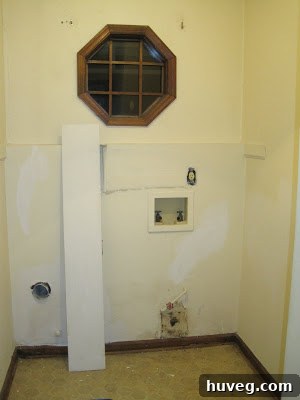
For many renters and first-time homeowners, patching small nail holes with spackle is a familiar and simple task. However, the nature of the damage in this laundry room was far more profound. We’re talking about holes too extensive for a dab of spackle, and cracks that seemed to reappear despite previous attempts at repair. This level of persistent wall damage requires a more robust and professional approach than typical cosmetic fixes. The question then becomes: how do you tackle such a mess effectively and ensure a lasting repair?
The Ultimate Solution for Persistent Wall Damage: Drywall Tape
After much research and a desire for a permanent fix, I discovered the unsung hero of challenging wall repairs: drywall tape. This versatile material is indispensable for covering uneven surfaces, bridging cracks, and reinforcing compromised areas that would be impossible to adequately patch with joint compound (also known as “mud”) alone. Drywall tape provides the structural integrity needed to prevent future cracking and create a seamlessly smooth surface.
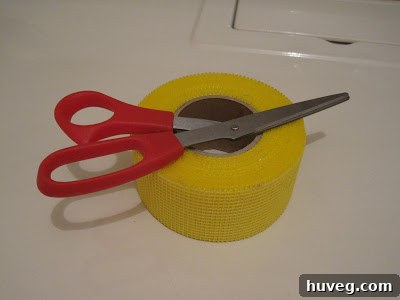
Drywall tape primarily comes in two forms: paper tape and fiberglass mesh tape. While paper tape is often preferred by professionals for taping seams between drywall sheets, fiberglass mesh tape is an excellent choice for repairs due to its adhesive backing and inherent strength. The fiberglass mesh tape, which I personally used, offers ease of application and superb durability, making it ideal for patching holes, reinforcing cracks, and ensuring a long-lasting finish. Utilizing drywall tape, combined with joint compound, significantly elevates the quality and durability of your wall repairs.
Essential Tools and Materials for Drywall Repair
Before diving into the repair process, gather the following essential tools and materials. Having everything at hand will make the job smoother and more efficient:
- Drywall Tape: Choose fiberglass mesh tape for ease of use in repairs. Its self-adhesive nature simplifies the application process significantly.
- Sharp Scissors: Essential for precisely cutting the drywall tape to fit the exact dimensions of your damaged area.
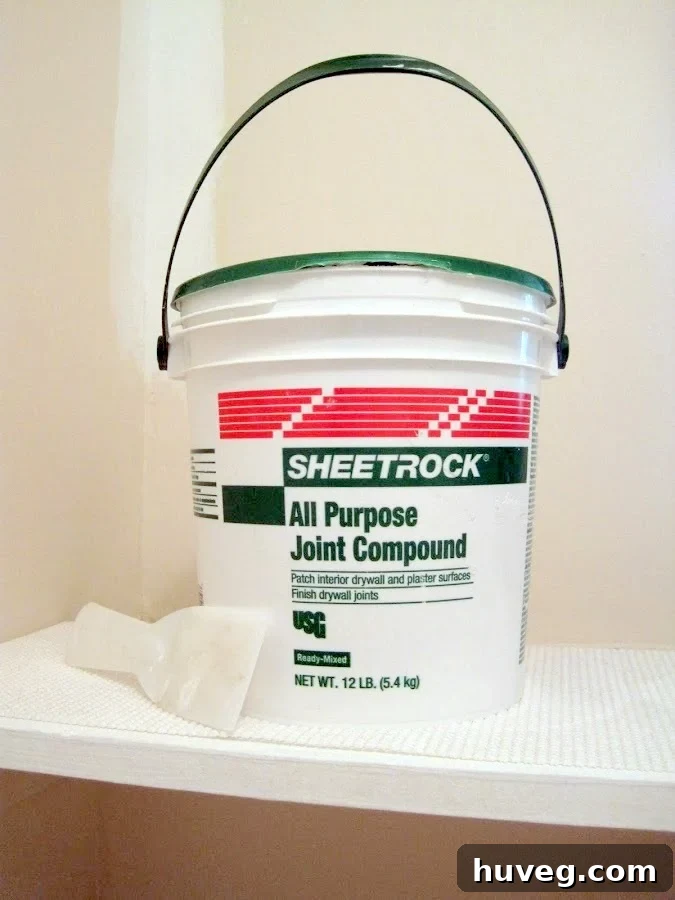
- Joint Compound (Drywall Mud): This is the material that will cover and embed the tape, creating a smooth surface. There are various types, including all-purpose, lightweight, and setting-type (often called “hot mud” for its fast-drying properties). For most home repairs, an all-purpose or lightweight compound is sufficient, offering a good balance of workability and strength.
- Putty Knives or Taping Knives: You’ll need at least one, but having a couple of different sizes (e.g., a 4-inch for initial application and a 6-inch or 8-inch for smoothing and feathering) can be very beneficial.
- Fine-Grit Sandpaper or Sanding Sponge: Crucial for smoothing the dried joint compound between coats and for the final finish. Aim for 120-150 grit for initial sanding and 180-220 grit for the final pass.
- Clean Rags or Sponges: For cleaning the surface before you start and for wiping down dust after sanding.
- Dust Mask and Safety Glasses: Joint compound dust can be irritating, so proper personal protective equipment is highly recommended.
- Drop Cloths: To protect your flooring and furniture from dust and compound splatters.
Step-by-Step Guide to Flawless Wall Repair with Drywall Tape
Achieving a professional-looking repair is a methodical process. Follow these steps carefully to ensure a durable and smooth finish:
1. Prepare the Surface Thoroughly
Before applying any tape or compound, the importance of a clean surface cannot be overstated. Wipe down the entire area you intend to repair with a damp cloth to remove any dirt, dust, grease, or loose debris. For areas like laundry rooms prone to humidity and grime, a mild degreaser might be necessary. A clean surface ensures optimal adhesion for both the tape and the joint compound. Additionally, inspect the damage carefully; if there are any loose bits of drywall or peeling paint around the hole or crack, gently scrape them away to create a stable foundation for your repair. For deeper cracks, sometimes it helps to slightly widen them into a V-groove to allow the compound to penetrate better.
2. Measure, Trim, and Apply the Drywall Tape
Using your sharp scissors, cut a piece of fiberglass mesh drywall tape that fully covers the hole or crack you are patching, extending approximately an inch beyond the damage on all sides. This overlap is crucial for providing adequate reinforcement. For larger holes or complex cracks, you might need to use multiple pieces of tape, ensuring they overlap slightly for continuous strength. Once cut, carefully apply the adhesive-backed tape over the damaged area. Press firmly across the entire surface of the tape with your hand or a putty knife to ensure it adheres securely to the wall and smooth out any air bubbles or wrinkles. The goal is a flat, tightly affixed patch.
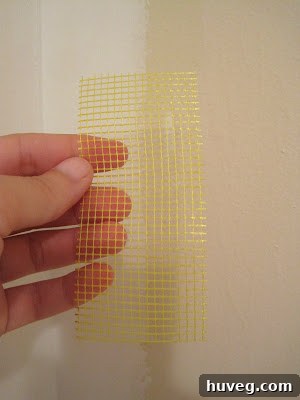
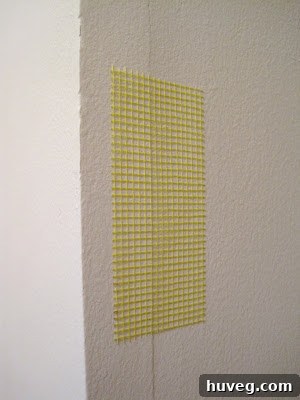
3. Apply the First Coat of Joint Compound: Embedding the Tape
Now it’s time to apply the joint compound. Scoop a generous amount of mud onto your putty knife. Starting from one edge of the tape, spread a thin, even layer of joint compound over the entire taped area, ensuring the tape is completely embedded and no longer visible. Use firm, even pressure and hold your knife at a slight angle (around 30-45 degrees) to the wall. Extend the compound slightly beyond the edges of the tape, gradually feathering it out into the existing wall surface. This feathering technique helps to blend the repair seamlessly. Remove any excess compound from the knife and return it to the bucket. Allow this first coat to dry completely, which can take several hours or even overnight, depending on humidity, temperature, and compound thickness. Rushing this step can lead to cracking.
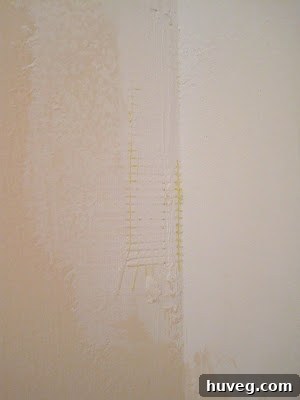
4. Second and Subsequent Coats for a Flawless Finish
Once the first coat is completely dry, gently sand the area using your fine-grit sandpaper or sanding sponge to smooth out any ridges or imperfections. The goal is to remove high spots, not to sand down to the tape itself. Wipe away all dust with a damp cloth. Next, apply a second, slightly wider, and often slightly thicker, layer of joint compound. This coat should extend further out from the edges of the first coat, feathering even more gently into the surrounding wall to create an imperceptible transition. Again, allow this coat to dry fully and then sand smooth. Depending on the depth of the repair and your desired level of perfection, a third, very thin coat might be necessary. Always sand thoroughly between each application to ensure the smoothest surface possible. Patience during these drying and sanding phases is key to a professional outcome.
5. Final Sanding and Preparation for Paint
The final step involves a meticulous sanding with very fine-grit sandpaper (180-220 grit) to achieve a perfectly smooth, paint-ready surface. Use a light touch, moving in circular motions, and frequently run your hand over the patched area to feel for any remaining bumps or dips. You can also shine a work light across the wall from different angles to highlight any imperfections that might not be visible under normal lighting. Once satisfied with the smoothness, wipe down the entire area with a damp cloth to remove all sanding dust. This is crucial for proper paint adhesion. Finally, consider applying a coat of quality primer to the repaired area. Primer helps to seal the porous joint compound, ensures uniform paint absorption, and effectively hides the repair, preventing “flashing” where patched areas look different from the rest of the wall after painting.
Beyond the Basics: Tips for Long-Lasting Drywall Repairs
- Ventilation: Always work in a well-ventilated area when sanding to minimize dust inhalation. A dust mask is a must.
- Don’t Rush Drying: The biggest mistake DIYers make is applying subsequent coats before the previous one is fully dry. This can lead to cracking and poor adhesion.
- Thin Coats are Better: It’s better to apply several thin coats of joint compound than one thick coat, as thick coats are more prone to cracking and take much longer to dry.
- Humidity Management: In rooms like laundry rooms, controlling humidity during and after the drying process can prevent issues. Ensure proper ventilation.
- Proper Tool Cleaning: Clean your putty knives immediately after use. Dried joint compound is difficult to remove.
Embrace Your Inner DIYer
Even though my laundry room painting project demanded more preparation and certainly more patience than I anticipated, the experience of learning a new skill was incredibly rewarding. Each new task I encounter in this house, no matter how challenging it initially seems, only builds my confidence, reassuring me that this is something I am perfectly capable of tackling. And as an added bonus, I get to share these practical tips with others, hoping that my experiences can empower fellow homeowners to confidently face their own home improvement challenges. It’s a win-win situation, transforming daunting repairs into gratifying achievements and fostering a greater sense of pride in our homes.
With these techniques, you’re not just patching a wall; you’re building skill, confidence, and adding lasting value to your home. So grab your drywall tape and joint compound, and get ready to create walls that are truly smooth and beautiful!