Ruby’s Renewed Delights

Welcome back, crafting enthusiasts! For those of you who’ve been following the heartwarming journey of Ruby, our beloved vintage camper, you’re in for a delightful and edible surprise today. In a festive twist for my 25 DIYs of Christmas series, we’re transforming Ruby from a charming renovation project into an adorable, custom-decorated cookie! This project marries my passion for creative DIY with a newfound love for intricate cookie artistry, offering a unique way to celebrate the holiday season and our Ruby’s Revival adventure. It’s a testament to how creative inspiration can strike from even the most unexpected places, bringing a touch of personalized magic to our holiday festivities.
It might come as a surprise to many of you, but I confess: I’m not a natural chef. For a long time, my blog rarely featured recipes, and even now, the vast majority of them fall squarely into the baking category. However, there’s a special joy I find in baking, and more specifically, in the meticulous art of decorating baked goods. The rise of platforms like Instagram has only amplified this fascination. I often find myself captivated by #cookievideo reels, losing track of time as I watch experts transform simple dough into miniature masterpieces. Whenever I’m tired and can’t sleep, I’ll type in #cookievideo or whatever on Instagram and just fall down the rabbit hole of cookie decorating techniques. While I’m still very much a novice in the intricate world of royal icing and piping, I firmly believe that practice makes perfect. Every attempt is a step closer to mastering this delightful craft, and I encourage anyone interested to simply give it a try!
This newfound obsession naturally led me to a fun idea: creating a special cookie in honor of our Ruby’s Revival project. The image of a charming camper cookie, adorned with glistening silver icing, became a persistent and delightful earworm. My initial thought was to find an existing cookie cutter. I scoured online shops, discovering a plethora of cute Airstream and RV-inspired cutters. Yet, none quite captured the unique silhouette and vintage charm of our Spartan Manor, Ruby. It became clear: a “Spartan Manor” specific cookie cutter simply didn’t exist off the shelf. This presented an exciting challenge and an opportunity to dive deeper into DIY, proving that sometimes, the best solution is to create it yourself.
And so, the decision was made: I would craft my own custom cookie cutter shape! A single Amazon order later, and I had all the supplies needed to bring this unique vision to life. This DIY approach not only ensures that the cookie perfectly mirrors Ruby but also opens up a world of possibilities for future custom cookie designs. It’s an empowering feeling to realize that any shape you can imagine can be transformed into a cookie cutter with just a few simple tools and a bit of creativity. This small project became a highlight of my holiday crafting, demonstrating that custom touches truly make a difference.
Check out the video:
I’ve got several pieces to this tutorial, so I’ve decided to split this into some specifics depending on the post (guess it works out that I’m sharing 25 posts in this Christmas series, right?). This first one is about how to make the cookie cutter any shape you want. It’s a foundational skill that will serve you well for many creative baking projects beyond just a vintage camper!
Come back tomorrow for the sugar cookie recipe (I’ve already shared this one, which is my personal favorite, but it’s soft and puffy and iced cookies need to keep their shape and stay rigid with the extra weight of all this icing on top). I will also have a tutorial for making some really cute wreath cookies since they caught on last year and a follower has asked that I share the technique. Let’s jump in!
How to Make Your Own Custom Cookie Cutters
Time needed: 15 minutes
Making your own cookie cutter is a LOT easier than you might think! If you want to make a custom shape, it can be done just a few simple steps:
-
Print out a True-to-Size Outline of Your Desired Shape
The foundation of any great custom cookie cutter is an accurate template. For Ruby, I sifted through my extensive collection of camper photos, eventually selecting one that perfectly showcased her distinctive profile. Using image editing software like Photoshop, I converted this photo into a clear outline, making sure to scale it to the exact size I envisioned for the final cookie. This precision is crucial; a perfectly sized template streamlines the bending process significantly. If you don’t have a specific photo, platforms like Pixabay offer a wealth of free images, including outlined illustrations, that can serve as excellent starting points. Remember, the key is to ensure your printout is the precise dimensions you want your finished cookie cutter to be.
-
Unroll and Cut a Food-Safe Tin Strip Coil
To ensure both safety and durability, selecting the right material is paramount. I opted for a “Make Your Own Cookie Cutter” roll of tin from Amazon. While I initially considered checking my local home improvement store for tin, I prioritized a product explicitly labeled food-safe, sturdy enough to withstand repeated use, and ideally, one that included food-safe adhesive tape – this kit met all those criteria. I measured and cut a generous length of the tin strip, allowing for a little extra material. This provides a buffer in case of minor errors or if I needed to refine a section, preventing the frustration of running short midway through the shaping process.
-
Carefully Bend Along the Printed Outline
This step requires a touch of patience and a steady hand. Place your printed template on a flat, stable surface that allows for comfortable movement around it. Begin to gently bend the tin strip along the contours of your outline. It’s a process of continuous adjustment: bend a section, check it against the paper, gently wrap, smooth, and repeat. A little secret I discovered: don’t hesitate when making a bend. A confident, decisive bend is often cleaner than a hesitant one, though minor corrections are usually possible. Also, pay attention to both sides of the cutter; sometimes a slight bump on the top edge doesn’t translate to the cutting edge, so keep checking for crispness. Important safety note: The edges of the tin strip can be very sharp. While I didn’t use them myself for this project, I highly recommend wearing protective gloves to prevent accidental cuts.
-
Utilize Pliers for Sharp Corners and Smooth Curves
While finger bending works well for general shapes, pliers become indispensable for achieving precision. For those sharper angles, such as the distinct shape of Ruby’s tires, I used pliers to create crisp, defined bends that my fingers simply couldn’t manage. When using pliers, always maintain a firm grip directly at the point of the bend. This ensures even pressure and allows you to shape one side accurately without distorting the other. Conversely, pliers can also be surprisingly effective for refining and smoothing out rounded sections, helping to achieve a perfectly fluid curve where needed. They are truly your best friend for intricate details and complex shapes.
-
Snip Off Excess and Secure Ends with Tape
Once your custom cookie cutter has taken its final form, carefully snip off any excess tin strip. The beauty of the kit I used is that it comes with a roll of simple, food-safe double-sided tape designed specifically for this purpose. This tape securely joins the two ends of the tin strip, forming a continuous loop that holds the cutter’s shape firmly. This final step is quick and straightforward, solidifying your handcrafted design and making it ready for action. Ensure the tape is pressed firmly to create a durable bond.
-
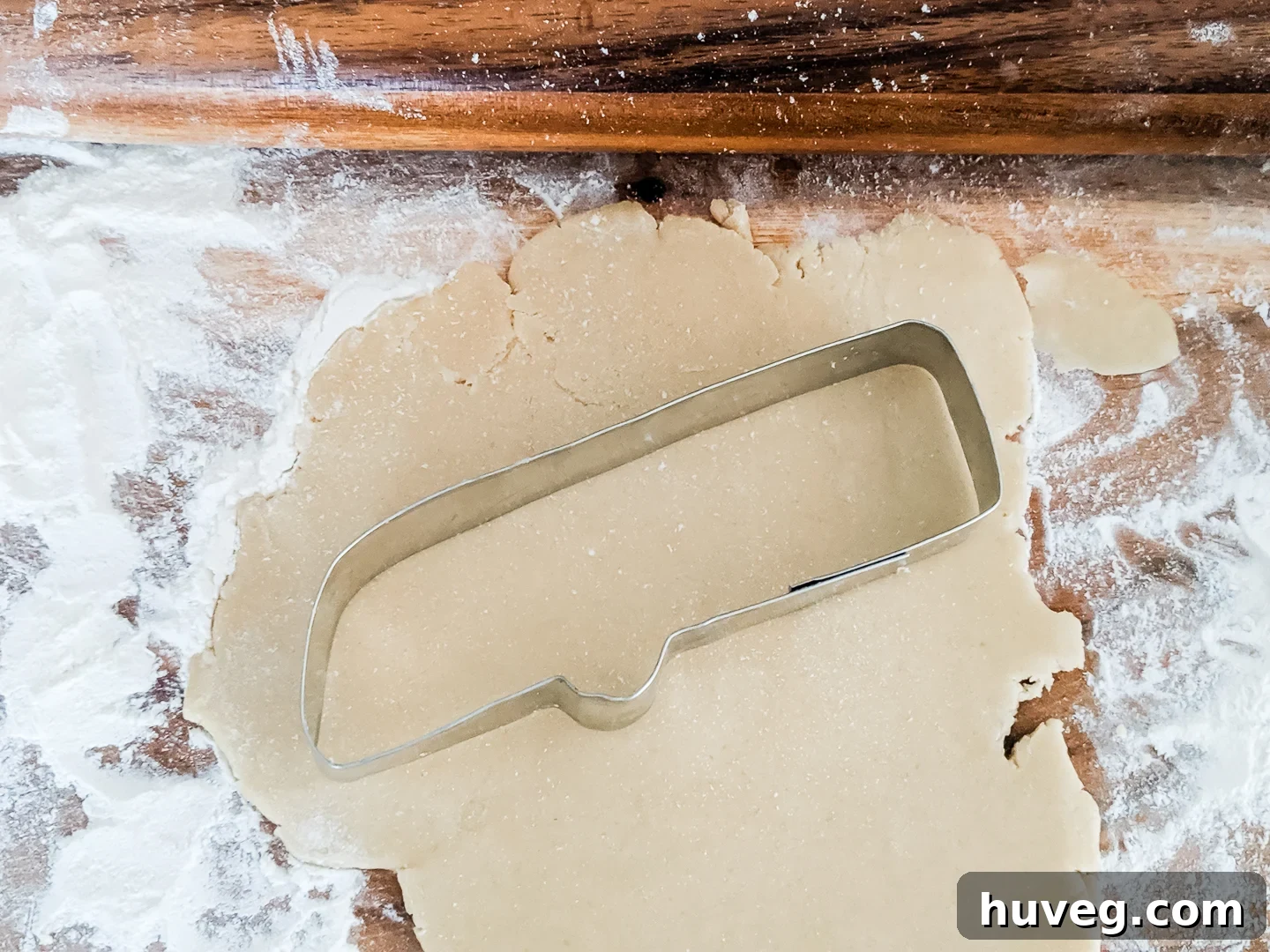
Cut Out Your Cookies and Prepare for Baking!
The moment of truth! Test out your newly crafted cookie cutter. I was delighted to find that mine was wonderfully sturdy, capable of cleanly cutting out cookie dough, piece after piece, without losing its form. I experimented with my existing favorite cookie dough, but also tried a new recipe that I’ll be sharing soon. This new recipe proved superior for decorated cookies, as it held its shape much better in the oven. When creating cookies destined for heavy icing, it’s essential to use a dough that bakes up thick and firm enough to support the considerable weight of all that beautiful decoration without losing its definition.
-
Embrace the Art of Decorating!
Now for the truly fun, albeit challenging, part: decorating! I brought together my own collection of icing tools with some specialty supplies from my mom, who is an avid cake decorator. We experimented with a palette of colors: a soft gray for Ruby’s main body, stark black for the tires and windows, a touch of green, and some shimmering silver and pearl icing spray. I even dabbed on some metallic paint-on icing for extra detail. This is where your personal creativity truly shines, even if you’re just starting out. Each cookie becomes a tiny canvas, allowing for endless possibilities of expression.

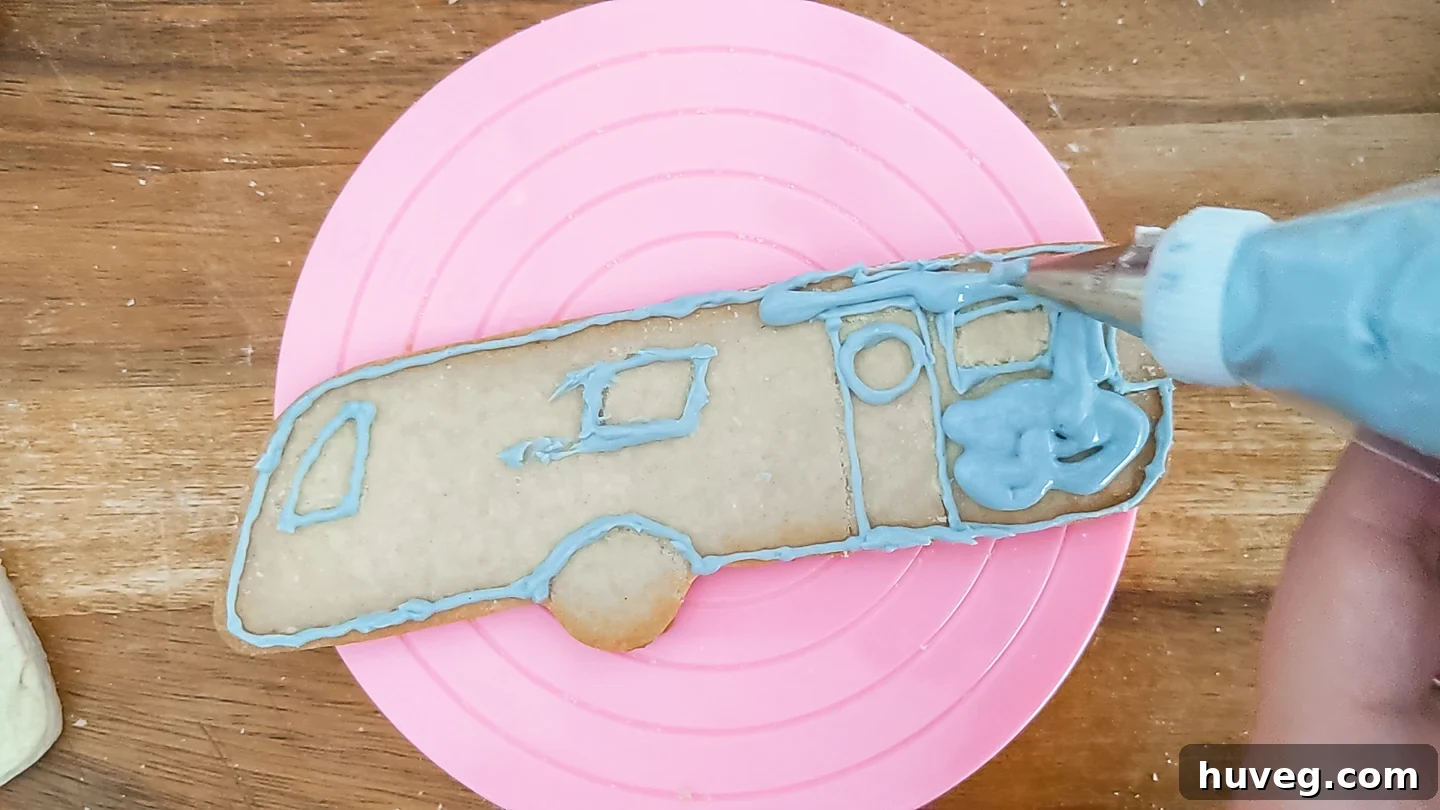
I’ll be the first to admit it – my icing skills are very much a work in progress! They lean heavily towards the amateur side, but that’s part of the fun of learning. Honestly, I don’t particularly enjoy eating icing, so these cookies were primarily crafted for their visual appeal. You might even notice in the video that I improved at keeping my hands off them to hold them still without smudging as I went along! I’m still figuring out the best icing consistencies – a thicker mix for crisp outlines and a thinner, runnier “flooding” consistency to fill them in (look at me, talking cookie lingo!). One valuable lesson I learned the hard way: refrigerating silver-painted cookies can unfortunately dull their beautiful shine. However, a little trick I picked up: if you display “meh” cookies in front of sparkling Christmas lights, even Santa won’t be able to tell the difference! 😉
And the best part? Since I used only a fraction of the cookie cutter kit, I now have the supplies to make many more custom cutters for mere pennies. This is a significant saving compared to purchasing bespoke cutters from artisanal shops or buying individual, pre-made cutters that don’t quite match my unique design visions. This DIY approach not only fosters creativity but also offers a remarkably cost-effective solution for all your custom baking needs, making it a truly rewarding project.
P.S. I’ll be using this same video in my upcoming post, which will feature the sugar cookie recipe I perfected for these decorated treats. I hope you find watching icing videos as satisfying as I do! Additionally, I’ll share even more practical tips on how to achieve smooth, professional-looking icing. In the meantime, don’t miss out on the other exciting projects in this festive Christmas series. Each post offers step-by-step tutorials, recipes, videos, and even free patterns or woodworking plans where applicable. Many ideas even include multiple variations to inspire your own creative interpretations. Make sure to explore the full series below, and for exclusive content and updates, consider subscribing so you never miss a single DIY adventure!
25 DIYs of Christmas
VIEW SERIES
This project is part of a series of DIY gifts, decor, and other fun inspiration that I’m calling my “25 DIYs of Christmas”! Check out the list below to see each post (step by step tutorials, recipes, videos, free patterns, and woodworking plans available for each (where applicable). Lots of these ideas have multiple versions to show you the possibilities of each DIY. Even better, you can subscribe to make sure you don’t miss a single post!
-
DIY Snowdrift Tree Skirts
-
DIY Watercolor Gift Tags
-
4 Watercolor Christmas Prints
-
DIY Hanging Advent Countdown Calendar
-
DIY Business Card Holder + Desk Planter
-
DIY Tree Cutout Art