Painting Begins on Our 2013 Kitchen Cabinets

Transforming a “Sad, Ugly Kitchen”: A DIY Cabinet Painting Saga During Grad School
Picture this: you’re embarking on your final semester of graduate school, a period typically synonymous with intense focus, late-night study sessions, and the relentless pursuit of academic excellence. Now, imagine layering on top of that an ambitious, self-imposed deadline to completely overhaul your outdated and frankly, rather depressing kitchen. Sounds like a recipe for chaos, right? Well, if you raised your hand in agreement, you’re certainly not alone. It’s a challenging endeavor, to say the least, but one driven by the undeniable desire to transform a space that has long felt neglected.
As those of you who frequently visit this blog might anticipate, progress on such an undertaking is rarely a smooth, linear path. In fact, it’s often a winding road filled with unexpected detours, learning curves, and the occasional moment of self-doubt. With the academic clock ticking relentlessly, I’ve had to make peace with the fact that much of the visual documentation might consist of quick phone snapshots until the grand reveal. This project has become a testament to balancing big dreams with the realities of a demanding schedule.
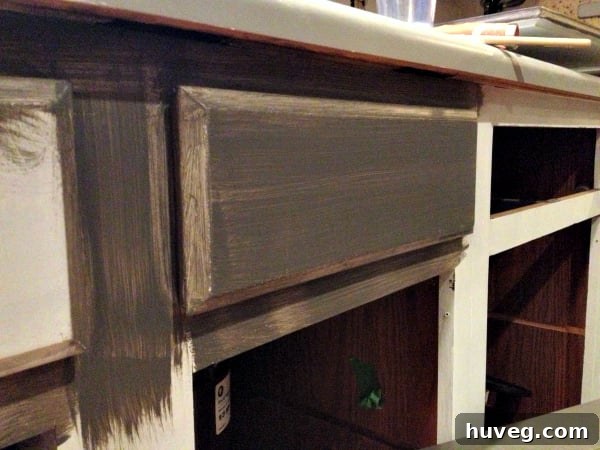
My initial enthusiasm for experimenting with the first coat of paint, under the optimistic assumption that any noticeable streaks could simply be sanded away later, certainly led to some interesting results. The white primer beneath was adorned with numerous streaks, a direct consequence of my eagerness and perhaps a slight overestimation of the paint’s self-leveling properties right out of the gate. However, I’m diligently capturing these less-than-perfect, ‘between-coat’ moments. It’s crucial for me to show you the authentic, sometimes messy, reality of DIY. If you decide to tackle a similar project, I want you to feel prepared, not panicked, when your initial coats don’t look like they belong in a magazine.
Unveiling the “Self-Leveling” Paint Technology: Expectations vs. Reality
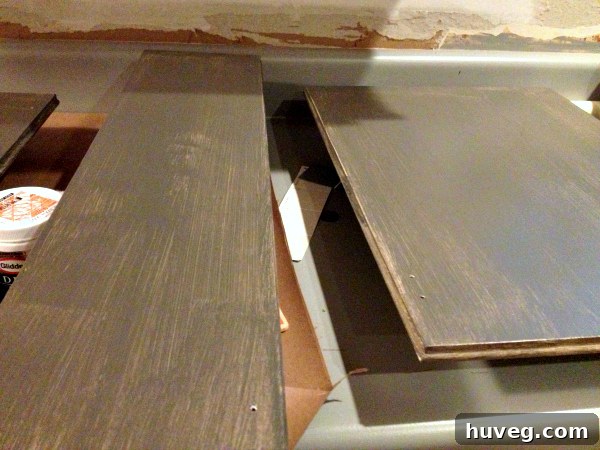
Despite the initial streaky appearance, I embraced the process as an experiment. My primary goal for this first application was to truly test the touted “self-leveling” paint technology without immediately resorting to a roller. I wanted to see just how much magic this paint could perform on its own, applied solely with a brush. The verdict? The results were surprisingly decent. The finish was undeniably smoother than I had anticipated, which offered a significant morale boost. However, there were still discernible brush strokes. It wasn’t merely a matter of the coat being thin; when the light catches the surface at just the right angle, those brush marks are clearly visible, a subtle reminder of human imperfection in the DIY process.
This initial observation solidified my belief that a minimum of three coats would be necessary to achieve the flawless, professional-looking finish I was aiming for. It also informed my strategy for subsequent applications. Moving forward, I planned to adopt a hybrid approach: using a brush to meticulously work the paint into the cabinet grain, especially in intricate areas, followed by a roller to efficiently smooth out any lingering brush marks and achieve that coveted uniform surface. This combination, I reasoned, would leverage the strengths of both tools and yield a superior result.
Navigating the Nuances: Tricky Areas and Color Choices
As the project progressed, certain areas of the kitchen presented unique challenges, demanding extra patience and precision. The section around the sink, for instance, proved to be the most “interesting” thus far. Those two drawer fronts, which initially appear functional, are actually false panels permanently attached to the cabinet structure. This design quirk meant they couldn’t be easily removed and painted separately on a flat surface, making them significantly trickier to paint evenly and thoroughly. It’s these small, unforeseen complexities that often add hours to a DIY project, underscoring the importance of adaptability.
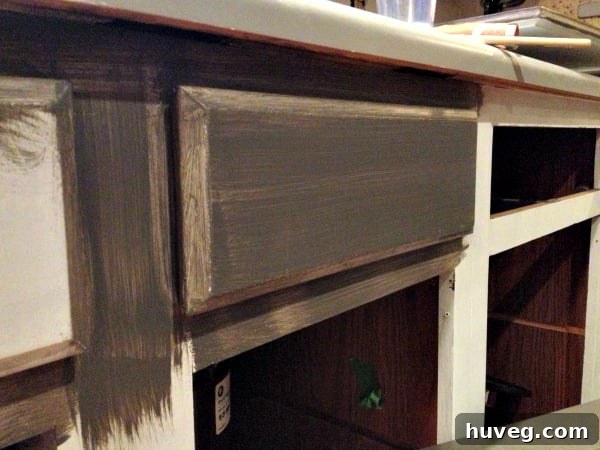
Choosing the right paint color and type is paramount for any successful cabinet transformation. For this project, I opted for Martha Stewart’s “Seal,” a sophisticated and versatile shade, applied using Benjamin Moore Advance paint with a satin finish. Benjamin Moore Advance is renowned in the DIY community for its exceptional durability and its ability to achieve a factory-like finish, making it a popular choice for high-traffic areas like kitchen cabinets. While the paint’s consistency was slightly thinner than my initial expectation, which contributed to some of the early streaking, it proved to be remarkably cooperative in layering. Each subsequent coat built beautifully upon the last, contributing to a rich, deep hue and a progressively smoother finish.
The Gritty Reality: Mess, Drying Times, and Sustained Motivation
Let’s be honest: at this midway point, the kitchen is far from a picturesque, magazine-ready space. It’s currently a symphony of organized chaos, a testament to a work-in-progress. Paint cans, brushes, drop cloths, and drying cabinet doors are strategically (or perhaps haphazardly) placed throughout the room. The aesthetic appeal is certainly a future promise, not a present reality. Compounding this visual disarray are the substantial drying times required between coats. With a recommended 16+ hours of curing time for Benjamin Moore Advance, the intervals are long enough to easily get sidetracked by other responsibilities – or, let’s be real, other distractions – which can test even the most dedicated DIYer’s patience.
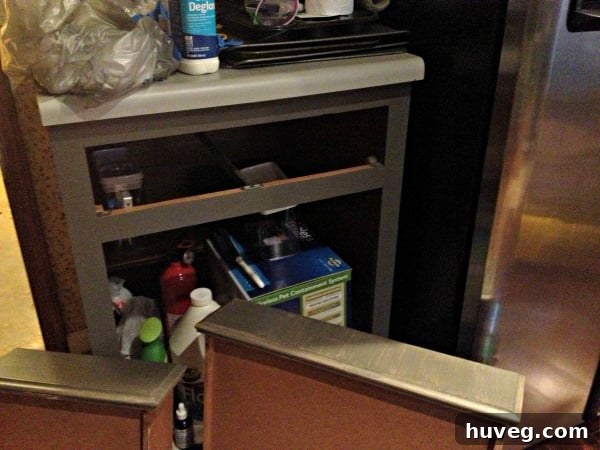
Despite the current mess and the often-slow pace, my unwavering conviction holds strong: the end result will be a monumental improvement over the tired, dated, and frankly, rather ugly oak cabinets that once dominated the space. The transformation, while gradual, is undeniable. I’ve already applied a second coat to the cabinet adjacent to the refrigerator, and the difference is truly exhilarating. What once looked like a greasy, dull surface is now beginning to gleam with a fresh, “shiny and new” appearance. The progress, even in these incremental stages, fuels my motivation and reinforces the belief that this challenging, yet rewarding, endeavor is absolutely worthwhile. The shift from a lackluster “um, did I just cover my cabinets in grease?” look to a visibly refreshed aesthetic is precisely why we embark on these home improvement journeys.
Tips for Tackling Your Own Cabinet Painting Project:
- Patience is Key: Understand that cabinet painting is a multi-day, sometimes multi-week, process. Rushing will only lead to disappointing results.
- Embrace Imperfection (Initially): Don’t panic after the first coat. Streaks and unevenness are often normal and will resolve with subsequent layers.
- Choose the Right Tools: Invest in high-quality brushes and rollers. For a truly smooth finish, consider a combination of both.
- Quality Paint Matters: While seemingly a higher upfront cost, premium paints like Benjamin Moore Advance offer superior durability, coverage, and a more professional finish in the long run.
- Ventilate Well: Ensure proper airflow during painting and drying times, especially with oil-based or high-VOC paints.
- Prepare Thoroughly: Don’t skip cleaning, sanding, and priming. These foundational steps are critical for paint adhesion and a lasting finish.
- Stay Organized: Label cabinet doors and hardware to ensure easy reassembly.
The Promise of a Brighter Future: Looking Ahead to the Final Reveal
Seeing the second coat on, glistening and starting to show the true depth of the “Seal” color, provides immense satisfaction. It’s a tangible representation of progress, a clear indicator that the effort, the mess, and the balancing act between academics and DIY are indeed paying off. Knowing that only one more coat stands between these cabinets and their final, fully transformed state is incredibly motivating. The vision of a bright, modern, and inviting kitchen is becoming clearer with each passing hour and every stroke of paint.
From here, things can only get better, right? The challenges encountered, the lessons learned about paint consistency, application techniques, and the sheer power of patience, are all contributing to a richer, more fulfilling DIY experience. Soon, the last coat will be applied, the hardware reattached, and the newly painted cabinets will stand as a testament to perseverance and the transformative power of a well-executed home project. Stay tuned for the final reveal – it’s going to be worth the wait!