New Messages

Effortless Mailbox Installation: A DIY Guide to Boosting Your Home’s Curb Appeal
Embarking on a home improvement project can sometimes feel daunting, yet many tasks are far simpler and more rewarding than anticipated. Case in point: installing a new mailbox. What initially seemed like a chore quickly transformed into a surprisingly straightforward endeavor, offering instant gratification and a noticeable upgrade to our home’s exterior. While I didn’t capture a full step-by-step tutorial (a regrettable oversight in the excitement of the moment!), I’m here to share insights, tips, and a detailed guide that makes this common household upgrade accessible to everyone.
Why Upgrade Your Mailbox? More Than Just a Box for Letters
A mailbox is more than just a functional receptacle for your mail; it’s a prominent feature that contributes significantly to your home’s curb appeal and overall aesthetic. An old, dilapidated, or poorly positioned mailbox can detract from even the most meticulously maintained property. Conversely, a stylish, well-maintained, and properly installed mailbox can instantly elevate your home’s exterior, offering a welcoming touch and even increasing its perceived value. Beyond aesthetics, upgrading can also mean better durability, improved functionality, and compliance with local postal regulations, ensuring your mail delivery remains smooth and uninterrupted.
Getting Started: Tools and Materials for Your Mailbox Project
Before you dive into the installation, gathering the right tools and materials will ensure a smooth and efficient process. Most of these items are readily available at any home improvement store and are common household tools. Here’s what you’ll likely need:
- Mailbox Kit: This typically includes the post, a ground stake, and sometimes the support arm for the mailbox itself.
- Mailbox: Choose one that complements your home’s style and meets your capacity needs.
- Sledgehammer: Essential for driving the ground stake into the earth.
- Post-hole Digger (Optional but Recommended): For more challenging soil or if you prefer a deeper, more secure foundation without relying solely on a stake.
- Level: Crucial for ensuring your post stands perfectly straight.
- Measuring Tape: For accurate placement and height adherence (check local postal regulations).
- Drill and Screws: To attach the mailbox to its support arm and the support arm to the post.
- Adjustable Wrench or Socket Set: If your mailbox kit uses nuts and bolts.
- Safety Glasses and Gloves: Always prioritize safety when working with tools.
- Paint, Primer, and Brushes (Optional): If you plan to customize the post’s color to match your home’s trim, as we did.
- Utility Marker/Spray Paint: To mark the installation spot.
- “Call Before You Dig” Service (e.g., 811 in the US): Absolutely critical to avoid underground utility lines.
The Installation Process: Simpler Than You Think
The core process of installing a standard post-mount mailbox is remarkably straightforward. It’s a project that often takes just a few hours from start to finish, yielding immediate visual results.
Step 1: Planning and Site Preparation
The first and most important step is choosing the correct location. In the United States, the U.S. Postal Service (USPS) has specific guidelines for mailbox placement:
- The bottom of the mailbox opening should be 41 to 45 inches from the road surface.
- The mailbox should be set back 6 to 8 inches from the curb or edge of the road.
- Ensure your chosen spot doesn’t interfere with pedestrian traffic, driveways, or other obstructions.
Before you dig or pound, contact your local utility services (e.g., 811 in the US) to mark any underground lines (water, gas, electric, communication cables). This step is non-negotiable for your safety and to prevent costly damage. Once the area is clear and marked, you can proceed with confidence.
Step 2: Securing the Mailbox Post
With your location confirmed and utilities marked, it’s time to install the ground stake. Many modern mailbox kits come with a robust ground stake designed for easy installation.
- Position the Stake: Place the stake precisely where you want the mailbox post to stand.
- Pound it In: Using a sledgehammer, vigorously pound the stake into the ground until only the top portion, designed to receive the post, is exposed. Ensure the stake is as plumb (straight) as possible during this process. A level can be helpful to check your progress as you go. For extremely hard soil, you might need to pre-dig a pilot hole with an auger or post-hole digger to get started, or even pour a small concrete footing for maximum stability, though often this isn’t necessary for stake-based kits.
- Attach the Post: Once the stake is firmly in place, take the mailbox post. Most kits feature a pre-drilled hole or a hollow cavity at the bottom of the post designed to slide directly over the part of the stake protruding from the ground. Gently lower the post onto the stake, ensuring it seats completely.
- Check for Level: Use your level to confirm that the post is perfectly upright. Make minor adjustments if needed by carefully shifting the base or stake. Boom, the main post is up and stable!
Step 3: Attaching the Mailbox and Support
With the main post firmly in place, the final step involves securing the mailbox itself.
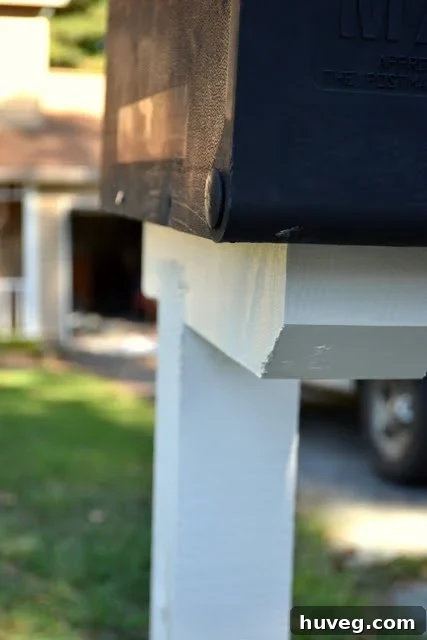
- Install Support Pieces: Many mailbox posts come with separate support arms or brackets that screw into the top portion of the post. Align these pieces and securely fasten them with the provided screws or hardware. Ensure they are level and properly positioned to support the mailbox evenly.
- Mount the Mailbox: Carefully place your mailbox onto the support arms. Most mailboxes have pre-drilled holes in their base for easy attachment. Using a drill and appropriate screws, fasten the mailbox to the support. It’s often best to start with two screws, check alignment, and then add the remaining ones.
- Test Functionality: After securing the mailbox, immediately test the door and flag (if applicable). Open the door fully to ensure there are no obstructions.
Troubleshooting: A Quick Fix for a Common Snag
Even in the simplest projects, minor adjustments are sometimes necessary. During my installation, I encountered a small issue that highlights the importance of testing functionality immediately after assembly. I had started to screw the mailbox too close to the underlying support, which prevented the door’s hinge from opening all the way. A quick adjustment—moving the box an inch forward on the support arms—resolved the issue completely. This small correction prevented future frustration and ensured smooth operation. Always double-check hinge clearances, flag movement, and overall stability before considering the project complete.
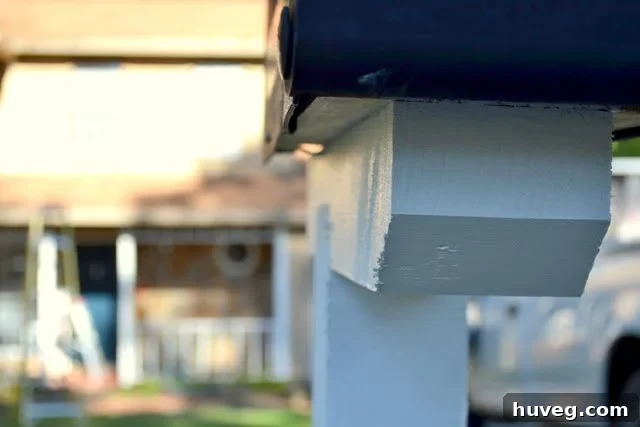
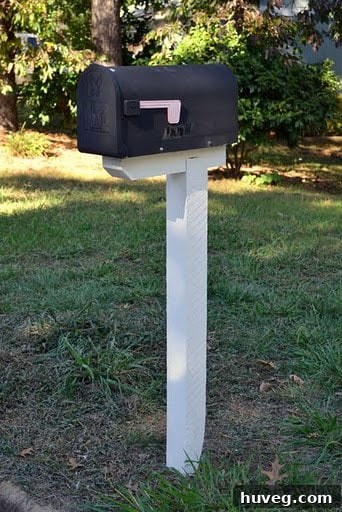
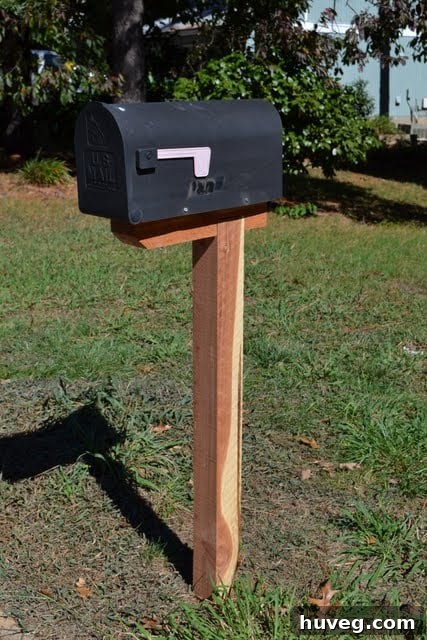
Originally, the post and support components were natural cedar, showcasing their beautiful grain and rustic charm. While appealing, I envisioned a look that would seamlessly integrate with our home’s updated exterior. Since the installation was so straightforward, I opted to paint the cedar components to perfectly match the trim of our newly refreshed house colors. This simple step transformed the mailbox from a standalone feature into a cohesive element of our home’s design, significantly enhancing its curb appeal.
When painting, remember to:
- Clean the Surface: Ensure the cedar is free of dirt, dust, and debris.
- Prime: Apply a good quality exterior primer, especially important for cedar, to ensure paint adhesion and durability.
- Paint: Use a high-quality exterior paint designed to withstand the elements. Multiple thin coats are better than one thick coat.
- Allow for Drying: Follow the manufacturer’s recommendations for drying and curing times before exposing the painted surface to full use or harsh weather.
Beyond the Box: Landscaping for Maximum Impact
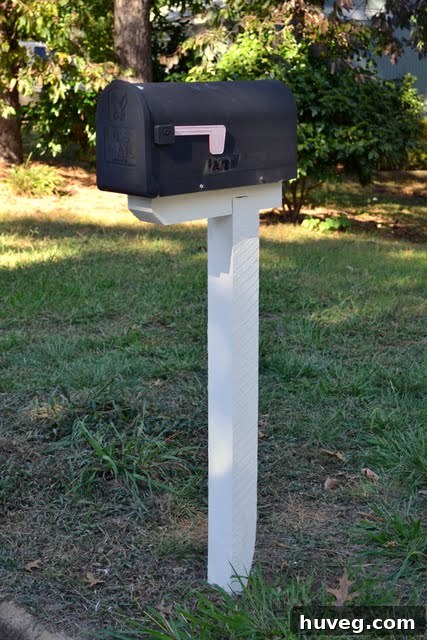
A newly installed and beautifully painted mailbox is a fantastic start, but don’t stop there! The area around your mailbox offers a wonderful opportunity to further enhance your home’s curb appeal through landscaping. In our case, the new mailbox was positioned a few feet over from its original spot to make mowing easier. This strategic relocation, while practical, left behind the remnants of the old post’s foundation – a small collection of bricks.
My next project involves carefully removing these old bricks and then digging a new garden bed around the base of the mailbox. This small landscaping effort will introduce a burst of color and texture to the area, creating a focal point that draws the eye and adds to the overall charm of our property. Consider planting hardy, low-maintenance flowers, small shrubs, or ground cover that thrive in your local climate. Adding decorative stones, a small border, or even solar-powered path lights can further elevate the aesthetic. A well-designed mailbox garden not only looks appealing but also helps define your property lines and welcomes visitors.
The Finishing Touch: A Cohesive Home Exterior
As you can see, each small improvement contributes to a larger, more cohesive vision for our home. From a fresh coat of paint inside to carefully chosen exterior upgrades, every decision builds towards a unified aesthetic that we love. The new mailbox, with its fresh paint and anticipated garden bed, is more than just a place for letters; it’s a statement piece that proudly announces our home’s refreshed character. These thoughtful touches truly bring the house together, creating a sense of completeness and inviting charm.