Inside the Dining Room: The First Inspection

Every homeowner dreams of a space that feels truly complete, where every detail contributes to a cohesive and inviting atmosphere. For me, that dream extends to every window in my house. My ultimate vision is to have beautiful, architectural casing surrounding each one, transforming bare openings into elegant features. This ambitious journey begins on the lower floor, and more specifically, within the confines of my dining room. While the practical reason for starting here might have been the camera’s proximity – a testament to the blog’s often spontaneous nature – the underlying motivation is a deep-seated desire to enhance my home’s character and curb appeal, one window at a time.
Unveiling the Power of Window Casing: Why This Upgrade Matters
Most homes feature trim, or “casing,” around their doorways, providing a finished look that frames these architectural elements beautifully. However, many houses, including mine, often neglect their windows, leaving them looking stark, unfinished, and frankly, a bit out of place. This discrepancy might not bother everyone, but for me, it creates an unsettling visual imbalance. It’s akin to a house having lost its “eyebrows” – an essential defining feature that, once missing, makes everything else seem a little off-kilter. You might not immediately pinpoint why something feels amiss, but the absence of window trim undoubtedly leaves a void.
The impact of adding window casing is truly remarkable, often delivering a high-end aesthetic without requiring an exorbitant budget. Imagine a space instantly appearing brighter, more polished, and significantly more inviting. Take, for instance, the transformative example from Pretty Handy Girl, where a simple addition of trim completely revitalizes a window opening:
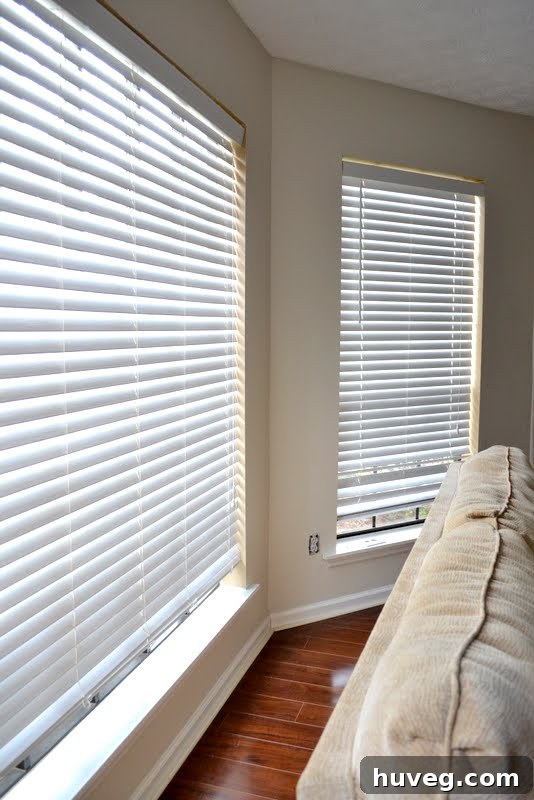
Notice how the room gains an immediate sense of elegance and completion. The light seems to diffuse differently, and the window itself becomes a focal point rather than just an opening. This visual upgrade is precisely the kind of subtle yet significant enhancement I envision for my dining room and, eventually, every window in my home. Adding trim isn’t just about covering gaps; it’s about introducing architectural integrity, enhancing visual depth, and elevating the overall ambiance of a space. It’s an investment in your home’s aesthetic value that offers a substantial return in perceived luxury and comfort.
The Dining Room’s Debut: Tackling the First Window Trim Project
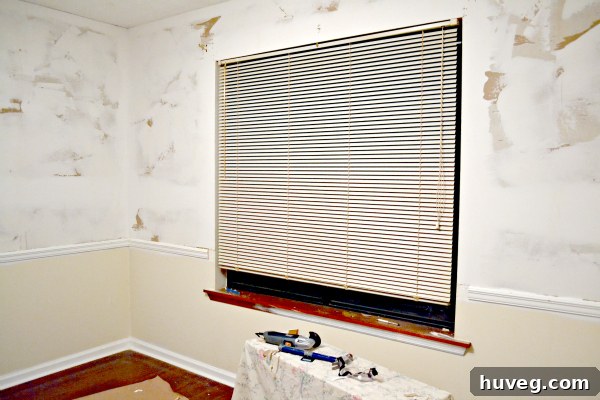
My dining room, with its currently unpainted walls and somewhat forlorn appearance, presented the perfect canvas for this initial window casing project. As I surveyed the room, planning how the new trim would integrate, a critical detail emerged: the existing chair rail. This decorative molding, while charming in its own right, posed an immediate challenge. Its placement meant that the new window trim, designed to elegantly frame the large window, wouldn’t sit flush or properly integrate without some modification to the chair rail itself.
Identifying this obstruction led to a straightforward solution. I meticulously marked off the precise area of the chair rail that would need to be removed to accommodate the new window casing. The trim I selected is intentionally simple, chosen to complement the architectural style of my neighborhood and to seamlessly match the existing trim around the doorways. This ensures a harmonious look throughout the house, avoiding any jarring stylistic inconsistencies. The beauty of such a seemingly small detail lies in its ability to contribute to a larger, unified design scheme, making the entire house feel more coherent and thoughtfully designed.
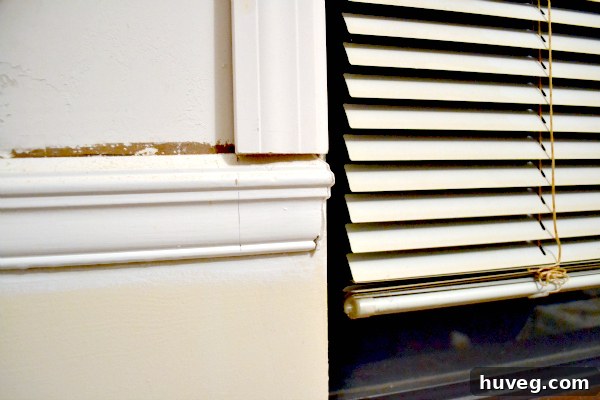
This initial planning phase, though seemingly minor, is crucial for any successful home renovation project. It allows you to anticipate potential roadblocks and devise elegant solutions before tools even come into play. For this specific task, a careful assessment of how the new trim would interact with existing architectural elements, like the chair rail, saved a considerable amount of time and effort in the long run, preventing potential reworks or compromises in the final aesthetic.
Precision and Preparation: Removing the Chair Rail Section
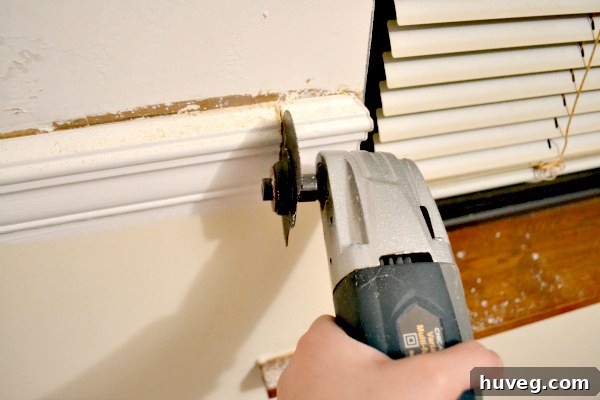
With the section of chair rail clearly marked, the next step involved its careful removal. To achieve a clean cut and avoid unnecessary damage to the surrounding molding, I opted for an oscillating tool. This versatile power tool, known for its ability to make precise cuts in tight spaces and against existing surfaces, was ideal for separating the unwanted piece of chair rail from the rest of the molding without having to dismantle, cut, and then re-install the entire length of the chair rail. The oscillating tool allowed for a controlled, surgical cut, minimizing disruption and ensuring that the remaining chair rail stayed firmly in place.
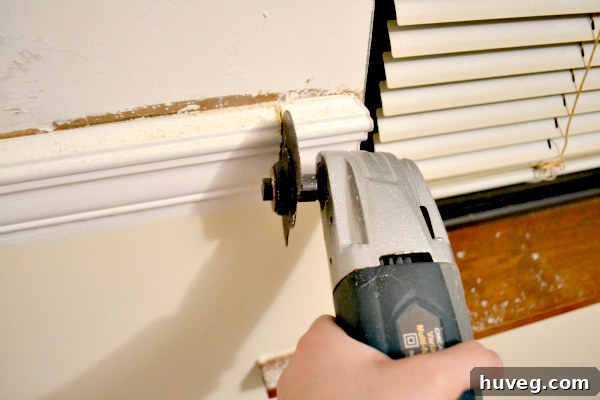
Once the cut was made, a few strategic blows with a hammer and the careful application of a small pry bar were all it took to gently coax the severed piece of chair rail away from the wall. The goal here was not brute force, but rather a methodical and controlled prying motion to prevent any damage to the drywall or the adjacent trim. Patience is key in these moments, ensuring that the wall surface remains as intact as possible, which in turn reduces the amount of patch-up and sanding required later.
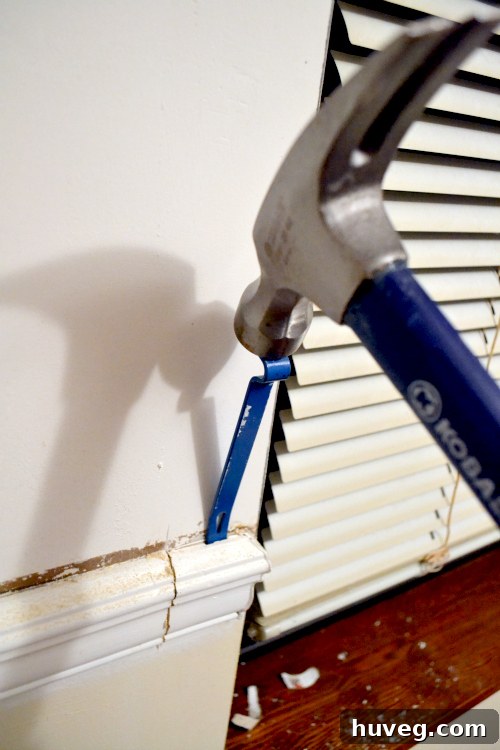
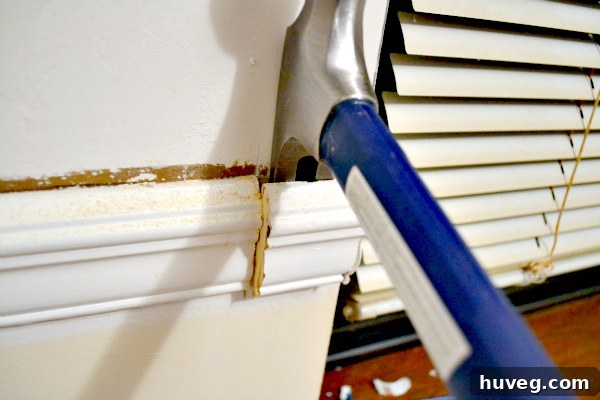
This careful removal process is a testament to the fact that effective home improvement often lies in thoughtful preparation and the use of the right tools. By meticulously addressing the chair rail, I’ve created a perfectly prepared space for the new window casing, ensuring a seamless and professional finish. This step, while seemingly minor, lays the groundwork for the successful integration of the new trim, making the subsequent installation process significantly smoother and more efficient.
The Vision Takes Shape: Dry Fitting and Future Steps
With the obstructing section of chair rail successfully removed, it was time for the moment of truth: the dry fit. This crucial step involves temporarily positioning the new window casing pieces around the window opening without permanent attachment. It allows for a visual assessment of how the trim will look, confirms that all pieces fit correctly, and identifies any last-minute adjustments that might be needed before nailing them into place. As anticipated, the new window casing pieces settled into their designated spots quite nicely, perfectly framing the window and instantly elevating the room’s aesthetic. The transformation, even at this preliminary stage, was palpable. The window immediately looked more substantial, more refined, and significantly more integrated into the room’s overall design.
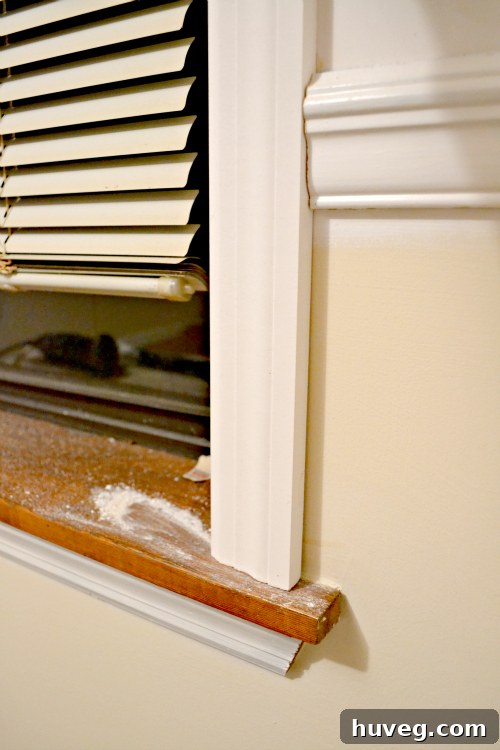
While the new pieces aren’t yet nailed securely, primarily because some minor drywall sanding is still required around the window opening, and I’m awaiting a new helper tool to arrive, the hard work of preparation is largely complete. Having all these pieces meticulously prepped and dry-fitted in advance significantly streamlines the entire project, ensuring that once the final touches of sanding are done and the new tool is in hand, the room can come together quickly and efficiently. This methodical approach not only saves time but also reduces potential stress, making the DIY process more enjoyable and manageable.
On a related note, one eyesore that will soon be a distant memory is the set of blinds currently adorning this dining room window. These blinds are a relic, original to the day I moved into this house. Their days are numbered, and they will soon be replaced, further contributing to the fresh, updated look of the dining room. This minor detail is part of a larger plan to meticulously update every element of the room, ensuring that every component contributes positively to the overall aesthetic.
A House-Wide Transformation: The Long-Term Vision for Trim
There’s a common saying among home renovators that once you start adding trim or molding, it can ignite an unstoppable urge to incorporate it everywhere. Fortunately, in my case, this “urge” is entirely justified, as my house boasts an abundance of bare windows, practically begging for the architectural detail that casing provides. This dining room project is merely the first step in a much grander, house-wide transformation. The satisfaction derived from seeing the immediate improvement in the dining room only fuels the motivation to extend this elegant upgrade throughout the entire home.
Each window, currently lacking its defining frame, represents an opportunity to enhance the home’s character, increase its perceived value, and create a more cohesive and sophisticated interior. From the bedrooms to the living areas, the addition of thoughtful window trim will tie all spaces together, creating a sense of unity and refined craftsmanship. This long-term project, while extensive, promises immense rewards in terms of aesthetic appeal and the personal satisfaction of making my house truly feel like a finished, cherished home. There’s no need for an intervention yet; just a multitude of exciting projects ahead. Onward to a beautifully trimmed future!