How to Remove Paint From Windows Without Damage

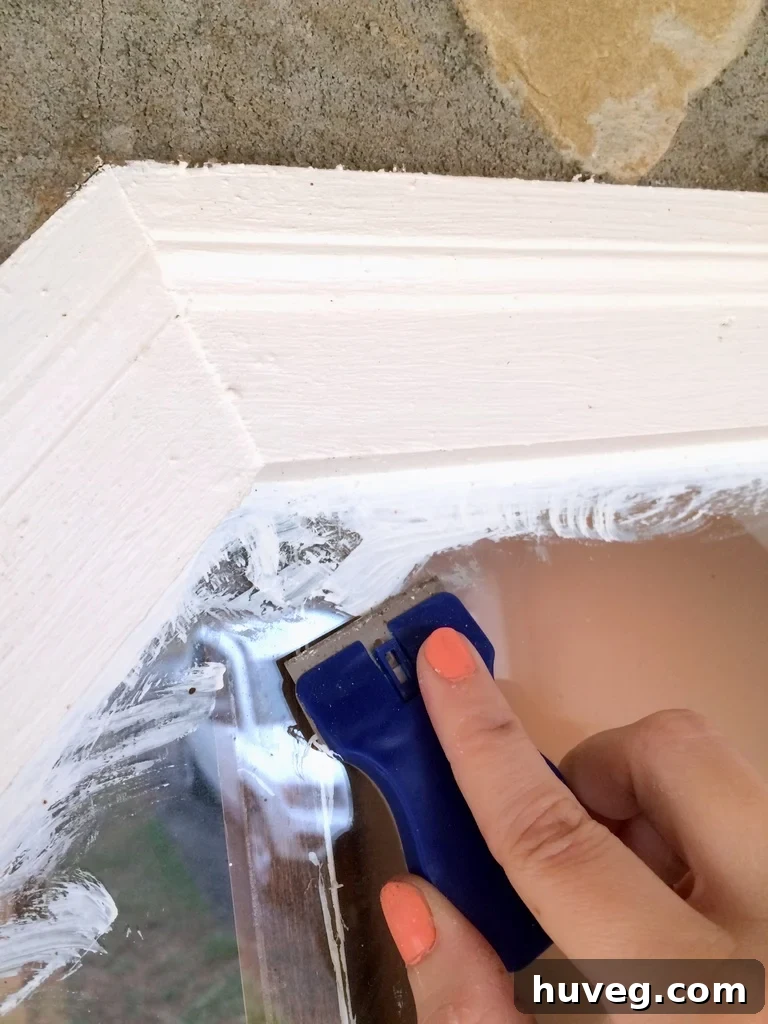
Transforming Windows: The Secret to Pristine Glass and Effortless Paint Removal
The arrival of spring often brings a renewed sense of energy and motivation, especially after a period of less-than-ideal weather. Here in Atlanta, recent weeks have been particularly mucky and overcast, turning even the most enthusiastic DIYer into a couch potato. The lingering threat of rain, coupled with the general drabness of persistent grey skies, has a curious way of fostering procrastination. For many, myself included, a dreary forecast is an open invitation to embrace laziness and postpone those nagging home improvement tasks.
However, with the much-anticipated return of sunshine this past weekend – a glorious harbinger of true spring – a powerful sense of obligation set in. The vibrant light piercing through the clouds served as a compelling call to action, reminding me that even a small step forward is infinitely better than standing still. This simple realization, that something is better than nothing, often acts as the perfect catalyst to break free from inertia and kickstart productivity. It’s a mental trick that works wonders: “just one mile,” “just one cup of coffee,” or in this case, “just one small project.” Once that initial barrier is overcome, and I step out into the invigorating sunlight, ideas for what to tackle next often come flooding in, transforming hesitation into an overwhelming wave of inspiration.
Embracing Spring: Tackling Those Neglected “Slacker Projects”
Even with the promise of sun, Saturday still held a touch of that “blah” feeling, perfect for easing into some long-overdue “slacker projects.” These are the minor but impactful tasks we often avoid for what feels like weeks months years. You know the type: the final, seemingly insignificant touches that elevate a room from good to great, like tidying up paint drips around a newly painted window or applying that last bead of caulk to trim. These details, while small, make an enormous difference in the overall aesthetic and feel of a space, yet they constantly get pushed to the bottom of the priority list.
My first target was the laundry room window – a modest but highly satisfying starting point. I tackled both the interior and exterior, meticulously cleaning up edges and ensuring a crisp, professional finish. While I’d love to give you a full tour of the laundry room right now, it’s currently a hub of multiple ongoing projects. Rest assured, a comprehensive update with all the exciting transformations will be shared with you very soon!
In the spirit of demystifying home improvement, I wanted to shine a spotlight on a tool that, while incredibly common among seasoned DIYers, might be a revelation for those navigating the vast and sometimes overwhelming world of do-it-yourself projects for the first time. For individuals who, much like my past self, have pieced together their DIY knowledge through a random and meandering path of online searches and trial-and-error, this simple gadget is a game-changer.
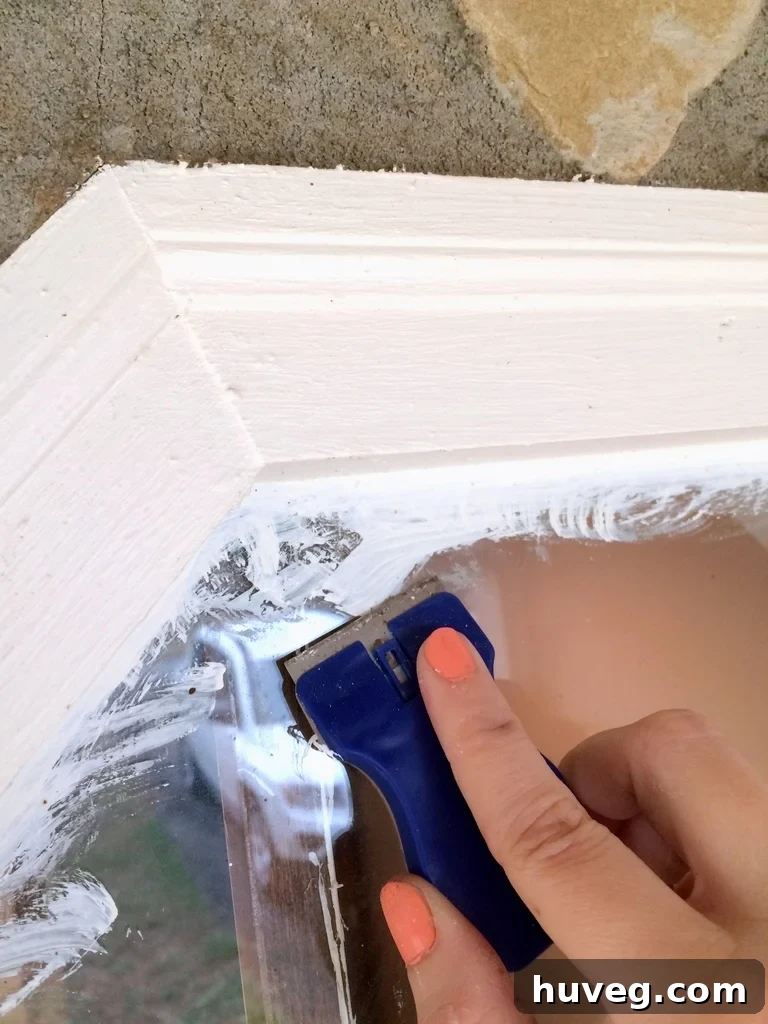
Discovering the Humble Hero: The Mini Glass Scraper
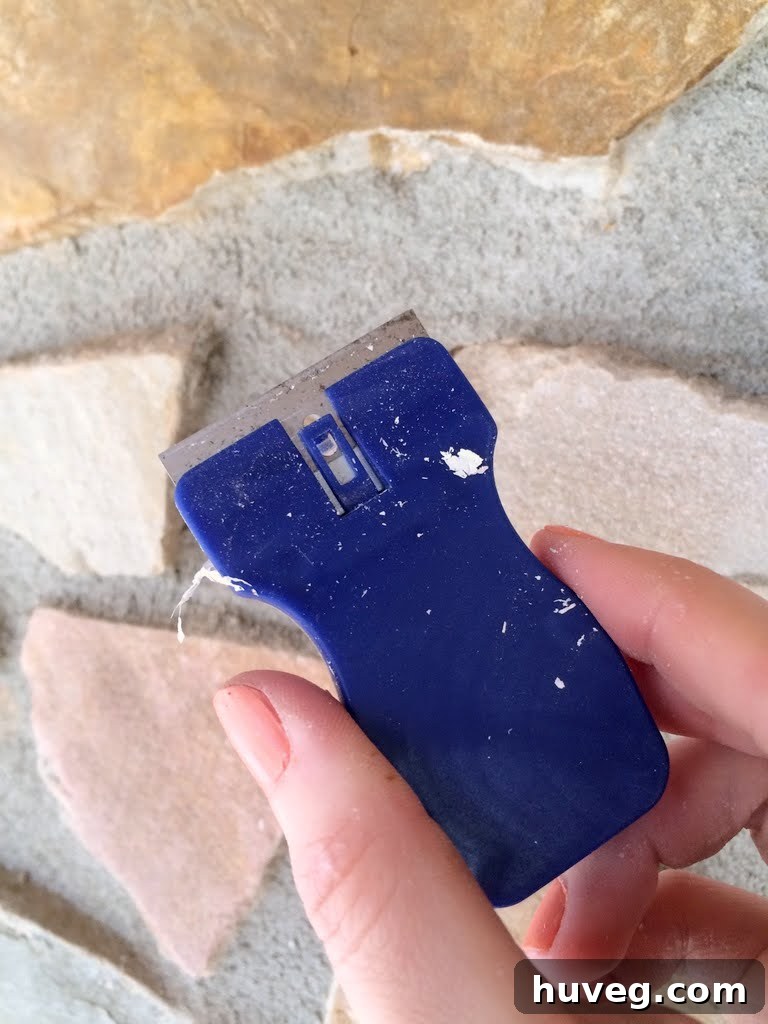
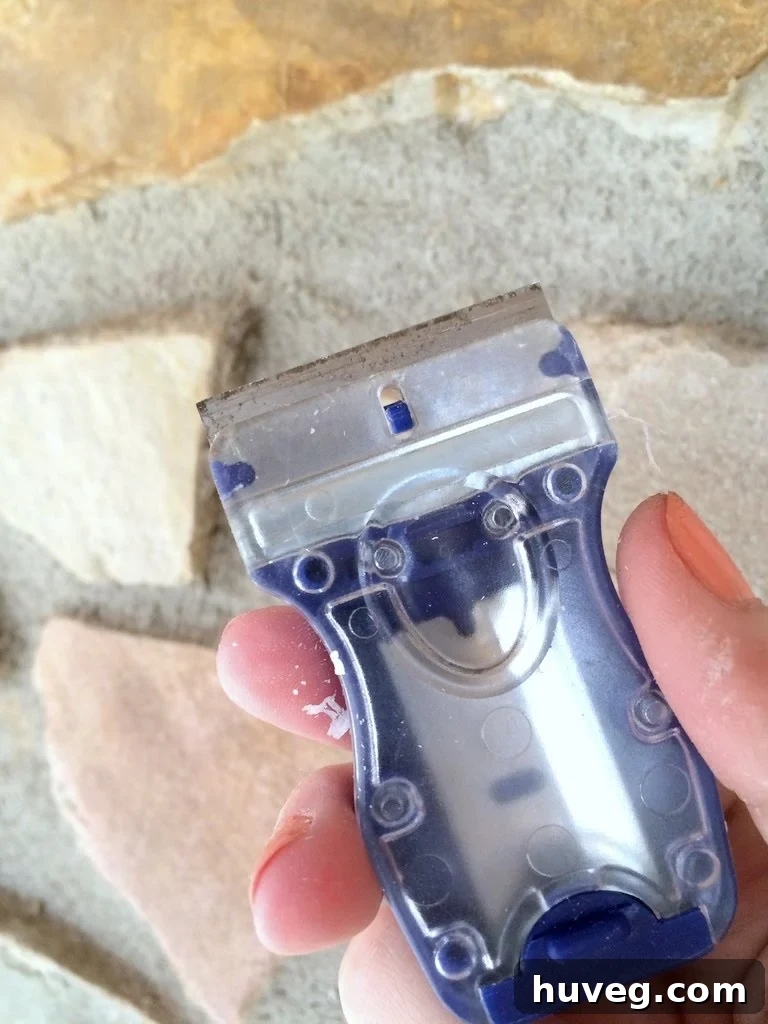
Behold this incredibly nifty, yet often overlooked, tool: the mini glass scraper. At its core, it’s a wonderfully straightforward device: a comfortable handle equipped with a secure grip, designed to firmly hold a single-edge razor blade at its end. Many variations even feature a clever compartment within the handle itself, providing convenient storage for extra blades, allowing for quick and easy replacements when the old one dulls. What makes this tool truly remarkable, beyond its sheer effectiveness, is its incredibly low cost. These indispensable little helpers are so inexpensive that they tend to mysteriously accumulate in your toolbox or utility drawer, often appearing without any memory of ever having purchased them. I, for one, am fairly certain I’ve acquired at least two over the years through this spontaneous generation method!
This simple razor blade scraper is purpose-built for tackling a variety of tasks on smooth, hard surfaces like glass, tile, or countertops. It excels at meticulously removing paint from windows, scraping off old caulk, lifting stubborn adhesives, or even cleaning dried spills with precision and minimal effort. Its compact size and razor-sharp edge allow for incredible accuracy, making it an indispensable asset for achieving professional-looking finishes on detailed projects. For anyone aiming for spotless windows after a painting project, or needing to clean up residue without damaging the underlying surface, this glass cleaning tool is an absolute must-have.
Why This Humble Tool Deserves Its Own Spotlight
It’s true that many seasoned DIY enthusiasts, myself included, might consider a tool as basic as a glass scraper too fundamental to warrant its own dedicated article. We’re often drawn to the complex, the shiny, the power tools that promise grand transformations. However, I’ve learned firsthand the value of revisiting the basics. I recall a fantastic instance where the “Badass DIYer” herself, Pretty Handy Girl, crafted an entire post explaining how to use a caulk gun. Despite having made “caulk jokes” since the inception of this blog (five years ago, come April 1st!), I genuinely gleaned new insights and techniques from her tutorial. It served as a powerful reminder that even the most seemingly simple tools and techniques often hold nuances that can significantly improve our craftsmanship and efficiency.
Therefore, for the countless DIYers who might not yet be acquainted with this magnificent little device, I sincerely hope this introduction brings you immense joy and efficiency. Imagine a world where you no longer need to painstakingly tape off your window panes every time you paint. This razor scraper for windows makes cleanup so incredibly easy, precise, and fast that taping becomes almost entirely unnecessary. Three cheers for tools that are not only cheap and readily available but also make life significantly easier, right?
Ha. I know. I couldn’t help myself. But seriously, the time and effort saved by using this simple tool are profound, allowing you to achieve clean lines and a professional finish with minimal fuss.
Mastering the Art of Paint Removal: Techniques and Safety
While the mini glass scraper is an exceptionally effective tool for removing paint from glass and other smooth surfaces, it’s crucial to remember that it houses a sharp razor blade. Therefore, handling it requires the same level of caution and common sense you’d apply to a pair of sharp scissors or any other cutting instrument. Always prioritize safety: avoid distractions, keep fingers clear of the blade’s path, and ensure it’s stored securely away from children and pets. When not in use, a retractable scraper or one with a protective cover is highly recommended. Discard dull blades safely, wrapping them to prevent accidental cuts.
Essential Tips for Effective and Safe Scraping:
- Let the Paint Dry Completely: Unlike using painter’s tape, which is best removed when paint is still wet to prevent peeling, when using a glass scraper, you absolutely want the paint to be thoroughly dry. Attempting to scrape wet or tacky paint will only result in smearing and a far messier job. Dry paint, on the other hand, comes off cleanly in satisfying curls or sheets.
- Consider Wetting for Larger Areas: While I rarely encounter this issue when exclusively removing paint from windows, for significantly larger surface areas or stubborn, thick paint drips, lightly misting the surface with water can sometimes aid in the paint removal process. The moisture can help to soften the bond slightly, allowing the blade to glide more easily. However, always test a small, inconspicuous area first to ensure it doesn’t cause any unforeseen issues.
- Blade Sharpness is Key: An old, dull blade is your enemy. Not only will it make the scraping process far more difficult and require excessive force, but it significantly increases the risk of scratching the glass surface. A sharp blade, used correctly, will glide smoothly and precisely, lifting paint without marring the surface. Trust your judgment: if the blade isn’t cutting cleanly or feels like it’s dragging, it’s time for a replacement. A fresh blade makes all the difference in achieving a flawless finish.
- Opt for a Ret retractable Scraper: If you’re in the market for a new glass scraper, I strongly recommend choosing one with a retractable blade feature. These models offer enhanced safety during storage and handling, as the sharp edge can be safely stowed away when not in use. Given that retractable versions are often comparable in cost to fixed-blade models, it’s a wise investment for both convenience and accident prevention.
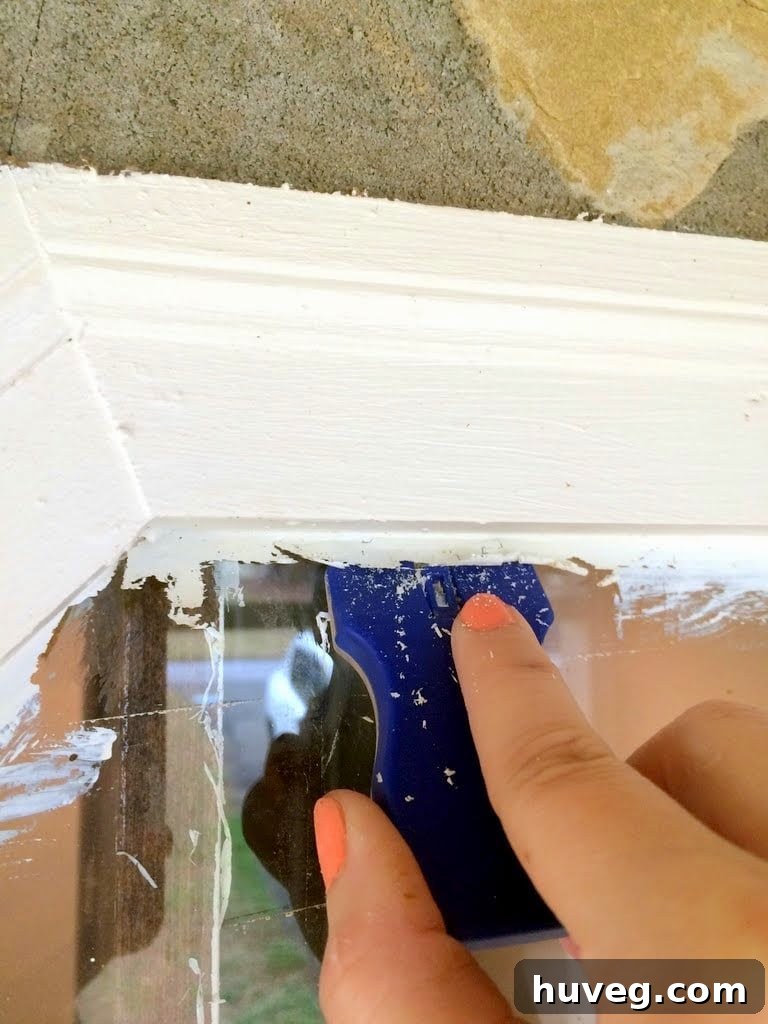
- Maintain the Optimal Angle: This is arguably the most crucial technique for effective paint removal. When scraping, always position the blade at a shallow 30 to 45-degree angle relative to the glass surface. This specific angle allows the blade to effectively get under the dried paint, lifting it cleanly without digging into the glass. Think of it less as chipping and more as gliding beneath the paint film with short, controlled, and quick strokes. You’ll notice the paint begins to curl over the blade, coming off in satisfying sheet-like strips rather than fragmented pieces. This technique minimizes effort and maximizes efficiency, leaving your glass spotless.
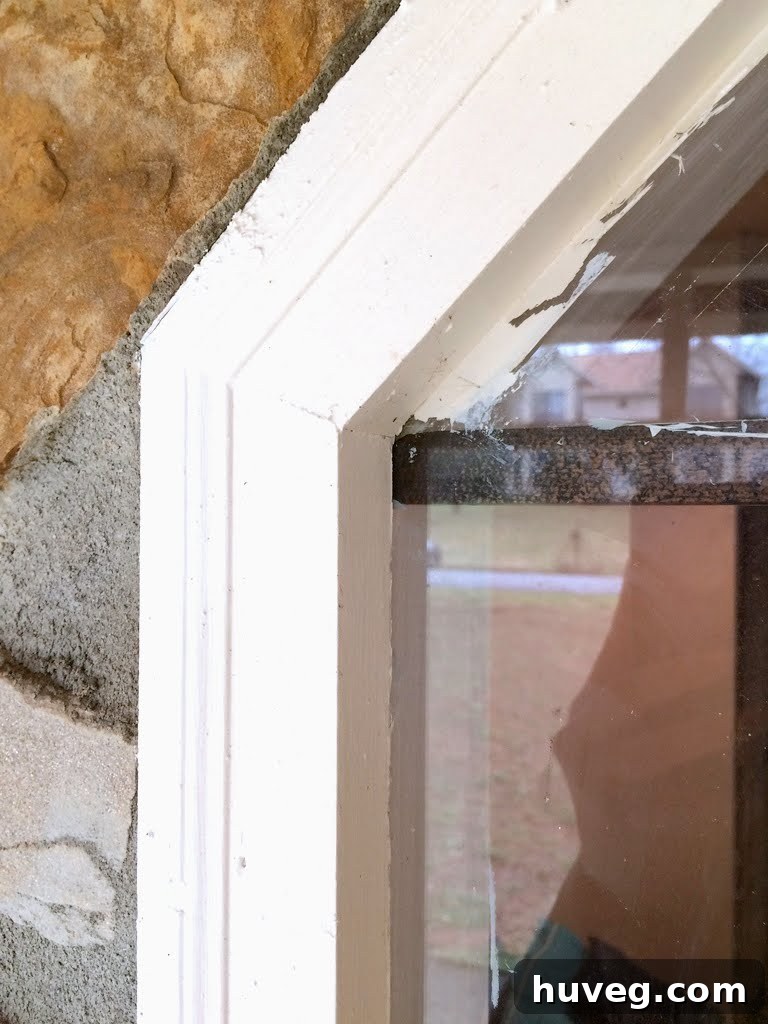
Advanced Scraping Techniques for a Flawless Finish
To truly master the art of window paint removal, visualize the process as an elegant dance between blade and surface. Instead of aggressively chipping away at the paint, aim to gently guide the razor blade *under* it. Employ a series of short, quick, and confident strokes. As you apply steady, even pressure at that optimal 30-45 degree angle, you’ll observe the dried paint gracefully curling up and over the blade, detaching in more of a cohesive sheet rather than fragmenting into messy flakes. This method not only speeds up the process but also makes cleanup significantly easier, as you’re left with larger pieces of paint debris.
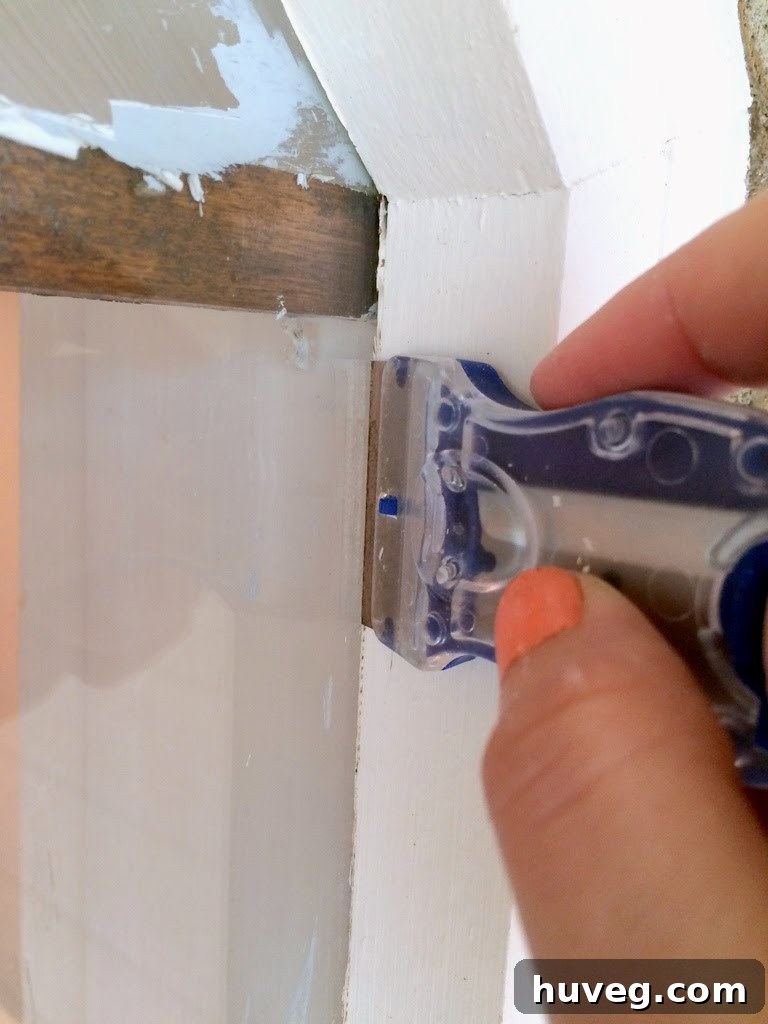
Once the majority of the paint has been removed from the main surface of the glass, you might notice some stubborn, thin lines or small remnants adhering tightly along the very edges where the glass meets the window frame or caulk. This is where a slight adjustment in technique comes into play for precision cleanup. For these final touches, carefully pivot the scraper to use the blade at a more acute, almost 90-degree angle. This allows you to use the very corner or edge of the blade to precisely slice through these remaining paint lines, ensuring they come off cleanly and crisply. This focused, perpendicular approach is perfect for achieving those impeccably sharp lines that signify a truly professional finish on your window panes.
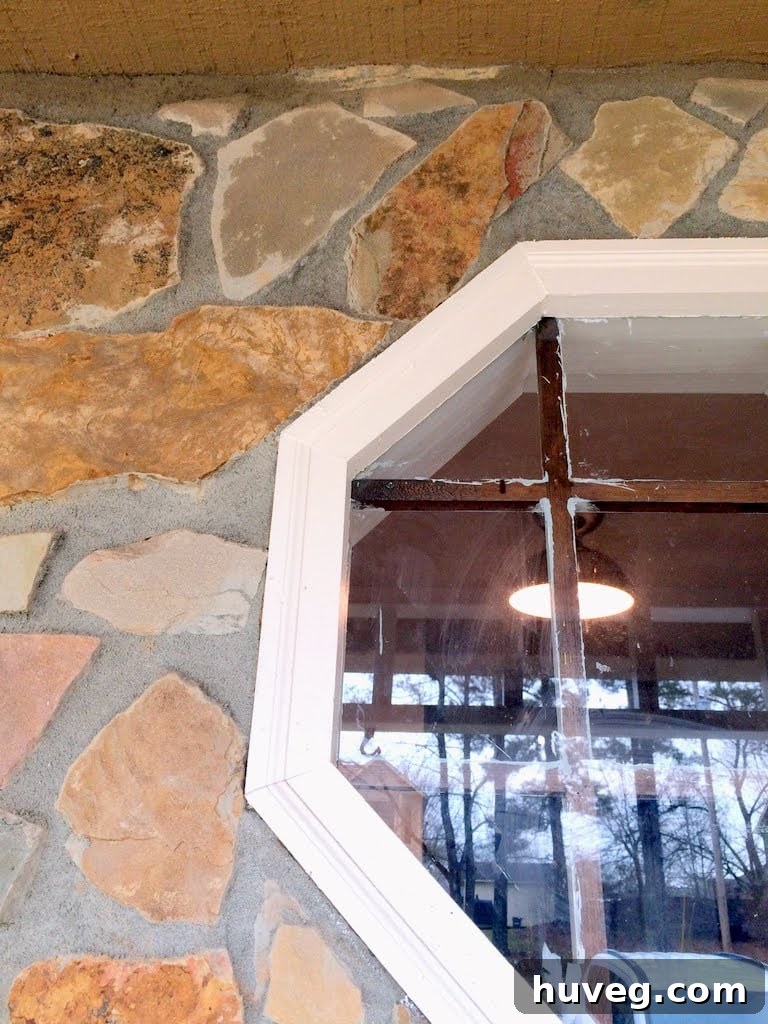
Conclusion: Embrace Your “Slacker Projects”
And there you have it – a simple yet powerful technique for achieving perfectly clean, paint-free windows with minimal effort, all thanks to the humble mini glass scraper. This often-underestimated tool proves that sometimes, the most effective solutions in DIY are also the simplest and most affordable. By embracing these small, often-neglected “slacker projects,” we not only improve the aesthetics of our homes but also cultivate a sense of accomplishment that fuels further creativity and motivation.
The satisfaction of seeing a window transform from paint-splattered to sparkling clean is immeasurable, and it’s these small victories that make the entire DIY journey so rewarding. There’s still plenty more work from the weekend to share with you in the coming days, but for now, I hope this guide inspires you to tackle those tiny tasks that make a huge difference.
What “slacker projects” have you been putting off lately? Perhaps a little window cleanup or a fresh bead of caulk? Share your neglected tasks in the comments below – you might just inspire someone else to finally pick up that scraper!