The One-Car Sanctuary

Transforming a Tiny Space: My One-Car Garage Workshop Journey
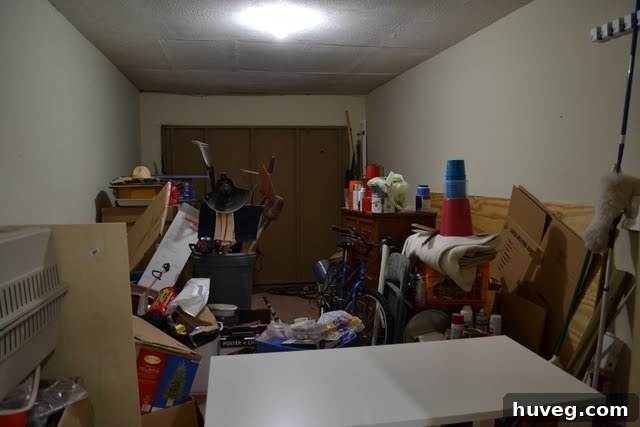
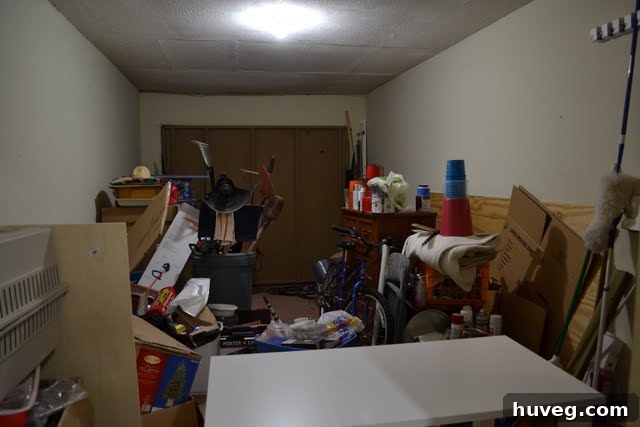
Every passionate DIY enthusiast dreams of a dedicated workshop, a sanctuary where tools and creativity converge. For many of us, this dream often starts with a humble space. In my case, it’s a single-car garage – a structure that, despite its name, has never once sheltered a vehicle since I moved into this house. And honestly, it’s unlikely to ever fulfill its original automotive purpose. Instead, it has evolved into something far more personal and productive: my very own, albeit tiny, workshop.
This journey of transformation, turning a forgotten corner into a bustling hub of creation, is a familiar one for many homeowners. It’s about making do with what you have, discovering new passions, and constantly adapting your environment to suit your evolving needs. My garage, with its limited square footage, has become a testament to the idea that big projects can indeed emerge from small beginnings. It’s where ideas take shape, wood gets cut, and dreams are slowly, but surely, built.
The Catalyst: Building the Study-O Desk and Unveiling New Realities
The latest venture that truly brought my workshop’s potential and limitations into sharp focus was the ambitious project of building the study-o desk. This wasn’t just any desk; it was a custom piece designed to fit a specific space, demanding precision and a dedicated workspace. As I immersed myself in cutting, sanding, and assembling, several undeniable truths about my current setup became glaringly apparent. These weren’t merely observations; they were profound realizations that are now shaping my future DIY aspirations and priorities.
Unveiling the Realizations: Small Space, Big Dreams
Working on the study-o desk unveiled a series of insights that have prompted a reevaluation of my approach to DIY projects and my workspace itself. These “aha!” moments have clarified what’s truly needed to elevate my craft and make the entire process more enjoyable and efficient.
The Size Squeeze: Navigating a Compact Workshop
My initial thought, one that echoed through the garage walls multiple times, was: “Wow, this one-car garage is really tiny.” This wasn’t just a fleeting thought but a persistent reality. While it’s technically a one-car garage, its actual usable space feels considerably smaller once you account for stored items, tools, and the sheer footprint of an active project. Maneuvering large sheets of plywood or long lumber pieces became a delicate dance, often requiring me to open the garage door just to accommodate a cut. The limited floor space means constantly shifting tools, materials, and even myself to make room for the next step. Every inch is precious, and optimizing this confined area has become an ongoing puzzle. It’s a challenge that forces creativity in organization, demanding solutions like vertical storage, collapsible work surfaces, and mobile tool carts to make the most of what’s available.
For anyone with a small workshop, the struggle is real. The desire to spread out, to have multiple stations for different tasks, feels like an unattainable luxury. Instead, it’s about meticulous planning: where to store raw materials, where to cut, where to assemble, and where to finish. Each stage of a project often means a complete reconfiguration of the space, turning a simple task into a multi-step logistical exercise. But despite the constraints, there’s a perverse satisfaction in making a small space work, in proving that size isn’t everything when it comes to crafting something beautiful and functional.
The Quest for More: Why Space Matters for Creativity
Following closely on the heels of the size realization was the undeniable craving for expansion: “I need more space to do the things I enjoy.” This isn’t just about physical elbow room; it’s about mental breathing room. A cramped workspace can stifle creativity and make complex projects feel even more daunting. More space would mean the ability to set up dedicated stations for different tasks – a cutting area, an assembly zone, a finishing bench – reducing the need for constant setup and breakdown. It would allow for safer operation of tools, less risk of damaging materials, and a more organized environment where everything has its place.
Beyond practicality, having more space would transform the workshop from a functional necessity into a genuine sanctuary. It would become a place where I could leave a project mid-progress without having to clear everything away for the next task or for simply walking through. This freedom to spread out, to experiment, and to fully immerse myself in the creative process without feeling physically constrained is an aspiration that now looms large on my DIY horizon. It’s about empowering myself to take on bigger, more complex projects that might currently seem impossible due to spatial limitations, pushing the boundaries of what I can achieve within my own home.
Embracing the Grime: A Newfound Love for Garage Life
Perhaps the most surprising revelation was a personal one: “I never thought I’d be the kind of girl who would spend this kind of time in a garage. And like it.” Growing up, the garage was always seen as a functional, often dusty, storage area – certainly not a place for extended stays or creative endeavors. Yet, here I am, finding immense satisfaction in the sawdust, the smell of fresh-cut wood, and the tangible progress of a project coming to life beneath my hands. There’s a profound sense of accomplishment in creating something from raw materials, a feeling that transcends the initial discomforts of a less-than-glamorous workspace.
This newfound affection for garage life is about more than just the output; it’s about the process. It’s the therapeutic rhythm of sanding, the problem-solving exhilaration of figuring out a tricky joint, and the quiet contemplation that comes with focused, manual work. It challenges stereotypes and proves that passion for building knows no gender or preconceived notions of what a “hobby” should look like. This garage, once just a storage unit, has become a place of growth, learning, and unexpected joy, solidifying my identity as a dedicated DIYer and creator.
The Essential Upgrade: Why a Shop Vac Isn’t Just a Luxury
Finally, a truly practical, yet critical, insight emerged: “I could really use a shop vac.” This isn’t just about keeping the workshop tidy; it’s about health, efficiency, and the longevity of tools. Sawdust, woodchips, and debris are inevitable byproducts of any woodworking project. Without a proper shop vacuum, these particles accumulate rapidly, coating surfaces, getting into sensitive tool mechanisms, and, more importantly, becoming airborne. Inhaling fine dust over extended periods is a significant health concern for any DIY enthusiast.
A shop vac would revolutionize my cleanup routine, transforming what is currently a time-consuming and often incomplete sweep-and-dust operation into a quick, effective process. It would ensure a cleaner work environment, making it easier to see pencil marks, reduce slip hazards, and maintain precision. Furthermore, connecting it to power tools like saws and sanders would drastically minimize airborne dust at the source, contributing to a healthier atmosphere and extending the life of my equipment. What once seemed like a minor convenience has now ascended to the status of an absolute necessity for any serious, or even semi-serious, home workshop.
The Perennial Prioritization Puzzle: Workshop vs. Home Renovation
These revelations about my workshop have certainly added a few critical items to my 2012 wish list. However, the path forward isn’t entirely clear-cut. Like many homeowners, I’m constantly juggling multiple projects, each demanding attention, resources, and time. My existing top priorities remain the significant master bathroom and kitchen remodels. These are not minor cosmetic updates but comprehensive overhauls that will dramatically improve the functionality and value of my home.
The dilemma lies in the interplay between these projects. On one hand, the bathroom and kitchen are “must-do” renovations that directly impact daily living and long-term property value. On the other hand, a truly functional workshop could act as a force multiplier, making both those extensive renovation projects significantly easier, more efficient, and perhaps even more cost-effective by enabling more DIY work. It’s a classic chicken-or-the-egg situation, where investing in the infrastructure (the workshop) could accelerate the main goals (the remodels).
This internal debate perfectly encapsulates the “in-between moments” that I frankly dislike – that frustrating pause where you’re caught between equally compelling demands. It’s the kitchen and the egg scenario all over again, where the decision feels pivotal, and the path forward isn’t immediately obvious. Balancing immediate needs with long-term strategic investments in my DIY capabilities is a challenge many home renovators face.
Navigating the Renovation Roadmap: Current Priorities
Despite the strong case for an immediate workshop upgrade, I believe I’m heading in the right direction by focusing on my primary objectives first. With the study-o desks finally crossing the finish line, my sights are firmly set on the next major milestone.
Master Bathroom Makeover: The Small Space, Big Impact Project
My number one priority remains the master bathroom. I want that master bath pronto! It’s an essential space, and while one can call a 6 by 9-foot space a master bath, its current state is far from the functional, serene retreat I envision. This isn’t just about aesthetics; it’s about maximizing every square inch of that compact area to create a highly functional and visually appealing space. Plans include optimizing storage, upgrading fixtures, and perhaps even reconfiguring the layout slightly to enhance the overall user experience. Completing this bathroom will not only significantly improve daily life but also add tangible value and comfort to the home.
The bathroom remodel will involve plumbing, tiling, cabinetry, and painting – all tasks that could benefit from a more organized workshop, yet the urgency of having a fully functional and beautiful personal sanctuary outweighs the desire to build the workshop first. There’s a certain momentum gained by completing one major project before embarking on another infrastructure-focused one, and the master bath is the next logical step in my home’s evolution.
Kitchen Renovation: The Heart of the Home Awaits
Once the master bathroom is a triumphant success, the spotlight will inevitably shift to the kitchen. This is arguably the heart of any home, and its current state, while functional, yearns for a modern update and improved efficiency. A full kitchen renovation involves significant planning, from cabinet selection and countertop choices to appliance upgrades and lighting design. It’s a project that will demand considerable time and financial investment, promising a dramatic improvement in both daily functionality and entertainment potential.
Envisioning the kitchen renovation fills me with excitement, picturing a space that is not only beautiful but also a joy to cook and gather in. The scope of work here will be extensive, likely requiring custom elements or significant modifications that a well-equipped workshop could facilitate. However, the exact timing and approach will depend on the successful completion of the master bath and a thorough assessment of resources afterward.
The Workshop’s Turn: Crafting the Ideal Creative Hub
So, where does that leave the workshop? For now, it continues to serve its current purpose, albeit with its known limitations. But its time will come. I imagine a future where the garage is transformed into an optimized creative hub, not just a storage space. This vision includes dedicated power outlets for various tools, improved lighting for precision work, smarter dust collection systems, and flexible storage solutions that can adapt to different project needs. Perhaps even a built-in workbench with integrated vises and storage would be part of the upgrade.
Ultimately, a fully functional workshop is an investment in my long-term DIY capabilities, promising to make every future project, big or small, a more streamlined and enjoyable experience. It’s the ultimate enabler, and its time will arrive when the core home renovations are complete, ensuring that when it’s built, it’s built right and serves its purpose for years to come. Once the primary living spaces are brought up to their desired standards, the garage and the kitchen will have a serious discussion among themselves and get back to me on which is more important to tackle next. This playful approach to prioritization allows me to acknowledge both needs while keeping the current focus clear.