Homemade Bathroom Bliss: Easy Odor Zappers

Elevate Your Bathroom: DIY Multi-Purpose Deodorizer & Aromatherapy Vase
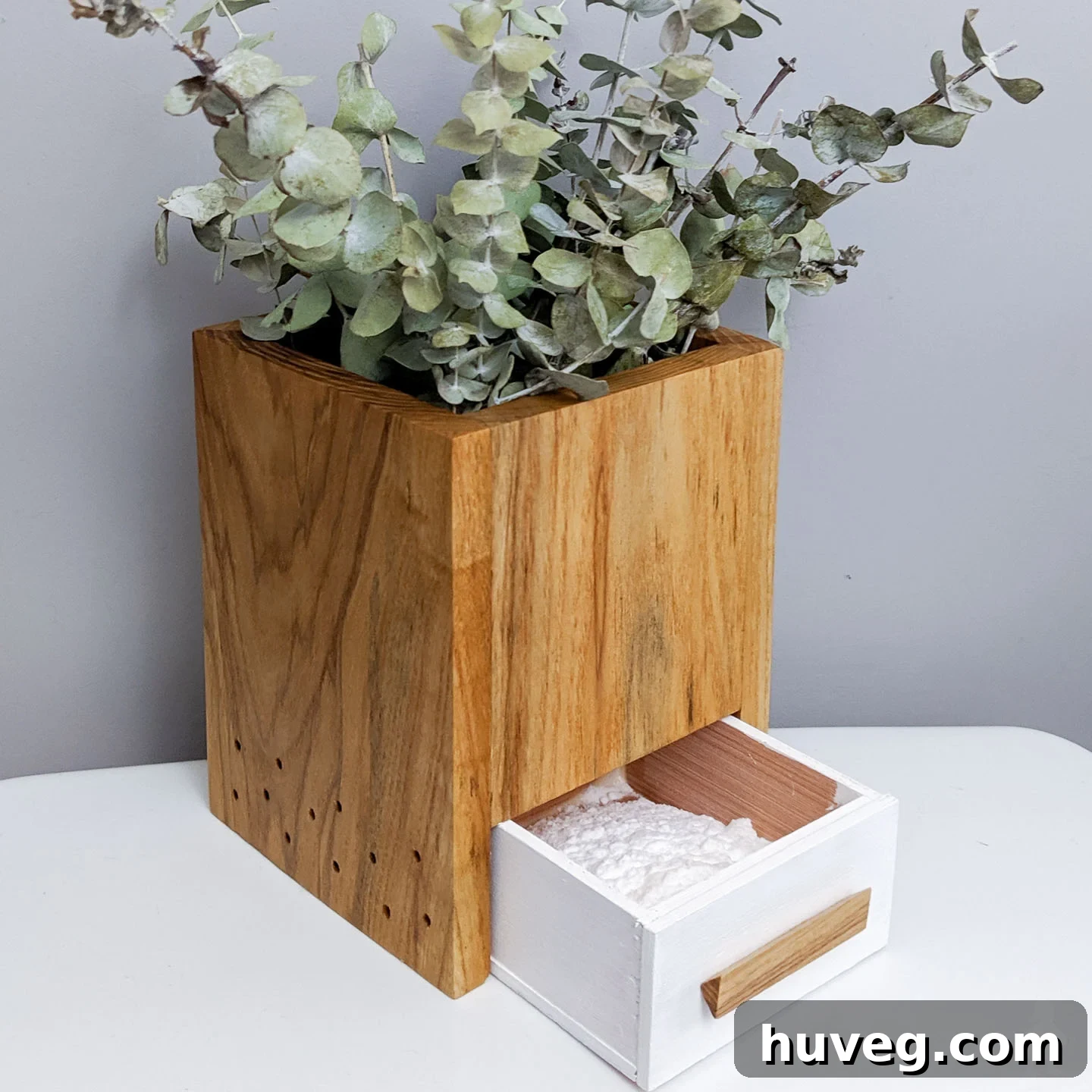
Transform your bathroom into a sanctuary of fresh scents and elegant design with this ingenious DIY project! My latest bathroom decor piece is not just a pretty face; it’s a dual-purpose marvel that acts as both a powerful deodorizer and a soothing aromatherapy diffuser. This decorative wooden vase ingeniously conceals an odor-absorbing compartment filled with baking soda, while its top proudly displays a fragrant eucalyptus “bath bouquet,” ready to infuse your shower with calming aromas. Join me as I guide you through creating this functional and beautiful addition to your home.
Every DIY enthusiast knows the feeling: you’re juggling multiple projects, perhaps four or five demanding your attention, and then, out of nowhere, a brilliant new idea sparks. Despite your already overflowing to-do list, you simply can’t resist the urge to start another creation. That perfectly describes my journey with this project this month. Originally, I had planned to take a break from this month’s DIY challenge – a recurring blog hop where I’ve previously crafted unique items like scrap wood wall art and a bespoke jewelry organizer. The theme for this challenge was “multi-purpose,” and honestly, I thought I’d skip it.
However, inspiration struck just a few days ago. I found myself scrutinizing a beautiful piece of ash wood I had saved for over a year, waiting for the perfect project to bring out its character. Its exquisite grain and rich texture whispered possibilities, and before I knew it, I was diving headfirst into this new endeavor. Here I am, just under the wire, thrilled to share the finished result and detail every step of its creation with you!
On a related note, this project holds a special significance beyond its aesthetic appeal. It was during the making of this very vase that the original blade of my trusty Dewalt miter saw finally gave up. After countless cuts and years of dedicated service, it literally surrendered mid-cut last week. A proper saw blade has sharp, distinct teeth designed for precision and efficiency. Mine, however, had been worn down to a mere nub, a testament to its long, hard life. I confess this with a slight tremor, fearing the judgment of the woodworking community for letting it go on for so long. Yet, I hold onto the hope that at least one fellow DIYer out there can empathize with the struggle of pushing tools to their absolute limits!
Crafting Your Own Multi-Purpose Bathroom Deodorizer & Aromatherapy Vase
Are you ready to create a stylish and functional piece that addresses common bathroom issues while adding a touch of natural elegance? This DIY project is perfect for enhancing your bathroom’s ambiance and keeping it fresh. Below, you’ll find a detailed guide on how to construct your very own multi-purpose vase, combining the power of natural odor absorption with the therapeutic benefits of aromatherapy.
Tools & Supplies You’ll Need:
Gathering your materials and tools before you begin is crucial for a smooth and efficient crafting process. This project requires a mix of common woodworking tools and simple decorative elements.
- 1/2″ x 2ft board: This will be the primary material for the vase structure. The type of wood matters for aesthetics; I chose ash for its beautiful grain, but pine or poplar are also great for beginners.
- 1/8″ luan (sanded plywood): Ideal for constructing the small, lightweight drawer and the internal base. Its thin profile makes it easy to work with for these smaller components.
- Wood glue: A strong adhesive is essential for durable joints, especially for the mitered corners.
- Miter saw: Crucial for making precise crosscuts and especially accurate mitered (angled) cuts. Ensure your blade is sharp for clean edges.
- Sander and sandpaper: For achieving a smooth, professional finish. Start with a coarser grit and work your way up to a finer one (e.g., 80-grit to 320-grit).
- Painter’s tape: Invaluable for holding pieces together during gluing and clamping, preventing slippage, and protecting surfaces.
- Clamps: Essential for applying even pressure during the wood glue drying process, ensuring strong bonds.
- White paint: For accentuating the hidden drawer front and providing a clean, contrasting look.
- Small craft brush: Perfect for detailed painting on the small drawer front.
- Finishing oil: To protect the wood, enhance its natural grain, and give it a beautiful luster.
- Protective gloves: Always wear these when handling wood finishes and for general hand safety during woodworking.
- Eucalyptus (dried or fresh): The star of your aromatherapy bouquet. Fresh eucalyptus offers a stronger initial scent, but dried still works wonderfully with essential oils.
- Twine (or rubber band): For bundling your eucalyptus and creating a loop for hanging.
- Eucalyptus essential oil: To boost the aroma of your bath bouquet and enhance the deodorizing effect in the baking soda.
1. Material Selection & Initial Cuts: Setting the Foundation
For a long time, I cherished a small piece of ash wood, acquired purely for its mesmerizing grain without a specific project in mind. This was a rare indulgence, as I typically work with readily available species like pine, poplar, or red oak from local home improvement stores. The ash felt like a real treat, inspiring me to branch out and experiment with new wood types, even if it meant a longer drive to the lumber yard. Perhaps this is the year I make those trips a regular occurrence – once our new lumber rack is up, of course! (More on our recent garage workshop progress coming soon.)
Without a rigid blueprint, I began by cutting the first three sides of my vase from the ash board. My intuition guided me to a length of approximately 6.5 inches, knowing this would leave the back piece slightly shorter, which was part of the design for the hidden drawer mechanism. Precision here is key for clean lines and a professional finish, even if you’re working without detailed plans from the outset.
2. Mastering Mitered Corners: Precision and Safety
The thought of cutting mitered corners on such small pieces, especially the front two, gave me pause. Mitered joints, while incredibly elegant, require careful execution, and working with small pieces always presents a safety challenge. A 45-degree bevel cut often feels less stable than a simple crosscut, making it critical to maintain a secure grip on the wood while keeping fingers safely away from the blade. This particular aspect of woodworking demands extra caution and smart techniques.
To overcome this, I employed a clever, albeit unconventional, method. I used double-sided tape to firmly attach my small ash pieces to a larger block of scrap wood. This provided the necessary stability and leverage, allowing me to comfortably make the miter cuts without risking my fingers. To ensure easy removal of the double-sided tape without damaging the wood, I first applied painter’s tape to the back of the smaller pieces. This trick worked wonders, much like when I used it for my DIY wooden puzzle, ensuring clean, undamaged pieces ready for assembly.
3. Assembly & Secure Gluing: Building the Vase Structure
Once the mitered corners were perfectly cut, the next crucial step was assembly. Mitered joints, by nature, need precise alignment to create a seamless corner. To achieve this, I once again turned to painter’s tape, wrapping it around the first three sides to hold them snugly together while the wood glue set. This technique provides gentle but firm pressure, preventing any shifts or gaps that could compromise the aesthetic and structural integrity of the vase.
I deliberately waited for the first three sides to dry completely before cutting and gluing the back piece. My concern was that the direct pressure from clamps on the back might inadvertently misalign the delicate mitered corners or create undesirable gaps. By assembling in two stages, I ensured that the primary vase structure was solid and true before integrating the final component, which would house the innovative drawer mechanism. This sequential approach guarantees a robust and aesthetically pleasing finished product.
4. Crafting the Hidden Drawer: Functionality Meets Discretion
With the main top section of the vase securely assembled, my attention shifted to the ingenious bottom compartment: a petite, hidden drawer designed to hold baking soda. I had an ample supply of scrap luan (sanded plywood) in my shed, which was perfect for this purpose due to its lightweight and smooth properties. I sized the drawer slightly smaller than the opening to ensure it could slide in and out effortlessly. To enhance its discreet appeal, I added an additional front piece, which I painted a crisp white, creating a subtle contrast against the natural wood.
The small handle on the drawer is a testament to resourceful DIY; it’s actually a remnant from one of the 45-degree mitered cuts I made earlier! After carefully sanding the corner down to create a flat gluing surface, it was perfectly repurposed as an understated yet functional pull. This thoughtful detail not only adds character but also showcases how every scrap can find a new purpose in a well-planned project.
5. Integrating the Vase Bottom: Creating a Stable Foundation
Next, I focused on creating the internal bottom for the upper vase section. While not exactly a “false bottom,” this piece of luan was cut to fit the square opening precisely. I then glued it in place at the same height where the back piece of the vase ended, effectively creating a platform. Explaining the internal support system can be tricky without visuals, but essentially, I used small scrap pieces of wood to brace the luan bottom from the inside. One side of these scraps was glued to the luan, and the other to the inner walls of the vase.
I opted for this internal bracing method instead of gluing the bottom directly from underneath to ensure that no support structure would interfere with the smooth operation of the hidden drawer below. Had I planned this project with detailed blueprints from the start, I might have designed a small channel or slot in the side pieces for the drawer bottom to sit in, integrating it into the initial taping and clamping steps. This would have provided a cleaner finish, but the internal bracing works perfectly for a spontaneous, “wing-it” approach.
I wasn’t overly concerned about any minor gaps that might arise due to the ash wood being ever so slightly bowed, as this upper compartment doesn’t need to hold liquid. However, if you were to adapt this design to function as a planter or a water-holding vessel (an idea I briefly considered, and which would be a fantastic alternative!), it would be absolutely essential to caulk or seal the inside thoroughly to prevent any leakage. This consideration highlights the versatility of the design and the importance of adapting your finishing techniques to its intended purpose.
6. Enhancing Airflow: Optimizing Deodorizing Power
For the baking soda within the hidden drawer to be maximally effective as an odor absorber, it requires adequate airflow. Without it, the baking soda’s surface area, which is responsible for trapping odor molecules, becomes limited. To address this, I decided to drill a series of decorative holes along the bottom of the main vase structure, directly above where the baking soda drawer would sit. This allows air to circulate freely around the baking soda, increasing its efficiency in neutralizing unwanted bathroom odors.
I opted for a random pattern for the drilled holes, which added a subtle visual interest to the piece while serving a crucial functional role. You can choose any pattern you like – uniform rows, a geometric design, or a free-form arrangement – as long as they allow for sufficient ventilation. This small, yet significant, detail transforms the vase from a mere container into an active, natural air purifier.
7. The Art of Finishing: Protecting and Beautifying Your Creation
Once all the structural components were in place and the glue had thoroughly dried, it was time to bring out the true beauty of the ash wood. I meticulously sanded the entire exterior surface, progressing through grits up to 320. This finer grit is essential for achieving a luxuriously smooth finish that feels incredible to the touch. The tactile satisfaction of running your hand over perfectly sanded wood is one of the true joys of woodworking.
Following the sanding, I applied a generous coat of Simple Finish oil. This step is vital for protecting the wood from moisture and daily wear, while also deeply enriching its natural grain and color, making the ash truly shine. I recommend wearing protective gloves during this stage so you can handle the entire piece, ensuring even application and thorough wiping off of excess oil. The tiny handle on the drawer also received the same meticulous sanding and oil treatment before being securely glued into its final position, completing the seamless look.
8. Activating the Deodorizer: Natural Freshness
During the design process, I admit I harbored a slight concern: would the small drawer actually hold enough baking soda to be an effective deodorizer? My worries were unfounded! The compartment, though discreet, proved to have ample capacity to hold a substantial amount of baking soda, ensuring it can tackle even stubborn bathroom odors. Baking soda is a natural marvel, renowned for its ability to absorb and neutralize acidic and basic odor molecules, rather than just masking them.
To amplify its deodorizing power and add a pleasant scent, I incorporated a few drops of eucalyptus essential oil directly into the baking soda. This enhances the overall aromatherapy experience of the vase. (Fair warning: this is my first time mentioning eucalyptus essential oil on the blog, so I fully anticipate a deluge of spam emails once this post goes live – a common hazard for DIY bloggers, ha!)
9. Creating the Eucalyptus Bath Bouquet: Spa-like Aromatherapy
I’ve been fascinated by the trend of hanging fresh eucalyptus “bath bouquets” in showers to release fragrance with the steam, and I was eager to incorporate this into my design. The idea of transforming a daily shower into a soothing, spa-like aromatherapy experience, especially with the invigorating scent of eucalyptus – one of my absolute favorites – was irresistible. Eucalyptus is known for its calming and respiratory benefits, making it perfect for a bathroom setting.
Given my tight schedule and the spontaneous nature of this project, I didn’t have time to run out for a fresh bunch of eucalyptus (for those interested, Trader Joe’s often has great deals on fresh greenery that can instantly perk up any decor, by the way!). Instead, I repurposed some dried eucalyptus I already had on hand. I gathered the dried stems into a neat bundle, secured them tightly with twine, and created a small loop for hanging. This loop allows the bouquet to be easily suspended from a shower head, ready to release its oils with the warmth of the steam. To intensify the aroma, especially since I was using dried eucalyptus, I added a dab of glue to help hold the bundle together and then applied a few extra drops of eucalyptus essential oil directly onto the leaves. This ensures a more potent and lasting fragrance whenever the shower runs.
I’m genuinely hopeful this eucalyptus bath bouquet will work its magic! If, for any reason, the dried version doesn’t quite deliver the desired aromatic punch, I have a backup plan. I’ll simply replace it with fresh eucalyptus and, if necessary, better seal the top compartment to convert it into a functional planter – another fantastic way to bring greenery into the bathroom. Or, for the sake of ultimate laziness, I’ll keep the dried bunch as a beautiful decorative element for the vase alone, letting its natural form enhance the decor.
And there you have it: my multi-purpose solution for this month’s DIY challenge! I believe the combination of a natural deodorizer and a refreshing aromatherapy diffuser is a winning formula, especially when it occupies minimal space and beautifully showcases the sexy wood grain of ash. It’s a subtle yet impactful addition to any bathroom. (By the way, did you catch my earlier pun with “piece of ash”? It always gives me a little chuckle.)
For those inspired to recreate this project, I’ve also put together simplified plans, specifically removing the more challenging 45-degree miter cuts to make it more accessible for beginners. Additionally, keep an eye out this week for an exciting update regarding the overall progress on my house!
As I mentioned, this project was a proud participant in the August DIY challenge. This means there are several other incredibly creative multi-purpose projects from my fellow bloggers that you absolutely must explore today! Don’t forget to hop over to their sites, leave a comment to show your support, and, of course, add their brilliant ideas to your ever-growing DIY to-do list (which I’m sure is just as extensive as mine!):
- Addicted 2 DIY: Discover another innovative multi-purpose creation.
- The Created Home: Explore their unique take on functional design.
- Anika’s DIY Life: Get inspired by their clever solution.
- Her Toolbelt: See what practical project they’ve dreamt up.
- Ugly Duckling House (that’s HERE!): You’re already here, enjoying the DIY bathroom deodorizer and aromatherapy vase!
Don’t forget to pin this project for later inspiration!
Explore More Scrap Wood Project Ideas