UDH Workshop Kickoff

Every home improvement enthusiast understands the thrill of a new project. We often hear the rallying cry, “Let’s do this!” – a phrase that perfectly encapsulates the excitement and determination that comes with transforming a space. For me, that sentiment has never been more fitting than when tackling the monumental task of organizing my one-car garage. After years of accumulated DIY chaos, it was time to reclaim this essential space and mold it into a truly functional workshop. This isn’t just about tidying up; it’s about optimizing efficiency, sparking creativity, and making every future project smoother and more enjoyable. Join me as I recount the journey from a cluttered disaster zone to a streamlined sanctuary of DIY productivity.
The Unbearable Before: A Tiny Garage’s Big Mess

For the longest time, my one-car garage, measuring a mere 9 feet 11 inches wide, was less of a garage and more of a dumping ground for five years’ worth of home renovation projects. Imagine the scene: a narrow space overflowing with lumber scraps, half-empty paint cans, forgotten tools, and miscellaneous boxes of “might-need-it-someday” items. It was a chaotic mess, a testament to countless projects completed and the lingering debris they left behind. This wasn’t just unsightly; it was profoundly inefficient. Every new DIY endeavor began with an archaeological dig for the right tool or material, often leading to frustration before I even made the first cut. My garage was a bottleneck, stifling my creative flow and making even simple tasks feel overwhelming.
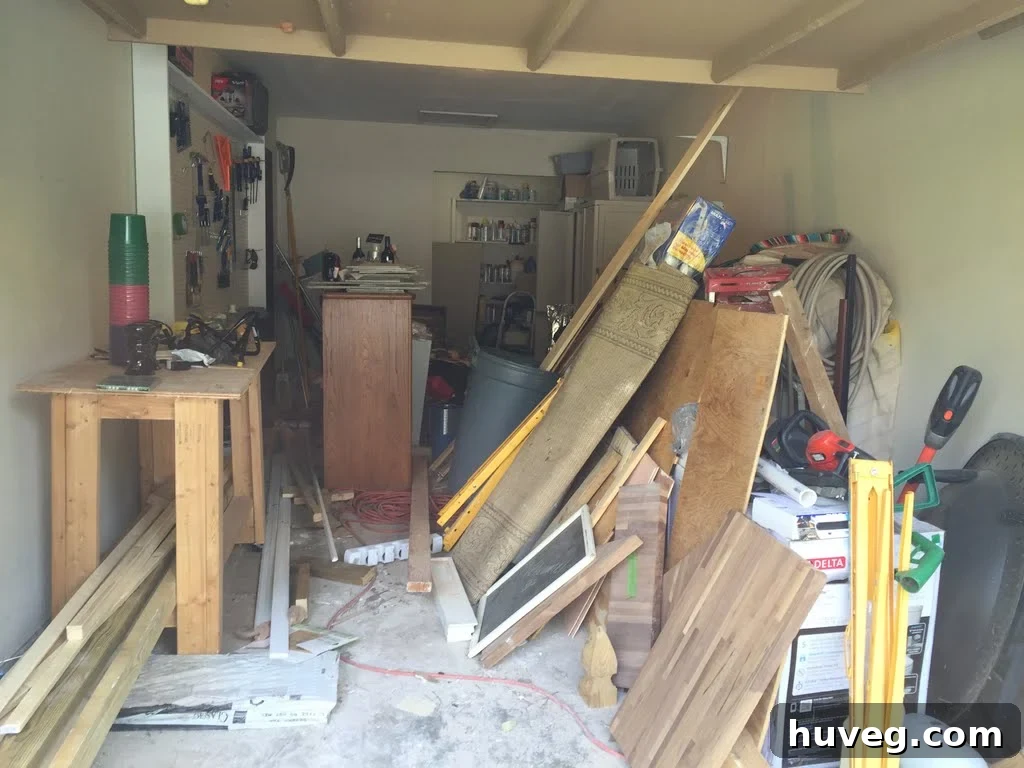
The vision of a dedicated DIY workshop seemed like a distant dream, always put off for “another day.” But that day finally arrived. The constant struggle of finding a flat, clear surface for cutting, assembling, or painting had reached its peak. After wrestling with laundry room shelves and then moving onto building backyard garden beds, the repeated frustration of navigating around piles of lumber and boxes of random clutter became the ultimate catalyst. It was no longer sustainable; something had to give. A truly functional and organized workspace was no longer a luxury, but a necessity for continuing my passion for home improvement.
Breaking Point: Enlisting an Expert for Garage Organization
I finally reached my breaking point. In a moment of sheer desperation, I fired off a text to my mom, pleading for her assistance. Knowing her background as a quality control expert, I knew she possessed an innate talent for organization and process optimization. My mom has a knack for transforming chaotic spaces into models of efficiency, and I desperately needed that expertise for my overflowing garage.
Her immediate response, sharp and insightful, confirmed my hopes:
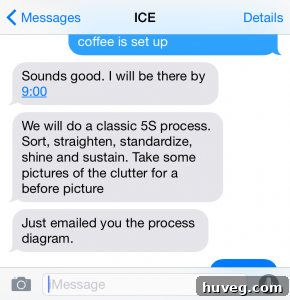
To my surprise and immense relief, Mom agreed to help, despite the daunting task that awaited her. And, because she truly is the best, she arrived armed with donuts – the perfect fuel for a day of intense decluttering. Over a pot of coffee, we laid out a strategic game plan. The first, and most crucial, step in this garage organization project was simple: making piles. This wasn’t just random sorting; it was a systematic approach to categorizing years of accumulation, ensuring everything found its proper place or made its exit.
The Decluttering Blitz: A Strategic Approach to Sorting
Our method involved creating distinct categories, making the daunting task manageable:
- Goodwill Pile: For household items I no longer wanted or needed. These were immediately loaded into Mom’s car for donation, ensuring they wouldn’t linger in my garage.
- Habitat Restore Pile: Dedicated to used building materials that were still functional but superfluous to my current needs. These found a new home in my car, ready for donation to support a great cause.
- Return Pile: A separate area for intact, still-packaged building materials that I no longer required. These items were destined for return to the home improvement store, allowing me to recoup some costs and invest in materials I genuinely needed for future projects. This is a smart tip for any DIYer: don’t let unused materials gather dust if they can be returned!
- Trash Pile: For anything broken, unusable, or truly waste-bound. This pile grew surprisingly fast, highlighting just how much unnecessary clutter had accumulated over the years.
Beyond these major piles, I also diligently redistributed other items back into their rightful places within the house. Countless previously “missing” tools were finally hung on walls, lumber was reorganized into more logical and accessible groupings, and several new storage solutions (which I’ll share details about soon!) were put into action. By about 2 PM, Mom was headed home, leaving behind not just a clearer space, but the solid foundations of a functional workshop and, crucially, a clear plan for the remaining organization.
The First Glimpse of Hope: Immediate Transformations
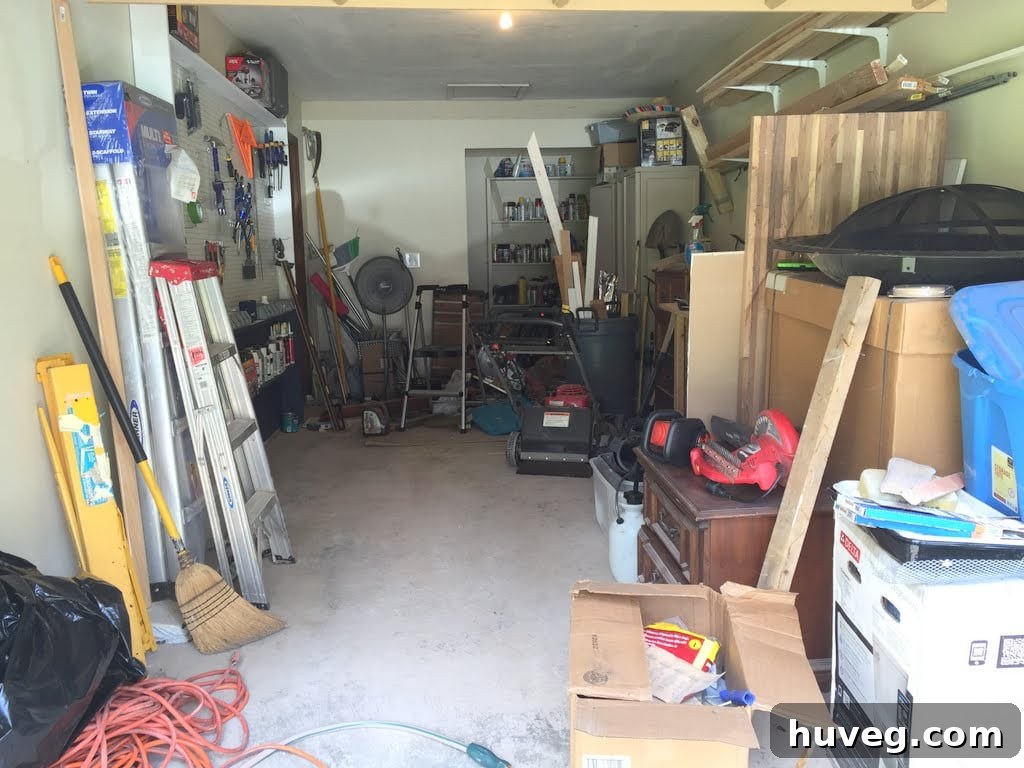
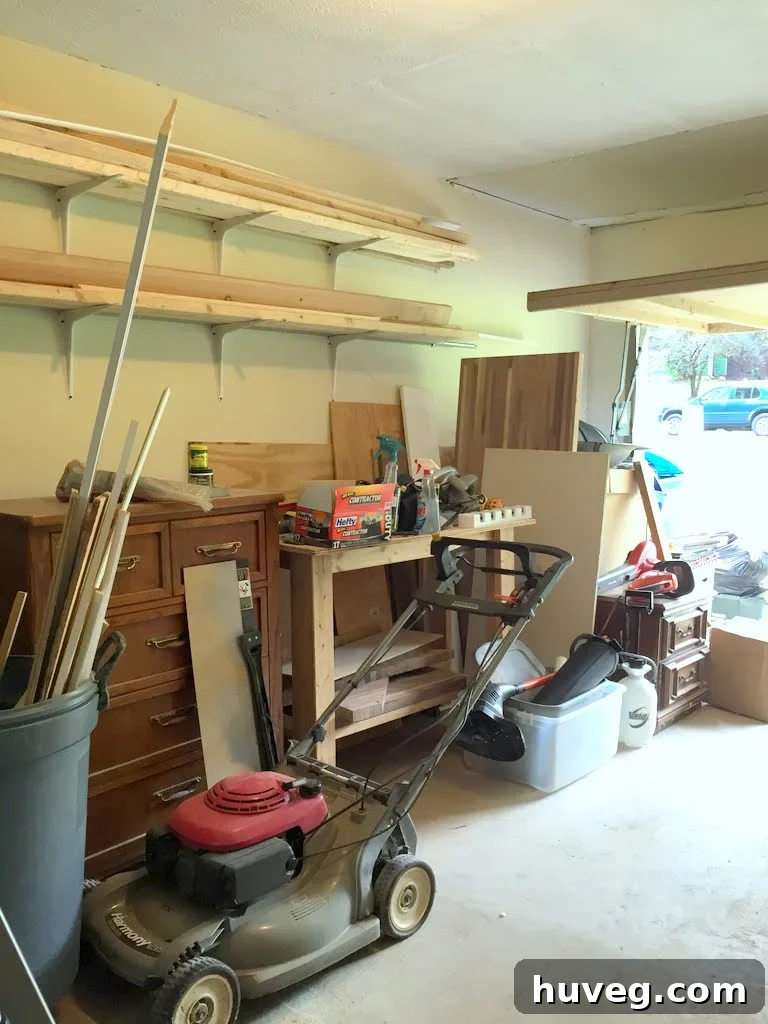
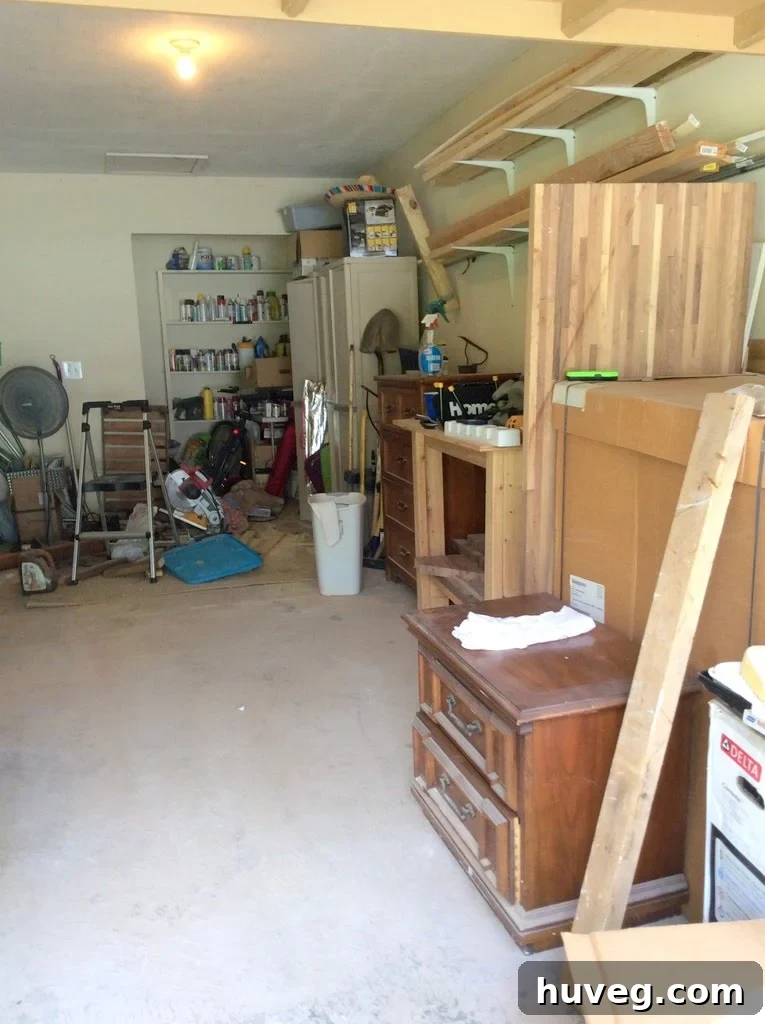
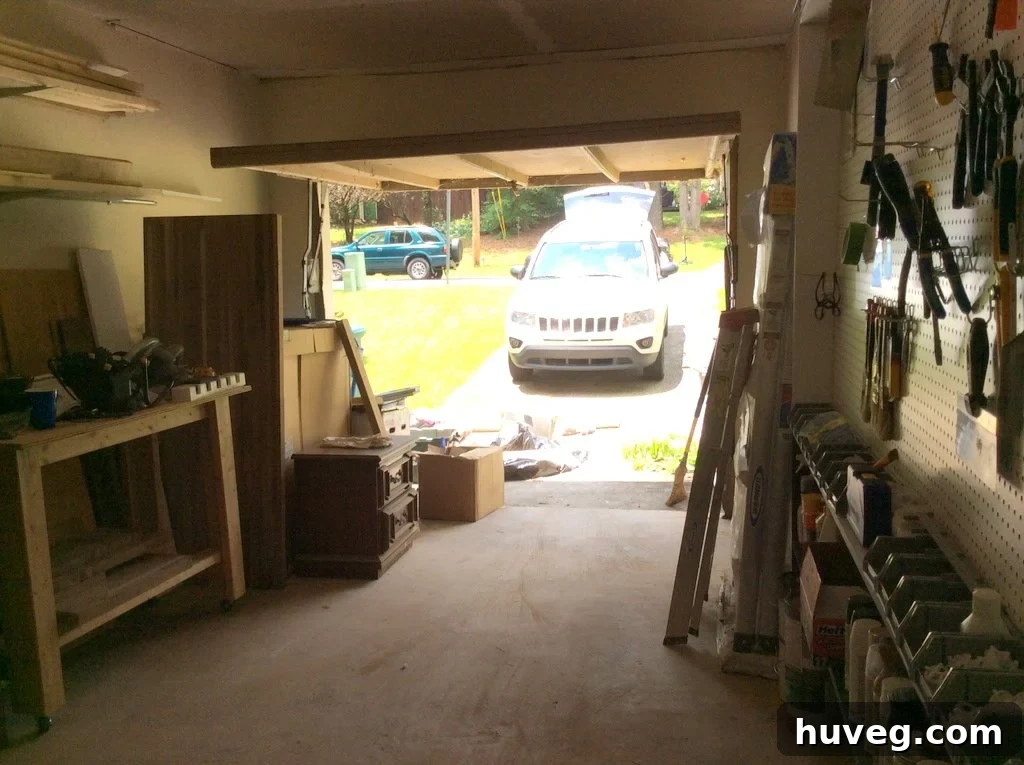
Oh, the glorious sight! Hello, garage floor! It had been an unceremonious absence for what felt like an eternity. Seeing the concrete again, clear and unobstructed, was incredibly motivating. It was a tangible sign of progress, a clear indication that my small garage could, in fact, be transformed into an efficient DIY workspace. This initial success provided an immense boost of energy and renewed my commitment to seeing the project through.
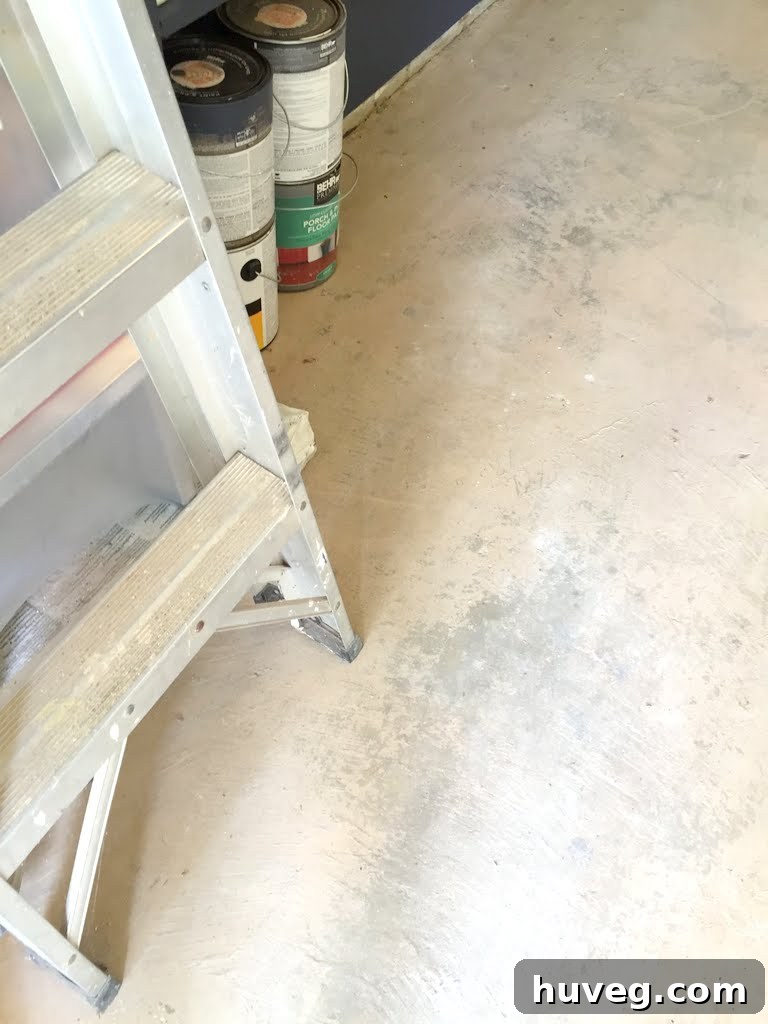
Initially, I had planned to stop here, exhausted but triumphant, and continue organizing another day. Certain elements, like a primary bath vanity and toilet, simply couldn’t be dealt with at that moment, meaning the space wasn’t truly “done.” However, after a brief rest, the urge to continue the momentum was irresistible. I gravitated towards the back corner, near the hot water heater – a notorious zone for forgotten items and awkward storage.
Pushing Further: Tackling the Hot Water Heater Corner
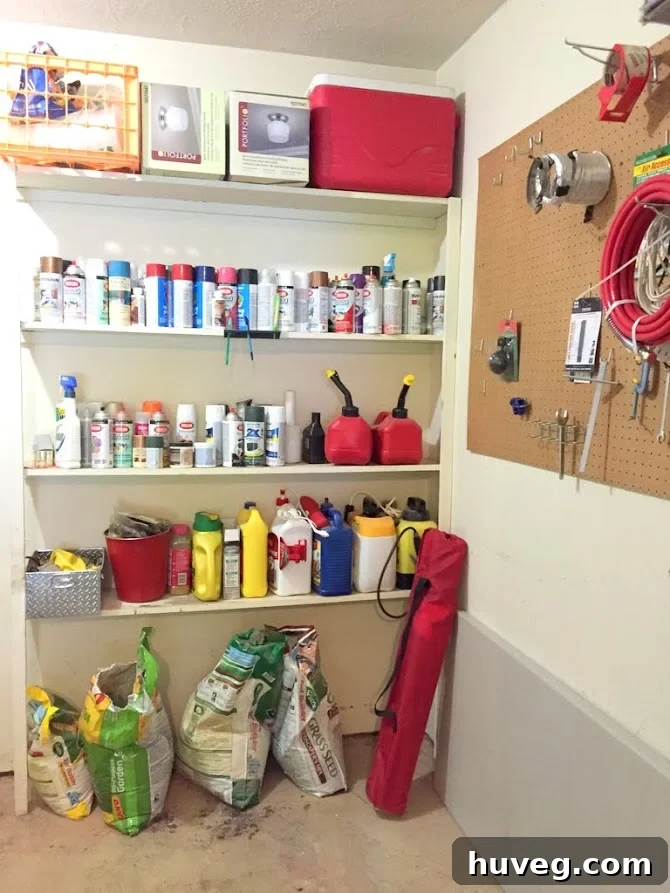
One hour (and a minor, self-inflicted toe injury) later, this once-neglected corner was completely revamped. I had installed shelves that were actually reachable and functional, created a dedicated spot for storing my bicycle without it getting in the way, and gathered a considerable amount of old paint that needed proper disposal. This small but significant win further solidified my belief that even the tightest spaces could be optimized for maximum utility. It also highlighted the immediate benefits of a well-thought-out garage organization strategy: easier access, better storage, and a safer environment.
Essential Tips: Responsible Paint Disposal
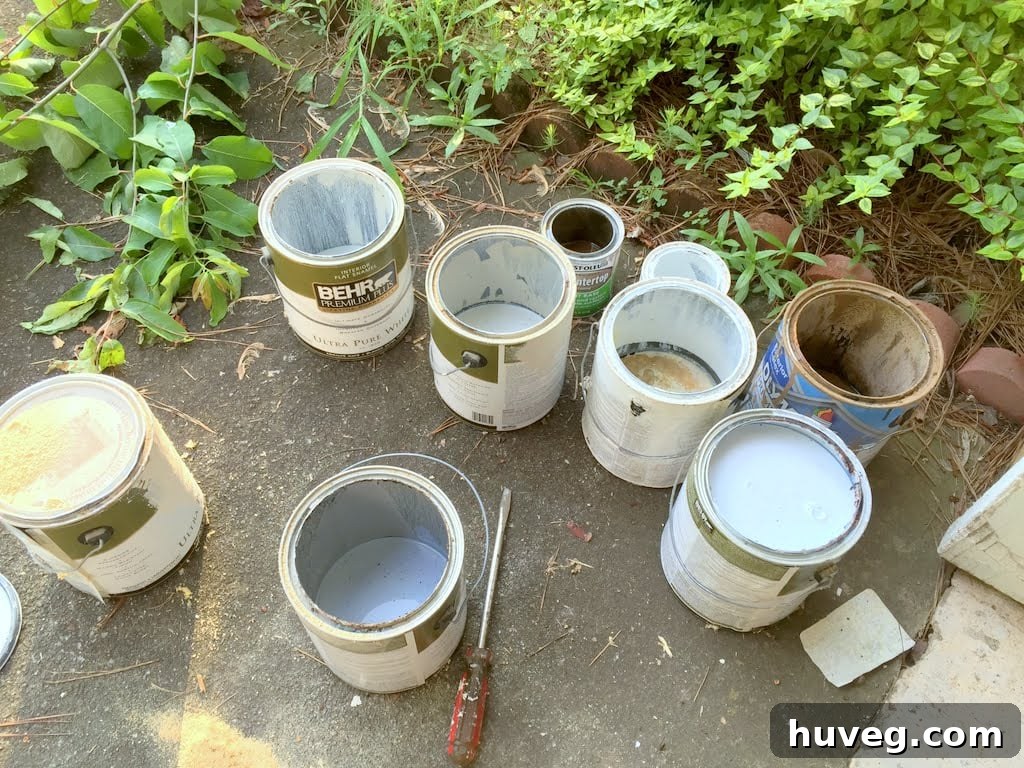
Speaking of old paint, let’s talk about responsible disposal, an often-overlooked aspect of garage organization. Latex paints, unlike oil-based paints, are not considered hazardous waste once they are completely dry. This makes disposal relatively straightforward for DIYers. For most of my nearly empty cans, the simplest method was to just remove the lids and let them air dry for a couple of days. The paint will solidify, becoming safe for regular trash disposal.
If you have larger quantities or are in a hurry, you can also purchase paint hardener, which can solidify a gallon of paint in just a few hours. However, for those of us who prefer the free and eco-friendly route, simply waiting it out is perfectly effective. There are a few other options depending on your local regulations and the type of paint, which I plan to delve into in a future, dedicated post. Always check with your local waste management facility for specific guidelines on paint and chemical disposal in your area.
Beyond Organization: The Blueprint for a Functional Workshop
While an incredible amount of progress has been made, my DIY workshop transformation is still a work in progress. The foundation is set, but the next phase involves building out specific features to maximize functionality and efficiency. I have several exciting workshop projects planned that will truly elevate this space:
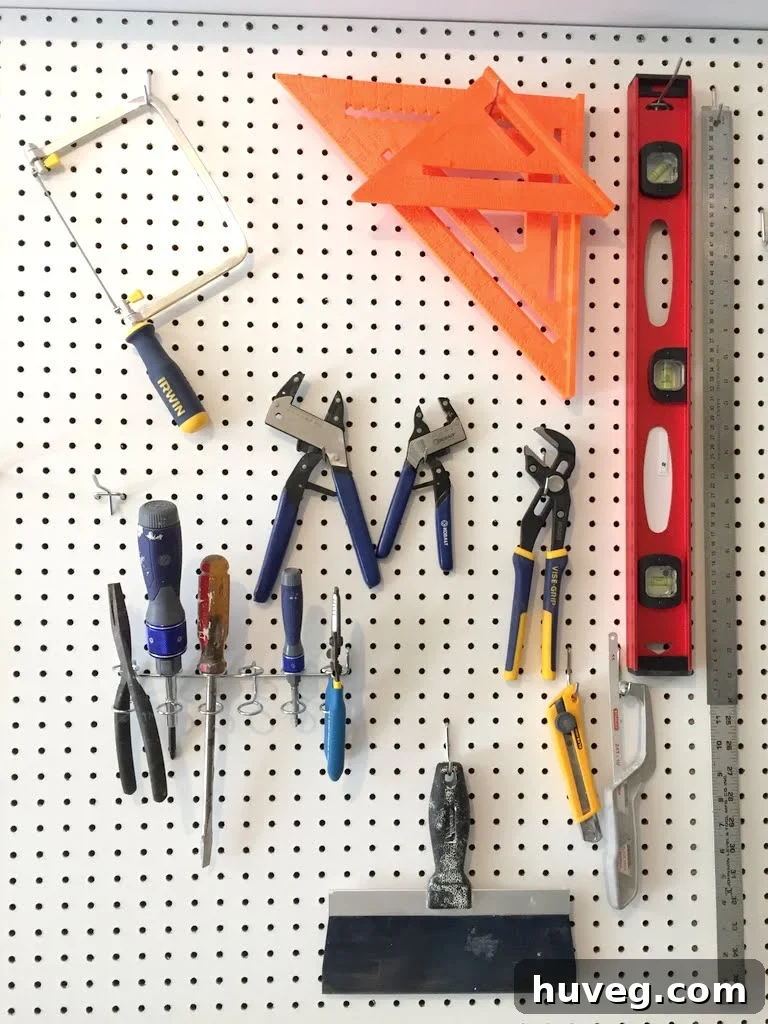
- A Pegboard Wall: (Done!) This is a game-changer for tool organization, keeping frequently used items visible and easily accessible. No more digging through drawers!
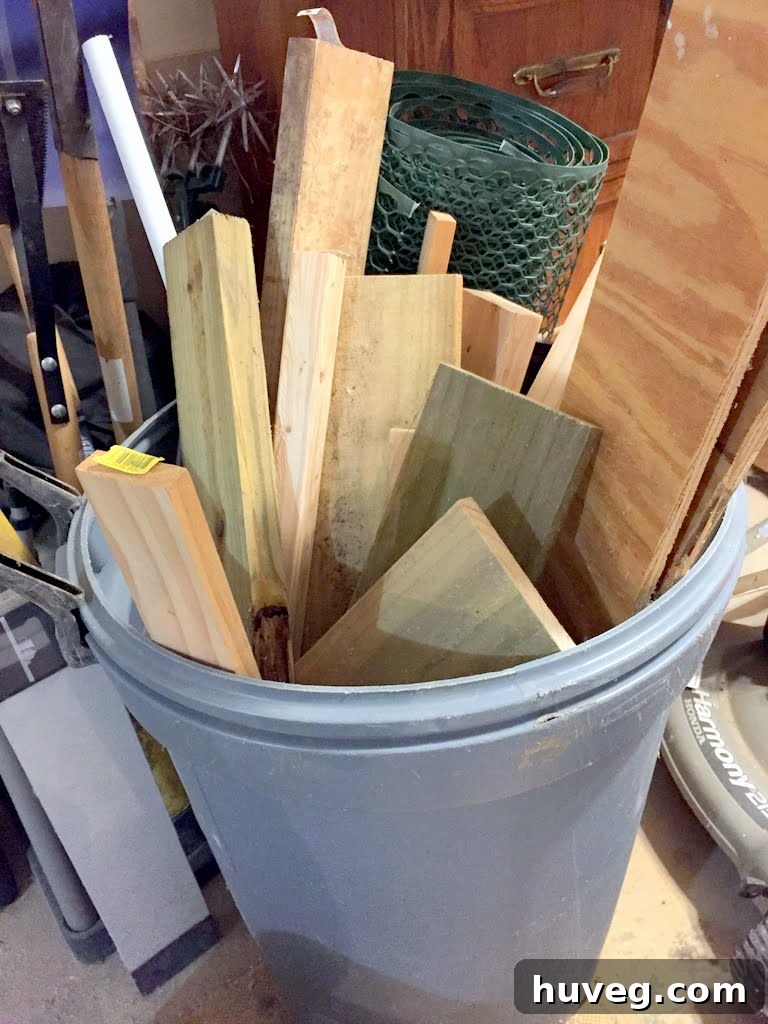
- Lumber Rack: (Done!) Essential for storing various lengths and types of wood neatly and safely, preventing warping and making inventory quick and easy.
- Gardening Tool Organization: Dedicated storage for garden tools will keep them clean, sharp, and ready for use without cluttering the main workspace.
- Lumber Cart: A mobile lumber cart will be invaluable for moving materials around the tight garage space, enhancing flexibility and reducing strain.
- Drill Charging Station: A centralized charging station will keep all my cordless tools powered up and organized, eliminating messy cords and misplaced batteries.
Reflecting on Progress and Looking Ahead
All in all, the initial phase of transforming my messy garage into a functional DIY workshop has been a monumental success. In a surprisingly short period, a space that once caused endless frustration is now a source of excitement and potential. I’ve already sketched out the design for my lumber cart, and I’m eager to continue building out these specialized features throughout the summer. The goal is to create an environment where creativity flourishes, and every project, big or small, can be tackled with ease and precision. This journey from chaos to order is a testament to the power of a clear vision and a little elbow grease.
What about you? Have you embarked on any major organization projects recently? How do you tackle the challenge of keeping your DIY or hobby spaces tidy and efficient?