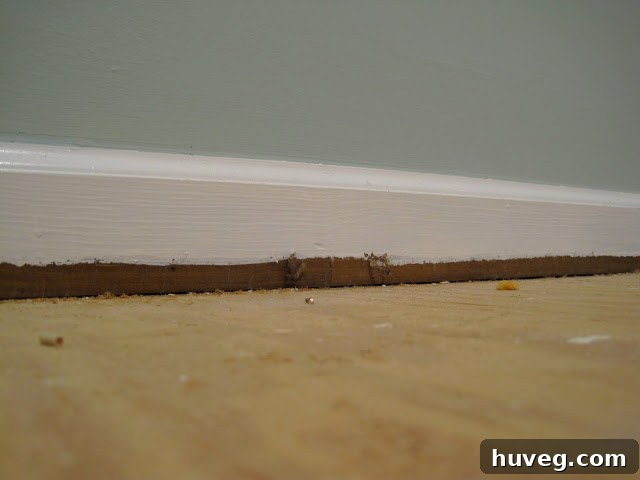
Evict Your Filthy Old Carpet

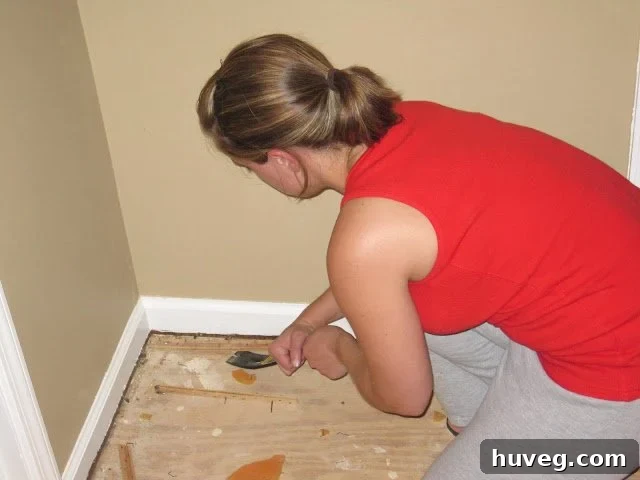
DIY Carpet Removal: A Comprehensive Step-by-Step Guide for Homeowners
Embarking on a home renovation project often brings a mix of excitement and apprehension. While the careful installation of new, beautiful elements is undoubtedly rewarding, there’s a unique satisfaction that comes from demolishing and removing the old, unloved features of your home. Taking out that outdated, unsightly carpet, for instance, can be surprisingly therapeutic and even fun!
Just like any home improvement task, there’s a right way and a wrong way to remove old carpet. Doing it correctly the first time not only saves you significant time and effort but also prevents potential damage to your subfloor, which could lead to costly repairs down the line. This comprehensive guide will walk you through every essential step of the carpet removal process, ensuring a smooth, efficient, and surprisingly enjoyable experience. Get ready to transform your space and reveal the potential beneath!
Why Remove Your Old Carpet? Benefits Beyond Aesthetics
Deciding to remove your old carpet is often the first step towards a complete room transformation, but the benefits extend far beyond a simple aesthetic upgrade. Understanding these advantages can motivate you through the more labor-intensive parts of the process:
- Improved Indoor Air Quality: Old carpets are notorious for trapping dust, allergens, pet dander, and even mold spores. Removing them can significantly reduce airborne irritants, leading to a healthier living environment, especially for those with allergies or respiratory sensitivities.
- Preparation for New Flooring: Whether you’re planning to install hardwood, laminate, tile, or even polish the concrete subfloor, removing the old carpet and its underlayment is a mandatory first step. A clean, smooth subfloor is crucial for a flawless new installation.
- Uncovering Hidden Potential: Many older homes hide beautiful hardwood floors or sturdy concrete slabs beneath layers of carpet. Removing the carpet can reveal these treasures, offering a cost-effective and charming flooring solution.
- Enhanced Home Value: Upgrading your flooring to a more modern, durable, and aesthetically pleasing option can substantially increase your home’s market value and appeal to potential buyers.
- Eliminating Odors: Years of spills, pet accidents, and general wear and tear can leave carpets with stubborn, unpleasant odors. Removal is often the only way to truly eradicate these lingering smells and freshen up your home.
Safety First: Essential Precautions for Carpet Removal
Before you even think about cutting into that old carpet, prioritizing safety is paramount. Carpet removal can be dusty, involve sharp objects, and require significant physical exertion. Here are key safety measures to keep in mind:
- Wear Protective Gear: A good quality dust mask or respirator is crucial to protect your lungs from accumulated dust, mold spores, and other allergens. Heavy-duty work gloves will protect your hands from sharp tack strips, staples, and potential splinters. Eye protection is also recommended to guard against flying debris.
- Ventilate the Area: Open windows and doors to ensure good airflow. If possible, use a box fan to direct dust out of the room. This helps clear the air and makes breathing easier.
- Clear the Room: Remove all furniture, rugs, and any other obstacles from the room. This gives you ample space to work safely and efficiently.
- Proper Lifting Techniques: Carpet rolls and padding can be heavy. Bend at your knees, not your back, when lifting to prevent injury. If possible, ask for assistance with heavier rolls.
- Beware of Tack Strips: These wooden strips with sharp nails are designed to hold carpet in place. Always be aware of their location and handle them with extreme caution once removed. Dispose of them immediately in a secure container.
- First Aid Preparedness: Keep a basic first aid kit nearby, just in case of minor cuts or scrapes.
Tools You’ll Need for a Smooth Carpet Removal Project
Having the right tools on hand will make the carpet removal process much smoother and safer. Here’s a list of essentials:
- Carpet or Angled Utility Knife: Essential for cutting through the carpet. An angled utility knife is often preferred for better grip and control, reducing the risk to your fingers.
- Heavy-Duty Tape: For securing rolled carpet sections, making them easier to handle and dispose of.
- Large Trash Bags: For disposing of carpet padding, small pieces of carpet, and collected debris.
- Crowbar (Pry Bar): Indispensable for lifting carpet tack strips and prying out stubborn staples.
- Pliers: Helpful for gripping and removing individual staples that resist the crowbar, or for pulling out nails from tack strips.
- Dust Mask/Respirator: As mentioned, crucial for protecting your respiratory system from dust and allergens.
- Work Gloves: To protect your hands from sharp objects.
- Broom and Dustpan: For thorough cleanup after all carpet and underlayment have been removed.
- Vacuum Cleaner (Shop-Vac recommended): For a final, deep clean of the subfloor.
Step-by-Step Guide to Efficient Carpet Removal
1. Detach Carpet from the Perimeter
Begin by locating an edge of the carpet, typically near a wall or doorway. Firmly grip the carpet and pull it upwards, away from the wall. You’ll feel the carpet backing separating from the carpet tack strip, which is a thin strip of wood embedded with sharp nails that holds the carpet securely. Work your way around the entire perimeter of the room, pulling the carpet free from these tack strips. This initial separation makes it easier to cut and remove the bulk of the carpet.
2. Cut Carpet at Seams and into Manageable Sections
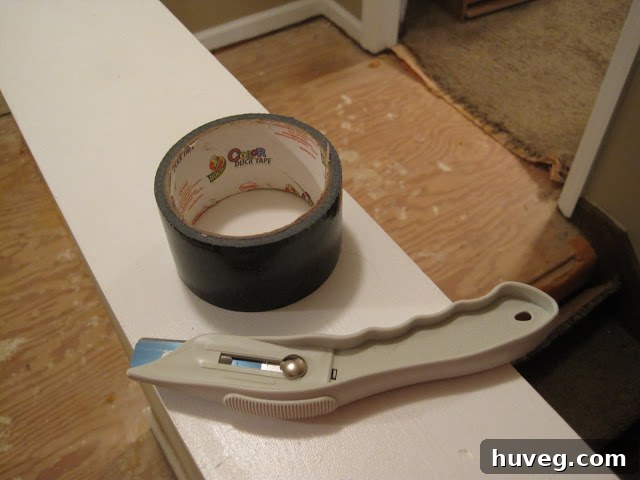
Carpet seams are most commonly found at doorways or in larger rooms where multiple carpet pieces were joined. Use your angled utility knife to carefully slice through the carpet at these seams. An angled knife provides a safer and more ergonomic grip, allowing you to cut efficiently without putting your fingers at risk. Once the carpet is detached from the perimeter and any seams, begin cutting it into two- to three-foot wide strips. This size is ideal for handling, rolling, and eventual disposal. Always cut away from your body and maintain a firm grip on both the carpet and the knife.
3. Roll Up and Secure Carpet Strips for Disposal
Once you have cut the carpet into manageable strips, begin rolling each strip tightly from one end to the other. Tightly rolled carpet takes up less space and is much easier to carry. After rolling, secure each end of the “carpet burrito” with heavy-duty tape. This prevents the rolls from unraveling, which is crucial for efficient transport and disposal. Depending on your local waste management guidelines, you might need to take these rolls to a landfill, a specific recycling facility, or arrange for a special bulk pick-up.
4. Remove the Carpet Padding
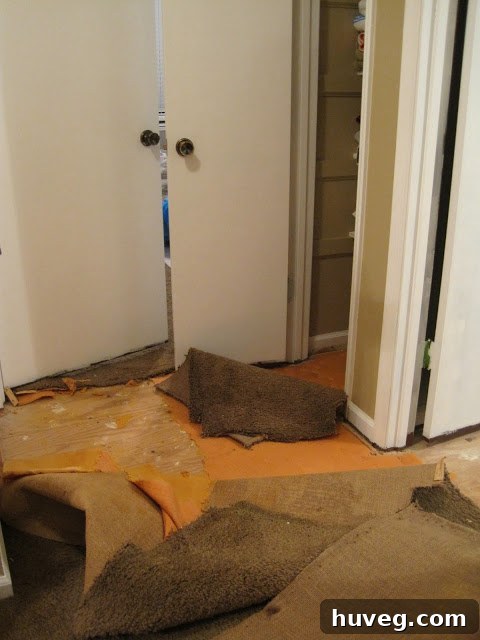
With the carpet gone, you’ll be faced with the carpet padding, which often hides a significant amount of dust, dirt, and allergens. This is where your dust mask becomes indispensable. Carpet padding is typically held down by numerous staples. Carefully pull up sections of the padding, trying to minimize yanking motions that can send clouds of dust into the air. Fold the edges of the padding into itself as you go, creating smaller, more compact pieces that can be easily stuffed into large trash bags. If your padding is old and deteriorated, it should come up with relative ease.
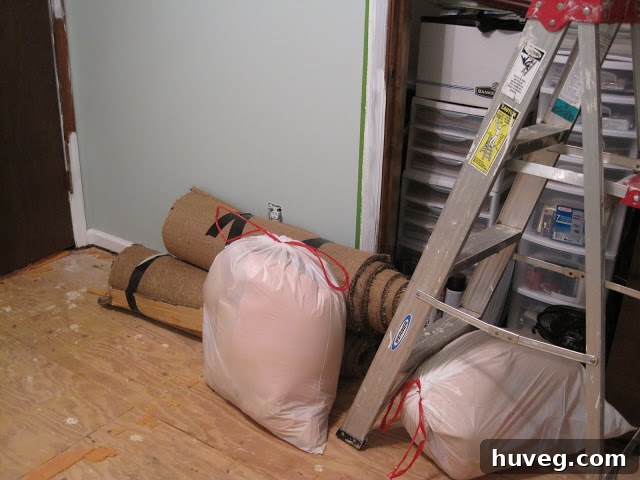
5. Prepare to Tackle Tack Strips and Staples
After the carpet and padding are removed, your subfloor will likely be covered with two remnants: carpet tack strips around the perimeter and hundreds of tiny staples that once held the padding. These need to be removed thoroughly to prepare the floor for any new installation. Your primary tool for this stage will be a sturdy crowbar. For particularly stubborn staples or nails, a pair of pliers will also prove invaluable.
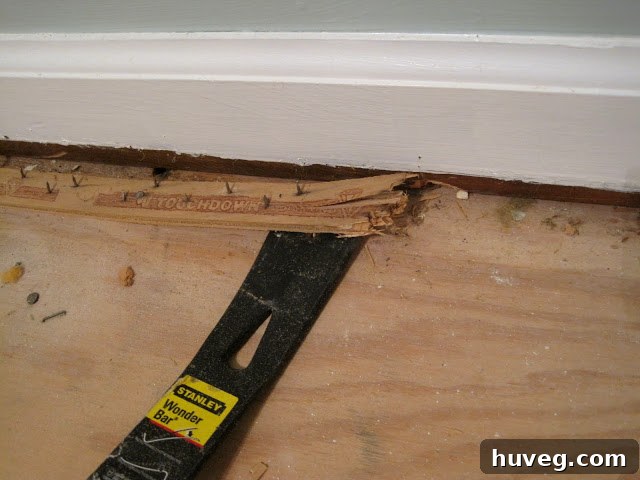
6. Systematically Remove Carpet Tack Strips
Removing tack strips requires a specific technique to prevent splintering the wood and ensuring the nails come out cleanly. Start at one end of a tack strip. Place the edge of your crowbar underneath the very first nail you see on the end. Use the crowbar as a lever, applying downward pressure on the handle to gently pop the nail out of the subfloor. Continue this motion down the entire length of the strip, working from one end to the other. Avoid trying to start in the middle, as this often causes the wood to break apart, leaving embedded nail remnants. Once a strip is fully detached, carefully pick it up by the ends to avoid the sharp nails and immediately place it in a secure trash container.
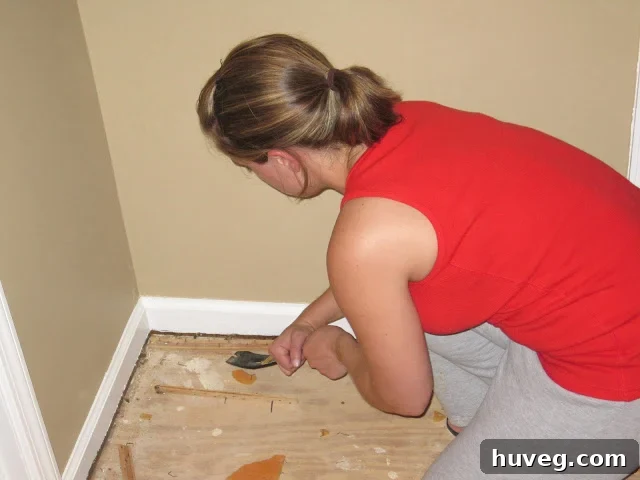
7. Efficiently Remove Remaining Staples
Staples can be the most tedious part of the removal process. While you might be tempted to pry them up one by one, a more efficient method is to “jab” at them with your crowbar. Hold the crowbar at an angle and rapidly slide or jab it across the floor in short, sweeping motions. The edge of the crowbar will catch the staples, leveraging them out of the subfloor. This technique takes some practice to master but significantly speeds up the process. For any incredibly stubborn staples that resist the crowbar, use your pliers to grip and pull them out.
8. Hunt for Hidden Staples
Even after a thorough pass, staples have a remarkable ability to hide, especially if they have tiny pieces of carpet padding still attached, making them blend in with the subfloor. After your initial staple removal, run the crowbar over the entire floor again, blindly sweeping it back and forth. This second pass will often catch staples you missed, ensuring your subfloor is as clean as possible. Missing even a few staples can cause issues when installing new flooring, potentially puncturing vapor barriers or preventing planks from laying flat. Dedicate sufficient time to this crucial step.
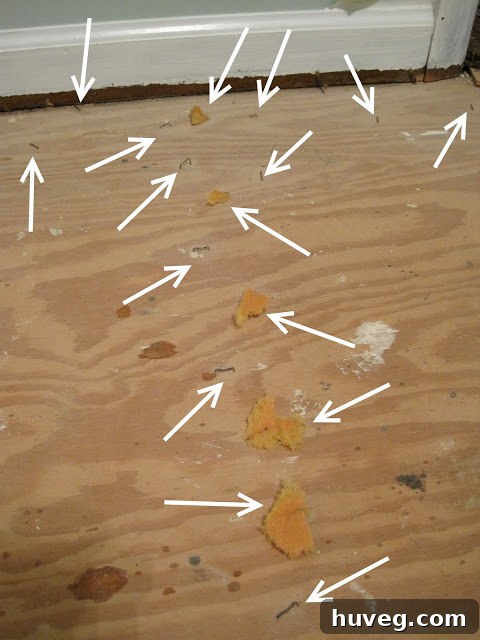
9. Final Cleanup and Subfloor Preparation
The final step is a thorough cleanup. Use a sturdy broom and dustpan to sweep the entire room, collecting all remaining dust, dirt, tiny carpet fibers, and especially any stray staples. A powerful shop-vac is highly recommended for this stage to ensure every last speck of debris is removed. A pristine subfloor is essential for the successful installation of any new flooring material. Take your time, as any leftover particles can affect the adhesion, stability, or longevity of your new floor. Once clean, your subfloor is ready for the next exciting phase of your renovation!
Post-Removal: What’s Next for Your Transformed Space?
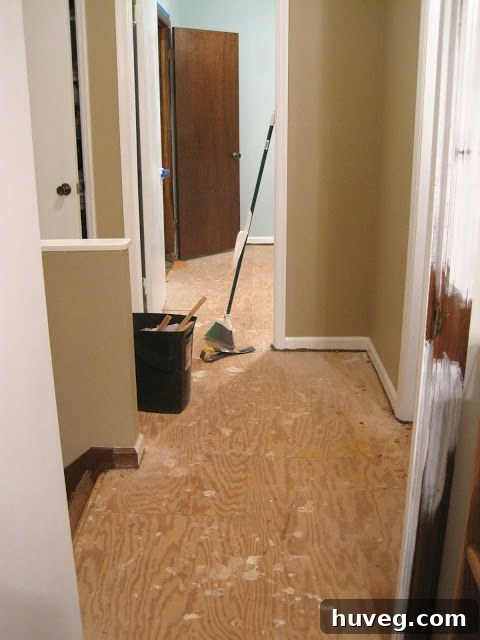
Congratulations! You’ve successfully removed your old carpet, and the transformation is already apparent. This is a significant accomplishment and opens up a world of possibilities for your home. However, the journey doesn’t quite end here.
As you survey your now-bare subfloor, you might notice some additional tasks. Often, removing carpet reveals scuffs, marks, or even minor damage to baseboards that were previously hidden. These might require a fresh coat of paint or some touch-ups to complement your upcoming new flooring. This is an opportune time to address any imperfections before the new flooring goes down, ensuring a truly polished finish.
The most exciting part, of course, is preparing for and installing your new flooring! Whether you’ve chosen elegant hardwood, versatile laminate, sleek tile, or any other option, your diligently prepared subfloor is now a blank canvas. Take pride in your hard work; you’ve laid the groundwork for a beautiful and healthier home. Stay tuned for the next steps in your renovation journey, as the installation of new flooring is an equally rewarding process!