Essential Termite Control Knowledge

Termites. The very mention of them can send shivers down a homeowner’s spine. And for good reason: these tiny insects are responsible for billions of dollars in damage annually across the United States. As someone who lives in a cedar-sided home, I understand the anxiety they can cause and the critical importance of addressing them promptly and effectively. Neglecting a termite problem can quickly decimate your home renovation budget and compromise the structural integrity of your most significant investment. This comprehensive guide will equip you with essential knowledge about termite inspections, crucial tips for homeowners, and effective treatment strategies to protect your property.
The journey of home improvement isn’t always glamorous. While it’s incredibly satisfying to unveil a stunning before and after transformation—a moment that often feels like living out an HGTV fantasy—a significant portion of homeownership involves tackling less visually appealing, yet absolutely vital, tasks. My blog, which started with an “ugly duckling” house, was born from the recognition that true home improvement often delves into the unglamorous realities. It’s about confronting the hidden issues: the stuff behind walls, beneath floors, and in the often-mucky crawl spaces. These unseen elements profoundly impact our happiness, health, and financial well-being. A beautiful home isn’t just about aesthetics; it’s about the confidence that comes from knowing you’ve meticulously maintained every aspect, even the parts that are moldy, dusty, time-consuming, and yes, full of bugs.
Indeed, bugs. Pests have been a recurring topic on this blog, and my own home’s history with termites began even before I officially owned it. Back in 2009, when I purchased the “Ugly Duckling House,” my mortgage lender required a termite inspection. The results weren’t favorable; an active infestation was discovered, necessitating professional treatment before the sale could proceed. Fortunately, the treatment was successful, the termites haven’t returned, and I was able to complete the necessary repairs. Fast forward nearly ten years – time truly does fly! – and I’m now partnering with Sentricon as an annual sponsor to ensure my home remains protected. Having recently undergone a thorough inspection and the installation of their treatment system, I want to share not only what the process entails but also practical advice on preparing your home for an inspector. Furthermore, I’ll debunk some common myths about annual termite inspections and provide a video illustrating the Sentricon® system installation. Be sure to check back in about a year for an update on the results of this first year of treatment.
To walk us through this essential process, I’d like to introduce David, a highly recommended specialist from American Pest Control (a fantastic choice if you’re in the local area). Sentricon connected me directly with David, and we scheduled a convenient time for him to assess my home. Throughout his visit, he meticulously explained each step of his inspection, detailing what he was looking for and patiently answering all my questions. His expertise and clear communication were invaluable.
Are All Termite Species the Same in the U.S.?
Absolutely not. The United States is home to approximately 45 different termite species, each with unique characteristics and geographical distribution. However, they generally fall into three primary categories: drywood, dampwood, and subterranean termites. Subterranean termites are by far the most common and, unfortunately, the most destructive. In Georgia, where my home is located, inspectors primarily focus on detecting subterranean termites.
Subterranean termites are social insects that establish complex nests or colonies deep within the soil, which gives them their distinctive name. Much like bees or ants, termites within a colony have specialized roles. Soldier termites are the intrepid foragers, venturing out into the soil to locate new food sources – often, your home’s wooden structures. The queen termite is a prolific egg-layer, capable of producing an astonishing 150 eggs per day, ensuring the rapid expansion of the colony.
These subterranean invaders are unequivocally the most wood-destructive insect pests in the nation, inflicting an estimated $2 to $5 billion in damages annually. A critical piece of information for every homeowner is that, in most cases, this extensive damage is not covered by standard homeowner’s insurance policies. This grim reality underscores the immense importance of early detection and proactive intervention to prevent widespread destruction and significant financial burdens.
Are Termite Inspections Always Required?
The straightforward, albeit frustrating, answer is: it depends. The necessity of a termite inspection can be dictated by several factors, including your specific state regulations, the type of home loan you secure, your mortgage lender’s requirements, and even your home insurance provider’s policies. In many instances, at least one of these entities will mandate an inspection before you can finalize the purchase of a home. For example, when I bought my house in Georgia, obtaining a “termite report” was a mandatory condition. This report detailed any existing termite infestations and documented known damage. Since termites were indeed found, the house had to be professionally treated and cleared before my loan could be approved and the property insured, allowing me to proceed with the purchase.
How to Prepare for a Termite Inspection & What Inspectors Look For
The cardinal rule when scheduling a termite inspection is this: the quality and effectiveness of the inspection are directly proportional to the accessibility of your property. If an inspector’s access is obstructed by clutter or landscaping, they cannot thoroughly assess all potential entry points and areas of concern, meaning you’re essentially paying for an incomplete service.
Preparing the Outside of Your Home for Inspection
A comprehensive termite inspection will extensively cover your home’s exterior and entire foundation. In the case of my home, which is built on a concrete slab, the foundation is a prime area where inspectors search for signs of active infestation. Key indicators include “mud tubes” – pencil-thin tunnels (approximately 1/8″ in diameter, making them surprisingly easy to overlook) that termites construct from the ground, over the foundation, and up to the siding. These tubes serve as vital protective highways, shielding termites from predators like ants and preventing dehydration as they travel between their soil colony and your home’s wooden structures.
Therefore, any obstructions along your home’s foundation – whether it’s untrimmed plants, large piles of debris, stored items, or even pets freely roaming – can severely hinder an inspector’s ability to spot these subtle yet crucial signs of termite activity. Before your scheduled appointment, take the time to walk around your entire home’s perimeter. Identify and clear anything that could impede thorough inspection. Is there a clear, unobstructed gap along the bottom of your house’s foundation, all the way around? If not, address these issues beforehand. Don’t forget to secure your pets in an area where the inspector won’t need access; for instance, I moved Charlie and Stella to the second floor since David primarily focused on the foundation, both inside and out.
During the inspection, the specialist will also point out areas of particular concern, such as “wood-to-earth contact.” These are critical vulnerabilities where wooden structures (like fence posts, decks, or trellises) are directly connected to or in contact with the soil, creating a direct bridge for termites to reach your home. This is precisely why it’s imperative that any exterior wooden elements are constructed using pressure-treated or naturally resistant woods. However, even these materials can become susceptible to rot, dry rot, or general deterioration with age, making them inviting targets for hungry termites.
Additional Pest-Related Risks Identified During Termite Inspections
While their primary focus is termites, professional inspectors spend a considerable amount of time meticulously examining your home’s exterior for potential risks related to a wide array of other pests. Even if they aren’t specifically looking for bats, squirrels, or rodents, their trained eye can often spot vulnerabilities that could lead to future infestations. Receiving a heads-up about these potential issues is incredibly valuable, enabling you to take preventative measures before significant damage occurs. For example, David pointed out several areas along my roofline where he suggested adding metal screening, similar to the solution I implemented to deter attic squirrels.
Preparing the Inside of Your Home for Inspection
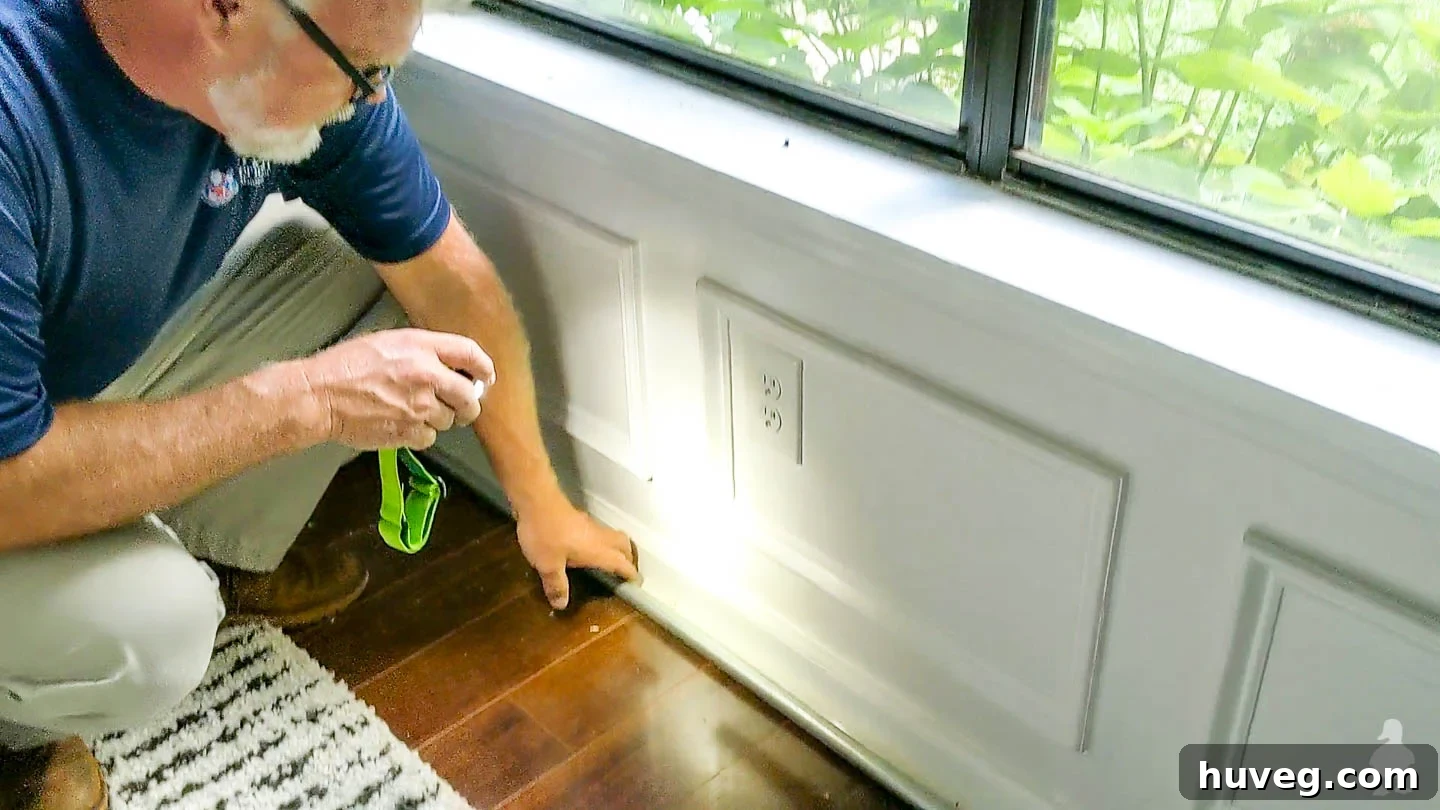
Just as with the exterior, termites can leave tell-tale signs of an interior infestation. Inspectors use flashlights and keen observation skills to detect these subtle clues, making accessibility to all areas paramount. Termites are incredibly persistent; they can infiltrate your home through minute cracks in the foundation, making their way up to feast on your flooring, even if it’s not hardwood or if a moisture barrier is present. They require crevices no wider than a credit card to gain entry – a testament to their determined nature!
Beyond flooring, termites can also cause damage and reveal their presence along windowsills or by consuming the cellulose found in your drywall – a surprising fact for many homeowners. In the spring, mature subterranean nests produce “swarms” of winged adult termites. These reproductive individuals fly off to establish new colonies, embarking on their own journeys of mass destruction.
I distinctly recall the difficulty, and frankly, the embarrassment, years ago when the inspector struggled to navigate my clutter-packed garage, where he needed to examine the floor for any signs of termites. Let my experience serve as a warning to prevent you from encountering the same issue! Ensure that all crawl spaces are easily accessible, with no obstructions blocking their entry points. Inspectors will want to examine the perimeter of your home’s interior, including flooring and windows in areas such as closets, the basement, attic, and bathrooms. Termite evidence can often be well-hidden, so don’t be surprised if your professional inspector uses a probe to carefully check windowsills, door frames, and areas beneath sinks. Proactively move any furniture, boxes, or stored items that might block access to these critical inspection points.
Termite Tips That Might Surprise Even Experienced Homeowners
During his visit, David shared numerous fascinating and often surprising insights about termites and pest prevention. Here are some of the key takeaways I meticulously noted:
If this isn’t already part of your home maintenance routine, it’s time to get your fence panels off the ground! While you might have seen me trimming my fence gate for aesthetic reasons, creating a gap between the bottom of your fence panels and the soil serves a much more critical purpose. This space prevents termites from establishing a direct bridge from the ground to your fence, which could then lead them to your home. Furthermore, it significantly reduces moisture wicking up into the wood, a common cause of rot and decay. Rotting wood is an irresistible invitation for termites and other wood-destroying organisms.
Personally, I’m not a fan of pine straw mulch. However, I was almost certain that using dyed wood mulch directly against my home’s foundation, especially with cedar siding, was an absolute no-go. According to David, this is largely a myth! He gave me the all-clear for using wood mulch, provided it doesn’t build up so high that it covers the crucial foundation gap I mentioned earlier. This gap needs to remain exposed for inspection and to prevent termites from tunneling unseen. It’s always a good idea to double-check with your specific homeowner’s insurance policy, as some providers may have unique stipulations regarding landscaping materials near the foundation.
Based on my previous assumption about mulch, I also believed that gravel might be a superior groundcover option in certain areas to deter termites. This, too, proved incorrect. David explained that simply replacing mulch with gravel doesn’t significantly alter the situation if soil remains prevalent underneath. For gravel to offer a true barrier, it would need to be dug down quite deep, creating a trench-like effect, which is an enormous undertaking, especially in hard Georgia clay. In fact, he pointed out that gravel can actually be a hindrance when installing termite bait stations around the perimeter, as the stations need to be dug securely into the ground. (You can see this installation process in the video!).
Termite Treatment Installation: Sentricon Review
I captured extensive footage of both the inspection and the installation of the Sentricon system, designed to create a comprehensive protective barrier around my entire home. The installation process involved David utilizing an auger to create holes approximately every 12 feet, positioned about 2 to 3 feet away from my home’s foundation. Into each of these holes, a Sentricon termite bait station was carefully inserted.
Each station houses a specially formulated bait material that termites discover during their foraging expeditions for food. Upon finding the bait, worker termites carry it back to their colony, sharing it with their nest mates. When the termites consume this bait, it interferes with their ability to molt—a vital process for their growth and survival. Without the ability to molt, the termites cannot mature and ultimately perish, leading to the collapse of the entire colony. Each bait station is equipped with markings that allow future inspectors to measure the amount of bait consumed during subsequent re-inspections, indicating the level of termite activity. A significant advantage of the Sentricon system is that while its active ingredient is highly effective and lethal to termites, it is specifically designed to be non-harmful to humans, pets, and plants, making it an environmentally conscious choice for termite control.
Watch the Install Video:
In the coming year, the pest control team will return to meticulously check each bait station, assessing how much of the interior bait has been consumed. This ongoing monitoring is crucial for determining when the bait cartridges will need replenishment to maintain continuous protection.
One practical aspect of the Sentricon stations is their ease of removal and re-installation. Should I decide to undertake additional landscaping projects around the exterior of my home, David’s advice was simple: temporarily pop out the stations, complete the gardening or construction work, and then contact American Pest Control to have them re-installed. It is imperative that the stations remain at ground level and are not buried by gardening efforts. This ensures they can be easily located and properly inspected during annual check-ups, guaranteeing their continued effectiveness.
As an added layer of protection, bait stations were also strategically placed around my new outdoor shed, extending the protective barrier to all vulnerable wooden structures on my property.
What About DIY Termite Treatment? Should You Hire a Professional?
As a passionate advocate for DIY projects whenever feasible—being a third-generation diehard DIYer and my father’s daughter—this was one of my most pressing questions for both Sentricon and American Pest Control. I firmly believe in avoiding fear-based arguments and instead focusing on the fundamental question: “You *can* do it yourself, but *should* you?” My conclusion, after careful consideration, mirrors the arguments for most professional-versus-DIY debates: it boils down to time, effectiveness, and ultimately, peace of mind.
I am always in favor of DIYing if the cost savings are substantial enough to justify the additional effort, learning curve, and potential risks. However, there is *always* a trade-off, and it’s crucial to thoroughly evaluate each component of that exchange. Successful termite baiting, particularly for a robust system like Sentricon, requires diligent installation, expert monitoring, and timely bait replenishment. Let’s dissect these three critical points.
Inspection and Installation: DIY vs. Professional
Observing David’s meticulous examination of both the exterior and interior of my home, and listening to his detailed explanations of what he was searching for, I can confidently say that, equipped with newfound knowledge, I now feel more capable of conducting a foundational perimeter check myself. This aspect, at first glance, appears somewhat DIY-friendly. However, the crucial caveat is that you truly need to know precisely *what* to look for. Without a seasoned professional offering expert pointers—such as distinguishing a fly’s wing from a termite’s discarded wing on a windowsill, or discerning between dirt and termite droppings—most homeowners would be completely at a loss. David also emphasized that a purely visual inspection of a home only provides about *half* the assurance of whether termites are present. This is because infestations can originate from unseen areas like interior subflooring, wall voids, and other hidden spots that are not readily visible. So, while no license is required to inspect your own home, and the process might seem achievable, it demands a significant investment in educating yourself (far beyond just this blog post) and developing the keen eye of an expert, which is a considerable time commitment in itself. The physical installation process for bait stations, too, appeared relatively straightforward. Yet, this leads me to my next critical point.
Monitoring and Effectiveness: The Critical Difference
One of the most striking differences for me was the efficiency of professional installation coupled with the extended monitoring schedule. Most professional pest control companies, after initial installation, typically don’t need to return for a full year for monitoring. In stark contrast, when researching DIY termite baiting systems, I found that they generally utilize far less active material (and I have doubts about their potency as well), which necessitates significantly more frequent monitoring and replacement. Many DIY kits, in fact, recommend inspections every *two to three months* and often require bait replacement within six to nine months! This frequent maintenance quickly erodes any initial cost savings, both in terms of time commitment and the recurring expense of purchasing replacement baits, or worse, if the system proves less effective, you might end up deploying many more stations, further escalating costs.
Honestly, remembering to meticulously check dozens of bait stations around the exterior of my home every couple of months is something I can very easily see myself forgetting. Such oversight could easily void any potential warranty the DIY product might offer. This brings me to another significant concern: many DIY kits come with highly questionable warranties. These often merely promise your money back, or crucially, they typically do not cover the cost of professional treatment or any damage incurred if a full-blown infestation occurs later. Some product labeling even explicitly warns that they are not intended as the sole protection against termites, going so far as to recommend professional inspection and treatment if an active infestation is found. This stark admission alone should give pause.
To put this into perspective, have you ever attempted to bleach your own hair at home? I have, and the result was a disastrous pile of scorched, orange straw. I *still* had to spend significantly more at a professional salon, where sympathetic stylists painstakingly tried to undo the damage I had inflicted. I was left not only without the look I desired but with an even uglier brown color than I started with, a much lighter wallet, and it took an eternity for my hair to return to anything resembling normalcy.
Peace of Mind: The Ultimate Return on Investment
My overarching point is that I evaluate certain “when to hire a pro” situations with a similar risk-versus-reward assessment. If my personal expertise and time management are not variables I’m willing to gamble my financial investment on, then the additional cost of professional help is unequivocally worth it. A house devoured by termites, unlike my hair, will not simply grow back, and correcting such extensive damage will cost exponentially more than my initial savings. Having personally endured the nightmare of a previous infestation and undertaken some of the repairs myself, I have no desire to relive that experience. This is one scenario where experts consistently advise that even if you’re comfortable tackling other forms of DIY pest control (fleas, mosquitoes, squirrels, etc.), termites should definitively *not* be included in the DIY category.
This perspective, however, does not diminish the value of many DIY termite *prevention* tips found online. In fact, I believe many of these proactive measures against termites are excellent best practices for warding off a wide range of other household pests as well:
- Replacing cardboard boxes in storage areas with durable plastic containers (cockroaches and other insects are particularly fond of cardboard for shelter and food).
- Regularly spraying around outdoor firewood piles and wood debris (to deter carpenter ants, wood-boring beetles, and various other insects).
- Utilizing gravel where wood contacts the ground (this helps significantly in preventing moisture accumulation and subsequent rot).
- Ensuring that gutters are clean and functional, and that A/C water drainage systems direct water away from the foundation, preventing them from becoming attractive water sources for insects (like mosquitoes, for example).
To me, these prevention strategies should be considered an “and,” rather than an “or.” It’s truly best to implement these preventative measures *and* engage with professional termite protection, rather than choosing one over the other and assuming your home is fully protected.
Alright, I believe that’s quite enough bug talk for today! I sincerely hope this detailed guide has provided you with valuable insights and “food for thought.” I would genuinely love to hear your perspectives and experiences on this crucial topic. Don’t forget to watch the video above for a visual walkthrough, and I’ll be back in a year to provide an update on this ongoing chapter of home protection. A special thank you to Sentricon for sponsoring this content and to the incredible team at American Pest Control (local readers, you can find their contact information here). You can also click here to locate a local professional in your area.
Don’t forget to pin this for future reference!
P.S. Interested in learning about other common household pests? I have dedicated articles on various pest topics here, including a detailed post about another nemesis for cedar-sided homes: carpenter bees!