Effortless Door Makeover: No Removal Required

Painting interior doors can dramatically transform the look and feel of any room, breathing new life into your home. However, the thought of tackling this DIY project often brings to mind the daunting task of removing doors from their hinges. For many homeowners, especially those dealing with older, settled homes, this step alone can be a major deterrent. But what if there was a smart, efficient way to achieve professional-looking results without the hassle of detaching your doors? I’ve discovered a simple, yet incredibly effective trick that allows you to paint doors right where they hang, saving you valuable time, effort, and the common frustrations of re-hanging stubborn, old doors.
I understand the desire for a fresh look. My own doors, like many in older houses, are simple, flat hollow core models that had seen better days. Over recent weeks, I’ve been on a mission to revitalize them. This process involves a thorough cleaning to remove years of accumulated dirt and grime, followed by scuffing the surface with a sanding sponge to create an ideal base for paint adhesion. After carefully wiping away all dust with a tack cloth, the doors are ready for their fresh coat of paint. But the secret to a pristine finish, especially around the hardware, lies in a clever technique that bypasses the need for door removal entirely.
How to Paint a Door Without Removing It from Its Hinges
Why Avoiding Door Removal is a Smart Choice
You might be thinking, “Why not just remove the door from its hinges?” It’s a valid question, but the answer is surprisingly simple and practical: it often creates more problems than it solves. For starters, removing a door, carrying it to a work area, painting it, and then meticulously re-installing it is far more time-consuming than painting it in place. But beyond the time commitment, there’s a significant risk involved, particularly with older homes and their inherent quirks. Doors in older houses often settle over decades, creating a unique fit within their frames. Once you take them off, there’s no guarantee they will hang exactly the same way again. You might find yourself struggling with a door that no longer closes properly, scrapes the floor, or binds against the frame, requiring frustrating adjustments. As a DIY enthusiast, I cherish learning and tackling home projects, but some headaches are best avoided when a simpler solution exists. This ingenious method helps bypass these common pitfalls, allowing you to achieve a smooth, professional paint job with minimal fuss.
Essential Preparation for a Flawless Finish
Before diving into the painting process, comprehensive preparation is absolutely vital. Skipping these initial steps can compromise the quality and longevity of your paint job. Start by thoroughly cleaning both sides of the door and the door frame. Use a mild all-purpose cleaner and a damp cloth to remove any dirt, grease, or grime that has accumulated over time. Ensure the surface is completely dry before moving on. Next, inspect the door for any imperfections such as old paint drips, nicks, or small holes. Use a sanding sponge or fine-grit sandpaper (around 120-220 grit) to lightly scuff the entire surface of the door. This creates a slightly textured surface that allows the new paint to adhere much better. For any deeper nicks or holes, apply a small amount of wood filler, let it dry completely, then sand it smooth. Once sanding is complete, use a tack cloth to meticulously wipe away all residual dust particles. This step is critical, as even tiny dust specs can show through a fresh coat of paint. Lay down drop cloths to protect your flooring, and now you’re truly ready to gather your tools and proceed with the painting trick.
Materials & Tools for Painting Your Door
- Craft knife: Essential for precision cutting of painter’s tape around hinges.
- Sandpaper (or sanding sponge): For scuffing the door surface and ensuring proper paint adhesion.
- High-quality paint brush: Ideal for cutting in edges, painting around hardware, and intricate details.
- Foam rollers (and roller frame): Perfect for achieving a smooth, even finish on flat door surfaces with minimal brush marks.
- Painter’s tape: Your best friend for protecting hinges and other hardware from paint.
- Tack cloth: For removing fine dust particles after sanding.
- Mild cleaner and cloths: For thorough pre-painting cleaning.
- Wood filler (optional): For repairing any minor dents or holes.
- Primer (optional but recommended): Especially if changing color significantly or painting raw wood.
Time needed: 5 minutes (for the taping trick per hinge)
This is the simple, yet highly effective trick to paint interior and exterior doors cleanly and without the hassle of removing them from their hinges. Get ready for pristine edges!
- Step 1: Cover Hinges with Painter’s Tape
Begin by taking a strip of high-quality painter’s tape and carefully covering the entire hinge you wish to protect. Ensure the tape extends slightly beyond the edges of the hinge onto the door surface itself. Press the tape down firmly to create a good seal, preventing any paint from seeping underneath. Overlap pieces if necessary to cover the full metal surface, making sure there are no gaps.

- Step 2: Precisely Find Your Cutting Line
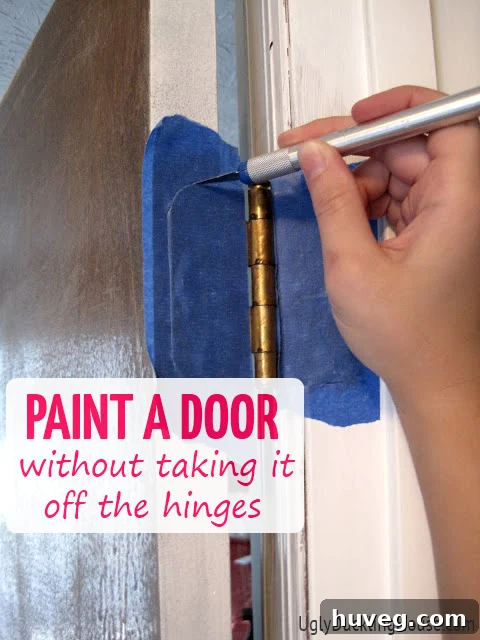
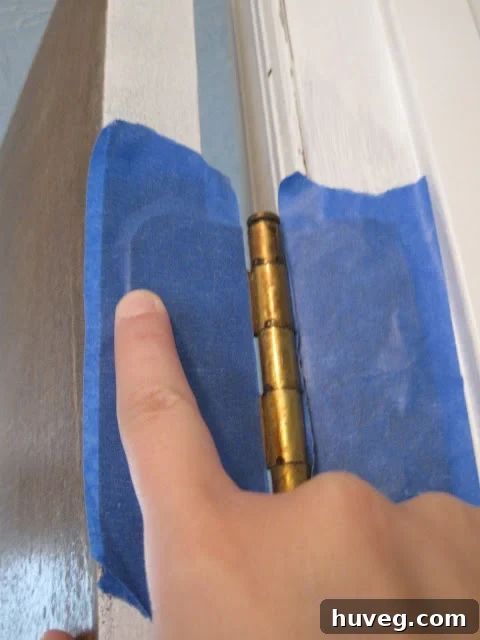
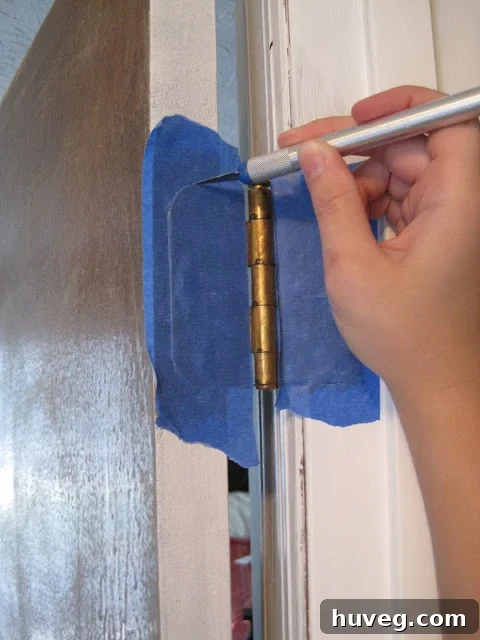
Once the hinge is fully taped, gently smooth your finger along the edge where the hinge meets the door. In most cases, especially with older doors, the hinge plate will not be perfectly flush with the door’s surface. You’ll likely feel a slight recessed edge or a distinct transition. This natural boundary is your perfect guide! It creates a clean, subtle outline that you’ll use for the next step, ensuring a crisp, straight line once the excess tape is removed.
- Step 3: Carefully Cut Around the Edge
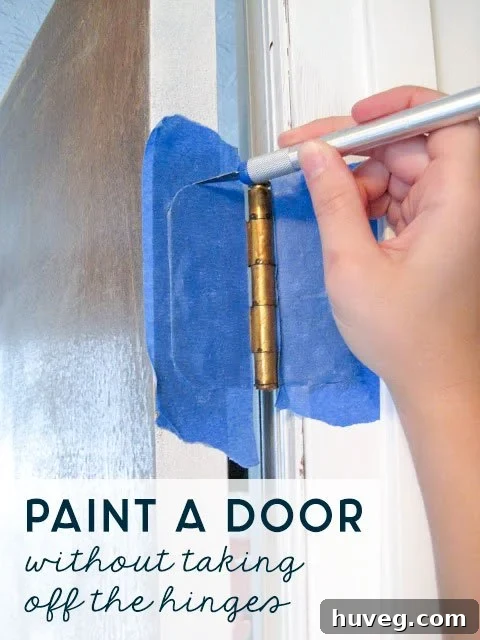
Now, with your cutting line established, take a sharp craft knife (like an X-Acto knife) or the sharp point of a putty knife. Carefully and steadily run the blade along the recessed edge you’ve identified in the tape. Apply just enough pressure to cut through the painter’s tape without scratching the door or hinge. Take your time, making sure to follow the contour of the hinge precisely. This step requires a steady hand for the best results, creating a perfectly tailored tape mask around the hinge.
- Step 4: Remove the Excess Tape
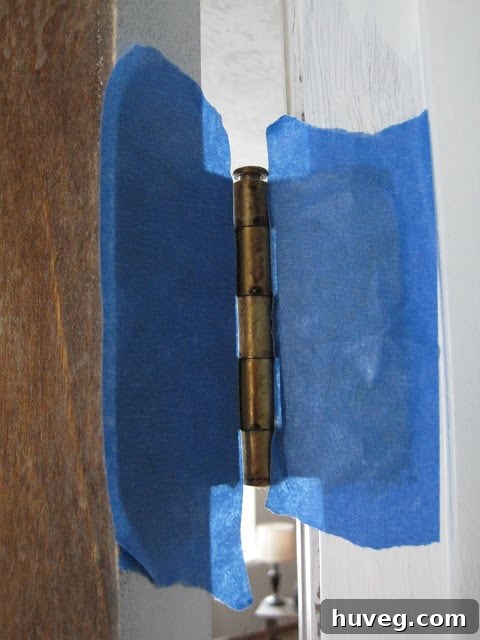
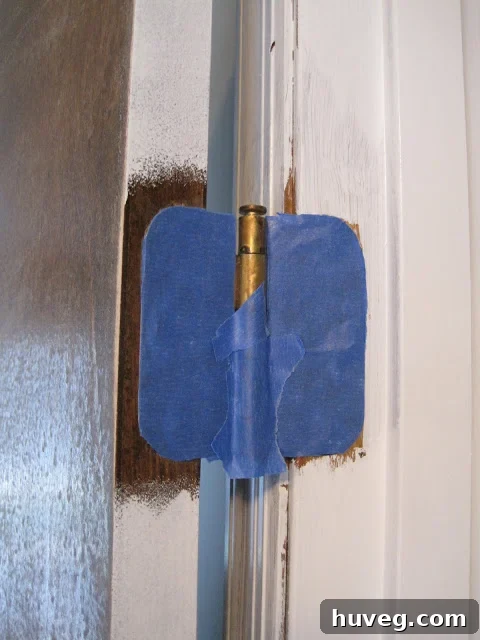
With the cut made, carefully peel away the outer portion of the painter’s tape – the part that is now separated from the piece covering the metal hinge. You’ll be left with a perfectly trimmed piece of tape neatly covering the hinge, protecting it from paint. At this stage, you can decide whether to cover the hinge pins as well. Some prefer to leave them exposed for a consistent look with the hinge, while others tape them for full protection. This choice is entirely up to your personal preference and desired outcome.
- Step 5: Paint with Confidence!
Now that your hinges are perfectly masked, you can proceed with painting the door with much greater ease and less worry about accidental drips or smears on the hardware. Apply your paint in thin, even coats, following the grain of the door. Use your chosen brush for edges and a foam roller for flat panels to achieve a smooth finish. Once you’re done painting and before the paint has fully dried (ideally when it’s still slightly wet), carefully remove the painter’s tape from the hinges. This helps ensure a super clean, crisp line and prevents the paint from curing to the tape, which could lead to peeling or tearing of your freshly painted surface. If you wait until the paint is completely dry, you risk pulling off small flakes of paint along the tape line.
More Interior Door Painting Tips for a Professional Finish
- Extend the Tape Treatment to Other Hardware: This precise taping method isn’t just for hinges. Apply the same technique to other door hardware like the strike plate for the door lock, deadbolt mechanisms, or even around the base of door knobs if you choose not to remove them. A little extra time spent taping accurately will save hours of tedious cleanup later.
- Don’t Skimp on Sanding: Sanding is your best friend for a lasting paint job. After the initial cleaning, use a medium-grit sandpaper (120-180) to scuff the entire door surface. For subsequent coats, a lighter sanding with fine-grit paper (220-320) between coats will create an incredibly smooth finish and enhance adhesion. Always wipe thoroughly with a tack cloth after each sanding session.
- The Power of Prep Work: As mentioned, preparation is paramount. Beyond cleaning and sanding, ensure your workspace is ready. Lay down ample drop cloths to protect floors and furniture. Fill any dents, dings, or holes with wood filler and sand them smooth for an unblemished surface. Mask off walls or trim with painter’s tape if you’re not confident in your cutting-in skills. Proper prep makes a HUGE difference in the final result.
- Choosing Your Paint and Primer: For a durable finish on doors, a high-quality interior paint is crucial. I often use a base coat of BEHR Ultra Premium paint with primer (only on the first coat for quick adhesion). However, for subsequent coats, I prefer a non-primer paint, as some primer-inclusive paints can sometimes have a tendency to yellow over time, especially with lighter colors. Always choose a paint that offers excellent coverage and durability.
- The Right Sheen: For interior doors, a satin or semi-gloss sheen is typically recommended. These finishes are more durable and easier to clean than flat or eggshell paints, which is important for high-traffic areas like doors. They also offer a subtle luster that enhances the door’s appearance.
- Painting Order for Paneled Doors: If your doors have panels, follow a specific order to avoid unsightly drips and brush marks. Start by painting the recessed panels first, then the horizontal rails (the short cross pieces), followed by the vertical stiles (the long vertical pieces). Always paint in the direction of the wood grain to hide brush strokes and achieve a smoother finish.
- Allow Adequate Drying Time: Patience is a virtue when painting. Always allow each coat of paint to dry completely according to the manufacturer’s instructions before applying the next. Rushing this step can lead to tacky surfaces, brush marks, and an uneven finish.
I’m optimistically hoping that tonight’s application will be the final coat, finally allowing me to unveil the complete transformation of the bedroom! This small trick has truly simplified my painting process. If you found this guide helpful and are looking for more ways to enhance your home, be sure to check out my front porch before and after transformation for more inspiration and practical DIY solutions.
Want to paint like a pro? Dive into these valuable resources for expert tips and techniques:
-
How to paint around trim without painter’s tape
-
My top 10 tips for better paint results
-
How to paint a paneled door
-
My secret to finding the best paint colors (without a lot of samples)
-
How to do a half and 3/4 paint wall treatment
-
How I painted my kitchen countertops
-
How to paint a vinyl floor
-
How to remove paint from windows
-
How to paint cabinets without sanding