Aye, The Shrub Unveiled


Aye, There’s the Rub: Taming Our Overgrown Hedges for Better Home Health and Curb Appeal
Some tasks around the house feel like a never-ending saga, and for us, the state of our front and side hedges had certainly reached epic proportions. While my initial musings might involve a bit of Shakespearean wit, the reality of our neglected landscaping was far from poetic. This post dives into our journey of tackling these overgrown behemoths, not just for aesthetics, but for the fundamental health and integrity of our home.
The Overwhelming Truth: Why Immediate Action Was Imperative
Our front lawn, much like many other areas of this old house, is a canvas awaiting a complete overhaul. However, grand visions for exterior renovations often clash with the more immediate demands of a half-finished subfloor indoors and a tightly stretched budget. Scott and I are firmly in the camp of “one project at a time,” and a full exterior landscaping redesign simply isn’t feasible right now. Yet, simply ripping out the existing hedges without a plan for replacement felt like a terrible idea. This charming old lady of a house would be left completely exposed, losing the architectural softness and a crucial layer of protection that even overgrown shrubs provide. Much like myself, I prefer my old ladies to retain a bit of their mystique!
This realization cemented our immediate course of action: work with what we have. Maintaining and improving the existing landscape became an absolute must until we could afford more significant changes. We needed to bring order to the chaos, and for the hedges, that meant a significant trim. With any luck, the anticipation of my aunt and uncle’s visit would serve as the perfect catalyst, giving us that extra push to tidy things up.
More Than Just Looks: The Crucial Benefits of Proper Hedge Spacing
While an unkempt hedge certainly detracts from curb appeal, the decision to trim ours was driven by far more than just aesthetics. There are several vital reasons why maintaining adequate space between your landscaping and your home’s foundation is paramount for long-term home health and safety.
Protecting Your Foundation from Moisture and Pests
One of the most critical guidelines in landscaping is to maintain at least twelve inches of space between your plants and the foundation of your house. This is especially true for homes with certain siding types, like our cedar-sided abode. Overgrown hedges can trap moisture against your foundation, leading to a host of problems. Excess moisture can encourage wood rot, mildew growth, and even compromise the structural integrity of your foundation over time. Preventing water accumulation is key to avoiding costly repairs down the line.
Beyond moisture, proper spacing is a formidable defense against pests. We had a significant termite problem just before moving in, and the last thing we want is a repeat infestation! Termites thrive in dark, damp environments, and dense foliage pressed against your house provides exactly that. Trimming back hedges eliminates these inviting conditions, making your home less attractive to termites, carpenter ants, rodents, and other unwanted critters seeking shelter or a direct pathway into your home. Good air circulation around the foundation discourages these pests and makes it easier to spot any signs of activity should they arise.
Ensuring Proper Drainage and Access for Maintenance
Adequate spacing also allows rainwater to properly reach the soil and drain away from your foundation. Overhanging or dense hedges can sometimes divert water in unintended ways, or create conditions where water pools directly against the house. This can undermine your foundation and lead to hydrostatic pressure issues. By creating a buffer, you ensure that your home’s drainage systems, such as gutters and downspouts, can function effectively without being impeded by vegetation.
Furthermore, a clear perimeter around your house significantly simplifies home maintenance. Imagine trying to paint, clean siding, inspect for cracks, or even just wash windows when dense shrubs are in the way. It’s a frustrating and often impossible task. Proper spacing ensures you have easy access to the exterior of your home for routine inspections, cleaning, and any necessary repairs, saving you time and effort in the long run.
Promoting Plant Health Through Enhanced Air Circulation
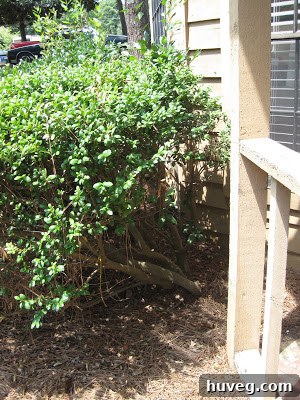
For those of us living in hot and humid climates, like ours, air circulation isn’t just important for the house; it’s vital for the plants themselves. Dense, overgrown hedges with poor airflow are breeding grounds for plant diseases such as powdery mildew, various fungi, and even rot within the plant’s interior. Trimming allows sunlight to penetrate deeper into the hedge and encourages better air movement through the foliage, leading to healthier, more robust plants that are less susceptible to disease and pests. As you can see from our “before” pictures, our hedges were clearly suffering from lack of light and air, signaling that we had some serious work to do.
Equipping for the Task: Smart Tool Choices
Every successful DIY project starts with the right tools. For this particular endeavor, a trip to our local “Orange” big-box home improvement store was in order. What I discovered there was quite eye-opening: a refurbished Black & Decker hedge trimmer. I honestly hadn’t realized that they sold refurbished or used equipment, but the $20 discount from a brand-new model sitting right next to it was too tempting to pass up. Not only was it budget-friendly, but choosing refurbished also felt like a “green” decision, giving a perfectly functional tool a second life.
A hedge trimmer, to me, looks remarkably like a futuristic, oversized pair of scissors or perhaps what I imagine a giant turkey carver might be. Its formidable blades and powerful motor promised to make quick work of our dense hedges. My initial plan for using it was simple and, dare I say, quite effective: I envisioned myself directing the operation, perhaps offering strategic advice from a safe distance.
True to form, after unboxing and a quick safety briefing, I handed the powerful tool over to Scott. After all, what are partners for if not for tackling the more physically demanding tasks? Scott, with his characteristic gusto, embraced the challenge, transforming into our resident hedge-taming hero.

The Transformation: Immediate Results and Future Implications
In just about an hour, Scott had made significant progress. The difference was immediate and dramatic. Most of the unwanted, overgrown branches were trimmed away, pulling the hedges back from the house and instantly improving the overall appearance. It was immensely satisfying to see the clean lines emerge from the previous tangled mess.
However, this immediate improvement also revealed another truth about our “old lady” of a house: the front siding that had been hidden for so long was truly beaten up. The exposed areas now clearly showed wear, fading, and some minor damage, underscoring the fact that it would need replacement sooner rather than later. While this wasn’t an entirely new revelation, seeing it so starkly laid bare was a reminder of the many projects still on our never-ending home improvement list.
Despite revealing another necessary repair, this hedge-trimming project was a resounding success. It was a crucial “baby step” in our larger home renovation journey. We achieved vital pest prevention, improved air circulation, and gave the house a much-needed breath of fresh air, all while staying within our current budget and time constraints. These smaller, manageable tasks are incredibly important for maintaining momentum and preventing overwhelm when facing a whole-house renovation.
Beyond the Blades: The Continuous Journey of Home Improvement
This experience with our hedges serves as a powerful reminder that home maintenance is an ongoing process, often revealing new layers of work with each completed project. While we’re still grappling with interior subfloors and dreaming of grander exterior transformations, tackling these neglected hedges provided immediate gratification and addressed critical functional concerns. It highlighted that even seemingly small acts of maintenance contribute significantly to the overall health, longevity, and eventual curb appeal of our home.
Moving forward, these newly trimmed hedges will require regular upkeep, but the initial heavy lifting is done. It’s a testament to the power of breaking down large, daunting tasks into smaller, achievable steps. For anyone facing similar landscaping dilemmas, remember the practical benefits of a good trim: pest control, moisture management, improved access, and healthier plants. And sometimes, it’s also about revealing what truly lies beneath, preparing you for the next exciting phase of your home’s evolution. Here’s to more “baby steps” and turning our house into the beautiful home we know it can be!