Crafting Your Dream Fire Pit

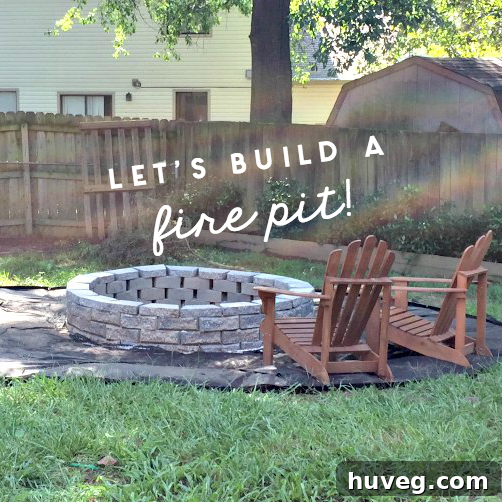
Transforming a backyard into a truly inviting oasis can seem daunting, but sometimes the most impactful changes are also the most straightforward. Recently, as part of a major backyard renovation, I embarked on building a new outdoor entertaining space centered around a fire pit. What genuinely surprised me was not just the simplicity of the construction process itself, but the immense amount of warmth and coziness this single feature added to my outdoor living area. A well-designed fire pit quickly becomes the heart of any backyard, a natural gathering spot that invites conversation, laughter, and relaxation under the open sky.
From Temporary Flames to a Permanent Fixture: My Fire Pit Journey
For those familiar with my previous outdoor projects, you might be thinking, “Didn’t she build a fire pit before?” And you’d be absolutely right! This latest project marks my third attempt at creating a functional fire pit in my backyard over the years. However, the first two iterations were designed for convenience and temporary purposes, serving specific needs rather than fulfilling the dream of a dedicated, aesthetically pleasing entertainment space.
My very first DIY fire pit, a humble endeavor, was located in a spot almost identical to where my new one now stands. It was less of a fire pit and more of a dug-out area, primarily for burning small debris. Eventually, this area became overgrown and unused, especially after the previous owners left behind an old, defunct water fountain. It was hardly the picturesque setting for enjoying drinks with friends or roasting marshmallows with family. It served its purpose at the time but clearly wasn’t a long-term solution for social gatherings.
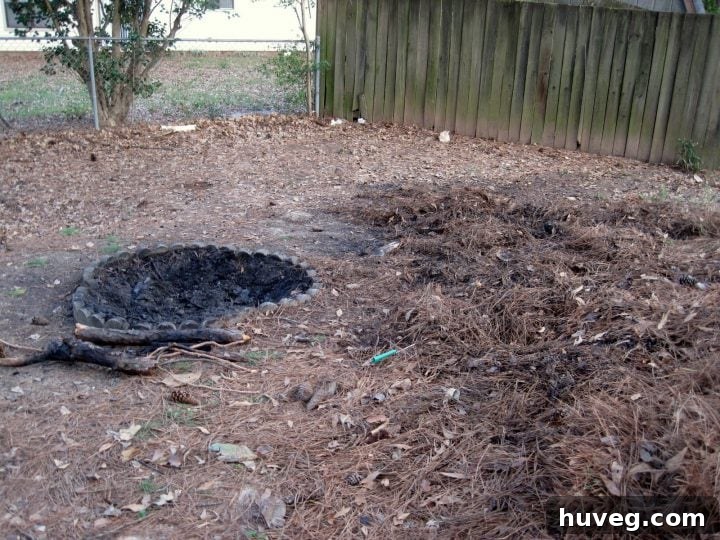
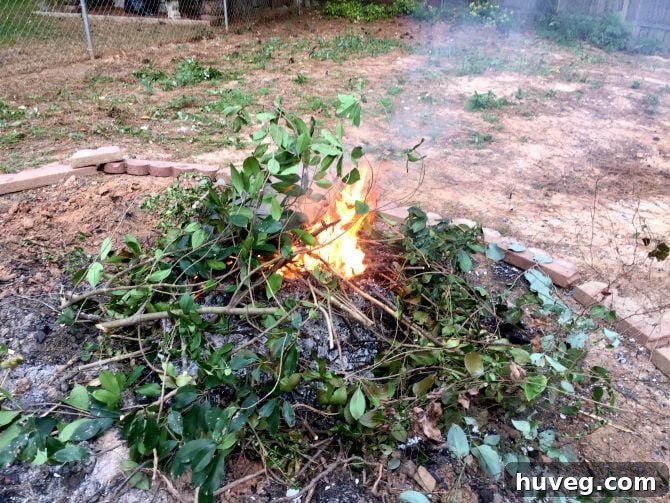
The second fire pit I constructed was purely utilitarian. Its main goal was to help dispose of stubborn tree stumps that remained after I undertook the challenging task of removing several large pine trees. While the stumps had been ground down, leveling the yard revealed an abundance of thick, entrenched tree roots and large chunks of wood. This “controlled” backyard brush fire proved incredibly effective, not only clearing the waste but also contributing to great topsoil over time. However, it was an above-ground, temporary structure, fundamentally unsuitable for a permanent gathering spot. Its purpose was purely functional, not designed for ambiance or long-term enjoyment.
After years of extensive landscaping work, including successfully cultivating lush green grass throughout the yard, my outdoor space finally began to look truly inviting. The transformation laid the groundwork for the next step: creating a sophisticated, adult-friendly outdoor entertainment area. With the previous temporary solutions behind me, I was more than ready to design and build a fire pit that combined both ultimate functionality with compelling aesthetics. Enough reminiscing, it’s time to dive into the details of building this multipurpose fire pit that perfectly balances burning yard waste with hosting memorable gatherings.
Building a Multipurpose Fire Pit: Blending Functionality with Style
My vision for this new fire pit was clear: it needed to be spacious enough to accommodate a large group of friends for social events, while also robust enough to efficiently burn yard waste. Essentially, I aimed for a design where function was beautifully intertwined with aesthetic appeal, creating a versatile centerpiece for my transformed backyard. This guide will walk you through the process, step by step, to help you achieve a similar result in your own outdoor space.
Essential Tools and Materials You’ll Need:
Gathering all your supplies before you begin is crucial for a smooth and efficient build. Here’s what you’ll need to construct your multipurpose fire pit:
- Retaining Wall Stones: Or other suitable landscaping stones, bricks, or even cinder blocks. Choose a material that complements your existing landscaping and can withstand high temperatures.
- Construction/Masonry Adhesive: A strong, weather-resistant adhesive designed for outdoor masonry projects. This is key for creating a durable structure.
- Caulk Gun: To apply the adhesive evenly and efficiently.
- Levels: You’ll ideally need two – a long level (4-foot or longer) to span across the diameter of your pit and a smaller torpedo level for leveling individual stones.
- Shovel: For digging and preparing the foundation.
- Heavy-Duty Yard Gloves: To protect your hands during digging and stone handling.
- Landscaping Fabric: For weed suppression and defining the surrounding area.
- Landscaping Border: To create a crisp edge around your fire pit area.
- Landscape Pins: To secure the landscaping fabric and border.
- Paver Sand (Optional): Can be used for stabilizing the first layer of stones, though gravel is another option.
- Rebar and Rubber Mallet (Optional): For additional reinforcement, especially for larger or more permanent structures.
1. Site Selection and Dry Fitting the First Row of Stones
The first critical step in building a successful fire pit is choosing the right location. Consider factors such as proximity to your home or other structures, overhead obstructions (like low-hanging branches), and ensuring adequate drainage to prevent water pooling or washing out your gravel base. Once you’ve identified an ideal spot, clear away any existing brush, grass, or debris. I then dug out a circular hole, roughly 6 inches deep, until I was satisfied with the overall diameter. A quick calculation (or Google search) helped me determine the number of stones needed for my chosen diameter (for a 6-foot diameter, I needed 16 stones).
With the spot cleared and the approximate size determined, I performed a “dry fit” by laying out the first row of retaining wall stones on the ground. This allowed me to visually confirm that the size and shape were exactly what I wanted before committing to any permanent steps. This initial dry run is invaluable for making adjustments without hassle and ensures you’re happy with the footprint of your new fire pit.
2. Ensuring a Perfectly Level Foundation for the First Layer
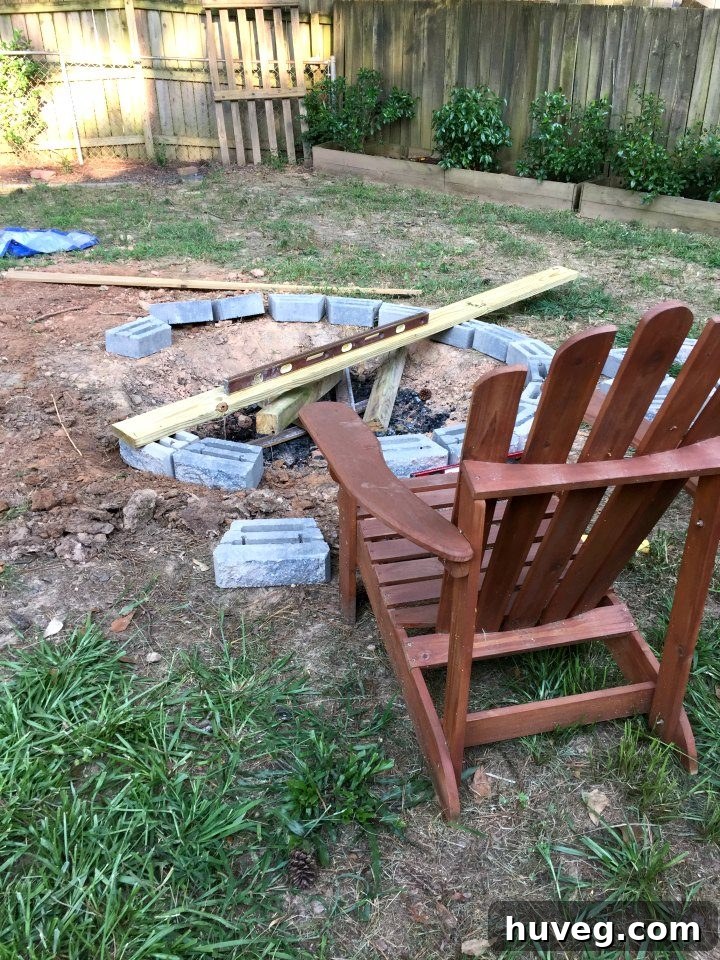
This step cannot be overstated: achieving a perfectly level first layer is absolutely crucial for the stability and longevity of your entire fire pit structure. Any unevenness in this foundational layer will compound with each subsequent row, leading to a wobbly, unstable, and aesthetically flawed fire pit. Before I began laying the retaining wall blocks permanently, I spent considerable time creating a completely flat and level surface within the excavated circle.
Since my edged circle was about 6 feet in diameter, my standard 4-foot level wasn’t long enough to span across the entire base. To overcome this, I used a straight piece of lumber, placing my level on top of it. I then moved this improvised leveling tool around the entire circumference of the pit, meticulously digging out higher points and adding soil to lower areas. The goal was to ensure that every point on the foundation was level with the stone on the opposite side of the pit, creating a truly flat plane.
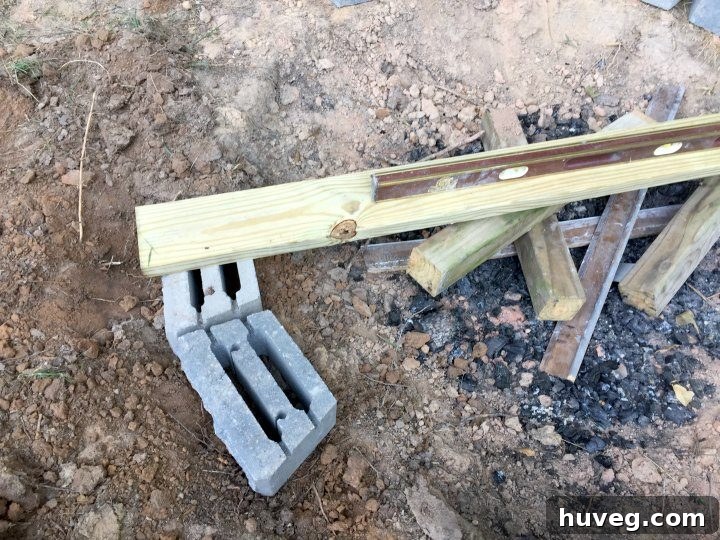
In addition to checking the overall level, I also used a smaller torpedo level to ensure each individual stone was level with its neighbors. This meticulous attention to detail prevents any rocking or wobbling within the first row, which, in turn, guarantees a solid base for the layers that follow. While the digging and leveling took a significant amount of time and effort, it is arguably the most important phase of the entire build. Investing this time upfront will save you countless headaches and potential structural issues down the line, ensuring your fire pit stands strong and true for years to come.
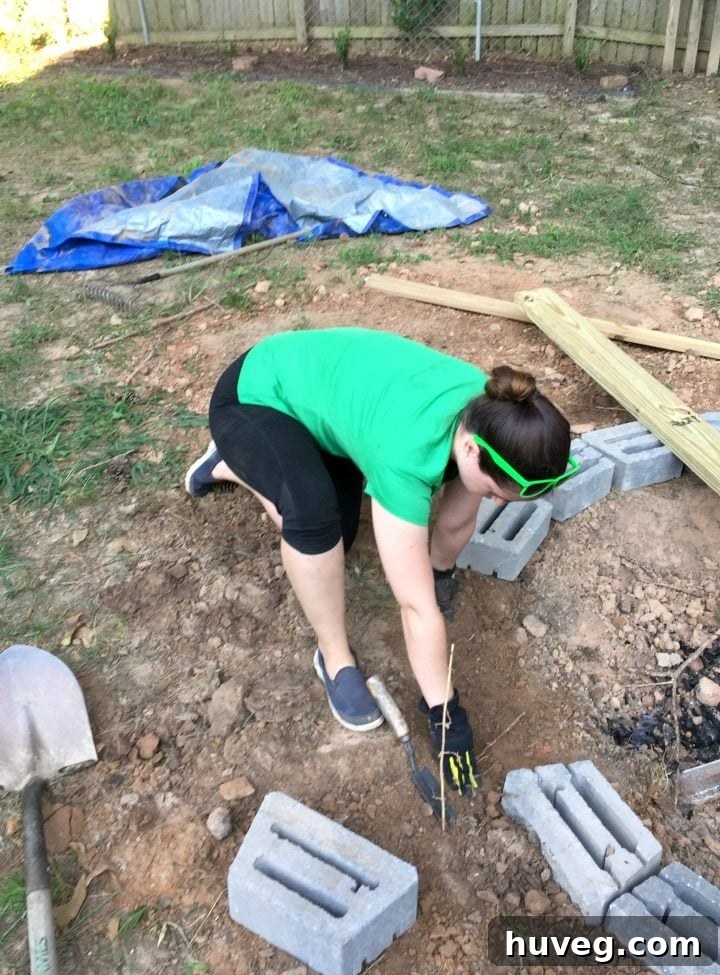
3. Stabilizing the Base and Beginning the Next Layers with Adhesive
Once the first layer of stones was perfectly positioned and level, I considered filling the hollow spaces within the blocks with paver sand. This step is optional and primarily serves as a stabilizing agent, particularly if your chosen stones are hollow or lightweight. If you’re using solid bricks or heavy, interlocking retaining wall blocks, paver sand might not be as necessary. Alternatively, a few inches of compacted gravel can serve the same purpose, providing a firm base and excellent drainage.
After adding the paver sand to the first row, I realized it wasn’t as critical as I initially thought for my specific stones. While the sand did seem to reduce movement, it complicated the application of the construction adhesive for the next layer. Masonry adhesive doesn’t adhere well to sandy surfaces. To rectify this, I used an old, stiff paintbrush to vigorously brush away any excess paving sand from the top surface of the stones where the adhesive would be applied. This ensured a clean, secure bond between the layers.
With the surface clean, I then applied a generous bead of construction/masonry adhesive along the top of the first row of stones. This adhesive is incredibly strong and crucial for permanently bonding the layers together. Ensure you apply enough to create a firm bond but avoid excessive amounts that might squeeze out noticeably between the stones. This adhesive will transform your stacked stones into a robust, integrated structure.
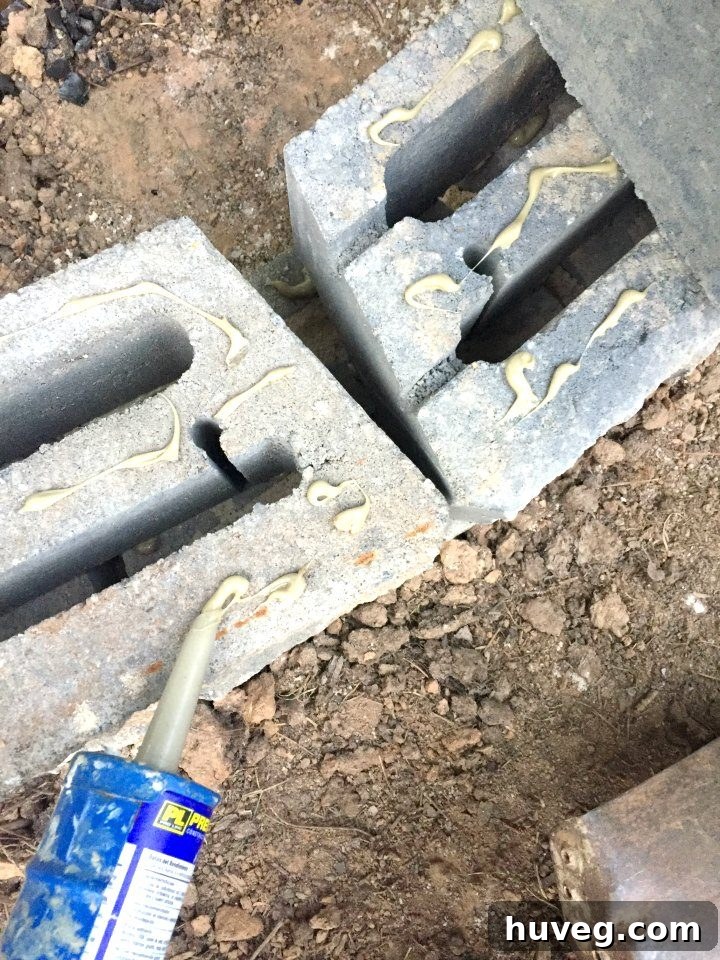
4. Building Up and Securing All Layers of Stones with a Running Bond
With the adhesive applied, it’s time to start stacking your subsequent layers of stones. The key to creating a strong and visually appealing fire pit is to use a “running bond” or “half-bonding” pattern. This means that the vertical joints of each layer are offset from the joints in the layers above and below. Essentially, each stone in the middle layer should ideally divide the stones above and below it in half. This staggered pattern distributes weight more evenly and significantly increases the structural integrity and durability of your fire pit, preventing weak points that could lead to shifting or collapse over time.
As I progressed with the second and third layers, I decided to skip filling the hollow blocks with sand. This decision was twofold: firstly, I planned to add rebar later for even greater reinforcement, making the sand less necessary for stability. Secondly, the sand tended to fall out through the gaps between the stones in higher layers, creating a mess and wasting material. For solid construction, focusing on the adhesive and proper stone placement in a running bond pattern proved to be more efficient and effective.
Continue applying adhesive and stacking stones, carefully checking the level of each stone as you go. Take your time to ensure that each layer is plumb (vertically straight) and that the circular shape is maintained. The adhesive will cure over time, creating a remarkably solid structure that will withstand the elements and the rigors of frequent use.
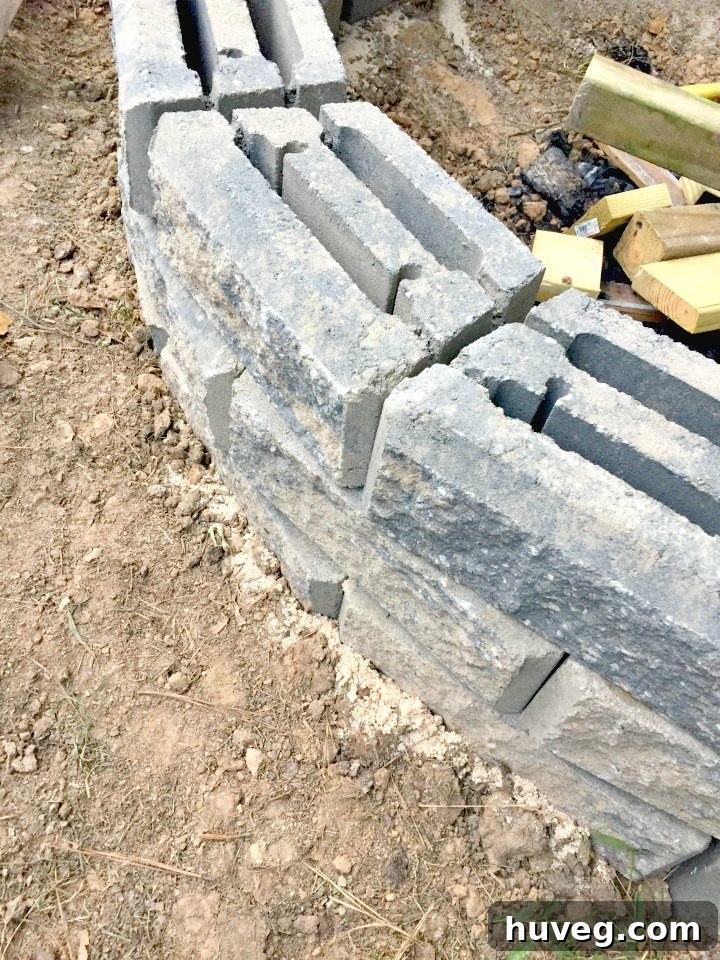
5. Defining the Entertainment Zone with Landscaping Fabric
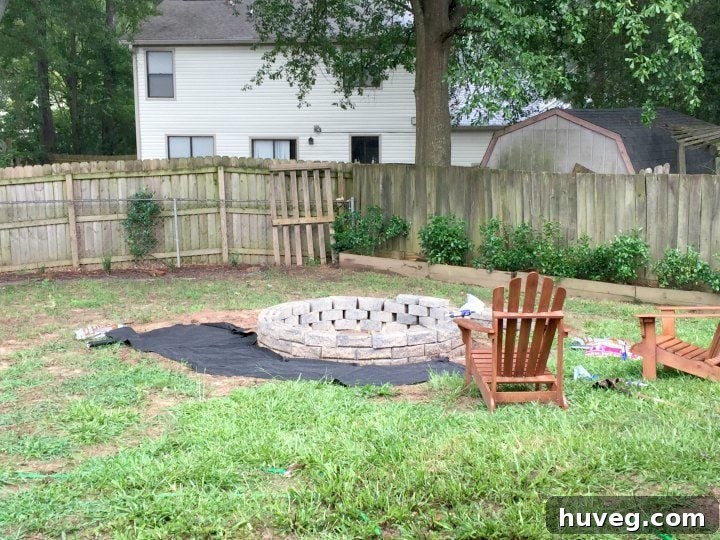
After successfully laying down the third and final row of stones, I paused the construction to allow the adhesive to fully settle and cure. This curing period is important for the long-term stability of your fire pit. During this time, I began laying out landscaping fabric around the exterior walls of the fire pit. This fabric serves a dual purpose: it acts as a crucial barrier against weeds, preventing them from growing up through your chosen ground cover, and it helps you visualize and define the perimeter of your seating and entertainment area.
By placing the fabric and arranging two Adirondack chairs (or your preferred outdoor seating) around the fire pit, I gained a clear understanding of how large the surrounding hardscaped area needed to be. This visual planning helps ensure that your finished entertainment space is proportionate, comfortable, and functional for your intended use. It’s much easier to adjust the fabric’s layout than to re-lay pavers or gravel later on.
6. (Optional but Recommended) Reinforcing the Structure with Rebar
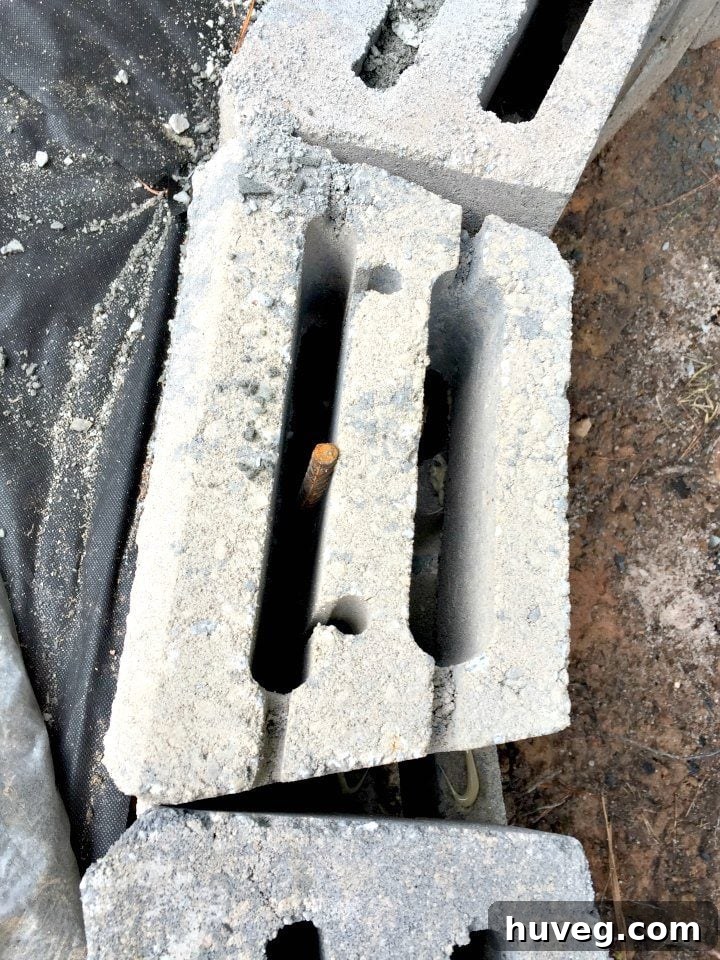
While many fire pit tutorials focus solely on adhesive, I decided to add an extra layer of reinforcement by incorporating rebar. I view a permanent fire pit more like a small retaining wall for the yard rather than a temporary structure. The added stability ensures it will withstand years of use and extreme weather conditions without shifting or settling. I strategically forced several pieces of rebar through the hollow cores of the stones and deep into the ground below. A sturdy rubber mallet made quick work of pounding the rebar firmly into place.
My fire pit is technically a hybrid, being partially below-ground and partially above-ground, so achieving maximum solidity was a priority. It’s worth noting that while rebar is typically inserted into the narrower holes of retaining wall blocks, the half-bonding pattern of my stones made those specific spots inaccessible. Instead, I carefully chose alternative points where the rebar could effectively anchor the structure, ensuring a robust and stable build. This optional step significantly enhances the durability and lifespan of your fire pit, providing peace of mind that your investment will stand the test of time.
7. Adding the Finishing Touch with Aesthetic Stone Caps
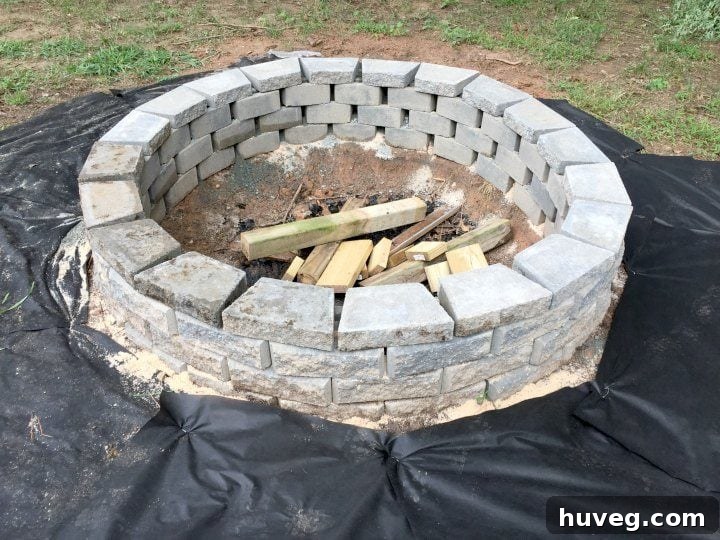
With the main structure of the fire pit now incredibly solid and stable, it was time to address the aesthetics of the top layer. While the hollow retaining wall stones are functional and relatively easy to work with, they aren’t always the most visually appealing finish. Remember, my goal was to combine both function and form. To achieve a polished, complete look, I added thin, flat stone caps as the topmost layer. These capstones not only conceal the hollow cores of the retaining wall blocks but also provide a smooth, finished surface that is much more inviting and pleasant to look at. They elevate the entire appearance of the fire pit, transforming it from a mere stack of stones into a beautifully integrated hardscape feature. This small but significant detail makes a huge difference in the overall appeal of your outdoor entertainment space.
8. Finalizing the Landscaping Fabric and Edging
With the fire pit structure complete, the final steps involve refining the surrounding landscape. I’ve found that using a flexible edging material is fantastic for creating a crisp, clean border without extensive effort. This particular material is made of durable plastic, making it both bendable for creating curves and incredibly solid once secured. You simply hammer yard stakes through it to keep it firmly in place, defining the edge between your fire pit area and the rest of the lawn or garden beds.
For the landscaping fabric, which extends beyond the fire pit itself to delineate the seating area, I used metal landscape pins to hold it flat and taut against the ground. These pins are essential for preventing the fabric from shifting, tearing, or allowing weeds to sneak through. While one reader cleverly suggested making DIY pins from wire hangers, I already had a whole bag of these professional landscape pins on hand, which provided a convenient and efficient way to secure the fabric. This ensures a neat, weed-free base for whatever ground cover you choose to add later.
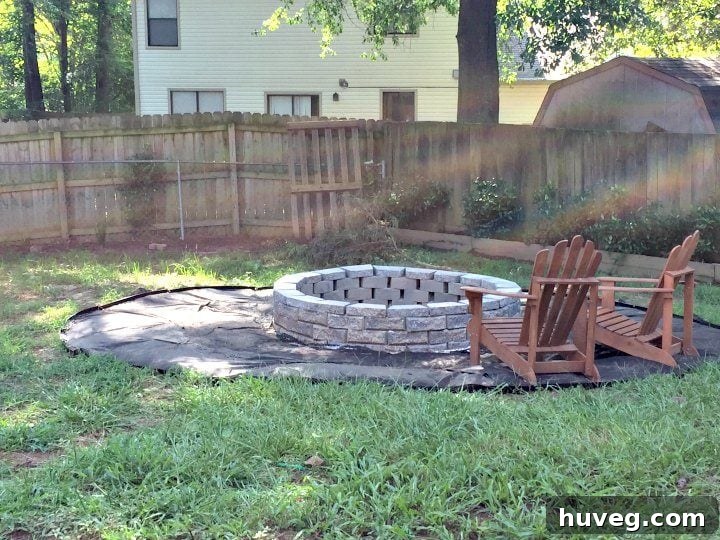
The transformation is quite remarkable, isn’t it? The difference between the initial temporary fire pits and this permanent, aesthetically pleasing structure is night and day. While the core fire pit structure is complete, there are still a few finishing touches to add. This includes laying down gravel (or pebbles or lava rocks, depending on your preference) for the ground cover, installing an inner row of fire brick for enhanced safety and heat retention, and creating additional seating arrangements to comfortably accommodate more guests. The current picture beautifully highlights the finished structure, but it also subtly reminds me of the paramount importance of meticulously leveling the entire project as you build. Can you spot that one subtle misalignment in the stones? It remained hidden until the very last layer, causing a frustrating moment of self-criticism! However, minor misalignments can also occur due to inherent ridges or flaws from stone production.
It’s not the end of the world, though. For any minor imperfections or slightly wonky stones, an angle grinder can be a DIYer’s best friend, allowing you to carefully grind away any flaws for a smoother finish. I’ve already had friends over to see if they could spot the misalignment. In person, it’s far less pronounced, and even when prompted to actively look for flaws, most people barely notice it. It’s easy for us, as builders, to obsess over every tiny imperfection, but the reality is that most guests will be too busy enjoying the warmth and company to scrutinize your handiwork. The overall ambiance and functionality far outweigh minor imperfections.
I’m genuinely thrilled with the progress and can’t wait for the entire backyard overhaul to be fully finished. This fire pit is just one piece of a larger puzzle that includes several exciting backyard improvement projects:
- Adding gravel, installing proper fireproofing, and finally fixing that slightly wonky stone.
- The ambitious “pub shed” project (yes, a pub shed – no “she shed” clichés for this house!).
- Mulching and fertilizing everything for fall, which means finalizing the yard’s aesthetic and planning for seasonal maintenance.
- Ongoing grass maintenance to keep the lawn lush and green.
- Removing the old chain link fence (it’s finally happening, much to my delight!).
- Planning and designing the new deck area and patio upgrade, which will further expand our outdoor living space.
But before diving into the next big project, my immediate plan is to kick back, relax, and thoroughly enjoy my brand new large fire pit and the beautiful, inviting backyard it now anchors. It’s truly the perfect gathering spot for casual yard parties, intimate conversations, and lively get-togethers with friends and family. I can’t wait to entertain in this reimagined outdoor space!
So many exciting changes are unfolding in my backyard, and I couldn’t be more enthusiastic about them. Are you currently working on any summer or fall outdoor projects that are transforming your space? Share your ideas and inspirations!
More Hardscaping Guides
DIY tips on how to landscape with stone, refresh a patio, and other yard features.
-
Fence Post Foam vs. Concrete
-
Let’s Build a Fire Pit!
-
How to Save a Ton of Money on Gravel and Mulch
SEE ALL HARDSCAPING GUIDES