Sculpting My Mind

Transforming Your Dining Room: A DIY Guide to Picture Molding Perfection
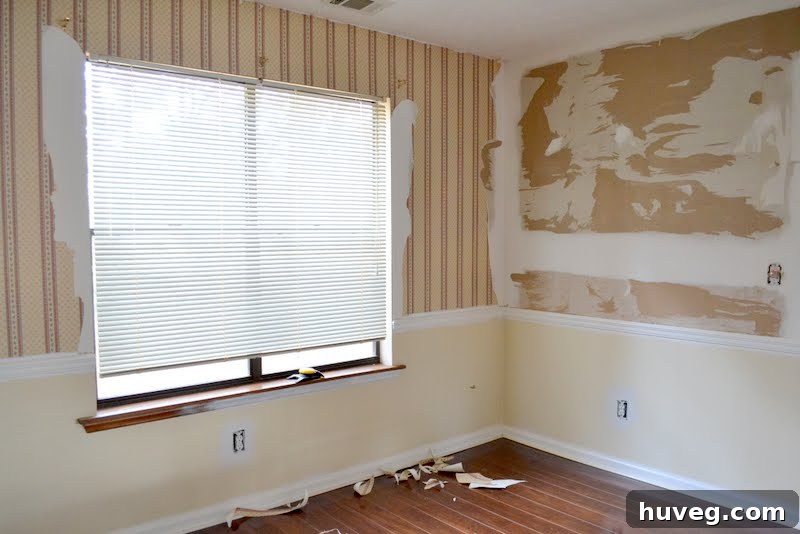
Embarking on a new DIY home improvement project often feels like facing a mountain, with the planning phase being half the climb. This sentiment perfectly captures my current endeavor: installing picture molding in my dining room. It’s a first for me, a venture into a technique that promises to add elegance and character to a space that’s been waiting for its moment to shine.
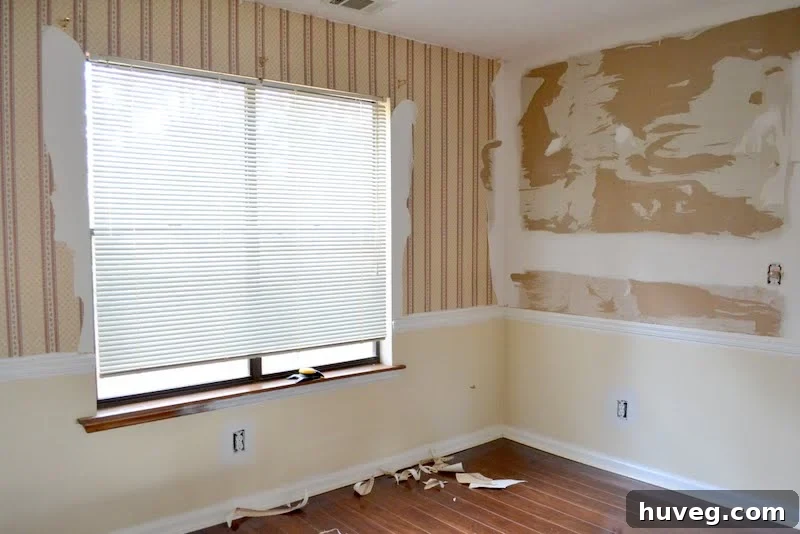
As someone who enjoys a good mathematical challenge, I’m confident in my ability to meticulously plan and execute this project. In fact, there’s a certain thrill in the precision required – envisioning and then bringing to life perfectly proportioned boxes on my walls. However, this isn’t just a spatial puzzle involving measurements, symmetry, and spacing (determining the ideal number of boxes per wall, their exact placement, and the precise distance from baseboards and ceilings). The primary hurdle for me is tackling this ambitious project solo. How do I achieve a flawless, professional-looking finish without an extra pair of hands?
Harnessing Online Wisdom: Preparing for Wainscoting Success
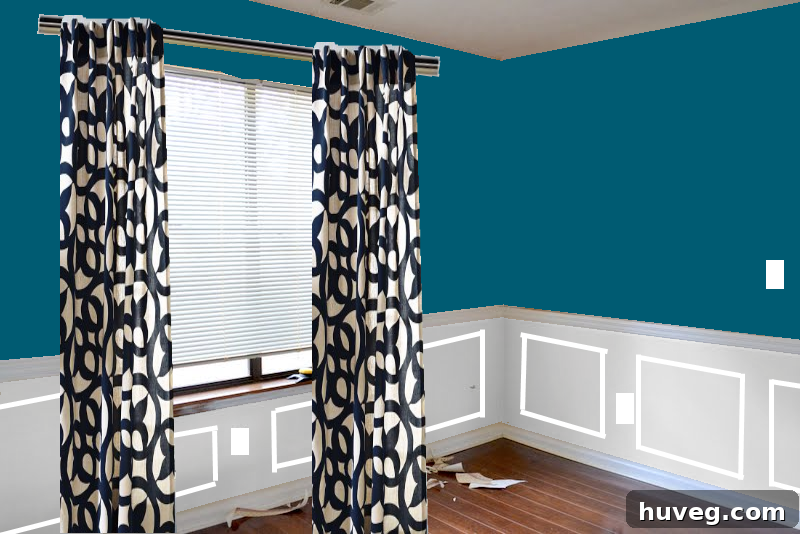
Just as I once discovered the indispensable role of a caulk gun for proper caulking, I’ve once again turned to the vast resources of the internet to mentally equip myself for this significant wainscoting project. The collective wisdom of fellow DIY enthusiasts and experienced bloggers has provided an invaluable blueprint, offering step-by-step guidance that has significantly boosted my confidence. Thanks to their insights, I now feel better prepared to transform my dining room into the elegant space I envision, moving beyond my rudimentary sketches and Photoshop mock-ups.
Embarking on a picture molding or wainscoting project can seem daunting, especially for a solo DIYer. However, with careful planning, the right techniques, and a little inspiration from those who’ve walked the path before, achieving a stunning, professional finish is entirely within reach. Here are some invaluable tips gleaned from the DIY community that are guiding my journey:
1. Visualize Your Design with Visual Aids
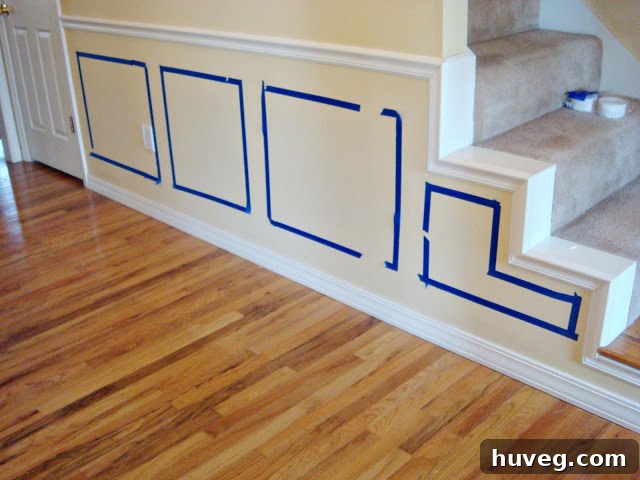
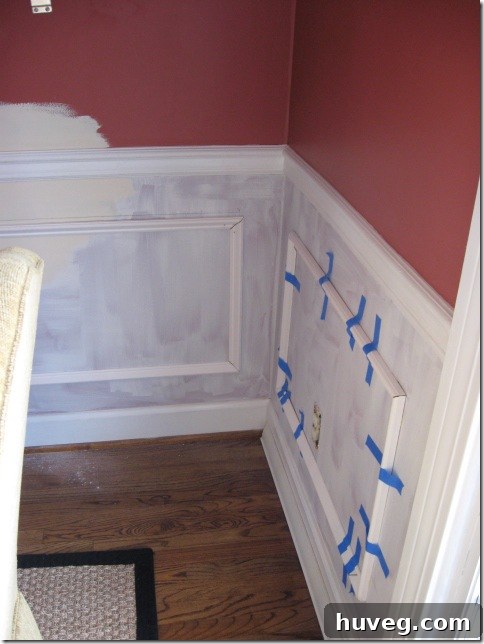
One of the most critical steps in any design project is visualization, and picture molding is no exception. Before making any cuts or permanent installations, it’s essential to confirm your layout and proportions. The brilliant technique employed by Little Big Nest involves using painter’s tape to outline each proposed molding box directly on the wall. This simple yet highly effective method allows you to see the exact size, spacing, and arrangement of your molding in real-time. It’s a game-changer for making crucial design decisions without commitment.
Imagine holding up a piece of molding to the wall, trying to gauge if it “looks right.” Now imagine seeing the entire configuration, knowing precisely how it interacts with electrical outlets, window frames, and existing trim. This visual rehearsal allows you to easily adjust proportions, move boxes, and even scrap entire design elements if they don’t quite fit the aesthetic. For instance, in a challenging space like a hallway or around a staircase, where angles and varying wall widths present unique design dilemmas, painter’s tape helps you navigate these complexities. Lauren from Little Big Nest herself decided against a small, awkward box near her stairs after seeing it taped out – a decision that saved time, effort, and potentially an unsightly design flaw. Taking this extra time upfront ensures that your final installation is exactly what you envisioned, perfectly balanced and aesthetically pleasing.
2. Achieve a Professional Finish and Master Solo Installation
Creating a truly polished look for your wainscoting or picture molding goes beyond just installing the trim. A key insight from Southern Hospitality recommends painting over the entire installed molding and wall section after installation, rather than just touching up the new trim. This technique ensures a seamless, unified finish that truly mimics custom wainscoting. It helps to blend the new molding into the wall as if it were an integral part of the structure, hiding any minor imperfections in the seams and creating a cohesive, high-end appearance.
For those of us undertaking this project without assistance, securing the molding pieces can be a challenge. This is where strategic use of tools and materials becomes paramount. My plan involves a combination of painter’s tape and Liquid Nails adhesive. Painter’s tape provides a temporary hold, allowing for minor adjustments before committing. Liquid Nails offers a strong initial bond, preventing the molding from shifting out of place while I carefully secure it with a nail gun. This two-pronged approach ensures stability and accuracy, even when working alone. Additionally, a reliable level is indispensable for ensuring every piece of molding is perfectly horizontal or vertical, guaranteeing the crisp lines that define a professional installation. Don’t underestimate the importance of sharp blades on your miter saw for clean, precise cuts – a critical factor for tight, seamless corners.
3. Prioritize Safety: Keep Both Eyes on the Project
Safety should always be paramount in any DIY project, especially when power tools are involved. My own past experience serves as a vivid reminder. I once witnessed a close call when installing shoe molding: a nail misfired from the air compressor and narrowly missed my cohabitant’s eye, leaving only a scratch on his cheek. That moment has stayed with me, reinforcing the critical need for vigilance and proper protective gear whenever I use power tools.
The advice from Creations by Kara offers excellent professional tips for molding installation, including strategic placement for nailing. While her emphasis is on choosing nail points that are easier to camouflage during filling and sanding, the underlying message of safe and smart tool usage is clear. Always wear proper eye protection – this is non-negotiable. Beyond eye protection, consider hearing protection, especially when using loud tools like air compressors and miter saws. Familiarize yourself with your tools, understand their safety features, and maintain a steady hand. Ensuring your workspace is clear, well-lit, and free of distractions also contributes significantly to a safe working environment. Remember, taking a few extra moments for safety precautions is always worth it to prevent injuries and keep your project on track.
4. The Finishing Touches: Caulk or Spackle for a Flawless Finish?
For many DIYers, myself included, caulk is often the go-to solution for almost any gap or seam. Its flexibility and ease of application make it incredibly versatile. However, when it comes to achieving an absolutely smooth, paint-ready finish on detailed molding, Centsational Girl presents a compelling argument for using spackling paste, particularly in the corners and seams of your molding boxes. The key difference lies in their properties: caulk is flexible and cannot be sanded smooth, while spackle hardens and is fully sandable.
Using spackle for nail holes and the fine gaps where molding pieces meet allows you to sand away any excess, creating a perfectly flat and seamless surface. This is crucial for painting, as a truly smooth substrate will result in a professional-looking paint job without visible bumps or ridges that caulk might leave behind. Caulk still has its place, particularly for sealing the perimeter of the molding where it meets the wall, especially if there are slight inconsistencies in the wall’s flatness. For these areas, caulk’s flexibility is an advantage, as it accommodates minor movement without cracking. Therefore, a combination of both products – spackle for internal seams and nail holes that require sanding, and caulk for perimeter gaps – will yield the best results, elevating your finish from good to truly exceptional.

Essential Tools and Materials for Your Picture Molding Project
To successfully complete a picture molding or wainscoting project, having the right tools and materials is half the battle. Here’s a quick checklist of what you’ll likely need:
- Molding Strips: Choose your desired profile and material (MDF, pine, etc.).
- Miter Saw: Essential for precise angle cuts.
- Nail Gun & Air Compressor: For quickly and securely attaching molding.
- Measuring Tape & Pencil: For accurate measurements and markings.
- Level: Crucial for ensuring straight and even lines.
- Painter’s Tape: For planning layouts and temporary holding.
- Liquid Nails (or similar construction adhesive): For a strong initial bond, especially when working solo.
- Caulk Gun & Paintable Caulk: For sealing perimeter gaps.
- Spackle & Putty Knife: For filling nail holes and internal seams.
- Sandpaper & Sanding Block: For achieving a smooth finish.
- Primer & Paint: For the final, professional look.
- Safety Glasses & Hearing Protection: Non-negotiable PPE.
Ready for the Transformation
So, what do you think? With this meticulous planning, invaluable tips from fellow DIYers, and a clear vision, I’m confident that I can tackle this picture molding project and achieve the elegant dining room I’ve been dreaming of. This whole #DIYcember journey has truly ignited my passion for home improvement, pushing me to learn and create. It’s incredibly rewarding to see a space transform through your own efforts.
Are you embarking on any exciting projects this week? I’d love to hear about what you’re working on!