Elevate Your Space: Painting High Hallways Above Staircases

Conquering the High Ceilings: A DIY Guide to Painting Your Stairway Hallway
In the vast world of home renovation, there’s a widely accepted mantra: “one room at a time.” It preaches focus, completion, and a tidy progression through your living space. However, I must confess, this methodical approach has never quite resonated with me. Perhaps it’s a testament to my boundless enthusiasm, or perhaps a slight lack of discipline, but my renovation journey often resembles a spirited dance between multiple projects, each at varying stages of completion. This means that instead of one perfectly finished room, I typically find myself navigating a home where almost every space is a work in progress, a vibrant testament to ongoing creativity – and sometimes, a delightful form of chaos.
Currently, my primary focus is the dining room, a commitment I’ve made for the week. Skim coats are drying, and the anticipation of a fresh paint job is almost palpable. I have the paint ready, which feels like 99% of the battle won, yet I’m exercising patience, taking a slow and steady approach to ensure a flawless finish. But as any seasoned DIYer knows, downtime between steps is an invitation for other projects to emerge. And that, my friends, is precisely how I found myself, ladder in hand, perched precariously above my stairs this past weekend, ready to tackle a long-neglected area of my home.
The Lingering Challenge: An Unpainted Stairway Hallway
Let’s rewind the clock four and a half years, back to the exhilarating and somewhat daunting day I first purchased this house. Time truly does fly when you’re immersed in renovation! Upon moving in, one thing became abundantly clear: a comprehensive cleaning and a fresh coat of paint were non-negotiable necessities for nearly every surface. It wasn’t merely a matter of aesthetics; it was a matter of comfort and creating a space that genuinely felt like home. The sheer magnitude of the task ahead was evident from the moment I stepped inside, each room whispering tales of decades past.
No, seriously – the “before” state of this house was quite memorable. Take, for instance, the kitchen ceiling:
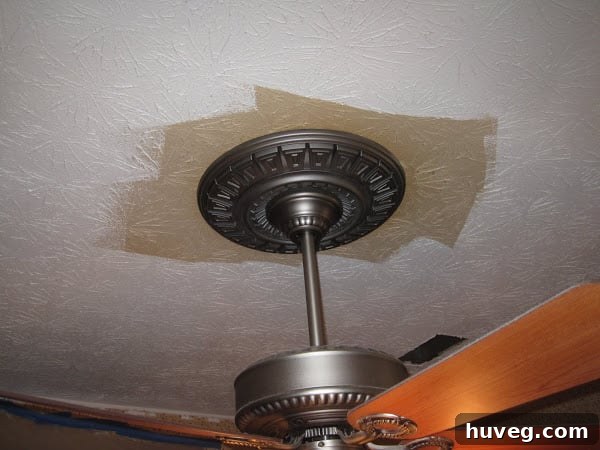
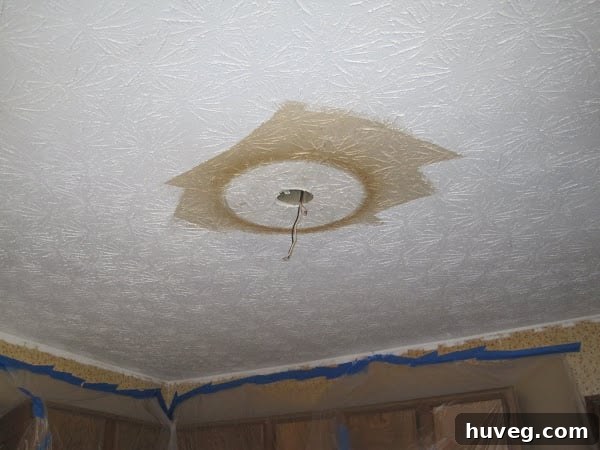
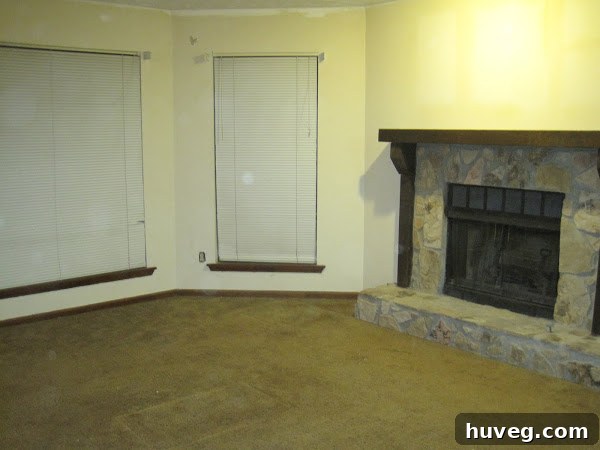
And then there was the living room, where ghostly outlines of former picture frames adorned the walls, giving it a distinct “haunted house” vibe. It truly brought to mind the spooky charm of a classic amusement park ride. The previous occupants had left behind a canvas ripe for transformation, a blank slate that silently challenged me to bring it back to life.
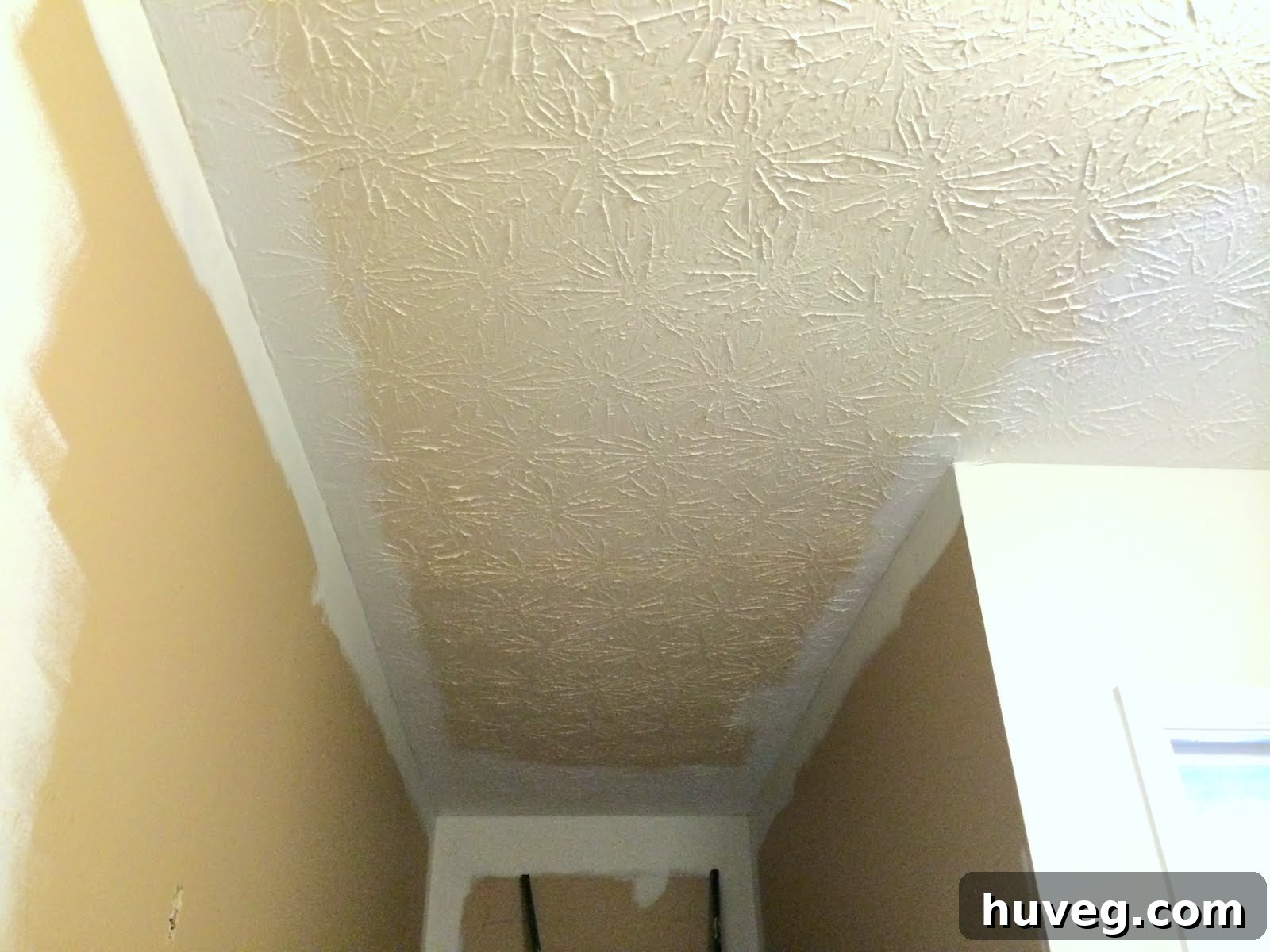
Thankfully, with a good dose of elbow grease and the invaluable help of a few dedicated volunteers, most of the house soon received a fresh coat of paint. Every square inch of ceiling gleamed white, transforming the formerly dingy spaces into bright, inviting rooms. Every square inch, that is, except for one particularly stubborn spot: the hallway ceiling above the stairs. This area, with its challenging height and awkward angles, became the sole untouched remnant of the house’s past. Four years later, it stood as a singular, yellowed ceiling, a constant reminder of an incomplete project and a silent wish that I had tackled it sooner.
Safety First: Enlisting Support for High-Altitude Painting
My aversion to heights combined with my notorious clumsiness made painting above the stairs a task I continuously deferred. It required a special kind of setup, a unique blend of stability and reach that my standard ladders simply couldn’t provide. So, after years of looking up at that yellowed patch, I decided this was the weekend. This is how my dad found himself spending a leisurely afternoon on my couch while I embarked on a precarious painting adventure. While I didn’t necessarily need his direct assistance with the brushwork, his presence was invaluable. Having someone within shouting distance to dial 9-1-1 if I took an unexpected tumble was a comforting assurance, a self-preservation measure I wasn’t willing to compromise on. He was my anchor, my safety net, and sometimes, the extra set of hands I needed to steady the ladder or pass a tool.
My immediate goal for the weekend was to complete all the “cutting in” – the meticulous work of painting precise lines where the ceiling meets the walls and trim. Beyond that, I needed to devise a strategy to safely reach every corner and edge without it feeling like a high-wire circus act. Thanks to my dad’s trusty, well-worn convertible ladder, we finally discovered a viable and remarkably stable solution. This wasn’t just about getting the job done; it was about doing it safely and efficiently, minimizing the risk of a DIY disaster.
The Game-Changer: Embracing the Multi-Fold Ladder
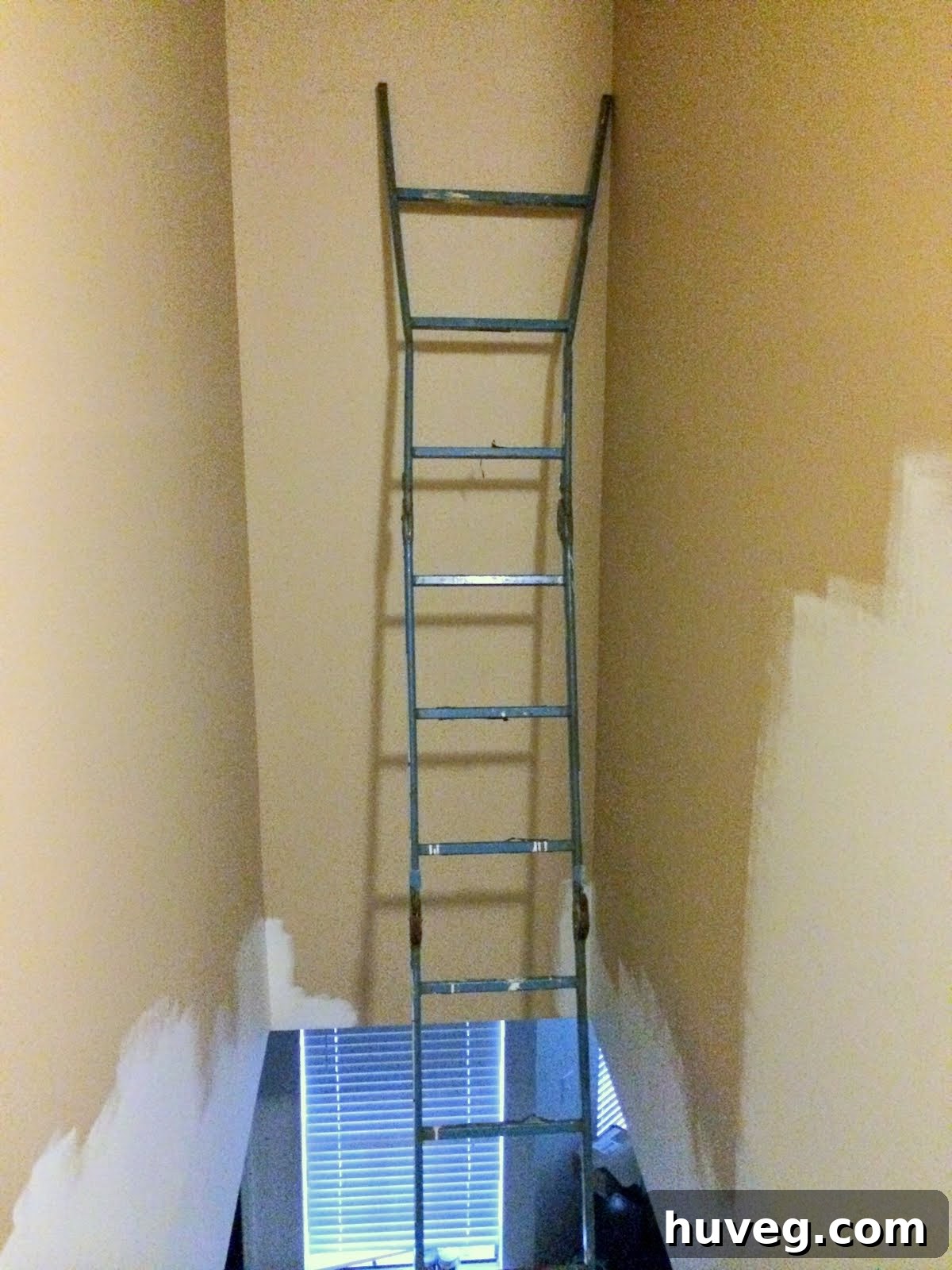
If you’ve never had the pleasure of witnessing a convertible ladder – also known as a “multi-position” or “multi-fold” ladder – in action, allow me to save you some time: if you have stairs in your home, especially a tall, challenging stairwell, you absolutely need one. These ingenious tools are a DIYer’s best friend, offering unparalleled versatility for awkward spaces. The fundamental principle is brilliant: a series of ladder pieces connected by robust hinges, allowing them to bend and lock into various configurations. This adaptability is what makes them indispensable for tackling areas where traditional ladders fall short.
You can extend the entire unit into a straight, incredibly long ladder, perfect for leaning against a high wall. Forgive the quality of these iPhone photos; the dark walls in the hallway make photography a challenge, but I promise better shots once the entire room is completed and gleaming:
What truly sets these ladders apart is their ability to transform. You can bend one or more sections into a configuration that perfectly suits your specific needs and the contours of your space. For instance, to reach the midsection of the tallest part of the ceiling above the stairs, I folded one of the ends back, creating an “L-shape.” This ingenious setup allowed me to push the ladder further off the wall, shifting its center of gravity precisely where it was needed for optimal balance and reach. While it might appear a tad unconventional or even precarious at first glance, this configuration was surprisingly sturdy, providing a stable platform for meticulous brushwork. It allowed me to comfortably reach areas that would have been impossible or dangerously unstable with a standard extension ladder.
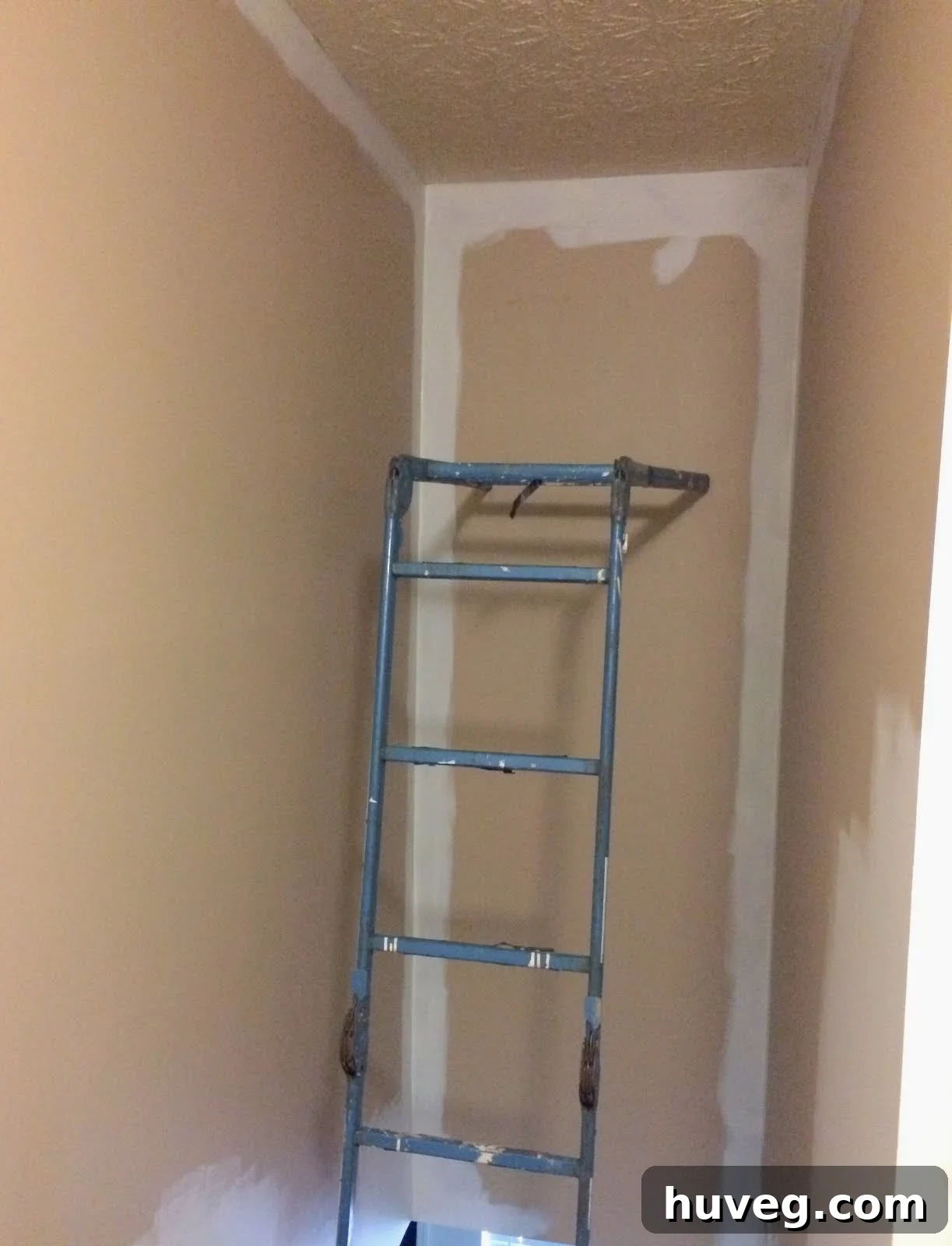
The ladder I used is an older, heavy-duty steel model, which is why I’m not linking directly to it. However, modern aluminum versions offering similar multi-position functionality are widely available online and at your local home improvement stores. Brands like Little Giant are well-known, though some models may not feature the exact accordion-style folding mechanism of my dad’s classic. They still offer exceptional adaptability for various tasks around the house.
UPDATED TIP: While Little Giant ladders are indeed multi-position, they might not offer the distinct accordion-style folding as elegantly as my dad’s older model. However, a quick search on Amazon for “multi-fold ladder” reveals several fantastic alternatives that do provide this crucial folding capability, often at very reasonable prices – some even under $100! These affiliate links are provided for your convenience to help you find the perfect tool for your next high-reach project.
Unlocking Versatility: Ladder Configurations for Tricky Spots
Addressing the very top of the stairs required yet another creative configuration. I folded one of the ladder pieces all the way back, essentially doubling it up on itself. This action effectively shortened the ladder, allowing me to lean it securely against the far left wall. A half-wall at the top of the stairs, which conveniently divides the upper hallway, provided additional support and crucial leverage. Although I don’t have a photo of this specific setup – picture me, slightly out of breath, phone misplaced, and solely focused on getting the job done – I do have a candid shot illustrating a common DIY mishap: the unintended consequence of leaning your full weight against an unsupported section of drywall. A small dent, a valuable lesson learned.
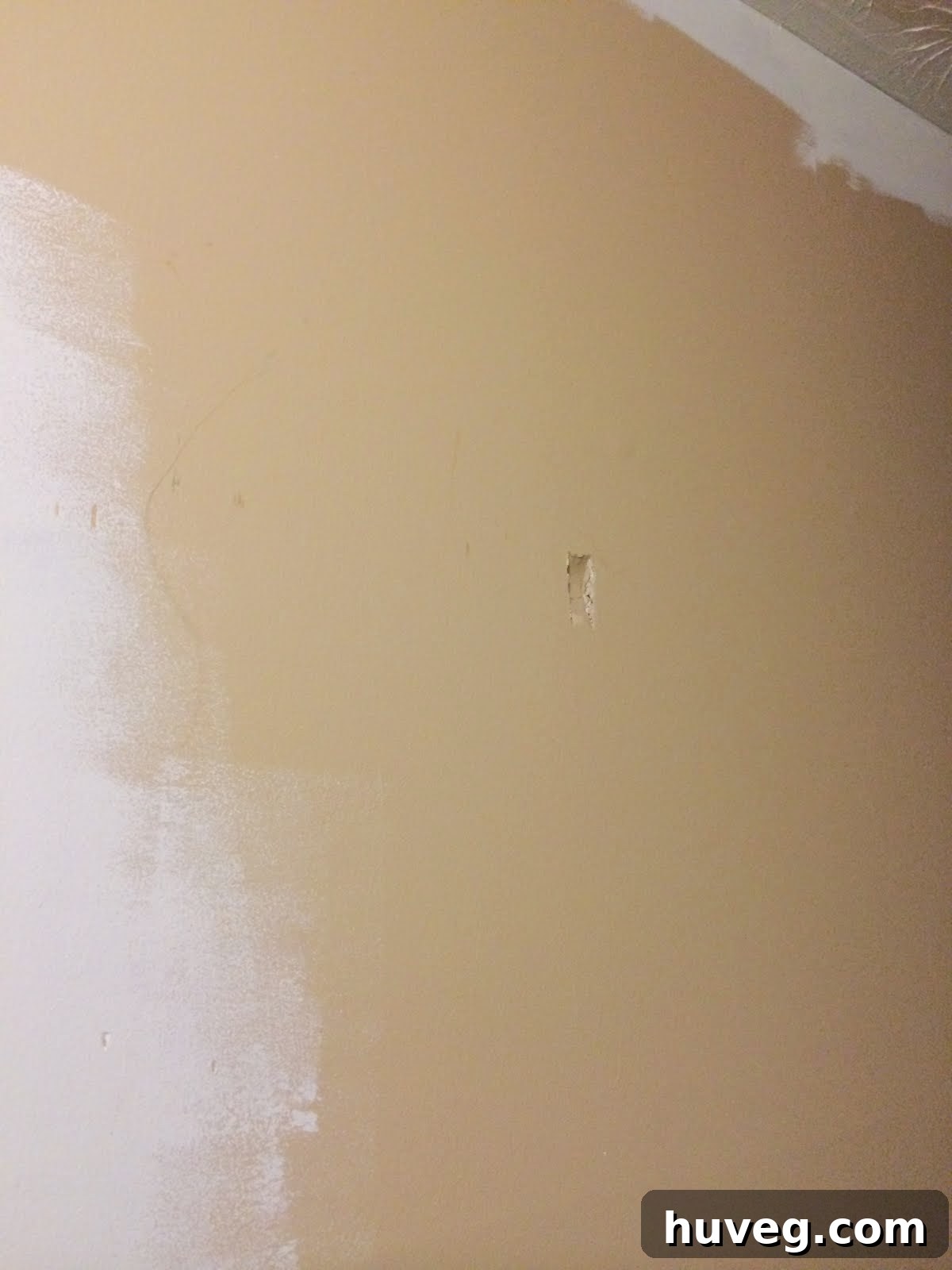
Perhaps a few extra yoga classes are in order this week to build up my core strength! On the bright side, this small dent is easily reachable without a ladder, right at the top of the stairs, so the repair won’t be another high-altitude challenge. The real victory here is that I successfully completed all the cutting in, including the entire ceiling. This means the most challenging and precision-intensive part of the job is behind me. All that remains is the comparatively straightforward task of rolling paint onto the rest of the walls, a much less demanding endeavor that doesn’t require the same level of acrobatic skill or nervous energy.
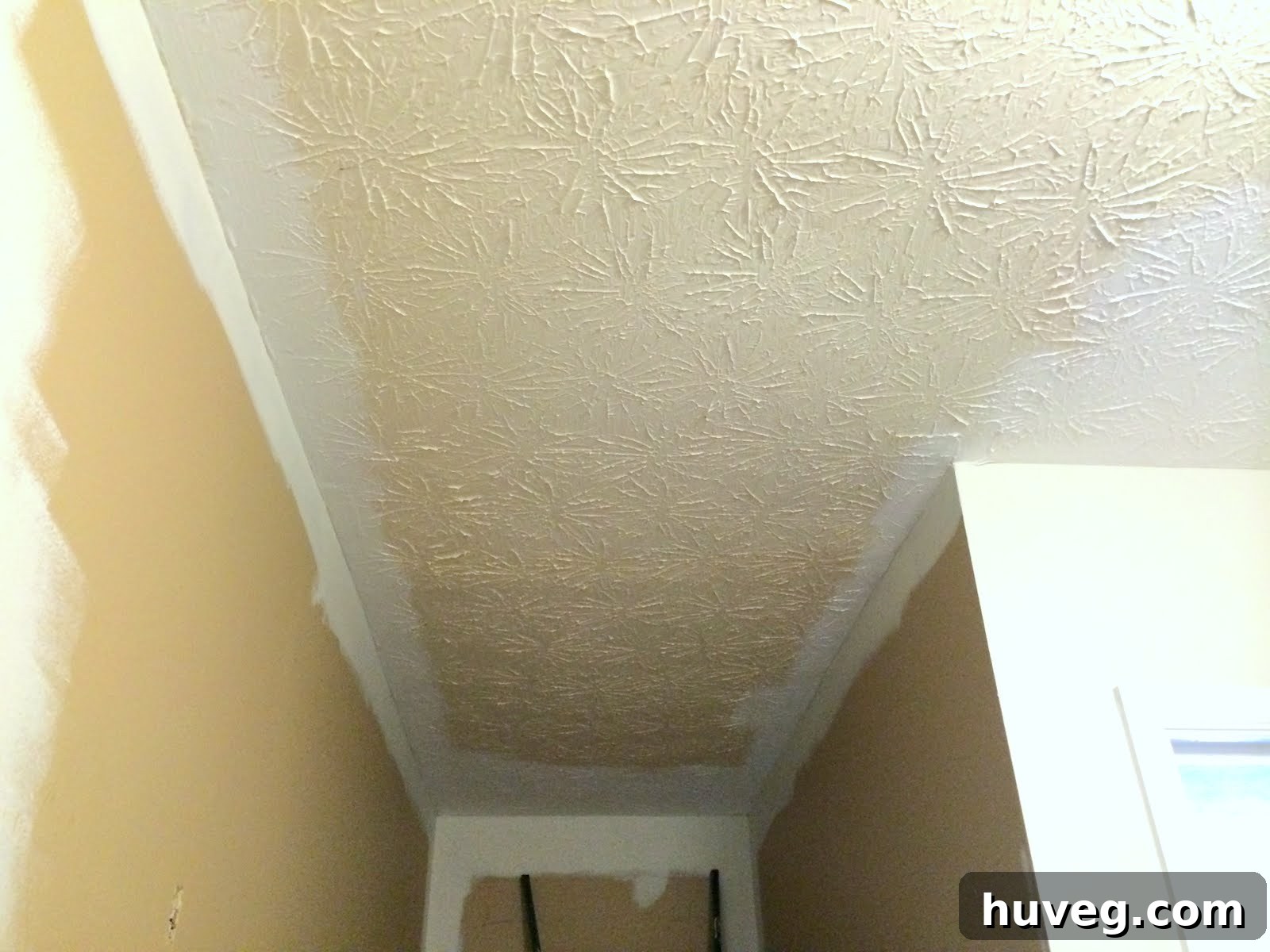
The Transformation Begins: Witnessing the Impact of Fresh Paint
Even with just the cutting-in completed, the difference is already striking. As you can clearly see, the new, bright paint is poised to make a significant impact on how light reflects and bounces throughout this formerly dark space. The hallway, once a dim and overlooked thoroughfare, is already beginning to feel more open, inviting, and connected to the rest of the freshly painted rooms in the house. It’s truly amazing how a simple coat of paint can instantly elevate the mood and perception of an entire area, bringing a sense of freshness and modernity.
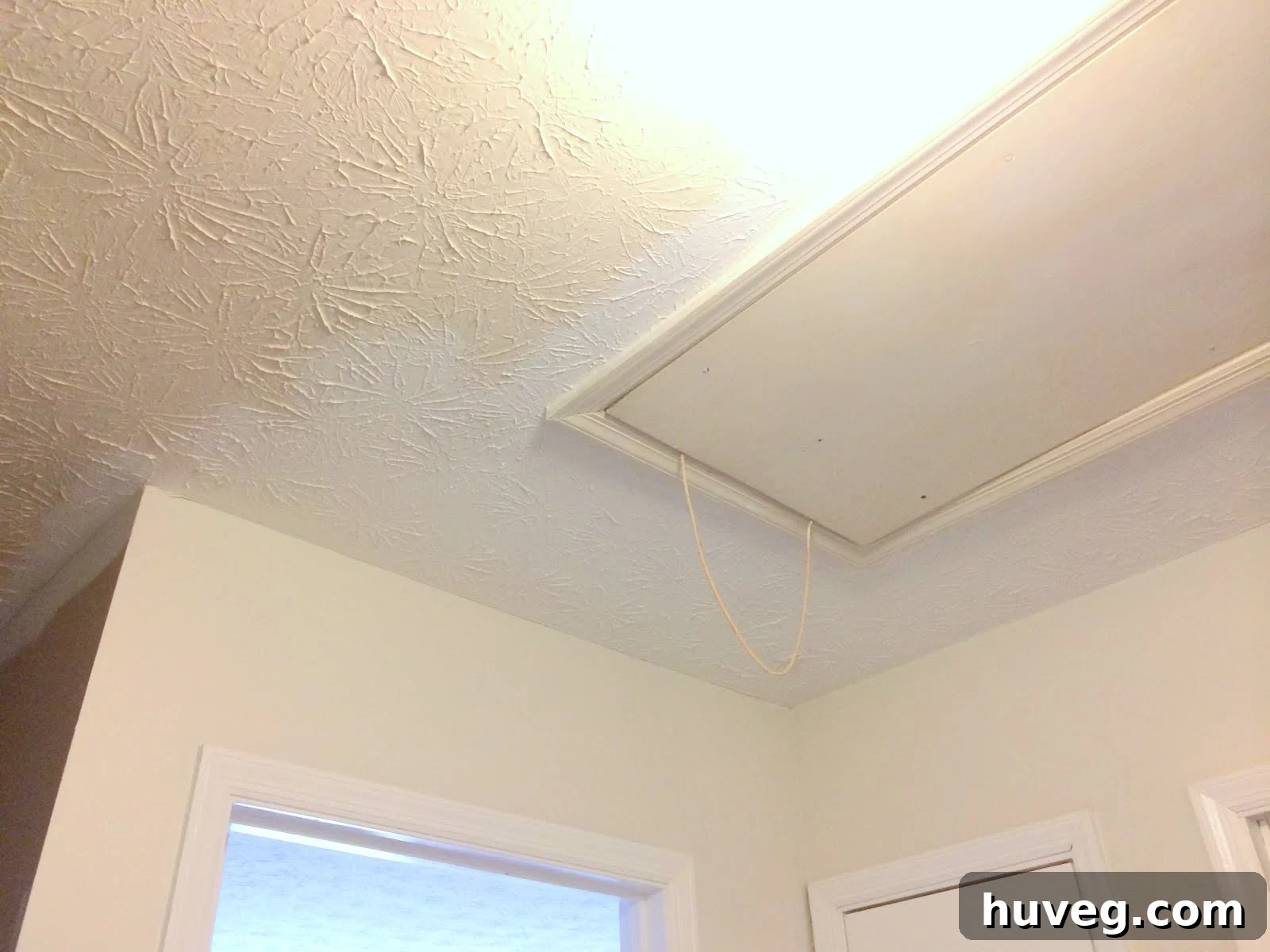
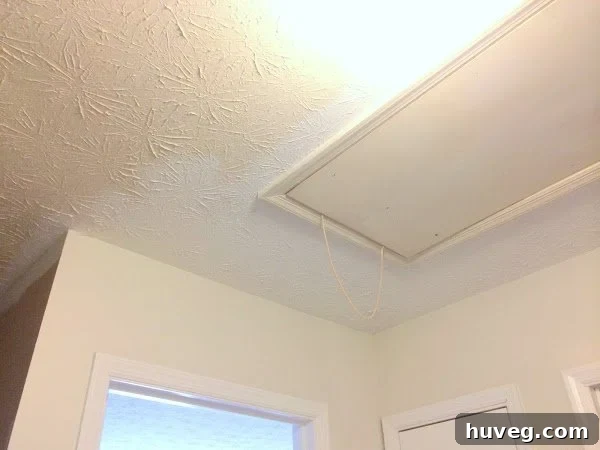
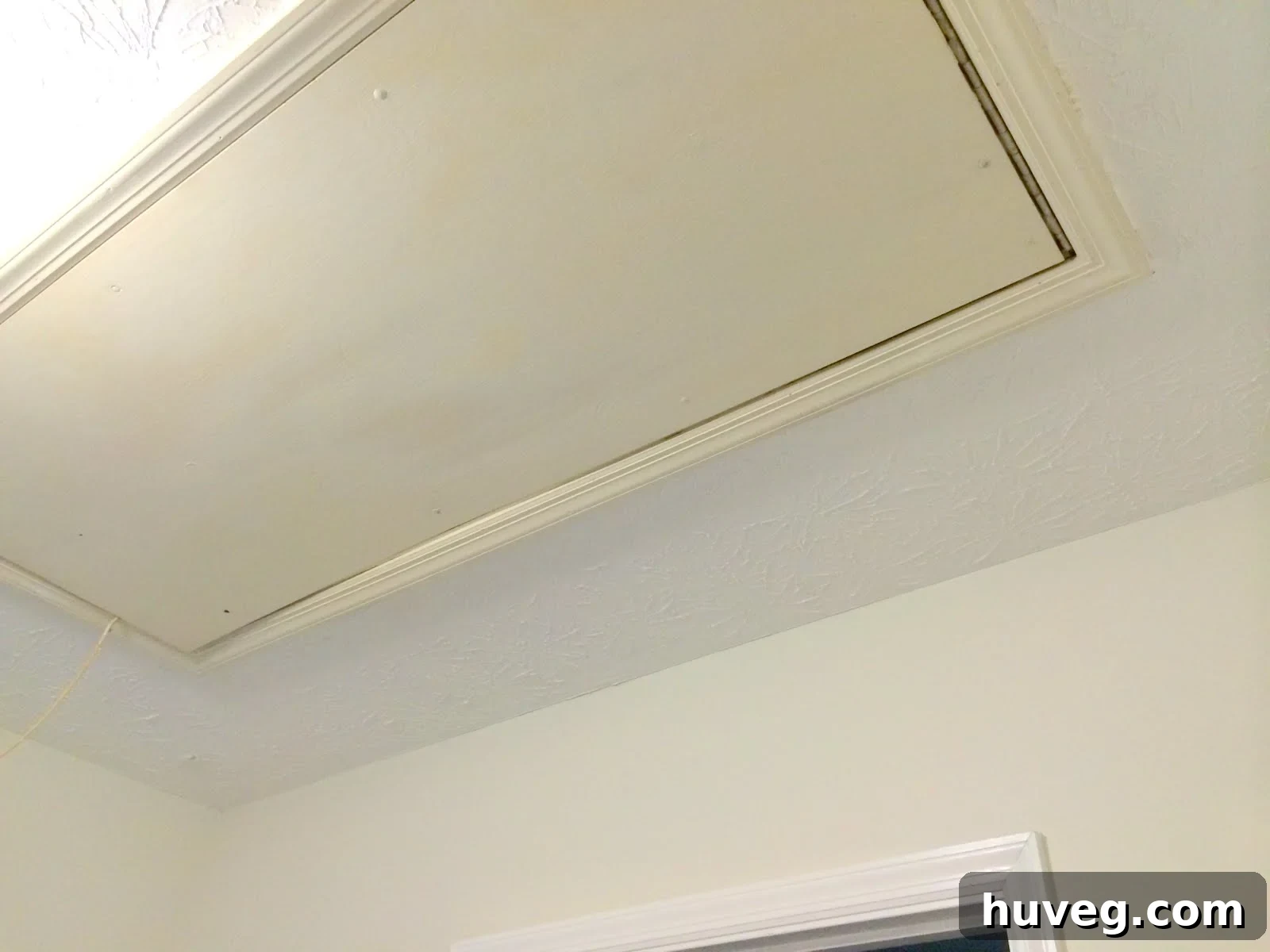
And as with any good home improvement project, checking one item off the list invariably means adding another. Now that the ceiling is addressed, the attic hatch, currently a utilitarian and unpainted panel, stands out. It too will require a fresh coat of paint. I have an intriguing idea bubbling for its transformation – perhaps something beyond a simple white, an interesting detail that will further personalize the space. The exact vision is still coalescing, but it’s another exciting mini-project to anticipate.
Looking Ahead: Future Projects and Design Dreams
So, in between my intensive arm workouts from sanding in the dining room, I now have another gratifying task to tick off my ever-growing to-do list: completing the rest of the hallway painting and tackling that attic hatch. There’s immense satisfaction in seeing these long-awaited projects finally come to fruition. In anticipation of this grand reveal, I’ve already indulged in purchasing a few more prints from Etsy. This hallway, with its clean lines and fresh canvas, practically screams for a vibrant gallery wall, don’t you agree? It will be the perfect way to infuse personality, color, and cherished memories into this newly revitalized space, truly making it a focal point of my home.
Embracing the multi-fold ladder for this challenging task proved to be a game-changer, transforming a daunting chore into an achievable weekend project. It’s a powerful reminder that with the right tools, a bit of ingenuity, and a dash of patience (and perhaps a supportive dad on standby), even the most intimidating DIY projects can be conquered. So, if you’ve got a high-ceilinged hallway or a tricky stairwell that’s been begging for attention, don’t shy away. Invest in a good multi-position ladder, prioritize safety, and get ready to transform your space. The results, as I’m quickly discovering, are incredibly rewarding.