Long Anticipated Venture Takes Flight

Every homeowner understands that the journey of homeownership is paved with projects. These endeavors often fall into one of two distinct categories: those that spark immense excitement and immediate action, compelling you to dive in headfirst, and those that you’d rather procrastinate indefinitely, perhaps tackling them only once under extreme duress. Remarkably, a single project can, at times, embody both extremes simultaneously.
For instance, the vision of transforming my kitchen mood board into a tangible reality fills me with undeniable joy and eagerness. The prospect of seeing those carefully chosen colors and textures come to life is incredibly motivating. However, the sheer thought of meticulously applying another four or five layers of primer and paint to the upper cabinets this month? That’s a task that conjures images of endless monotony, perhaps even requiring a significant boost of courage to get through. Yet, despite the inherent tedium, the transformation is inevitable, and the work will undoubtedly get done.
But when it comes to home improvement, there’s one particular project that consistently stands out as both deeply desired for its finished state and utterly dreaded in its execution: the complete overhaul of the backyard. The primary reason for this profound apprehension isn’t a lack of vision, but rather the overwhelming scale of the problems it presents. The backyard has become a complex tapestry of issues, making the starting point feel almost impossible to identify. It’s a space that has slowly, over time, transformed into a challenging landscape, and addressing it feels like embarking on an epic saga of restoration.
Confronting the Backyard Jungle: A Deep Dive into Restoration Challenges
The journey to reclaim my backyard begins with acknowledging the myriad of issues that have accumulated over time. Each problem, from invasive plants to structural concerns, contributes to a daunting landscape that demands immediate attention. This section will explore the specific challenges that have turned my outdoor space into a project of epic proportions, laying the groundwork for a much-needed transformation.
Ivy Infestation: A Persistent Green Threat
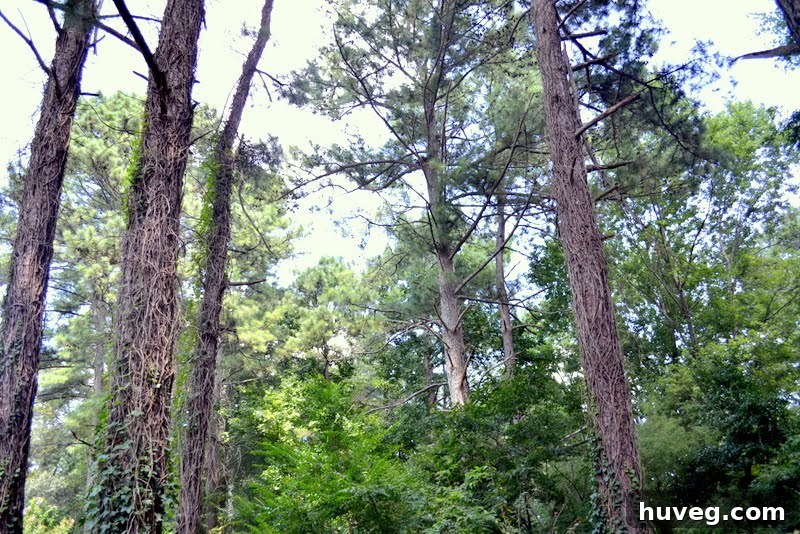
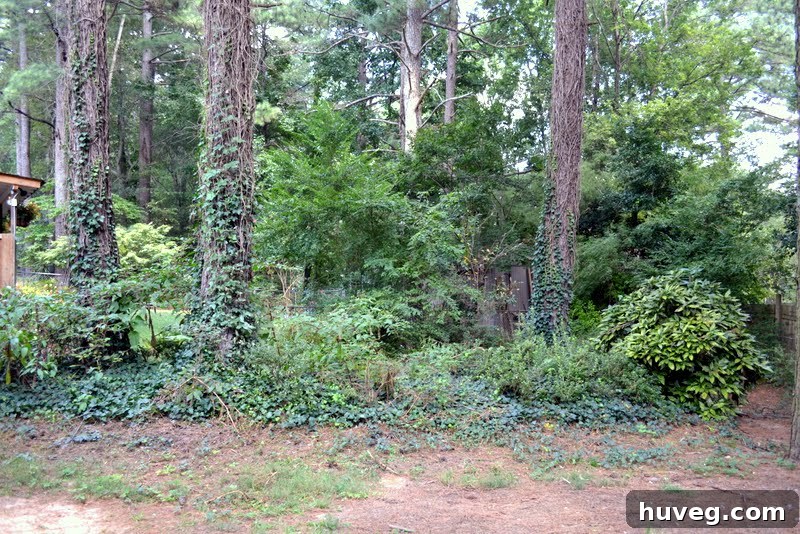
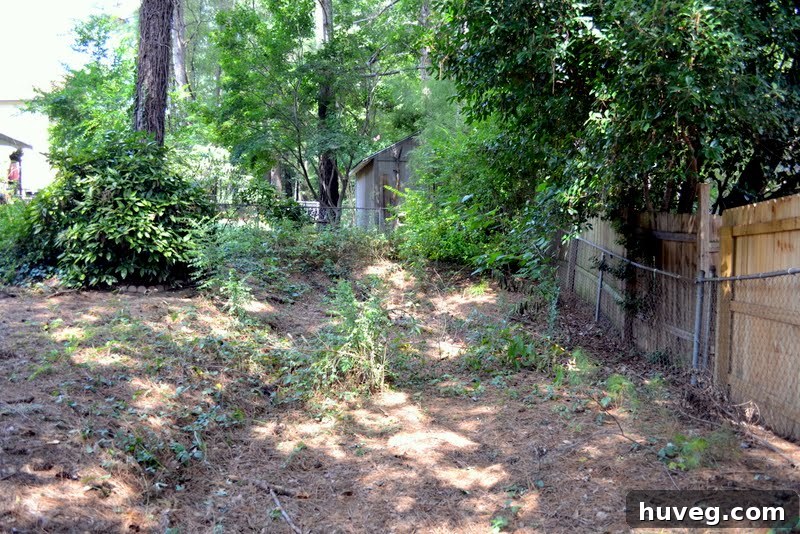
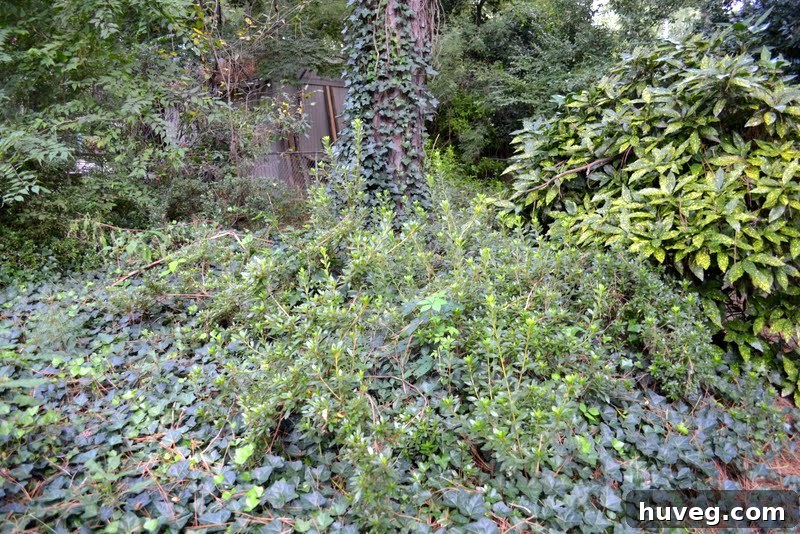
One of the most pervasive and visually disruptive issues in my backyard is the rampant growth of ivy. This vigorous vine has not only taken over vast sections of ground but has also aggressively crept up the mature trees, forming dense, suffocating blankets. While my ex-partner commendably cut back the ivy from the tree trunks three years ago to save the towering pine trees from being strangled, the ground-level ivy was largely left unchecked. Like any resilient plant, ivy doesn’t simply disappear; it thrives and spreads. Consequently, after another two years of turning a blind eye, the problem has returned with a vengeance, mirroring its previous state.
Compounding the current growth is the lingering presence of the old, dead ivy that never fully detached from the trees. Each tree now hosts a gruesome layer of decaying, rotting ivy beneath the vibrant new growth, creating an unsanitary and unsightly environment. Beyond the aesthetic blight, this dense ivy acts as a magnet for undesirable wildlife. While I haven’t personally encountered them, reports suggest that overgrown ivy provides ideal shelter for creatures like snakes and rats, transforming a peaceful yard into a potential haven for pests. The thought of encountering a copperhead, as Melanie’s dog regrettably did, is enough motivation to address this issue with extreme prejudice. While my dog, Charlie, roams freely and could act as a deterrent, I’m certainly not keen on making her my primary line of defense against venomous reptiles. The complete eradication of this stubborn ivy is not just about aesthetics; it’s about restoring the health and safety of my outdoor living space.
The Persistent Sinkhole: A Drainage and Safety Hazard
Another significant challenge lurking in my backyard is a noticeable sinkhole, a topographical anomaly I’ve discussed in detail previously (here). While the precise cause remains a suspicion, its presence creates both a safety hazard and a drainage nightmare. Sinkholes can worsen over time, leading to instability, further erosion, and potential damage to nearby structures if left unaddressed. Filling this void properly requires a substantial amount of earth – not just any dirt, but quality fill dirt that can be compacted effectively to prevent future settling. This isn’t a trivial task; it demands careful planning and execution to ensure a lasting solution.
My strategy involves sourcing large quantities of affordable or even free dirt, a quest I hope to complete through local resources like Craigslist in the Atlanta area. However, acquiring the material is only half the battle. The real labor-intensive part is the meticulous process of filling and tamping, layer by layer. This isn’t a one-and-done job; it involves repeatedly adding a layer of dirt, thoroughly compacting it, adding another layer, and repeating the cycle until the sinkhole is completely filled and stable. The sheer physical exertion and repetitive nature of this task are what I dread most. Yet, ensuring proper compaction is critical for preventing future subsidence and restoring the integrity of the yard. This isn’t just about aesthetics; it’s fundamentally about safety and establishing a stable foundation for any future landscaping projects.
Battling Bamboo: The Neighbor’s Invasive Gift
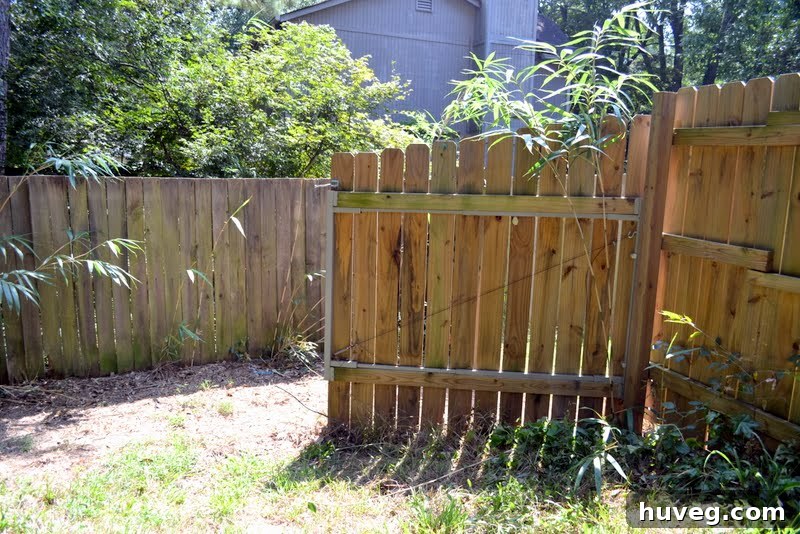
The challenge of bamboo in my backyard presents a unique blend of horticultural nuisance and neighborly diplomacy. While my neighbor is generally pleasant, her choice to cultivate bamboo near our shared fence has inadvertently created an escalating problem for my property. Bamboo, particularly running varieties, is notorious for its aggressive growth habit; its rhizomes spread rapidly underground, making it incredibly difficult to contain once established. It’s often likened to “the herpes of plants” for its persistent and invasive nature, and this analogy couldn’t be more fitting for my situation.
This relentless spread is actively undermining the integrity of our shared fence, pushing through and destabilizing its structure. Furthermore, bamboo shoots are appearing in various parts of my yard, turning formerly clear areas into new battlegrounds. I’ve subtly broached the subject with my neighbor, hoping for a proactive solution from her end. However, it seems she’s not inclined to take decisive action to eradicate the problem. Given the complexities of neighbor relations, I’ve opted to manage the intrusion myself rather than escalate the issue into a potential disagreement. Maintaining peace with neighbors often outweighs the immediate satisfaction of a confrontational solution. Therefore, I’m continually engaging in a solo battle against the encroaching bamboo, attempting to keep its spread in check within my property lines. This ongoing fight requires constant vigilance and strategic removal to prevent it from completely dominating my landscape and damaging further structures.
The Overgrown Jungle: A Testament to Neglect
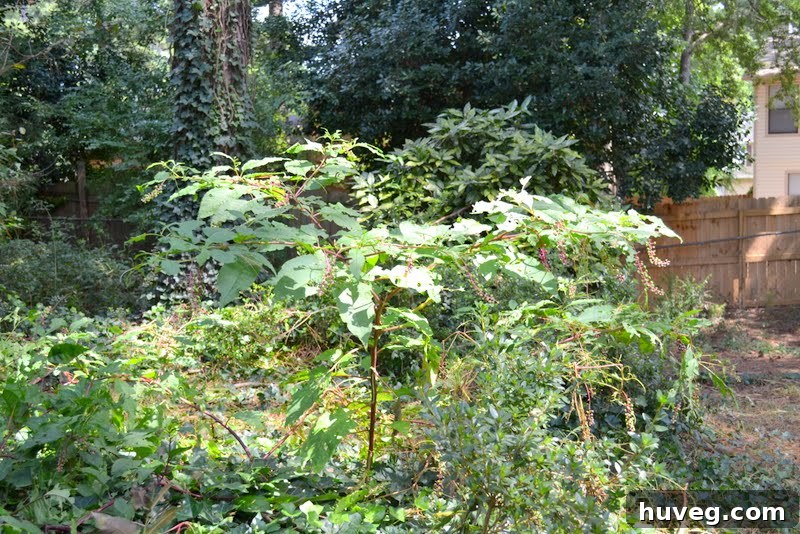
Beyond the specific issues of ivy and bamboo, the overarching problem in my backyard is simply rampant neglect. This oversight has allowed virtually every plant to reach a state of extreme overgrowth, transforming what should be a serene outdoor space into a dense, unruly jungle. The azaleas and Japanese laurel, though beautiful in moderation, have thrived beyond control, becoming gangly and shapeless. While their vigor is admirable, they are desperately in need of significant trimming and shaping to restore their aesthetic appeal and allow other plants to flourish.
Even more concerning is the proliferation of weeds, which have evolved past simple nuisances into what I can only describe as “freakishly large weed trees.” These aggressive invaders compete with desired plants for nutrients, water, and sunlight, stifling any attempt at intentional gardening. Their deep root systems make them incredibly difficult to remove, especially once they’ve established themselves and reached considerable size. This uncontrolled growth not only detracts from the yard’s curb appeal but also reduces usable space, creates potential habitats for pests, and makes the entire area feel chaotic and uninviting. Reclaiming this overgrown space demands a comprehensive approach to pruning, weeding, and strategic plant management, aiming to restore balance and beauty to the neglected landscape.
Shade Challenges: Overgrown Branches Blocking the Light
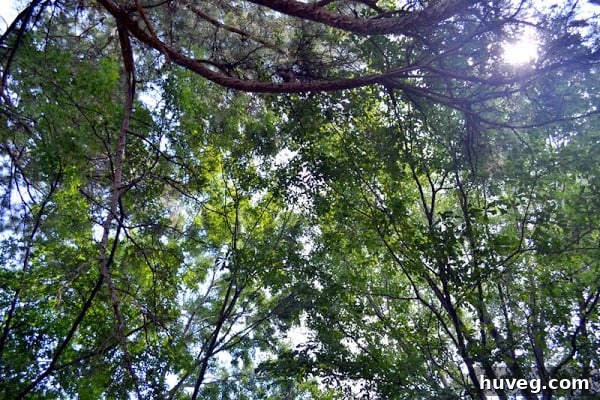
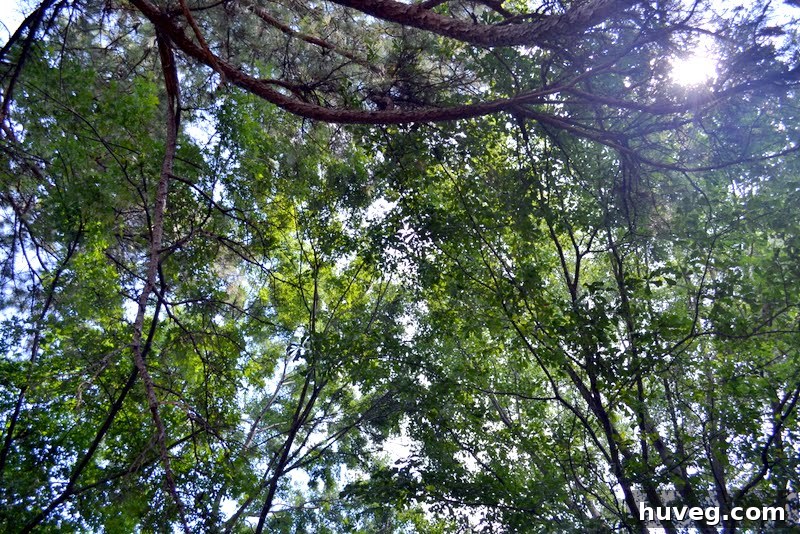
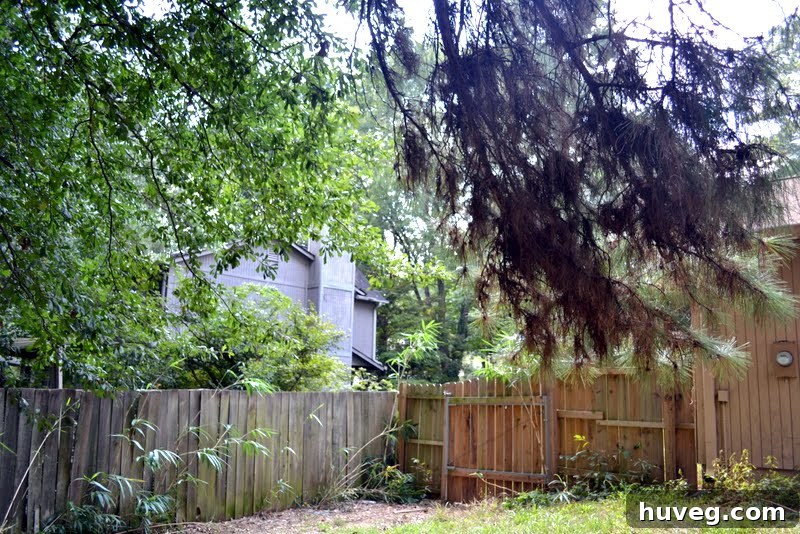
Further contributing to the backyard’s somber atmosphere are the extensively overgrown branches on the far side of the yard. These branches have expanded to such an extreme degree that they form a dense, impenetrable canopy, effectively blocking out almost all natural sunlight. This perpetual shade creates significant limitations for landscaping, making it incredibly challenging to cultivate anything other than the most resilient, shade-loving shrubs near the house. Most desirable plants require at least some sunlight to thrive, and in this perpetually dim environment, even common garden varieties struggle to survive, let alone flourish.
Beyond the horticultural restrictions, the heavy shade contributes to a damp, cool microclimate, encouraging the growth of moss and algae and potentially fostering conditions conducive to pests. It also makes the space feel confined and less inviting. Addressing this issue involves strategic tree pruning and limb removal, a task that not only restores vital sunlight to the yard but also improves air circulation and reduces the risk of weak or dead branches falling during storms. Opening up the canopy will not only expand the possibilities for plant selection but also transform the overall ambiance, making the backyard feel brighter, more open, and significantly more welcoming.
The Uninspiring Patio and Missing Garden Sanctuary
The existing cement patio, meant to be a central feature for outdoor enjoyment, is regrettably small, uninspired, and lacks any discernible charm. It serves as a stark reminder of missed opportunities for creating a beautiful outdoor living space. Flanking the house, two narrow, two-foot-wide strips of scalloped red brick line the patio area. This entire section is a source of considerable frustration for me. I harbor a particular dislike for the dated red brick, the complete absence of any greenery, and, perhaps most acutely, the relentless presence of mosquitoes, which seem to thrive in this neglected corner.
I suspect that at some point in the past, these areas might have hosted thriving plants, offering a touch of color and life. However, by the time I moved in, these plants were either long dead or completely missing, leaving behind barren strips that have since been colonized by persistent weeds. The weeds now stand as the sole form of “vegetation” in these strips, doing little to enhance the area. Even in the accompanying photo, the brick is largely obscured by the general disarray, yet its presence is keenly felt. Transforming this area means not only addressing the aesthetic shortcomings of the patio and brick but also creating a vibrant garden space that deters mosquitoes, invites relaxation, and seamlessly integrates with the overall backyard vision.
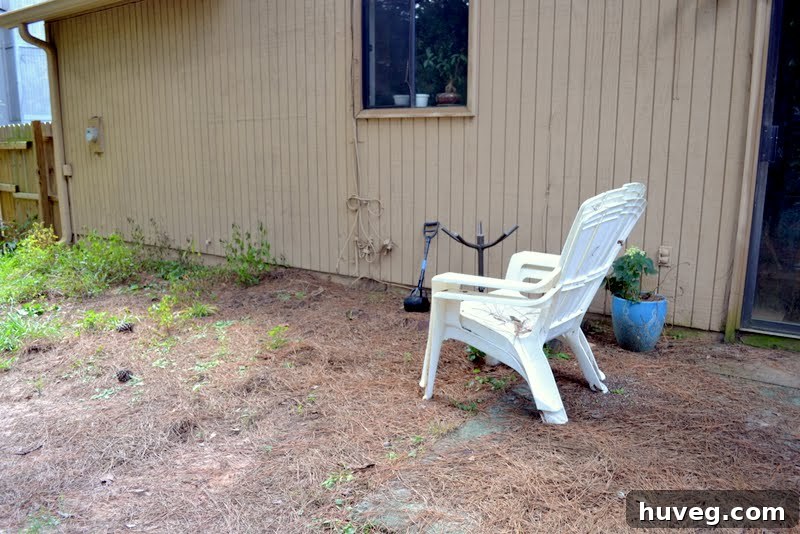
You actually can’t even see the brick in this photo… but trust me, it’s there, adding to the overall outdated look.
The Catalyst for Change: Embracing the Backyard Transformation
It might sound as though I’m lamenting the state of my backyard as if I’ve just moved in, only to discover its myriad flaws. The truth is far more humbling: I’ve allowed this space to languish, fending for itself for years, perhaps even a decade. So, why, after such prolonged neglect, am I finally bringing these pervasive issues to light now?

The answer is simple: a confluence of factors has finally aligned, creating the perfect storm of motivation and opportunity. It is unequivocally time to wrangle this “clusterfork” (an intentional typo that perfectly captures the chaos) of a yard into submission. As I type this very post, my arms feel like rubber, and my hands are still trembling, yearning for a well-deserved rest. This past week has been an intense immersion in hard labor, encompassing three and a half days of relentless effort. I recognized that I needed a truly significant push, a powerful catalyst, to finally overcome the inertia and get started on this monumental task. Once that initial momentum was generated, however, things truly began to click into place. The progress, though arduous, has been incredibly rewarding, fueling my determination to see this project through to completion.
I’m not quite ready to reveal the full transformation yet, as the project is still underway, and there are so many more pictures to share! Therefore, for the next week or so, anticipate a steady stream of outdoor-focused posts, interspersed with updates on the ongoing kitchen cabinet renovation. It truly goes to show that the momentum gained from tackling one challenging home improvement project can wonderfully spill over, igniting the energy and drive to conquer the next. This journey of restoration is not just about fixing problems; it’s about reclaiming space, enhancing well-being, and demonstrating the incredible power of consistent effort in home transformation.
What about you, dear reader? What does your backyard situation look like? Have you recently tackled a daunting outdoor project, or are you contemplating one? Share your stories and challenges in the comments below – we’d love to hear about your home improvement adventures!