DIY Duel Against the Obstinate

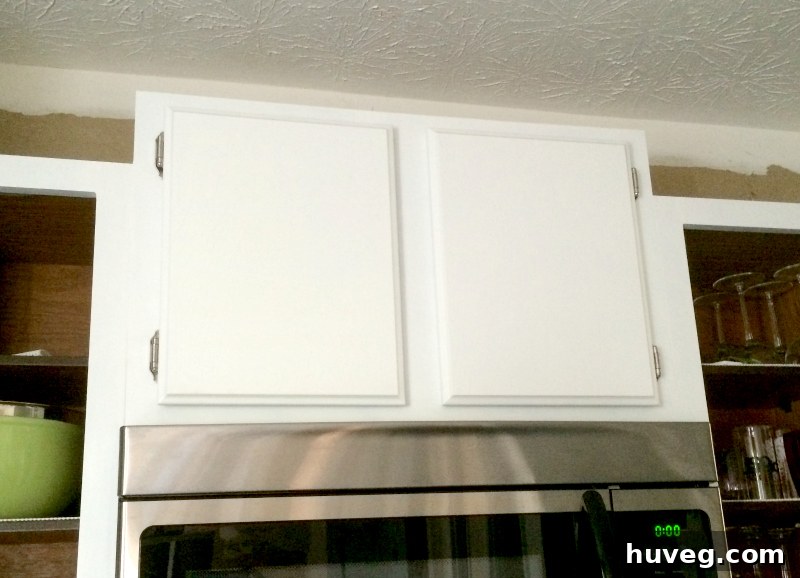
Conquering the Cabinet Door Installation Challenge: A DIYer’s Guide to Hanging Upper Kitchen Cabinets
Every seasoned DIY enthusiast knows the feeling: you embark on a home improvement project, brimming with optimism, only to encounter a task that seems designed to test the very limits of your patience and physical dexterity. Hanging upper cabinet doors in a kitchen renovation is precisely one such challenge. It’s a job that often demands the precision of a surgeon, the strength of an acrobat, and, most frustratingly, an extra set of hands that, for most solo DIYers, simply doesn’t exist.
Imagine trying to perfectly align a heavy, freshly painted cabinet door while simultaneously holding it steady, maneuvering a hinge into place, and screwing it securely into the cabinet frame. All of this, often perched precariously on a ladder several feet off the ground. It’s a recipe for frustration, a symphony of dropped screws, wobbling doors, and perhaps, a few choice words escaping your lips. But fear not, fellow renovators! This comprehensive guide is designed to help you navigate these common pitfalls and emerge victorious with beautifully installed upper cabinet doors, transforming your kitchen with confidence.
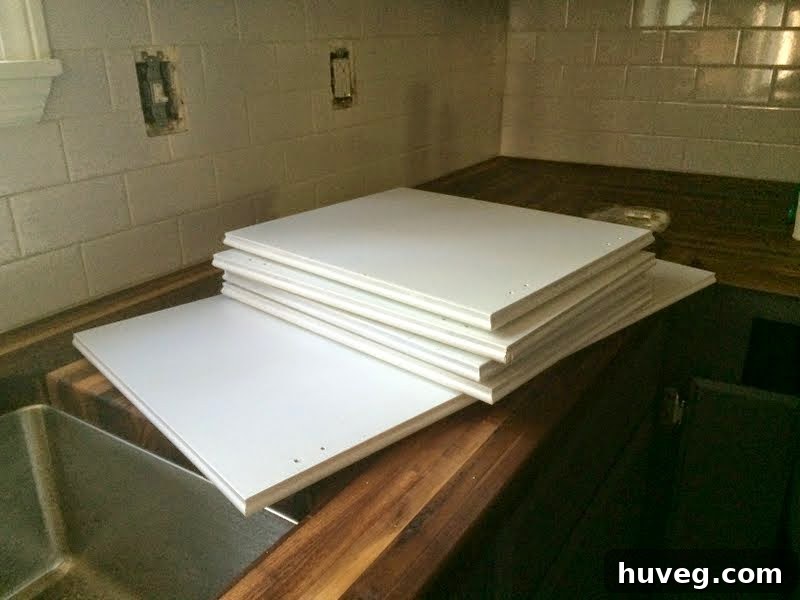
The Unique Hurdles of Upper Cabinet Door Installation
When I tackled the lower cabinet doors during my renovation, the process, while still requiring a bit of ingenuity, felt significantly more manageable. Gravity was on my side, and I could employ various makeshift supports—a stack of books, a strategically placed block of wood, or even my knee—to act as that crucial “third hand.” The doors were closer to the ground, offering better leverage and stability, making the hinge alignment and screwing process considerably smoother. A little creativity went a long way, and the sense of accomplishment came relatively quickly.
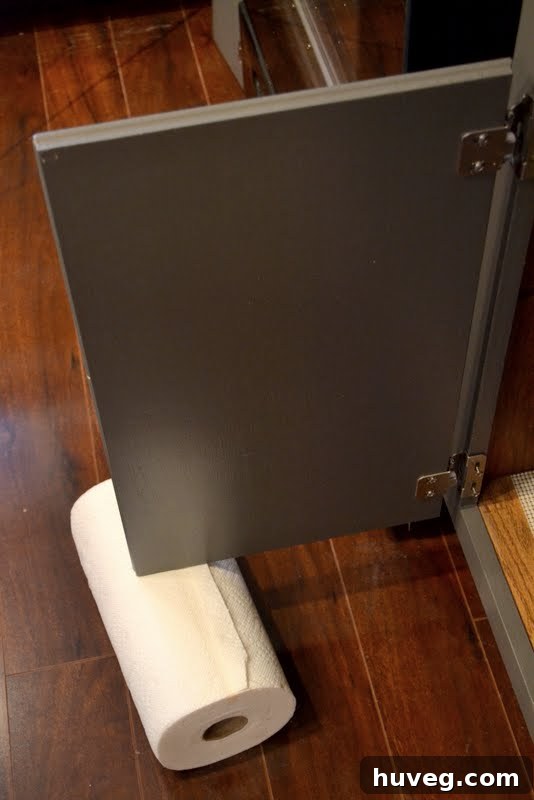
However, the transition to upper cabinets introduces an entirely new dimension of difficulty. What was once a relatively straightforward task becomes an intricate dance with gravity and awkward positioning. The core steps—using existing hinge marks as guides, carefully pre-drilling pilot holes, and then securely screwing in the newly painted door and its hinge—remain fundamentally the same. Yet, the environment shifts dramatically, amplifying every minor challenge and making precision a true test of patience.
Why Upper Cabinets Demand Extra Patience
- Working at Height: You’re no longer working at a comfortable waist level. Being five feet or more in the air on a ladder changes everything. Your balance is less stable, your reach is constrained, and maintaining a steady grip on both the door and the drill becomes a physical strain. Fatigue sets in faster, impacting your focus and fine motor skills.
- Lack of Adequate Support: A standard household ladder, while essential for reaching the cabinets, is rarely the perfect tool for supporting a heavy cabinet door. It’s often the wrong height to provide level support, and its rough, metallic surface can easily scratch or mar a freshly painted door. This leaves you, the solo DIYer, to bear the full weight and alignment responsibility with your two already-occupied hands, leading to an awkward and strenuous hold.
- Precision Under Pressure: The need for precision doesn’t diminish just because you’re uncomfortable. Misaligned hinges can lead to crooked doors, uneven gaps, and a frustratingly unpolished finish that detracts from your entire kitchen remodel. Achieving this precision while juggling the door, hinge, and drill requires immense focus and, often, a good deal of re-doing, which can slow down the entire project.
- Visibility Challenges: At certain angles on a ladder, your line of sight to the screw holes or the level line can be obstructed, making accurate placement even harder.
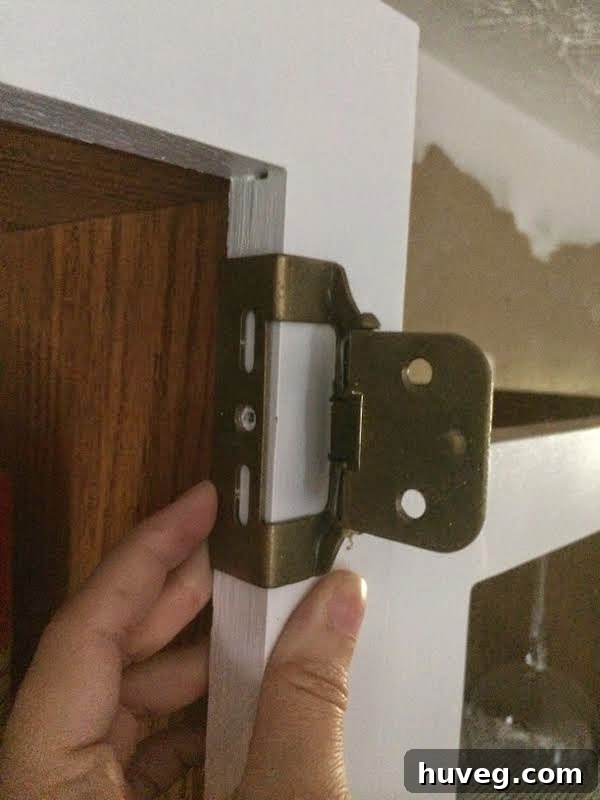
Essential Tools and Strategies for Success in Cabinet Door Installation
To mitigate the “three-handed” dilemma and conquer the upper cabinet installation, preparation is key. Having the right tools at hand, and knowing a few strategic tricks, can significantly reduce your stress levels and improve your success rate. While the awkward hold-drill-screw maneuver might feel like a Sisyphean task with a success rate hovering around 25%, arming yourself with the proper equipment makes a world of difference for any home improvement project.
Your DIY Toolkit for Flawless Cabinet Doors:
- Cordless Drill/Driver: Essential for both pre-drilling pilot holes and driving screws. Ensure it’s fully charged to avoid interruptions.
- Magnetic Drill Bits: This is not just a suggestion; it’s a non-negotiable sanity saver. More on this below.
- Pilot Hole Drill Bits: Always use a bit slightly smaller than your screw diameter to prevent wood splitting and ensure a tight fit.
- Spirit Level (or Laser Level): Crucial for ensuring doors hang perfectly straight and for achieving consistent alignment across all cabinets.
- Measuring Tape & Pencil: For precise marking and alignment, especially when transferring hinge positions.
- Shims or Wedges: Small, thin pieces of wood or plastic can provide temporary support and help with fine-tuning alignment, particularly useful when adjusting doors.
- Painter’s Tape: Useful for holding hinges in place temporarily or marking drilling spots without damaging the finish.
- Protective Cloths/Padding: To protect your freshly painted cabinet doors from scratches and dents, especially when resting them against a ladder or improvised support.
- Adjustable Cabinet Jacks (Optional but Highly Recommended): These specialized tools can provide excellent support and lift, effectively acting as your third and fourth hands. If you plan many kitchen renos or cabinet installations, they’re a worthy investment that pays dividends in saved time and reduced frustration.
- A Helper (Your Best Bet!): If possible, recruit a friend or family member. Even for an hour, an extra pair of hands to hold the door steady can transform the experience from agonizing to merely challenging.
- Safety Glasses: Protect your eyes from falling debris or errant screws.
The Magnetic Drill Bit Revelation: A Sanity Saver for Cabinet Hardware
Let me impart a crucial piece of wisdom that I learned the hard way through countless DIY challenges: invest in magnetic drill bits. Seriously, go out and buy them right now if you don’t have them. I’ve slogged through the first few upper doors, wrestling with tiny screws that inevitably tumble to the floor at the most inopportune moments, sending me down the ladder repeatedly to search for them. Each dropped screw is a dip in motivation and a rise in frustration. By the time this project is complete, I will undoubtedly have succumbed to the inevitable and purchased yet another set of bits, this time prioritizing magnetism over everything else.
Why are they so vital for cabinet door installation? They hold the screw firmly in place on the drill bit, preventing those infuriating drops. This means you can focus entirely on aligning the door and hinge, rather than trying to balance a tiny screw with your fingertips while also holding a heavy door with the other. It dramatically increases your efficiency, reduces the risk of damaging your new doors, and most importantly, saves your mental well-being from the brink of a South Park-esque meltdown, where every known obscenity spills out in one long, confusing string.

Step-by-Step Guide to Flawless Upper Cabinet Door Installation
Let’s break down the process into manageable steps, incorporating the wisdom gained from countless dropped screws and near-misses. Remember, patience is your most valuable tool here, and taking your time will ultimately yield a better result for your kitchen cabinet doors.
1. Preparation is Paramount for a Smooth Renovation
- Cleanliness: Ensure both your hands and the cabinet doors are meticulously clean. It’s incredibly frustrating to finish a door only to find an unsightly smudge from dirty hands or a stray mark from the installation process. Consider wearing clean gloves if your hands tend to get grimy.
- Hardware Check: Lay out all your hinges, screws, and other cabinet hardware. Confirm you have enough of everything before you begin to avoid last-minute trips to the hardware store.
- Safety First: Ensure your ladder is stable, on a level surface, and properly secured. Clear the area around your workspace to avoid tripping hazards and provide enough room to maneuver the doors.
- Pre-Assemble Hinges (if applicable): If your hinges come in multiple parts, assemble them onto the doors first on a flat, protected surface.
2. Marking and Pre-Drilling with Precision
- Hinge Alignment: If you’re reusing old hinges or replacing them with identical ones, use the existing screw holes on the cabinet frame as your primary guide. This saves a lot of measuring and ensures consistency. If installing new hinges or doors without existing holes, carefully mark the precise hinge plate positions on both the cabinet frame and the door using a pencil and measuring tape. Accuracy here is critical for perfectly aligned doors and consistent gaps. Use a level to ensure your marks are straight.
- Pilot Holes: Using your cordless drill and the appropriate pilot bit (slightly smaller than your screw diameter), pre-drill shallow holes for each screw location. This prevents wood splitting, makes screwing much easier, and ensures the screws go in straight and true, especially in harder woods or engineered materials.
3. The “Third Hand” Strategy: Attaching the Hinges and Doors
This is where the real challenge lies, and where your creativity and chosen support method come into play for installing cabinet hinges and doors.
- Attaching Hinges to Doors: It’s generally easier and safer to attach the hinges to the cabinet door first. Place the door on a protected, flat surface (or use painter’s tape to hold hinges in place on the door) and screw the hinges securely into the pre-drilled holes.
- Positioning the Door:
- With a Helper: If you have an assistant, this is by far the easiest method. Have them hold the door in its exact upright and level position against the cabinet frame. You can then focus solely on aligning the hinges with the pre-drilled pilot holes in the cabinet frame, ensuring perfect cabinet door alignment.
- Solo (Creative Support): If you’re working alone, this is where ingenuity shines.
- Cabinet Jacks or Lifts: If you have them, position the jack under the door, adjust its height until the door is perfectly level and aligned. This is the ideal solo method, as it frees both your hands for the drill and screws.
- Makeshift Support: A stack of sturdy boxes, books, or even an old paint can (protected with a soft cloth) on a stable surface might reach the bottom edge of the door, offering temporary support. Ensure it’s absolutely stable and won’t scratch the door. Use shims to fine-tune the height.
- The Awkward Hold: If all else fails, you’re left with the “awkward hold.” Carefully lift the door, align one hinge with its pilot holes, and use your drill (with a magnetic bit, of course!) to start one screw. Once one screw is partially in, the door should be able to pivot slightly, allowing you to align and secure the remaining screws. This method is slow, requires immense patience, and often necessitates frequent breaks.
- Securing the Door: Once the door is properly aligned and held in place, use your magnetic drill bit to drive in the screws for the hinges attaching to the cabinet frame. Start with one screw per hinge (the one that offers the most secure initial hold), check the alignment with your level, then drive in the remaining screws. Be careful not to overtighten, which can strip the wood or deform the hinge.
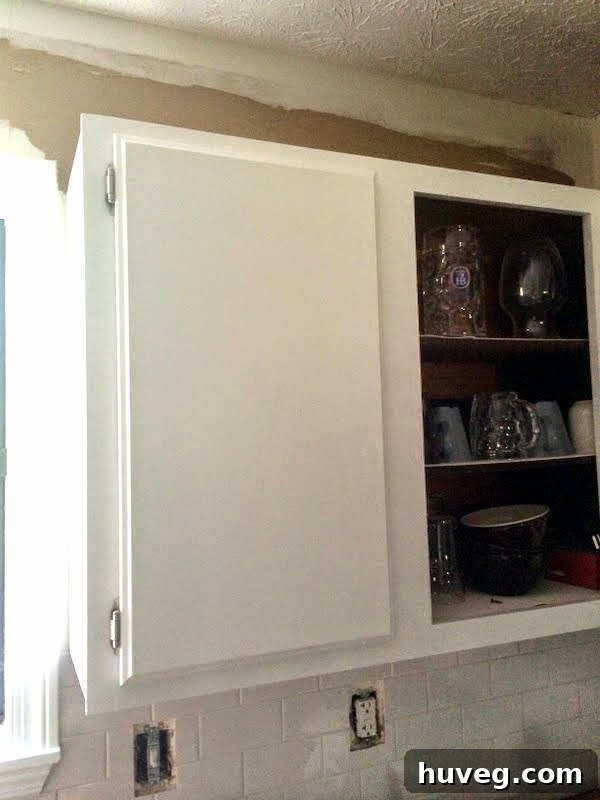
Dealing with Frustration: Keeping Your Cool During DIY Challenges
Let’s be honest: moments of intense frustration are an almost guaranteed part of any DIY project, especially one as fiddly and high-stakes as hanging upper kitchen cabinet doors. There will be dropped screws, misaligned attempts, and perhaps, a newly acquired dirty smudge on your pristine cabinet door. I’ve been there, staring at a smudged door, feeling like the universe itself is conspiring against my efforts. My advice? Don’t let it get the better of you.
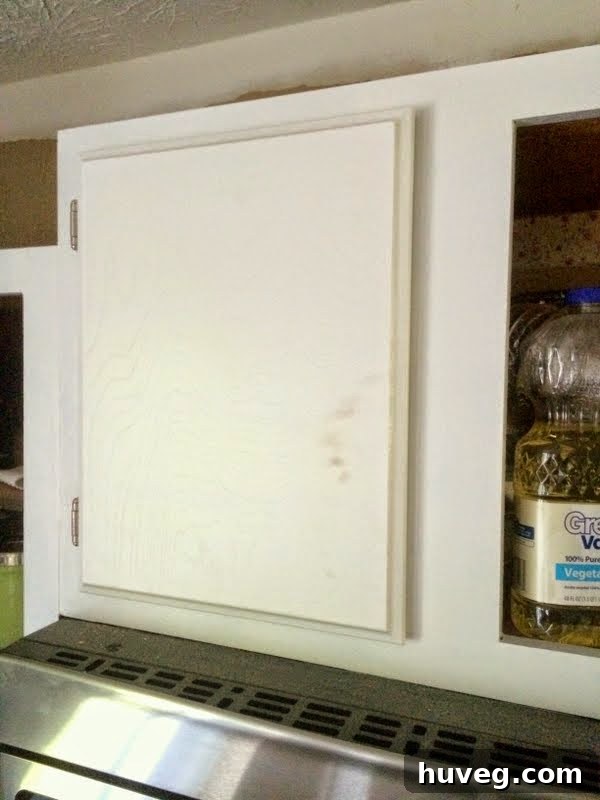
When the obscenities (perhaps borrowed from a certain animated show, as I’ve experienced myself) begin to flow freely, and your success rate plummets, it’s a clear sign: take a break. Step away from the ladder, walk outside, grab a glass of water, or simply breathe deeply. Sometimes, a short mental reset is all it takes to return with fresh eyes and renewed determination. Remember, these cabinet doors are just inanimate objects, even if they feel like total jerks deliberately challenging your every move. They will eventually be up and hanging in their rightful, perfectly aligned place. Patience, persistence, and perhaps a well-deserved beverage afterward, will see you through.
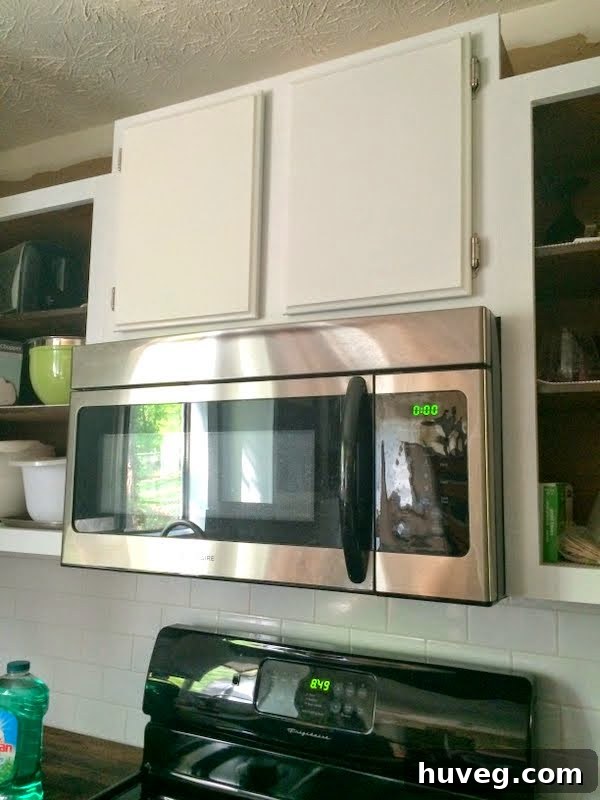
Finishing Touches and Enjoying Your Accomplishment
Once all your doors are hung, the battle isn’t quite over. Take the time to fine-tune the alignment. Most modern hinges, particularly European-style concealed hinges, offer multiple adjustment screws that allow you to move the door up/down, left/right, and even in/out from the cabinet frame. Adjust these meticulously until all the gaps between the doors are even, they close smoothly without rubbing, and the entire kitchen cabinet facade looks cohesive and professional.
After adjusting, give your beautiful new cabinet doors a final wipe-down to remove any fingerprints, smudges, or dust from the installation process. Step back and admire your handiwork. You’ve tackled one of the most notoriously tricky DIY tasks in kitchen renovation, persevered through the frustration, and achieved a professional-looking result. That sense of accomplishment, perhaps accompanied by a celebratory beverage, is truly one of the best rewards of DIY and a testament to your perseverance.
Share Your DIY Journey and Connect with the Community!
Have you faced similar inanimate offenders in your household? Do you have any clever tricks for installing cabinet doors, or other home improvement projects that require an elusive third hand? We’d love to hear your stories, tips, and insights in the comments below! Sharing our experiences helps us all learn and grow in our DIY journeys, fostering a supportive community of renovators.
And for more inspiration and renovation progress, be sure to visit Carrie’s blog to see what she’s been up to in her own home improvement adventure! Connecting with other DIYers can provide motivation and fresh ideas for your next project.