Simple Homemade Sweet Heat Pepper Jelly

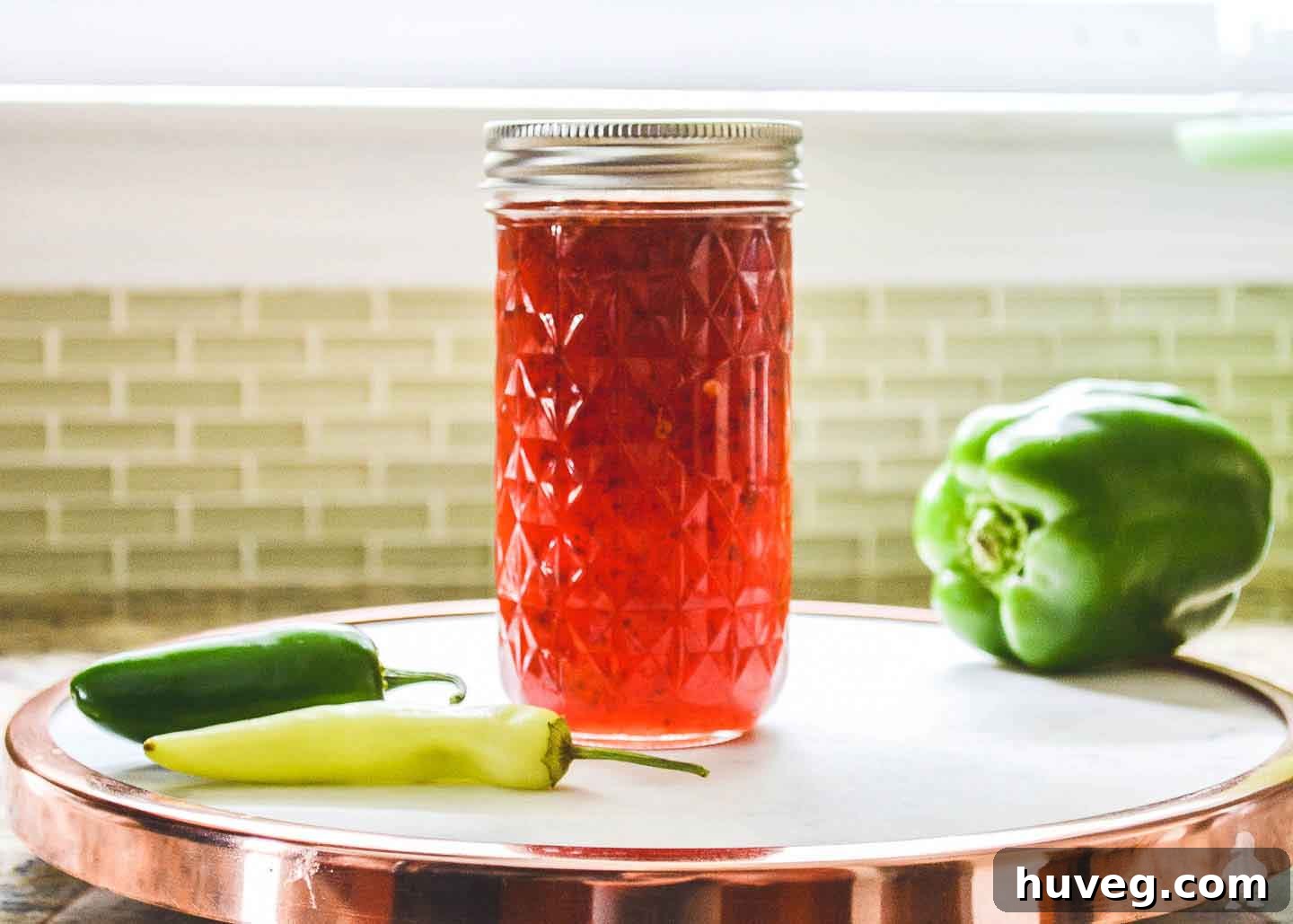
Like many enthusiastic first-time gardeners, I often find myself with an abundance of fresh produce, far more than I can consume immediately. My humble backyard garden recently yielded an impressive harvest of various peppers, inspiring a delightful weekend project. Last Saturday morning, I spent quality time with my mom, diving into the art of making homemade hot pepper jelly. We used a vibrant mix of bell peppers, banana peppers, and fiery jalapeños harvested straight from my thriving vegetable garden, transforming them into a sweet and spicy preserve that’s perfect for any occasion. This experience not only helped me utilize my garden’s bounty but also allowed me to learn invaluable family traditions.
The Sweet Debate: Is it Jam or Jelly?
Technically speaking, based on what the internet tells me about preserving, this recipe should probably be called ‘jam.’ Jelly is traditionally made using only the juice of the fruit or vegetable, ensuring a clear, translucent end product. However, our hot pepper creation involves blending the entire pulp of the peppers and their seeds (for extra kick!), resulting in a thicker, slightly opaque spread. But here’s the thing: Mom calls it jelly. And when it comes to time-honored family recipes, Mom’s word is law. So, while purists might argue the semantics, for us, it’s Mom’s delightful hot pepper jelly – and it’s absolutely perfect just the way it is.
Embracing the Art of Home Canning for Fresh Preserves
My visit with Mom was an incredible learning experience for both K and me, as we delved into the world of making jellies, jams, and preserves. Mom patiently guided us through each step, from understanding the necessary equipment to mastering the crucial sterilization methods. Home canning can seem daunting at first, but with the right guidance, it’s an incredibly rewarding process that allows you to enjoy the fresh flavors of your garden long after the harvest season ends. The satisfaction of seeing rows of beautifully sealed jars filled with your own homemade preserves is truly unmatched.
I’m currently working on a more comprehensive guide that will cover the general rules of thumb for safe and effective home canning, including detailed sterilization techniques and essential safety precautions. That separate post will dive deeper into those concepts, but for now, this article is primarily focused on sharing this straightforward and delicious recipe. However, I’ve included some fundamental information here to get you started on your own canning journey with confidence.
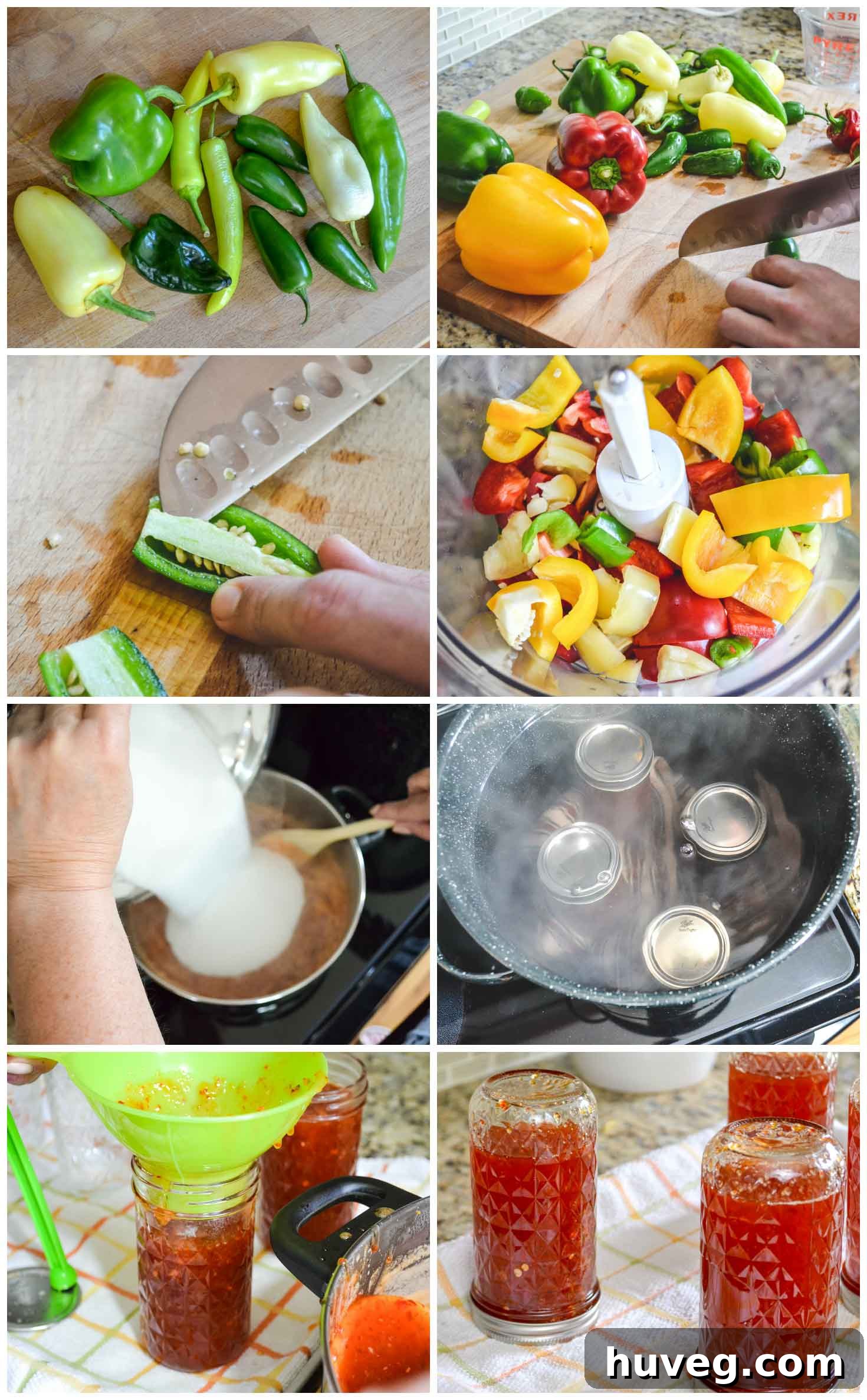
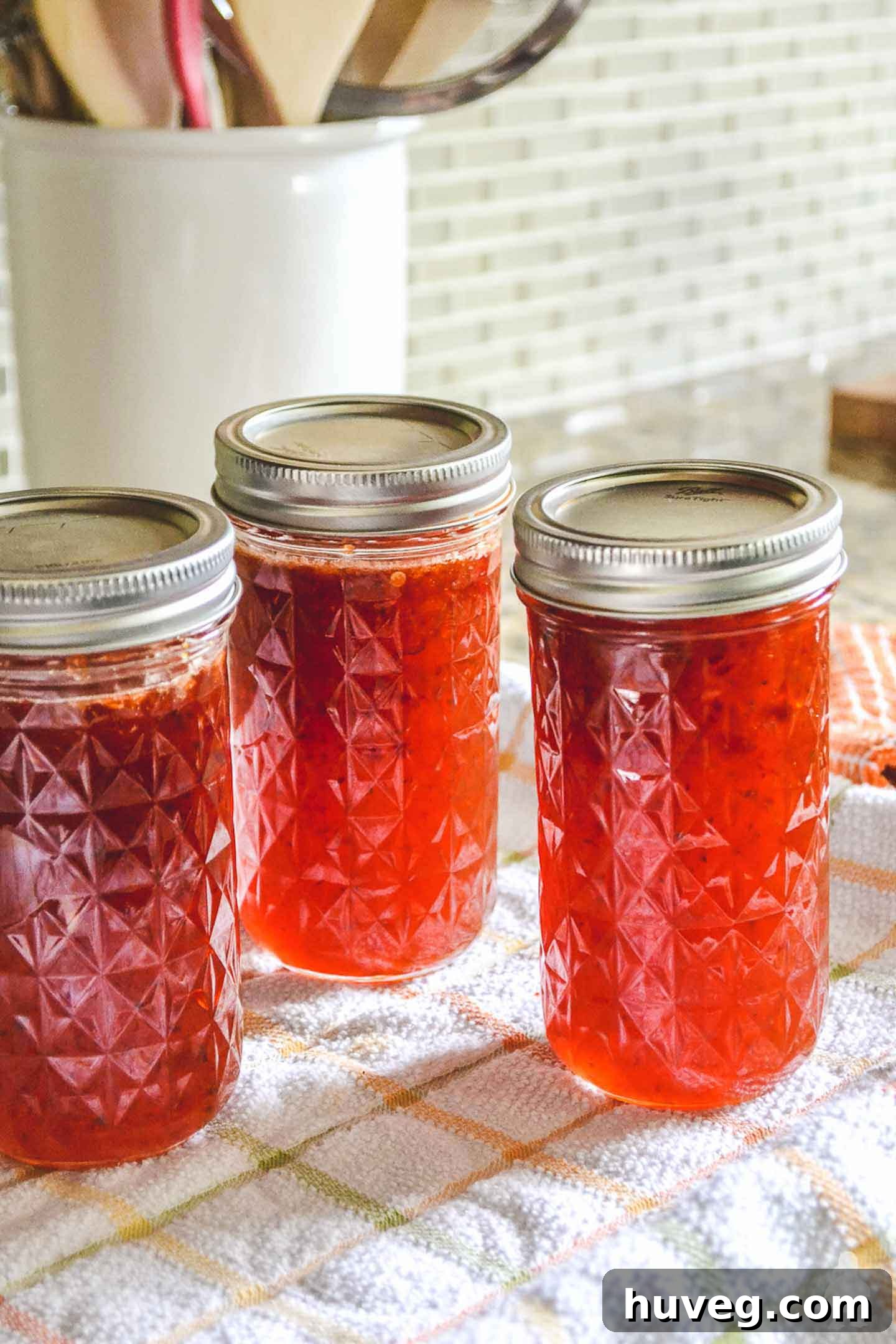
When it comes to home canning, maintaining a clean and uncontaminated environment is paramount to ensure the safety and longevity of your preserves. Things tend to move quite swiftly once the mixture comes off the heat, so having everything ready in advance is key. You’ll need to thoroughly sterilize your canning jars before you even begin preparing the jelly. Mom has a clever system: she keeps her sterilized jars in the dishwasher, ensuring they remain hot until they are ready to be filled. The lids and bands, equally important for a proper seal, are kept simmering in a pot of hot water on the stovetop as we prepare the delicious pepper mixture. This meticulous preparation prevents any potential spoilage and guarantees a perfect seal.
Essential Home Canning Supplies for Pepper Jelly
To successfully make and preserve this incredible hot pepper jelly, you’ll need a few essential pieces of equipment. Having these on hand will make the entire process smoother and more efficient:
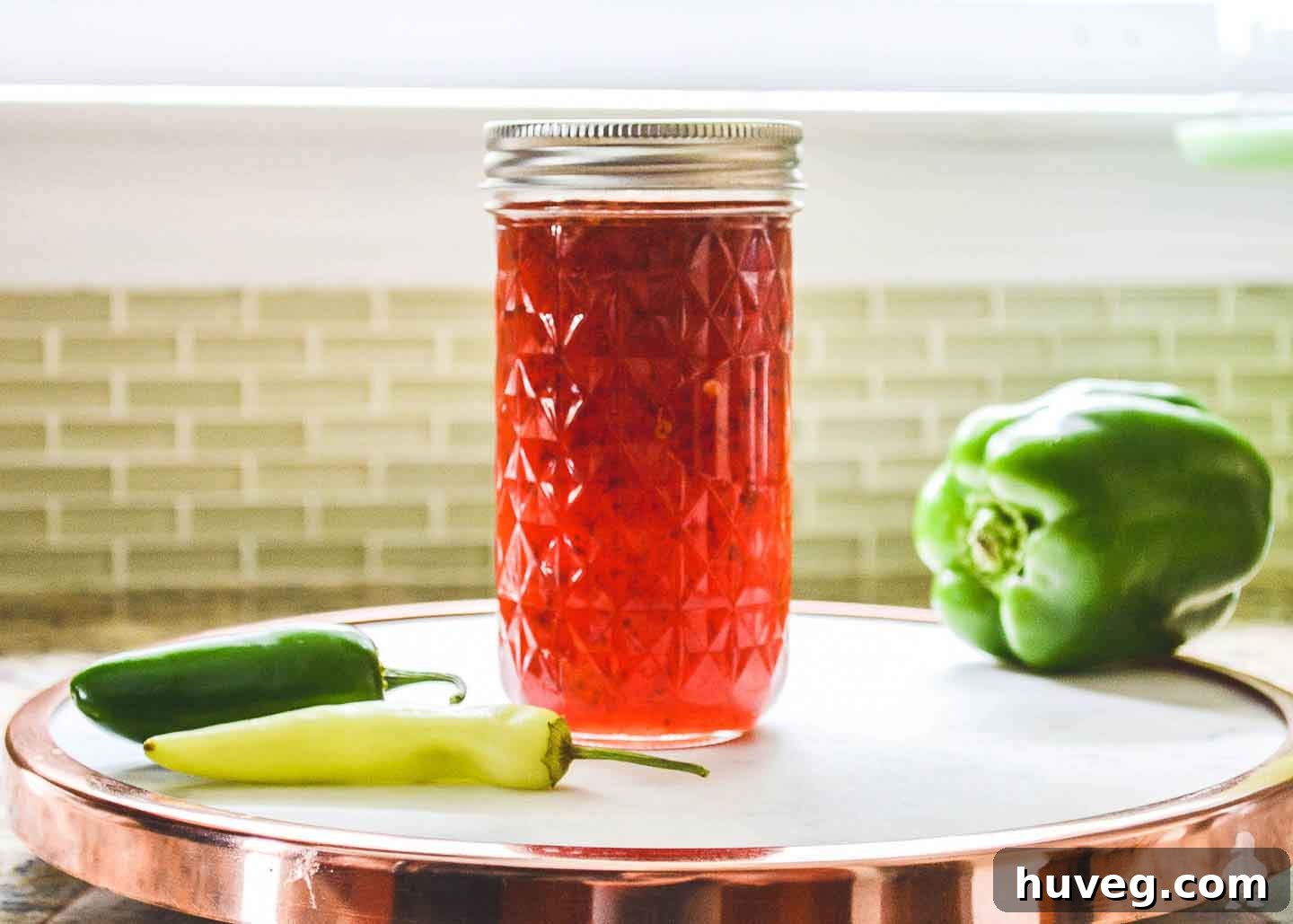
- Regular Mouth Quilted Jelly Jars: These classic jars are ideal for preserves and jellies, offering both functionality and an attractive presentation. The quilted design also provides a better grip.
- Canning Essentials Set: This kit typically includes a jar lifter (crucial for safely handling hot jars), a funnel (to prevent spills when filling jars), a headspace tool (to measure the correct space between the jelly and the lid), and a bubble remover. These tools are indispensable for maintaining hygiene and preventing contamination.
- Stainless Steel Canning Rack: A canning rack keeps your jars elevated off the bottom of the canning pot, preventing them from touching each other or the hot bottom. This ensures even heat distribution during the water bath process. (Mom used a dishtowel in a pinch, but a proper rack is highly recommended and makes the process much easier. I even bought her one as a thank you!)
- Large Saucepan: You’ll need a spacious saucepan to cook the pepper mixture and bring it to a rolling boil. A larger pan helps prevent boil-overs as the sugar is added.
- Blender: Essential for achieving the smooth consistency of this “jam-like” jelly, the blender pulverizes the peppers and seeds thoroughly, creating a uniform mixture.
- Large Pot for Water Bath Canning: This is your main canning vessel. It needs to be tall enough to allow water to cover your jars by at least an inch. Mom uses her large crab pot, but you can also find specialized canning pots. Many even come as a pot + canning rack combo.
- Ladle: A heat-proof ladle with a good pour spout will make transferring the hot jelly into the sterilized jars much safer and cleaner.
Now that you have all your supplies ready, let’s get to the star of the show: Mom’s incredible hot pepper jelly recipe!
Mom’s Quick and Easy Hot Pepper Jelly
5 Stars
4 Stars
3 Stars
2 Stars
1 Star
4 from 1 review
If you’re searching for an appetizer that truly stands out, combining irresistible sweetness with a delightful spicy kick, then Mom’s hot pepper jelly is your answer! Simply pour a generous serving over softened cream cheese and serve with your favorite crackers. It’s an absolute crowd-pleaser and perfect for holidays, parties, or just a sophisticated snack.
- Author: Sarah
- Prep Time: 30 minutes
- Cook Time: 15 minutes
- Total Time: 45 minutes
- Yield: 4 tall jars
- Category: Appetizers
- Method: Water bath
Ingredients
- 3–4 regular-sized bell peppers (we used a few smaller ones from the garden that amounted to about one regular bell pepper)
- 4 jalapeño peppers (adjust quantity based on desired heat level)
- 1 small habanero pepper (optional, for an extra fiery kick – handle with gloves!)
- 1 box (approximately 1.75 oz) package of powdered pectin (ensure it’s designed for jellies)
- 1 cup apple cider vinegar (adds a tangy balance to the sweetness)
- 5 cups granulated sugar (a crucial component for setting and preserving)
Instructions
- Prepare Jars: Begin by sterilizing your canning jars, lids, and bands according to the manufacturer’s instructions. This is a critical step for food safety and proper sealing. Fill your large canning pot with water and place it on the stove to heat up; keep the water warm but not boiling.
- Chop Peppers: Wash all peppers thoroughly. Roughly chop the bell peppers, banana peppers, and jalapeños into chunks. For a milder jelly, remove all jalapeño seeds and membranes; for medium heat, remove about half of the seeds (as we did in this batch); for maximum heat, leave all seeds in. If using a habanero, wear gloves and remove its seeds and membranes unless you desire extreme heat. Place all chopped peppers into your blender. Blend until the mixture is smooth with no large chunks remaining.
- Start Cooking: Transfer the blended pepper mixture to a large saucepan. Place it over high heat, stirring constantly to prevent scorching. Add the apple cider vinegar and the powdered pectin. Continue stirring diligently until the mixture reaches a full, rolling boil that cannot be stirred down.
- Add Sugar: Once a full rolling boil is achieved, quickly add all 5 cups of sugar to the saucepan. Stir continuously until the sugar is fully dissolved. Bring the mixture back to a vigorous, full rolling boil and maintain this boil for exactly 1 minute, stirring constantly. This step is crucial for the pectin to activate and set the jelly properly.
- Skim Foam: After 1 minute of boiling, remove the saucepan from the heat. Use a clean spoon to carefully skim off any foam that has risen to the surface. This will result in a clearer, more aesthetically pleasing jelly.
- Fill Jars: Carefully ladle the hot pepper jelly into your sterilized jars, leaving exactly 1/4 inch of headspace from the top of the jar. This headspace is essential for a proper vacuum seal. Wipe the rims of the jars clean with a damp cloth to ensure no jelly prevents the seal from forming. Place the hot lids on the jars, followed by the bands, and screw them on finger-tight.
- Water Bath Process: Gently place the filled and sealed jars into your canning pot. If you have a canning rack, slowly lower it into the pot. If not, place a dish towel on the bottom of the pot to prevent the jars from direct contact and rattling. Ensure the water completely covers the jars by at least 1 inch. The water should be hot, but not yet boiling when jars are added. Bring the water to a full, vigorous boil, then process the jars for 5 minutes.
- Cooling & Settling: Once the 5-minute processing time is complete, carefully remove the jars from the canning pot using your jar lifter and place them on a clean towel or cooling rack, ensuring they are not touching each other. To prevent the pepper seeds from settling entirely at the bottom, carefully flip the jars upside down for about five minutes while the jelly is still cooling and beginning to set. Then, turn them right side up to finish cooling completely for the next 12-24 hours.
- Check Seals: As the jelly cools, you should hear satisfying “pops” from the lids as a vacuum seal forms. After 12 – 24 hours of cooling, remove the bands. Press down on the center of each lid with your finger. If the lid is concave and does not flex or pop back up, it is properly sealed. If a lid still looks bumped up or flexes when pressed, it is unsealed and needs to be immediately stored in the refrigerator and consumed within a week, or reprocessed with a new lid.
Expert Tips & Notes
- Preparation is Key: Always prepare and sterilize your jars, lids, and bands well ahead of time. Having everything ready minimizes stress and maximizes safety once the cooking process begins. For a more extensive guide on sterilization, refer to this helpful post.
- Lid Usage: For optimal safety and a reliable seal, never reuse canning lids. Bands can be reused if they are in good condition.
- Batch Size Matters: Homemade jelly recipes, especially those relying on pectin, are generally designed for small batches. Doubling the recipe can sometimes interfere with the pectin’s setting ability, leading to a jelly that doesn’t properly set. It’s often better to make multiple small batches.
- Unsealed Jars: If you don’t hear the satisfying “pop” from a jelly lid, or if your post-cooling test reveals an unsealed lid, don’t despair! You have two options: you can either replace the lid with a fresh one and reprocess the jar immediately in the water bath for 5 minutes, or simply place the unsealed jar directly into the refrigerator and consume its contents within approximately a week.
- Storage Guidelines: Properly water-bathed and sealed, unopened homemade jelly can last for up to two years in a cool, dark pantry. Once opened, it should always be stored in the refrigerator and will maintain its quality for up to three months (some sources suggest up to six months, but three months is a safer, more conservative estimate).
A Note from Me & Mom: Cherishing Family Culinary Traditions
The swiftness of this recipe post can largely be attributed to the overwhelming enthusiasm I encountered on Instagram this past weekend. My initial intention was simply to spend time with Mom and Dad, learning to transform my garden peppers into Mom’s renowned pepper jelly, and eventually share it on the blog. However, I was genuinely surprised by the outpouring of comments requesting more content from what many lovingly dubbed “Cathy’s Kitchen.”
Our family is rich with cherished culinary traditions and recipes, much like Granny’s beloved kolache recipe. I’m absolutely thrilled that so many of you are eager to hear the stories that accompany these dishes. These aren’t just recipes; they are snippets of our history, filled with laughter and love – like the unforgettable time Granny accidentally knocked her kitchen timer into a massive batch of her Sunday sauce, and we only discovered its whereabouts months later when she thawed a portion! We still chuckle about that one to this day. Rest assured, more stories and recipes, including that Sunday sauce, will be making their way to the blog after future visits to Mom’s kitchen.
While I’m still relatively new to the world of serious cooking and don’t intend for this blog to become solely a recipe haven, I cherish the opportunity to sprinkle in these culinary lessons as I learn them. It’s a natural extension of my home and DIY journey, reflecting the everyday skills and traditions that make a house a home. And to those who weren’t following my journey when she passed, it means the world to me to bring some of my mother’s favorite activities and passions to this space. She also taught me cross stitch, a craft many of you have already seen here. Sharing these parts of her legacy truly fills my heart. ❤️
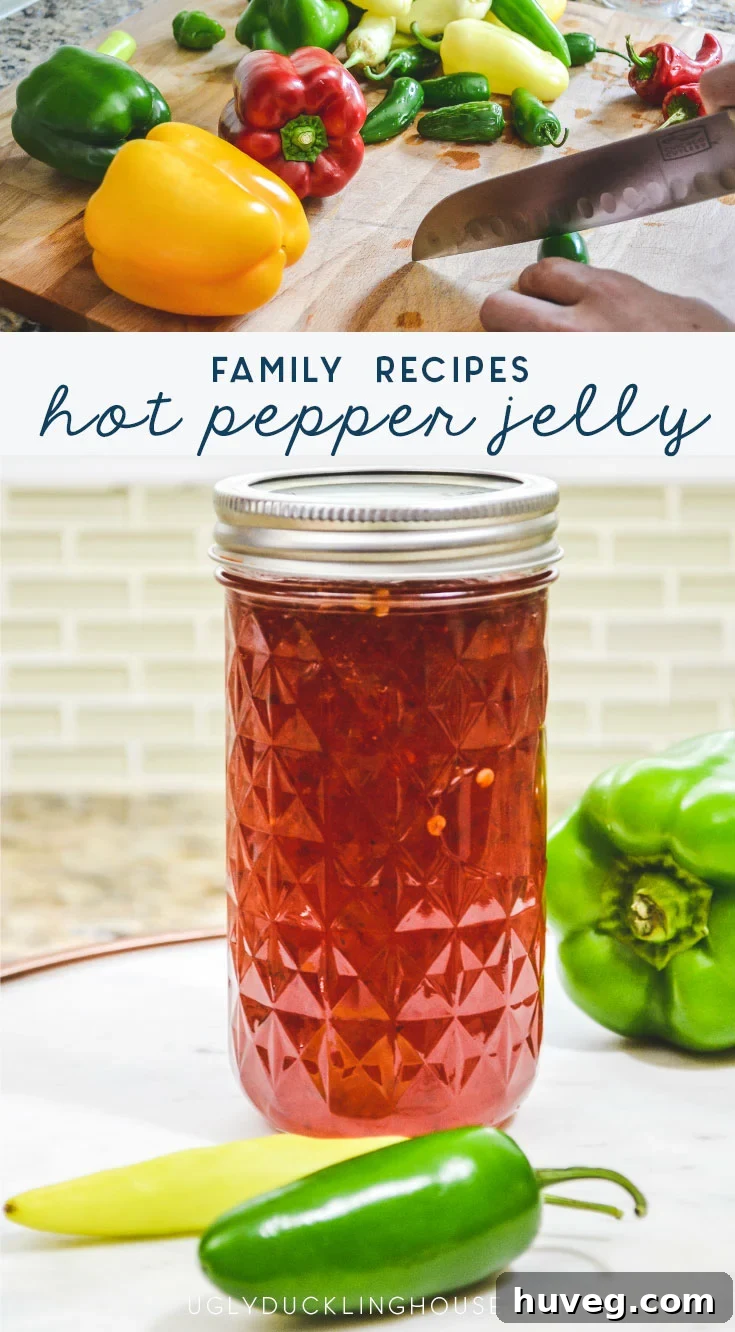
Don’t forget to pin this delightful sweet and spicy hot pepper jelly recipe to save for later!
More Family Recipes
SEE ALL RECIPES
Check out these other family favorites!
-
Czechoslovakian Cookies | Family Favorite Recipes
-
Our Favorite Kolaczki Cookie Recipe
-
Easy Sugar Cookie Frosting (Vanilla Buttercream Recipe)
-
Classic Italian Pizzelle Cookies (Family Recipe)
-
Baked Leftover Turkey or Chicken Croquettes
-
Mom’s Quick and Easy Hot Pepper Jelly