Autumn Bonfires Stump Disposal

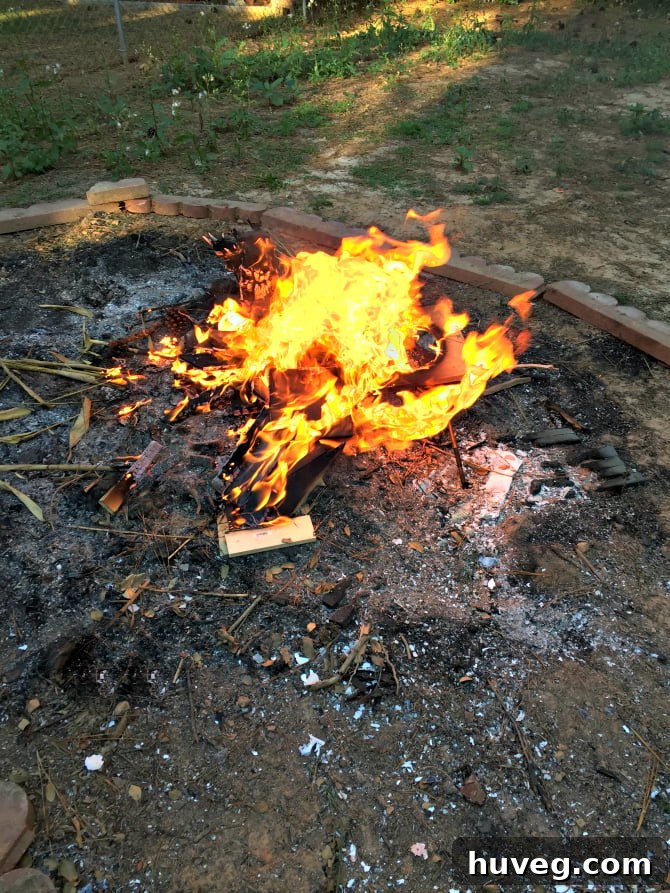
There’s an undeniable, comforting aroma of a crackling campfire wafting through my home, and I couldn’t be more content about it. This earthy, smoky scent is a testament to the satisfying progress happening in my backyard, marking another significant milestone in our ongoing outdoor transformation journey. It’s more than just a smell; it’s the essence of hard work, hands-on creativity, and the joy of seeing a vision slowly come to life right outside my back door. This project, like many DIY endeavors, has had its challenges, but the reward of a re-imagined space and the unique ambiance it now brings makes every effort worthwhile.
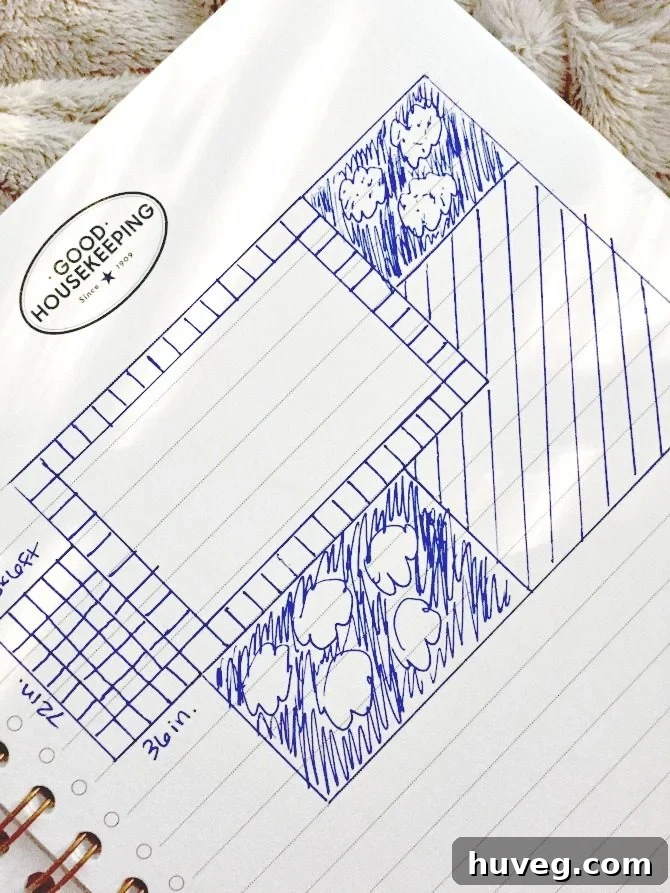
For those who have been following along with my previous posts, especially the one from last Friday detailing our major backyard overhaul, you’ll know that the groundwork has been meticulously laid. The substantial task of filling in and leveling the terrain is largely complete, achieving a remarkably even surface – a feat I’m particularly proud of as an enthusiastic, albeit sometimes unskilled, DIYer. This foundational work wasn’t just about moving dirt; it was about preparing a blank canvas for the exciting next phase of our backyard transformation. And let me assure you, the gears are turning, and a multitude of ambitious plans are already in motion! I’ve been diligently sketching out numerous landscaping ideas, envisioning everything from cozy outdoor seating areas to lush garden beds, and I’m eager to share some of these detailed plans and design concepts with you later this week. The anticipation of bringing these outdoor living dreams to fruition is truly motivating, fueling every step of this extensive home improvement project.
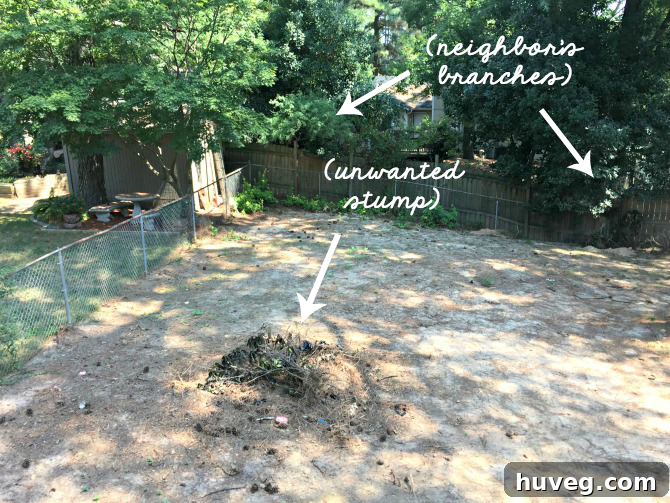
However, before diving headfirst into the more aesthetic and structural elements of our backyard design, a crucial preliminary step was still required: further clearing. Even after the major excavation work, the property still presented a few stubborn challenges that needed to be addressed to ensure a truly clean slate. Specifically, I needed to tackle a number of persistent issues: the unruly overhanging branches encroaching from the rear fence line, which were both an eyesore and a potential hazard, and the remnants of several resilient tree stumps that, despite our best efforts with the backhoe, simply refused to be dislodged. These deep-seated root systems were proving to be particularly formidable opponents, necessitating a more strategic approach to complete the ground preparation for our upcoming landscaping endeavors. Clearing these last obstacles is vital for both safety and for creating the optimal conditions for future planting and construction, ensuring our new backyard truly thrives.
To efficiently tackle the substantial task of clearing out yard debris and managing those challenging overhanging branches, I rely on a selection of robust and reliable tools. These have become my go-to equipment for any significant garden or backyard clearing project, and I wholeheartedly recommend them for fellow DIY enthusiasts. (Please note that the following are affiliate links, offering a convenient way to explore these trusted products):
- A battery-powered reciprocating saw is an absolute game-changer for larger branches and tougher cuts. Its portability, free from the constraints of power cords, allows for unparalleled maneuverability across the yard. When paired with a specially designed serrated blade—often labeled for pruning or green wood on its packaging—it effortlessly slices through thick wood, making quick work of what would otherwise be a laborious task. This saw’s power and precision are invaluable for challenging tree trimming.
- For those hard-to-reach, medium-sized branches, large loppers are indispensable. Their extended handles provide excellent leverage, allowing you to snip through branches that are too thick for hand shears but not quite large enough to warrant a power saw. They are perfect for shaping trees and shrubs and managing dense foliage that extends over paths or structures.
- Finally, small pruning shears are essential for finer work and for reducing larger pieces of debris into manageable sizes. After a branch has been cut down by the saw or loppers, these shears allow for precision trimming, breaking down bulky material into smaller, more compact pieces that are easier to handle, stack, and especially, to burn in our temporary fire pit. Their ergonomic design and sharp blades make detail work efficient and less strenuous, ensuring every piece of yard waste is properly processed.
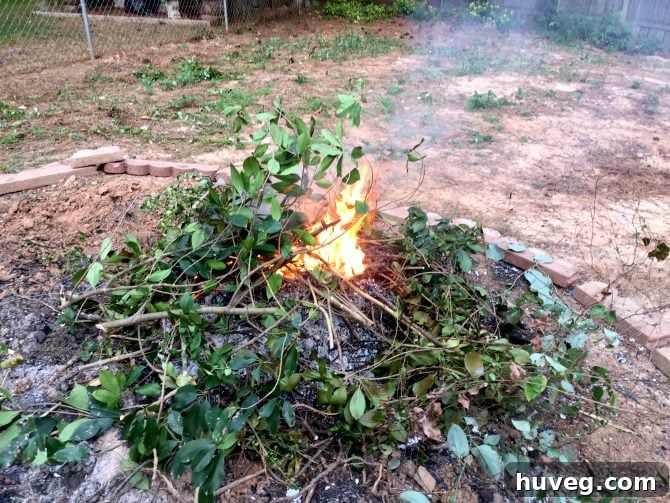
With the arrival of October, our county has finally entered its designated allowable burning season, providing the perfect opportunity to tackle the accumulated yard debris in a truly enjoyable and efficient manner. I’ve established a temporary burn area, which has proven to be an incredibly effective solution for disposing of all the organic waste generated during our extensive backyard renovation. Given that much of the yard is still bare earth, the timing feels exceptionally safe and conducive to managing debris from the extensive backhoe project without significant risk to neighboring properties. To enhance safety, I did implement a perimeter using plenty of that leftover scalloped edging—the very kind you know I have a love-hate relationship with—creating a clear boundary around the burn site. While I’ll admit I might not be the quintessential poster child for stringent fire safety regulations (though I am undeniably far more careful now than in seasons past, particularly when my ex lived here – and wow, just look at the difference in pine straw since those problematic trees are gone!), I ensure nothing is ever left unattended. I maintain a constant presence outdoors while the fire is active, vigilantly monitoring the burn and ensuring complete control over the flames. This allows for both effective yard waste disposal and a relaxing, mindful outdoor experience.
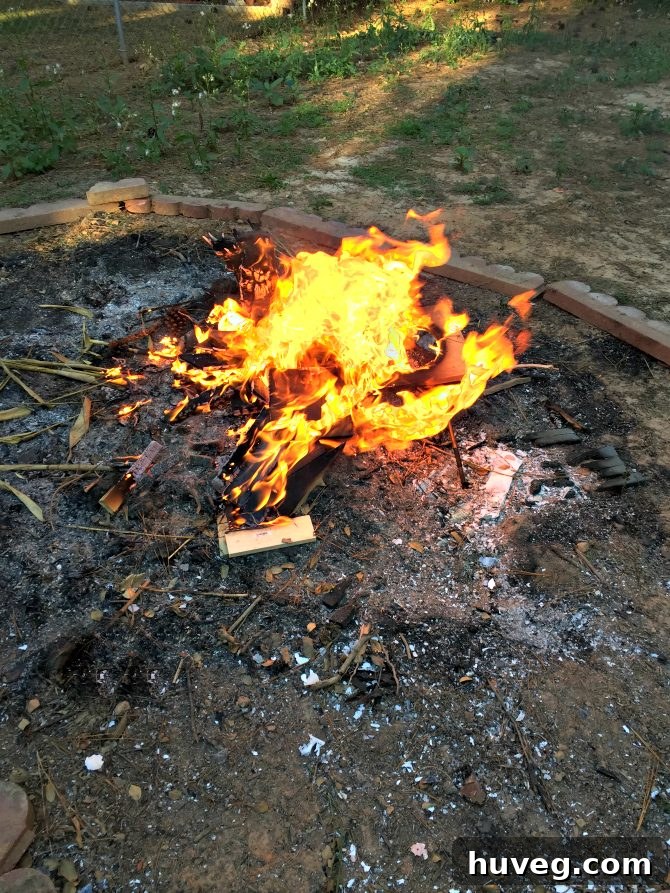
Beyond simply disposing of general yard debris, this dedicated burn spot is serving a secondary, equally important purpose: tackling a particularly stubborn tree stump that I highlighted in my last post. Despite my persistent efforts with the backhoe during the leveling process, the root system of this particular cluster of trees proved to be incredibly dense, extensive, and deeply entrenched, making its complete removal by mechanical means virtually impossible. While the professional tree removal crew did an admirable job of grinding down the visible stumps initially, I discovered numerous additional roots and buried stump sections once I began the detailed work of leveling the ground. My options were to rent a heavy-duty stump grinder—a solution I might still pursue if this current method doesn’t yield the desired results—or to experiment with burning the stump out, a technique I’d heard about and was keen to try. The prospect of a cost-effective, hands-on, and somewhat unconventional approach for this challenging stump removal project was certainly appealing, turning a chore into a fascinating DIY experiment in backyard sustainability and resourcefulness.
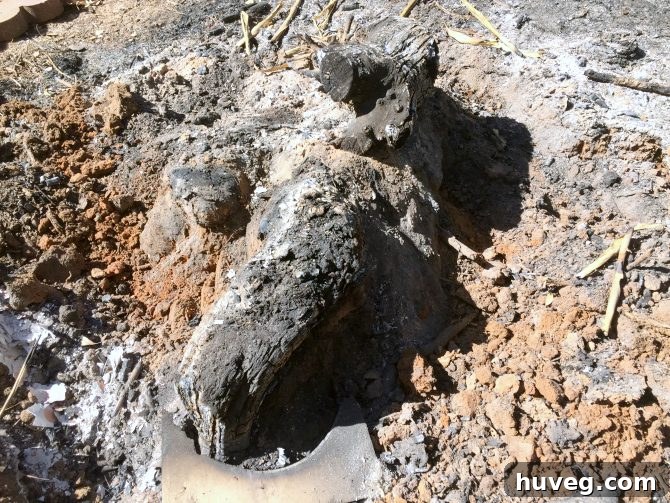
The idea to try burning out the stump actually came from my insightful neighbor, who is always a great source of practical advice and invaluable help with my various home projects. His suggestion instantly felt like a win-win situation for me, as I not only needed an effective method for stump removal but also had an abundance of yard debris to dispose of. In a spirit of mutual assistance, I even offered him the opportunity to add any extra debris from his own yard to my burn pile, further maximizing the efficiency of our efforts and strengthening our community bond. To ensure I approached this stump burning process effectively and safely, I dedicated some time to watching various instructional videos on YouTube, gathering tips and best practices from experienced DIYers. Based on this research and my initial trials, here’s a breakdown of the techniques I’ve been applying thus far, transforming what could be a costly and arduous task into an engaging and budget-friendly backyard maintenance solution:
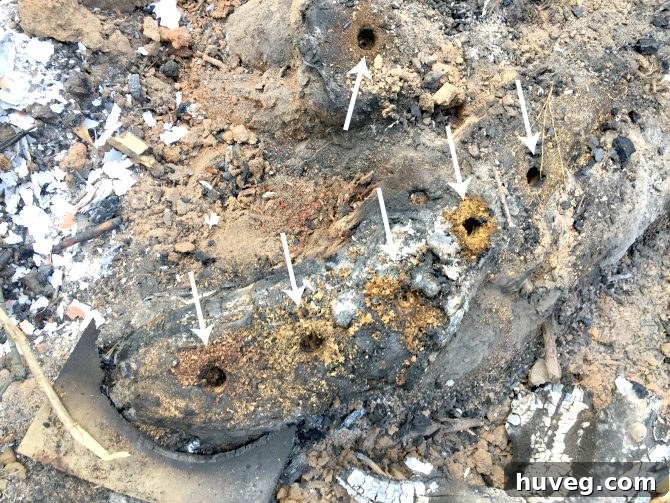
- The first crucial step involves using a hammer drill to bore a series of holes into the stump and its exposed root system. These holes are strategically placed a couple of inches apart, covering the entire surface. The goal is to create pathways for oxygen and fuel, facilitating a deeper and more thorough burn. For this task, a spade bit or a similar wood-boring bit is ideal, aiming for the deepest penetration possible. Since I didn’t have a bit extender on hand, I’ve adopted an adaptive approach: I drill deeper into the stump after each successive burn. This technique is surprisingly effective because the wood becomes significantly softer and easier to drill into once it has been subjected to heat and partially charred, making subsequent drilling much less strenuous. This continuous deepening of the holes helps ensure the fire can reach further into the core of the stump, promoting a more complete and efficient removal.
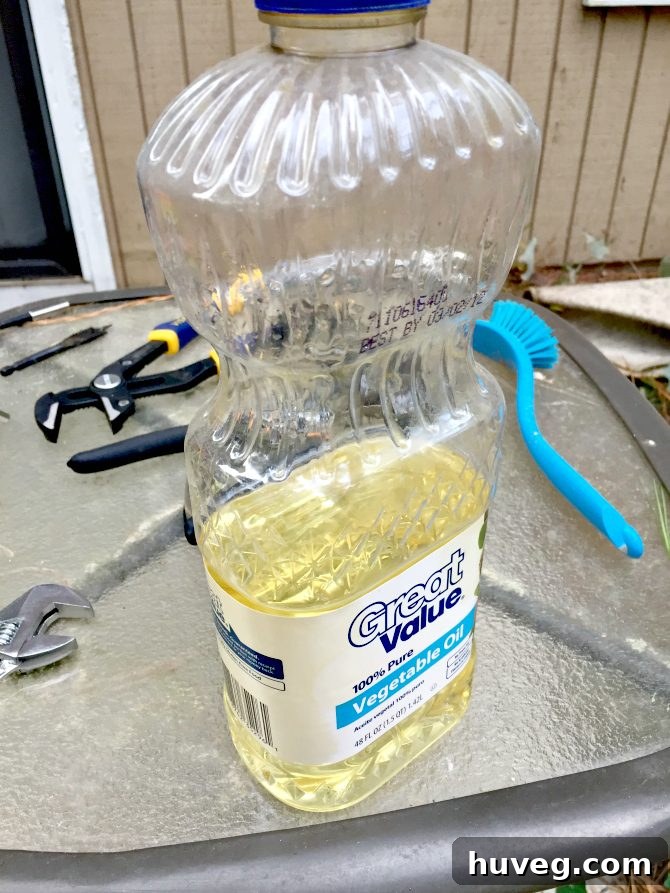
- After the initial drilling, I proceed to fill each of the newly bored holes with cheap, regular vegetable oil. I let the oil soak into the wood for as long as possible. There’s a particular satisfaction in repurposing everyday household items for DIY projects, and this is a perfect example: I’m not only facilitating the stump burn but also clearing out a bottle of vegetable oil that had been languishing at the back of my cupboard for far too long! This oil acts as a slow-burning fuel, helping to sustain the combustion deep within the stump’s dense wood fibers. While recommendations often suggest allowing the oil to soak for an extended period—ideally a month or so—to achieve the fastest and most thorough results, my current schedule hasn’t permitted such a long waiting period. Despite the shorter soaking times, the oil still significantly aids the burning process, ensuring a more consistent and prolonged internal charring of the stump.
- Following the initial burn and after the vegetable oil has had some time to penetrate, I introduce another element to maintain consistent heat: an inexpensive bag of charcoal. I simply spread the charcoal directly on top of the stump, ensuring it covers the drilled holes and any exposed root areas. The charcoal provides a sustained, even heat source that helps to keep the stump smoldering for extended periods, effectively breaking down the wood from the outside in, and from the inside out through the oil-soaked holes. This method capitalizes on the charcoal’s ability to maintain a steady temperature, which is crucial for the slow but thorough process of burning out a deeply rooted stump. It’s an economical way to intensify and prolong the burn, contributing significantly to the gradual disintegration of the stubborn wood.
So far, this experimental approach to stump removal and yard waste management is progressing remarkably well. While I maintain realistic expectations that this process will not be a quick fix—it’s inherently a slow, methodical endeavor—the results are steadily accumulating. I plan to provide a comprehensive update after a few more burns, sharing further insights into the stump’s disintegration and the overall effectiveness of these techniques. What makes this project particularly satisfying is its dual benefit: not only is it a cost-effective method for tackling a persistent landscaping challenge, but it also serves as an efficient means of disposing of various yard debris, including small pieces of scrap wood and other organic waste, all without requiring extensive additional labor. This synergy of purpose makes the entire process incredibly enjoyable. If only every home improvement project could unfold with such pleasant efficiency and yield such practical, multi-faceted benefits, right? This ongoing backyard transformation continues to be a source of great satisfaction, constantly reminding me of the rewarding journey of DIY landscaping and creating the perfect outdoor living space.