Growth Through Errors

Embracing Imperfection: The Unfiltered Reality of DIY Furniture Building
Every seasoned DIY enthusiast, and indeed every beginner embarking on their inaugural home improvement journey, will inevitably encounter that moment: the dreaded “oops.” It’s an almost universal experience when you’re pushing boundaries, trying something completely new, or even attempting a familiar task with a novel approach. This particular story began with the ambitious goal of constructing two custom desks for a dedicated craft and study room. The challenge wasn’t just in the design or the material selection, but in the simple fact that I hadn’t truly built anything substantial from scratch before in my life. It was a leap of faith into the world of woodworking, a journey fueled by enthusiasm but lacking in direct practical experience.
Navigating the DIY Learning Curve: From Caulk to Complex Builds
While this desk-building project was new territory, it wasn’t my absolute first foray into home improvement. Over time, I’ve managed to pick up a few essential skills that form the backbone of many DIY endeavors. I’ve become reasonably proficient with caulk, understanding its crucial role in sealing gaps and achieving a polished finish. Painting, too, has evolved from a chore into an art, learning techniques for smooth coats and crisp lines. There was even that one memorable, slightly audacious project involving sawing under a stone fireplace to install new flooring – a task that certainly pushed my limits and taught me the importance of precision and patience under pressure. Each of these experiences, while rewarding, came with its own unique learning curve. They were undoubtedly fun, offering a sense of accomplishment, but none were without a little trial and error, a few head-scratching moments, and the occasional minor mishap. These smaller victories, however, built a foundation of confidence, preparing me for bigger, more complex projects like building furniture from the ground up.
The Anatomy of a Mistake: Pocket Holes Gone Awry
My latest adventure, the desk construction, was going smoothly until it wasn’t. The specific error that brought progress to a grinding halt involved a fundamental step in furniture assembly: drilling pocket holes. For those unfamiliar, pocket holes are an ingenious way to create strong, concealed joints in woodworking using a specialized jig. The process typically involves drilling angled holes into one piece of wood, which then allows screws to be driven into an adjoining piece, creating a robust connection without visible fasteners on the exterior. The concept is straightforward, but execution requires attention to detail – a detail I momentarily overlooked.
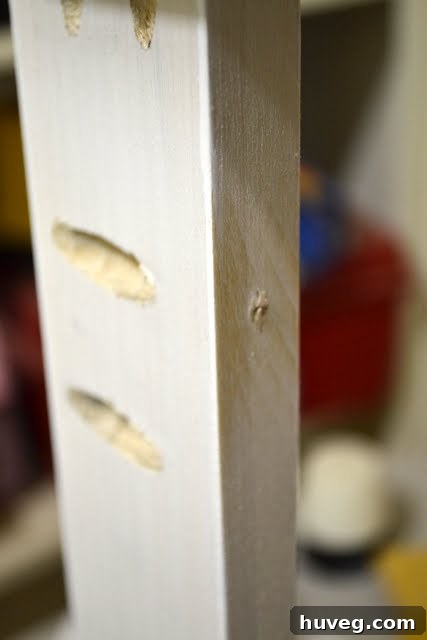
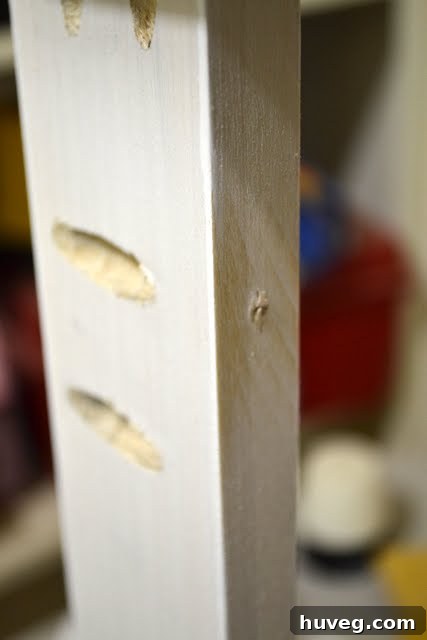
I meticulously pre-drilled the pocket holes into a crucial piece of wood, envisioning it perfectly integrating into the desk frame. However, in a moment of haste or perhaps overconfidence, I committed a classic beginner’s blunder: I attached the piece upside down when connecting it to the robust 3×3 posts designed to support the desk’s entire structure. The result was immediately apparent and undeniably frustrating. Instead of the neatly concealed pocket holes facing inward, ready to accept their screws discreetly, they were now exposed on the exterior, glaringly visible and completely out of place.
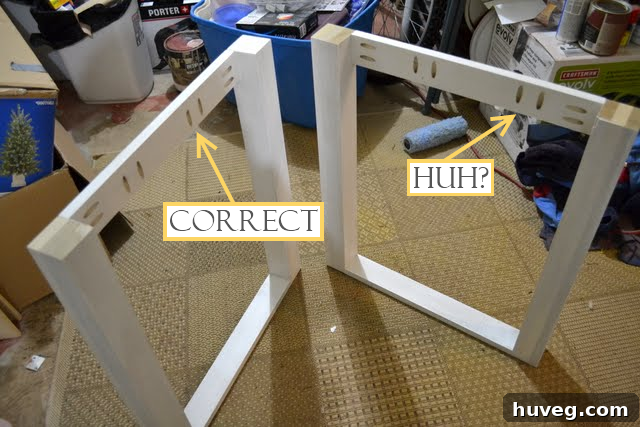
Like I said, oops. It was one of those moments where you stare at your handiwork, a mix of disbelief and exasperation washing over you. But in DIY, dwelling on the mistake is unproductive; finding a solution is paramount. Thankfully, for almost every construction error, there are usually multiple paths to rectification. In this scenario, I had two distinct options to salvage my desk frame, each with its own pros and cons:
- The Reversal Method: This involved unscrewing both sides of the misaligned piece, carefully flipping it to the correct orientation, and then meticulously screwing everything back together. The critical secondary step here would be to ensure the entire assembly was perfectly square once more, a process that can be finicky and time-consuming, especially with a partially built structure.
- The Patch and Redrill Method: This alternative suggested drilling entirely new pocket holes in the correct direction on the same piece of wood. Subsequently, the incorrectly placed holes would be patched up and filled, effectively erasing their existence before the final finishing stages.
Solutions and Strategic Recovery: Choosing the Path of Least Resistance
Weighing the options, option number two immediately struck me as the more appealing and pragmatic choice. Why? Because the project already necessitated patching up other minor imperfections and existing holes in preparation for the final coats of paint. Integrating the patching of these errant pocket holes into the existing workflow seemed like a natural extension, rather than an additional, separate task. The thought of painstakingly unscrewing, flipping, realigning, and re-squaring the entire assembly felt like an unnecessary detour, potentially introducing new alignment issues or stress on the joints. Drilling new holes, while requiring precision, felt like a more controlled and less disruptive approach. It minimized the risk of further complications and aligned better with the project’s impending finishing stages.
This decision highlights a critical aspect of effective DIY problem-solving: sometimes, the most elegant solution isn’t about undoing everything, but about adapting and integrating the fix into the broader process. By choosing to patch and redrill, I was effectively turning a visible error into an invisible one, relying on the magic of wood filler and paint to hide any evidence of my momentary lapse. It’s a strategy many experienced DIYers employ – understanding that not every mistake needs a complete overhaul, but rather a clever workaround and meticulous finishing.
The Profound Lesson: Embracing Trial and Error in Every DIY Project
Beyond the immediate fix, this incident offered a profound and valuable lesson: it is absolutely okay, and even expected, to make mistakes when you’re learning and creating. When it comes to building furniture, precise cuts, accurate measurements, and meticulous attention to detail are undeniably important. These factors contribute to the structural integrity and aesthetic appeal of the final piece. However, it’s equally important not to let the pursuit of perfection paralyze your efforts, especially when you’re attempting something for the very first time. The journey of DIY is inherently one of continuous learning, and errors are often the most effective, albeit sometimes frustrating, teachers.
As part of a vibrant community of DIY enthusiasts, I believe it would be a disservice to all of you to pretend that every project unfolds flawlessly. The curated images and perfected tutorials often hide the struggles, the re-dos, and the occasional “oops” moments that are so integral to the creative process. I, too, grapple with the same intimidation and self-doubt when approaching new techniques or products. The familiar questions echo in my mind: “Will I get it right? Will I embarrass myself if I share this setback? What if I ruin the material?” But ultimately, the DIY spirit compels us to push past these fears. The mantra becomes: “Screw it; let’s just see what happens.” This mindset isn’t about recklessness, but about embracing experimentation, understanding that failure is not final, and that every stumble is a stepping stone towards greater skill and confidence.
Beyond the Paint: The True Spirit of DIY and Continuous Improvement
And that, my friends, truly encapsulates what DIYing is all about. It’s about empowering yourself to tackle challenges, to figure things out through hands-on experience, and to develop an intuitive understanding of materials and processes. You learn not just what to do, but perhaps even more importantly, what not to do next time. This iterative process of learning and adapting is invaluable. For instance, when I embark on building desk frame #2, I’ll approach the pocket hole step with heightened awareness, perhaps triple-checking my piece orientation before committing to the screws. This hard-won knowledge makes future projects smoother, more efficient, and ultimately more satisfying.
The beauty of many DIY projects, especially those involving wood and paint, is their inherent forgiving nature. Once the wood filler dries, the surfaces are sanded smooth, and the final coats of paint are applied, the evidence of that initial goof-up will be completely concealed. No one, apart from those of you reading this candid confession, will ever know that I stumbled along the way. And that’s perfectly fine. The real triumph isn’t just the finished desk; it’s the journey, the problem-solving, the resilience, and the growth that occurred along the way. It’s about creating something with your own hands, imperfections and all, and taking pride in the story behind it. So, keep drilling, keep painting, and most importantly, keep learning and don’t be afraid to say “oops” along the way – it’s all part of the glorious adventure of DIY.