Front Porch Facelift: Layer One

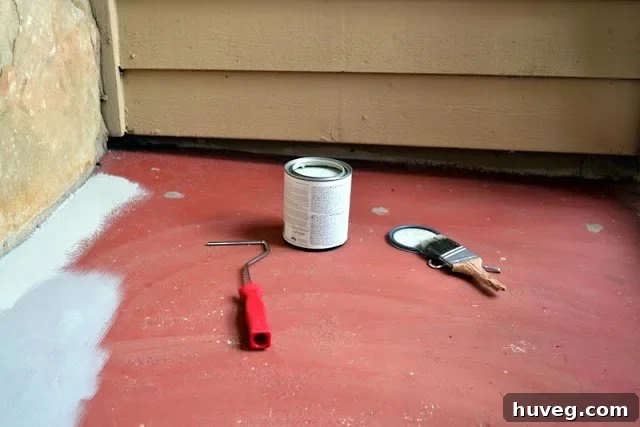
Revitalizing Your Entryway: A Journey to the Perfect Front Stoop Makeover
The entrance to your home sets the tone for your entire property. It’s the first impression visitors receive, and a well-maintained, aesthetically pleasing front stoop can significantly enhance your home’s curb appeal. A few weeks ago, I embarked on a journey to transform my own front stoop, grappling with a common homeowner dilemma: what color to paint it?
The Great Color Debate: Embracing Gray for Timeless Appeal
The decision wasn’t an easy one. My front door had recently been painted a striking blue, and naturally, my mind wandered to a matching blue for the stoop. However, experience and an instinctive pull towards a more neutral palette led me to consider gray. To gather diverse perspectives and validate my own intuition, I sought advice from my readers. The response was overwhelming: a large majority echoed my gut feeling, recommending gray. This collective wisdom solidified my choice, and I was ready to begin the transformation.
Choosing the right color for an exterior element like a front stoop is more than just personal preference; it’s about creating a cohesive and inviting aesthetic. While a vibrant blue might have seemed daring, the potential for it to overpower the blue door or create an overly monochromatic look was a concern. Gray, on the other hand, offers a sophisticated and versatile backdrop. It complements almost any color, allowing the blue of the door to truly pop without competition, and provides a neutral foundation for future seasonal decorations. The goal was to achieve a harmonious balance, elevating the entrance without making it feel visually cluttered.
The Unyielding Challenge of Prep Work: Conquering Stubborn Surfaces
With the color decision made, the next logical step was preparation. Any seasoned DIY enthusiast knows that the success and longevity of a paint job hinge almost entirely on meticulous prep work. For concrete surfaces, this typically involves thorough cleaning to remove dirt, grime, oil, mildew, and any loose debris that could prevent proper paint adhesion. I armed myself with various cleansers, eager to scrub the stoop to pristine perfection.
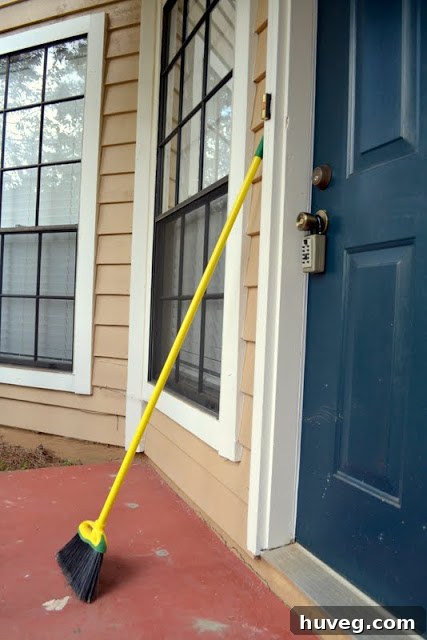
However, what followed was a series of frustrating, unyielding attempts. Despite my best efforts with different cleaning solutions and a good deal of elbow grease, this particular cement slab proved remarkably resistant to my cleaning endeavors. It seemed determined to cling to every last particle of dirt and debris. After several rounds of scrubbing with minimal visible progress, I made a pragmatic decision: to sweep off all loose dirt and proceed with painting. While ideal preparation is always recommended, sometimes you have to acknowledge the limitations of a surface and adapt your approach. In this instance, the priority shifted to achieving a refreshed look that was significantly better than the existing state, even if the concrete wouldn’t achieve absolute spotless perfection.
Why Prep Work Matters (Even When Challenging)
Proper surface preparation is the cornerstone of any successful painting project, especially outdoors where surfaces are exposed to harsh elements. For concrete, this typically involves:
- Cleaning: Removing dirt, dust, grease, oil, efflorescence, and mildew is crucial. A pressure washer can be highly effective, followed by a concrete degreaser or cleaner.
- Repairs: Filling cracks, patching holes, and repairing any damaged sections ensures a smooth, uniform surface for painting.
- Etching (if necessary): Some new or very smooth concrete surfaces benefit from acid etching to create a porous profile that allows the paint to bond better.
- Drying: The surface must be completely dry before painting to prevent moisture from compromising adhesion.
While my stoop presented unique challenges that led to a compromise on the prep intensity, it’s vital for others undertaking similar projects to prioritize these steps for maximum durability and a professional finish. Even if 100% perfection isn’t attainable, doing the absolute best possible prep work will always yield better results than no prep at all.
Selecting the Right Paint: Durability Meets Desired Aesthetic
Choosing the right type of paint for exterior concrete is just as important as the color. Porch and patio paints are specifically formulated to withstand foot traffic, harsh weather conditions, and UV exposure. They often contain anti-slip additives for safety, making them ideal for high-traffic areas like a front stoop. When I first began my paint search months prior, Home Depot primarily offered full gallons, which can be excessive for smaller projects. Luckily, Lowe’s provided more convenient smaller container options for porch and patio paint, a crucial factor for a project of this scale.
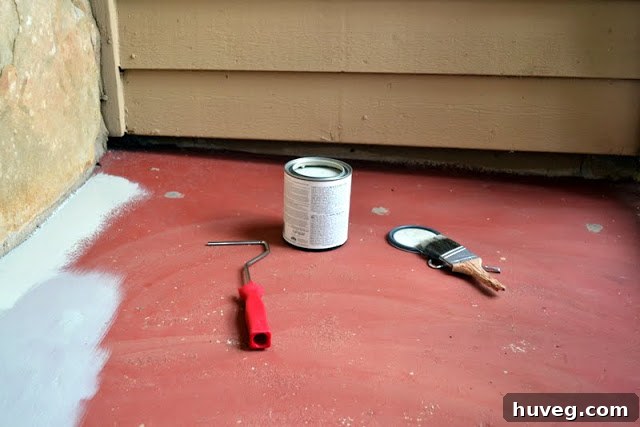
My biggest concern regarding color was the notorious tendency of gray paints to lean towards blue, especially when paired with existing blue elements. I’ve learned from past experiences that even a hint of blue in a gray can make it appear distinctly blue once applied, which would clash with my new front door. To avoid a potential color nightmare, I was meticulous in my selection, seeking a true neutral gray. Without the luxury of testing multiple samples at home first, I opted for a quart of Valspar’s Weathered Concrete, a shade that, on the swatch, exhibited the least amount of blue undertone. Despite my careful selection, the evening light during application still gave it a slightly bluish cast in some photos, a common phenomenon with grays and varying light conditions.
Tips for Choosing Exterior Concrete Paint:
- Type of Paint: Opt for acrylic latex porch and patio paint or specialized concrete coatings. These are designed for durability and adhesion to concrete.
- Durability: Look for paints resistant to chipping, fading, mildew, and UV rays. Some paints offer enhanced slip resistance.
- Color Testing: Always purchase sample pots and test colors directly on your surface. Observe them at different times of day to see how light affects the shade.
- Finish: Most porch paints come in a satin or low-sheen finish, which is durable and easy to clean.
The Art of Application: Bringing the Vision to Life
With my chosen paint in hand, Sunday evening became painting night. Before committing to the entire stoop, I performed a small sampling on Saturday to ensure I was genuinely happy with the color. My initial reaction was a cautious “meh.” I had hoped for something a touch darker, but surprisingly, most of the gray swatches in the floor paint deck were even lighter and bluer than Valspar’s Weathered Concrete. Given its $11 price tag and the clear improvement it offered over the existing red, it was a decision I could live with. The goal was to complete the first coat that night, ensuring it would be ready for a second coat by the following weekend.
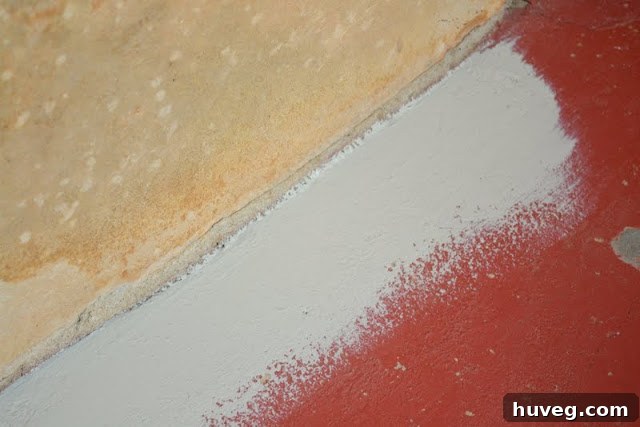
Strategic application is crucial when painting a walkway or entrance. To avoid painting myself into a corner, both literally and figuratively, I made sure to begin painting in the far corner of the stoop and systematically worked my way backward, ending at the front door. This method allowed the freshly painted surface ample time to dry overnight without impeding my ability to enter or exit the house. Such planning, though seemingly minor, can save considerable frustration and ensure a smooth process.
Step-by-Step Painting Guide for Your Concrete Stoop:
- Gather Supplies: You’ll need painter’s tape, a paint tray, a roller with an appropriate nap for concrete (usually 1/2 to 3/4 inch), an angled brush for edges, and a stir stick.
- Tape Off Edges: Use painter’s tape to protect any adjacent surfaces like walls, trim, or the front door frame.
- Mix Paint Thoroughly: Stir the paint well before and periodically during application to ensure uniform color and consistency.
- Cut In Edges: Use your angled brush to carefully paint along the taped edges and any areas the roller can’t reach.
- Apply First Coat: Pour paint into the tray and load your roller. Apply thin, even coats, working in small sections. Maintain a “wet edge” to avoid lap marks, ensuring each new section overlaps the previous one while it’s still wet.
- Work Strategically: As mentioned, always plan your escape route! Start from the furthest point and work towards your exit.
- Allow for Drying: Follow the manufacturer’s recommendations for drying time between coats. This is critical for adhesion and durability.
- Apply Second Coat (and Third, if needed): Most concrete paint projects benefit from at least two coats for full coverage and longevity.
- Remove Tape: Carefully remove painter’s tape while the paint is still slightly tacky but not wet, to prevent peeling.
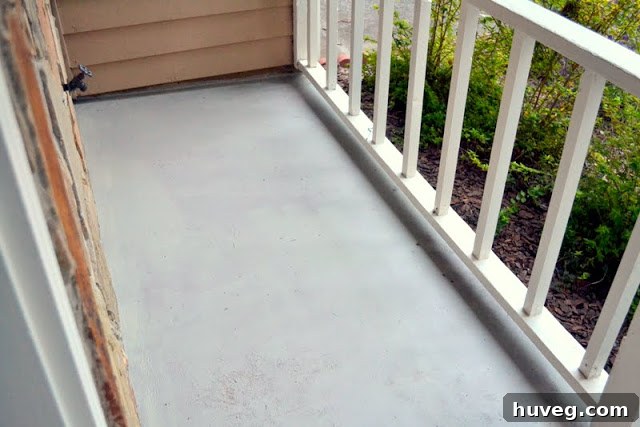
Beyond the Paint: Envisioning the Finished Look
Even though my initial reaction to the color was only moderate enthusiasm, I knew that the true potential of the painted stoop would reveal itself once decorated. A quick look around the blogosphere confirmed my belief: a fresh coat of paint is merely the canvas; the decor brings it to life. I envisioned a small chair nestled in the corner, adorned with seasonal decorations for fall, or whatever holiday might arrive by the time the project was truly complete. This foresight turned my “meh” into an excited anticipation, understanding that the overall aesthetic is a sum of its parts.
This perspective shifted my focus from just the paint color to the broader vision of a welcoming entryway. The gray stoop, rather than being the star, would serve as a sophisticated foundation, allowing decorative elements to shine. This transition led me to the next exciting question: if you were a chair in that corner, what color would you be? This simple query opened up a world of possibilities for adding personality and flair to the space.
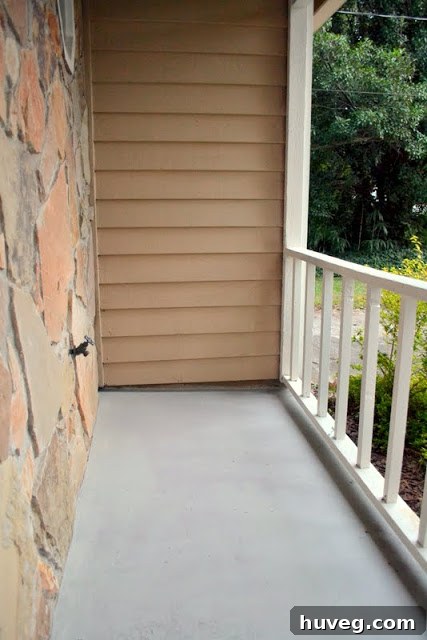
Elevating the Entryway: Decorating and Styling Your Newly Painted Stoop
The beauty of a freshly painted, neutral-colored stoop lies in its versatility. It’s a blank slate, ready to be infused with personality and seasonal charm. My mind, ever restless for the next creative challenge, quickly moved past the simple idea of a painted chair. What if, instead of a standard chair, I built something more substantial and functional, like a charming bench with a wall panel? The thought of an IKEA-inspired piece, or even just the bench portion, immediately ignited my inner builder.
This “builder brain” twitch is a familiar sensation, a sure sign that it’s been too long since my last construction project. The idea of crafting a custom piece not only adds a unique touch but also offers practical benefits like additional seating or a surface for displaying plants and decor. A built-in bench could provide a cohesive, architectural element that seamlessly integrates with the home’s exterior, further enhancing its curb appeal.
Inspiring Front Stoop Decor Ideas:
- Seasonal Planters: Large potted plants, seasonal flowers (mums for fall, impatiens for summer), or evergreen shrubs can add life and color.
- Welcome Mats: A stylish welcome mat can ground the space and add a personalized touch.
- Outdoor Lighting: Sconces, string lights, or solar lanterns can create a warm, inviting glow, especially in the evenings.
- Decorative Elements: Wreaths, door knockers, house numbers, or even a small statue can express your personal style.
- Seating Options: Beyond benches, consider a small bistro set, a rocking chair, or a cushioned ottoman for comfort and charm.
- Textiles: Outdoor throw pillows or blankets can add a cozy, residential feel to seating areas.
Ultimately, the transformation of a front stoop is a multi-layered project. It begins with a thoughtful color choice, progresses through the often-challenging prep and painting stages, and culminates in the exciting process of decorating. Each step contributes to creating an entryway that is not only visually appealing but also a true reflection of the home and its inhabitants. The newly painted gray stoop, once a simple slab, is now poised to become a beautifully curated focal point, ready for its final decorative touches and perhaps, another engaging DIY build.