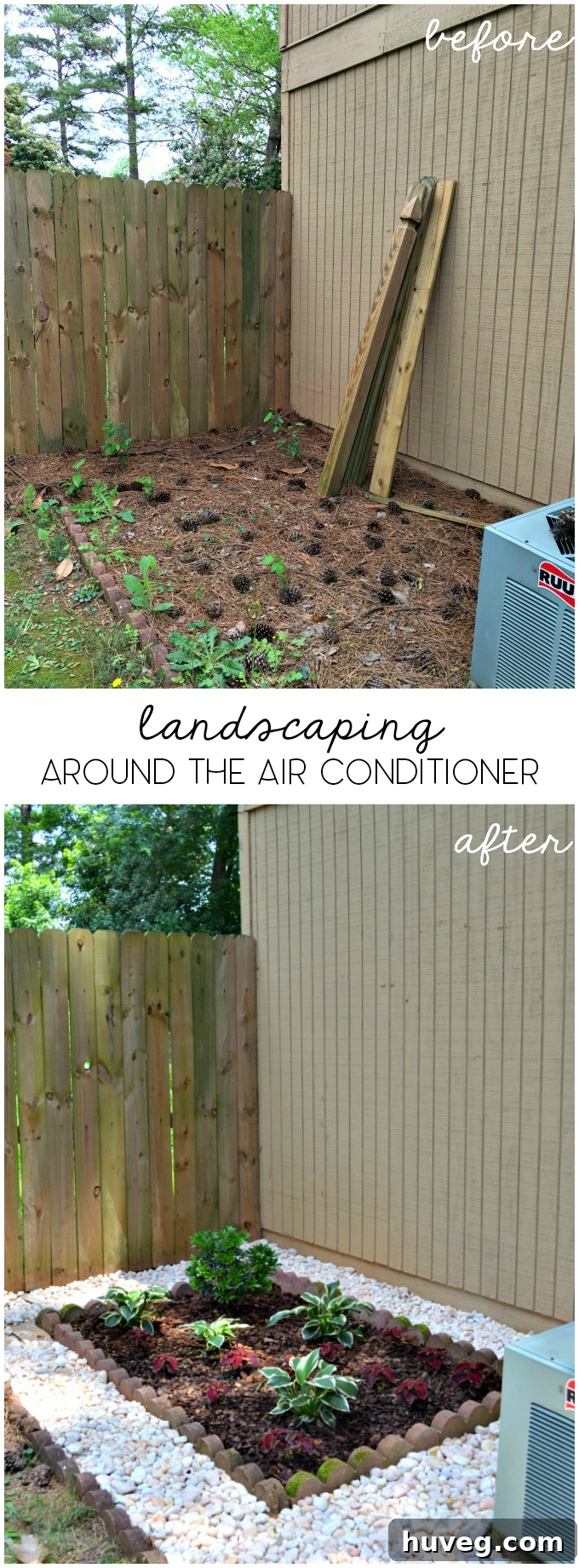
Finishing Touches for Your AC Unit Landscaping

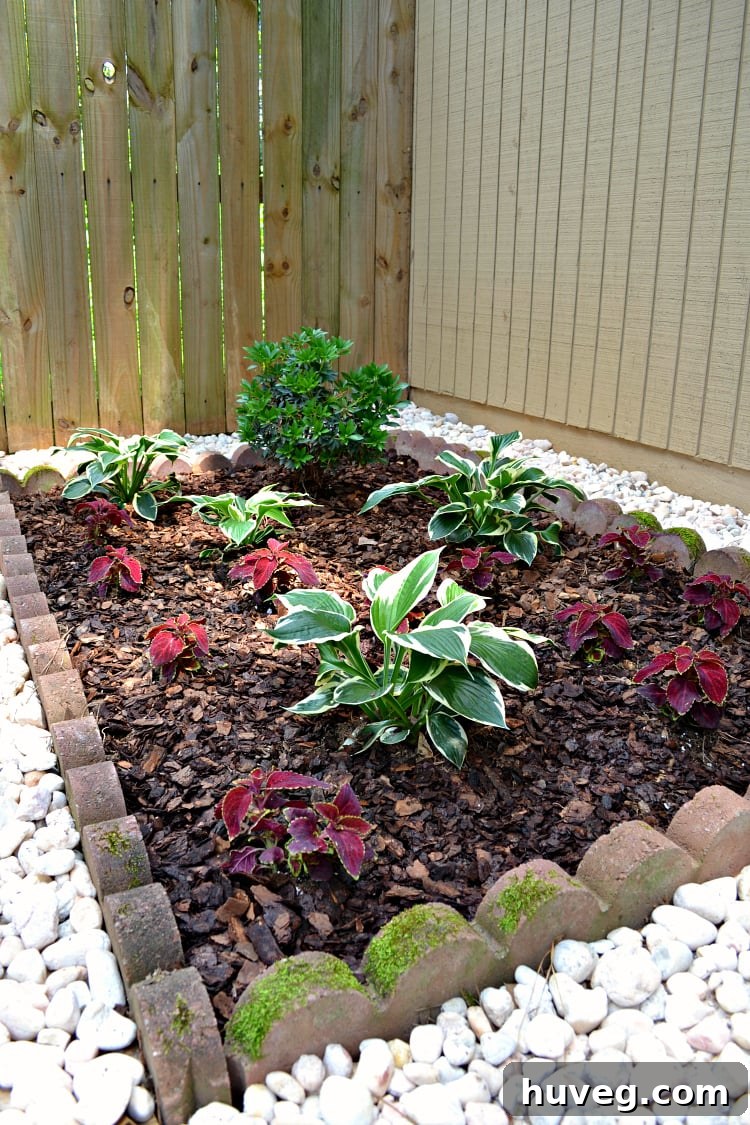
Transforming an outdoor space can be incredibly rewarding, especially when it involves turning a neglected area into a functional and visually appealing feature. This past weekend, I took on the challenge of revitalizing the landscaping around my exterior air conditioning unit, a project that not only enhanced curb appeal but also aimed to improve efficiency and reduce maintenance. The results have been truly exciting, mirroring the satisfaction I felt after tackling my kitchen backsplash installation.
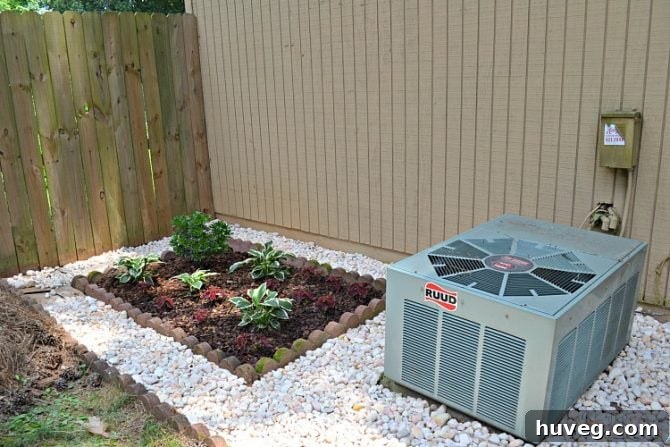
The majority of this side of the house now looks remarkably better than where it started. What was once an overlooked, slightly disheveled corner has blossomed into a clean, organized, and aesthetically pleasing landscape. It’s amazing what a bit of planning and dedicated effort can achieve in a short amount of time.
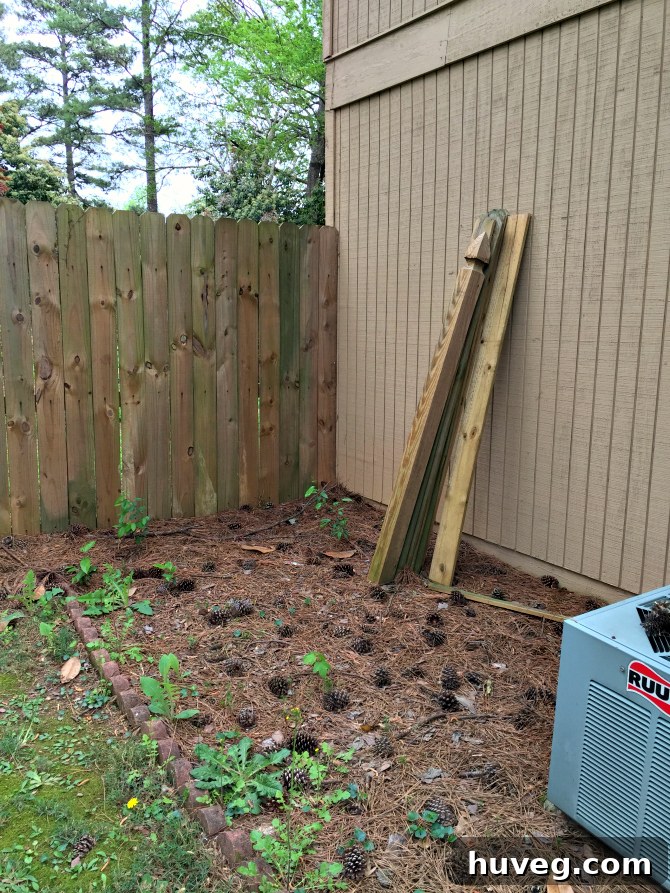
If you followed my previous updates, you might recall that I was nearing completion but still needed a few more bags of gravel to fill in the central section. This specific area, pictured below, presented an opportunity to complete the visual flow and functionality of the entire bed.
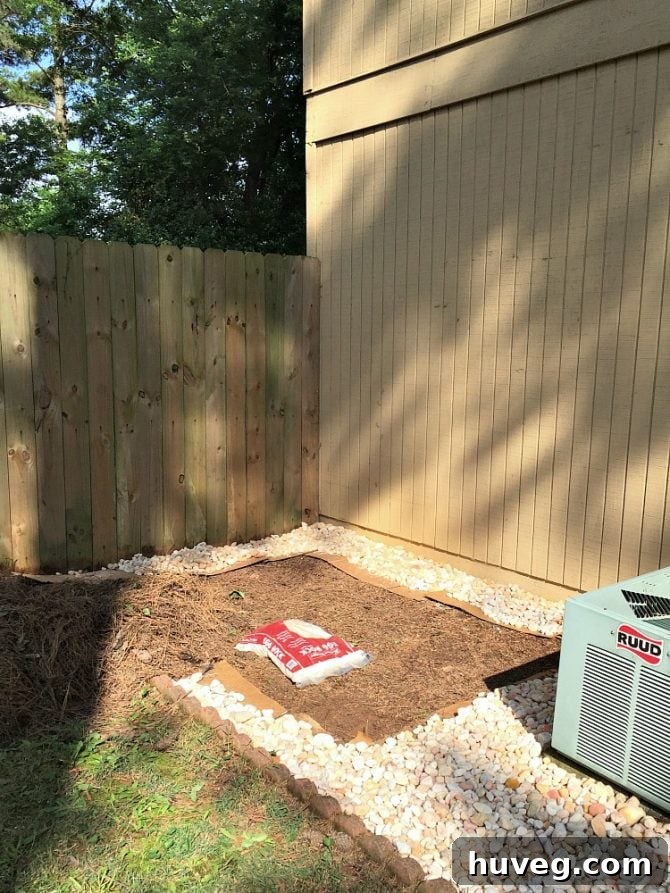
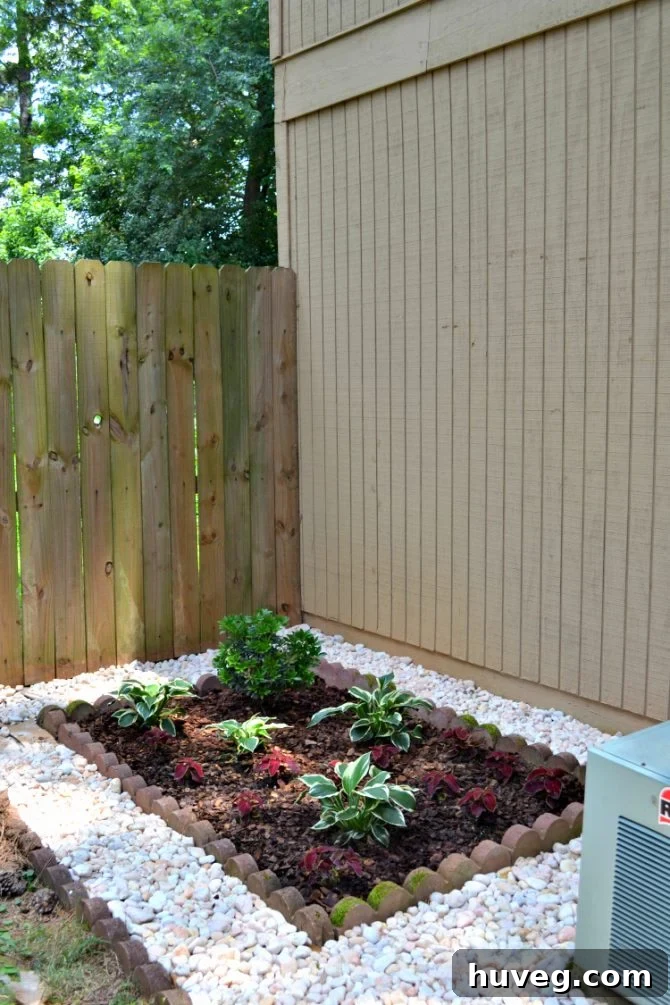
And that’s precisely what I dedicated my weekend to. From the very last bag of gravel to the remaining mulch and plants, every item available was put to good use. The outcome exceeded my expectations, a rare and delightful experience where a project unfolds exactly as envisioned from the outset. This smooth execution was a testament to careful planning and a clear vision for the space.
During the process, I also realized that if I was going to invest the effort in graveling around the AC unit, it made sense to extend this treatment to the entire tucked-away area on this side of the chimney. This decision explains why I initially ran short on gravel. The photograph below shows the area to the right of the AC condensing unit, which I subsequently filled in to create a cohesive landscape. To maintain a distinct division between the gravel and the existing holly bushes planted in front of the house – which, as we’ve discussed before, aren’t my favorite but serve a purpose – I will be adding more of the scalloped edging.
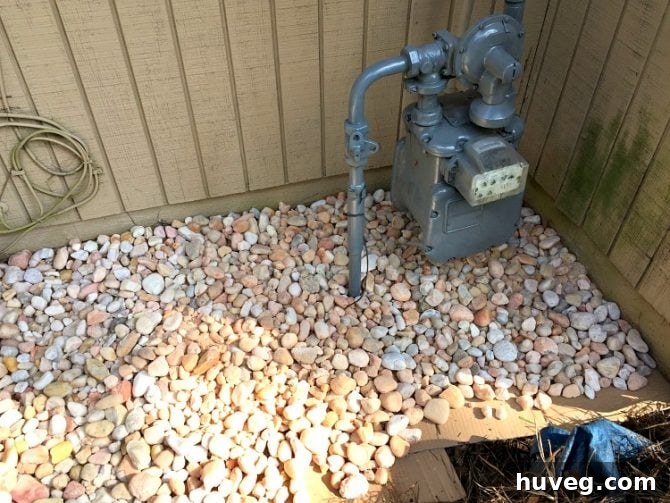
While a quick scrub is needed to remove some green residue from the house siding, the transformation is already dramatic. The area looks significantly cleaner and promises to be much more low-maintenance, a true win in my book. Although I could delve into intricate details about each step, I’ve outlined the key considerations below for those who prefer to skim and grasp the essential takeaways. The overall impact is a testament to how thoughtful landscaping can truly elevate a home’s exterior.
Strategic Landscaping Around Your Air Conditioning Unit: Key Considerations
Creating an appealing and functional landscape around your outdoor air conditioning unit requires careful planning. It’s not just about aesthetics; it’s also about maintaining the unit’s efficiency and longevity. Here’s a breakdown of the critical factors I considered for my project.
Optimal Spacing for Efficiency and Maintenance
The primary reason I opted for gravel around the AC unit was driven by research indicating that while shade can be beneficial for energy savings, planting anything too close can paradoxically reduce efficiency. Plants can grow into the unit, obstructing airflow and decreasing its cooling capacity. Furthermore, any plant that sheds leaves or flowers regularly during off-peak seasons is generally a poor choice, as debris can accumulate and restrict the vital airflow an AC unit needs to dissipate heat effectively. This would be counterproductive to the unit’s primary function.
A widely accepted rule of thumb, supported by sources like SFGate Home Guides and other experts, recommends maintaining a distance of one to three horizontal feet around the sides of the condensing unit. Additionally, it’s crucial to ensure there’s ample clearance of four to six feet above the unit to avoid impeding vertical airflow, though this wasn’t a concern in my specific situation. While the pine straw and low-lying plants in the “before” picture weren’t severely encroaching horizontally, they certainly contributed to an unsightly appearance. I was determined to create a beautiful landscape without compromising, and ideally, enhancing the unit’s operational efficiency.
Another crucial measurement involved ensuring adequate spacing around the back of the newly created garden bed, particularly important due to the cedar siding on my house. To prevent termite infestation, it’s advised to maintain a good distance, typically around 15 inches, between the bottom of your siding and any mulch or ground cover. Failing to do so could even void a termite warranty, if applicable to your home. In previous projects requiring a blend with regular mulch, I’ve successfully used rubber mulch for this purpose. However, since I was already using egg rock around the AC unit, there was no need for complex mulching combinations. The spacing against the fence was primarily for visual balance, ensuring the new design seamlessly integrated with the existing elements of the property.
Selecting the Right Stones and Edging
My choice of egg rock for this project was made easier by a significant discount I secured. For those looking to source landscaping gravel affordably, I highly recommend checking out tips here. Gravel offers excellent drainage, helps suppress weeds when combined with a proper barrier, and provides a clean, modern aesthetic that is inherently low-maintenance.
To prevent the stones from migrating into the new garden bed and to help keep the area tidy over time, I incorporated the same scalloped edging found elsewhere on my property. Landscaping pebbles and rocks are notorious for spreading, especially in high-traffic or sloped areas, so a defined border is essential. During a brief break to gather more cardboard for weed suppression, I noticed a tiny visitor assessing my progress.
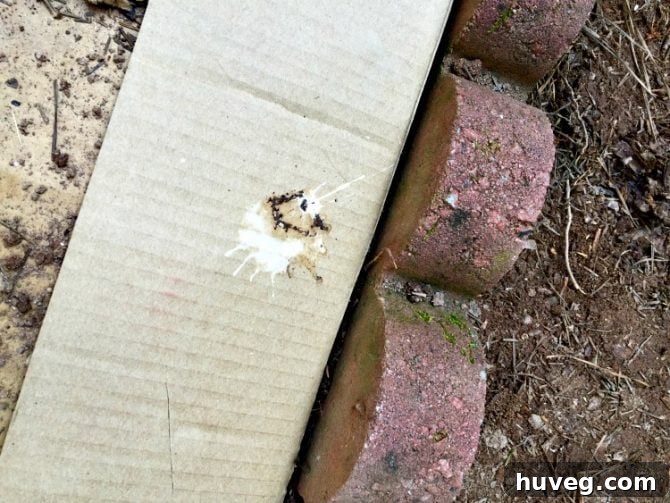
Was it a sign of approval, or perhaps disapproval? Either way, the moment was a charming interlude during the hard work.
While the scalloped edging might not be my absolute favorite aesthetically, its practical benefits and cost-effectiveness were undeniable. I had a substantial amount of it leftover from removing large sections from the backyard mound after clearing several trees. Utilizing existing materials saved both time and money. Altering its appearance, such as flipping it to the flat side, would have highlighted the inconsistent edging in other parts of the yard, and my priority was maintaining visual consistency across the entire property without embarking on a much larger, more labor-intensive edging overhaul.
Thoughtful Plant Selections for Shade and Low-Maintenance
As mentioned, selecting the right plants for proximity to an AC condensing unit is crucial. The best choices are those that do not regularly shed flowers or leaves, minimizing the risk of debris accumulation. This criteria immediately ruled out my usual shade-loving favorites, like hydrangeas, known for their beautiful but shedding blooms.
While I’m generally not enthusiastic about hostas, a visit to my local gardening center for shade-tolerant, non-flowering options quickly changed my perspective. I realized that a vibrant selection of hostas with colorful foliage would provide the visual interest I desired without the maintenance drawbacks. Their ease of care is an undeniable bonus.
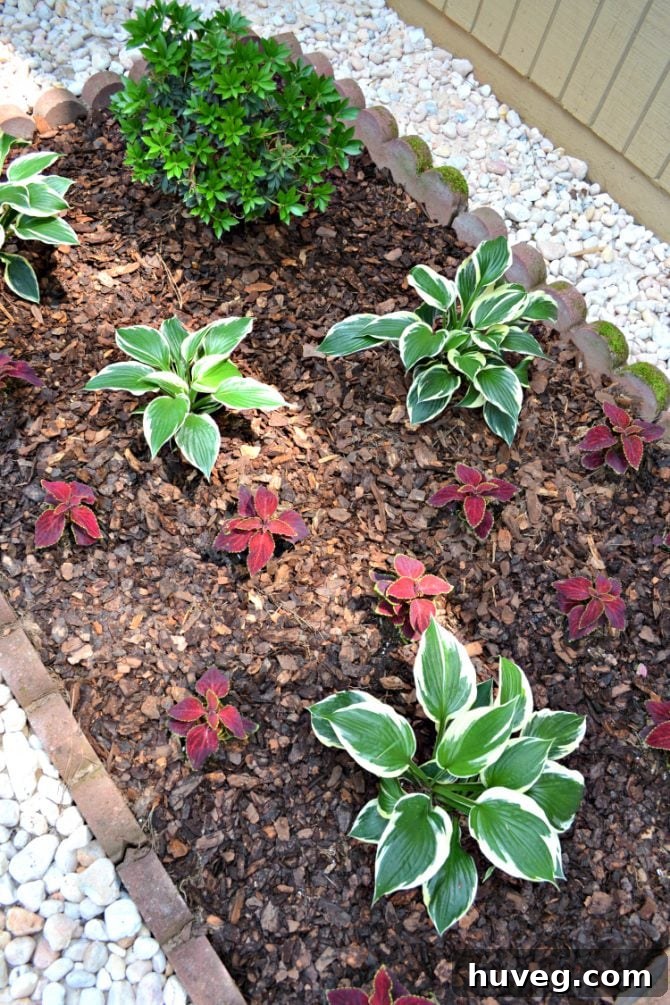
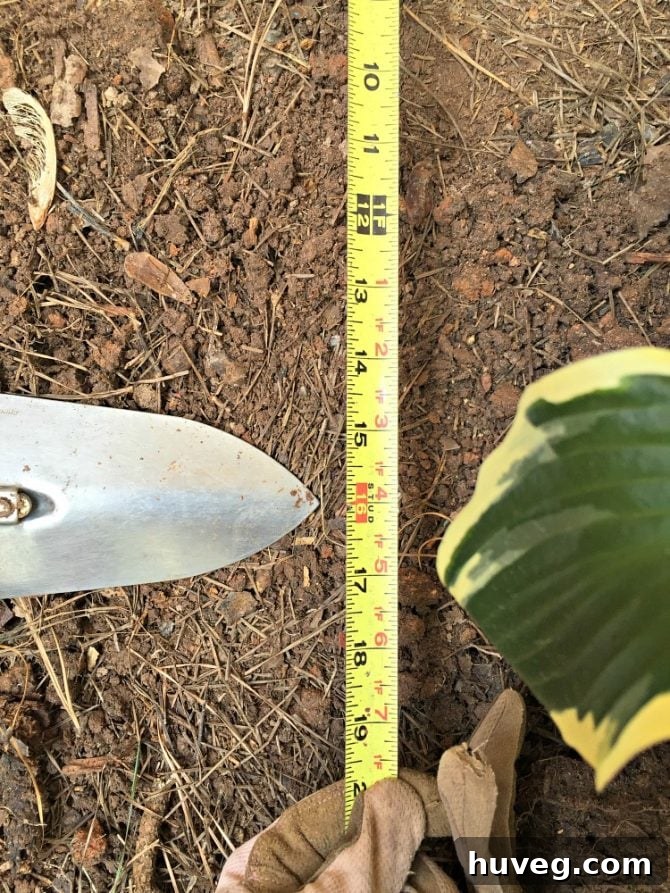
For each plant, I measured spacing on the higher end of the recommended range (e.g., if a tag suggested 18-24 inches wide, I aimed for 21-24 inches). This foresight provides ample room for the plants to mature and fill in naturally over time, ensuring a lush yet not overcrowded appearance. I used the tip of my gardening trowel to precisely mark the center spot for each planting, and my trusty mattock proved invaluable for digging deep, well-prepared holes with minimal physical exertion, setting the plants up for success.
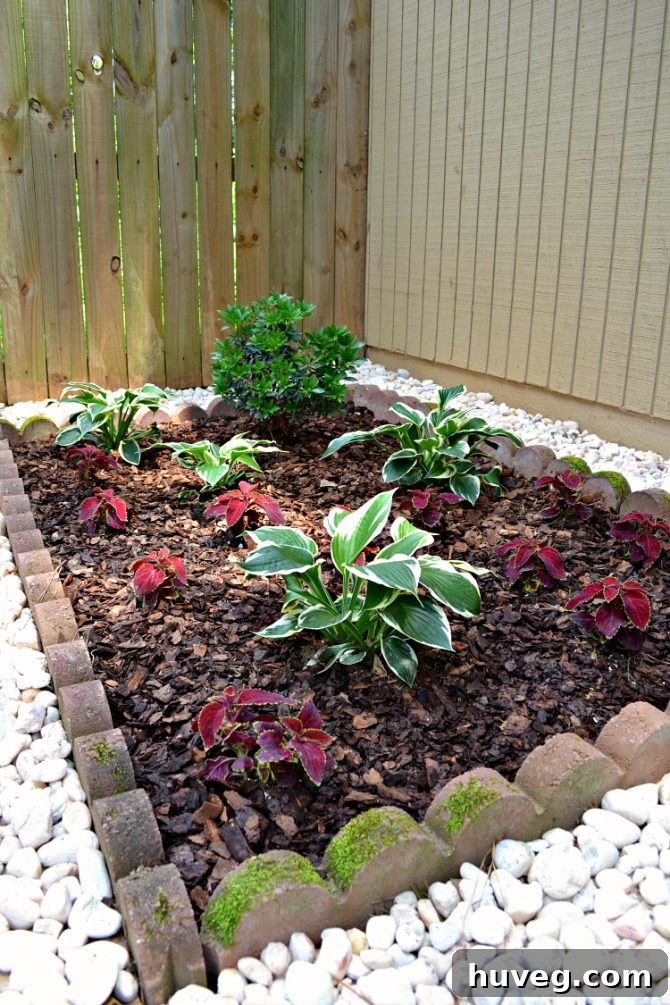
With all plants meticulously placed and the garden bed topped with mulch, the result is a beautifully defined area that I anticipate will require minimal to zero maintenance for the remainder of the year. This low-maintenance design was a core objective of the project, allowing me to enjoy the beauty without the constant upkeep.
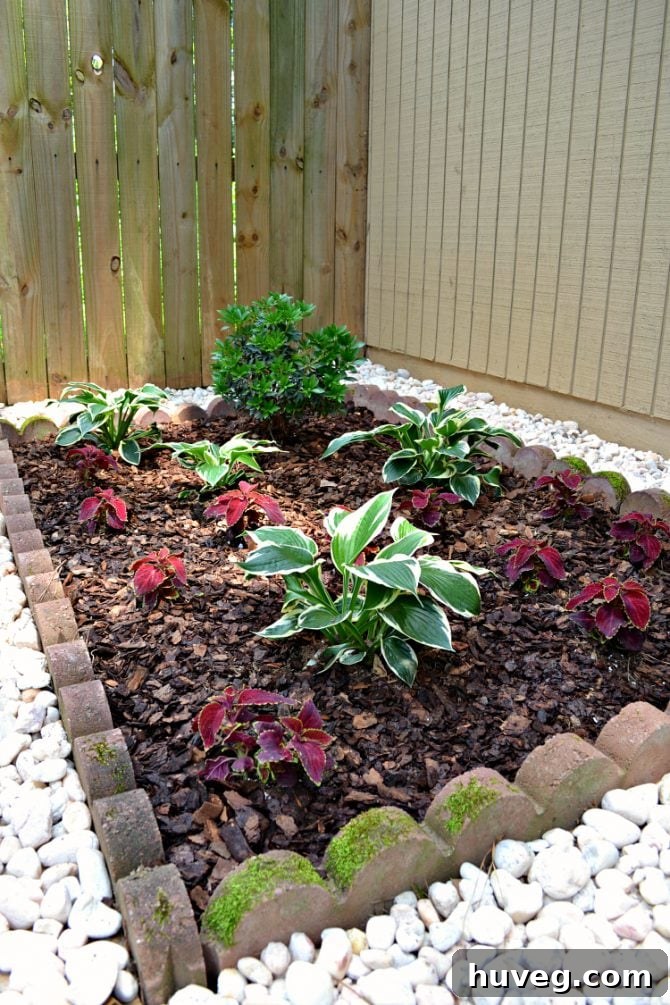
The vibrant red plants are annual coleus, a fantastic suggestion from Vanessa and others in a previous post. Their purpose is to temporarily fill in the negative space and add a pop of color while the perennial hostas slowly establish and grow. The shrub positioned at the back is Andromeda (I believe). Interestingly, I purchased it over a year ago, and it patiently remained in its pot while I deliberated on its permanent placement. This makes it arguably the lowest-maintenance nursery plant I’ve ever owned that actually survived! I considered leaving it as a potted plant, as it seemed perfectly content, but its growth would have been severely stunted by the pot size. Andromeda produces tiny white buds and is a slow grower, making it an ideal choice for the back of the bed. Its placement with ample room near the fence will eventually add height and structure to the bed without posing a risk of obstructing the condenser unit.

Future Enhancements and Ongoing Home Projects
While the landscaping around the AC unit is largely complete and looks fantastic, a few complementary tasks remain to fully finalize this side of the house and ensure long-term satisfaction. These next steps are integral to both the aesthetics and functionality of the overall exterior:
- Acquire Additional Gravel: Despite my best estimates and taking advantage of a fantastic sale on landscaping rocks, the project expanded slightly beyond the original scope, covering more square footage than anticipated. I’m just shy of completing a small section and will need one or two more bags of gravel to achieve a perfectly uniform finish. This minor detail is crucial for the polished, complete look I’m aiming for.
- Siding Patching and Painting: There’s a specific band along the siding that requires patching and a fresh coat of paint. My goal is to match it precisely to the crisp white/cream color I used for the trim across the house. This will ensure a cohesive and well-maintained appearance, tying the newly landscaped area seamlessly into the rest of the home’s exterior.
- Construct a Weather-Resistant AC Unit Screen: One of the most anticipated future projects is building an aesthetically pleasing and weather-resistant screen to discreetly hide the AC unit from street view. This project has already begun, and I’m excited about its potential to further enhance curb appeal. I assure you, this screen will be designed with meticulous attention to the “keep things away from the unit” rule. The plan is to create a structure that provides proper distance for optimal airflow while still offering a much more pleasant visual element. Additionally, it might serve an extra protective function, helping to deter any stray vine roots that might attempt to grow into the unit from beneath the soil.
I managed to complete the core landscaping work on a Saturday morning, which technically left the rest of the holiday weekend free for that first errand – picking up the extra gravel. However, as often happens, other plans took precedence. I spent the remainder of the weekend enjoying Atlanta’s “Brew at the Zoo” and, quite memorably, getting a playful poke on the head from a good-natured bearded gentleman.
Speaking of which, it’s his birthday today! So, I’ll be stepping out this evening for some delicious Moroccan food, allowing myself to momentarily ignore the substantial list of weekend labor awaiting me. Happy Friday, everyone! I’d love to hear about your own DIY plans for the upcoming weekend if you have any exciting projects on the horizon.