Stair Railing Saga One Step at a Time

Mastering Solo DIY: A Comprehensive Guide to Installing a Stair Handrail with One Set of Hands
Embarking on large-scale home improvement projects as a solo DIYer often presents a unique set of challenges. While mastering the technical aspects like material selection, project timelines, and precise measurements is crucial, an entirely different obstacle emerges when you don’t have an extra pair of hands to assist. It’s a journey that demands creativity, resilience, and a knack for problem-solving. This guide delves into the detailed process of how I successfully installed a stair handrail entirely on my own, transforming a daunting task into a rewarding achievement.
It’s not that I lack supportive friends or family eager to lend a hand. However, the ebb and flow of DIY enthusiasm can be unpredictable. My motivation to tackle a project often peaks long before I can coordinate schedules with others. Over years of solo renovations, I’ve learned that pushing through and embracing the inherent difficulties of single-handed work is often the most efficient path to completion. This approach cultivates ingenuity, forcing me to think outside the box for practical solutions. My recent stair handrail installation project stands as a testament to this philosophy, showcasing how a seemingly impossible task can be conquered with a strategic approach and a little perseverance.
The Genesis of the Project: From Removal to Reluctance
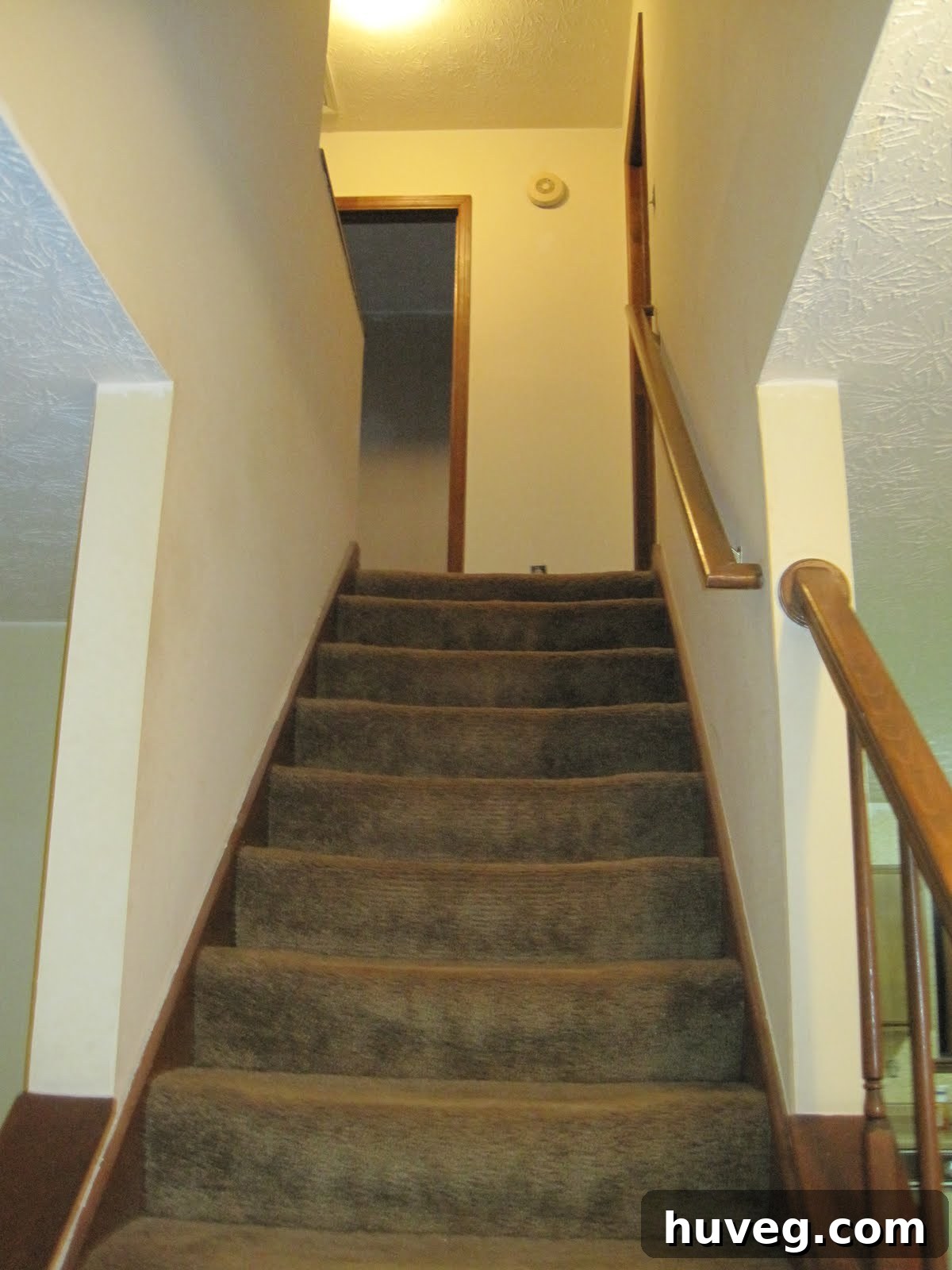
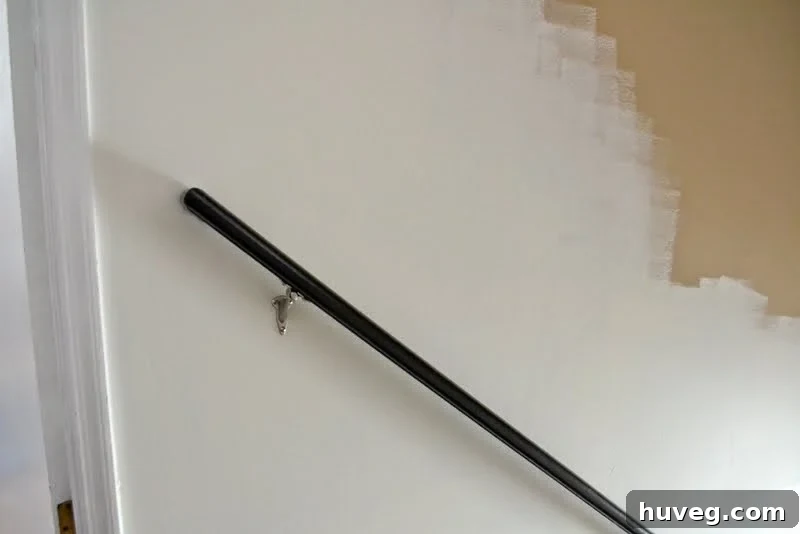
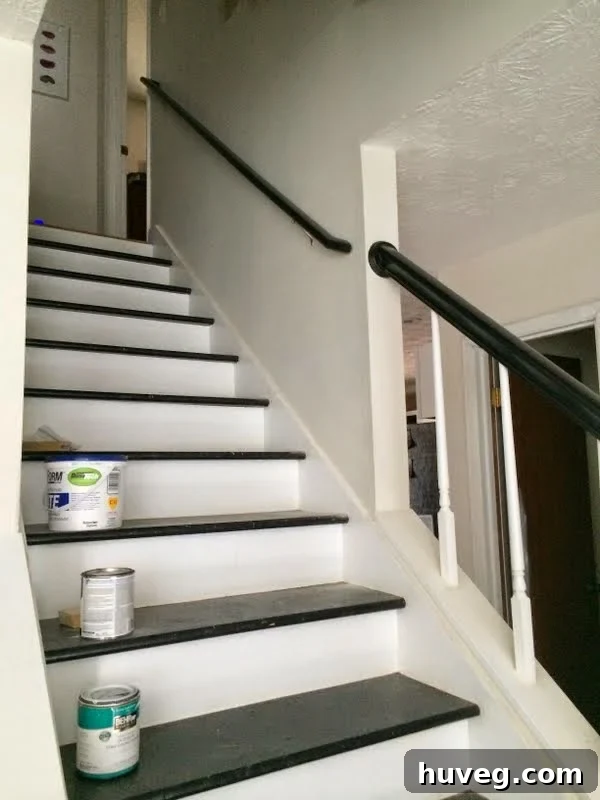
My handrail saga began shortly after moving into my current home. The initial plan was straightforward: remove the handrail, give it and the surrounding walls a fresh coat of paint, and then reinstall it. At the time, I even considered painting it a crisp white, matching the existing stairs. This old photograph, taken within the first few months of occupancy, is one of the rare images capturing the handrail in its original, intact state.
However, the removal process quickly hit a snag. The first mounting bracket came off easily, but the second presented a formidable challenge: stripped screws. Given that both brackets were securely anchored into wall studs for structural integrity, extracting a stripped screw was far from simple. I temporarily sidelined the problem, shifting my focus to other projects around the house, always with the intention of returning to the stubborn bracket. Months turned into years, and the handrail remained stubbornly attached, a constant reminder of an unfinished task.
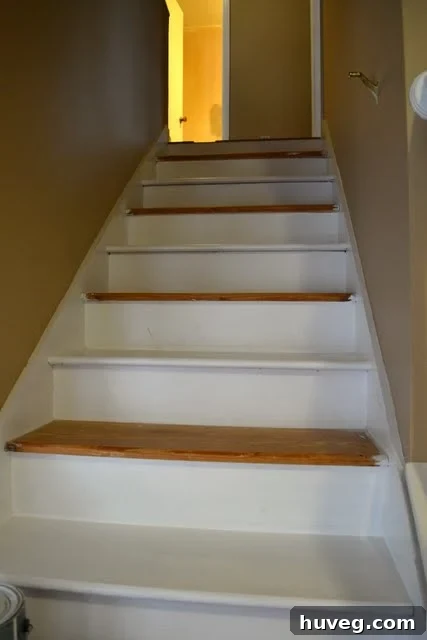
The solution, when it finally arrived, was unexpected and rather dramatic. One afternoon, I returned home to discover the second bracket had been removed – along with a significant chunk of the wall it was screwed into. Clearly, someone, either my Dad or my ex, decided a more forceful approach was in order. While efficient, it certainly added another layer to my to-do list, as it’s always easier to remove something when you’re not the one responsible for the subsequent repair. Despite my initial annoyance, the details of who performed the impromptu demolition have faded with time. The handrail was unceremoniously relegated to the garage, where it remained in storage, a silent testament to procrastination.
Like many DIY “slacker projects,” it was easy to ignore until a compelling reason forced its resurgence. The need to prepare the house for sale finally provided the necessary impetus. The inspiration truly struck when I decided to paint the railing a sleek black, aligning it with the updated color scheme of the rest of the stairs. This decision reignited my desire to bring the project to a satisfying close.
Preparation is Key: Painting, Patching, and Choosing Hardware
The painting process for the handrail was a meticulous affair, requiring several coats to achieve a flawless finish. I ingeniously transformed my kitchen into a makeshift paint shop, utilizing the top of a trash can and a small stepladder as makeshift saw horses. This improvised setup allowed me to efficiently paint the lengthy handrail without taking up excessive space or creating a major mess. While the handrail dried between coats, I turned my attention to repairing the wall where the old bracket had been so forcefully removed. This involved carefully patching the damaged area, sanding it smooth, and priming it, ensuring a pristine surface for the reinstallation.
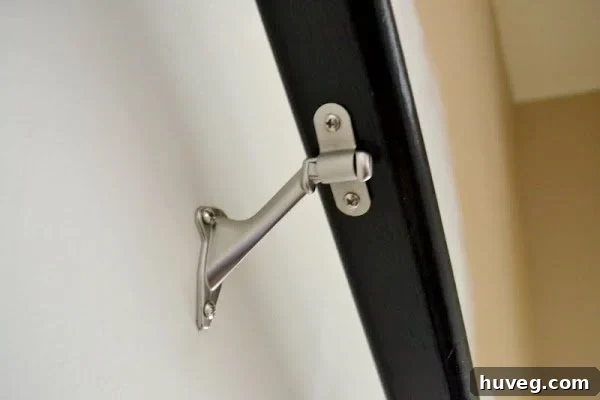
Once the handrail was dry and ready, a trip to the hardware store was in order. The old brackets were shiny brass, marred by years of paint splatters from previous owners. To match the new satin nickel hardware I’d incorporated throughout the house, I selected a fresh set of support brackets. Fortuitously, the screw holes on the new hardware almost perfectly aligned with the existing holes on the wall. This alignment proved incredibly helpful in ensuring the correct angle and placement of the railing, simplifying what could have been a complex alignment task. In theory, all that remained was to screw the handrail back into place. In practice, however, undertaking this alone required a more nuanced strategy.
The Solo Installer’s Dilemma: Holding the Handrail
The most significant hurdle in this solo installation was how to securely hold the lengthy handrail at the precise angle required for mounting. The conventional method, which involves attaching the brackets to the handrail first and then hanging the entire assembly on the wall, was simply not feasible for one person. The handrail was long and cumbersome, and there was no one to support the other end while I worked. Attempting to hold the entire length in the air while simultaneously trying to secure screws would have been an exercise in futility, not to mention a safety hazard.
After much deliberation, I concluded that mounting the support pieces of the brackets onto the wall first, and then attaching the handrail to these pre-mounted supports, was the only viable option. I briefly considered devising a temporary support system for the far end of the handrail, but the inherent structure of a staircase makes creating stable, flat surfaces for support incredibly difficult. Unlike my clever paper towel trick in the kitchen, there wasn’t a reliable flat surface I could depend on to bear the weight and maintain the angle of the handrail.
An Ingenious Solution: The Slip-On Bracket Method
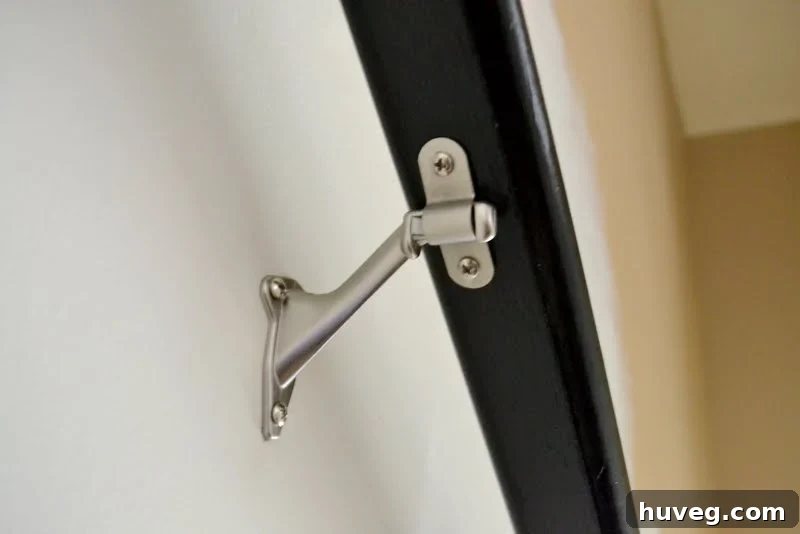
The new handrail brackets came in two distinct parts: a support piece designed to be screwed directly into the wall, and a crescent-shaped piece that attaches to the handrail itself. The genius of my solution lay in how these two components interacted. When fully tightened, the crescent piece would securely wrap around the wall support, creating a robust connection. However, by initially securing the crescent-shaped piece to the handrail loosely, I could create a temporary “loop” or “hook.”
This loose attachment allowed me to carefully slip the handrail, with its loosely attached crescent pieces, over the pre-mounted wall supports. Once in place, the rail would rest loosely on the base of the wall supports, providing just enough stability to hold it at the correct approximate angle. This “slip-on” method offered crucial temporary support, freeing my hands to make the necessary adjustments and begin tightening the screws without the constant struggle of holding the entire weight of the handrail.
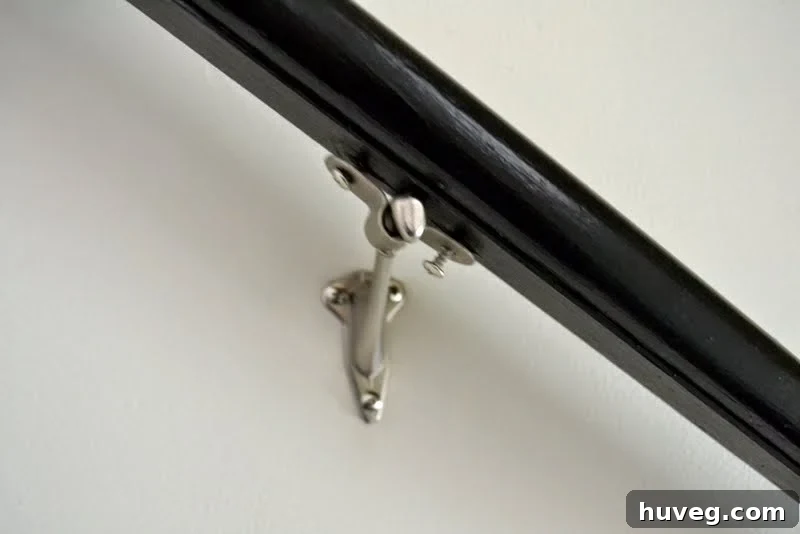
By employing this strategy at both ends of the handrail, I could effectively position the entire rail at the correct angle, even before fully securing any screws. This allowed for precise alignment and minimized the physical strain of trying to hold it perfectly while working.
The Moment of Truth: Installation and Refinement
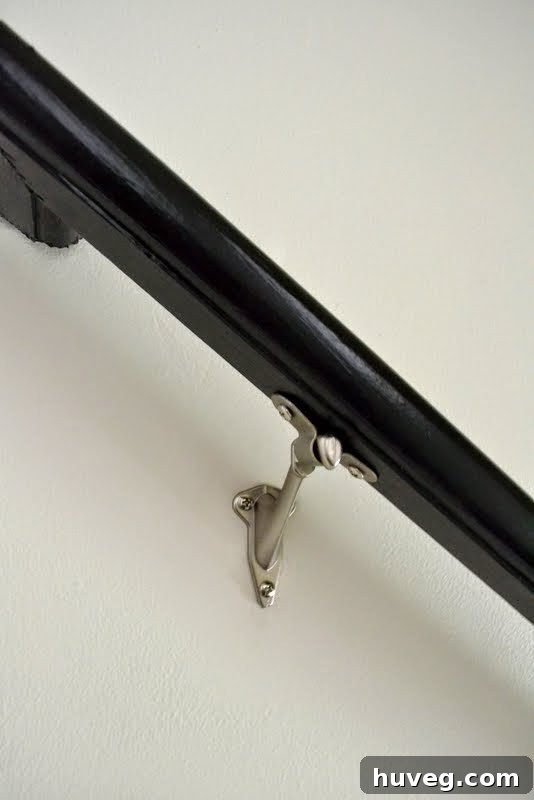
While the “slip-on” method provided a clever way to temporarily hold the handrail, the actual installation was a test of patience and endurance. The process involved a frustrating yet ultimately rewarding thirty minutes of constant movement: tightening one screw slightly at the top, adjusting the rail’s position, then descending to the bottom bracket to tighten another screw, making another adjustment, and repeating the cycle. It’s a delicate dance of incremental adjustments to ensure the railing is perfectly level, secure, and aesthetically pleasing.
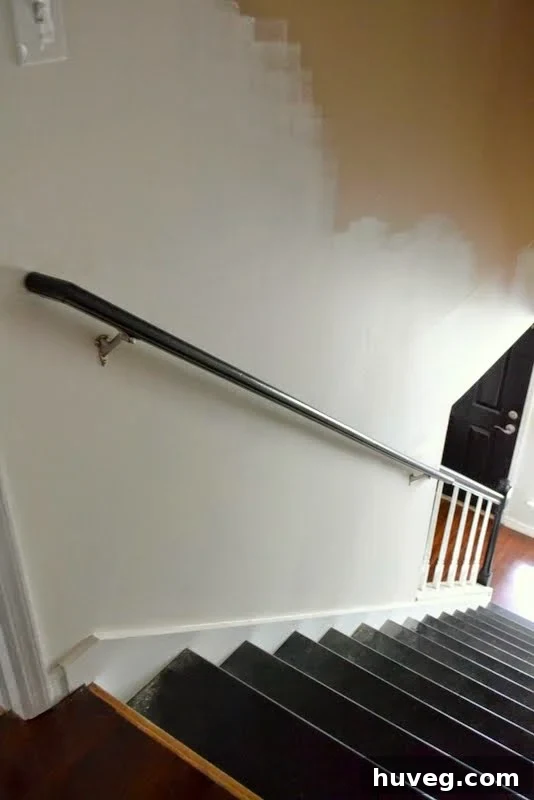
Capturing mid-installation photographs was simply impossible during this intense phase. Every available hand, including mine, was dedicated to holding, adjusting, and tightening. The image above, showing the railing loosely resting, was actually staged for dramatic reenactment purposes – a brief pause to illustrate the pivotal “slip-on” technique before diving back into the arduous task of securing everything tightly. But in the end, perseverance paid off:
Finishing Touches and Reflection
The satisfaction of seeing the handrail securely in place was immense. However, the installation wasn’t entirely without minor repercussions. The process of maneuvering the freshly painted black handrail left a few noticeable scuff marks on the wall. I had already painted the wall up to that point in anticipation of the handrail’s reinstallation, so these marks stood out. Fortunately, a simple sanding sponge proved to be the perfect tool for gently buffing away these imperfections, restoring the wall’s pristine appearance.
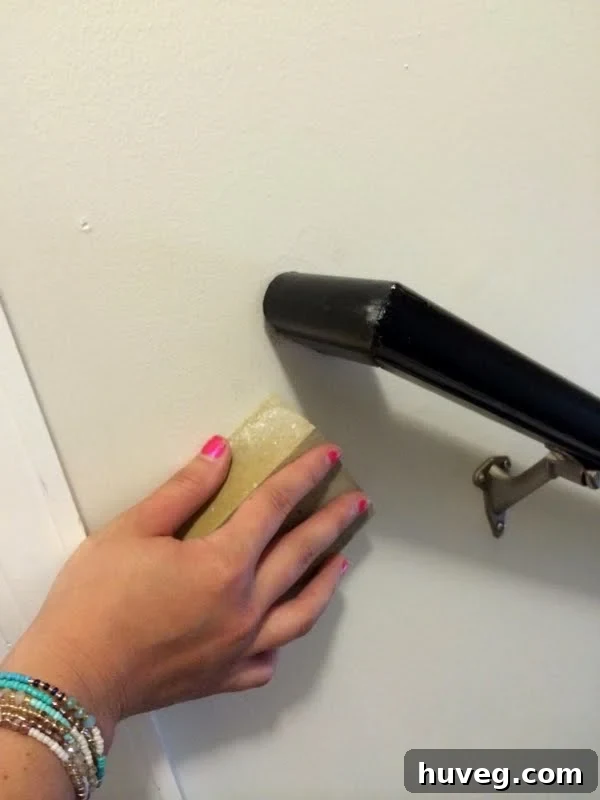
While the stairs aren’t entirely finished – there’s still more wall painting to do, particularly the upper sections (which will require borrowing scaffolding from my Dad again), and capping the top of the stairs where the laminate floor ends – this handrail installation marked a significant milestone. I was incredibly proud of myself for tackling and succeeding at a project that many would deem impossible for a single person. It was a true test of ingenuity and determination, affirming my belief that with enough creative problem-solving, any DIY challenge can be overcome. This project not only enhanced the aesthetics of my home but also bolstered my confidence as a solo DIYer, proving once again that a little “booyah” moment is well-deserved after such an accomplishment!