Build Your Own Reverse Truss Bench

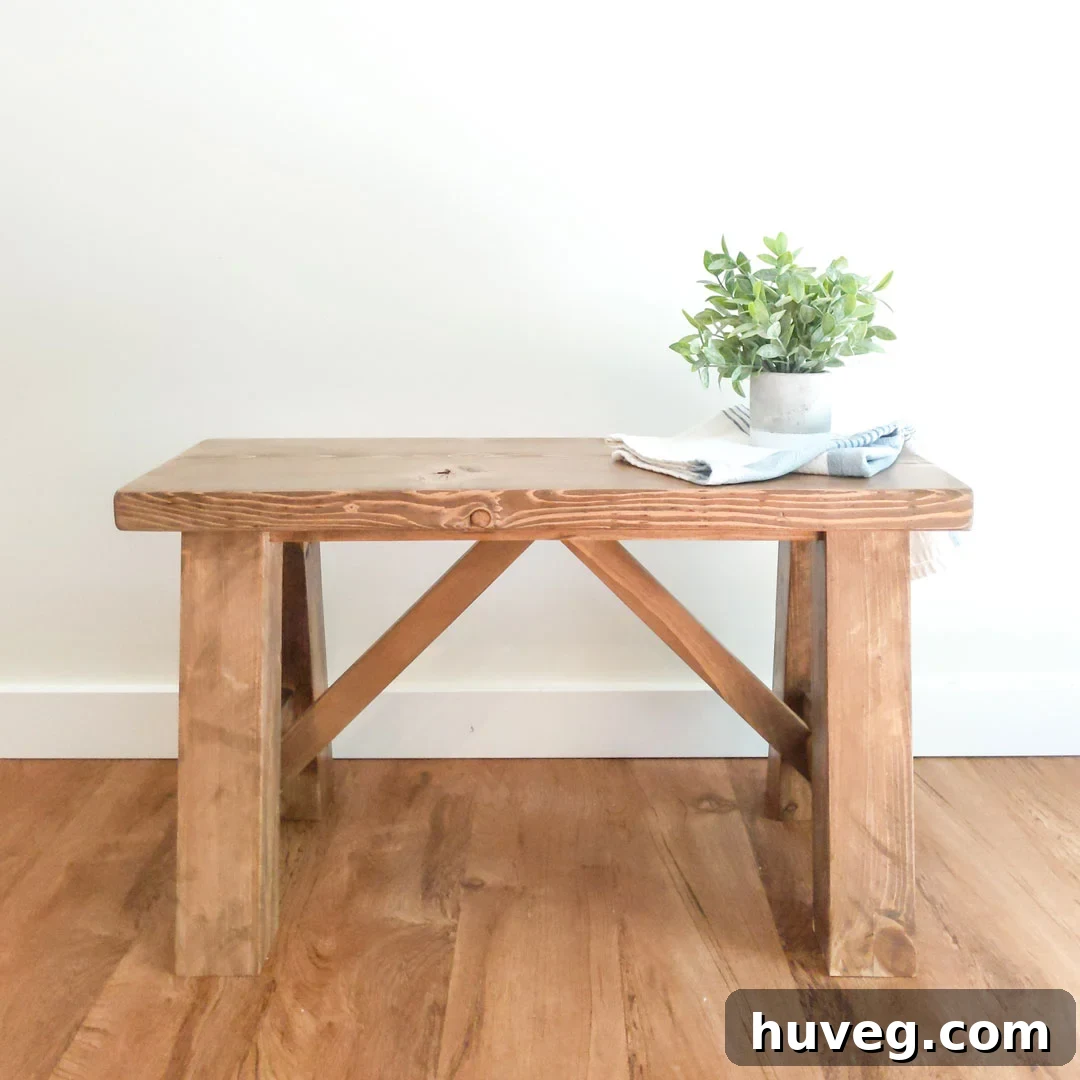
Welcome to Bitterroot DIY, fellow creators and woodworking enthusiasts! Tylynn here, excited to share another inspiring project that will not only enhance your home but also sharpen your DIY skills. This week, we’re diving into the plans for a charming and highly functional small reverse truss bench. Designed with versatility in mind, this piece of furniture can seamlessly integrate into various spaces within your home, though it truly shines as an inviting addition to your entryway. Imagine a stylish spot where you can comfortably put on or take off your shoes, or a unique surface to display decorative accents, making your home feel more welcoming from the moment you step inside. This project is perfect for those looking to add a touch of handcrafted elegance and practical utility to their living space.
Essential Tools & Supplies for Your Reverse Truss Bench
Embarking on any woodworking project requires the right set of tools and materials. For this reverse truss bench, we’ve carefully curated a list that balances efficiency with precision, ensuring a smooth building experience and a professional-looking final product. Having these items on hand before you begin will streamline your workflow and help you tackle each step with confidence.
- Miter Saw: A crucial tool for making accurate crosscuts and mitered angles. Precision in your cuts is paramount for a sturdy and aesthetically pleasing bench, especially with the intricate truss design.
- Drill: Essential for pre-drilling pilot holes to prevent wood splitting and for driving screws efficiently. An impact driver can also be beneficial for stronger fastening.
- Kreg Pocket Hole Jig: This jig is invaluable for creating strong, concealed joints, giving your bench a clean and professional appearance without visible fasteners.
- Orbital Sander: For achieving a perfectly smooth finish, preparing your wood for stain or paint. Start with a coarser grit (e.g., 80 or 100) and progressively move to finer grits (150-220) for optimal results.
- Tape Measure: Accuracy starts with precise measurements. A reliable tape measure is your best friend for every cut.
- Clamps: A variety of clamps (bar clamps, C-clamps) are indispensable for holding pieces together while glue dries, ensuring tight joints and preventing shifting during assembly.
- Wood Glue: The unsung hero of woodworking. Wood glue, when properly applied, creates a bond that is often stronger than the wood itself, adding significant structural integrity to your bench.
- 2 1/2” Pocket Hole Screws: Specifically designed for pocket hole joinery with thicker materials like 2x4s, providing a robust connection.
- 1 1/4″ Pocket Hole Screws: Ideal for attaching thinner boards, such as 1x2s, with pocket holes, ensuring a secure fit without piercing through the material.
- Wood Filler: For seamlessly filling any imperfections, nail holes, or visible pocket holes, creating a smooth surface ready for finishing.
- Brad Nailer: Perfect for attaching trim pieces or other components where smaller, less conspicuous fasteners are desired.
- 1 1/4″ Finish Nails: To be used with the brad nailer for secure, neat attachments.
- Speed Square: A versatile tool for marking straight lines, checking angles, and ensuring squareness during assembly.
- Pencil: For marking cuts and measurements. Keep it sharp!
- Safety Glasses: Non-negotiable. Always protect your eyes from flying debris.
- Ear Protection: Power tools can be loud. Preserve your hearing with proper ear protection.
- Wood Conditioner: (If staining) An essential step before staining, especially with softer woods, to ensure an even absorption of stain and prevent blotchiness.
- Stain or Paint: Your choice for finishing, allowing you to customize the bench to match your home’s decor.
- Polyurethane: A durable topcoat that protects your finish from wear and tear, moisture, and adds a beautiful sheen.
Selecting Your Lumber for the Reverse Truss Bench
Choosing the right lumber is a critical step that impacts both the structural integrity and the aesthetic appeal of your finished bench. Opt for straight, knot-free boards whenever possible to minimize waste and ensure a smooth building process. For this project, you will need the following:
- 2 | 2×4 @ 8′ OR 1 | 4×4 @ 8′ (for the legs)
- 1 | 1×2 @ 8′ (for the frame and truss)
- 1 | 2×12 @ 3′ (you need 30″ but sometimes they sell 36″ sections) (for the bench seat)
A note on the legs: you have the flexibility to either purchase pre-cut 4×4 posts or, as I often prefer for added customization and sometimes cost-efficiency, craft your own 4x4s from 2x4s. For this particular reverse truss bench, I opted for the DIY approach to making the 4×4 legs, which provides an excellent opportunity to refine your joinery skills and achieve a truly custom look.
Crafting Your Own 4×4 Legs from 2x4s
Making your own 4x4s offers a fantastic way to utilize readily available lumber and achieve unique results. This method is particularly useful if specific dimensions are hard to find or if you simply enjoy the challenge of a more involved woodworking process. Here’s how to do it:
- Initial Cuts: Begin by cutting eight pieces of 2×4 lumber. Each piece should be just slightly over the final desired length, approximately 16 inches, with parallel 10-degree miters on both ends. This slight excess ensures you have room for precise final trimming.
- Glue and Clamp: Take two of these 2x4s and apply a generous, even layer of wood glue to one face of each board. Press the two glued faces together, ensuring they are perfectly aligned. Secure them tightly with clamps, applying even pressure across the entire length. Repeat this process for all four legs, creating four laminated blanks. Allow the glue to dry completely according to the manufacturer’s instructions. This step is critical for a strong, unified leg.
- Trim Rounded Edges: Once the glue has thoroughly cured, you’ll notice the rounded edges of the original 2x4s. Use a table saw to carefully trim off approximately 1/4 inch from each of the four sides of your newly formed 4×4 blanks. This step squares up the legs and removes the rounded factory edges, giving them a clean, professional finish akin to solid 4×4 lumber.
- Final Length Trim: Now, trim each leg precisely to its final length of 15 1/2 inches. Performing this final cut after the laminating and squaring process ensures that both ends of your legs are perfectly flat and parallel, which is essential for a stable bench.
- Sand to Perfection: The final step is to sand your legs until they are smooth to the touch. Pay particular attention to the joints where the 2x4s meet; with proper sanding, these joints should appear virtually seamless, mimicking a single solid piece of wood. This also prepares the surface beautifully for your chosen finish.
Precise Cut List for Your Reverse Truss Bench Components
Accuracy in cutting is foundational to a successful woodworking project. Take your time with each cut, double-checking measurements before you commit. This detailed cut list ensures all your components will fit together perfectly, contributing to the overall stability and aesthetics of your reverse truss bench.
- 4 | 4×4 @ 15 1/2″ with parallel 10-degree miter (These are your bench legs, previously crafted or purchased).
- 2 | 2×4 @ 7 1/4″ with perpendicular 10-degree miter (These pieces form the long side of the bottom leg supports, connecting the front and back legs).
- 2 | 1×2 @ 3 1/4″ with perpendicular 10-degree bevel (These are for the long side of the top leg frame, providing support for the seat).
- 2 | 1×2 @ 20″ (These pieces form the short sides of the top frame, connecting the top leg frames).
- 2 | 1×2 @ 16 3/4″ with perpendicular 45-degree miter (These are the distinctive reverse truss pieces that give the bench its unique character).
** Important Note for Miter Saw Users: If your miter saw does not have a bevel function, don’t worry! You can still achieve the desired angle for the 1×2 pieces. Simply turn the 1x2s on their narrowest side and make the cuts at a 10-degree miter. This will effectively create the same angle relative to the frame. Always prioritize safety and ensure your workpiece is securely clamped before making any cuts.
Step-by-Step Guide: How to Build a Reverse Truss Bench
Now that your materials are prepped and your cuts are ready, it’s time to bring your reverse truss bench to life. Follow these steps carefully, taking your time with each assembly, and you’ll soon have a beautiful, handmade piece to admire.
Step 1. Assemble the Leg Structures
The leg structures are the foundation of your bench, so precision and strong joinery here are key. Refer to diagrams (if available) for visual guidance on how these components come together. You will be attaching the 1×2 top frame pieces and the 2×4 bottom leg supports to your 4×4 legs.
To ensure a clean finish and to conceal fasteners effectively, drill two pocket holes on the top surface of each 1×2 (the top leg frame pieces). Similarly, drill two pocket holes on the inside face of each 2×4 bottom leg support. This strategic placement will keep the screws hidden from view once the bench is complete. Apply a liberal amount of wood glue to the mating surfaces, then use 1 1/4″ pocket hole screws to securely attach the top 1×2 pieces to the 4×4 legs. For the more robust bottom leg supports, use wood glue in conjunction with 2 1/2″ pocket hole screws to attach the 2x4s to the legs. Ensure all joints are tight and square before proceeding.
Once the leg structures are assembled, address any visible pocket holes on the 2×4 bottom leg supports. Fill these with wood filler or use pocket hole plugs for a smoother appearance. The pocket holes on the tops of the 1x2s will naturally be concealed by the bench seat, so no filling is required there. Allow the wood filler to dry completely, then sand flush for an immaculate finish.
Step 2. Connect the Assembled Leg Structures
With both leg structures complete, it’s time to join them together to form the main frame of the bench. This step establishes the overall width and stability of your project.
Position the two leg structures parallel to each other at the desired bench width. Take the two 1×2 @ 20″ pieces (the top frame connectors) and apply wood glue to their ends. Using 1 1/4″ pocket hole screws, attach these 1x2s to the corresponding 1x2s on the leg structures. It is crucial at this stage to ensure the entire frame is square. Use a speed square or a large framing square to check all corners, making adjustments as needed. Clamping the assembly while securing the screws will help maintain squareness and tight joints.
Step 3. Secure the Bench Seat
The bench seat is where comfort meets design. Attaching it correctly will complete the primary structure of your bench.
Carefully flip the assembled bench frame upside down, placing it on a flat, stable surface. Position the 2×12 bench seat on top of the frame, ensuring it is centered with an even overhang on both sides and the front/back. Use 1 1/4″ screws to attach the seat to the top 1×2 frame pieces. Pre-drill pilot holes to prevent splitting the wood, especially near the edges. Drive the screws flush with the surface of the seat, or countersink them slightly and fill with wood filler for an even smoother finish. Double-check that the seat is securely fastened and won’t wobble.
Step 4. Install the Distinctive Reverse Truss Elements
The reverse truss is the signature design element of this bench, adding both aesthetic appeal and a unique structural flair. This step requires careful placement to achieve the intended visual effect.
With the bench still upside down, center the two 1×2 reverse truss pieces on the bottom surface of the bench seat. These pieces should also align within the inner edges of the 2×4 leg frames. Due to their design, these 1x2s will overlap in the center directly under the bench seat. This overlap means each 1×2 truss piece will be positioned approximately 3/4″ off-center relative to the centerline of the 2×4 leg frame—essentially, one 1×2 width. Ensure the mitered ends fit snugly against the legs. Apply wood glue to the ends and contact surfaces of the truss pieces. Then, using a brad nailer and 1 1/4″ finish nails, secure the reverse truss pieces in place. The glue provides the primary strength, while the nails hold them until the glue cures. Wipe away any excess glue immediately with a damp rag, as dried glue will prevent stain from penetrating the wood, resulting in uneven coloring.
This attention to detail in glue cleanup is particularly important if you plan to stain your bench, as wood glue will not accept stain. Take the time to meticulously wipe off any excess with a damp rag before it dries. Once all components are assembled and excess glue is removed, allow the wood glue to dry completely, typically for at least 24 hours, to ensure maximum bond strength. After the glue has cured, perform a final sanding of the entire bench. Start with a medium-grit sandpaper (e.g., 120-150) to smooth any rough spots and remove pencil marks, then move to a finer grit (e.g., 180-220) for a silky-smooth finish that will beautifully accept your chosen stain or paint. This meticulous preparation is crucial for a professional-looking result that will truly make your handcrafted bench shine.
Finishing Your Masterpiece: Staining & Protection
The finishing stage is where your reverse truss bench truly comes alive, transforming raw wood into a piece of furniture that reflects your style and personality. My personal choice for this bench was a delightful blend of Minwax “Provincial” and Varathane “Sunbleached” stain, creating a warm yet subtly aged look that complements a variety of decors. I then sealed it with a glossy polyurethane for durability and a beautiful sheen. However, the possibilities are endless, and you can tailor the finish to perfectly match your home.
Choosing Your Finish: Stain vs. Paint
- Stain: If you love the natural beauty of wood grain, staining is the way to go. Stains come in a vast array of colors, from rich dark tones that evoke traditional elegance to lighter, weathered hues perfect for a farmhouse or coastal vibe. Before applying stain, especially to woods like pine or fir that can be prone to blotchiness, it’s highly recommended to use a wood conditioner. This step ensures even absorption of the stain, resulting in a consistent and professional appearance. Apply stain with a rag or brush, working in small sections, and wipe off any excess according to the product’s instructions to prevent a tacky finish.
- Paint: For a solid color, vibrant pop, or a more contemporary look, paint is an excellent choice. Acrylic or latex paints formulated for furniture work well. For the best adhesion and durability, always apply a good quality primer before painting, especially if you’re covering knots or going from a dark to a light color. Multiple thin coats of paint will provide a smoother, more resilient finish than one thick coat. You can achieve different effects, from a smooth, modern look to a distressed, antique feel with various painting techniques.
The Importance of Protection: Polyurethane
Regardless of whether you choose to stain or paint, applying a protective topcoat is crucial for the longevity and durability of your bench. Polyurethane is an outstanding option, providing a hard, clear finish that guards against scratches, spills, and general wear and tear. It comes in various sheens, from matte and satin to semi-gloss and gloss, allowing you to control the final look of your piece.
- Application: Ensure your stained or painted finish is completely dry and cured before applying polyurethane (check product instructions, usually 24-72 hours). Apply polyurethane in thin, even coats using a good quality brush, foam applicator, or sprayer. Avoid overworking the polyurethane, as this can introduce bubbles.
- Sanding Between Coats: For an exceptionally smooth and durable finish, lightly sand between coats with a very fine-grit sandpaper (e.g., 220-400 grit). This helps to de-nib the surface, removing any dust particles or minor imperfections, and provides better adhesion for subsequent coats. Always wipe away sanding dust thoroughly with a tack cloth before applying the next coat.
- Multiple Coats: Aim for at least 2-3 coats of polyurethane for adequate protection, especially for a piece like an entryway bench that will see regular use.
Once your final coat of polyurethane has dried and cured according to the manufacturer’s recommendations, your reverse truss bench is ready to be moved into its new home. Stand back and admire your handiwork – you’ve not only built a functional piece of furniture but also crafted something beautiful and lasting.
I hope this detailed guide empowers you to tackle this project with excitement and confidence. Should you have any questions at any point during your build, please don’t hesitate to reach out. I’m always happy to help and will get back to you as soon as possible!
Nothing makes me happier than seeing your DIY successes! If you build from these plans, please share your creation and tag me on Instagram @bitterrootdiy. Your projects inspire our entire community!
For more inspiring project ideas, helpful tutorials, and creative tips, I’d be thrilled if you stopped by my blog. You can also find me on Pinterest for endless inspiration. And to stay updated with all the latest shenanigans and new projects, make sure to follow me on Instagram!
Don’t forget to pin this project for later!