Butcher Block Mastery: Cleaning and Treating for Lasting Beauty

As passionate home renovators and kitchen enthusiasts often attest, the choice of countertops significantly impacts both the aesthetics and functionality of a space. My journey to achieving the perfect kitchen led me to walnut butcher block countertops, a decision born from both design aspirations and practical considerations. Having shared glimpses of this process and received numerous inquiries, I realized the need for a comprehensive guide dedicated to treating and maintaining these beautiful wooden surfaces. This article will delve into my specific method, offering insights and tips for anyone considering or already owning butcher block countertops.
The Definitive Guide to Walnut Butcher Block Countertop Care
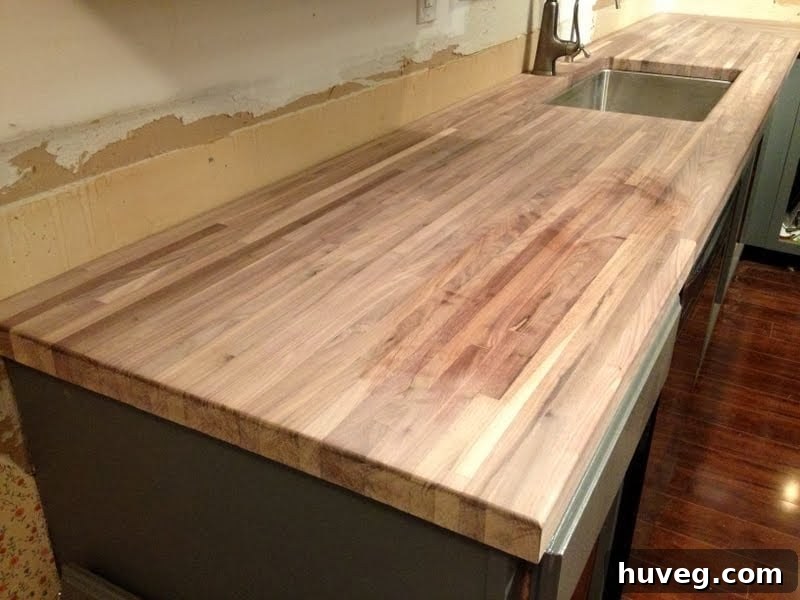
Unlike stained options, my countertops are genuine walnut, sourced from Lumber Liquidators (now LL Flooring), which I then expertly cut and installed. The result exceeded all expectations, delivering a naturally dark, elegant, and robust surface that has stood the test of time. This guide aims to provide you with all the knowledge needed to replicate this success, ensuring your butcher block remains a cherished feature of your home.
Why I Chose Walnut Over Stained Ikea Butcher Block
Initially, my kitchen design plan called for a darker countertop aesthetic. My original thought process, like many DIYers, gravitated towards more readily available options such as Ikea butcher block. At the time, Ikea offered countertops primarily in lighter woods like beech and birch. To achieve the desired deep, rich tone, these lighter woods would inevitably require staining.
However, staining butcher block introduces a significant challenge: food safety. Traditional wood stains are not designed to be food-safe, meaning direct food preparation on a stained surface could lead to contamination. My research pointed to using a protective coating over the stain, such as Waterlox, a popular choice known for its durability and water resistance. While Waterlox offered a solution, it came with its own set of considerations. Reviews indicated that it could slightly lighten the stain color and might introduce a subtle “ambering” or yellowing effect over time – factors I had to account for in my design.
Crucially, even with a protective coating, I remained committed to using cutting boards for all food preparation. This wasn’t a significant inconvenience, as it’s a habit I’ve always maintained to protect my surfaces. While I appreciate the character wood gains from use, I found the idea of extensive cuts and gouges directly on my main counter surface to be less appealing for long-term aesthetics. This approach, combined with annual re-treatment, seemed like a viable, albeit somewhat more complex, path to achieving my vision with stained butcher block.
The Unexpected Blessing: Choosing Walnut Butcher Block
My initial plan took an abrupt turn when I faced a last-minute sourcing challenge for the Ikea butcher block. This unforeseen obstacle, however, turned out to be a tremendous stroke of luck. In my frantic search for an alternative, I discovered walnut butcher block countertops available at Lumber Liquidators (now LL Flooring). This discovery was a true blessing in disguise, as it eliminated the complexities associated with staining.
Walnut wood, in its natural state, boasts a deep, rich, and inherently dark color profile. This meant I wouldn’t need to stain it to achieve the desired aesthetic for my kitchen. The natural beauty of walnut perfectly aligned with my vision, offering an elegant and sophisticated look without any artificial coloring. This realization was a game-changer, simplifying the entire countertop treatment process immensely.
By opting for naturally dark walnut, I could bypass the need for potentially non-food-safe stains and complex sealants. Instead, I could choose a much simpler, truly food-safe finish: food-grade mineral oil. Mineral oil is an ideal choice for butcher block because it penetrates the wood, protecting it from moisture and everyday wear, while remaining completely safe for food contact. This simple solution provided both the protection I needed and the peace of mind regarding food preparation, reinforcing my decision to always use a cutting board for actual chopping.
How to Treat Butcher Block Counters for Lasting Beauty and Protection
The key to long-lasting, beautiful butcher block countertops lies in proper treatment and consistent maintenance. My preferred method focuses on food-safe, effective, and economical solutions that enhance the wood’s natural properties.
The Mineral Oil Secret: Affordable and Food-Safe Protection
When it comes to treating butcher block, many specialized “butcher block oils” are available, often at premium prices. However, a little research quickly reveals a simple truth: if a product’s ingredients consist solely of mineral oil, you can achieve the same results with a much more cost-effective alternative. Food-grade mineral oil, readily available at most grocery stores or pharmacies, is the same essential product, often sold in the laxative aisle for mere dollars.
This “secret” allows you to buy mineral oil by the gallon without breaking the bank, making regular treatment an affordable endeavor. Look for labels that specify “food-grade,” “USP mineral oil,” or state it’s safe for human consumption. There’s no need to pay extra for fancy packaging or marketing; the efficacy comes from the pure mineral oil itself, which deeply penetrates wood fibers to prevent drying, cracking, and water damage, all while remaining completely food-safe.
Elevated Protection: The Mineral Oil + Beeswax Blend
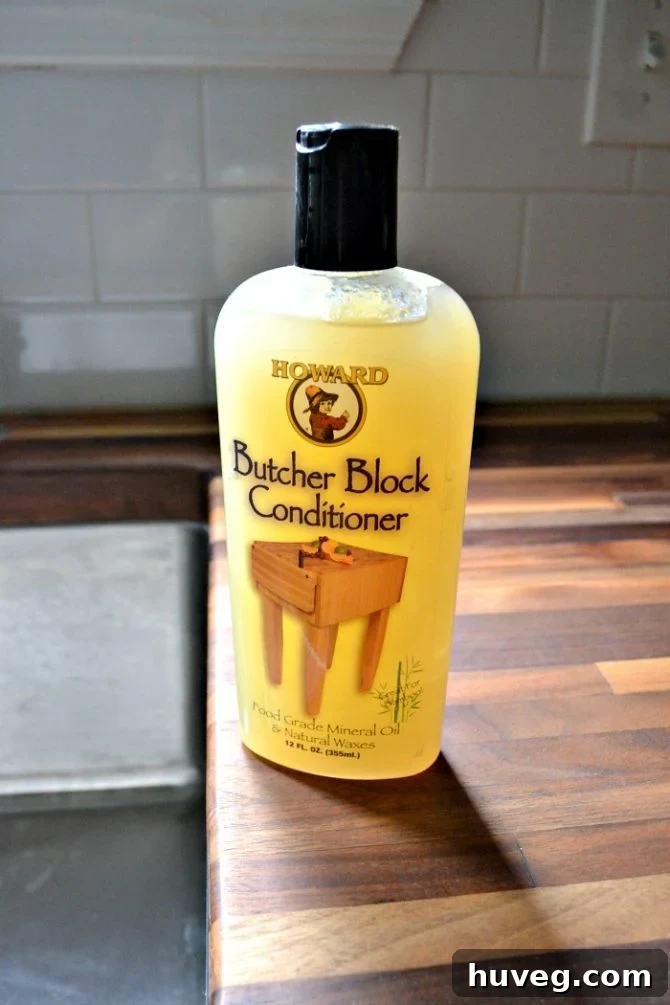
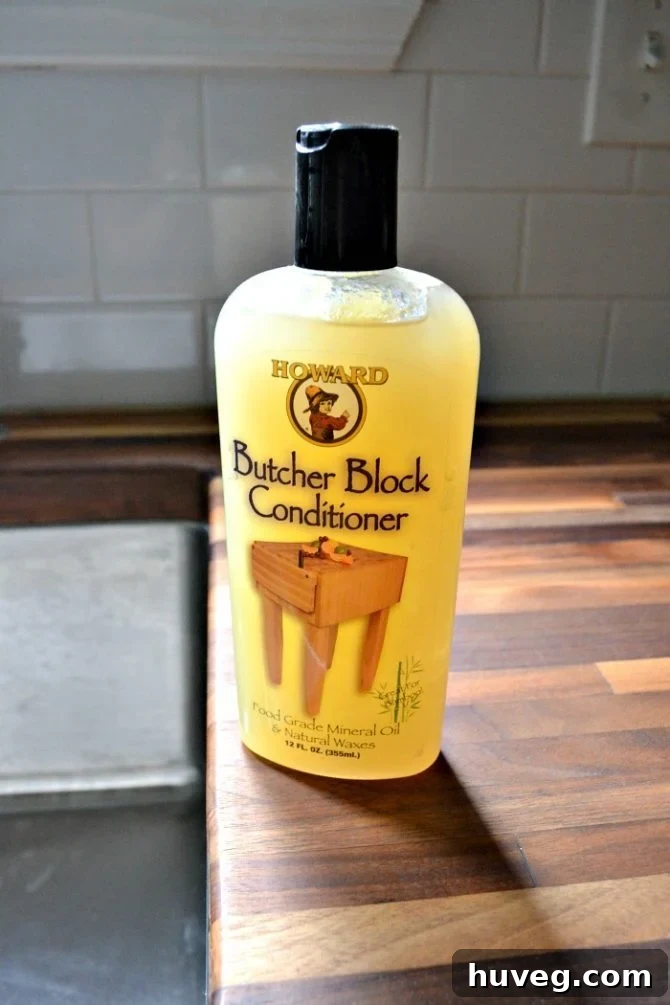
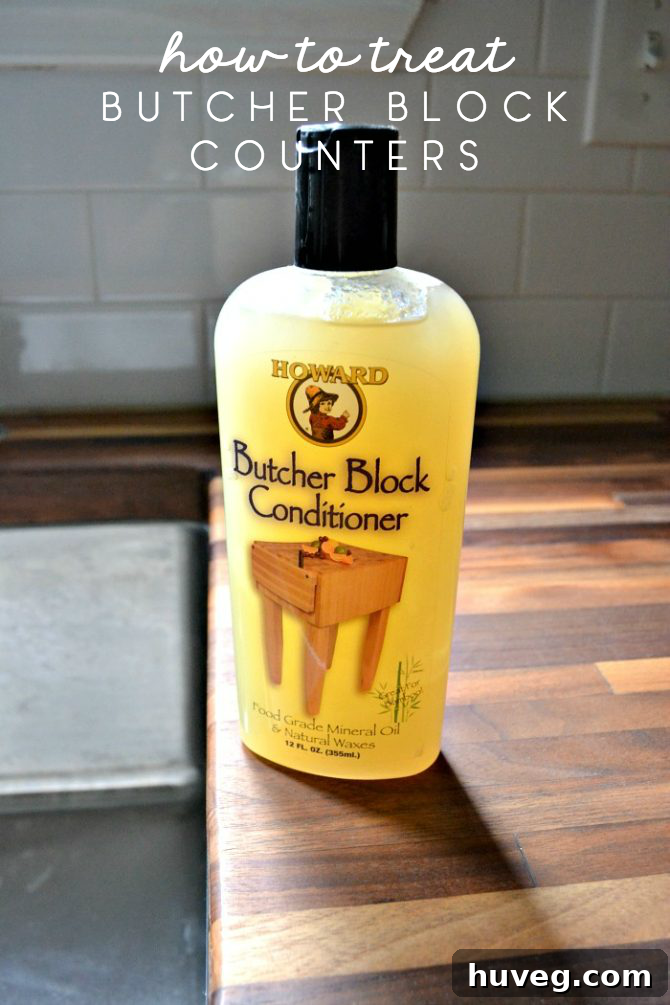
While pure mineral oil is excellent, I decided to experiment with a product that combines both mineral oil and beeswax, such as Howard Butcher Block Conditioner. This blend offers enhanced benefits. The mineral oil still conditions and protects the wood from moisture, but the added beeswax provides an extra layer of defense. Beeswax helps to fill in minor scratches and dings, building up a more robust, water-repellent barrier over time. It also imparts a beautiful, subtle sheen that enhances the wood’s natural luster.
Although a combined product like this is slightly more expensive than plain mineral oil, the added protection and aesthetic benefits make it a worthwhile investment. For a small price difference, you get a superior finish that helps maintain the pristine condition of your countertops for longer. This small “experiment” proved incredibly successful in achieving a durable and visually stunning finish.
Preparing Your Butcher Block for Treatment
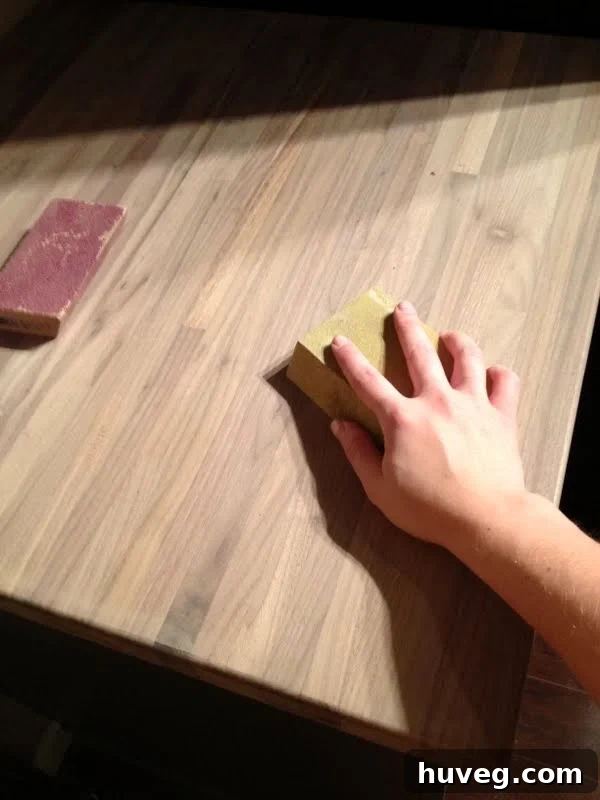
Before applying any oil or wax, proper preparation is crucial for a smooth and even finish. Even if your wood is new, a light sanding will ensure optimal absorption and a silky-smooth surface. I started with a fine-grit sandpaper (180-grit) to gently refine the surface, then moved to progressively finer grits (220-grit and 320-grit) for an incredibly smooth feel. After sanding, meticulously wipe down the entire surface with a tack cloth to remove all dust and debris. This step is vital to prevent any grit from getting trapped in your finish.
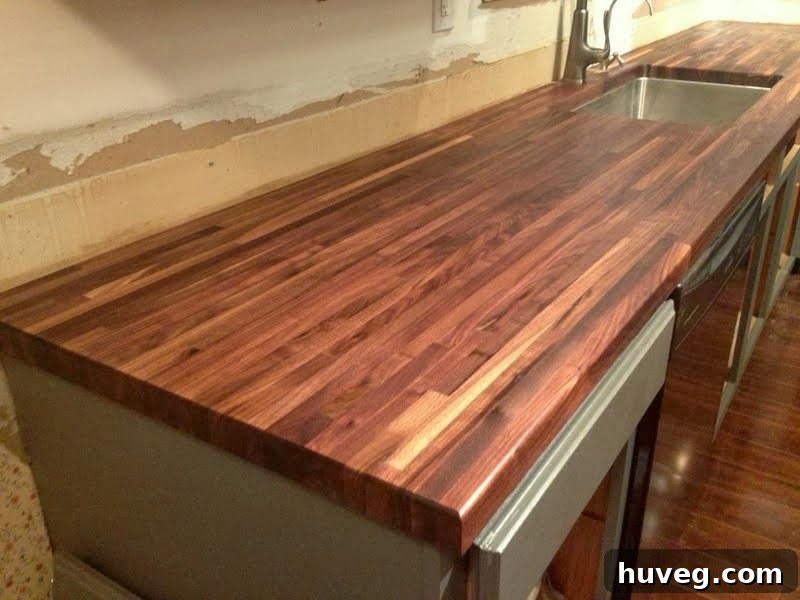
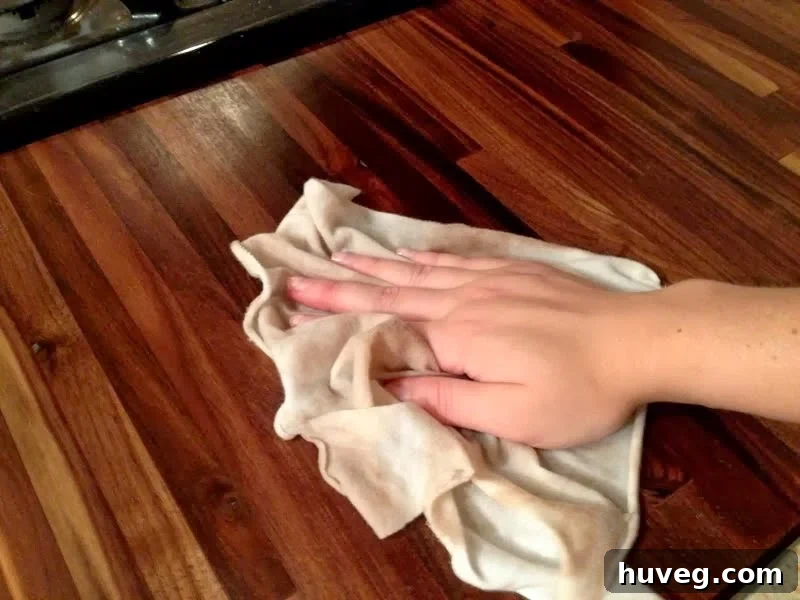
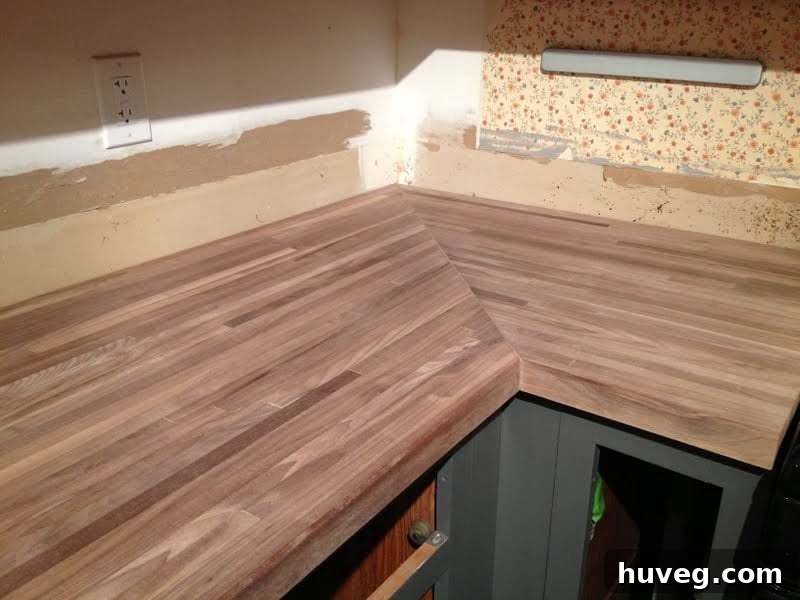
Once prepped, I was ready for the initial application of the beeswax/mineral oil mixture. The anticipation of seeing the wood’s true character emerge was palpable. Using clean, lint-free cloths – old t-shirts are fantastic for this purpose, as I’ve mentioned in other DIY projects – I generously applied the mixture. The wood immediately drank it in, transforming from a dry, somewhat dull appearance to a rich, vibrant hue.
Application and Initial Results: Before and After
The application process is straightforward: simply wipe on a generous amount of the oil/wax mixture, allow it to soak in thoroughly (preferably overnight for the initial coats), and then wipe off any excess with a clean, dry cloth. Repeating this process builds up the protection and deepens the wood’s color.
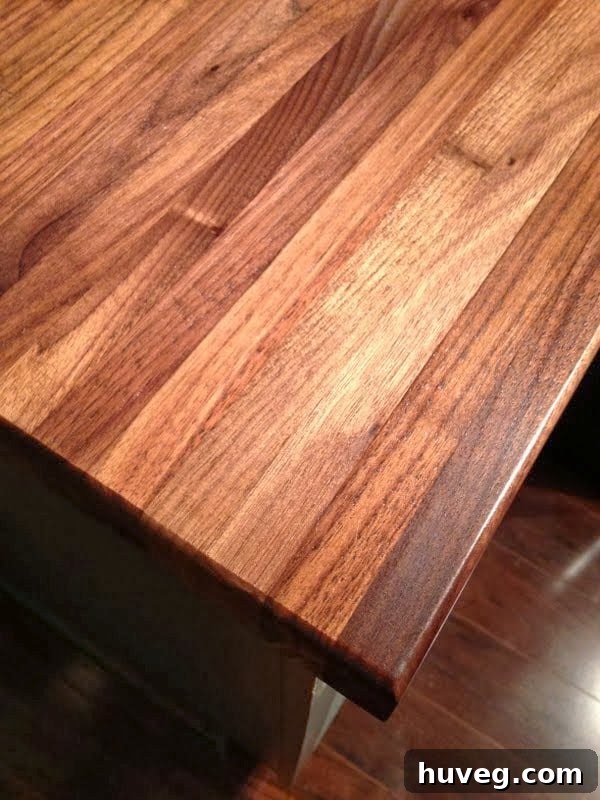
Here’s a dramatic visual of the transformation:
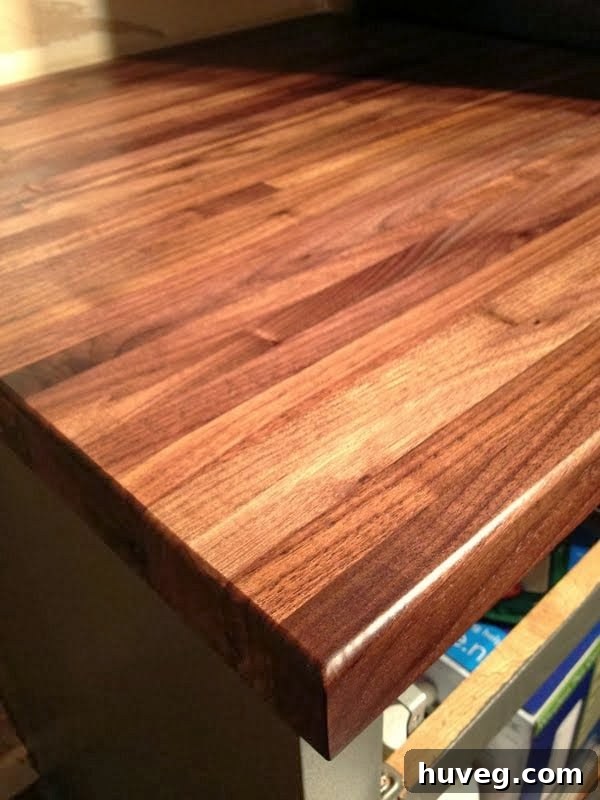
And after just two coats!
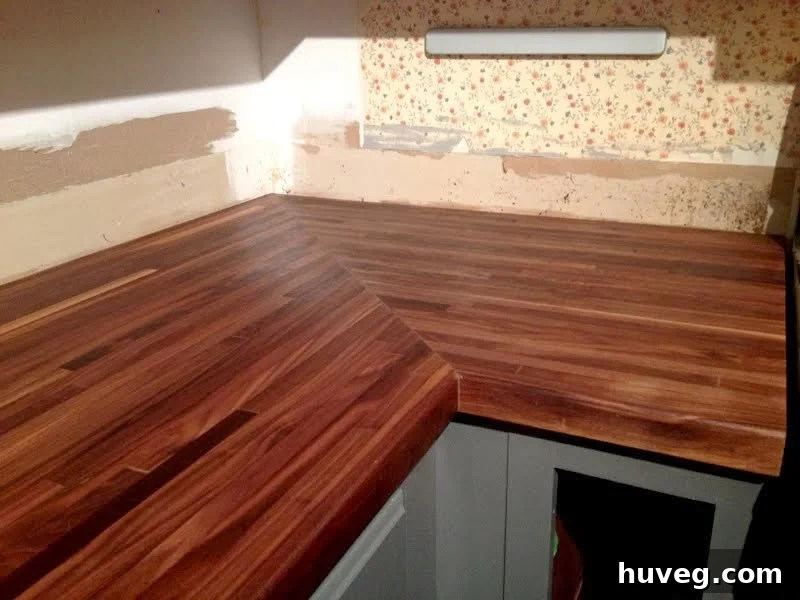
I absolutely adore the natural variation and grain of the wood that the oil brings out. Each streak and swirl tells a story, making the countertop a unique piece of art in my kitchen.
Ongoing Maintenance for Butcher Block Countertops
Initially, I applied several treatments to ensure the wood was fully saturated. Moving forward, the maintenance schedule is quite flexible. I re-treat the countertops every few months, or whenever the wood begins to appear dry, lighter in color, or if I notice water no longer beads up effectively on the surface. The walnut now feels incredibly rich and resilient, a far cry from its initial thirsty state.
Regular checks, especially around high-moisture areas like the kitchen sink, are important. While butcher block does require more attentive care than, say, a laminate countertop, the warmth, natural beauty, and unique character it brings to the kitchen are undeniably worth the effort. It perfectly complements the overall aesthetic of my kitchen, creating a focal point that feels both inviting and luxurious.
Cleaning Butcher Block Countertops: Maintaining Hygiene and Appearance
Maintaining the cleanliness and hygiene of butcher block countertops is paramount, especially in a kitchen environment. While the treatment protects the wood, proper cleaning methods ensure its longevity and food safety. Here’s a guide to keeping your wood counters pristine:
How to Clean Butcher Block Effectively
- Clear Debris: Begin by sweeping up any food residue and scraping crumbs into the sink with a clean dish towel or bench scraper. This prevents larger particles from scratching the surface during cleaning.
- Gentle Cleaning Solution: For daily cleaning, a simple mixture works best. Spray down the counter with a solution of hot water and a few drops of mild dish soap. Alternatively, a popular DIY cleanser involves diluting white vinegar with water (a 1:1 ratio is often effective) and adding a few drops of essential oil for fragrance and mild antimicrobial properties (e.g., lavender, tea tree oil, or lemon). Avoid harsh chemical cleaners, as these can strip away the protective oil and damage the wood.
- Wipe and Dry Immediately: After spraying, wipe the surface clean with a damp cloth or sponge. It’s crucial to immediately follow up with a dry cloth to thoroughly dry the countertops. Wood is susceptible to water damage, so never let water sit on the surface for extended periods.
- Re-oil After Cleaning: It’s important to note that any cleaning method, even gentle ones, can slightly diminish the oil and wax barrier. Therefore, after cleaning, especially after more intensive cleaning sessions, it’s a good practice to reapply a thin coat of mineral oil or the oil/wax mixture to replenish the wood’s protection.
Addressing Darker Wood Stains and Imperfections
One inherent characteristic of wood countertops, which owners often come to appreciate, is that they do not remain perpetually “pristine.” Over time, the wood will naturally develop a patina, some areas might darken, or stubborn water spots may form. Embracing this evolution as part of the wood’s character is key.
For tougher stains or to lighten darkened areas, a traditional and effective method is to sprinkle coarse salt onto the affected area and then scrub it with half a lemon. The mild abrasive action of the salt combined with the natural acidity of the lemon juice works to gently lift stains and brighten the wood. Lemon juice also offers the added benefit of killing germs and preventing bacteria, contributing to a hygienic surface. After this treatment, always rinse the area thoroughly and dry immediately, then follow up with an application of oil/wax.
I also plan to test non-toxic products, such as a disinfectant spray and a dedicated wood cleaner, to efficiently remove food residue while maintaining the highest level of food safety. My approach will always include re-oiling or re-waxing after any cleaning to ensure the wood remains nourished and protected.
And yes, for those noticing the background, my focus here remains purely on the beauty and care of good wood countertops. The surrounding renovation challenges, as hinted at by past builders’ oversight and previous homeowner quirks, are a story for another time!
Long-Term Durability and Updates on My Walnut Butcher Block
It’s always reassuring to see how a project holds up over time. For those wondering about the longevity of these walnut butcher block countertops, I’m delighted to provide an update. You can see how the kitchen looks now, beautifully settled and often decorated for special occasions like Christmas!
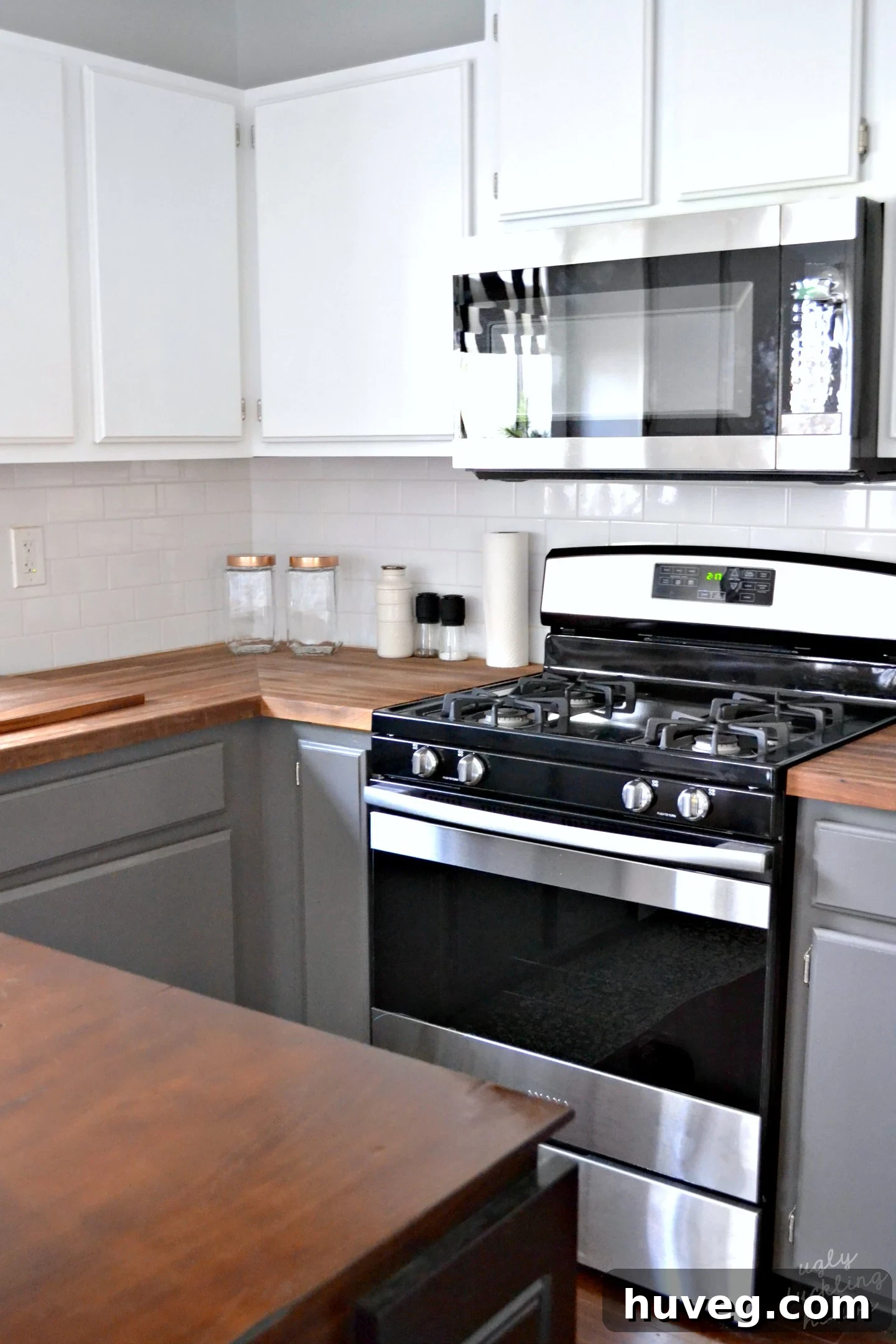
Over the years, I’ve received countless questions regarding how the oil/wax mixture interacts with moisture and the overall durability of the counters. I’m pleased to report that even after several years, they continue to look gorgeous and perform exceptionally well! As with any natural wood product, you should anticipate subtle changes over time. Butcher block will develop a unique character, with some areas potentially deepening in color or acquiring slight variations. For me, these natural developments only add to the charm and authenticity of having solid wood countertops, enhancing their unique appeal.
I continue to rely on the Howard Butcher Block Conditioner for regular maintenance, a testament to its consistent performance. For specific guidance on how I manage and care for water spots, which are a common concern with wood surfaces, I’ve shared detailed insights in this updated post about the sink area. This long-term experience reinforces my belief that with proper initial treatment and ongoing care, walnut butcher block countertops are a beautiful, durable, and rewarding choice for any kitchen.