Tidy Your Workspace With Free DIY Organizer Plans

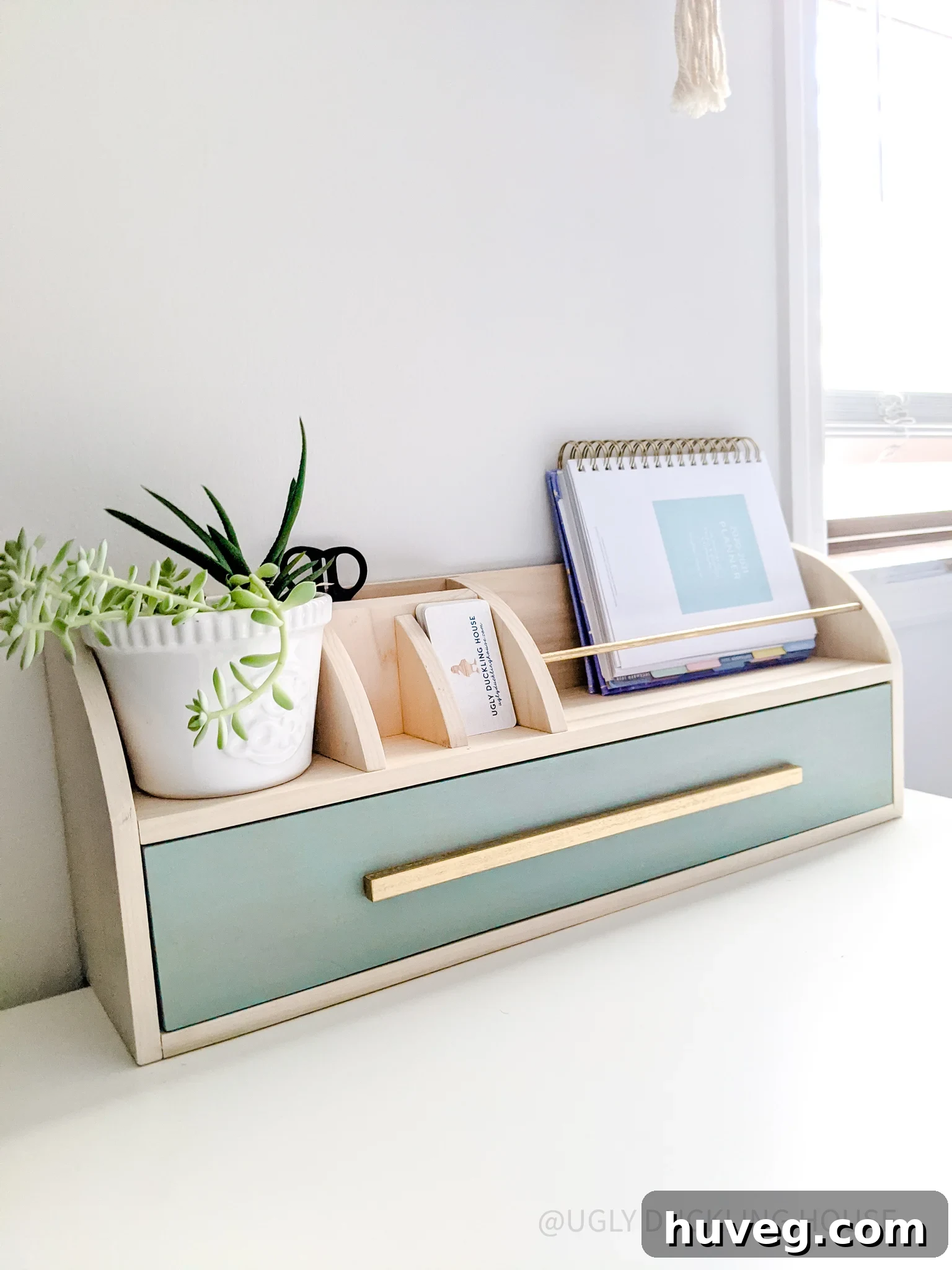
Transform your workspace from chaotic to coordinated with our stunning DIY desktop organizer! Designed to stylishly manage all your essential desk items – from pens and notebooks to even a tape measure – this project promises both beauty and unparalleled functionality. What’s even better? We’re providing the comprehensive, easy-to-follow plans for free, making it simple for anyone to create this elegant solution for a clutter-free environment.
The dawn of a new year, particularly January, often brings a collective sigh of exasperation as many of us confront the undeniable truth of our disorganized spaces. Whether you’re working from a home office, a dedicated craft corner, or even a small nook in your living room, desk clutter can significantly impede productivity and create unnecessary stress. Recognizing this universal struggle, we’ve crafted the perfect solution: a bespoke desk organizer that’s not only a breeze to build but also incredibly effective. Every small step towards organization counts, and this project offers a substantial leap forward. We’ve made the process incredibly straightforward, and to ensure your success, we’re offering FREE, detailed woodworking plans. It’s been a little while since we last released new plans, so consider this a promising sign of many more exciting DIY projects to come throughout 2021!
This comprehensive guide and project are proudly sponsored by Minwax, a brand we trust for exceptional wood finishing products. Rest assured, all opinions and detailed insights shared within this post are 100% our own, reflecting our genuine experience and passion for DIY.
To further assist you in visualizing each step and ensuring a smooth building experience, we strive to include video tutorials with our projects whenever possible. For this desk organizer, you can find a helpful visual guide either on our blog or by visiting our official Instagram page. Watching the process unfold can often clarify intricate details that static images might miss, helping you build with confidence.
Essential Materials & Tools for Your DIY Desk Organizer
Before diving into the exciting world of woodworking, it’s crucial to gather all your necessary materials and tools. Having everything at hand will streamline your building process and prevent unnecessary interruptions. This project utilizes readily available lumber and common workshop tools, making it accessible for most DIY enthusiasts. Here’s a comprehensive list to get you started:
- 4 – 1/2″ x 6″ x 4ft poplar boards (Poplar is an excellent choice for its smooth grain and ease of workability, taking stain beautifully.)
- 1/2″ and 1/4″ scrap plywood (Perfect for hidden elements like the drawer box, maximizing material efficiency and saving costs.)
- 1/4″ round dowel (For crafting elegant accent pieces like the handle and paper bar.)
- Pencil (For marking precise cuts and design lines.)
- Miter saw (Ideal for accurate cross-cuts, though other saws can be adapted.)
- Orbital sander (For achieving smooth, professional-looking surfaces ready for finishing.)
- Sandpaper (Various grits, from coarse to fine, for initial shaping and final smoothing.)
- Measuring tape (Essential for all accurate dimensioning.)
- Safety gear: Glasses, hearing protection, breathing mask (Prioritize your safety with proper protective equipment.)
- Minwax Water-Based Solid Color Stain in 2021 Color of the Year, Vintage Blue (This beautiful hue will elevate the aesthetic of your organizer.)
- Scroll saw (For cutting intricate curves and decorative shapes with precision.)
- Drill (For pre-drilling holes and other assembly tasks.)
- Forstner bits (Perfect for creating clean, flat-bottomed holes for dowels or other inserts.)
- Clamps (Indispensable for holding pieces together securely while glue dries.)
- Wood glue (For strong, durable joints that will last.)
- Pin nailer (Provides quick, subtle fastening for assembly, minimizing visible hardware.)
- Gold spray paint (For adding elegant metallic accents.)
- Minwax Polycrylic Protective Finish in Ultra Flat (To seal and protect your finished organizer, offering durability without added sheen.)
How to Build Your Own Simple & Stylish DIY Desk Organizer
This cleverly designed desk organizer, measuring a modest 5-1/2 inches deep, is a testament to efficient design, capable of holding a surprisingly large assortment of items. Its compact footprint ensures it won’t dominate your desk, while its thoughtful compartments maximize storage utility. To access the precise measurements and follow our expert guidance for each cut and assembly step, make sure to download the comprehensive free plans available in our library. These plans are your essential companion throughout the build, ensuring accuracy and a successful outcome.
Project Cost: A budget-friendly investment of approximately $12 for the primary poplar lumber. This estimate assumes you, like many avid DIYers, likely have common workshop supplies and scrap wood on hand. By strategically using scrap materials for hidden components, such as the inner drawer box, you can significantly reduce expenses, making this an incredibly economical project.
1. Precision Cutting and Assembly of the Internal Drawer
While our materials list provides a guideline for using consistent wood types throughout the project, embracing resourcefulness can lead to both cost savings and a sense of accomplishment. I highly recommend utilizing scrap wood wherever possible, particularly for internal components like the drawer box. Since the drawer will be largely concealed by its decorative face, any imperfections or mismatched wood types on the inside are completely unnoticeable. I chose to cut and assemble the drawer first, driven by the desire to use up available scrap pieces. However, you certainly have the flexibility to construct the drawer after the main outer organizer. The design intentionally leaves a small amount of clearance at both the top and back of the drawer, offering a tiny margin for error or even allowing you to slightly increase the drawer’s dimensions beyond the plans if you desire more internal storage space.
2. Crafting the Back Piece: A Robust Foundation
When selecting lumber from large hardware stores, you’ll often find that the widest 1/2-inch boards are nominally 6 inches, which translates to an actual width of 5-1/2 inches. For this particular DIY desk organizer, a wider back piece, specifically 9 inches, was required to provide adequate structural integrity and design aesthetics. To achieve this necessary width, the solution involves a straightforward yet crucial woodworking technique: gluing up multiple boards. This process entails carefully joining two or more narrower boards edge-to-edge using wood glue and securing them with clamps until the adhesive fully cures. The result is a single, wider panel that forms a strong and stable back for your organizer, ensuring its longevity and solid construction. Proper clamping and alignment during this step are paramount for a seamless and durable joint.
3. Precisely Cutting All Remaining Components
With the drawer and back piece addressed, the next critical step is to meticulously cut all the remaining components according to the precise dimensions provided in your free woodworking plans. This includes the sides, the internal shelf, the bottom panel, the dividers that segment the top compartments, and the visible drawer face. While I personally completed all my cuts using a miter saw, it’s worth noting that these pieces can be somewhat long, and a miter saw requires multiple rotations for wider boards. For optimal accuracy and ease, especially for those longer cuts, I highly recommend using a table saw if you have access to one; it significantly simplifies achieving perfectly straight and consistent edges. Alternatively, a circular saw can also be effectively employed, though careful setup with a straight edge guide would be beneficial to ensure precision. Regardless of the tool chosen, always double-check your measurements before making any cuts to ensure all components fit together flawlessly during assembly.
4. Designing and Cutting the Signature Curved Elements
To infuse this desk organizer with a unique and elegant touch, I opted for a distinctive curved shape that would be echoed across both the side panels and the internal dividers. This design element adds a custom, artisanal feel to the piece. The process begins by sketching your desired curve directly onto one of the side pieces. Don’t be afraid to experiment with different arcs until you find a profile that you love. Once satisfied with your initial sketch, carefully cut along this line using a scroll saw, which is ideal for intricate curves, or even a jigsaw with a fine-tooth blade. After the initial cut, refine the curve using an orbital sander to smooth out any rough edges and achieve a perfect, flowing line. This first curved piece then serves as your master template. By tracing this template onto the remaining side and divider pieces, you ensure absolute consistency in the design, resulting in a cohesive and professionally finished aesthetic for your organizer.
5. Assembling the Outer Framework of the Organizer
Once all the individual components for the outer structure of the desk organizer have been precisely cut and shaped (excluding only the decorative drawer face at this stage), it’s time for the exciting phase of assembly. This step transforms disparate pieces of wood into a functional and aesthetically pleasing unit. Using a combination of high-quality wood glue and a pin nailer, carefully join each part according to the assembly diagrams in your plans. Apply a thin, even layer of wood glue to all mating surfaces to ensure a strong, lasting bond. Then, use the pin nailer to secure the pieces together temporarily while the glue sets. The pin nailer is perfect for this project as it leaves only tiny holes that are nearly invisible or easily filled, maintaining the clean lines of the design. Ensure all corners are square and joints are tight before allowing the glue to fully cure. Adequate clamping during this phase is crucial to prevent gaps and ensure a robust final structure for your desktop organizer.
6. Staining and Attaching the Elegant Drawer Face
The drawer face is where a significant part of your organizer’s character will shine through. For this project, I chose to finish it with the exquisite Minwax Water-Based Solid Color Stain in their captivating 2021 Color of the Year, Vintage Blue. This solid stain offers a beautiful balance, providing a rich, vibrant color while still allowing a subtle hint of the natural wood grain to peek through, adding depth and a touch of organic charm. Applying this stain is remarkably fast and efficient – simply swipe it on, wipe off any excess, and you’re done! Its quick-drying, water-based formula is one of the key reasons it’s become a frequent choice in my projects. Once the stain has dried completely, the next step is to carefully attach the drawer face to the front of the inner drawer box. To ensure perfectly even spacing and consistent gaps around all sides of the drawer face, a handy trick is to use a few business cards as temporary spacers. This provides a uniform reveal, giving your organizer a professional and polished appearance.
7. Adding Sophisticated Spray-Painted Accent Pieces
To elevate the aesthetic and functionality of the desk organizer, I incorporated subtle yet striking gold accent pieces. Using a small scrap piece of leftover material for the handle and a 1/4-inch wooden dowel for the paper bar, I transformed these simple elements with a coat of gold spray paint. The contrast of the shimmering gold against the rich Vintage Blue stain and natural wood is truly captivating, adding a touch of modern elegance and visual interest to the finished piece. After allowing the spray paint to dry thoroughly, I carefully installed these accents. The dowel was fitted into the designated slots in the upper section of the organizer, creating a convenient bar for holding notes, papers, or small documents. The gold handle was then attached to the center of the drawer face. When fastening the handle, I was mindful to use nails only in the middle of the drawer face. This strategic placement ensures that the elegant gold handle perfectly conceals any minute nail holes or blemishes, preserving the pristine appearance of the stained wood and completing the sophisticated look of your custom desk organizer.
The beauty of this DIY desk organizer lies not only in its stylish design but also in its incredible versatility and adaptability to your specific organizational needs. When conceiving its layout, I deliberately aimed for a design that could accommodate a wide array of items and functions. For instance, I personally envision a small plant pot nestled on one end, bringing a touch of nature to the workspace. However, this spot could just as easily house a dedicated pencil cup, keeping your writing instruments upright and readily accessible. The narrow slot at the back, where I typically store pencils and a pair of scissors, is also perfectly sized for holding envelopes, mail, or important documents you need to keep within reach. The slender front compartments, ideal for business cards in my setup, can be transformed into convenient holders for Post-It notes, sticky tabs, or even small electronics. For tiny items like paperclips or pushpins that might otherwise fall out, you could easily add a small metal bar or a piece of mesh to create a secure enclosure. And, of course, the spacious pull-out drawer offers invaluable hidden storage for items that are less visually appealing but no less essential – think charging cords, spare batteries, or other odds and ends you prefer to keep out of sight, maintaining the tidy aesthetic of your desktop. This organizer truly becomes whatever you need it to be, evolving with your workspace demands.
Ultimately, my greatest hope is that this elegant and functional DIY desk organizer provides much-needed relief from the organizational challenges many of us face daily. In an era where more individuals are embracing the convenience and necessity of working from home, a well-ordered workspace is no longer a luxury but a vital component for productivity and peace of mind. Crafting this organizer is a rewarding project that empowers you to take control of your environment, fostering a sense of calm and efficiency. Enjoy the process of building it, and even more, enjoy the newfound order and beauty it brings to your home office. Your organized, stylish workspace awaits!
Loved this project? Don’t forget to pin it to your favorite DIY or home organization board on Pinterest! Sharing it helps us reach more fellow enthusiasts and keeps the inspiration flowing.