DIY Floating Deck Part 3 Mastering Diagonal Decking


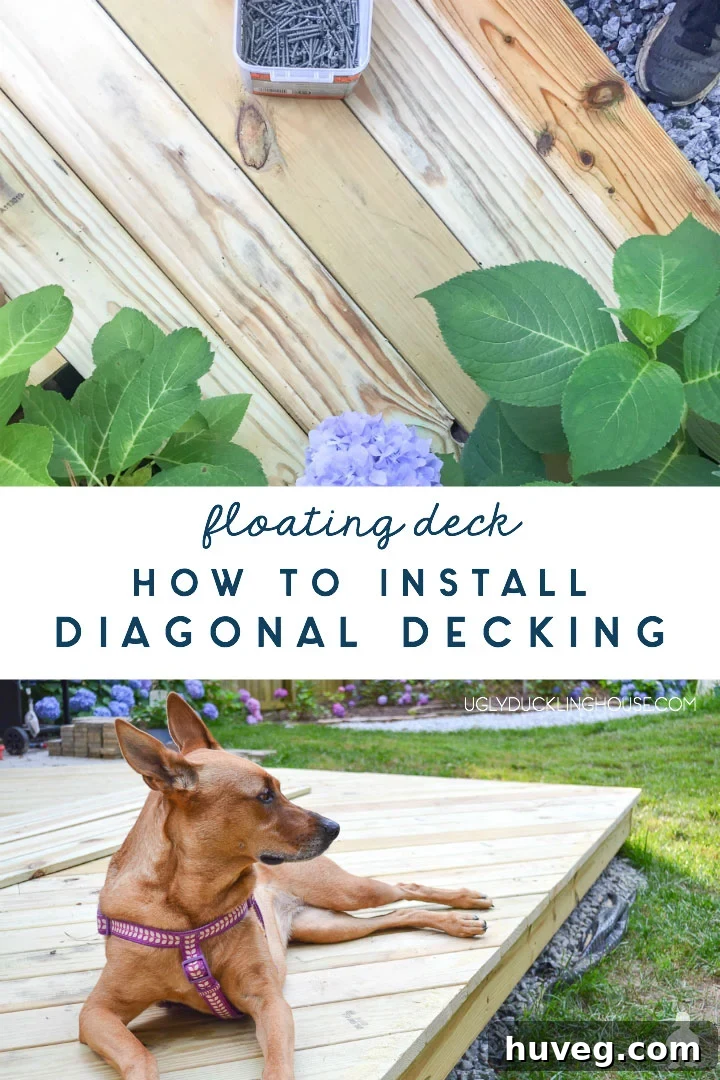
Embarking on a backyard transformation, I’m thrilled to share the intricate details of constructing my very own DIY floating deck. This comprehensive guide captures the entire journey, from initial planning to the final flourishes. In this specific installment, we dive deep into the art and science of installing decking boards at a dynamic 45-degree angle, a design choice that elevates both the aesthetics and functionality of any outdoor living space.
- Part 1: Planning & Layout – The foundational steps for conceptualizing your dream deck.
- Part 2: Framing & Waterproofing – Building the robust skeleton and ensuring its longevity.
- Part 3: Decking Overview – An introduction to choosing and preparing your decking materials.
- Part 4: Mastering Diagonal Decking – That’s what you’re reading now!
- Part 5: Landscaping & Finishing Touches – Integrating your new deck seamlessly into your backyard.
- Part 6: DIY Light Pole Planters – Adding ambient lighting and charm to your outdoor retreat.
- Part 7: The Grand Reveal (Mom’s Surprise Party) – Celebrating the finished project!
Hello fellow DIY enthusiasts! Many of you have been eagerly awaiting the next chapter in my ground-level floating deck construction series, and the wait is finally over. Following our detailed discussion on creating a sturdy foundation, effective waterproofing, and selecting the right wood for the frame, we’re now moving onto the exhilarating stage where the deck truly begins to take shape: laying the decking boards.
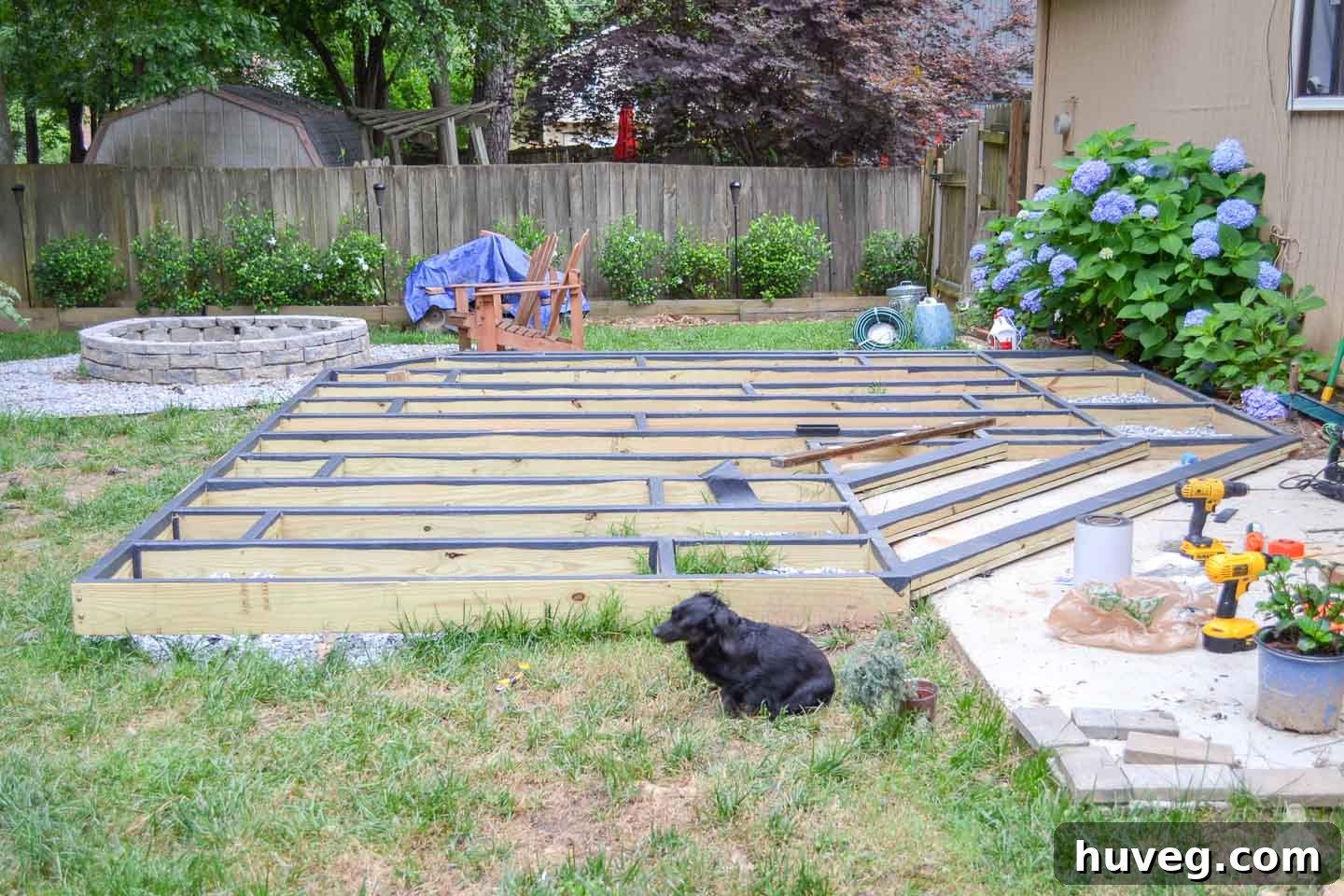
Previous installments covered the essential groundwork necessary for a durable and long-lasting deck. Given the sheer volume of information involved in a project of this scale, I’ve meticulously broken down each phase into distinct, manageable parts. If you’re just joining us, be sure to catch up on the initial stages:
- Part 1: Planning and Layout – Everything you need to know about preparing for your deck build.
- Part 2: Frame and Waterproofing (+ video) – Constructing the robust substructure and protecting it from the elements.
And now, we arrive at one of the most visually rewarding steps: installing the decking on a precise 45-degree angle. This diagonal layout isn’t just about aesthetics; it adds a unique character and often enhances the perceived spaciousness of the deck.
Watch the Video: Diagonal Decking Installation Guide
For me, this stage truly marked a turning point in the project. It’s when the abstract plans and sturdy framework transform into a tangible, inviting outdoor space. Watching the individual boards come together to form the deck’s surface brought an immense sense of accomplishment and excitement, making all the prior planning and hard work feel incredibly worthwhile.
This DIY floating deck project is proudly sponsored by Wood Its Real, a testament to the beauty and versatility of real wood in outdoor constructions.
Essential Tools & Materials for Diagonal Decking
Achieving a professional finish for your diagonal decking requires the right set of tools and materials. Here’s a rundown of what proved invaluable during my installation:
- CAMO Edge Deck Fastening System: This innovative system is a game-changer for hidden fasteners. It includes:
- Marksman Pro Tool: This ingenious tool guides screws at an angle for a fastener-free surface.
- Edge Deck Screws: Specifically designed screws to work seamlessly with the Marksman Pro, ensuring a strong, hidden hold.
- Driver Bits: Specialty bits tailored for the edge deck screws, often included with the screw boxes.
- Cordless Drill: Essential for pre-drilling pilot holes (if needed for certain wood types) and other fastening tasks.
- Impact Driver: Highly recommended for driving the deck screws efficiently and with less effort, especially crucial for repetitive fastening.
- Wood Clamps: Indispensable for securing boards in place, especially those with minor warps, and for maintaining consistent spacing.
- Miter Saw: Crucial for making precise, clean cuts, particularly for squaring board ends and achieving perfect angles.
- Tape Measure & Carpenter’s Square: For accurate measurements and ensuring perfect perpendicularity and alignment.
- Safety Glasses & Gloves: Always prioritize personal safety during any DIY project.
Mastering the Diagonal: Techniques for a Flawless Deck Layout
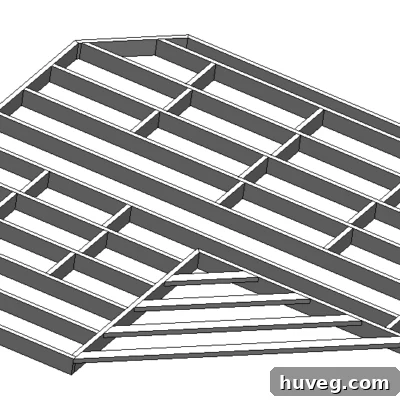
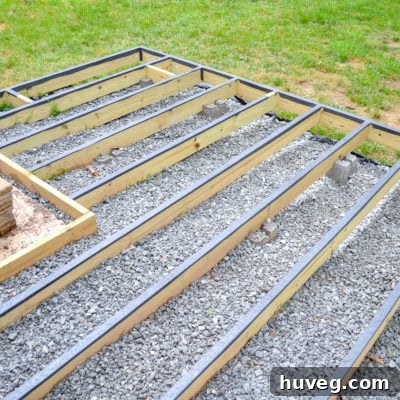
Installing deck boards at a 45-degree angle might seem daunting, but with careful planning and execution, it can be surprisingly straightforward. The key to success largely stemmed from the precision of the underlying frame, which provided an accurate base for the diagonal alignment. My experience proved that a solid foundation makes all the difference.
To ensure consistent alignment throughout the process, I employed a simple but effective technique: periodically, I would extend a straight-edged board perpendicular to the 45-degree angle of the boards being laid. By checking that the overhanging portion of the diagonal boards remained perfectly even and straight against this perpendicular guide, I could confidently confirm that my angle was holding true. This method provided continuous quality control, preventing any gradual deviation that could compromise the final appearance.
(You might notice Stella, my furry supervisor, in some photos. She has a peculiar way of lounging in the heat – a reminder that even during intense DIY, life finds a way to be wonderfully quirky!)
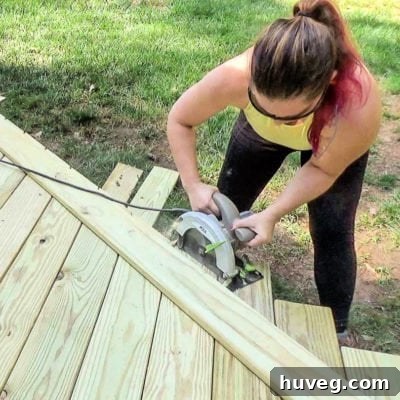
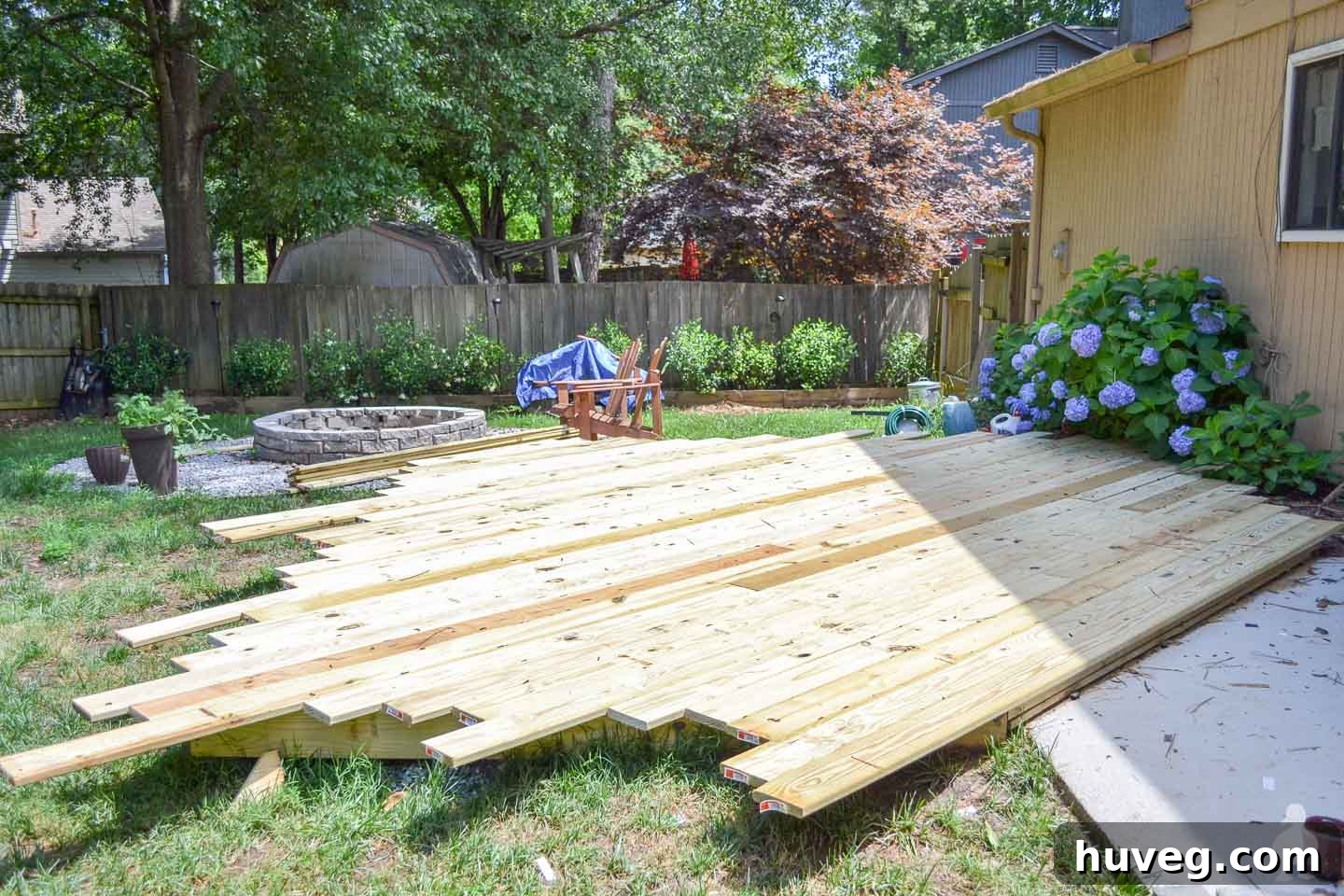
My initial plan called for a consistent 1-inch overhang on all sides of the deck. While this measurement was critical for fastening the very first deck board, I quickly adapted my approach for subsequent boards. Rather than meticulously trimming each board end as I laid it, I allowed them to hang jaggedly over the edge. This strategy saved significant time during the installation phase. The final, precise 1-inch overhang would be achieved later during the trimming phase, when all the deck boards were in place and I could make one continuous, clean cut around the entire perimeter.

The CAMO Hidden Deck Fastening System: A Game-Changer for Aesthetics and Durability
One of the most impactful choices for this project was investing in the CAMO Edge Deck Fastening System. This system offered two compelling features that significantly enhanced both the installation process and the final look of the deck:
- Consistent Board Gapping: The Marksman Pro tool functions much like a specialized clamp. It expands over the edges of each deck board, firmly securing it in place. Crucially, its integrated metal tabs provide a precise and consistent 1/16-inch gap between adjacent boards. This uniform spacing is vital for proper water drainage and allows for the natural expansion and contraction of the wood with changes in humidity and temperature. I installed my deck during a particularly wet summer, and as the boards have since dried and settled, this initial conservative gap has expanded slightly, creating a perfect, not-too-wide spacing that looks excellent and performs well. A wider initial gap would likely have resulted in an excessively gapped appearance over time.
- Virtually Fastener-Free Surface: Once clamped onto a deck board, the tool features screw guides on each end. These guides direct specialty screws at an exact, optimal angle into the edge of the board, securely fastening it to the joists below. The beauty of this system is that the screws are driven into the side profile of the boards, rendering them almost entirely invisible from the deck’s surface. This creates a clean, professional, and visually appealing finish that enhances the natural beauty of the wood. While it doesn’t work for the very outer edges where a slight overhang is maintained (a few visible screws might be necessary here), the vast majority of the deck remains beautifully unblemished by fasteners.
It’s important to note that the CAMO materials are often sold as individual components (tool, screws, bits), but sometimes you can find them as a complete kit. Regardless, they are designed to work as a cohesive system. You’ll need to ensure you purchase the specific CAMO edge deck screws that correspond with the Marksman Pro tool for optimal performance. My initial investment in screws proved to be incredibly generous, lasting not only for this deck but also for a pub shed deck and its accompanying bar – truly a long-lasting and worthwhile purchase!
For increased efficiency, I discovered that having multiple drills and impact drivers on hand, each fitted with a CAMO driver bit (two bits usually come in the screw box), significantly accelerated the installation process. My partner, K, and I could work simultaneously on the same board, passing the guide tool back and forth, effectively halving the time spent on fastening each board. This collaborative approach made quick work of even the longest sections.
Seamless Decking: Strategies for Managing Seams and Reinforcing Supports
As I began laying the first few boards, I encountered a minor challenge: an area where the deck extended over an existing patio lacked sufficient support for the new decking. This resulted in a slight “wiggle” underfoot. This issue was easily rectified by adding a few strategically placed scrap pieces of wood to bolster the framework in that specific area. This experience highlighted the importance of proactively checking for adequate support, especially at board ends and seams, and adjusting the substructure as needed. The rest of the deck’s robust framework, thankfully, required no further modifications.
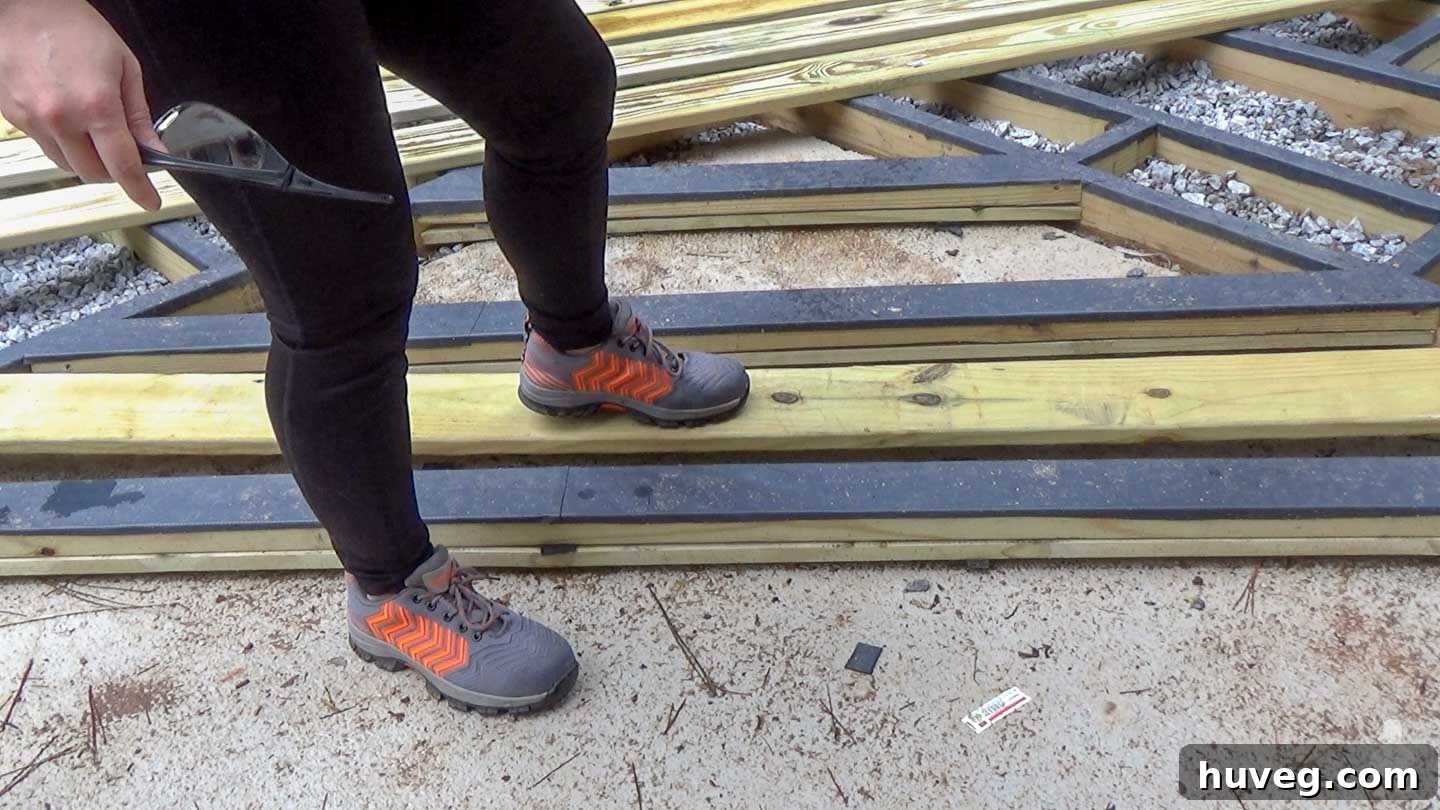
The standard pressure-treated deck boards I purchased were 12 feet long. While 16-foot boards are sometimes available, even those would not have been long enough to span the entire length of the longest sections of my deck. This necessitated laying two boards side-by-side in multiple places, creating seams. To manage these seams effectively and ensure both structural integrity and a visually appealing finish, I developed a few key strategies:
Working in a Z-Pattern for Staggered Seams: When a single board wasn’t long enough to cover an entire row, I would start with a full board, then cut another piece to fit the remainder of that row. For the *next* row, I would begin from the opposite end, again with a full board, ensuring that the seam created by the shorter piece from the previous row was not directly aligned. This “Z-pattern” or staggering technique effectively disperses the seams across different rows, making them far less noticeable and significantly enhancing the overall strength and stability of the deck surface. It prevents a continuous line of weakness and creates a more cohesive appearance.
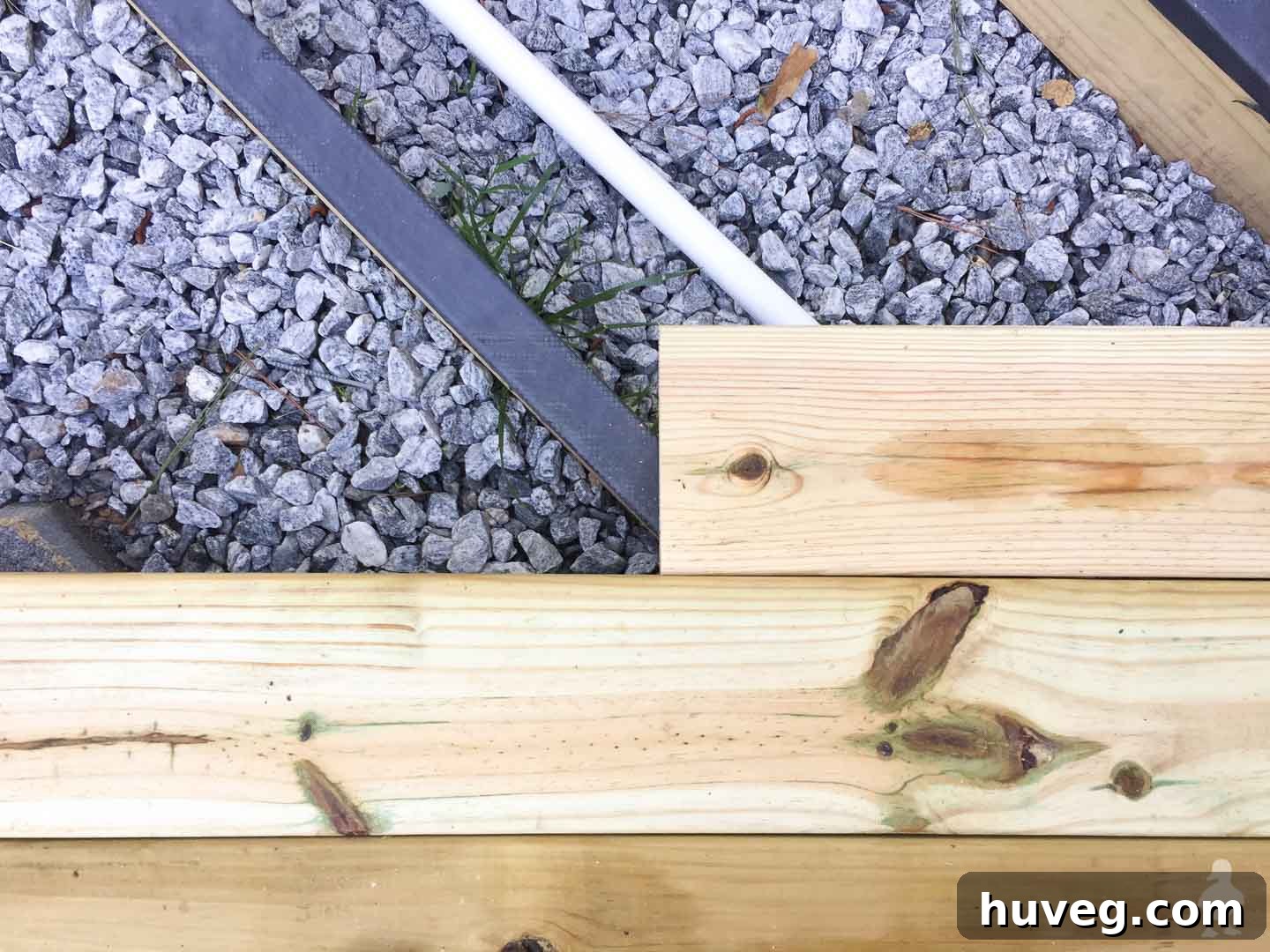
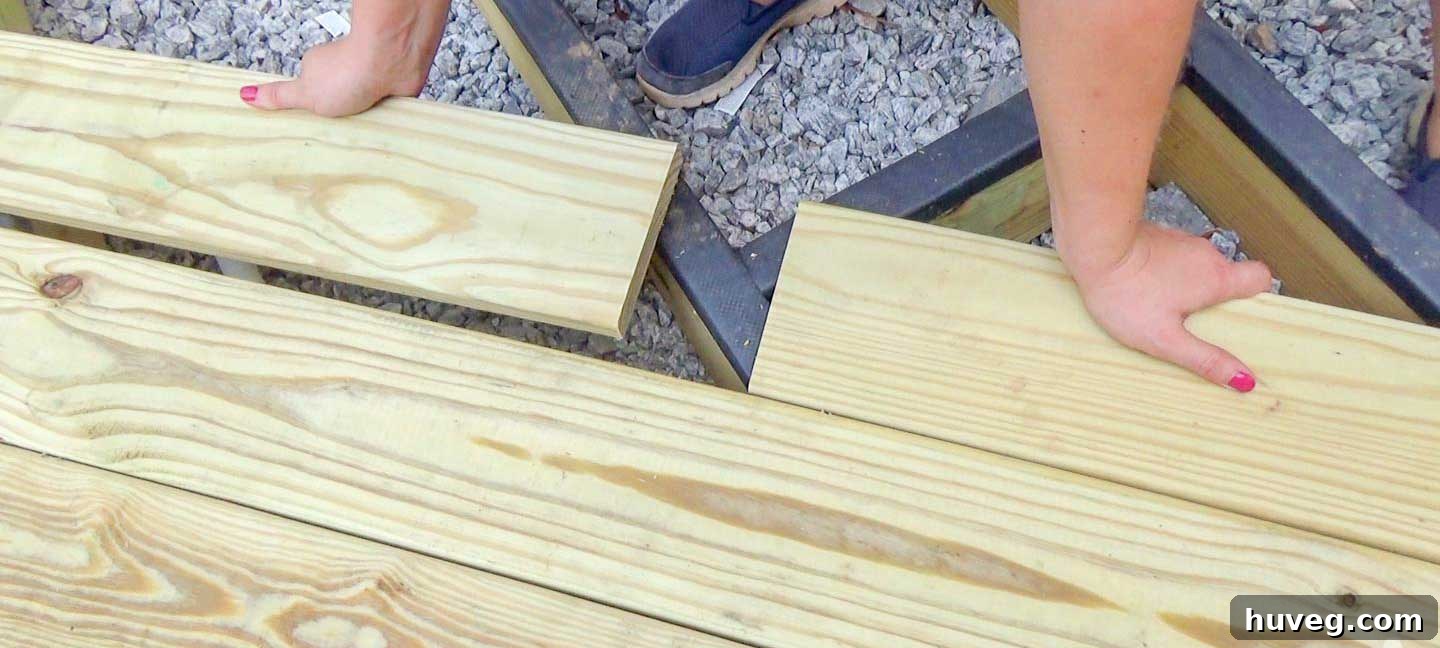
Squaring Up Board Ends for Tight Seams: I observed that the factory-cut ends of many deck boards are often slightly off-square. To achieve the tightest possible fit and minimize gaps where boards meet end-to-end, I made it a practice to “square up” these ends using my miter saw. A perfectly square cut allows for an almost imperceptible seam when two boards are laid side-by-side. Critically, before permanently fastening any seamed boards, ensure that both ends of the boards at the joint are fully supported by a joist or blocking underneath. If not, add additional blocking or carefully reposition the seam to ensure solid support. Always test the seam by stepping on it; any noticeable wiggle now will only worsen over time, leading to premature wear and instability. A well-supported, square seam is essential for the longevity and comfort of your deck.
Taming Warped Boards: The Power of Clamps
Pressure-treated wood, while excellent for outdoor durability, often comes quite wet from the lumberyard. Coupled with the intermittent rain showers during my installation, many of my meticulously selected straight boards inevitably developed some minor warping or twisting as they dried out on site. To mitigate this, I regularly flipped boards on a flat surface to encourage even drying. However, for those stubborn boards that still twisted at the ends or along their length, clamps became my invaluable allies. By strategically clamping warped sections, I could force them into alignment long enough to be securely fastened. Additionally, I sometimes planned ahead, positioning boards so that any significantly warped sections would fall within the area designated for the overhang, ensuring they would be trimmed off later anyway, effectively eliminating the issue.
Site Preparation: Don’t Forget to Clear the Way
One minor oversight that could have made the job easier (and which I learned for future projects) was the importance of thoroughly trimming back surrounding vegetation *before* beginning installation. My beautiful hydrangeas were in full, glorious bloom during the decking phase, and I initially hesitated to cut them back for better access to certain corners of the deck. While I eventually did, there’s a humorous moment in the video where you can see me attempting to install boards with a faceful of blooms! A clear work area is not only more efficient but also safer, preventing snagged clothing or accidental damage to your plants (or yourself).

Before long, with perseverance and careful attention to detail, the entire deck surface was laid! It was an incredibly satisfying moment, marking a significant milestone in the project. (P.S., for more celebratory antics from Charlie, be sure to check out the accompanying video!).
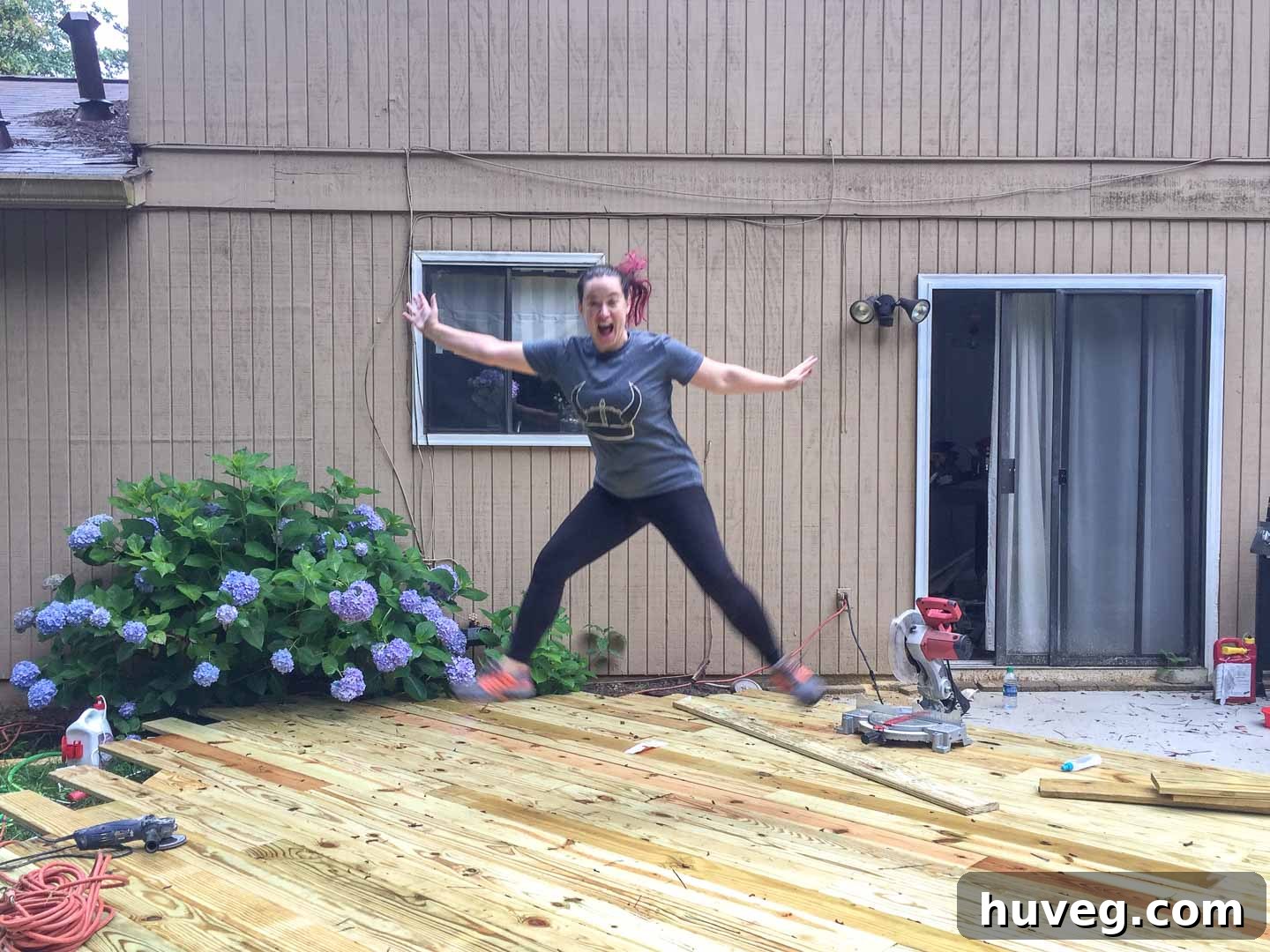
While the decking boards are now firmly in place, the project isn’t entirely “finished” just yet. The next crucial steps involve refining the edges to perfection. In the upcoming installment of this DIY deck series, I’ll walk you through the process of meticulously trimming the overhanging boards to a perfectly straight line and then elegantly rounding off those edges for a soft, professional finish. Following that, we’ll move on to installing the steps, enhancing the surrounding landscaping, applying a protective stain, and so much more. This phase was a monumental step forward, and I’m eager to share the exciting progress soon!
Explore the Complete DIY Floating Deck Series