2015 Decor Trends: What’s Hot, What’s Not

As the calendar year resets to January 1st, a familiar cycle begins, one that is almost impossible to escape. I often refer to it as the ‘New Year Triangle’: a time for reflecting on the triumphs and challenges of the past year, diligently setting ambitious goals for the twelve months ahead (much like I’ve done, here), and inevitably, delving into the myriad predictions for the design and lifestyle trends that promise to define the new year and differentiate it from the last.
While I usually pride myself on navigating clear of this particular “Bermuda Triangle” of new year phenomena, every few years, my resolve weakens. Perhaps it’s the lure of endless Netflix options combined with an accessible computer, but I recently found myself inexplicably drawn into the expansive digital rabbit hole that is Apartment Therapy. Before I knew it, I was engrossed, not just in one, but in all of the 2015 Trend Report videos from something called the December Maker Talk – an event I had previously been entirely unaware of.
Unpacking the 2015 Design Forecast: Chevron’s Demise and Memphis’s Rise?
The headline that immediately captivated my attention was a bold declaration from DwellStudio founder Christiane Lemieux: “Goodbye Chevron, Hello Memphis”. With no formal background in design or decorating, my initial reaction was pure confusion. Several thoughts immediately sprang to mind:
- Firstly, I was under the distinct impression that chevron, that ubiquitous zig-zag pattern, had already been clinging to its last threads for a couple of years. In fact, it was one of the most frequently mentioned “overdone” trends in the comments section of my “So Over” blog post, dating all the way back to 2011 (and reiterated in the 2013 Edition). Was chevron truly only now being declared “over” in 2015? It felt like a design trend that simply refused to die, akin to a persistent cockroach of the decor world. The news, frankly, elicited little more than a weary sigh.
- Secondly, and perhaps more importantly, what exactly is Memphis design? Here, my lack of formal design credentials became painfully apparent. A quick search, however, did little to impress me. If this particular aesthetic was truly what we were meant to be welcoming, it only reinforced my long-held belief that it’s often best to steer clear of being overly influenced by fleeting “trends.” My personal mantra has always been: if you genuinely love it, integrate it into your space, regardless of its current popularity.
Despite my initial skepticism, as I continued watching the videos, I found myself increasingly intrigued. I then proceeded to view the other two reports, eager to observe where designers converged and diverged in their predictions. It’s always fascinating to note the disagreements; one designer might be passionately extolling the virtues of gray tones, while another expresses utter fatigue with the same color, serving as a reassuring reminder that ultimately, we all retain the freedom to pursue our individual preferences. I also captured several memorable quotes from the videos that resonated deeply with me. So, consider this a momentary indulgence, a Monday deep-dive into the ever-evolving world of design trends.
“If you’re telling a story about yourself, it should be the real story.” – Christiane Lemieux
A unifying theme across all three designer videos was the resounding declaration of the “death” of “instant vintage.” This concept refers to the mass-produced attempt to mimic or fake aged pieces, rather than seeking out genuine items that possess a true history. This immediately brought to mind notorious offenders in the realm of decor – the flimsy furniture often found at big-box retailers, or the pervasive “apothecary overload” seen in certain popular lifestyle stores. Christiane Lemieux herself eloquently dubbed this phenomenon “Hipster Heritage,” advocating instead for a return to seeking out genuine artisans and craftsmen who can create original, new pieces without merely recycling tired ideas from the past. Interestingly, Lemieux also touched upon several trends she believed were already well-established long before 2015, such as the vibrant appeal of neon, the intricate beauty of facets, and the sophisticated interplay of mixed metals. My dedicated Pinterest boards for these trends offer further visual inspiration.
“We are all products of our own time.” – Andrew Corrie
Prior to watching this particular segment, Andrew Corrie was an unfamiliar name to me. However, his presentation left a distinct impression, marked by its unique insights and humble delivery, even including a thoughtful shout-out to the blogging community. While Corrie did dedicate a few minutes at the end of his talk to precisely pinpointing what he deemed “out” (a list that included Instant Vintage, Bold Geometric Prints, Chalkboard Paint, and Faux Fur), what truly resonated was that the predominant focus of his discussion revolved around a single, powerful word: authenticity. This emphasis on genuine expression has increasingly appeared in various design blogs and online platforms I’ve encountered recently. In my estimation, the pervasive sense of inauthenticity we sometimes feel in design stems from various societal pressures. It’s high time we collectively shift towards embracing spaces that feel less pressured, less “packaged,” and far more genuine in their creation and expression.
“Our job is to stay weird.” – Genevieve Gorder
Ah, Genevieve Gorder! I have been an admirer of her vibrant, delightfully eccentric personality ever since her captivating appearances on Trading Spaces. While I eagerly anticipated her unique perspective on what 2015 had in store for design, I deliberately saved her video for last – a characteristic habit of mine, always preserving the most anticipated experience for the grand finale. And she certainly did not disappoint! Genevieve’s insights spanned beyond just home designs, offering broader predictions for what cultural influences were making a resurgence (be sure to watch around the 7:22 mark for a surprising revelation). In her view, all these emerging trends could ultimately be distilled down to one compelling cultural touchstone: “F*cking Vikings.” This captivating and unconventional reference implies a move towards rugged individuality, natural elements, craftsmanship, and a bold, untamed aesthetic that celebrates strength and character.
While I highly recommend watching each of the videos to gain a comprehensive understanding of what each designer considers ‘in’ or ‘out,’ here are my personal highlights and reflections on the predicted design shifts for the year:
What’s In for Home Design
Craftsman Artistry: Embracing the Handmade and Authentic
Given the collective emphasis from each designer on authenticity being a pivotal theme for the year, it comes as no surprise that handmade goods from skilled artisans are envisioned as a cornerstone for achieving this. This trend goes beyond mere aesthetics; it speaks to a deeper appreciation for unique pieces that tell a story, bearing the mark of human effort and individuality. We can anticipate this translating into a surge in more elaborate, thoughtful DIY projects, hopefully accompanied by a decline in superficial “faux” tutorials that mimic true craftsmanship without its inherent value.
Texture: A Feast for the Senses
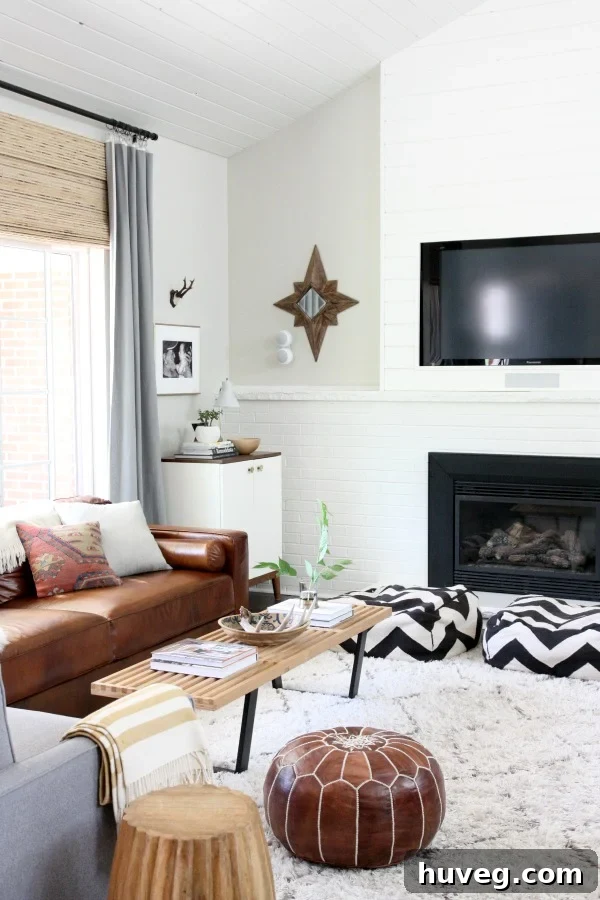
Prepare for a rich tapestry of tactile experiences in home decor. Envision the luxurious feel of aged, brown leather, the inviting comfort of 70s-inspired upholstery, the intricate patterns of woven fabrics, and the subtle shimmer of beads. Personally, I’ve been captivated by the idea of brown leather couches for the past six months, contemplating a replacement for my worn beige living room sofa. However, given that this represents a significant budgetary commitment, I plan to observe whether this trend gains broader momentum and if prices become more accessible before investing heavily in something I might quickly tire of. While I appreciate the concept of hand-woven fabrics and creating personalized textile art, I remain somewhat ambivalent about the full-blown macrame resurgence. While I admire the intricate beauty of macrame curtains in other people’s homes, I’ll likely draw the line at incorporating 70s-style versions into my own doorways.
Layering: Curating a Lived-In Aesthetic
To cultivate spaces that truly feel lived-in and deeply personal, the emphasis shifts towards creating a collected look that evolves organically over time. This means showcasing beloved items, celebrating personal collections, and arranging them in a thoughtful manner. While collections remain popular, a key aspect of this trend will likely involve careful editing to achieve a less cluttered, more harmonious aesthetic. The goal is to build a narrative within your home, where each object contributes to a larger story of your life and travels.
Tweaks on Mid-Century Modern (MCM): Evolving a Classic
Mid-Century Modern furniture continues to hold its appeal, a testament to its timeless design. However, the prediction suggests an evolution, with new additions and global influences being woven into the classic MCM aesthetic. This subtle reinterpretation, rather than a complete overhaul, makes perfect sense for a style that remains incredibly popular. It’s less about reinventing the wheel and more about adding fresh, contemporary twists to a beloved foundation.
Rope: From Utility to Decorative Art
Rope, a material I personally considered to be a growing trend some time ago, received significant attention in Genevieve Gorder’s report, showcasing numerous creative examples. This suggests an even greater emphasis on its versatility in the coming year. Beyond its traditional utilitarian roles, expect to see rope integrated into decorative elements, light fixtures, furniture accents, and even wall art, adding a touch of rustic charm or nautical elegance.
Black: A Bold Return to Sophistication
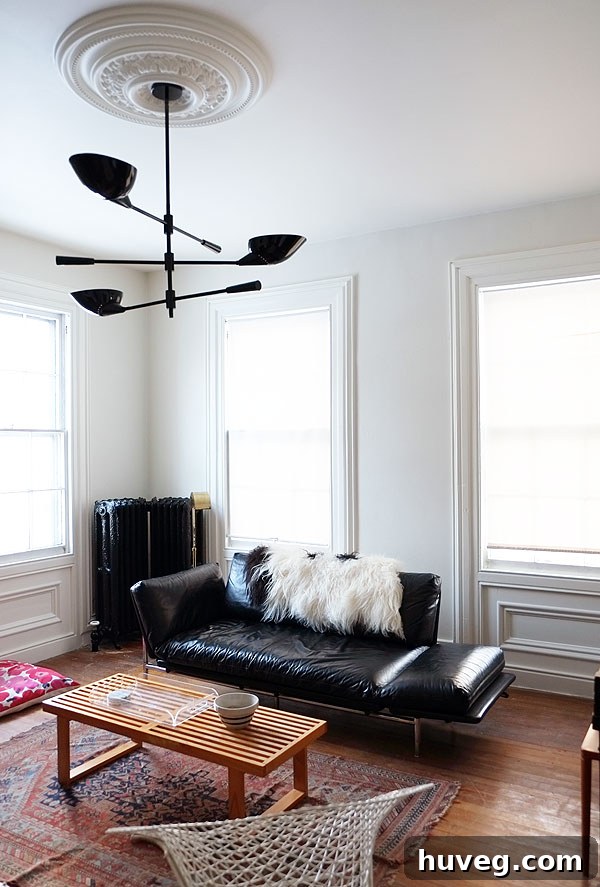
While the classic black and white combination enjoys an enduring place in design, black itself is reportedly making a significant comeback. Black accents, such as the striking light fixture pictured below, are undoubtedly a welcome addition, offering a touch of drama and sophistication. However, I harbor reservations that an overabundance of black could become a fleeting fad, much like chalkboard paint or faux fur. Andrew Corrie’s practical critiques – the constant smudges on chalkboard surfaces or the transfer of fur onto clothing – highlight the potential for black to be a concept that’s appealing in theory but presents practical challenges in everyday living. Much like a black car perpetually revealing every speck of dirt, an entirely black interior might prove challenging to maintain in pristine condition.
What’s Out in Home Design
Too-Perfect Everything: Embracing Imperfection and Warmth
The era of sterile, overly polished, and perfectly coordinated spaces has been gradually fading for some time, but this year’s trend reports underscore its definite demise. A recurring theme in all the videos was the collective fatigue with “too-perfect” aesthetics. In an age where technology makes everything sleek and uniform, design appears to be moving in the opposite direction, favoring the human touch and welcoming imperfection. This translates to an appreciation for slightly uneven lines, organic shapes, and even geometric patterns that feel more random and handcrafted than digitally replicated. This shift aims to make homes feel cozier, more intimate, and genuinely more enjoyable. Genevieve Gorder passionately articulated this sentiment, vocally expressing her exhaustion with the ubiquitous presence of granite and stainless steel in modern kitchens, signaling a desire for more character and warmth.
Taxidermy: A Niche Aesthetic on the Wane (Mostly)
While I have never personally been drawn to taxidermy, I’m not convinced we will witness its complete disappearance as rapidly as some trend forecasts might suggest. Certain regions, particularly the southern United States, maintain a enduring fondness for taxidermy, irrespective of annual trends. Furthermore, when creative individuals can transform taxidermy into something genuinely humorous and conversation-starting, it demonstrates a resilience that defies simple trend cycles. It will likely remain a quirky, niche aesthetic rather than vanishing entirely.
Chalkboard and Chevron: The Continued Decline of Overexposed Trends
The collective agreement on the decline of both chalkboard paint and chevron patterns came as no great surprise. Both trends, having enjoyed extensive popularity and widespread application, have reached a point of saturation. Their gradual phase-out has been anticipated for some time, and this year’s reports merely solidify their transition from trendy to tired. It marks a logical progression in the ever-evolving landscape of interior design.
The Enduring Power of Authenticity
Ultimately, if the overarching, genuine trend for the year is indeed authenticity, then the most liberating truth is that we don’t truly need to obsess over what’s deemed “in” or “out.” To truly embody authenticity in your home is simply to surround yourself with the things that resonate deeply with you, items that hold personal meaning and joy. So, if you’re a devoted fan of vinyl lettering, embrace it wholeheartedly. A subtly applied chevron pattern can possess a timeless quality, especially when it’s not aggressively paired with every other passing trend. (While I’d certainly advise against neon chevron macrame, I’d also wager there’s at least one audacious designer in a tiny New York apartment who could somehow make it look effortlessly chic.)
The true essence of design lies in discernment: selecting elements you genuinely adore, then thoughtfully editing, rearranging, and playing with your aesthetic until your space truly begins to speak to your soul. Your home should be a reflection of your unique journey, your passions, and your personality, not a mere echo chamber of fleeting fads. Trust your instincts, curate with intention, and create a space that is unapologetically, beautifully you.