Woven Wonders: A Journey into Basketry

Welcome, fellow DIY enthusiasts, to a journey of transformation where a humble thrift store find evolves into a stylish home accent. While the term “basket weaving” might conjure images of intricate patterns and skilled craftsmanship, today’s project embraces a far simpler, yet equally satisfying, technique: the art of the glue gun. Forget complex weaving patterns; we’re about to show you how effortlessly a cheap, overlooked basket can be reborn into a chic and functional piece using nothing more than some rope and a reliable adhesive.
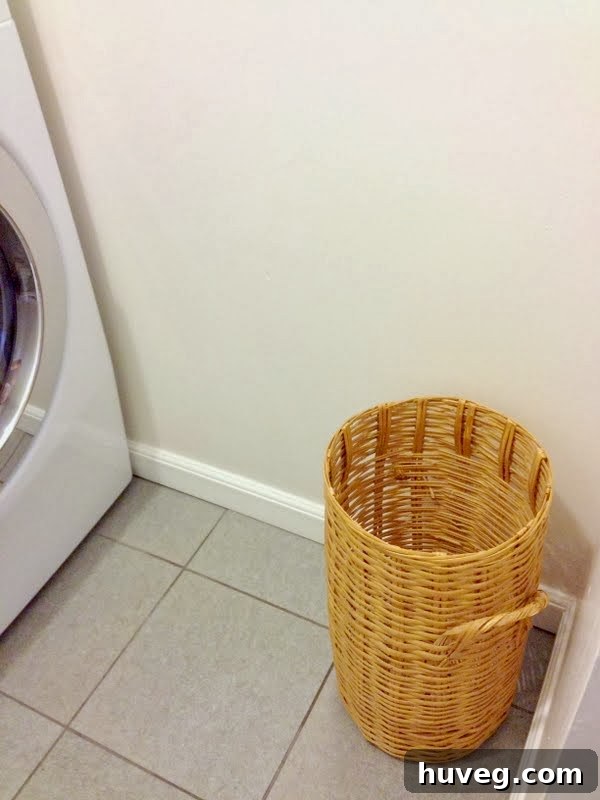
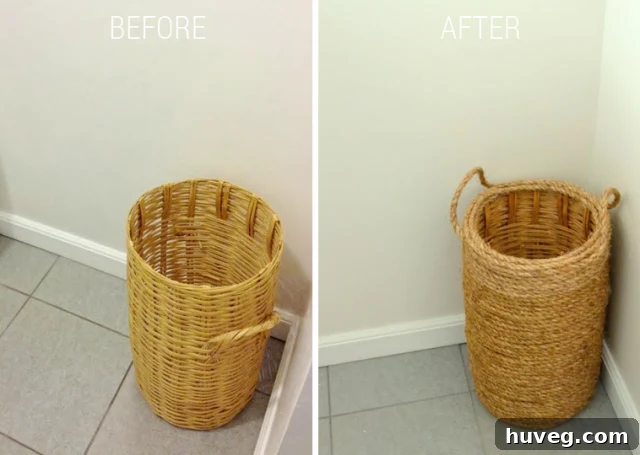
A few weeks ago, I stumbled upon a forgotten basket – the kind often relegated to dusty corners of thrift shops. Initially destined for a mundane existence as a laundry room trash can, its potential for something more significant sparked an idea. This wasn’t just any basket; it was the same one that previously inspired a rather amusing photoshoot of me in a wig. Now, with a little creative vision and the rustic charm of manila rope, this unassuming item is stepping into the spotlight, looking infinitely swankier and perfectly aligned with a more refined aesthetic.
Transform Your Home with DIY Rope Baskets: An Easy Upcycling Guide
In a world increasingly focused on sustainability and personal expression, upcycling has become a powerful trend in home decor. This project perfectly embodies the spirit of giving new life to old items, demonstrating that even the most ordinary objects can be transformed into extraordinary pieces with a touch of creativity. Join us as we explore the simple steps to elevate a basic basket into a bespoke design element that not only serves a purpose but also enhances your home’s unique style.
Why Upcycle? The Charm of DIY Home Decor
Upcycling isn’t just a trend; it’s a movement towards mindful consumption and personalized living. By choosing to transform an old basket, you’re not only saving money but also contributing to environmental sustainability by diverting an item from a landfill. More importantly, DIY projects allow you to infuse your personality into your living space, creating pieces that tell a story and resonate with your aesthetic preferences. This rope basket makeover is an accessible and rewarding way to dip your toes into the world of upcycling, promising a high-impact result with minimal effort.
Finding Your Perfect Base: The Thrift Store Treasure Hunt
The journey begins with the right basket. Thrift stores, garage sales, and even dollar stores are treasure troves for potential candidates. When selecting a basket for a rope-wrapping project, consider these factors:
- Material: Wicker, rattan, or even plastic baskets work wonderfully as long as they have a sturdy structure that can withstand the weight of the rope and glue.
- Shape and Size: A simple, straight-sided basket is often easier to wrap, but don’t shy away from unique shapes if you’re feeling adventurous. Consider the intended use – a smaller basket for keys, a larger one for blankets or laundry.
- Condition: Minor imperfections are fine, as they’ll be covered by the rope. However, avoid baskets with significant structural damage that might compromise the final piece.
My chosen basket, once a humble utility item, was structurally sound but aesthetically bland. It was the perfect canvas for a rustic-chic makeover.
Essential Materials for Your Rope Basket Makeover
Before diving into the craft, let’s gather our tools and materials. The beauty of this project lies in its simplicity and the readily available nature of its components. You won’t need an extensive workshop or specialized equipment, just a few key items that will bring your vision to life.
Choosing the Right Rope: Manila vs. Sisal vs. Jute
One of the first revelations I had during this project was the diverse world of ropes available for crafting. Like many, I initially thought “sisal rope” was a catch-all term for natural fiber ropes. However, discovering the specific characteristics of different types opened up new possibilities. For this project, I chose **manila rope**.
- Manila Rope: Known for its strength, durability, and a distinct golden-brown hue, manila rope offers a classic, rustic aesthetic. It’s derived from abaca fibers and has a slightly coarser texture than some other ropes, providing excellent grip for gluing. Its natural color adds warmth and an organic feel to any decor.
- Sisal Rope: Lighter in color, sisal rope is also very durable but can sometimes be a bit stiffer and have more loose fibers. It’s a great alternative if you prefer a lighter, more neutral tone.
- Jute Rope: Softer and finer than manila or sisal, jute rope offers a more refined look. It’s often used for decorative purposes and can come in various thicknesses.
- Cotton Rope: For a softer, cleaner, and often white or off-white finish, cotton rope is an excellent choice. It’s perfect for a modern farmhouse or coastal aesthetic.
The choice of manila rope for my project was deliberate; its darker, richer tone offered a more sophisticated contrast to the original basket, adding a layer of texture and visual interest. (Side note from my wonderfully weird brain: the name “Manila” doesn’t immediately make me think of envelopes, as logic might dictate. Instead, it sparks ideas for humorous, manly fragrance names like “Manila,” “Manana,” or “Bacon” – because nothing says masculine like bacon, right?)
For a standard-sized basket, you’ll likely need anywhere from 50 to 100 feet of rope, depending on its thickness and the height of your basket. It’s always better to overbuy and have extra than to run out mid-project.
Adhesives That Hold: E-6000 and Hot Glue Techniques
The success of your rope basket heavily relies on the right adhesives applied at the right stages. We’ll be using a combination of two glues:
- E-6000 Adhesive: This industrial-strength adhesive is known for its incredible bonding power, flexibility, and durability. It creates a permanent bond that is resistant to water and temperature fluctuations. It takes longer to cure, making it ideal for the initial, crucial layers where maximum hold is paramount.
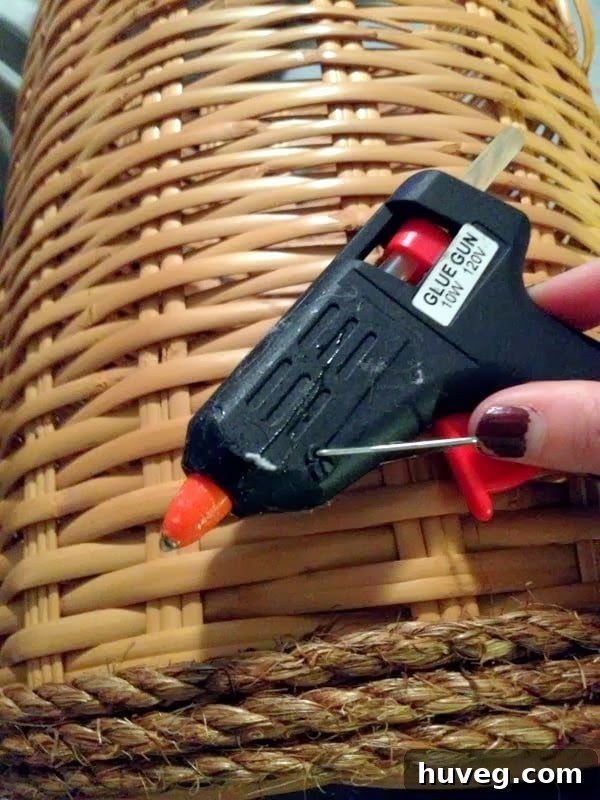
- Hot Glue: The trusty hot glue gun is perfect for its speed and ease of use. It dries almost instantly, allowing you to quickly wrap successive layers of rope. While not as strong as E-6000 for heavy-duty bonds, it’s more than sufficient for securing the decorative outer coils.
You’ll also need a good pair of scissors or sharp utility knife for cutting the rope, and perhaps a measuring tape if you want to be precise with your handle placements.
Step-by-Step Guide: Crafting Your Rope-Wrapped Basket
Now that our materials are ready, let’s embark on the hands-on part of this exciting transformation. This process is surprisingly straightforward, relying more on patience and consistency than on complex techniques.
Step 1: Preparing Your Basket for Transformation
Before applying any rope, ensure your basket is clean and dry. Wipe away any dust, dirt, or debris with a damp cloth and let it air dry completely. A clean surface ensures optimal adhesion for the glues. If your basket has a very slick or glossy finish, a light sanding might help the glue adhere better, but for most thrift store baskets, this step isn’t usually necessary.
Step 2: Anchoring the Foundation with Permanent Glue
The first coil of rope around the base of the basket is the most critical, as it sets the foundation for the entire project. For this reason, we opt for the formidable strength of E-6000.
Start by applying a generous bead of E-6000 around the very bottom edge of your basket. Take the end of your rope – often bound with tape to prevent fraying, which I chose to leave on for added neatness – and firmly press it into the glue, making sure it’s snug against the base. Work in small sections, applying glue and then pressing the rope firmly. Hold each section in place for a few moments to allow the glue to begin setting. Continue this process all the way around the base until the first full circle is complete. This initial bond needs to be exceptionally strong, as it will bear the slight tension of subsequent layers. Allow this layer to dry and cure according to the E-6000 instructions, typically a few hours, before moving on.
Step 3: The Art of Wrapping: Building Layers with Hot Glue
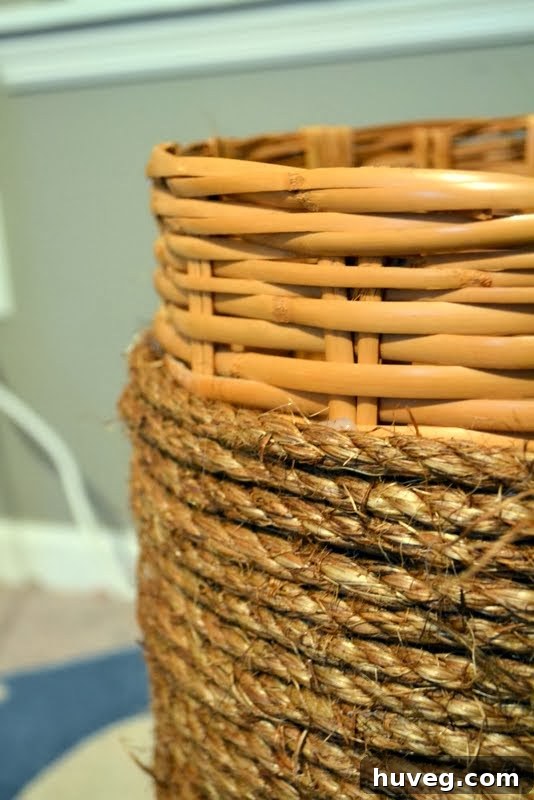
Once the base layer is secure, it’s time to switch to the hot glue gun. This is where the project truly gains momentum. Apply a line of hot glue directly above the previously laid rope, ensuring it’s close enough to create a seamless bond. Immediately press the next coil of rope firmly into the hot glue. The quick drying time of hot glue allows you to progress efficiently.
Continue this process, wrapping the rope tightly around the basket, gluing every few inches or as needed to maintain a secure and consistent wrap. The key here is consistency: maintain even tension on the rope as you wrap to avoid gaps or uneven sections. Ensure each new coil sits snugly against the one below it. This stage requires a bit of patience and rhythmic movement. While it didn’t literally take an entire year, it certainly felt like it after countless episodes of Scrubs played in the background – a testament to the meditative, yet time-consuming, nature of repetitive crafting!
Step 4: Rethinking Handles: Customizing for Style and Function
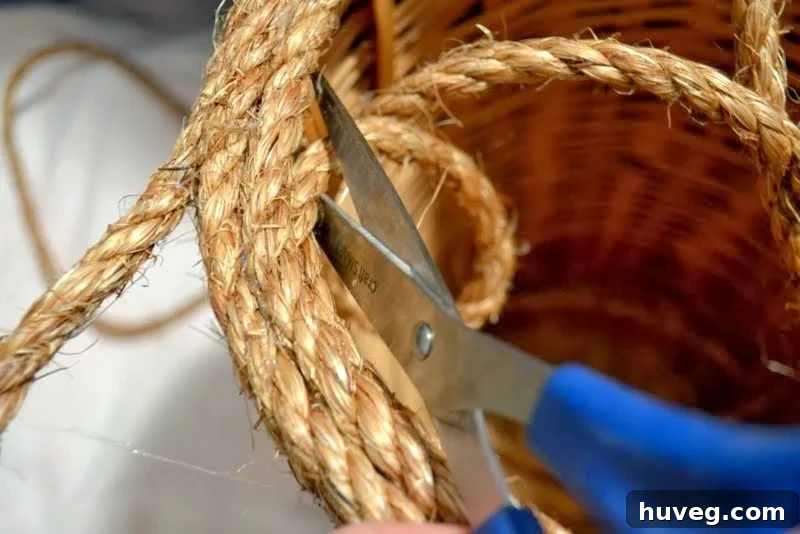
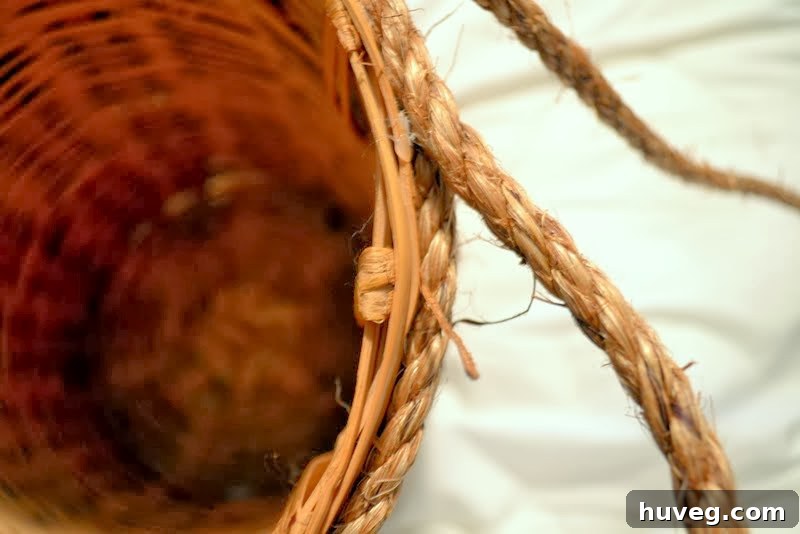
As I approached the top of the basket, I encountered the existing handles. My original basket had simple, somewhat flimsy handles that didn’t align with the rustic, robust look I was aiming for with the manila rope. I considered a few options:
- Integrate them: Wrap the rope directly over the existing handles. This can work if the handles are sturdy and well-shaped.
- Replace them: Cut off the old handles and create new ones from rope, leather, or fabric.
- Eliminate them: Simply cut them off and continue wrapping the entire basket, creating a decorative, handle-free lip.
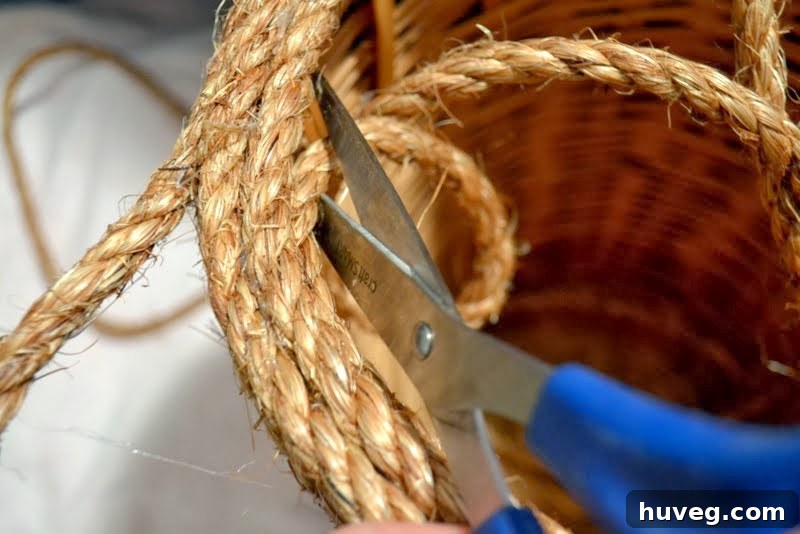
I decided to snip off the old handles. This choice might seem impulsive (and perhaps, as my brain likes to suggest, reveals a deeper truth about my personal life!), but it was purely for aesthetic reasons. Removing them allowed me to create a continuous, uninterrupted wrap of rope up to the very top edge, giving the basket a cleaner, more modern profile. The “new” handles were essentially formed by continuing the rope wrap over where the old handles once were, creating a thick, integrated structure.
Step 5: Perfecting the Top Edge and Finishing Touches
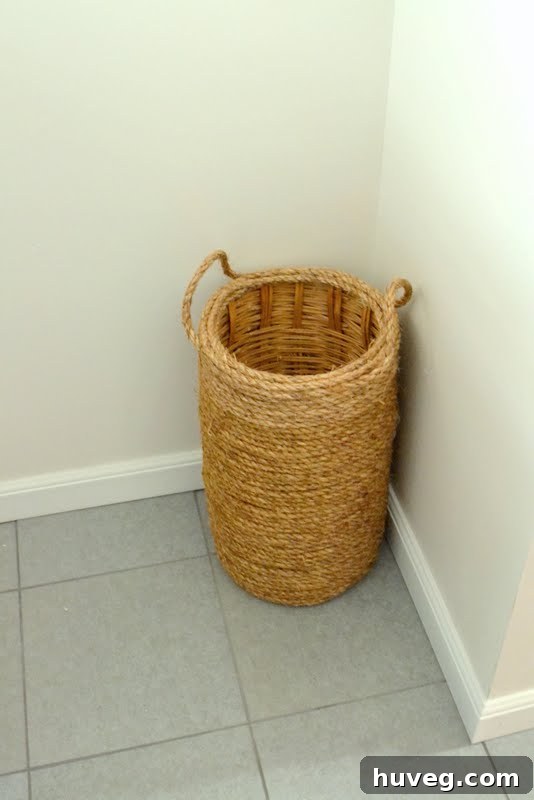
With the handles dealt with, I continued wrapping the rope until I reached the very top rim of the basket. I decided to extend the rope slightly above the original edge, creating a small, defined lip. This intentional overhang not only conceals the original rim completely but also adds a nice, finished touch, giving the basket a more substantial and refined appearance. The contrast between the smooth basket interior and the textured rope exterior becomes a subtle design feature.
To finish, cut the rope end cleanly and secure it firmly with hot glue, ensuring it blends seamlessly with the last coil. For extra security, you might add a tiny dab of E-6000 to the very end piece, allowing it to cure overnight.
The Grand Reveal: A Stylish Basket for Any Room
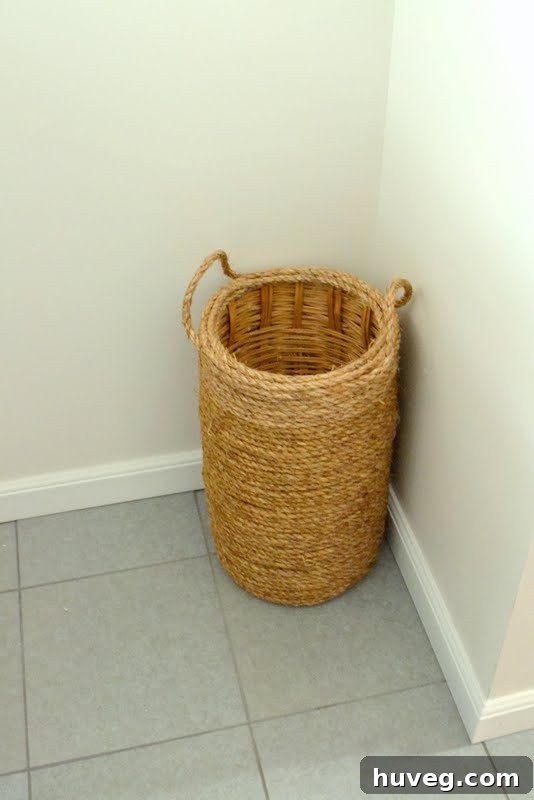
Truth be told, the “handle” area of my basket isn’t perfectly polished. In a moment of creative exhaustion, I declared it “good enough” and promptly returned my newly transformed basket to its post in the laundry room. And honestly? It looks fantastic there. What was once an anonymous, slightly tired receptacle is now a statement piece, blending functionality with a beautifully updated aesthetic. Its rustic charm adds warmth and texture to an otherwise utilitarian space, proving that even a laundry room can benefit from a touch of personalized style.
Beyond the Basics: Future Inspiration and Customization Ideas
While I’m pleased with the current outcome, the beauty of DIY lies in its endless possibilities for evolution. The “finished” state is often just a pause, waiting for the next wave of inspiration. Here are a few ideas for taking this rope basket project even further:
- Painted Accents: Consider painting a section of the rope, perhaps the top lip or the very bottom, for a pop of color or a modern geometric design. Inspired by trends like this, a contrasting color could dramatically change the basket’s character.
- Mixed Media Handles: To address the slight imperfection in my “new” handles, I might add a different kind of rope, or even leather straps, for a more defined and comfortable grip. This would also cleverly disguise the visible seam where my two separate rope samples (from the same box!) met.
- Embellishments: Add tassels, pom-poms, beads, or even a personalized tag for an extra touch of flair.
- Different Rope Patterns: Experiment with different rope thicknesses or colors within the same basket to create stripes or textured designs.
For now, I’ll let inspiration strike when it’s ready. Until then, my upcycled basket stands as a testament to the power of a glue gun and a roll of rope – not only functional but now perfectly aligned with my personal style.
Conclusion: Embrace Your Inner DIYer
This rope-wrapped basket project is more than just a craft; it’s an invitation to view everyday objects through a lens of creative possibility. It’s a reminder that beauty and functionality can emerge from the simplest materials and the most straightforward techniques. Whether you’re seeking to organize your laundry room, add rustic charm to your living space, or simply enjoy the satisfaction of a handmade item, this DIY project offers a rewarding experience with stunning results.
So, grab that forgotten basket, choose your favorite rope, and unleash your inner decorator. The transformation awaits, promising a stylish, personalized addition to your home that you can proudly say you made yourself. Happy crafting, and have a wonderful weekend filled with inspiration and creativity!