Unearthing Stylish Office Chairs on a Budget

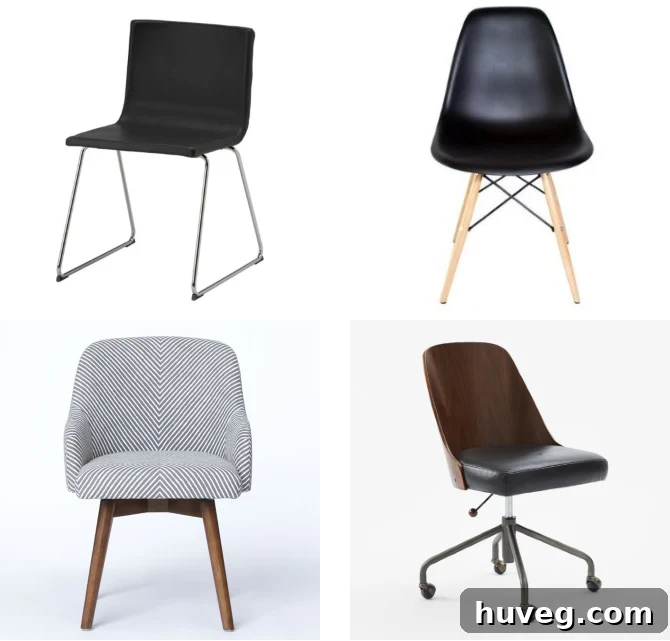
The Ultimate Quest for the Perfect Office Chair: Blending Ergonomics, Style, and Budget
As the chill of the season settles in, many of us find ourselves spending more time indoors, often at our desks. Whether you’re working remotely, diving into creative projects, or simply managing household affairs, a comfortable and supportive office chair is an absolute necessity. Yet, the journey to finding that elusive “perfect” chair can often feel like an epic quest, fraught with dilemmas that test both patience and pocketbook. I’m currently deep in this very search for my new office space, hoping to find a chair that provides exceptional back support without compromising on aesthetics. My persistent back tension, which almost inevitably leads to stiff shoulders, has underscored the critical importance of a well-designed chair in my workspace.
The ideal chair for my L-shaped handmade desk would ideally swivel smoothly, allowing seamless transitions between tasks, but without the bulky visual footprint of traditional wheeled bases. This seemingly simple requirement, however, has opened up a Pandora’s box of challenges, making my selection process far more complex than anticipated. The market is saturated with options, yet few truly hit the sweet spot between form and function. Let’s delve into the core dilemmas that are slowing down my decision-making process.
Navigating the Core Dilemmas in Office Chair Selection
The search for an office chair isn’t just about picking a seat; it’s about making a significant investment in your health, productivity, and the overall aesthetic of your home office. However, several common pitfalls often hinder this process, making it difficult to find a chair that truly meets all needs.
1. The Style vs. Comfort Conundrum: A Battle for Aesthetics
It’s a familiar lament: why do the most comfortable office chairs so often fall short in the style department? While ergonomic designs prioritize spinal alignment and posture, they frequently come in utilitarian forms that clash with modern home decor. My vision for the office involves a chair that complements the existing design, something sleek and inviting, rather than an imposing, corporate-looking piece that feels out of place. The desire for a swivel function, particularly without obtrusive wheels, adds another layer of complexity. While a swivel mechanism is incredibly practical for an L-shaped desk, offering unparalleled freedom of movement, integrating it into a stylish, non-corporate design seems to be a significant limitation for manufacturers.
Even venturing into the realm of high-end, luxury chairs, often accompanied by exorbitant price tags, doesn’t always guarantee a design triumph. One might expect chairs in this category to offer a blend of cutting-edge ergonomics and breathtaking aesthetics, perhaps feeling as supportive and luxurious as “sitting on Adam Levine’s lap” – if one were to imagine the epitome of comfort and desirability. Yet, many still resemble oversized, industrial fixtures or pieces that look like rejects from a medieval fantasy set rather than a contemporary home office. The aspiration remains: to find a chair that’s both undeniably attractive and offers an amazing level of comfort, integrating seamlessly into a thoughtfully designed space without screaming “corporate cubicle.”
2. The Elusive “Sit Test”: Availability and Personal Comfort
While the internet has revolutionized shopping, some purchases demand a tactile experience, and comfort is paramount among them. Online reviews, while helpful, can never fully convey the subjective experience of sitting in a chair. Lumbar support, seat depth, and overall ergonomic fit are highly individual. What feels incredibly comfortable to one person might be entirely inadequate for another, especially given variations in height, weight, and body shape. My own 5’2″ frame, for example, often feels overlooked by standard office chair designs, which seem to cater to a more generalized, perhaps taller, demographic.
The ideal scenario involves giving a chair “the ol’ sit test” – spending a good 10-15 minutes in it, adjusting settings, and getting a true feel for its support and contours. However, pursuing this hands-on approach often significantly limits the range of options available. Many unique or aesthetically pleasing chairs are sold exclusively online or through specialized showrooms located far afield, making an in-person trial impractical. This forces a difficult compromise: sacrificing the ability to personally assess comfort for a wider selection, or conversely, limiting oneself to local retailers with potentially fewer stylish choices. Navigating this dilemma requires careful consideration of return policies and the willingness to potentially absorb shipping costs if a chair doesn’t live up to its online promise.
3. Budgeting for Back Health: The Price Factor and Hidden Costs
As with any significant purchase, budget remains a constant consideration. My reluctance isn’t about an unwillingness to invest in a quality piece – a chair is, after all, where I’ll be spending a substantial portion of my workday. Instead, it stems from the desire to make the right choice the first time around. The thought of having to purchase two or three chairs before finding the perfect fit is daunting, not just financially, but also logistically. Each failed attempt brings with it the added cost of shipping (often for delivery and return), not to mention the significant hassle of disassembling, re-packaging, and arranging for items to be shipped back.
This reality underscores the importance of a “one-and-done” approach. Investing wisely upfront in a chair that meets ergonomic needs and aesthetic desires ultimately saves money, time, and frustration in the long run. Skimping on a chair can lead to discomfort, reduced productivity, and potentially even health issues that require further financial outlay. Therefore, finding that sweet spot where quality, comfort, and style align with a realistic budget becomes a critical part of the decision-making process.
Key Features to Prioritize in Your Office Chair Search
Beyond the dilemmas, understanding what makes an office chair truly effective can guide your search and help you make an informed decision. Prioritizing certain ergonomic and design elements can significantly narrow down your options and improve your chances of finding “the one.”
Ergonomics Explained: Your Body’s Best Friend
- Adjustable Height: Essential for ensuring your feet are flat on the floor and your arms are at desk height, preventing strain.
- Lumbar Support: A properly contoured backrest that supports the natural curve of your lower spine is crucial for preventing back pain. Some chairs offer adjustable lumbar support.
- Backrest Tilt and Tension: The ability to recline and adjust the resistance of the recline allows you to change positions throughout the day, promoting circulation and reducing stiffness.
- Seat Depth: Your chair’s seat should allow 2-4 inches between the edge of the seat and the back of your knees, preventing pressure on your circulation.
- Armrests: Adjustable armrests can support your arms and shoulders, reducing tension, especially important for tasks like typing.
Material Matters: Comfort, Durability, and Style
The choice of material affects both the chair’s comfort and its aesthetic integration into your space. Mesh backs offer excellent breathability, ideal for warmer climates or long hours. Fabric upholstery provides a softer feel and comes in a wide array of colors and textures, making it easy to match decor. Leather and faux leather exude a more executive, luxurious feel, often easier to clean but can retain heat. Molded plastic, while offering sleek modern designs, can be less forgiving for extended sitting periods without adequate cushioning.
Chair Type Considerations: Swivel, Wheels, and Arms
As mentioned, a swivel function is highly desirable for multi-tasking and ease of movement within a workspace. While wheels offer mobility, many prefer a stationary base for aesthetic reasons or if they have flooring that could be damaged. Armrests, while supportive, can sometimes restrict movement or make a chair feel bulkier. Armless chairs can offer greater freedom of movement and a more minimalist profile, which might be appealing for smaller spaces or specific desk configurations.
My Current Contenders: A Closer Look at Promising Picks
After sifting through countless options and wrestling with the dilemmas above, I’ve managed to narrow down a few strong contenders. These chairs represent a spectrum of styles, price points, and features, each with its own set of pros and cons.
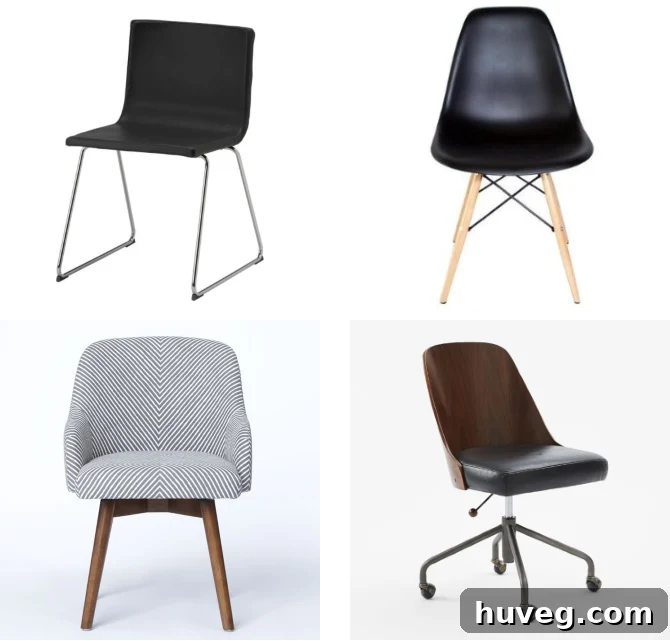
1. IKEA Bernhard Chair (Dining Chair)
My initial foray into the chair hunt naturally led me to my favorite Swedish retailer, IKEA. While their office chair selection didn’t quite hit the mark for the ideal comfort-to-style ratio I was seeking, this Bernhard dining chair caught my eye for its sleek, modern aesthetic and incredibly appealing price point. Its minimalist design and chrome-plated frame offer a clean look that would blend beautifully into a contemporary office. However, the fundamental issue remains its primary purpose: it’s designed as a dining chair. While it offers a decent level of comfort for short periods, it lacks the specialized ergonomic support, adjustability, and overall robustness required for prolonged daily office work. It’s a fantastic budget-friendly option for occasional use or for pairing with a less demanding desk setup, but perhaps not the dedicated office workhorse I truly need.
2. Wayfair Mid-Century Eiffel Side Chair
I’ve been admiring this chair from Wayfair for quite some time, primarily because it perfectly encapsulates both my desired style and budget. Its mid-century modern aesthetic, reminiscent of classic designs, would add a touch of timeless sophistication to the office. Online reviews often praise its unexpected comfort, despite its non-traditional role as an office chair. However, a significant hesitation point for me is the fact that it’s made from molded plastic and, crucially, I cannot physically try it out before purchasing. Comfort in a molded plastic seat can be highly subjective and often less forgiving than upholstered alternatives, especially for long hours of sitting. The risk of ordering it only to find it unsuitable for extended use keeps me from pulling the trigger on what is otherwise a very attractive option.
3 & 4. West Elm Saddle Chair & Bentwood Chair
Venturing into the West Elm collection brings two strong contenders to the forefront, though I haven’t yet had the chance to visit a showroom to experience them in person. The Saddle chair is particularly appealing, as it subtly incorporates a swivel mechanism while maintaining the appearance of a standard, stylish accent chair. This “sneaky swivel” is precisely the kind of discreet functionality I’m looking for, avoiding the visual bulk of traditional office chair bases. Its design promises to integrate seamlessly into a home environment without sacrificing practicality. Surprisingly, the Bentwood chair, despite being on wheels, presents a more refined and less “ugly” appearance compared to the multitude of other wheeled options I’ve encountered. West Elm’s consistent commitment to stylish, contemporary designs makes these two chairs high on my list for a physical inspection.
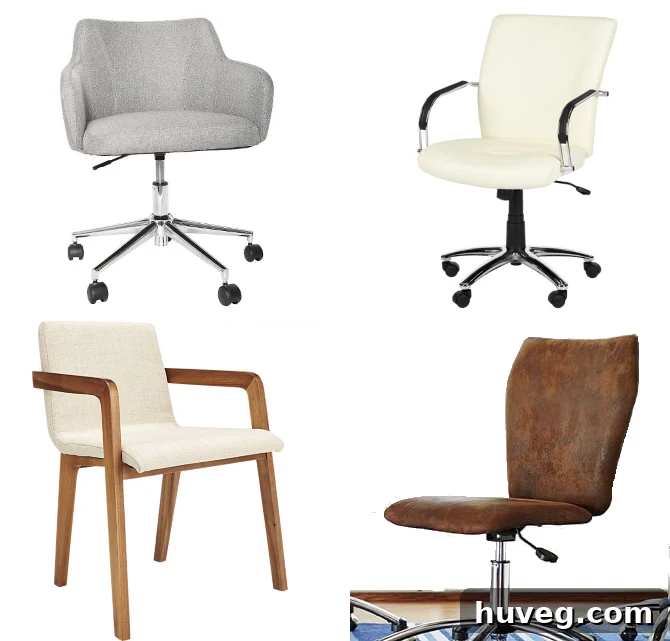
5 & 6. Target Options: Cushion Comfort vs. Chrome Wheels
Target, known for its accessible and trendy home furnishings, offers a couple of chairs that present an interesting dichotomy. Both chairs boast appealing design elements, but they share a common aesthetic stumbling block: the often-unattractive chrome wheels. However, the positive aspects are notable: the shape of the cushion on one is particularly inviting and visually comfortable, suggesting a pleasant sitting experience. Similarly, the other chair simply looks incredibly comfortable, radiating an inviting softness. My primary hesitation with the latter, beyond the chrome wheels, is its white upholstery, which, while chic, often proves impractical for a high-traffic item like an office chair, raising concerns about maintenance and longevity.
7. CB2 “Austin” Chair
The “Austin” chair from CB2 is another contender that aligns well with a minimalist aesthetic. Its low-profile design ensures it won’t dominate the space, a significant advantage for a smaller home office. While I appreciate its understated elegance, the material choice suggests that it might eventually require re-covering to maintain its pristine appearance or to better suit my evolving decor preferences. Despite this potential future task, its compact size and modern lines make it a strong candidate for consideration.
8. PBteen Airgo Chair (Armless Version)
Finally, the Airgo chair from PBteen, particularly its armless version, appeals to me for its distinctive shape and appealing, well-worn look. This chair exudes a relaxed, yet stylish vibe that could add character to the office. The armless design is also a major plus, offering greater freedom of movement and a less imposing visual presence than many other options. However, much like the Target chairs, it unfortunately features the same chrome wheel issue that I’m keen to avoid. This persistent design element continues to be a recurring hurdle in my search for a truly perfect chair.
Your Turn: Share Your Insights and Recommendations!
The quest for the ultimate office chair is clearly a nuanced one, balancing personal comfort, ergonomic needs, aesthetic preferences, and practical budget constraints. I’ve shared my ongoing struggle and the specific chairs that have caught my eye, but the search is far from over. I believe in the power of shared experiences and community wisdom.
How about you? Have you embarked on a similar journey to find the ideal office chair for your home workspace? Do you have any golden suggestions on where else to look, perhaps hidden gems or brands I haven’t yet discovered? Have you tried out any of the chairs I’ve listed above and can offer a firsthand review of their comfort, durability, or overall suitability for prolonged use? Your insights and recommendations would be incredibly valuable as I navigate the final stages of this important decision. I’d love to know what chairs you’ve found to be both comfortable and stylish, and what specific features made them stand out. Let’s make this quest a collective effort!