Transform Your Laundry Room with a Custom Plywood Countertop

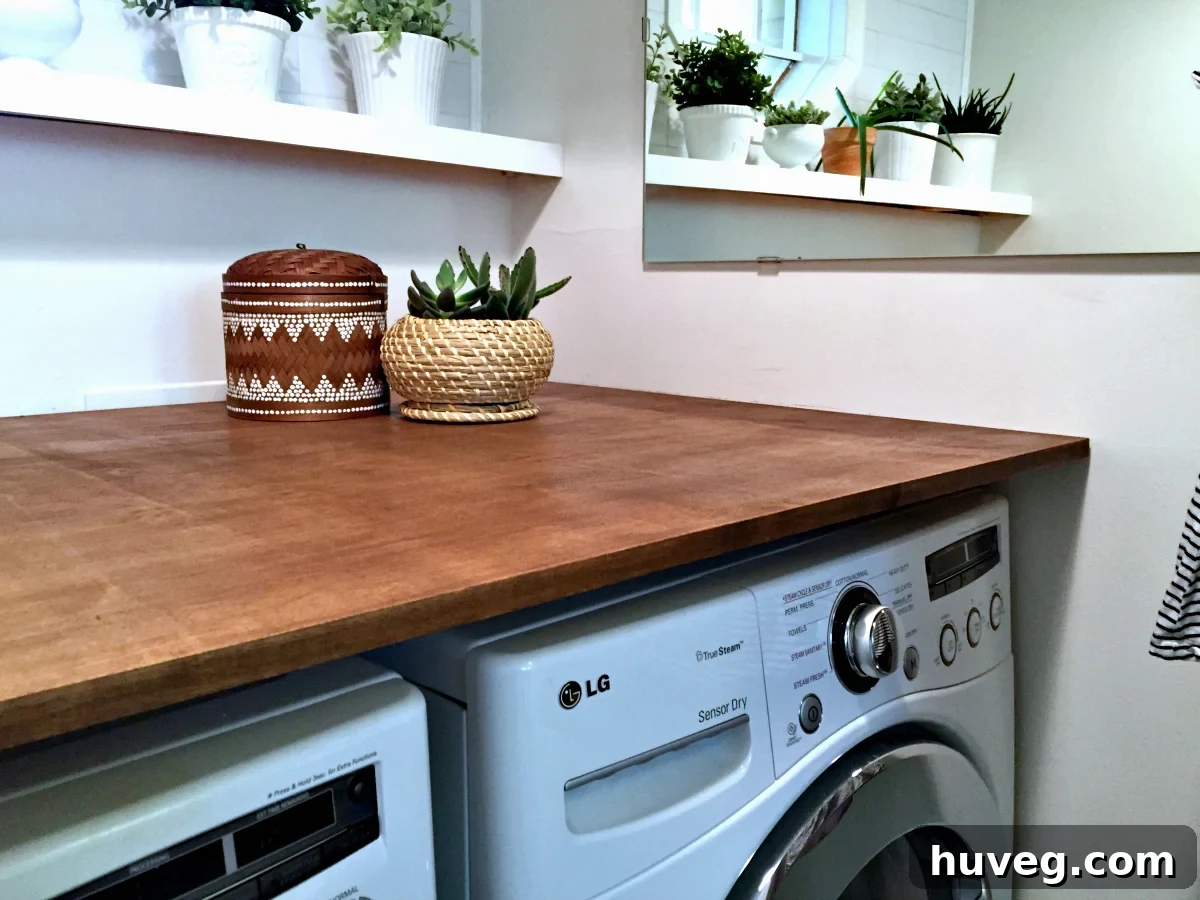
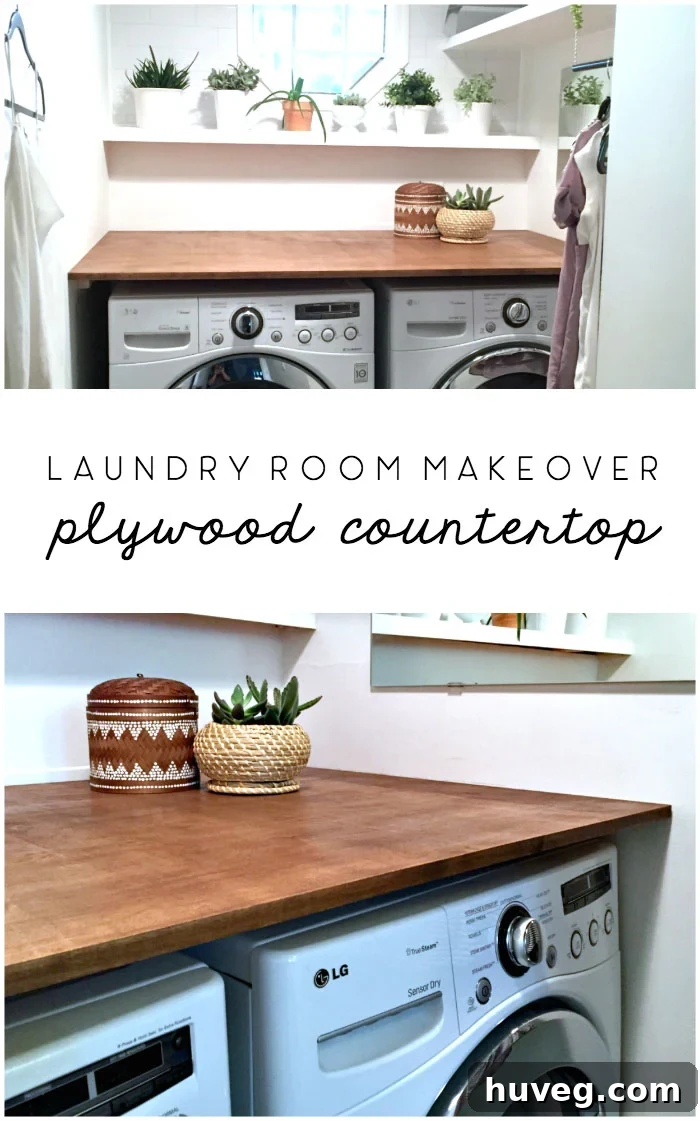
Embarking on a laundry room makeover doesn’t have to break the bank. This DIY wood countertop project proves that an inexpensive approach can lead to stunning results, easily completed by one person for installation. Witness how a simple plywood countertop can dramatically transform a small laundry room overnight, offering both functionality and style!
After our recent laundry room reveal, the most frequently asked question revolved around the striking DIY wood countertop. It’s clear that this budget-friendly, custom solution captured a lot of attention, and for good reason. Let’s dive into the details of how you can create a durable and beautiful countertop for your own laundry space.
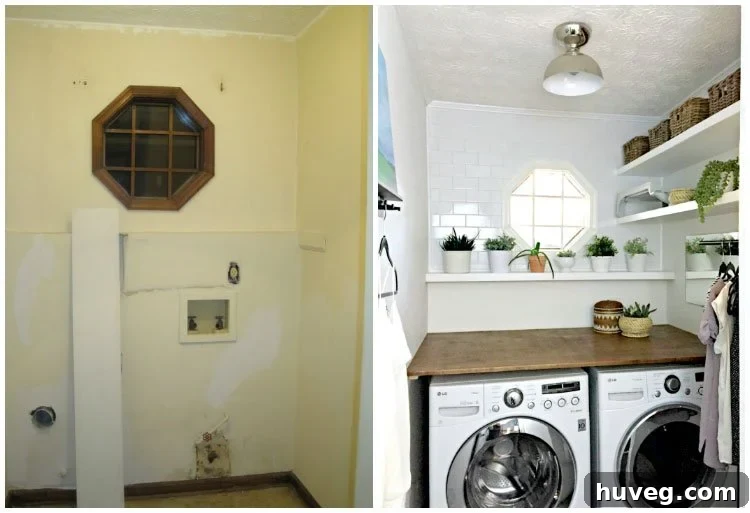
Crafting a Custom DIY Wood Countertop for Your Laundry Room
A functional and aesthetically pleasing laundry room can make mundane chores feel a little less daunting. One of the most impactful upgrades you can make is adding a sturdy countertop over your washer and dryer. This not only provides a convenient surface for folding clothes and storing supplies but also elevates the room’s overall appearance. For those seeking an affordable and customizable option, a DIY plywood countertop is an excellent choice, as demonstrated by this dramatic transformation.
The Appeal of a Plywood Laundry Room Countertop
Our laundry room’s wooden countertop is expertly crafted from 3/4″ maple plywood. When weighing options against more expensive laminate or solid surface countertops, plywood stands out as a top budget-friendly contender. Its primary advantage, beyond cost, is the unparalleled ability to customize the total depth. Unlike standard kitchen counters, laundry room countertops often require a unique depth to extend perfectly from the back wall to the front of your front-loading washer and dryer. Deviating from standard dimensions can quickly inflate costs with pre-fabricated options, making a DIY plywood solution not just economical but also practical.
The plywood itself, once cut to size, can be surprisingly heavy. Maneuvering it into place, especially in an older home with less-than-perfect walls, can present its own set of challenges. Our installation journey involved dealing with slightly wonky corners, a common quirk in older properties. This necessitated a blend of careful measurement, strategic cutting, and a bit of persuasion. The mantra “measure twice, cut once” is paramount, but sometimes, an additional tool like an electric hand planer becomes invaluable for shaving off mere 1/16″ increments, ensuring a snug fit without damaging drywall.
Before installation, thorough research can uncover clever techniques to enhance your project. One inspiring idea, from Mandi at Vintage Revivals, involves gluing a less expensive piece of plywood or MDF underneath the primary sheet. This ingenious trick provides the illusion of a much thicker, more substantial countertop without the prohibitive cost of a single, thick slab of expensive wood. While under a tight pre-Christmas deadline for this project, this reinforcement strategy was noted for future consideration. Adding this extra layer would undoubtedly bolster the counter’s strength, reducing any potential for bending under the weight of heavy laundry baskets over time. This is a modification that could be revisited later, perhaps when updating the front edge for an even more custom, built-in appearance, potentially hiding support structures. Currently, the plywood is simply wedged into place and is remarkably stable, allowing for easy removal with a few gentle mallet swings should reinforcement or further customization be desired.
Precise Plywood Cutting for a Professional Finish
Starting with a full sheet of plywood can be intimidating, but most large home improvement stores offer cutting services. For this project, measurements were taken to Home Depot, where they performed the two necessary cuts for free and even assisted with loading the pieces into the SUV. This service is a fantastic resource for DIYers, particularly when dealing with large, unwieldy sheets.
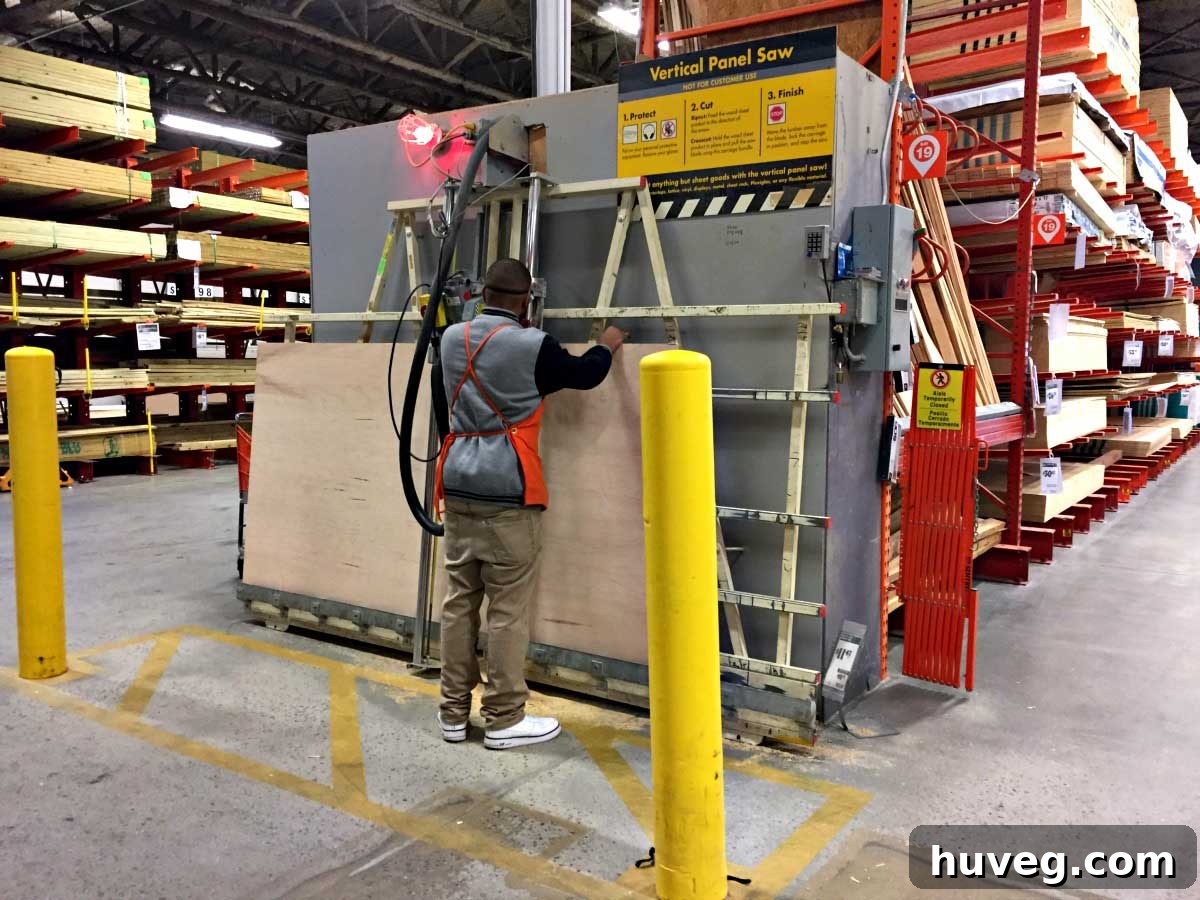
Pro Tip for Store Cuts: When utilizing a big-box store’s cutting service, it’s crucial to inspect the full plywood sheet carefully before any cuts are made. Plan your cuts strategically to achieve the smoothest possible edges and to ensure the most aesthetically pleasing section of the plywood is designated for your countertop’s visible top surface. While industrial saws handle the cuts with ease, the speed and control might not be as refined as a skilled DIYer using their own equipment. Observe the cutting process closely.
When the saw cut with the wood grain (along the length of the plywood), splintering was minimal. This particular cut was critical, as it would form the visible front edge of the countertop, the most noticeable part once installed. However, crosscuts (perpendicular to the grain) often present a higher risk of splintering. Even though these edges would be less visible, positioned against the left and right side walls of the laundry room, excessive splintering could lead to uneven staining and require patching with wood filler. While stainable wood filler exists, its texture can differ, making patched areas stand out. By observing the initial cut, both the store clerk and I noticed that splintering was slightly more pronounced on the front side of the cut than the back. This observation allowed for a strategic decision: positioning the more splintered side underneath the counter, ensuring a pristine top surface. For those considering cutting at home, a circular saw is perfectly capable, much like how a butcher block countertop was precisely cut during a kitchen renovation.
Building Robust Countertop Support
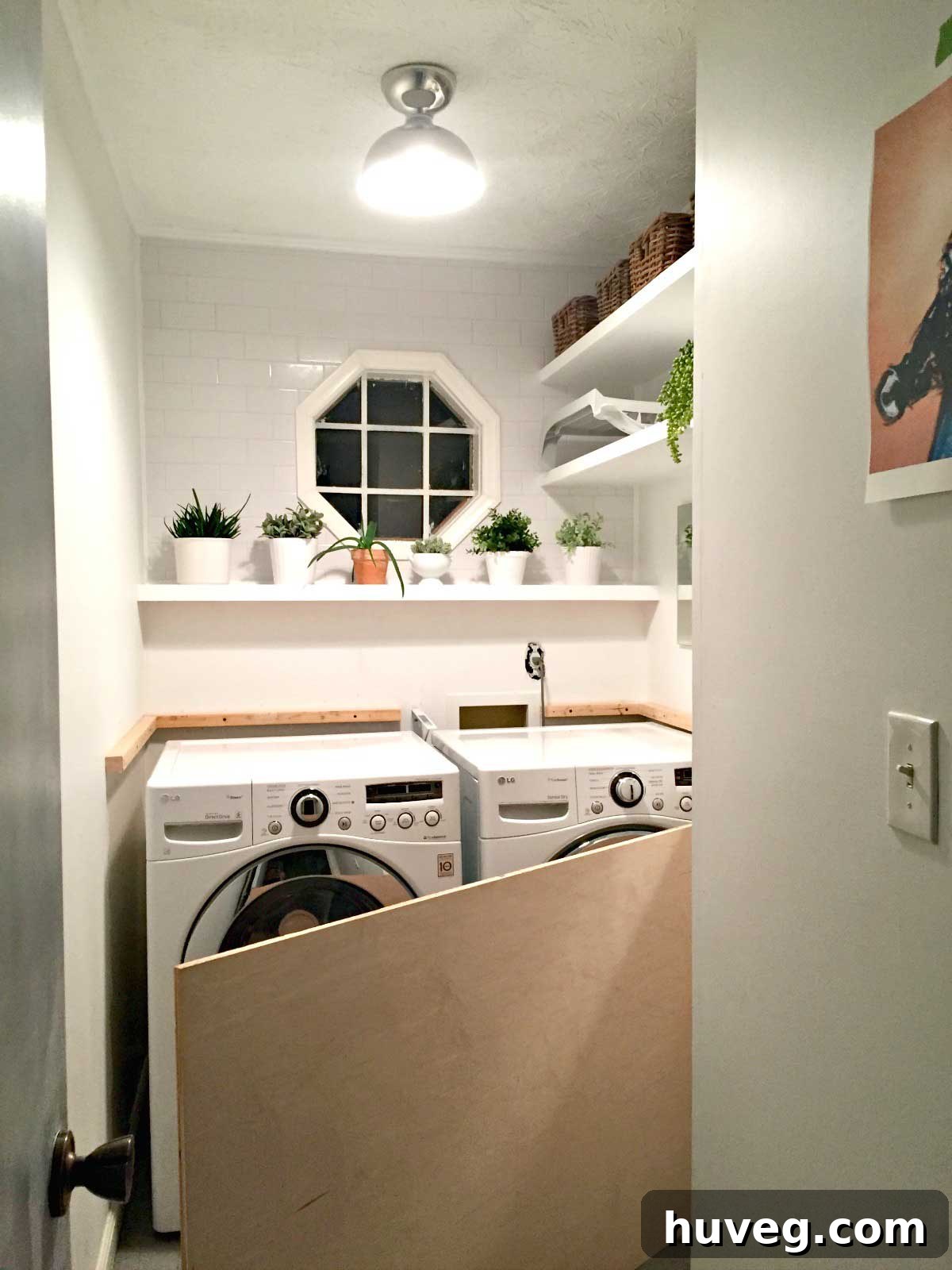
The installation of this substantial plywood countertop demanded a robust support system, akin to creating oversized floating shelves. The primary challenge in this small laundry room was the confined space and the constant presence of the washer and dryer. Moving these heavy appliances out of the room could disrupt their delicate balance, so the decision was made to work around them. This meant carefully climbing over the units to install the necessary supports, often referred to as “cleats” or “ledger boards,” along three surrounding walls.
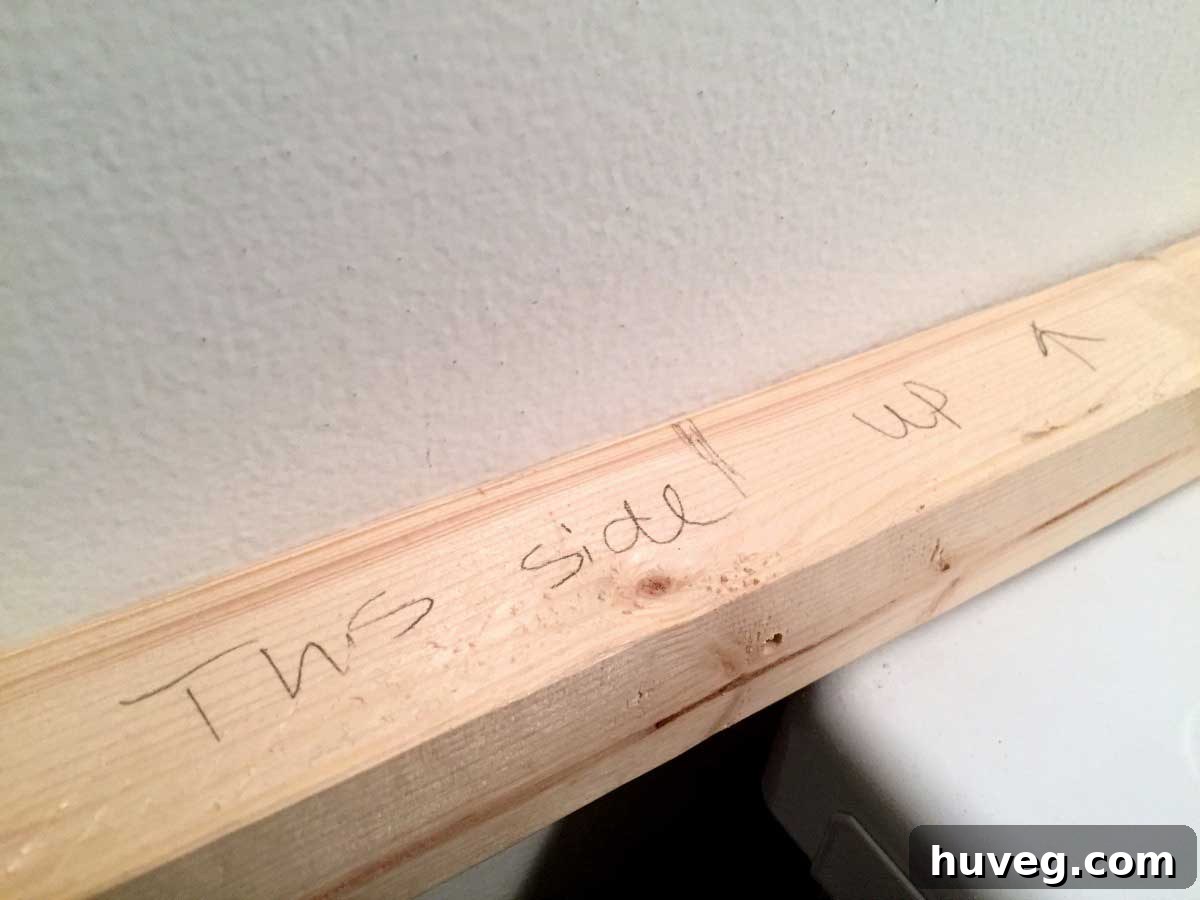
The ledger boards were fashioned from economical 2×2 lumber, carefully selected for straightness (always inspect boards for warping at the store!). These were then securely screwed into as many wall studs as could be located. Pre-drilling screw holes is essential to prevent the wood from splitting, ensuring the integrity of your support. While 2x4s offer superior strength, 2x2s were chosen here to minimize the gap between the countertop and the appliances. This choice achieved a more integrated, custom “snug fit” look, while still allowing adequate airflow around the units – a crucial consideration for appliance longevity. Given the non-square dimensions of older homes, achieving a perfectly level surface involved considerable trial and error. Marking everything directly onto the lumber itself – indicating “up” versus “down,” stud locations, and precise measurements – proved indispensable for navigating these architectural quirks. With walls bordering a garage, an exterior masonry wall, and a closet/bathroom, extreme care was taken using a stud finder, laser level, and heavy-duty drywall anchors to ensure each support was placed securely and accurately.
Supporting the middle span between the washer and dryer presented a unique challenge. With the entire length just under 5 feet, building floor-mounted supports was deemed impractical due to the minimal clearance for the appliances. Any additional structure would have created an overly snug fit, hindering future maintenance or movement. The chosen solution was a robust heavy-duty shelf bracket, boasting an impressive 600-lb weight capacity, securely anchored to the back wall. While L-brackets aren’t typically a design feature, their utility is undeniable when they can be discreetly hidden, providing essential central support without compromising aesthetics or accessibility.
Finishing Touches: Sand, Stain, and Seal for Durability
Achieving a professional-looking finish on your DIY plywood countertop requires careful attention to sanding, staining, and sealing. The process began with a thorough sanding using 220-grit sandpaper, which ensures a smooth surface ready to absorb stain evenly. Following this, the wood was pretreated with a wood conditioner. This crucial step prevents blotchiness, particularly when working with maple, which is notoriously difficult to stain evenly due to its tight grain. After conditioning, several coats of ZAR wood stain in Modern Walnut were applied, building up a rich, warm hue that beautifully contrasted with the predominantly white laundry room. To protect the finished surface from moisture, spills, and general wear and tear, several topcoats of polyurethane were applied. This clear protective layer is essential for durability in a high-traffic utility area like a laundry room.
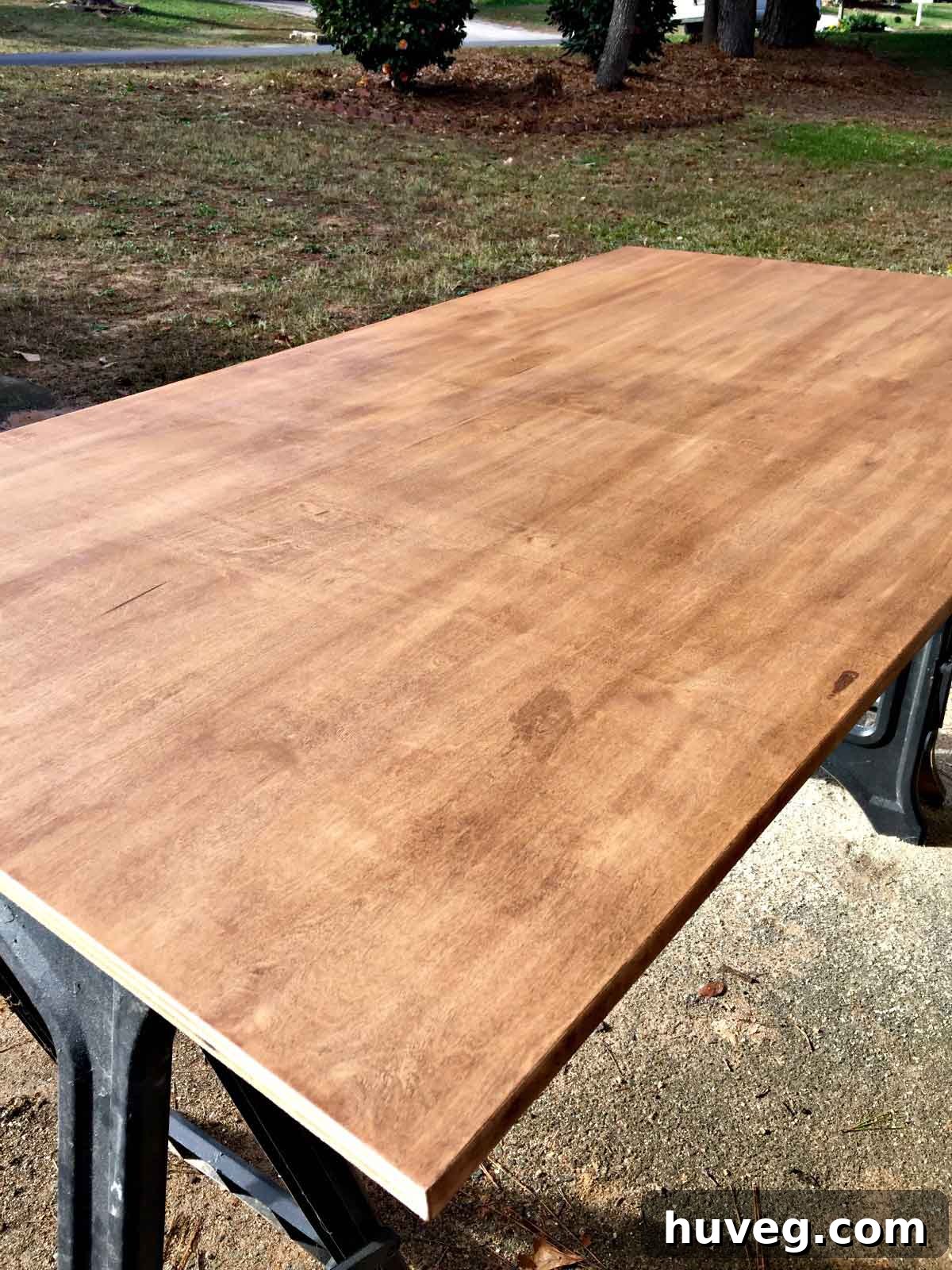
One common concern with plywood projects is the visibility of the raw edge layers. To conceal these, 3/4″ iron-on veneer edge banding was used along the front lip of the counter, a technique previously employed with great success on an entryway closet makeover. While effective, the plan for a future upgrade involves replacing this with a more substantial, stained piece of wood to create a more integrated and finished look, potentially also hiding any remaining visible support structures from the front.
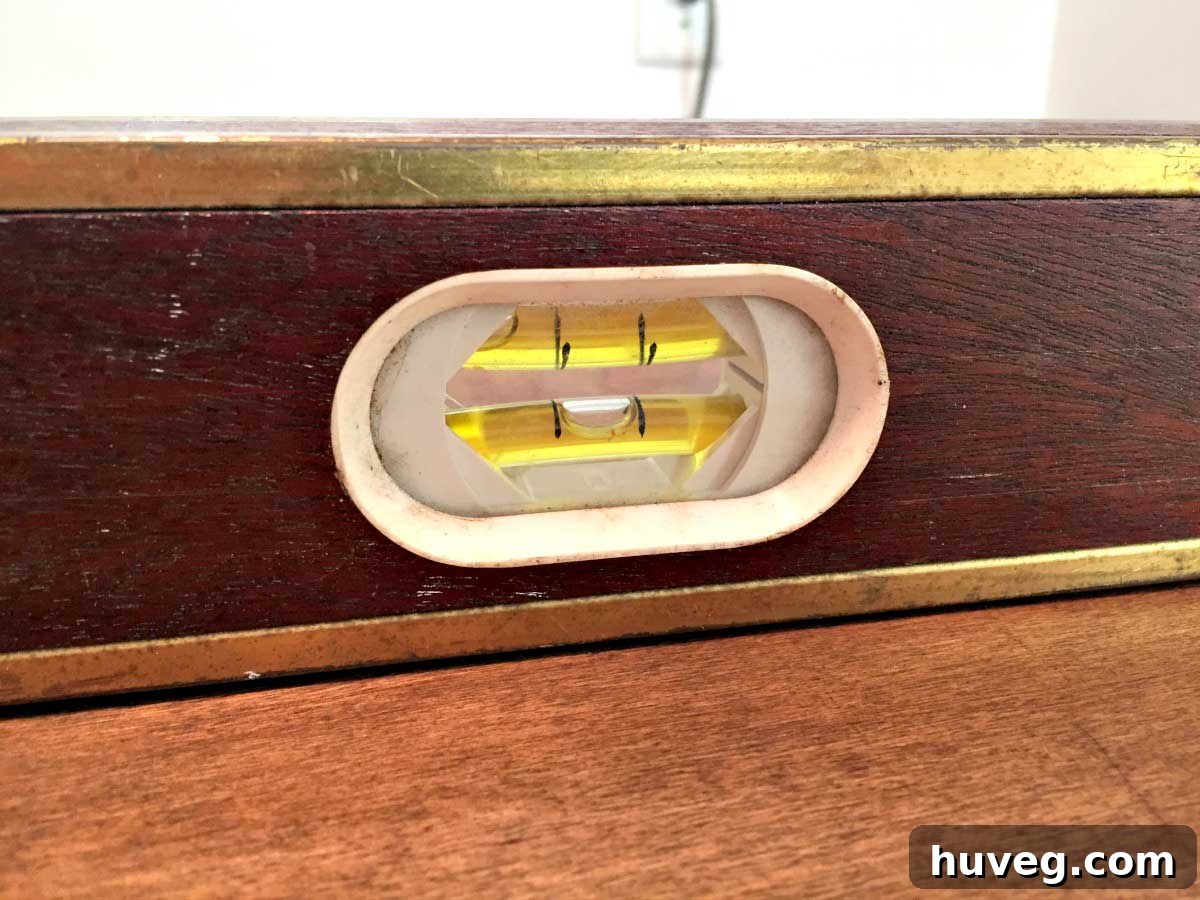
Remarkably, achieving a perfectly level countertop required minimal effort once the supports were in place. A trusty 4-foot level, a cherished inheritance, confirmed the surface was ready for use. Phew!
Upon completion, the countertop was rigorously tested for stability. It proved exceptionally sturdy for daily tasks like folding clothing. While standing on the counter is not recommended, it was designed to comfortably handle the weight of at least two full laundry baskets. Online estimates suggest a full laundry basket can weigh around 18 pounds, so the design accounted for a conservative 40 pounds, with the wall anchors selected to safely manage twice that amount for added peace of mind. A thoughtful design detail included leaving a small gap at the back of the counter to accommodate the washer’s power cord, ensuring functionality without compromising the clean lines.
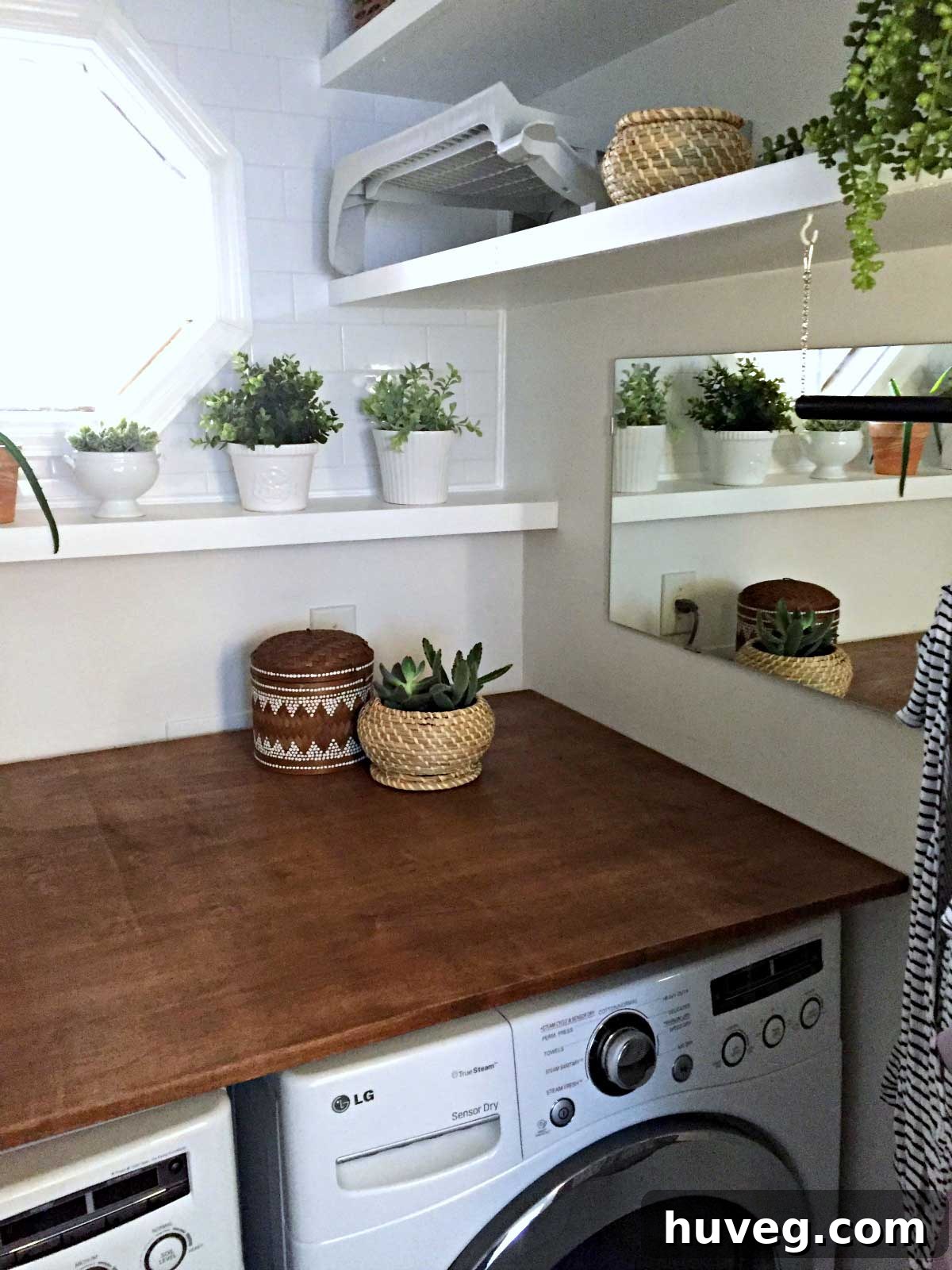
And there you have it! A low-maintenance, incredibly useful space that goes beyond just functionality, adding significant aesthetic value to the laundry room. It’s now the perfect spot for folding clothes, organizing cleaning supplies, or simply displaying a decorative potted plant. Future tweaks might include adding more ceramic tile to the lower bump-out area below the window shelf, further enhancing the room’s character. For more inspiring ideas and detailed tutorials on other features from this laundry room makeover, such as the floating shelves, stylish decor choices, and the elegant tile backsplash, explore the related post links below. Transform your laundry space into a room you’ll genuinely appreciate!
More Laundry Room Ideas
SEE ALL LAUNDRY ROOM
Ready to spruce up this often-neglected room? Check out these tutorials below for some great makeover ideas and DIY your way to a laundry room you’ll love.
-
Laundry Room Makeover: Art Inspired by Emily Jeffords
-
Reader Remarks: Top- or Front-Loading Washer?
-
Completed: Imperfect Crown Molding (& A Tool To Share)