Repairing Imperfect Undermount Sink Cuts in Butcher Block

This post contains affiliate links, which means I may earn a small commission (typically a few cents) if you make a purchase through them. This helps support the maintenance of this site and allows me to continue sharing valuable DIY experiences. Thank you for your continued readership and support! For a comprehensive understanding of my affiliate policy, please refer to my Disclosure page.
Navigating the Nightmare: Fixing a Botched Undermount Sink Cut in Butcher Block Countertops
The day we dubbed “Sink Hole Day” was anticipated with a mix of excitement and trepidation. It marked a pivotal moment in our kitchen renovation journey: cutting the precise opening for our new undermount sink into the beautiful butcher block countertops. From the outset, we knew this particular cut demanded absolute perfection. There was no room for error, as we were working with a single, irreplaceable piece of countertop material. As the title suggests, and I’ll reveal upfront to spare you the suspense, the cut did not go as planned. What ensued was a stressful scramble to salvage the situation, turning a potentially disastrous setback into a valuable lesson in DIY problem-solving. This isn’t a story of seamless execution, but rather a transparent account of what went wrong and how we ultimately overcame a frustrating turn of events. I believe sharing the authentic struggles and triumphs offers far more value to fellow DIY enthusiasts.
The meticulous planning for this critical step commenced on a Thursday evening, following the initial tasks of routing the countertop edges and cutting slots for the clamps – details I plan to cover in a future post. Despite the comprehensive planning, we made the strategic decision to postpone the actual cutting until the following day. This was largely influenced by the weather; the skies darkened prematurely, presenting a risk we weren’t willing to take. Cutting a delicate, irreversible line in fading light was simply too hazardous, reinforcing the wisdom of waiting for the clarity and safety of daylight.
Choosing the Perfect Reveal: Why a Zero-Reveal Undermount Sink Demanded Flawless Execution
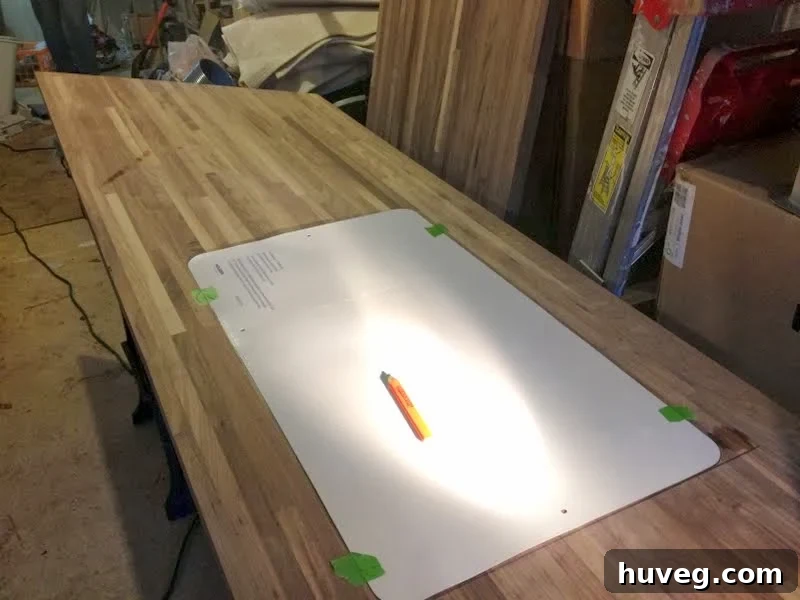
Even during the initial planning phase, several crucial decisions shaped our approach. Foremost among them was my desire for a “zero” or “flush” cut, meaning the sink opening would be perfectly level with the countertop’s edge, creating a seamless transition. While other popular options exist, such as a positive or negative reveal, the flush cut offered the cleanest aesthetic for our modern kitchen design. A positive reveal exposes a slight lip of the undermount sink where it meets the countertop, providing a small ledge. Conversely, a negative reveal means the countertop extends slightly over the sink basin, obscuring the rim. Opting for a zero-reveal left absolutely no margin for error. It was a one-shot deal, requiring pinpoint accuracy. Fortunately, our undermount sink came with a comprehensive template, illustrating all three reveal options. This allowed us to carefully select our desired cut size – noting that the hole for a negative reveal is inherently smaller than that for a positive one – and trace the precise line onto the butcher block.
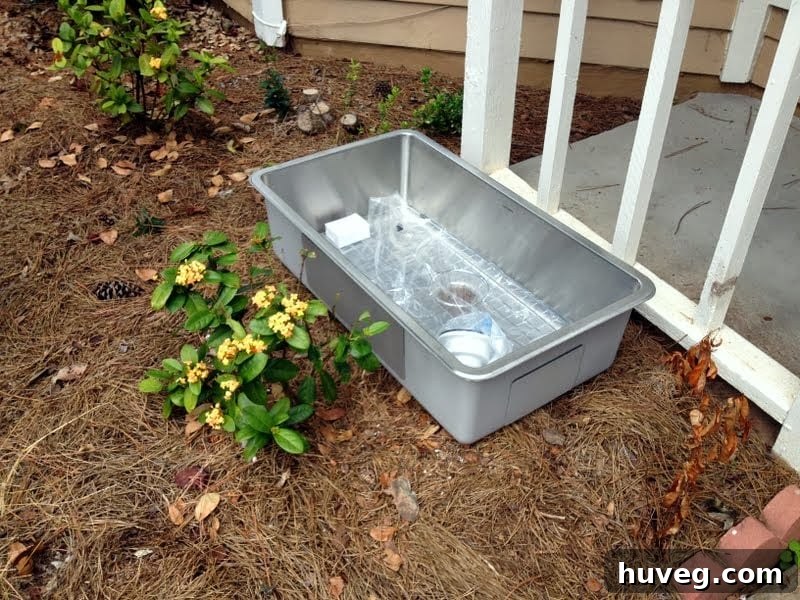
Isn’t she a beauty? This Houzer Nouvelle Undermount sink had become a temporary fixture in various locations throughout the week, from my garage to my garden, always kept within close proximity for measurements and planning. I had the pleasure of collaborating with National Builder Supply in selecting this exquisite piece. Their team was incredibly supportive, guiding me through countless options to find the perfect sink that aligned with my aesthetic preferences and practical needs. Beyond the selection, they provided invaluable advice on installation and long-term care. My contact, Rachael, was particularly exceptional, even sending me inspiration photos for weeks before we finalized our choice. Their showroom in Georgia was an added bonus, allowing me to see their operations firsthand and gain confidence in my purchase. Walking home with my gleaming new sink felt like a significant step forward in the renovation, little knowing the challenges that lay ahead.
Lessons from Hindsight: The Strategic Importance of Cutting Order in DIY Projects
In hindsight, if I could turn back time, I would have insisted on making this critical sink cut before any other cuts for the kitchen. We had two full lengths of butcher block, offering a golden opportunity to mitigate risk. Had we first attempted the sink cutout on a standalone piece, perhaps even after the 45-degree angled corner cut, any mistake would have been a contained learning experience. We would still have had a generous twelve feet of material remaining, allowing us to learn from our errors and approach the second attempt with newfound wisdom. This is a crucial piece of advice for anyone tackling a similar project: always perform your riskiest, most irreversible cuts on a piece where a mistake won’t derail the entire project. However, while I was preoccupied with classes, my aunt gave my uncle the green light to cut the other smaller pieces from the second butcher block. Her logic was sound – to maintain momentum after the numerous delays we had experienced earlier in the week, as detailed in my previous post. So, while it wasn’t the path taken for my countertops, I wholeheartedly recommend this risk-mitigation strategy to anyone embarking on a large-scale DIY project.
The Right Tool for the Job: Why Investing in Quality Matters for Precision Cuts
Another crucial recommendation, which I’ve touched upon in this post about cutting corner angles and is certainly worth repeating, is the absolute necessity of using the right tool for such an all-important cut. It’s often worth the expense of renting a higher-quality tool than relying on a subpar one you might own. My personal jigsaw, for example, was a rather inexpensive model. While we did make an excellent decision regarding the blade – after our 5,487th trip to the hardware store, we carefully selected a proper blade designed for the thickness of the wood – I deeply regret not renting a higher quality brand jigsaw. We conducted several test cuts, but critically, none of them involved a curve. This oversight prevented us from uncovering the inherent instability of my jigsaw’s blade, which struggled to maintain a perfectly straight line, especially on curved sections. Had we tested a curved cut, the problem would have been revealed *before* attempting the irreversible cut on the main countertop.
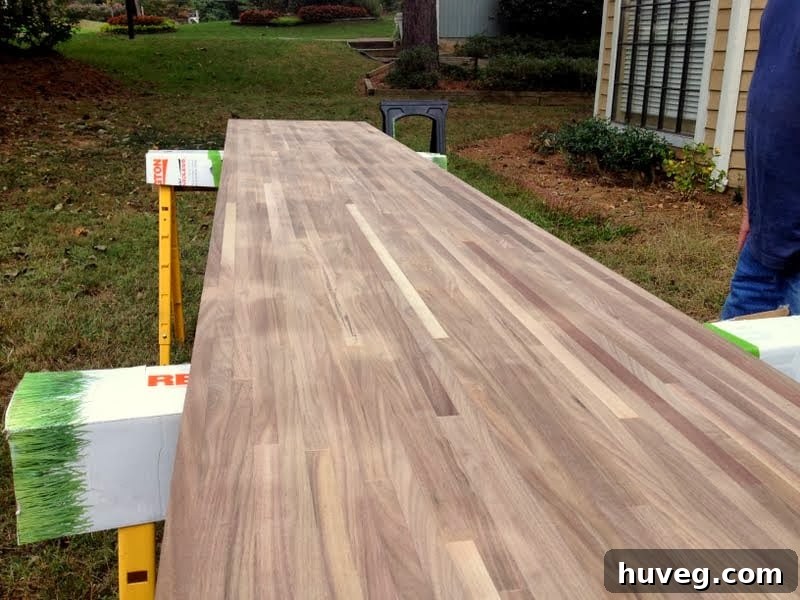
My nervousness about the sink hole was palpable. To cope with the mounting anxiety, I consciously tried to stay out of my uncle’s way as he meticulously planned and prepared for the cut, figuring my hovering would only add pressure. In hindsight, perhaps this was a mistake. I often found myself with unvoiced ideas, like “Shouldn’t we try to cut a circle in a test block, just to ensure the angle is perfectly straight up and down, similar to how we approached the 45-degree corner?” I’m certainly not proud of chickening out from actively contributing to the decision-making process. Instead, I retreated to a corner, biting my nails and offering silent prayers, a classic example of letting fear override proactive participation in a high-stakes DIY moment.
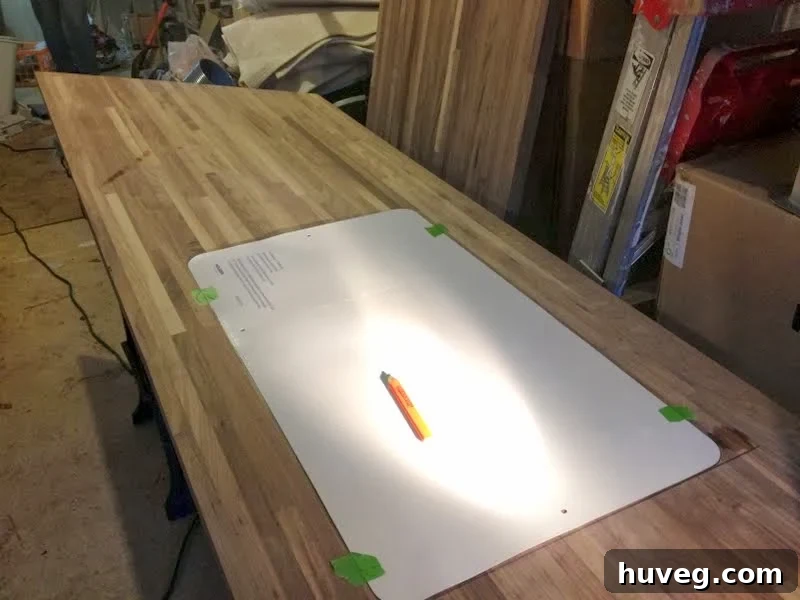
The Moment of Truth: When a ‘Joke’ Turns Into a DIY Disaster
I was engrossed in working on the new window molding in the dining room and kitchen – a tedious but essential task involving caulking, painting, and general finishing touches that make a project look truly complete – when the distinctive buzz of the saw reached my ears. The initial plan involved using a circular saw to cut the straight lines of the sink opening. By carefully plunging the circular saw into these defined straight sections, the only areas requiring a jigsaw would be the four corners, significantly reducing the amount of freehand cutting. (For an excellent visual demonstration of this technique, I recommend watching this video.) The second distinct whirring sound signaled that it was jigsaw time, indicating the more delicate, curved sections were being tackled. When the noise finally ceased, I made my way to the front yard, which had served as our makeshift outdoor workshop all week, weather permitting.
“We cut the hole wrong.”
My uncle’s opening comment as I approached didn’t immediately alarm me. Knowing his sense of humor, he often makes dramatic statements that turn out to be harmless jokes. I smiled, expecting a playful follow-up, and continued walking towards him. And then… I saw it. He wasn’t kidding.
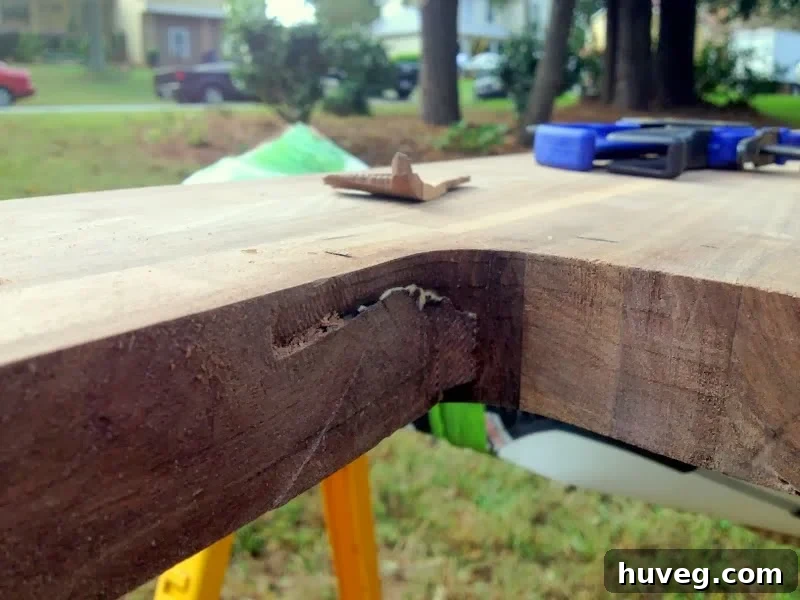
“We should have rented a better jigsaw,” he explained, his voice laced with frustration. “The blade didn’t stay straight, and the curve on the underside isn’t flush with the sink.” My brain momentarily short-circuited. I blinked, desperately wishing I could rewind five minutes, back to a time before I knew my pristine countertop had been compromised. The news hit like a gut punch, sinking the weight of all the planning and effort into a pit of despair.
The Panic and the Problem-Solver: Seeking Solutions Amidst Despair
“We could just go pick up another sink to fit the hole,” offered Timmy, my uncle’s brother, attempting to lighten the mood with a seemingly simple solution.
A torrent of negative thoughts flooded my mind in a nanosecond. *Just pick up a new sink? After all this meticulous planning, all the research, all the coordination? Sinks aren’t simply available in quarter-inch size variations. There’s the overall width, the depth, the intricate curve of the edges, the precise placement to avoid interference with the faucet, and all the other minute details we had painstakingly prepared and planned for. We had even rearranged the entire plumbing system to perfectly accommodate this specific sink’s layout.* In that moment of intense frustration, I was enraged by the mere suggestion that the solution could be so straightforward. It was Friday afternoon, and National Builder Supply, our sink provider, would be closing for the weekend in less than two hours. Even if, by some miracle, a suitable sink existed, the chances of it being in stock for same-day pickup were astronomically low. My family was scheduled to leave town in less than 48 hours, adding immense pressure to an already fraught situation. I was at my wit’s end, battling a fierce urge to cry.
My initial reaction, sharp and ungracious, was: “No, that’s simply not going to happen. There is no such thing as ‘just’ picking up a new sink!” I was snapping at someone who was genuinely trying to help, a far cry from my most patient or proudest moment. To be fair, they hadn’t caused the error intentionally; they probably felt worse than I did, and I repaid their effort with an undeserved outburst. I retreated inside, frantically calling National Builder Supply about a replacement, only to discover that Rachael, my helpful contact, had already left for the day. Remembering a few other individuals I’d met during my showroom visit, I tried to guide the (understandably flustered, given my panic) agent on the phone to track down anyone who might have assisted me. Eventually, they promised to call me back shortly with options, should any suitable replacements be in stock. For the second time in a week, my hopes were tethered precariously to the promise of a phone call.
Fortunately, my uncle possesses an incredible knack for problem-solving in home improvement. Present him with a seemingly insurmountable obstacle, and he can usually devise an ingenious workaround. Remember this impressive feat? When I walked back outside, he presented his brilliant alternative solution. The problem areas, he explained, were confined to only two specific spots along the sink hole. Crucially, these just happened to be the least visible corners of the sink – specifically, the two closest to the edge of the counter, facing the faucet (as you can see here). This meant that the flaw would likely only be noticeable if one deliberately craned their head to inspect them, such as during a thorough cleaning, making them largely invisible to anyone not actively looking for imperfections. Despite the initial setback, this was far from the worst possible outcome, provided he could find a way to make it work.
The Ingenious Solution: Rescuing the Butcher Block with a Coping Saw
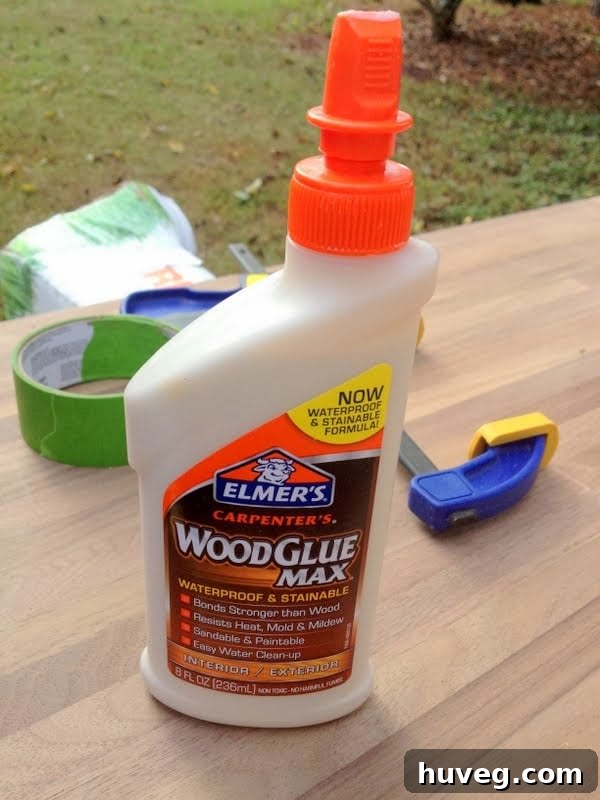
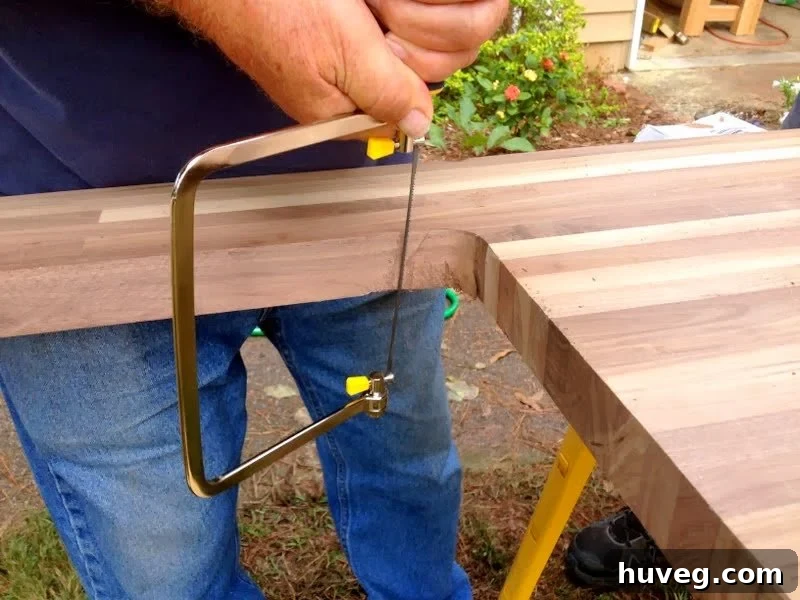
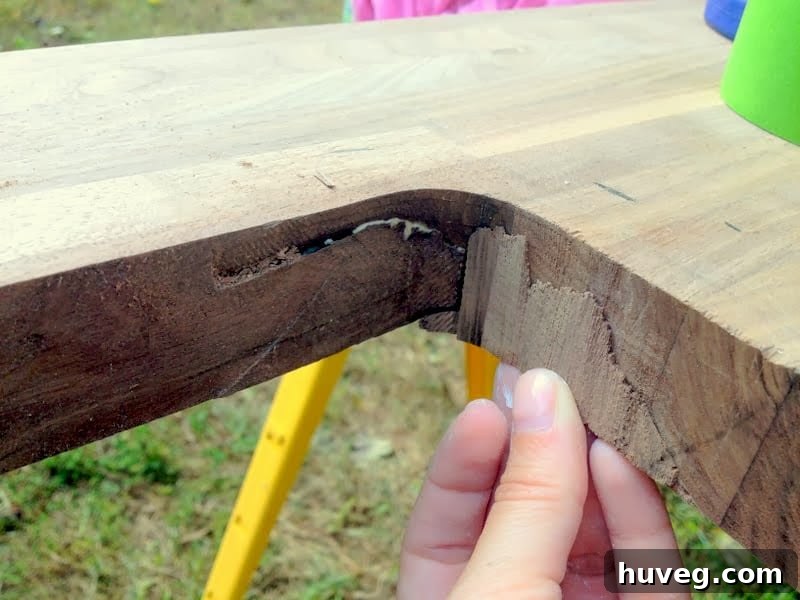
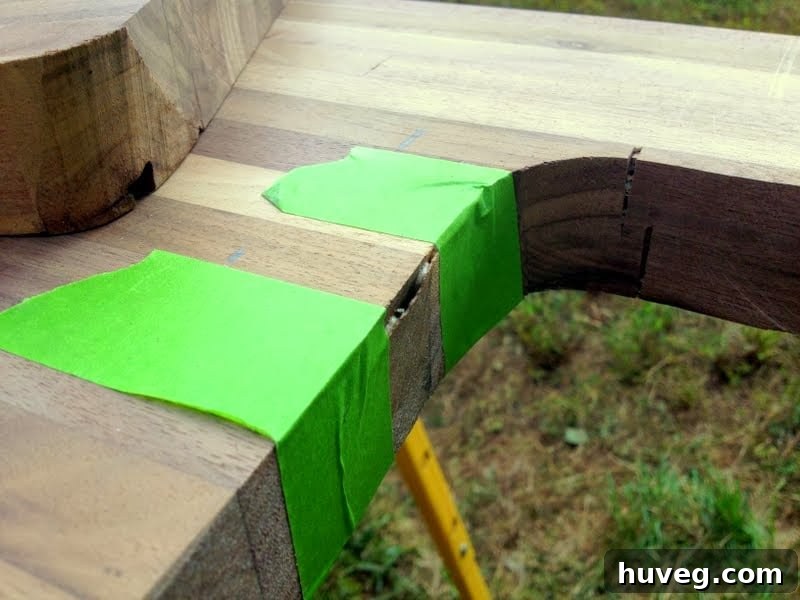
My uncle suggested a practical and resourceful approach: a quick trip to the store (for what felt like the 6,412th time that week) to acquire a coping saw. This specialized saw, with its thin blade and unique frame, would enable him to precisely cut the narrow sliver of wood that had been mistakenly removed from the countertop’s edge. Once cut, this piece could then be carefully re-attached to the sink hole using strong wood glue, secured with tape, and held firmly in place with clamps until dry. After a bit of wood putty and careful sanding, he was confident that the repairs would be virtually unnoticeable, blending seamlessly with the natural grain of the butcher block.
About fifteen minutes later, as we were finalizing our game plan, the phone rang. The call from National Builder Supply confirmed our suspicions: there was no suitable replacement sink in stock that would fit the existing hole without significantly increasing the sink depth (which we had already maximized) and still allowing ample space for the faucet (an essential component of any kitchen sink!). Furthermore, the only available alternative was a completely different style, requiring an immediate, frantic dash across Atlanta traffic to acquire before their closing time. And even then, there was always the risk of making another mistake while cutting a new hole, leading to the same problem all over again – an unlikely but not impossible unfavorable outcome.
Given the lack of viable alternatives and the ingenuity of my uncle’s plan, we wholeheartedly embraced the most probable-sounding solution: overcoming the mistake with the precise cuts of a coping saw. Thankfully, my uncle executed this task with remarkable precision, achieving a nearly perfect fit and even making a few minor trims in other areas to ensure optimal alignment. His skill and resourcefulness transformed a moment of panic into a testament to clever DIY repair.
The Art of Imperfection: Blending the Repair Seamlessly
With the precise slivers of wood now prepared, we carefully applied wood glue and secured them into their new homes with tape and clamps, allowing them ample time to dry. Once the glue had cured, we moved on to filling any remaining gaps or imperfections with wood filler. It’s important to remember that with butcher block, wood putty is almost always a necessity. As a natural material, wood inherently comes with minor dings, knots, and imperfections, so a perfectly pristine surface without any filler is rarely achievable. This fact actually made the repair seem far less daunting than I initially anticipated.
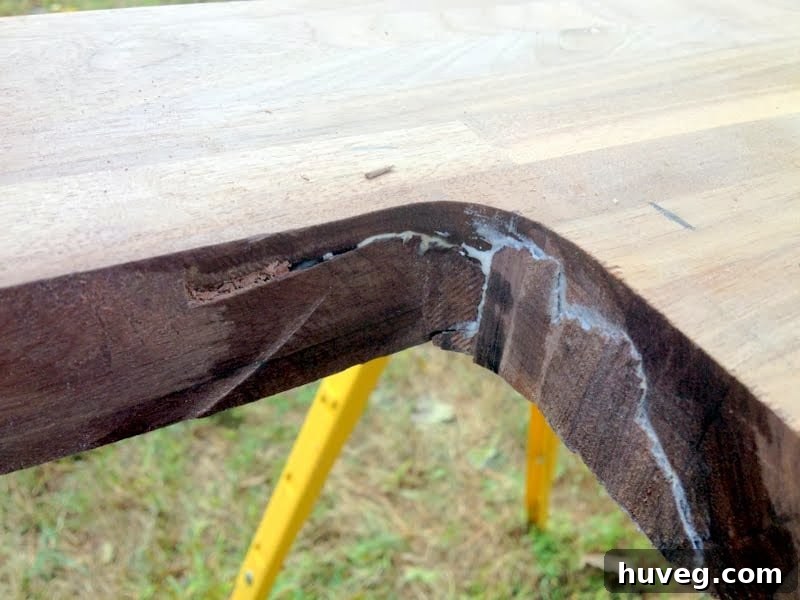
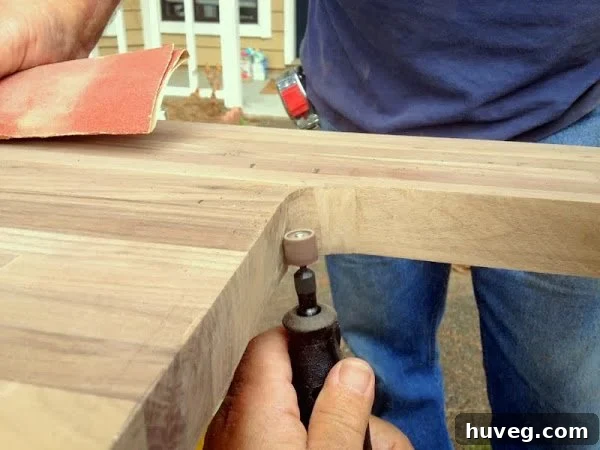
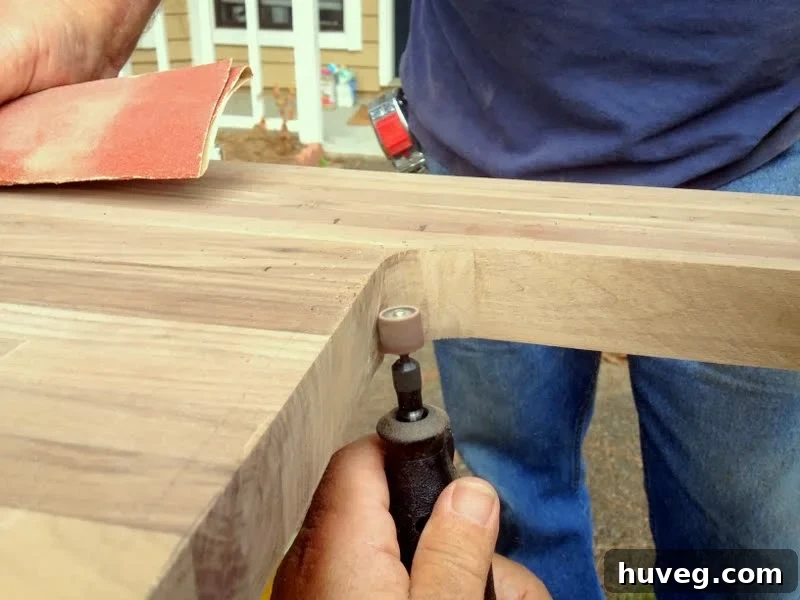
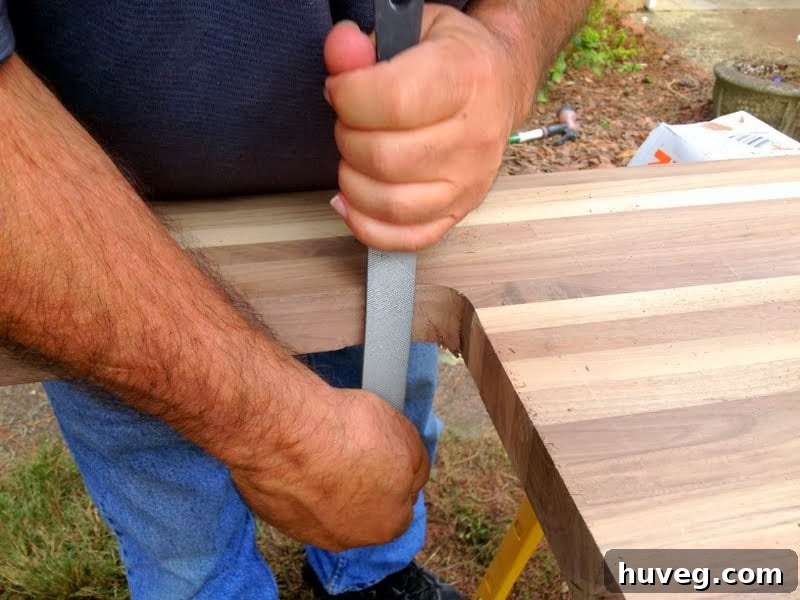
The walnut wood filler we selected matched the natural color of the wood remarkably well, creating a cohesive look. With the aid of a Dremel sanding tool and a metal file, we were able to meticulously shape and smooth the repaired areas, ensuring a seamless transition and a perfectly flush surface. This final stage of refinement truly transformed the botched cut into a virtually undetectable repair, a testament to patience and the right tools.
Looking Ahead: Installation and the Continuing Saga
With the sink hole successfully repaired and smoothed, the next crucial steps involved installing the undermount sink itself and the coordinating faucet. However, as dusk settled once more, signaling the end of a long and emotionally draining day, I had to shift my focus back to my studies for classes the following day. At this juncture in our progress, I couldn’t be entirely certain that no other unforeseen issues might arise, but what I *was* certain of was our ability to find a solution, no matter the challenge. My uncle and his brother, still raving about the fantastic Mexican restaurant I had treated them to the day before, ensured we ended the evening with a meal they thoroughly enjoyed, bringing a much-needed sense of normalcy and gratitude to a chaotic day.
I went to bed that night feeling immensely grateful for their unwavering help, yet still burdened by a heavy dose of stress. Given the week’s rollercoaster of events, the thought of spending an entire class day on edge, away from the action, was almost unbearable. The saga of our kitchen renovation continues, with a partial reveal scheduled for Friday… whew! What a journey it has been!
Related posts to explore:
Did you miss any part of my kitchen renovation project so far? Catch up on the journey! Begin with the inspiration board, delve into the background of my uncle’s crucial visit, follow the painting saga from its start here, learn about sourcing the butcher block, and discover how to tackle a corner angle here.
And for the full breathtaking reveal of the entire kitchen renovation, visit the complete tour here!