Removing the Chain Link Building Neighborly Bonds

Transforming your backyard can often feel like a monumental task, but sometimes, the biggest improvements come from what you remove, not what you add. In fact, a major shift in my own backyard recently involved the satisfying demolition of an old, unsightly chain link fence. This project wasn’t just about clearing space; it also led to a clever, budget-friendly solution for a neighboring fence issue, proving that a little ingenuity can go a long way.
This article will guide you through the straightforward process of how to remove a chain link fence, often achievable in just an afternoon, and share practical tips for addressing a neighbor’s damaged fence without spending a dime of your own money. Get ready to reclaim your outdoor space and enhance your property’s curb appeal with these DIY fence removal and repair strategies.
The Genesis of a Backyard Transformation: From Nuisance to Opportunity
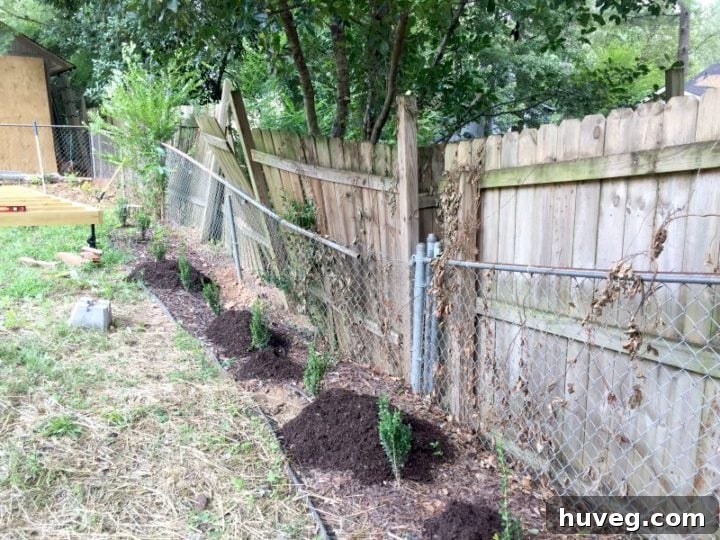
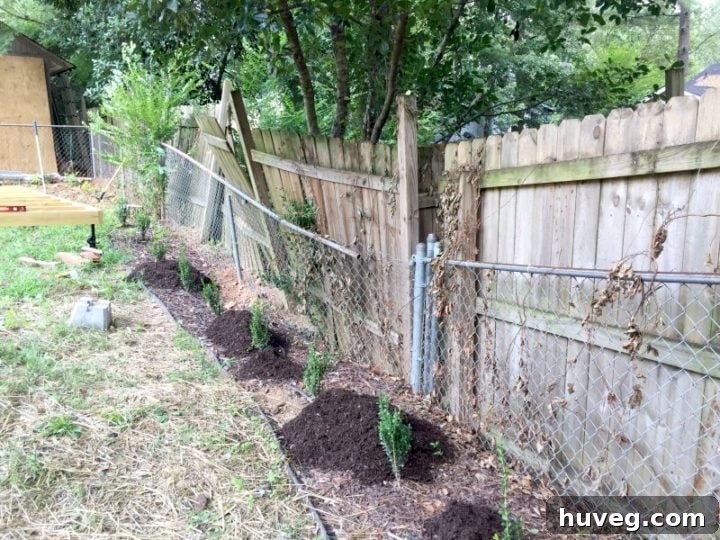
The journey to a more aesthetically pleasing and functional backyard often begins with identifying and addressing existing problems. As you can see from the “before” photo above, the removal of the chain link fence became a clear priority, especially as I was diligently working on creating a new hedge line, complete with fresh mulch. (For invaluable advice on how to significantly cut costs on landscape materials like gravel and mulch, I highly recommend checking out this comprehensive guide.) While the images tell part of the story, the complete narrative involves a bit of neighborly dynamics and a desire to maintain a peaceful, pleasant environment.
This post may contain affiliate links — for the full disclosure policy, click here.
Addressing Backyard Annoyances and Neighborly Fences
Before diving into the “how-to,” it’s crucial to understand the context. Looking at the initial photos, several elements were contributing to my backyard’s less-than-ideal state. The most obvious culprit was, of course, the aging chain link fence itself. Beyond that, an aggressive overgrowth of poison ivy encroached from a neighbor’s yard, and stubborn weeds flourished in the unreachable crevices between my fence and theirs. And then there was the not-so-minor issue of one of my neighbor’s fences, which was frankly, in a terrible state of disrepair.
My property enjoys the company of four neighbors: one on each side, and two along the back. This particular layout means that roughly half of one neighbor’s yard is on the left side of my rear boundary, and half of another’s is on the right. This often explains the noticeable variations in fence quality and appearance along the back line, as visible in the photos. These are the neighbors I interact with least, as our backyards simply face each other, a common setup in typical U.S. subdivisions.
With the exception of the chain link fence I just removed, and a small wooden gate/fence I installed to fully enclose my yard, all other perimeter fences belong to my neighbors. It’s easy to assume they are mine because the “bad” or unfinished sides often face my property. This is a frequent occurrence in areas like Georgia, especially with backyard fences, often going against common fence etiquette standards. My neighborhood is well-established and lacks a homeowners’ association (HOA), which presents both advantages and disadvantages.
On one hand, the absence of an HOA means freedom from restrictive rules and additional expenses, a definite blessing given the numerous changes and improvements I’ve made to my property. On the other hand, it means there’s no immediate governing body to turn to when issues arise with shared boundaries, leaving only county codes as recourse (and since I’m outside downtown city ordinances, county approval is generally my only concern). While this can be challenging, most of my neighbors are considerate, fostering a safe and active community where people generally respect each other’s space unless a direct conflict arises.
Creative Solutions for Lingering Fence Problems
However, as long-time readers know, neighborly fences have been a recurring source of frustration. My efforts have often focused on low-budget, creative solutions to compensate for their disrepair. The fence to my right, in particular, has been a persistent problem due to extreme bamboo overgrowth (a highly invasive species) and sheer age, causing it to essentially fall apart. Since I don’t own this fence, installing an entirely new one of my own would be prohibitively expensive. This necessitated resourcefulness.
One notable solution involved repurposing leftover fence panels from my sister to construct charming raised garden beds:
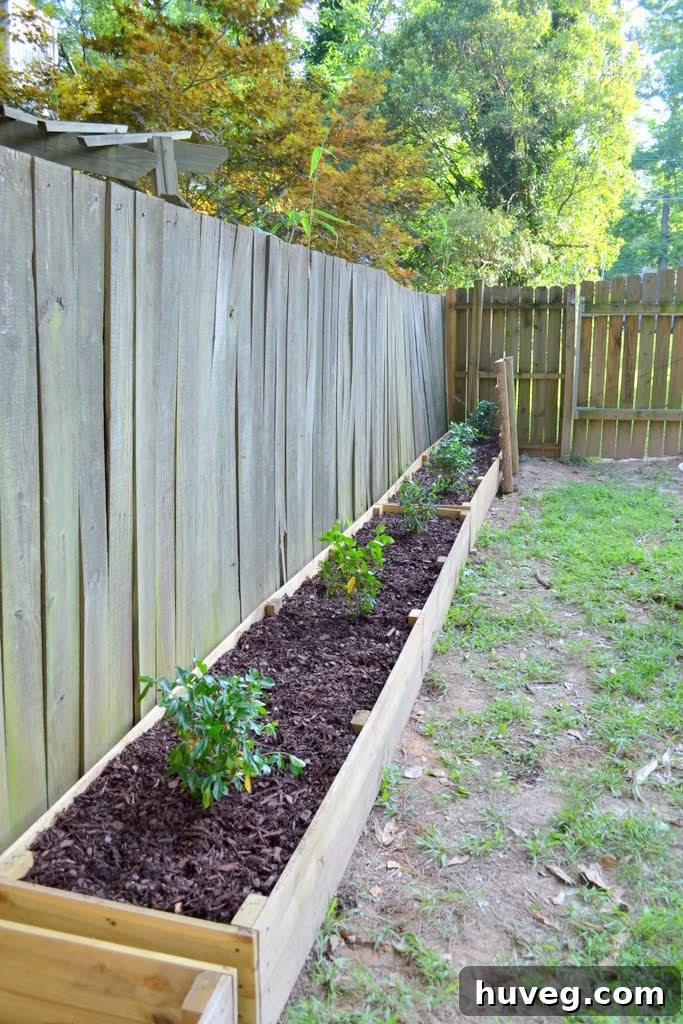
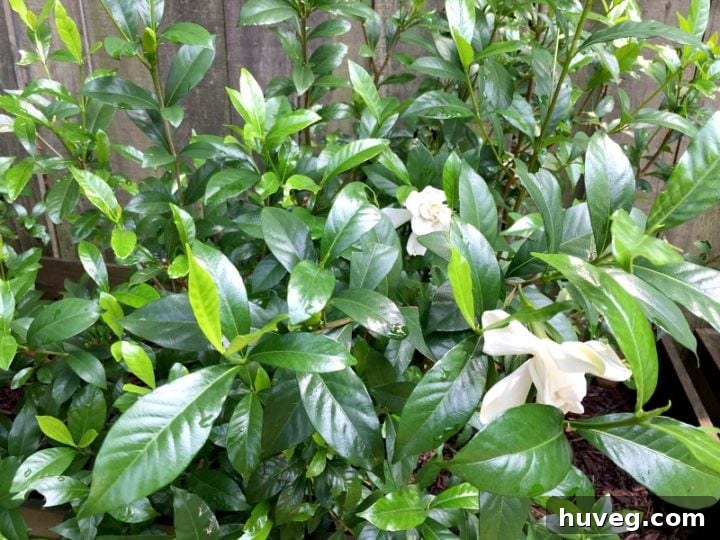
Occasionally, I’ve also re-secured loose fence panels warped by weather or utilized scrap pieces to prevent further collapse. These are mostly temporary fixes, aimed at averting a larger problem and leveraging on-hand materials to avoid direct costs. My elderly neighbors on the right are on a fixed income, making it difficult to request a costly fence replacement. Thus, my gardenia beds serve as both a beautiful addition and a practical long-term solution. As they continue to flourish and grow, it’s only a matter of time before they fully obscure the broken fence behind them, creating a lush, fragrant privacy screen.
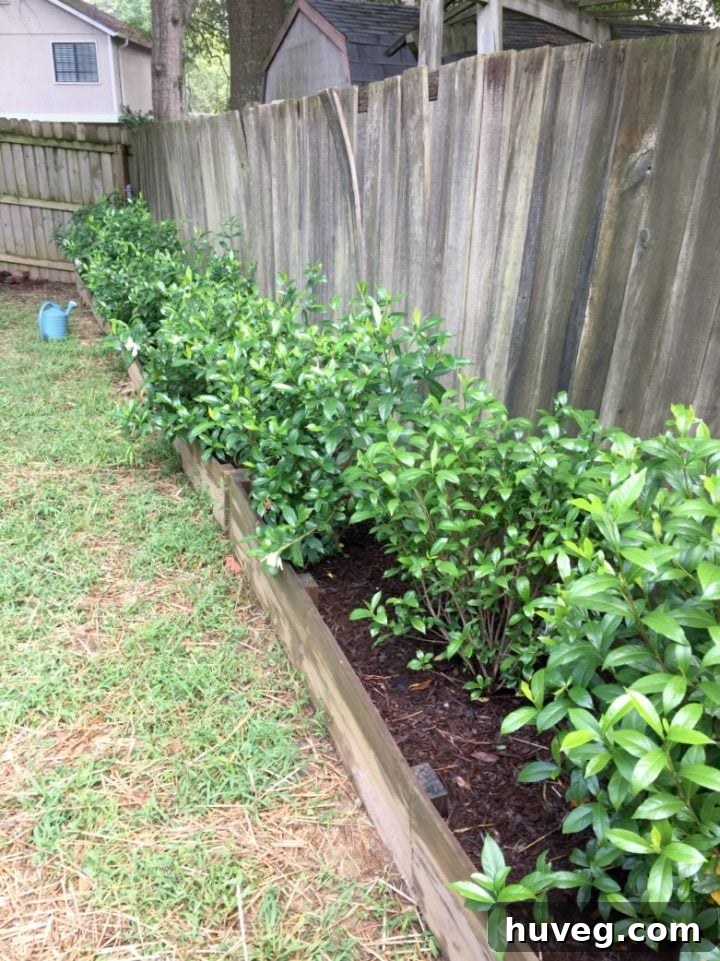
Beyond their practical benefits, these gardenias significantly enhance the beauty and aroma of the entire right side of the yard, perfectly complementing the new fire pit area. This will undoubtedly become a fantastic space for future entertaining!
The Catalyst: A Fallen Tree and a Broken Fence
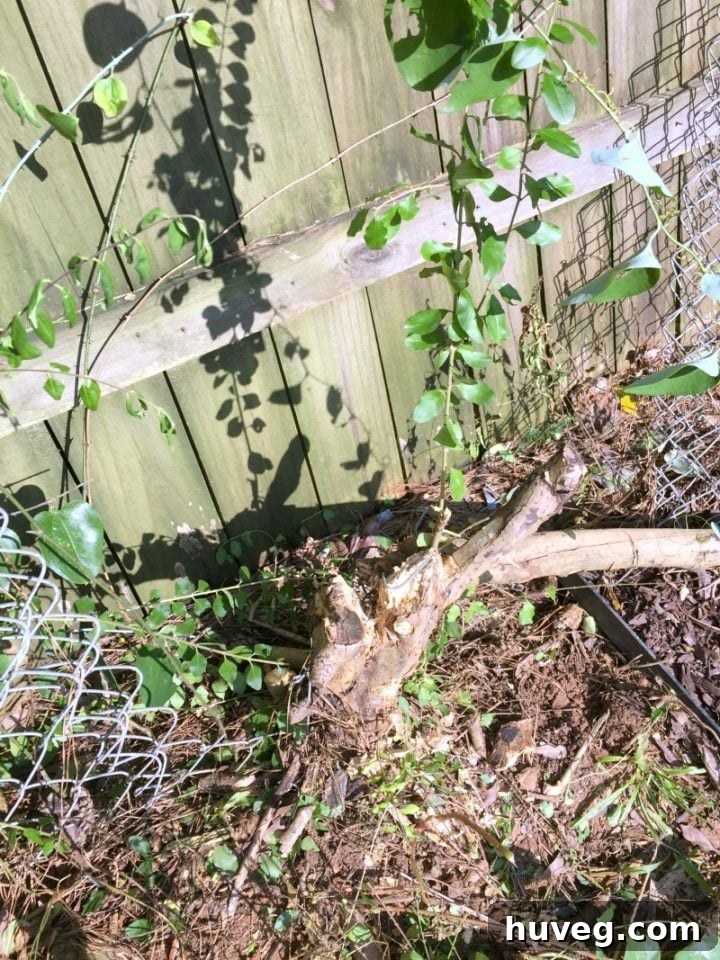
Turning our attention back to the other fence – the one that prompted this entire project. A few months ago, a massive tree fell in my back-left neighbor’s yard. This incident proved to be the decisive catalyst for removing my own chain link fence. The tree was enormous and situated just on the other side of our property line. Its fall caused significant upheaval, creating a substantial hole in the ground that could eventually lead to erosion issues, and, more immediately, severely damaging a section of the fence separating our properties. Critically, it completely busted my chain link fence on that side, turning a long-standing annoyance into an urgent problem.
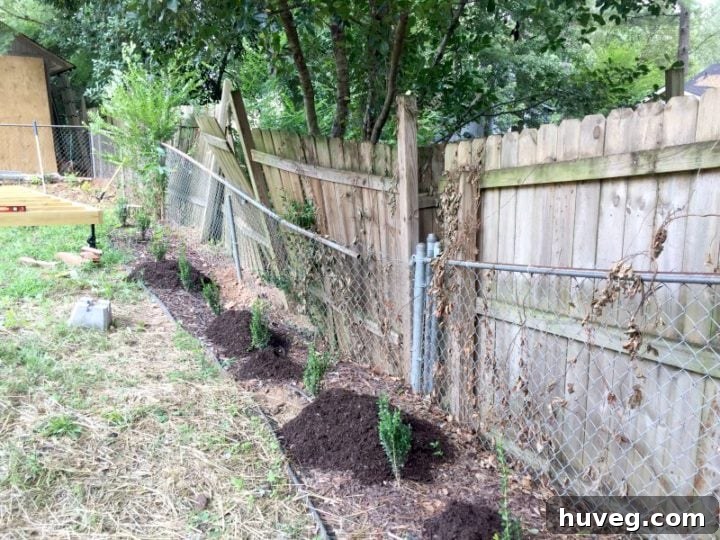
My irritation was considerable, especially after having spent the previous year filling in this entire section with fill dirt to rectify an existing erosion problem. To fix one erosion issue only to have another, equally frustrating one appear – an issue I was powerless to address directly – was incredibly annoying. The fallen tree actually spanned across both of my rear neighbors’ lots, including the fence line separating them. The neighbor who owned the tree initially left it untouched, and the property has appeared vacant for some time, leading me to suspect it’s an investment property with occasional visitors but no permanent residents.
About a month after the tree fell, someone eventually called the county, and the tree was removed. However, no repairs were made to the damaged fence. Since it wasn’t my fence to begin with, my options were limited to glaring at the unsightly damage. Or, perhaps, I could offer a small, temporary fix? Ultimately, I had no desire to fix my already disliked, broken chain link fence. As I prepared to mulch for fall, I realized it was the perfect time to simply remove the entire chain link structure and see what I could do about the adjacent, broken fence section.
How to Remove a Chain Link Fence: A DIY Guide
Removing a chain link fence might seem like a daunting task, but with the right approach and tools, it’s surprisingly manageable and can dramatically improve your backyard’s appearance. Here’s a step-by-step guide to help you tackle this project efficiently.
1. Kill Off Weeds and Vines
Before you even think about cutting metal, the first crucial step is to eliminate any stubborn weeds and vines that have intertwined with the fence. In my case, this involved treating pervasive poison ivy and other invasive growth several weeks in advance. I highly recommend using an effective poison ivy spray. To save money in the long run, I now purchase the concentrated version and mix it myself, allowing for multiple refills of a spray container. Given that my dad and sister are highly allergic, I’ve become quite adept at identifying, avoiding, and treating poison ivy. You can find detailed tips on identifying poison ivy and effective treatment methods here. This initial step is vital not only for safety but also for making the actual fence removal much easier, as clear access to the fence components is essential.
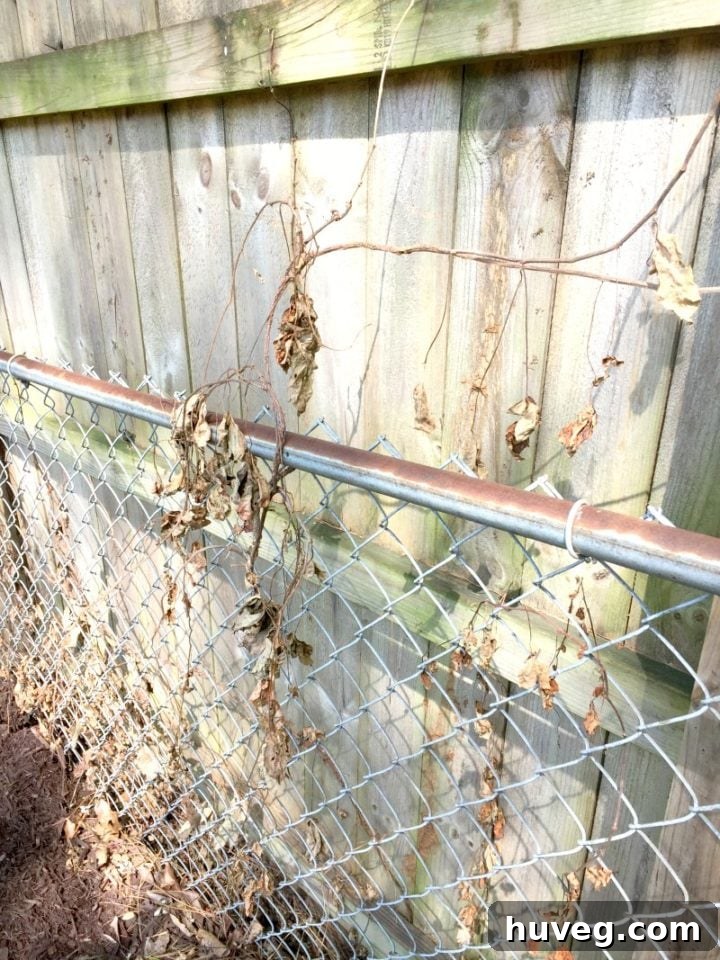
2. Clip Fence Ties and Fasteners
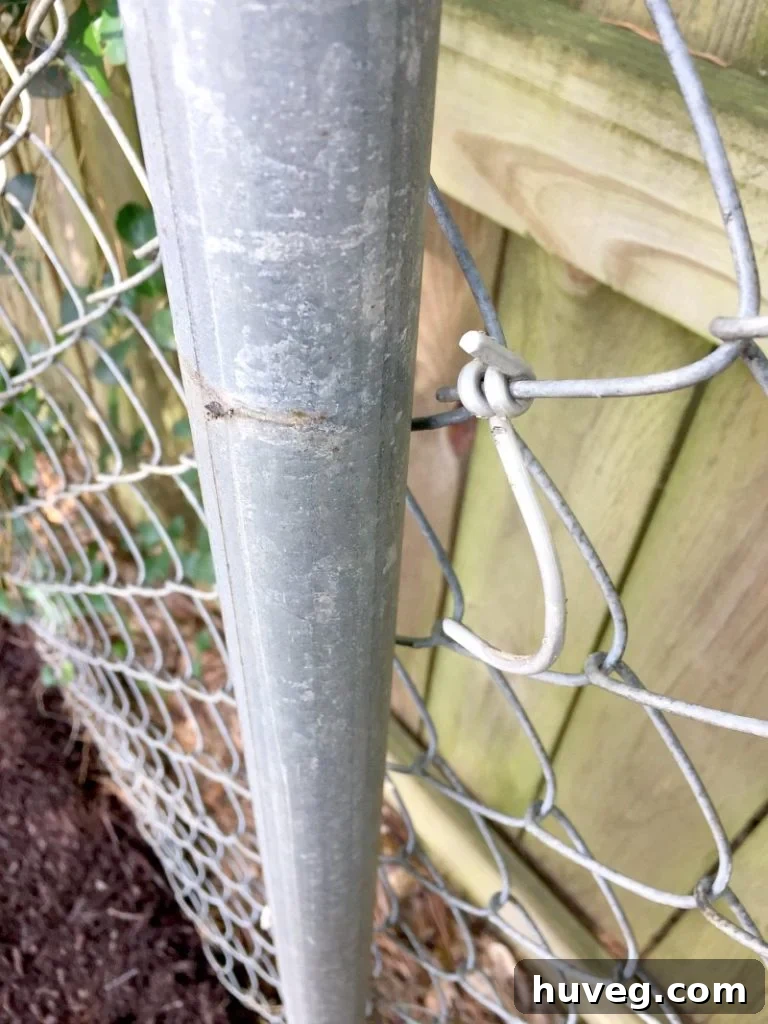
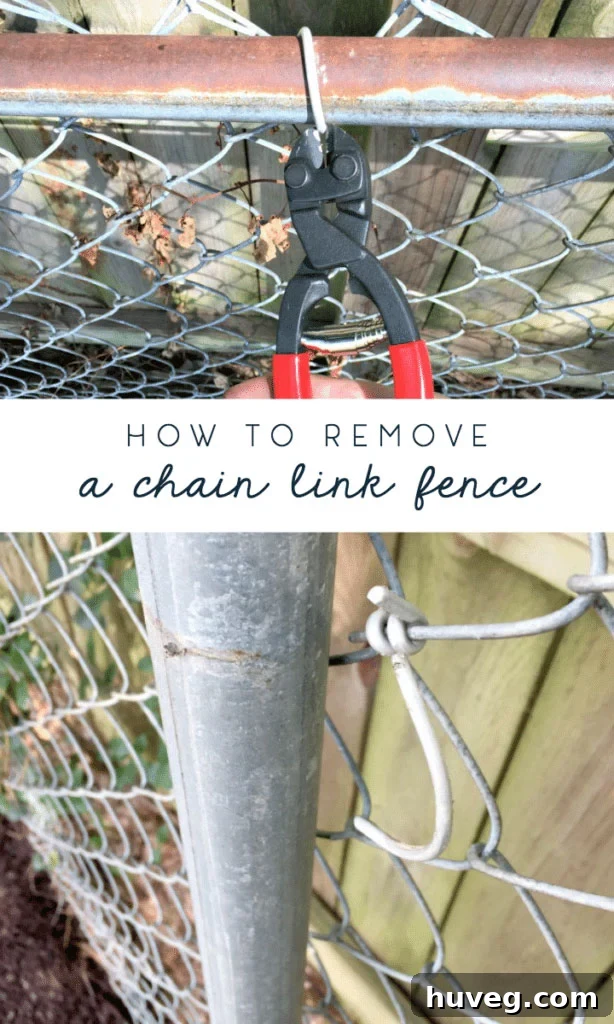
Once the vegetation has died back, you can proceed to detach the chain link mesh from its frame. Begin by systematically clipping all the wires that secure the chain link fabric to the top rail, commonly known as “fence ties.” For this task, a small but sturdy bolt cutter with a sharp blade is indispensable. Even a new set, like this one, can dull quickly on a project of this scale, so invest in a decent quality tool. Work your way along the entire length of the fence, ensuring every tie is cut.
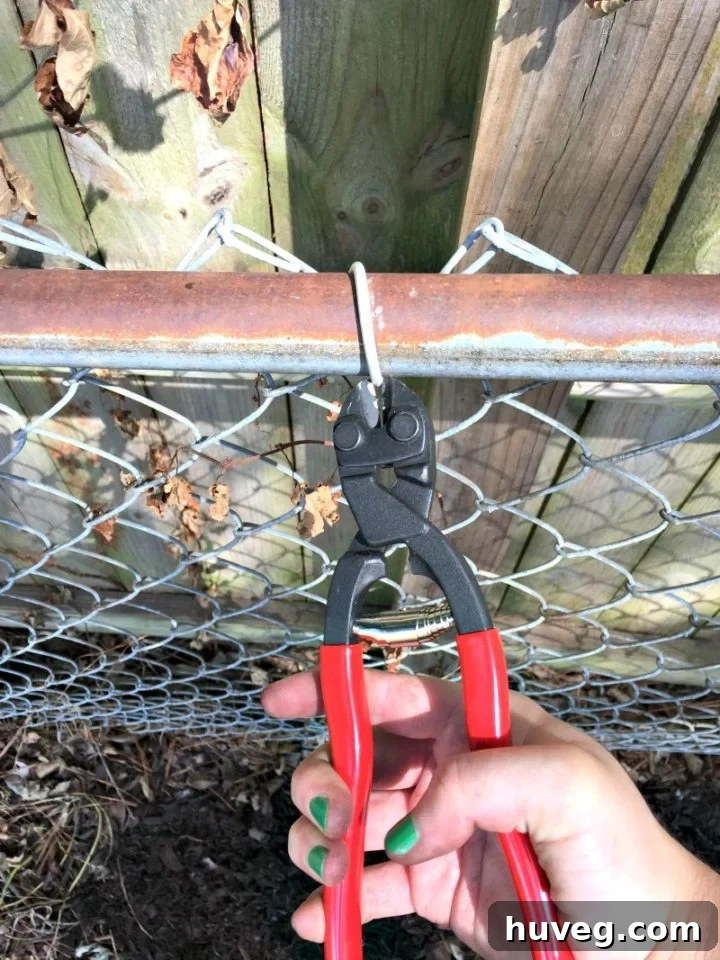
Next, move on to the vertical ties and any other fasteners that hold the chain link to the vertical posts. Some ties might be more stubborn than others due to rust or tightness; in such cases, a sturdy pair of pliers will provide the extra grip and leverage needed to snip them free. The goal is to completely separate the chain link mesh from its entire metal framework, making it ready for removal.
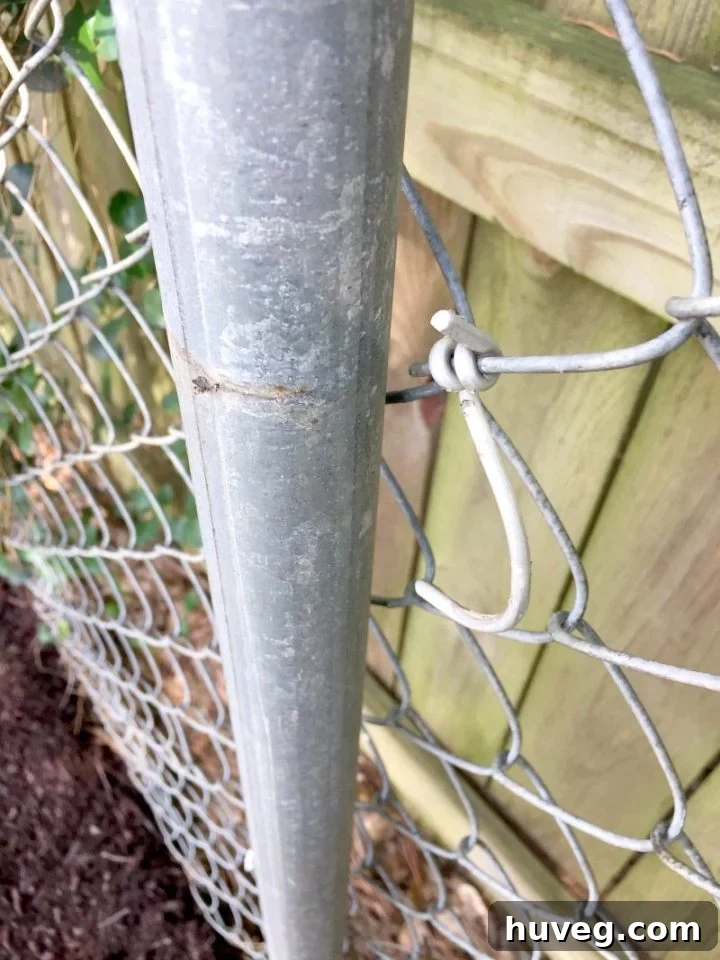
3. Remove Each Fence Component in Sections
With all the ties clipped, the chain link fabric should now be relatively loose. This is the point where you can begin to dismantle the fence in manageable sections. Start by carefully sliding out the top rail components. These are typically connected by sleeves and can often be pulled apart with relative ease. As you free the top rail, you can then start rolling up the chain link mesh into a large, compact roll. Rolling it up neatly makes it much easier to transport and dispose of. This is also an excellent opportunity to remove any remaining dead vines or debris that were clinging to the fence.
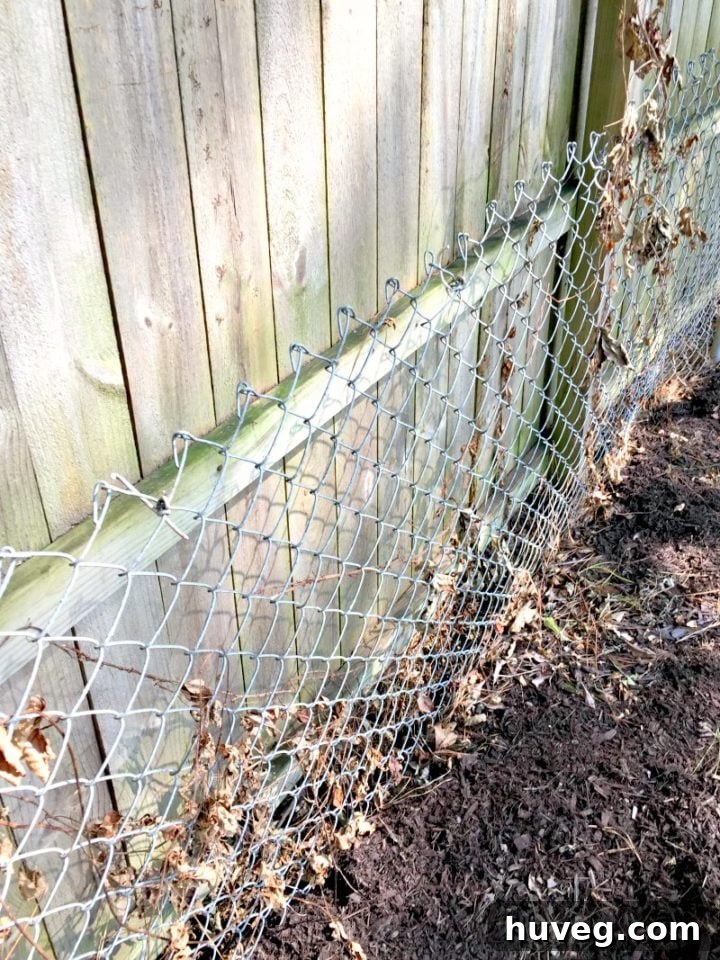
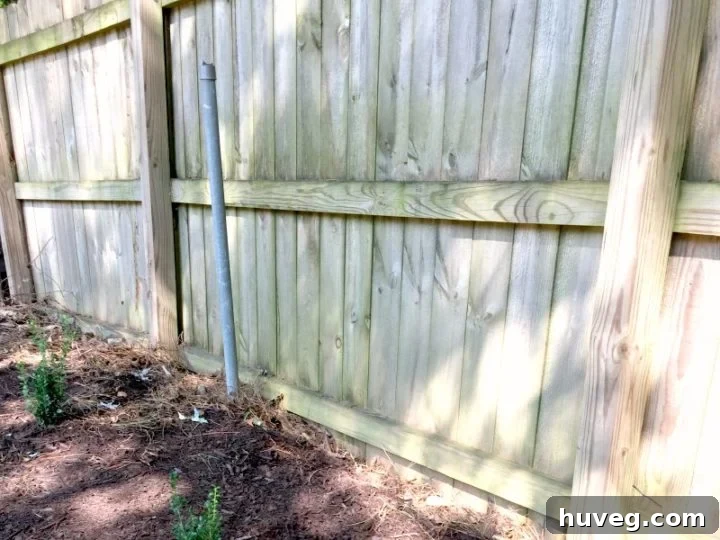
The vertical posts will remain standing at this stage. Removing them can be the most labor-intensive part, especially if they are set in concrete. While I had some much-appreciated help yanking out most of the intermediate posts, the terminal posts (those at each end of the chain link section) were much more securely anchored. In some cases, the effort required to dig out deeply set posts might outweigh the benefit. Consider alternative solutions like wrapping them in pre-treated wood to integrate them into a new design, rather than committing to the arduous task of removal. If you do choose to remove them, a post puller or a lever system can be very helpful.
4. Clip and Tackle Tricky Areas
Not all fence removal is straightforward. You might encounter sections that present unique challenges. For instance, I had one particularly comical (and frustrating) situation where a sizable tree had literally grown through the links on the left side of the fence. Dealing with such obstructions requires patience and the right tools. I actually had to clip out parts of the fence fabric around the tree before I could even consider using an axe to cut away the encroaching branches. Be prepared for these unexpected obstacles and have a variety of cutting and clearing tools on hand.
And that’s pretty much it for the chain link fence! The process of uninstalling it is incredibly easy and the visual improvement is immediate and dramatic. Having this old fence removed instantly elevates the look of the entire backyard.
A Neighborly Fix: Temporarily Securing a Damaged Fence
As I removed my chain link fence, an unforeseen consequence was that it inadvertently weakened the already broken section of my neighbor’s fence. A large part of one of their panels had been loosely resting on the top rail of my fence, especially after the fallen tree had damaged both structures. My initial thought was to simply place the broken piece back into their yard. However, after patiently waiting what I considered a reasonable period for them to address the issue (and with the property still appearing to be a rental with no permanent occupants), I decided a more proactive approach was needed.
The best aesthetic solution, and more importantly, a crucial security measure for my dog (to prevent her from ending up in their yard through a large gap), was to temporarily re-secure the fence panel. I decided to use materials I already had on hand: some string and exterior screws. While my neighbors will eventually need to undertake a proper, long-term repair of their fence, my temporary fix ensures it no longer falls into my yard or crushes my newly planted hedge. Moreover, this felt like the truly “neighborly” thing to do. With readily available exterior screws and string, the entire process took approximately 30 minutes. Over time, the fence post itself might settle and naturally stabilize, allowing me to potentially remove these temporary reinforcements.
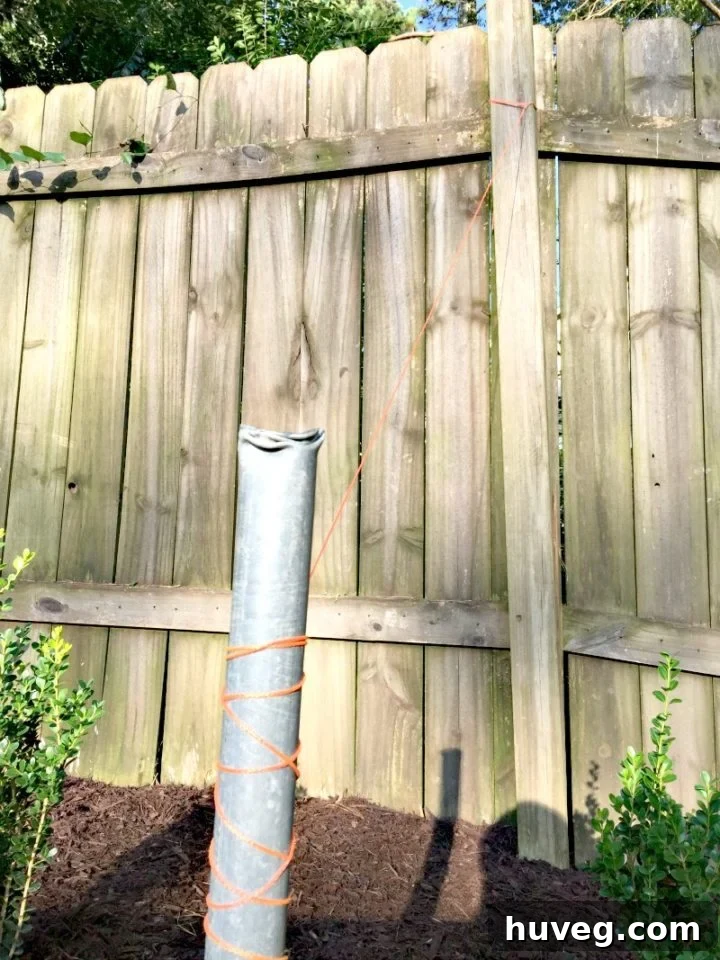
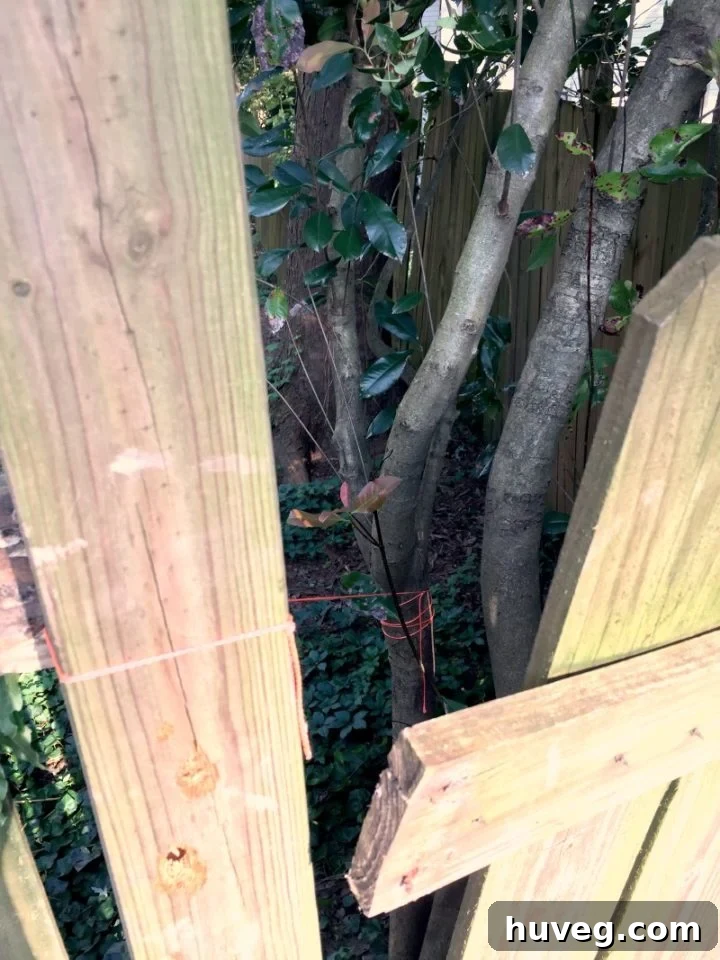
I applied a similar method to the other end of the broken piece, tying it securely to another tree within their lot. (A word of caution: if you’re installing a new fence, avoid planting trees directly adjacent to the fence line, as this neighbor has done, as it often leads to problems!) By strategically securing both ends, the rest of the fence was straightened sufficiently for me to screw the individual pieces back together, creating a more cohesive and stable structure.
With the panel back in place (mostly straight, though a remaining tree in their corner still pushes one section out slightly), I could confidently continue with my mulching project. The transformation in the back portion of the yard is remarkable, as you can see now!
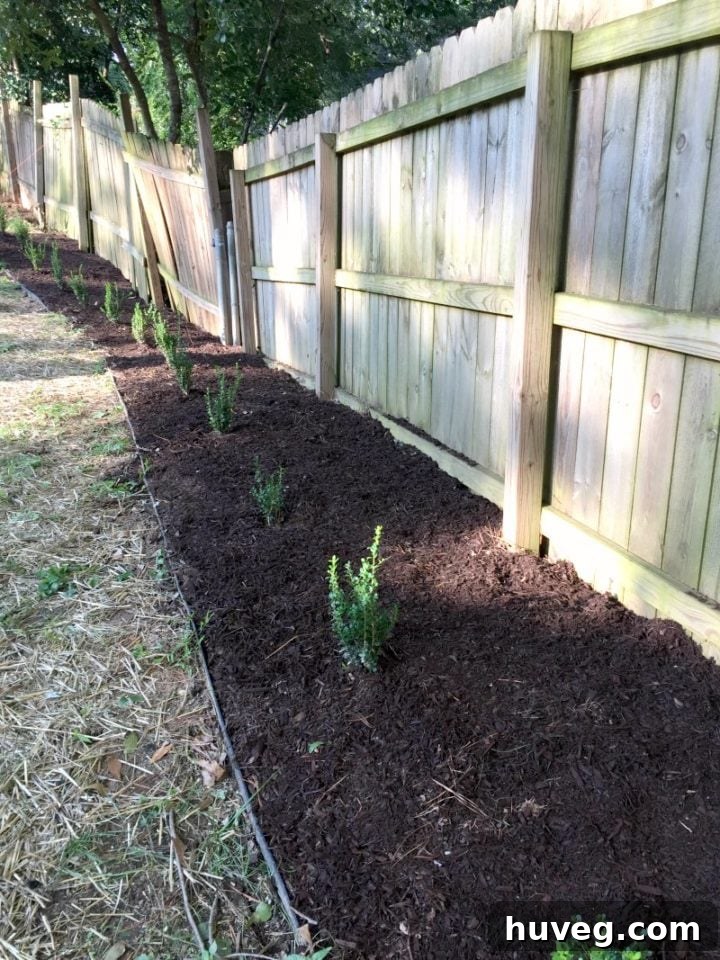
Considering its former state—plagued by the need for mulch, overgrown weeds, a broken fence, and invasive poison ivy—the current appearance is a monumental upgrade. It’s truly inspiring to see how much a space can change with a bit of effort and strategic planning.
Onward and upward to more backyard improvements!
A Note on Neighborly Relations
P.S. For anyone concerned about my actions regarding a neighbor’s fence: it’s important to understand that relationships with neighbors are highly subjective and vary greatly from one community to another. In my particular neighborhood, there’s a prevailing culture of informal mutual assistance. While we may not be the type to host regular neighborhood barbecues, there’s a general understanding and acceptance of helping each other out, especially when it comes to maintaining property aesthetics. I genuinely doubt my neighbors will even notice the temporary fix, or if they do, they’ll appreciate it. Ultimately, this temporary solution prevents my yard from looking worse until they decide to address the issue properly. Stewing in needless anger over something I can temporarily resolve with minimal effort felt counterproductive, so I opted for a practical, neighborly solution.
P.P.S. Completely off-topic, but since we’re here: I’ve recently designed some logo tees for the blog!
My primary motivation was to have some branded apparel to wear in my DIY videos and photos, especially when collaborating with brands. I’ve noticed many content creators sporting their own merchandise, and it seems like a smart way to subtly promote my website, especially on days when I’m flustered and might forget to mention it directly.
The company I partnered with requires a minimum of just five shirts per style to print, regardless of color, size, or type. Since I was already planning to order nearly that many for myself, I thought it would be a great opportunity to offer them to you all too! Surprisingly, even though I just listed them yesterday, a few people have already made purchases – goes to show what I know, right?
Currently, there are two design options available: one features my logo with my signature tagline on the back (“I’m not going gray… that’s just paint in my hair”), and the other presents a simplified logo style on the front (same font, but no duck icon and nothing on the back). Both designs come in a small variety of colors and are available as either a tank top or a tee (the slouchy tanks are my personal favorite!). They’re all made from a lightweight, soft cotton blend fabric. While I haven’t received these specific shirts yet, I own other tees made by Next Level, and I’m literally wearing one as I type this – they’re incredibly comfortable!
 The UDH Logo Tees
 Simple UDH Logo Tee
These exclusive tees are available for THIS MONTH ONLY. So, if you’re one of the nine people (a generous estimate that includes my mom!) who have previously asked me to create t-shirts, here’s your chance! Please note that a minimum of 5 shirts of each specific type (design) must be sold for them to go into production. If those sales goals are met, both types will ship out in October. I’m honestly so excited to wear them in upcoming tutorials!
I’m also brainstorming a few other fun designs I’ve always wanted, such as “Squirrels are assholes” and “What the frass?!” but those will be rolled out at a later date. Thanks for your support, friends!