My Inaugural Lumber Yard Adventure

The rhythmic patter of rain against the window has been a constant companion in Atlanta this past weekend, and the forecast promises more of the same. While last month’s drought had me yearning for moisture, this prolonged downpour does make the idea of a cozy nap particularly tempting, even with a busy work schedule and a major project reveal just around the corner!
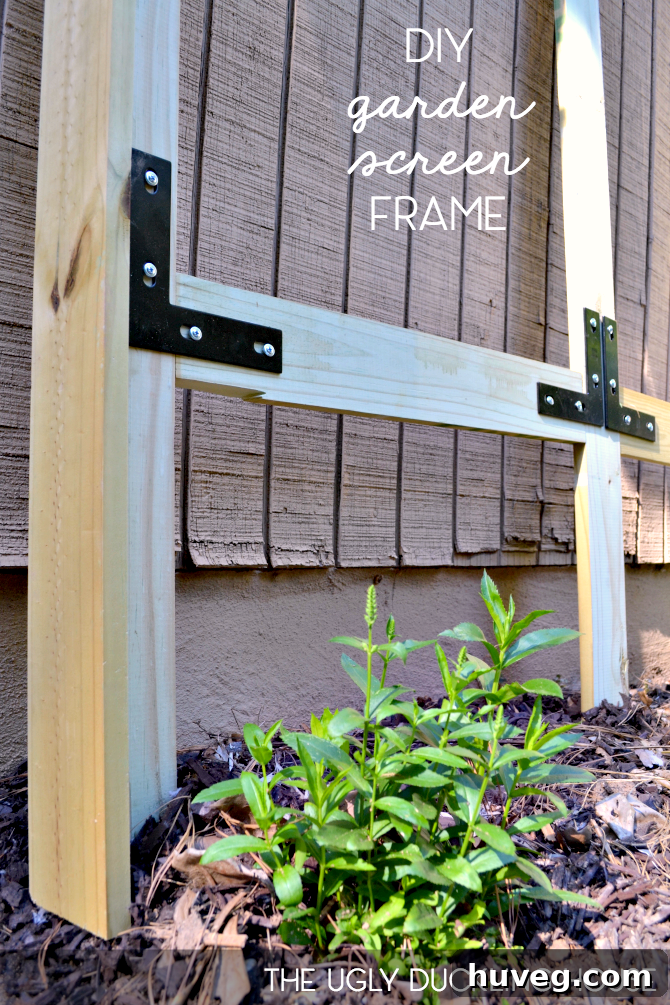
Speaking of projects, you might have caught a glimpse on my Instagram feed of a recent endeavor when the skies were still clear: making significant headway on the wooden screen I designed to conceal our outdoor trash cans. This project, aimed at improving our home’s curb appeal and functionality, largely mirrored the construction of the air conditioner screen I tackled last summer. The primary difference for the trash can enclosure was the inclusion of a more decorative frame, enhanced with elegant black outdoor hardware, a process you can delve into further here.
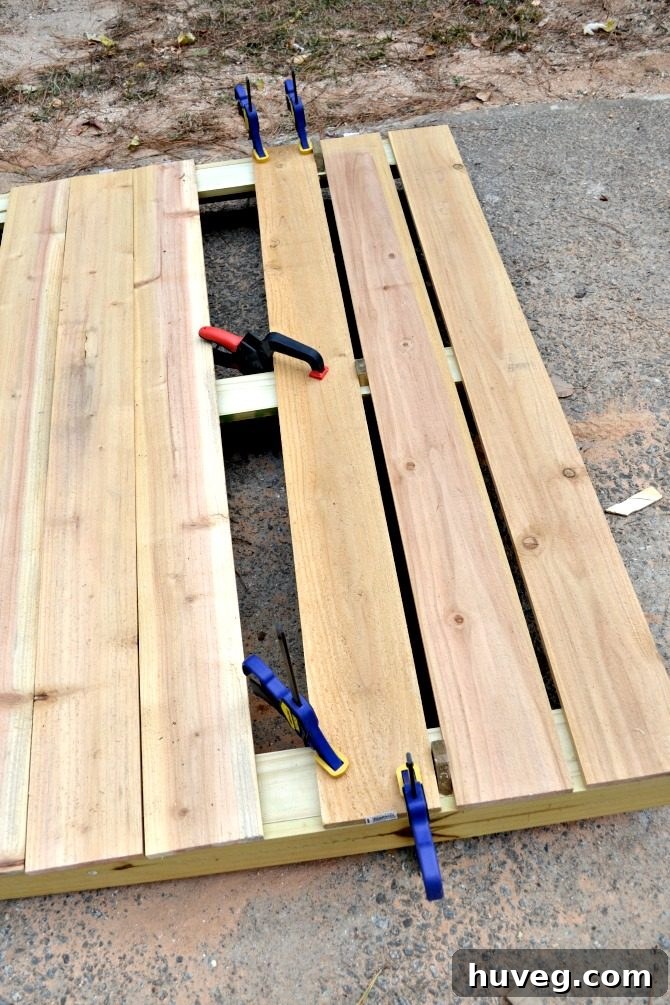
Building these slats for the screen requires patience, involving a cycle of clamping and waiting for the glue to set. One afternoon, finding myself momentarily out of supplies, I decided it was the perfect opportunity for a small adventure. I’d been meaning to visit a local lumberyard, located about twenty minutes north, just past an intriguing kilt store and, believe it or not, a goat sporting a poncho. (I promise, no hallucinations were involved; it was quite a sight!)
Stepping into the World of Specialty Lumber: My First Lumberyard Visit
While I’ve frequented many specialty shops over the years, walking into a dedicated lumberyard felt different. It was a realm I hadn’t truly explored, a “next level” step in my DIY and woodworking journey that felt a bit intimidating. I envisioned myself clearly out of my element, unsure of the etiquette or even the right questions to ask. So, rather than aimlessly wandering, I decided to proactively seek guidance. I approached a friendly salesperson in the front office and openly confessed my inexperience. Her immediate offer to introduce me to one of the seasoned experts in the back was incredibly reassuring.
The gentleman who took me under his wing proved to be an invaluable guide. He patiently walked me through the various sections, demystifying the pricing structures, explaining what the cryptic markings, numbers, and tags on the wood pieces signified. It was a crash course in lumber logistics! For instance, I learned that the colorful paint on the ends of the wood planks simply identifies the mill of origin, a fact that surprised me as I had mistakenly assumed it indicated pricing or grade. This simple revelation alone began to chip away at my initial apprehension, making the vast warehouse feel less daunting.
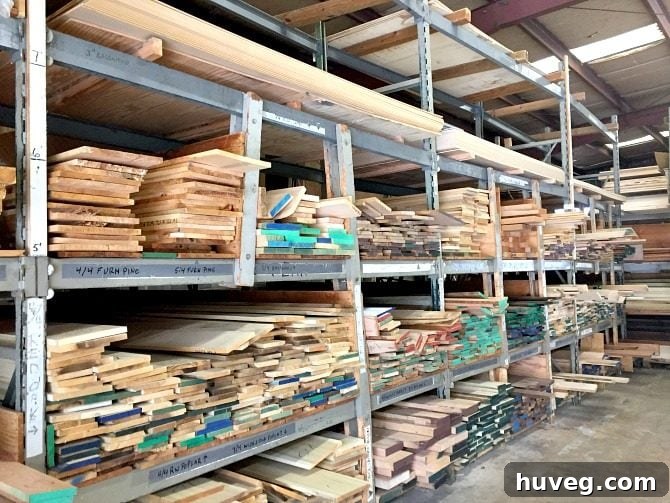
After our guided tour, filled with terms that, while somewhat new to me then, I diligently researched later, he graciously allowed me to explore on my own. It was a fantastic opportunity to absorb the atmosphere, marvel at the raw beauty of the wood, and take mental notes of all the fascinating details. For anyone considering their own visit to a specialty lumber supplier, here are some key insights I gathered that I believe you’ll find incredibly helpful for your next woodworking or home improvement project:
Understanding Hardwood Lumber: Key Terms and Considerations
Board Thickness: The “Quarter” System Explained
Unlike the standardized dimensions found at big box hardware stores, lumberyards often sell wood in thicknesses based on a “quarter” system. This system uses 1/4-inch increments. So, when you see “4/4” (pronounced “four-quarter”), it refers to a board that is nominally one inch thick. Similarly, “5/4” would be 1.25 inches thick, “6/4” is 1.5 inches, and “8/4” is two inches. It’s crucial to understand that these are the rough, pre-milled dimensions. The final thickness will be slightly less once the wood is planed and surfaced.
Rough vs. Surfaced Lumber: Choosing Your Starting Point
One of the most significant differences between a lumberyard and a retail building supply store is the state of the wood. At a big box store, you typically buy “S4S” (surfaced four sides) lumber, which is smooth, squared, and ready for immediate use. In contrast, most boards at a lumberyard are sold “rough,” meaning one or more sides may be unfinished, uneven, or still show saw marks. Opting for rough lumber means you’ll need to put in additional work to plane and smooth all four sides yourself before you can accurately work with it (unless you’re specifically going for a live edge aesthetic). This process requires specialized tools like a table saw, a jointer, and a planer. Many seasoned woodworkers prefer buying rough lumber because it allows for greater control over the final dimensions and finish, often at a lower initial cost per board foot.
It’s also vital to consider this when it comes to pricing. The measurements used for pricing rough lumber are based on its original, rough dimensions. For example, if you purchase a 4/4 (nominally 1-inch thick) board, and then plane it down to a finished thickness of 3/4-inch to achieve a smooth surface, you are still paying for the original 4/4 measurement. This concept isn’t entirely foreign; it’s similar to how a “2×4” from a big box store isn’t actually 2 inches by 4 inches, but rather its nominal dimensions. Length, however, is generally true to its stated measurement.
Variable Length and Width: The Beauty of Unique Cuts
Unlike the predetermined lengths and widths you find in retail stores, lumberyards offer a wider range of variability in both length and width. This means you might find longer boards than typically stocked elsewhere, or wider planks that are perfect for specific projects like tabletops or wide panels without needing to glue multiple pieces together. This variability, while requiring more careful selection, opens up a world of possibilities for custom projects and makes each piece of wood truly unique.
Pricing by the Board Foot: A Different Math for Your Materials
Perhaps the biggest adjustment for those new to lumberyards is the pricing method: the “board foot.” One board foot is defined as a piece of wood measuring 12 inches by 12 inches by 1 inch thick. This unit of measure allows lumberyards to price wood consistently regardless of its varied dimensions. To calculate the cost for your desired piece, you’ll need to do a bit more math than simply looking at a linear foot price. The formula is: (Thickness in inches * Width in inches * Length in inches) / 144. This system can seem a little complex at first, but it’s an efficient way for suppliers to manage inventory and for customers to purchase exact volumes of wood for their specific needs.
Discovering Diverse Wood Species and Unique Grains
Beyond the technicalities of measurement and pricing, one of the most exciting aspects of visiting a specialty lumberyard is the sheer variety of wood species available. The shelves are typically organized by species, but within each section, every piece tells its own story. While I’m accustomed to working with readily available poplar, cedar, oak, and pine from larger chain stores, this trip allowed me to explore a much broader spectrum. I’ve previously picked up smaller, more manageable pieces from woodworking specialty shops like Rockler, but seeing the raw, large stock opened my eyes to the true diversity.
The experience was genuinely exhilarating, especially observing the vast range of wood types, each with its distinct color, texture, and grain pattern. One side of the building was dedicated entirely to molding, showcasing intricate details and profiles. However, the largest section was a treasure trove of varying sizes and widths of different species. I admit, I have a particular fondness for walnut and other woods that exhibit rich variation and character in their grain. The unique names were also a delight — take, for instance, the captivating “wormy maple.” Isn’t it absolutely gorgeous?
This “wormy maple” isn’t just beautiful; it tells a story. The distinctive patterns and streaks are created by ambrosia beetles, which burrow into the tree, introducing a fungus that stains the wood. This natural process results in striking, one-of-a-kind designs that are highly prized by woodworkers and furniture makers looking for unique aesthetics.
Exploring Beyond the Stock: Live Edge Lumber and Future Adventures
I continued my conversation with the knowledgeable gentleman, specifically inquiring about live edge wood, with visions of a rustic new coffee table dancing in my head. While this particular location didn’t have live edge slabs available for sale at the moment, he was incredibly helpful, providing contact information for another supplier. This second supplier, he explained, holds clearance sales a few times a year when they receive large shipments of unique wood, including live edge pieces. The prospect of exploring that resource is incredibly exciting, and I’m eagerly anticipating the opportunity. Rest assured, if (or rather, *when*) I embark on that adventure, I’ll be sharing every detail and discovery right here!
As a final gesture of helpfulness, the woman at the front desk printed out a comprehensive catalog of all the types of wood and related products they typically carry. This guide will be an invaluable resource as I continue to learn and plan future projects. I was genuinely touched by how welcomed and supported I felt throughout my visit. What began as a somewhat intimidating foray into an unfamiliar world transformed into an enriching and inspiring experience. I’m optimistic that 2017 will be the year I make this lumberyard a much more familiar and frequent destination, truly embracing the “maker” side of home improvement.
Ready to Dive Deeper into Woodworking?
My first expedition to a specialty lumberyard was a profound learning experience, and it certainly won’t be my last. It demystified many aspects of sourcing raw wood and opened my eyes to the incredible variety and possibilities that lie beyond the standard offerings of big box stores. I hope these insights help you feel more confident about exploring these resources yourself.
Did I manage to capture all the essential vocabulary and nuances correctly? (A lifelong learner’s humble inquiry!) More importantly, do you have any personal tips, tricks, or advice for navigating lumberyards or working with specialty woods? Perhaps a favorite wood species or a calculation shortcut? I would absolutely love for you to share your wisdom in the comments below. Let’s build a community of knowledge and inspire each other’s woodworking journeys!