My Completed Crown Molding Imperfections and the Tool That Got It Done

The final touches have been applied, and I’m thrilled to announce that the crown molding in the laundry room is officially complete! This project, much like many DIY endeavors that initially seem daunting, turned out to be far less intimidating than the elaborate fears I’d built up in my mind. For those of you who offered gentle encouragement and insight on my previous update regarding this room, I’m happy to concede: you were absolutely right. The sense of accomplishment in conquering a new skill, even with a few learning curves, is incredibly rewarding.
Embracing the Journey: From Hesitation to Installation
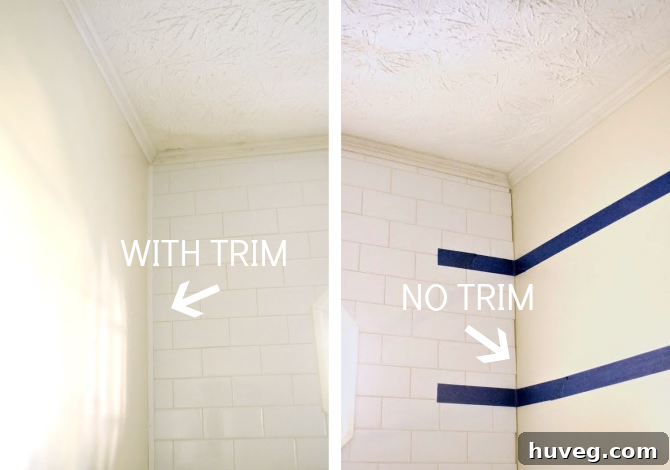
Let’s rewind a bit to the beginning of this particular project. When I initially purchased the crown molding for the laundry room, I made a conscious decision to opt for a smaller profile, specifically less than 2 inches in height. This choice wasn’t arbitrary; it stemmed from an initial uncertainty about the scope of the project. I debated whether to install it along all four walls or simply add a single piece above the wall adorned with a tile backsplash. The flexibility of a smaller molding felt appropriate for this indecision.
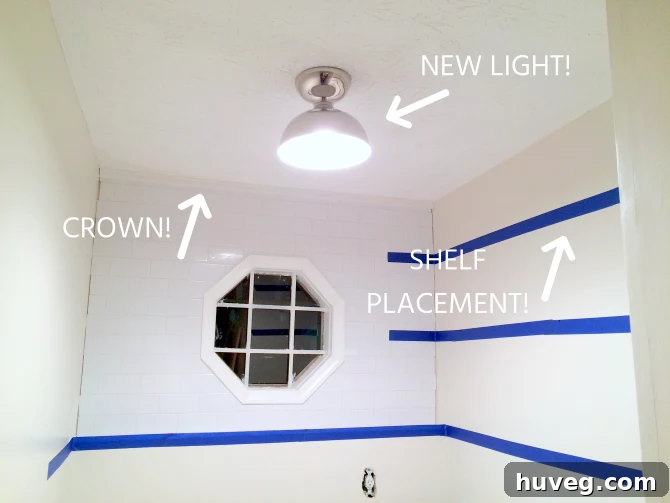
Ultimately, the primary motivation for the crown molding was practical: to elegantly conceal some less-than-perfect edges. For those who followed my previous updates, you might recall that this particular tile project involved utilizing leftover pieces from my kitchen renovation. These weren’t premium, perfectly cut tiles; rather, they were often “oops” pieces that would otherwise have been discarded. Consequently, the upper and side edges often featured some noticeable jaggedness, which I knew would benefit from a clever disguise.
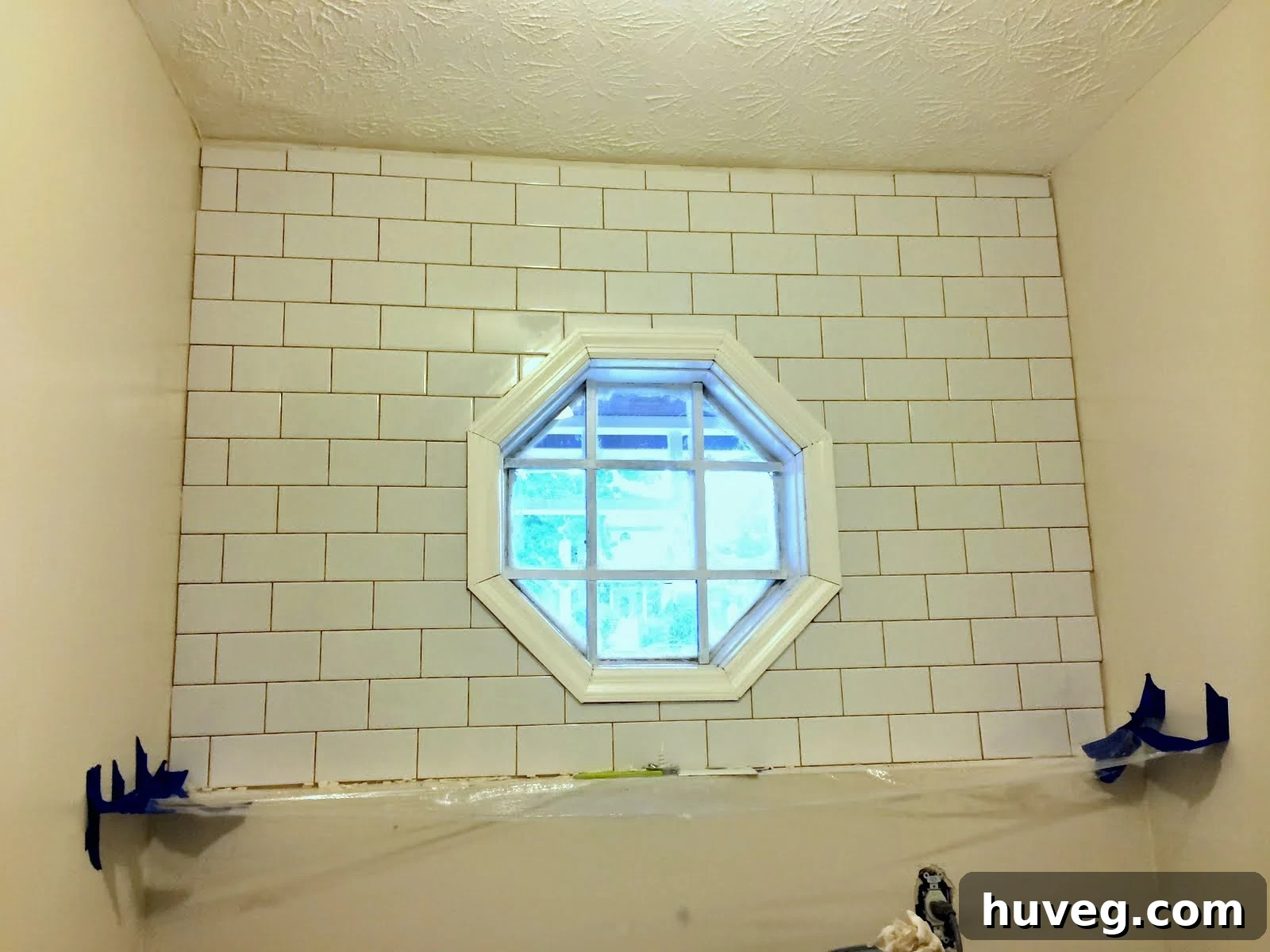
DIY Resource: For anyone looking to tackle their own tiling projects, check out my guide on How to Tile a Backsplash for helpful tips and tricks.
The initial idea of using crown molding merely to hide those imperfections evolved. As I contemplated the aesthetics of the room, it became clear that the space truly needed the molding to extend around the entire perimeter. However, a significant hurdle remained: I had never installed crown molding before. This lack of experience, particularly concerning the notoriously tricky mitered corners, had been a major source of apprehension, leading to considerable procrastination. It’s easy to get caught in a loop of “I’ll do it later” when facing an unfamiliar task, often finding delightful distractions like a new season of Teen Mom on Hulu instead of tackling the looming project.
Conquering Corners: The Reality of DIY Perfection
But finally, I took the plunge. And the result? Well, let’s be honest, most of my corners are far from perfect. In fact, if I were aiming for professional-grade flawless finishes, I might be declaring this a “sad trombone” moment for my corner-making skills. There’s one exception though: the outside corner. That one, I’m genuinely quite proud of!
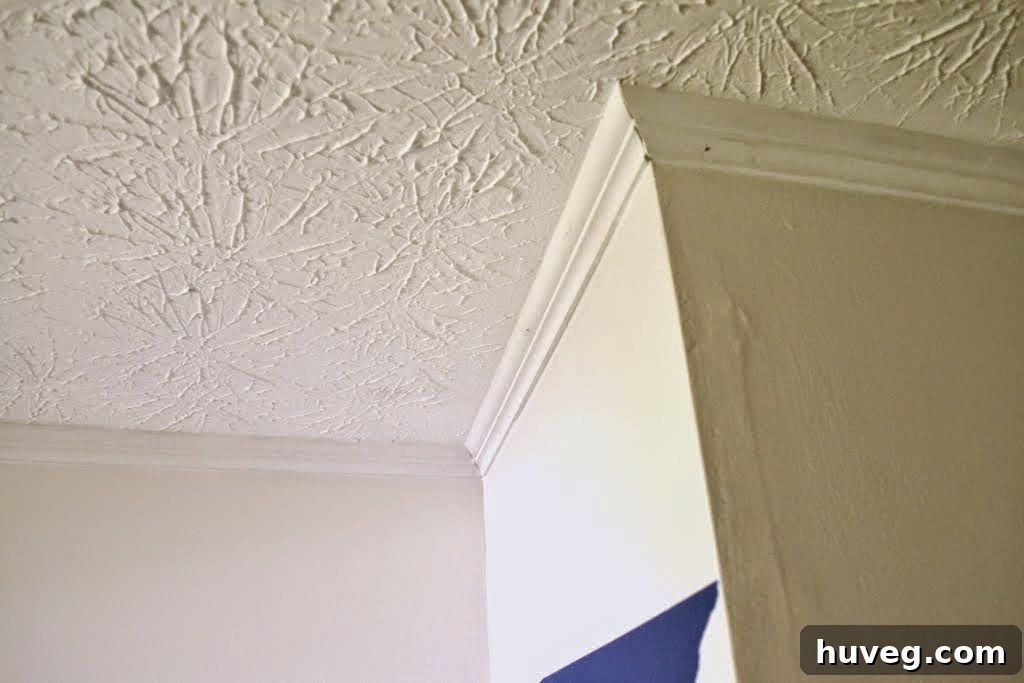
Here’s the thing about DIY, especially in an older home that has truly “seen better days”: absolute perfection is often an unachievable and ultimately futile goal. This house, like many charming older properties, doesn’t boast perfectly level ceilings or mathematically precise 90-degree corners. Expecting every cut and joint to align flawlessly is setting oneself up for disappointment. Instead, the true victory lies in problem-solving and in the satisfaction of transforming a space, even if it means embracing a few “character marks.” The real triumph is in finally installing the crown molding, seeing how much better the room looks, and knowing that I overcame a significant personal hurdle.
And for those moments when things don’t quite line up? That’s where caulk and spackle become your ultimate DIY secret weapons. These humble materials are nothing short of miraculous, capable of transforming what might appear to be a shoddy corner into something surprisingly neat and polished. My friend Sandra, a true expert in crown molding installation, even shares a fantastic tutorial demonstrating that even her projects don’t always look pristine right off the bat. The lesson here is clear: don’t be discouraged by initial imperfections. Once paint is applied, these minor flaws become virtually undetectable.
I wanted to share these in-progress shots with you specifically so you could see the patching and remedial work before everything gets painted over. My hope is that by seeing the “flubs” and acknowledging that even a dedicated DIYer experiences them, you’ll feel more confident when embarking on your own crown molding project. It’s a powerful reminder that with a little patience and the right finishing touches, the end result will turn out just fine.
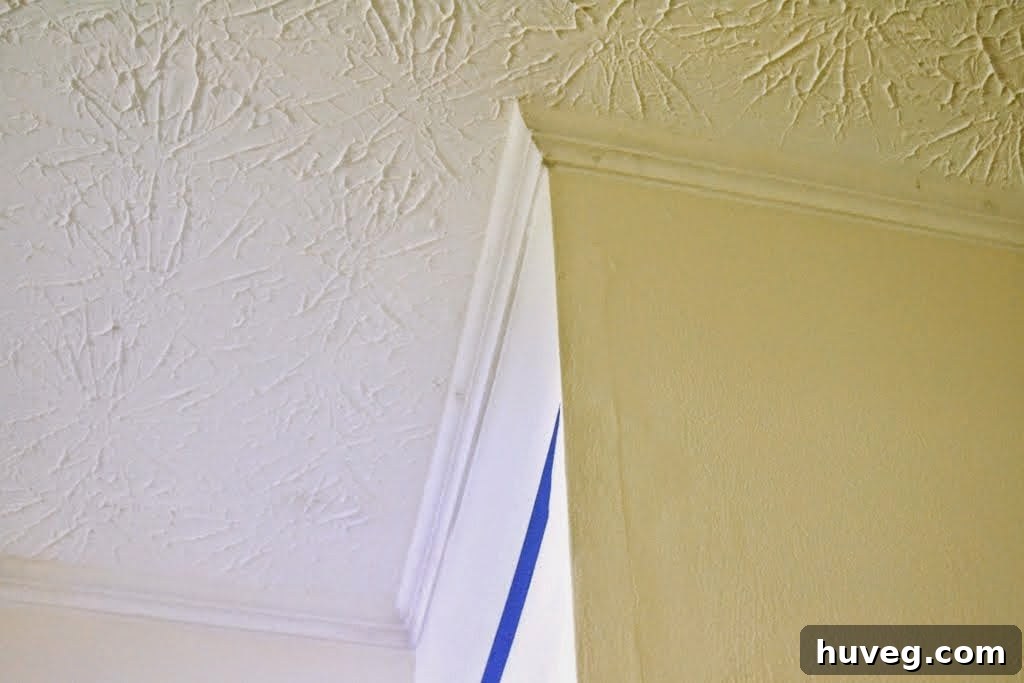
And if, by some highly unlikely chance, a guest ever visits and scrutinizes my laundry room crown molding corners closely enough to point out any imperfections? Well, let’s just say their beer privileges would be immediately revoked. While it might be impolite not to offer a beverage, someone who nitpicks the imperfect corners of your ceiling’s crown molding—especially in a utilitarian space like a laundry room—is, in my humble opinion, an asshole.
Beyond the Molding: Addressing Lingering Issues and Final Touches
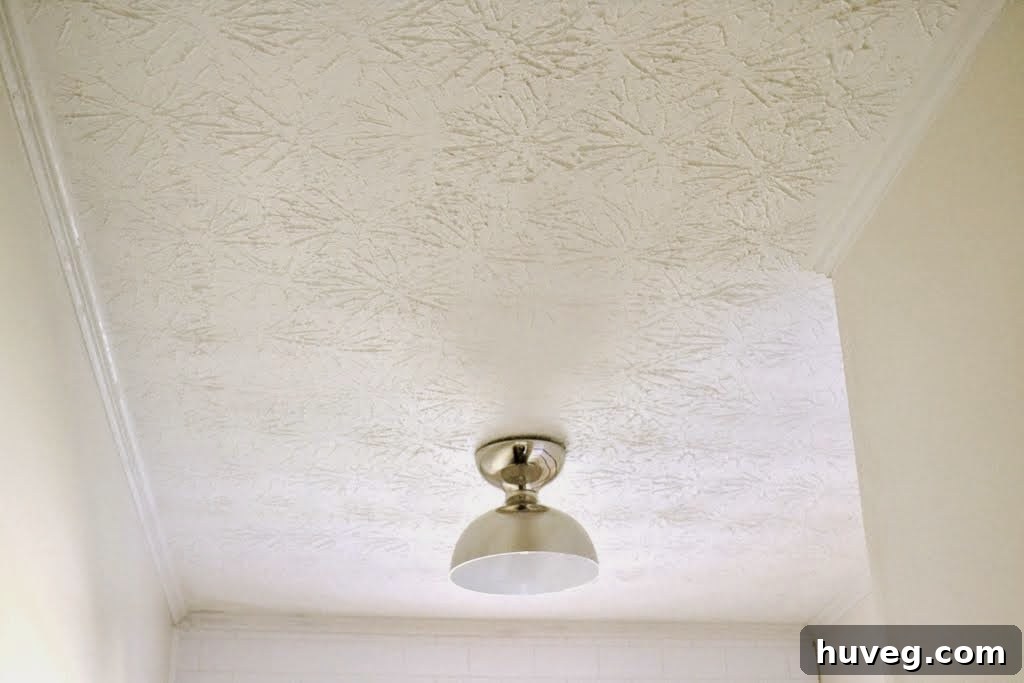
On another note, there’s a stubborn ceiling stain in one corner, a lingering reminder from the primary bathroom leak last winter. It actually looks even worse now, partly because I had to take down one of the crown pieces after accidentally installing it upside down (a moment of sheer frustration, I assure you!). However, a good quality primer followed by fresh paint should make everything look dramatically better. In fact, that stain persisted even after an earlier priming and painting attempt, so this re-priming and painting will be a crucial step in properly sealing the area. Beyond that, the added trim along each side of the crown molding remarkably cleans up the edges, making the corner appear much more finished and intentional.
Essential DIY Tool: Mastering the Nail Set
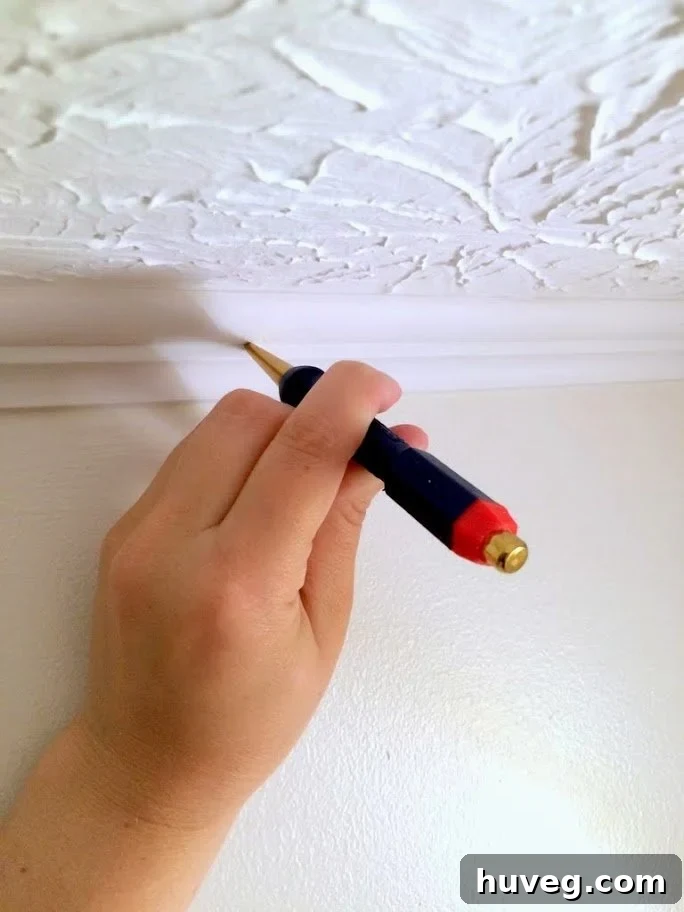
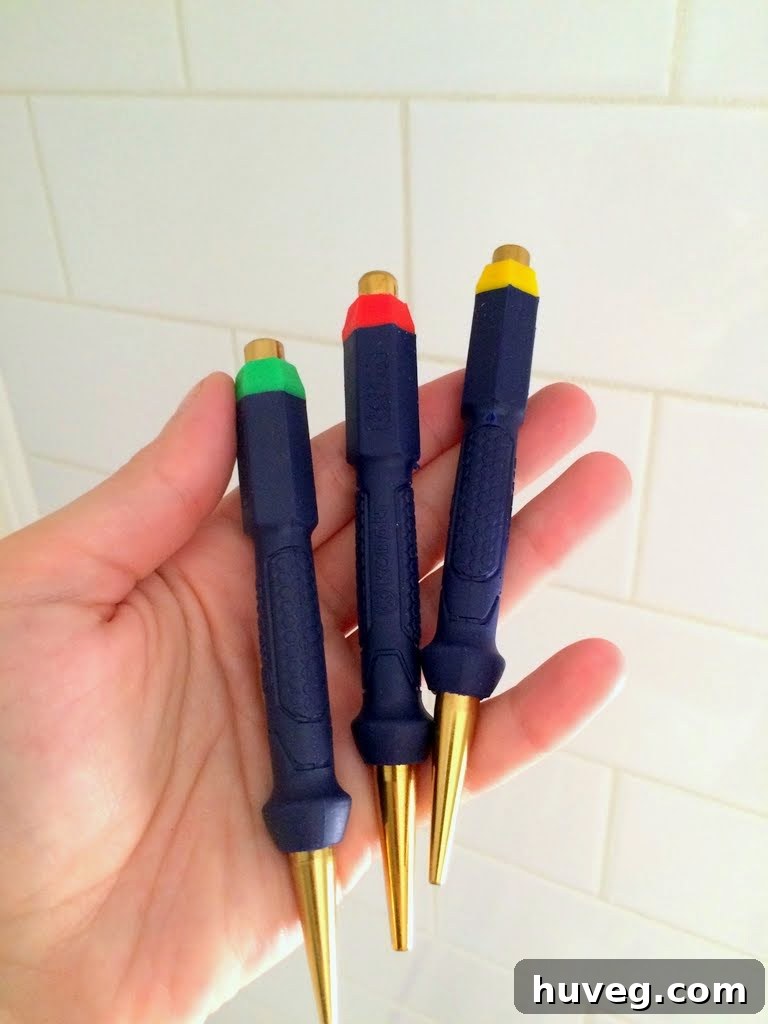
During this crown molding installation, I also wanted to highlight a truly invaluable tool that I don’t believe I’ve mentioned before: the nail set. In the image below, you’ll see a set of these handy devices. The core purpose of a nail set is quite simple yet incredibly effective: it’s designed to drive nails that haven’t quite fully sunken in after using a nail gun (a tool I absolutely adore for its speed and efficiency!). Even with the best nail gun, sometimes a nail head will sit slightly proud of the surface, and that’s where this small but mighty tool comes into play.
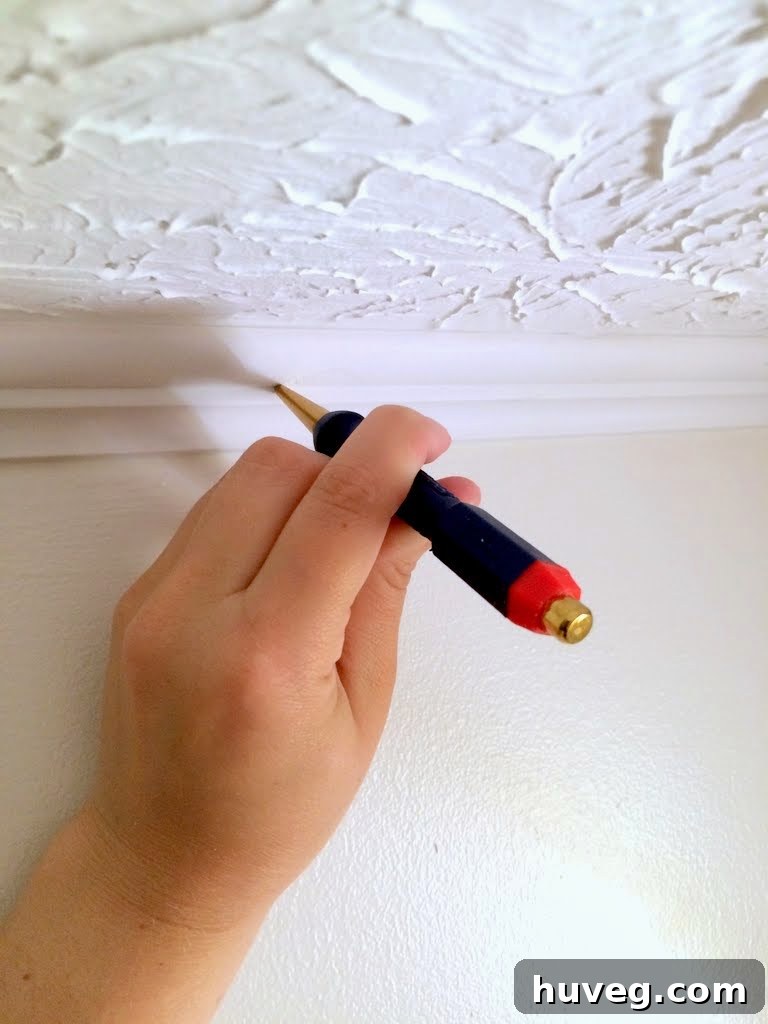
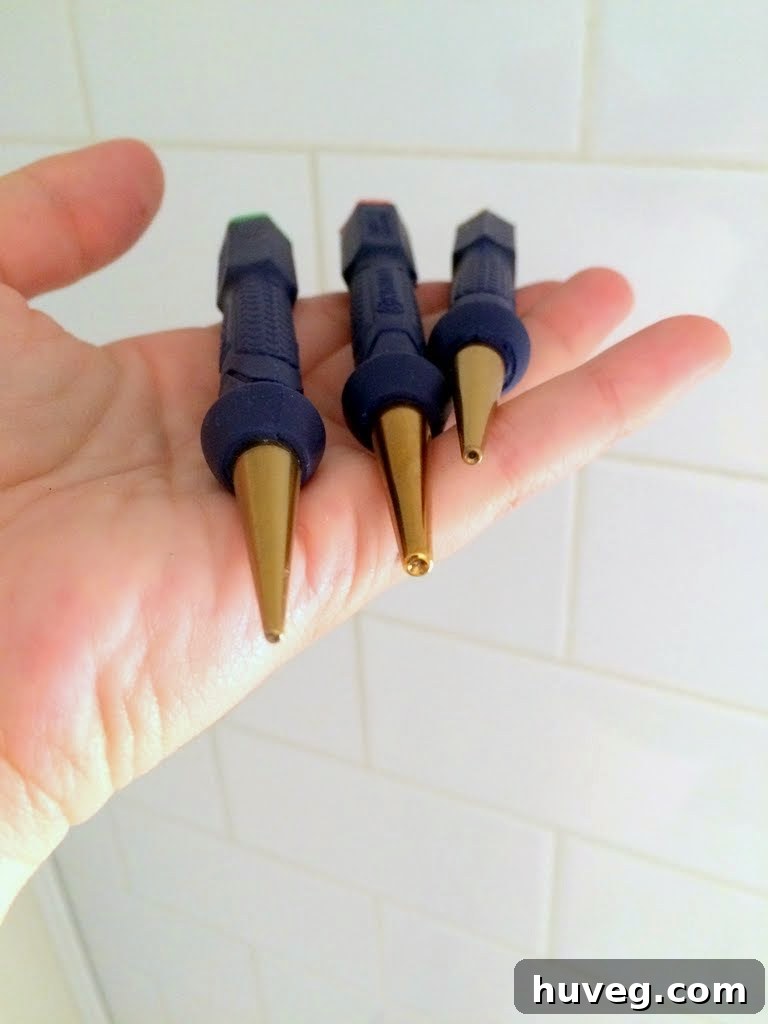
When you pick up a nail set at your local hardware store, such as Home Depot or Lowe’s, it typically comes in a set of three. These different sizes are all for the same fundamental purpose but cater to various nail head dimensions. Often, they are color-coded, making it easy to quickly grab the right size for the task at hand. As you can observe in the next image, each end of the nail set features dimples of varying sizes. These dimples are crucial because they perfectly cup the nail head, preventing the tool from slipping off when struck with a hammer. It’s an inexpensive addition to any DIY toolkit, and I wholeheartedly recommend acquiring one if you plan on undertaking any molding projects. You can find a similar set through Amazon affiliates. This small investment will save you from the frustration of hammering directly onto your trim and potentially damaging it, or from having to paint over unsightly protruding nails!
Unfortunately, I only had two hands while I was actively using this tool, so you might need to engage a bit of your imagination to visualize the process clearly. Alternatively, you can always refer to Sandra’s concise tutorial for a visual explanation. In essence, the process is straightforward: you simply place the tip of the nail set directly onto the head of the protruding nail, and then gently tap the other end of the nail set with a hammer to drive the nail further into the molding. Some nails will sink with just a couple of taps, while others may prove a little more stubborn. Don’t hesitate to switch to a different size nail set if the first one isn’t cooperating; sometimes a slightly larger or smaller dimple will provide a better grip. Be mindful that if you’re working with very tiny brad nails, using a larger nail set might leave a slight indentation in the molding. However, this is easily rectified by filling it in with a bit of wood filler or spackle, which you’ll likely be doing anyway as part of your caulking and spackling routine. Incorporating this step into your finishing process makes it incredibly efficient and ensures a smooth, ready-to-paint surface. It’s super easy and yields professional-looking results!
What’s Next for the Laundry Room and Beyond?
And that’s the wrap-up for the crown molding project! Tonight, my focus shifts to working on the floating shelves, which will truly complete the functionality and aesthetics of the laundry room. By Friday, I anticipate having more small house updates to share with you all, as the ongoing saga of home improvement continues. How was your past weekend? What exciting projects are on your list to tackle this week? I always love hearing about what you’re working on!