From Scraps to Serenity: Building a Mini Deck Garden

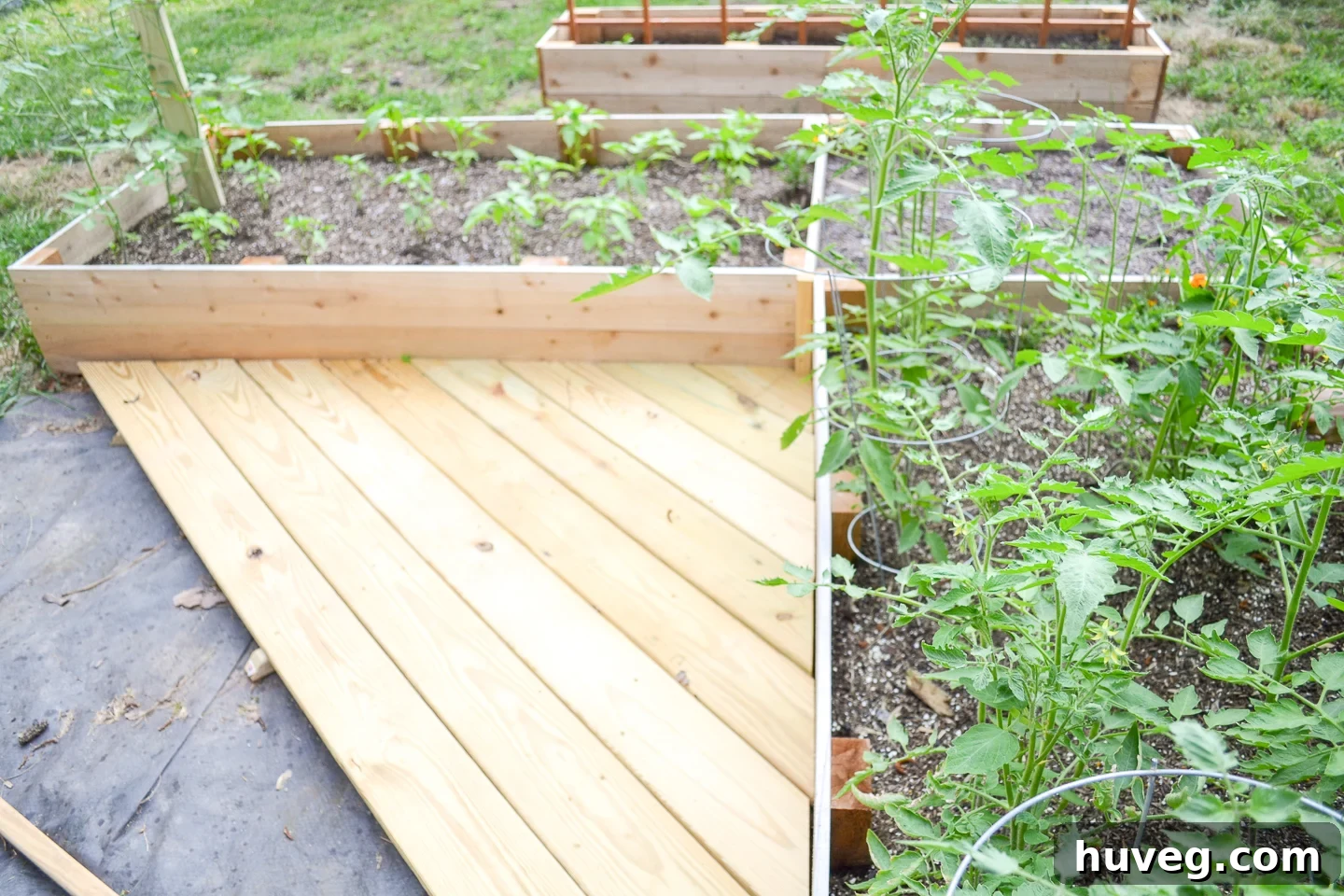
DIY Mini Garden Deck: Transforming Your Vegetable Garden with Scrap Wood
Are you tired of muddy shoes and messy garden paths, especially after a refreshing rain? If you’ve been spending more time tending to your vegetable garden, you know the struggle of keeping your feet dry while navigating damp soil. This clever “mini garden deck,” ingeniously crafted from leftover deck boards, offers a simple yet revolutionary solution, making a significant difference in how you interact with your green oasis.
Hello fellow DIY enthusiasts and garden lovers! As you might recall from recent deck updates, my days have been filled with outdoor projects. Between tackling a new vegetable garden, meticulously planning a new shed build, and generally embracing the joys of summer, I’ve also grown quite weary of battling persistent mud patches. Georgia’s spring rains this year were particularly relentless, turning much of my garden area into a soggy challenge. With summer officially in full swing and a surplus of scrap deck boards at hand, I decided to tackle this common garden dilemma head-on. Participating in the inspiring #scrapwoodchallenge, I devised my own practical and aesthetically pleasing solution for enhanced garden maintenance – what I affectionately call my “mini garden deck.”
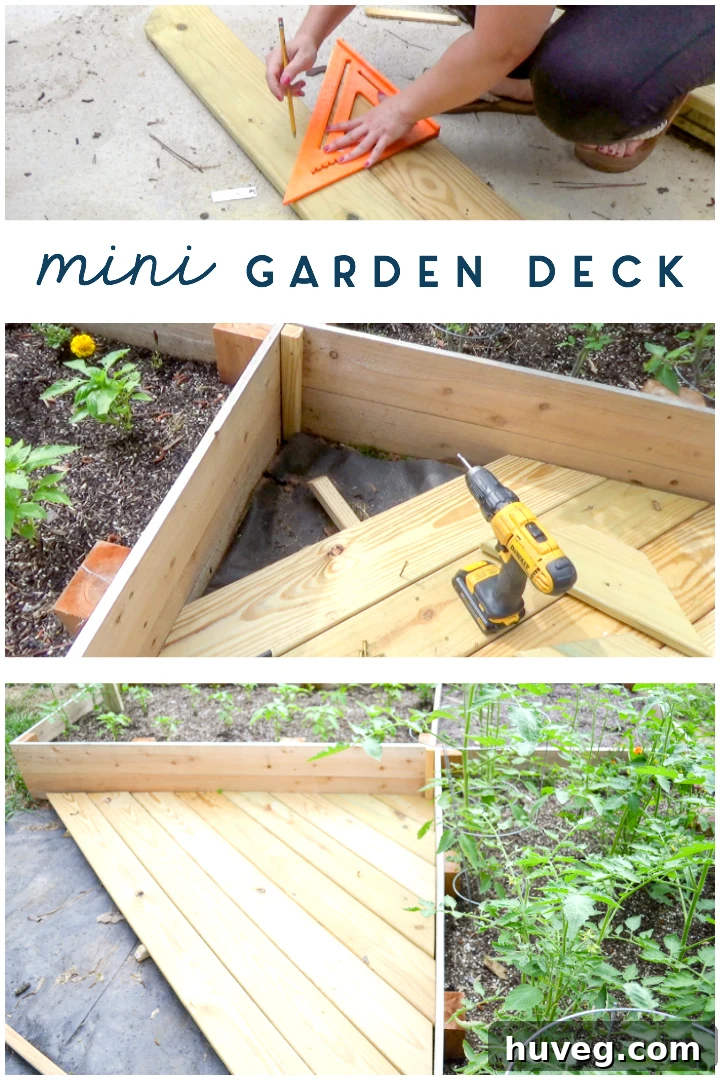
The Imperative for a Mud-Free Garden Path
My new L-shaped vegetable garden bed, while incredibly rewarding, has been a journey of continuous learning. One critical realization was the sheer volume of foot traffic this area would endure for regular upkeep. From planting delicate seedlings to watering thirsty crops, harvesting bountiful produce, and routine weeding, frequent visits are absolutely essential for a thriving garden. However, this constant activity, especially on moist soil, inevitably leads to compaction and erosion. The initial charm of a pristine garden can quickly give way to muddy trails and worn-out patches.

As proud as I am of the progress and the health of my growing plants, a noticeable drawback emerged. The inner triangle of the L-shaped garden bed, a natural focal point for activity, rapidly transformed into a dirt-rich, grass-poor zone. I had initially laid down landscaping fabric with the intention of covering it with gravel to create a stable path. Yet, a moment of inspiration struck when I considered the abundance of leftover deck boards from previous projects. Why invest in additional materials when a perfectly viable, cost-free solution was staring me in the face? This epiphany not only solved the mud problem but also perfectly aligned with the spirit of repurposing and sustainability.
Why a DIY Mini Garden Deck is Your Garden’s Best Friend
Beyond simply keeping your feet dry, a mini garden deck offers a myriad of benefits that enhance both the functionality and aesthetics of your vegetable patch. This simple scrap wood project is a game-changer for any gardener facing similar challenges.
- Mud-Free Access, Always: The primary and most immediate benefit is providing a clean, stable surface to walk on, regardless of weather conditions. No more tracking mud into your home or slipping on slick pathways. This means you can tend to your garden comfortably, even right after a downpour.
- Protecting Your Garden Beds: Constant foot traffic directly on soil leads to compaction, which can impede water drainage and root growth. By creating a designated path, you protect the delicate soil structure of your garden beds, ensuring healthier plants and better yields. It also prevents the erosion of grass or mulched areas around your beds.
- Enhanced Garden Aesthetics: A well-defined pathway instantly elevates the visual appeal of your garden. It provides a clean, finished look, transforming a potentially messy area into an organized and inviting space. The natural wood tones blend seamlessly with the lush greenery, adding a touch of rustic charm.
- Cost-Effective & Sustainable: Utilizing scrap materials means this project comes with virtually no additional cost. It’s an excellent way to reduce waste and give new life to materials that might otherwise end up in a landfill. This commitment to repurposing aligns perfectly with eco-conscious gardening practices.
- Easy Maintenance: The deck provides a stable platform for garden tasks. Weeding, harvesting, or even just inspecting your plants becomes a more comfortable and efficient process, as you have a solid surface to stand on. It also helps in keeping weeds at bay in the path area, especially when laid over landscaping fabric.
Essential Tools and Materials for Your DIY Mini Deck
Before you begin, gather your supplies. The beauty of this project lies in its simplicity and reliance on salvaged materials. Always prioritize safety when using power tools, wearing appropriate eye and ear protection.
Recommended Tools and Materials
(Please note: This post may contain affiliate links, which means I may earn a small commission if you make a purchase through them, at no extra cost to you. This helps support the content I create.)
- Scrap Pressure-Treated Deck Boards: These are the stars of the show. Ensure they are suitable for ground contact, especially since your deck will sit close to the earth. Pressure-treated wood is crucial for outdoor projects as it resists rot, decay, and insect infestation, ensuring your mini deck lasts for years.
- Stair Balusters (or other strips of scrap wood): These will serve as the stringers, the hidden support structure that holds your deck boards together. Don’t worry if you don’t have balusters; any sturdy, narrow strips of scrap wood will work perfectly. The goal is to have something strong enough to screw into.
- Miter Saw: Essential for making precise, angled cuts on your deck boards. A miter saw allows for consistent and clean cuts, which are key for a professional-looking finish.
- Drill: You’ll need this for driving screws to fasten the deck boards to the stringers. A cordless drill offers maximum flexibility and ease of use in an outdoor setting.
- Speed Square: An indispensable tool for marking accurate angles and ensuring your cuts are perfectly square or at your desired angle (like 45 degrees).
- Pencil: For marking cuts and screw points.
- Exterior Screws: These are designed for outdoor use and are resistant to rust and corrosion, which is vital for the longevity of your deck. Choose a length that will securely penetrate both the deck board and the stringer without poking through too far.
- Plastic Spacers (optional, but highly recommended): These are incredibly useful for maintaining consistent gaps between your deck boards. While optional, they ensure proper drainage and allow for the natural expansion and contraction of the wood. Small nails or even pennies can serve as makeshift spacers in a pinch.
- Landscaping Fabric: This is laid beneath the deck to suppress weeds and prevent vegetation from growing up through the gaps in your deck boards, contributing to a neater, lower-maintenance path.
The deck boards I opted for are specifically rated for “Ground Contact.” This designation is crucial for any wood project that will be situated within six inches of the ground, as it provides superior protection against moisture and decay. You can delve deeper into the specifics of treated lumber and its various ratings here, ensuring you select the right materials for your own outdoor endeavors.
How to Make a Mini Garden Deck from Scrap Wood: A Step-by-Step Guide
Crafting this mini garden deck is a straightforward process, even if you’re “winging it” a bit, like I was. The key is to work systematically and adapt to your available materials and space.
Step 1: Preparing Your Foundation & Arranging Stringers
First, ensure your area is clear and the landscaping fabric is smoothly laid out. This forms the base and will prevent weeds from growing through your deck. With my commitment to using up every last scrap, I utilized leftover stair balusters as stringers—the hidden support system for the deck boards. Many of these had already been cut to size for my floating deck project, making them ideal for repurposing. Even if you don’t have balusters, any sturdy strips of scrap wood will do the job.
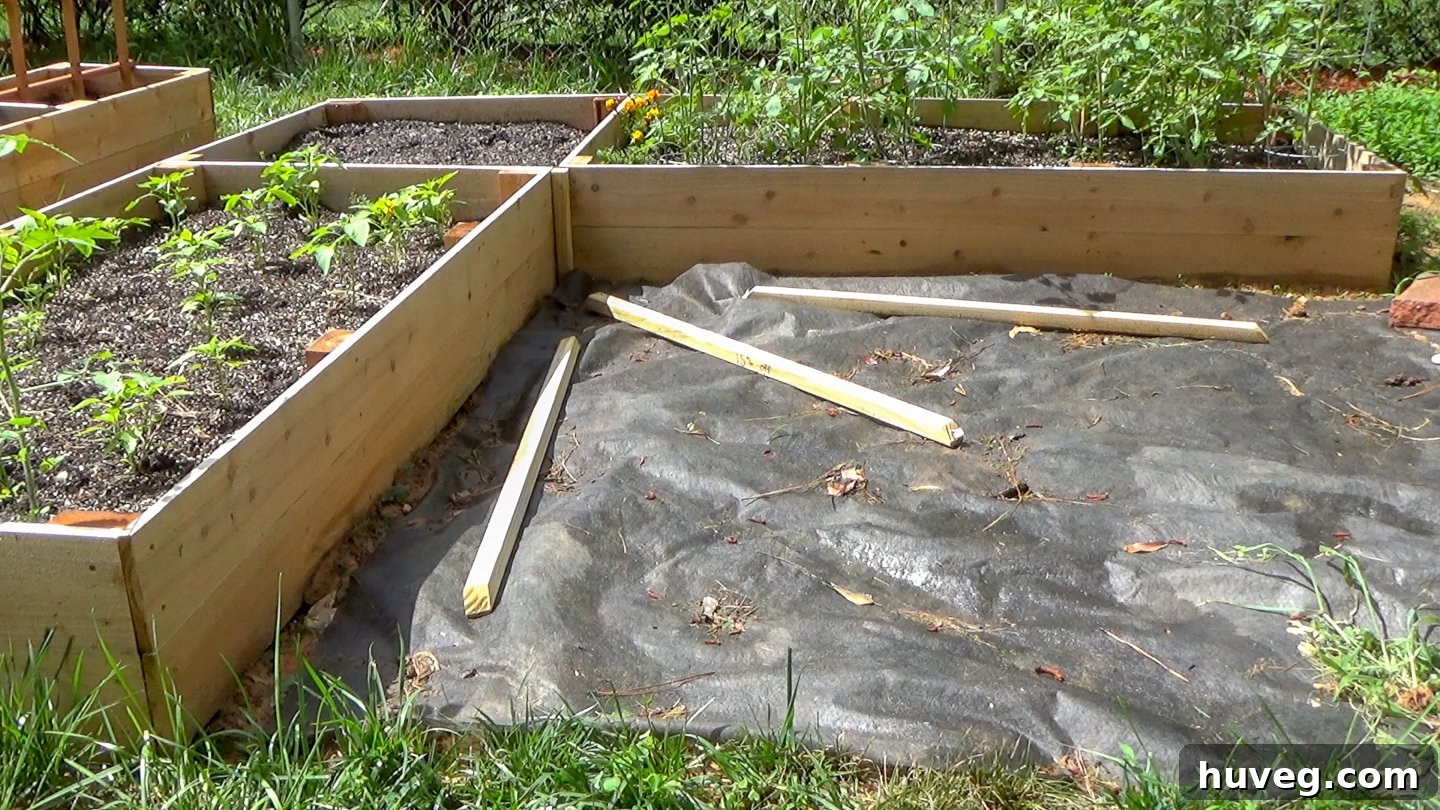
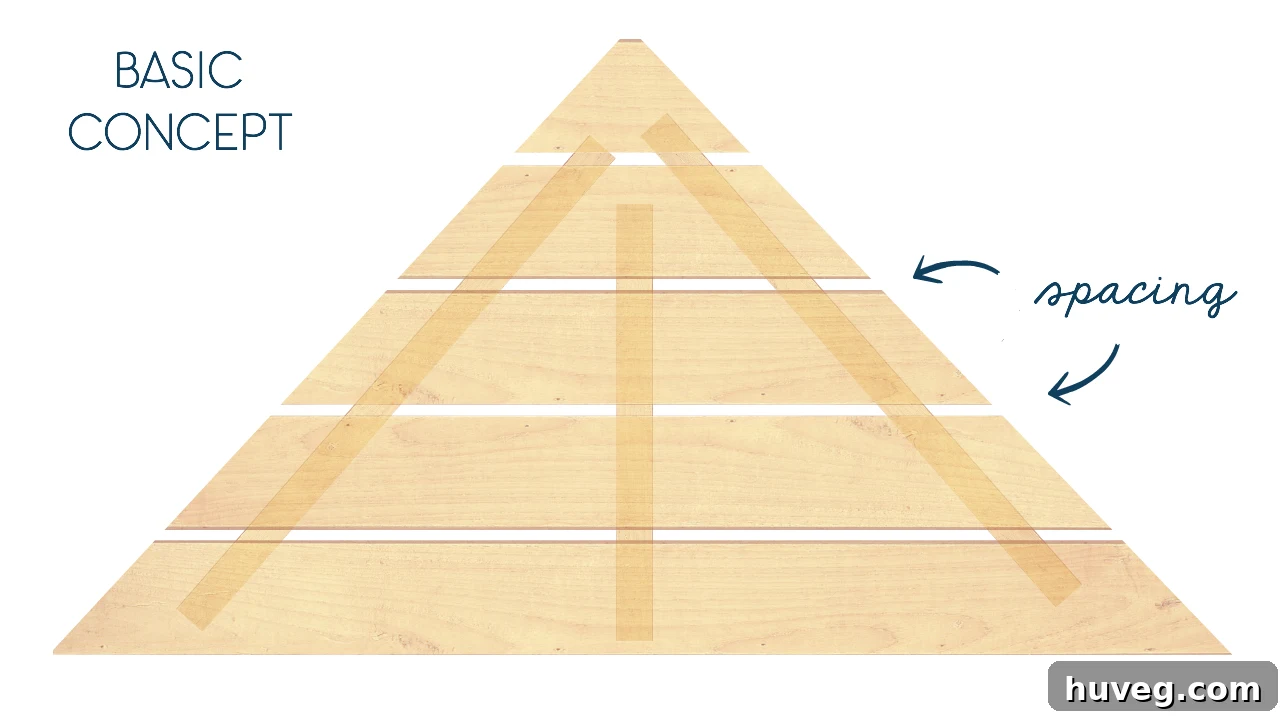
Since I was improvising, I simply placed the balusters directly on the landscaping fabric, spreading them out to form a rough triangular shape, mirroring the inner corner of my L-shaped garden bed. These pieces would serve as the attachment points for the deck boards. Think of it like the back of a wooden sign, where horizontal strips connect vertical planks, much like the examples seen here or here. The exact placement doesn’t need to be perfect at this stage, as long as they provide enough surface area for securing the deck boards.
Step 2: Cutting and Dry Fitting Your Deck Boards
I began by identifying what I envisioned as the “middle-ish” point of the L-shaped area. My first deck board was cut with 45-degree angles on both ends, allowing it to neatly fit into the corner and start defining the radiating pattern.
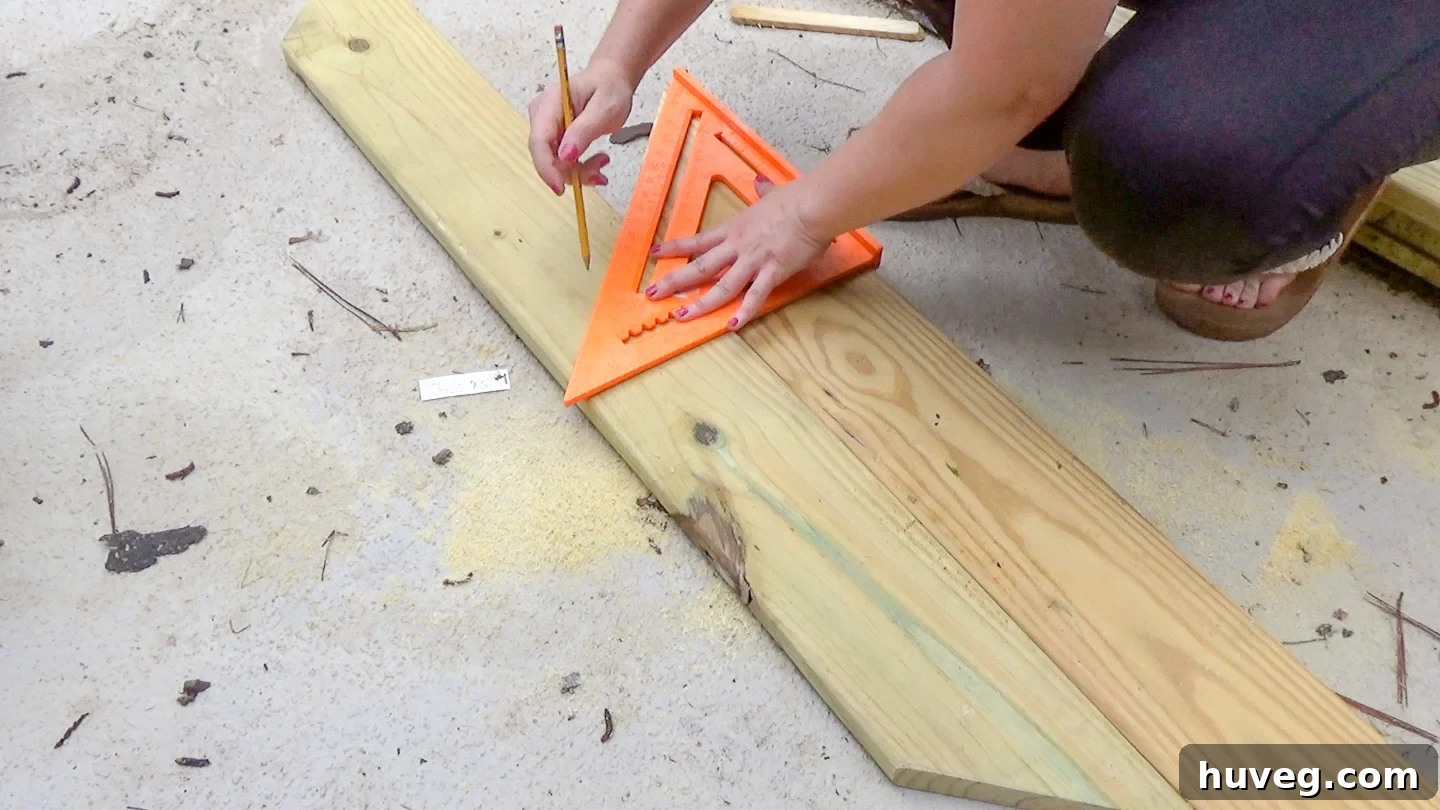
From this central piece, I continued to cut more deck boards, shaping them to progressively fill the triangular space. The key here is to “dry fit” each board. This means placing them in position without fastening them, allowing you to check the fit and make any necessary adjustments to your cuts before committing. This iterative process ensures a snug and precise arrangement for your mini deck.
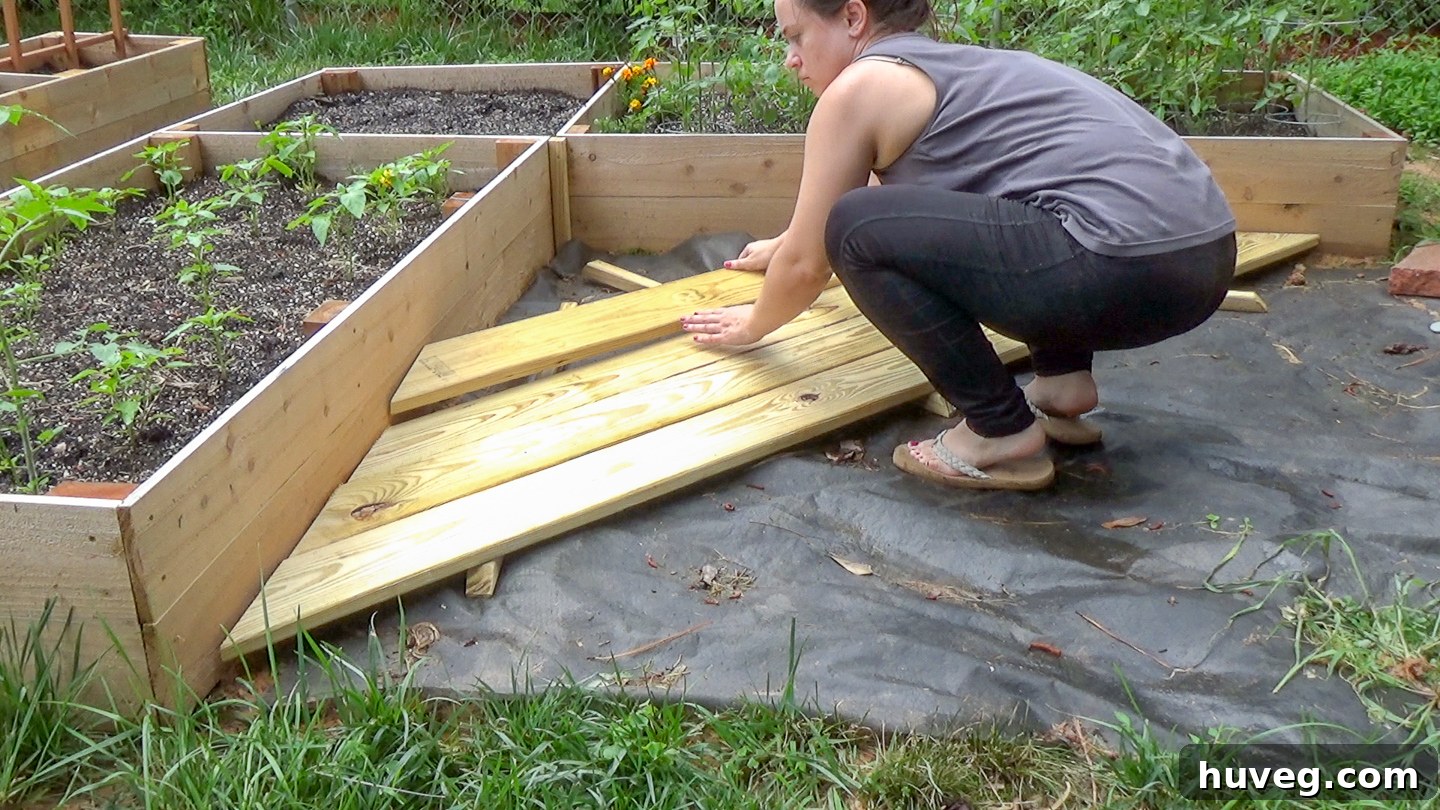
Step 3: Ensuring Proper Spacing
Maintaining consistent gaps between your deck boards is crucial for both aesthetics and the longevity of the structure. Wood naturally expands and contracts with changes in moisture and temperature. Without proper spacing, boards can buckle or crack over time. For this, I used some old plastic spacers I had kept from installing laminate flooring in my house – a testament to always holding onto useful odds and ends! These small wedges ensured uniform gaps.
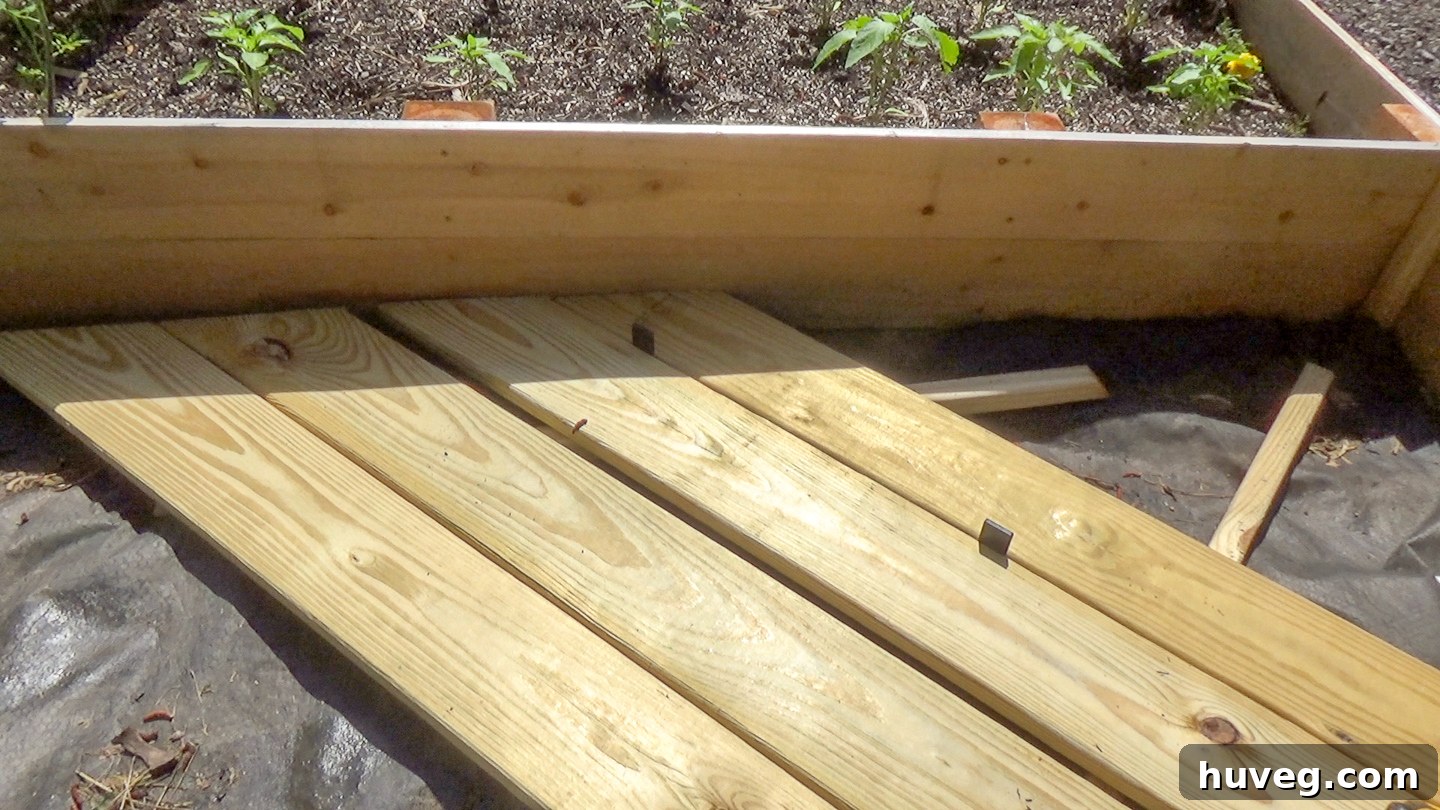
If you don’t have specialized plastic spacers, don’t worry! You can easily use a few small nails, screws, or even coins inserted between the boards as temporary wedges. The goal is simply to create a small, consistent gap that allows the wood to breathe and move freely.
Step 4: Screw Together and Fan Out to Completion
Once you’re satisfied with the dry fit and spacing of a board, it’s time to fasten it. I screwed in the first board securely, typically using two exterior screws on each end where it met a stringer, and often two more screws down the middle if the board was long enough. Ensure your screws are exterior-grade to prevent rust.

After securing one board and confirming its spacing, I would move the spacers to the next gap, position the next board, and repeat the fastening process. This methodical approach allowed me to gradually build out the triangular shape until the entire space was filled with the new mini deck.
Looking at the underside of the deck, you might find the arrangement of the stringers appears somewhat chaotic. They were placed where they could best support the deck boards, often with an improvisational touch.
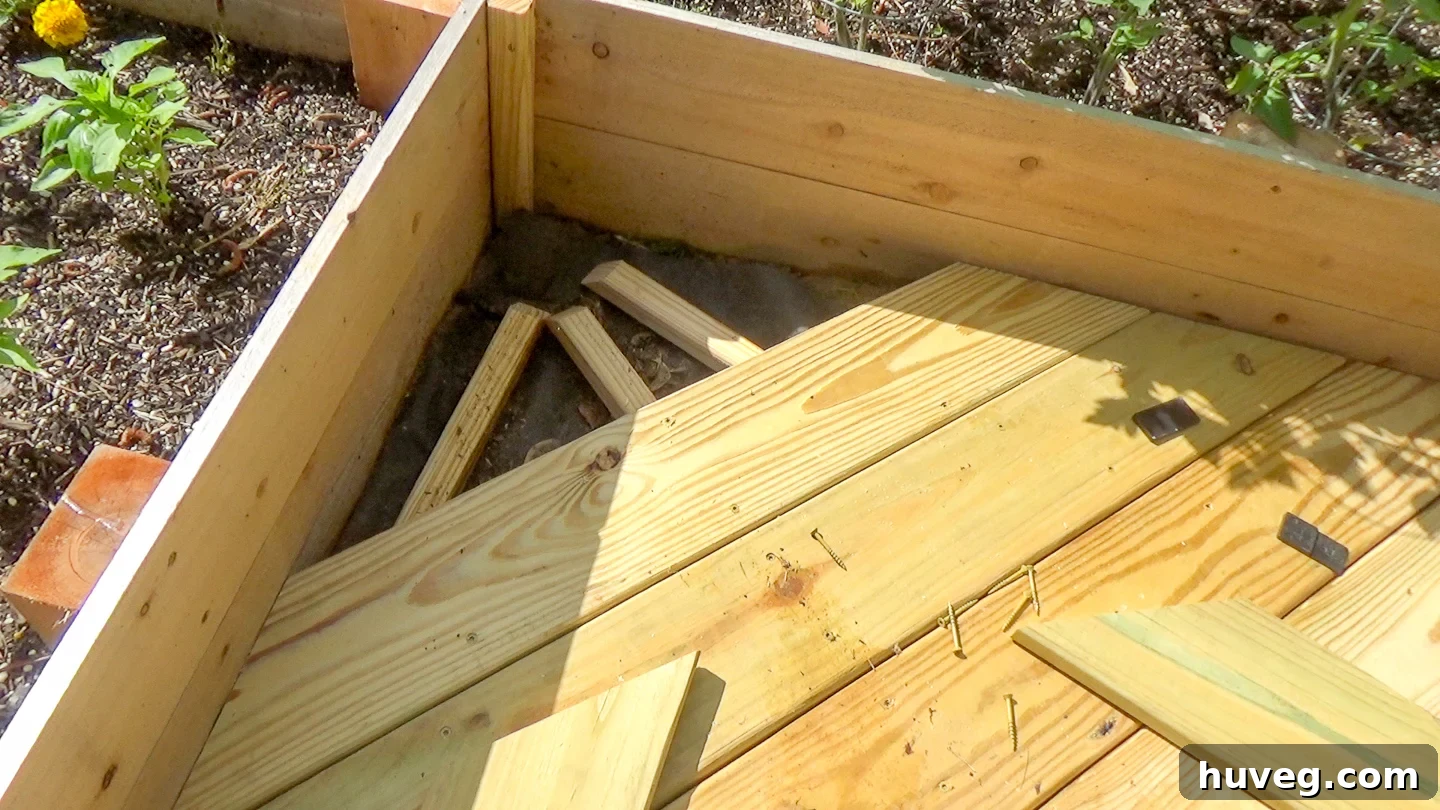
However, since this part will never be seen, what truly matters is that there’s sufficient material to securely hold the whole structure together. Given the soft ground from recent rains, a simple walk over the new platform was enough to gently settle it into place and provide stability. The innermost corner of the L-shape was particularly narrow and presented a bit of an awkward spot. I cleverly addressed this by working an extra piece of baluster vertically into the corner, which provided perfect additional support and a snug fit.
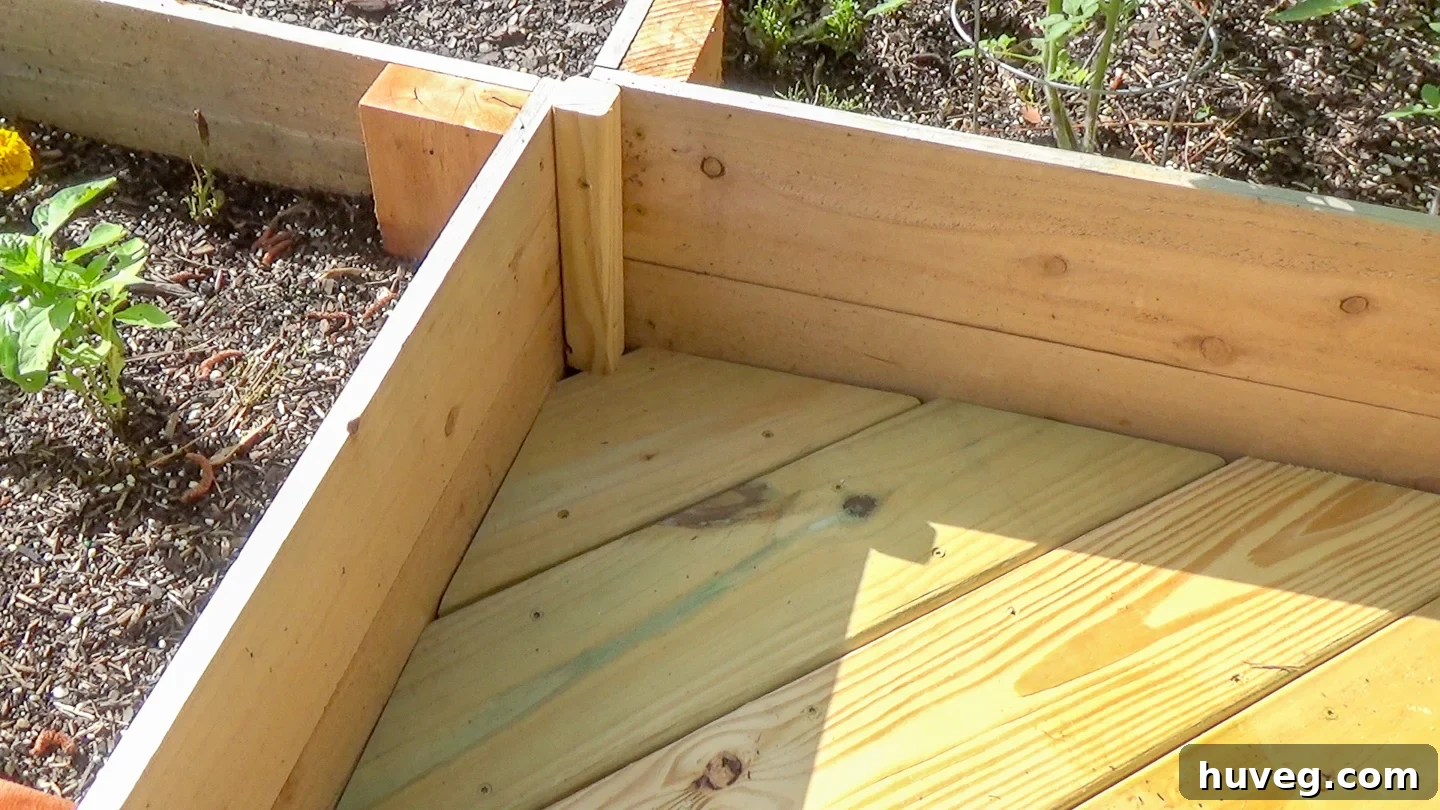
The Transformative Impact: Enjoying Your Mud-Free Garden
And just like that, the problem of muddy feet while maintaining the garden became a thing of the past! This simple scrap wood project not only provides practical access but also beautifully finishes the area, tying together the entire garden bed. The transformation is immediate and immensely satisfying.
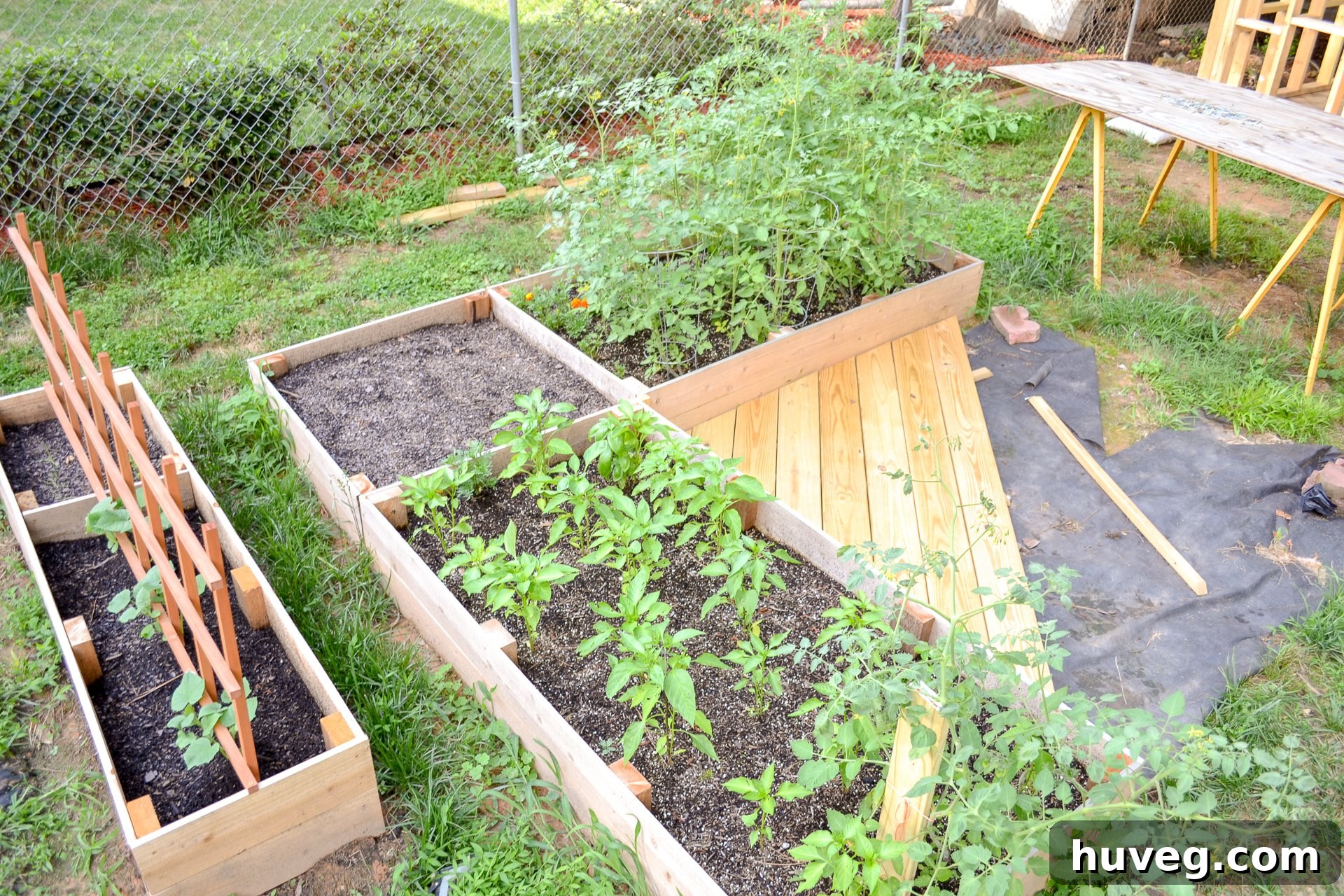
There’s still a touch more work to do to give the widest end of the deck a fully finished look, but with the ongoing shed build, I’ll hold onto the remaining full-length deck boards for that larger project. Once the shed is complete, I’ll repurpose one for the final touches on the garden bed. This entire outdoor area is destined to be a truly spectacular and highly functional space!
Customization and Design Ideas for Your Mini Deck
While my mini deck took on a triangular shape to fit the unique corner of my L-shaped garden, this concept is incredibly versatile. You can adapt the design to fit any space in your garden – a rectangular path between rows, a circular landing area, or even a series of stepping stones. Consider staining or painting your deck boards for a pop of color, or leave them natural to let the wood age gracefully. Experiment with different patterns for laying the boards if you have a larger area to cover. The beauty of a DIY project, especially with scrap wood, is the freedom to customize it to your exact needs and aesthetic preferences.
Join the Movement: More Scrap Wood Inspiration!
I absolutely adore projects that make use of scrap wood – they’re a testament to resourcefulness, creativity, and sustainability. If this mini garden deck has sparked your imagination, you’re in for a treat! Jen from House of Wood organized a fantastic #scrapwoodchallenge, encouraging us all to share our innovative ideas for repurposing leftover lumber. There’s a treasure trove of inspiration waiting for you below. Dive in and discover how others have transformed simple scraps into incredible creations for their homes and gardens. Let these projects fuel your next DIY adventure!
Check out these other awesome Scrap Wood projects:
- The House of Wood – DIY Bunk Buddy
- 3×3 Custom – Scrap Wood Trivets
- Ugly Duckling House – Mini Garden Deck — that’s HERE! —
- Her Toolbelt – 3D Pixel Art
- The Kim Six Fix – Outdoor Drink Stakes
- DIY Huntress – Scrap Wood Coasters
- At Charlotte’s House – Buffalo Check Tray
- Sawdust 2 Stitches – Scrap Wood Wall Decor
- Bower Power – Pallet Baseball Hat Rack
- Pneumatic Addict – Table with Epoxy Resin
- Anika’s DIY Life – DIY Spice Rack
- 100 Things 2 Do – DIY Can Crusher
- Hazel + Gold Designs – Patio Table Drink Holder
- Reality Daydream – Scrap Wood Shoe Cabinet
- House Becoming Home – Modern DIY Clock
- Chatfield Court – Wooden Garden Obelisk