Elevating Living Room Windows with Stylish Trim

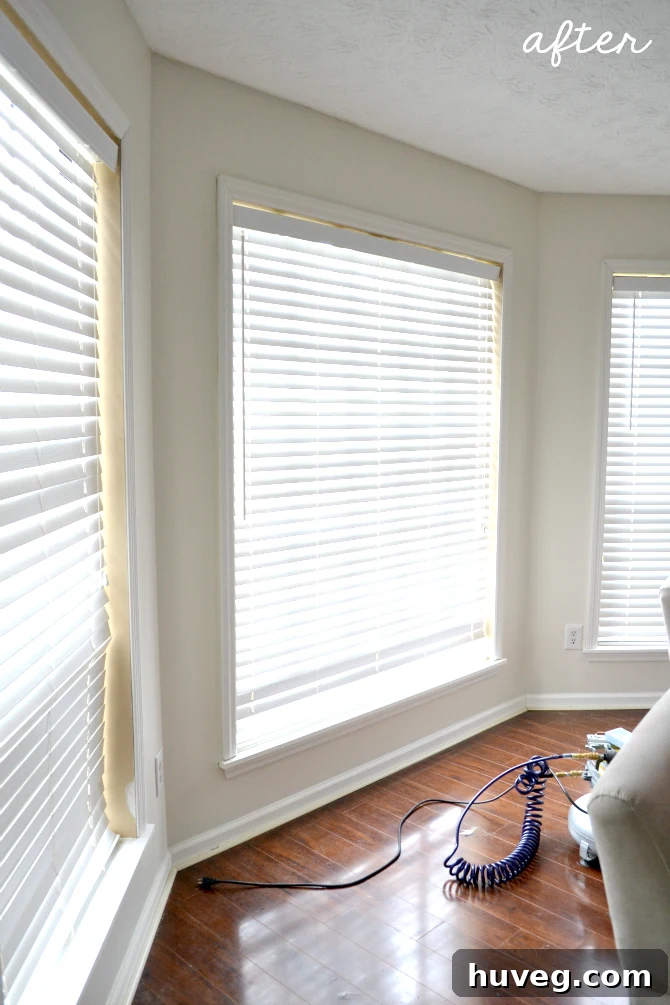
There’s a special kind of satisfaction that comes with seeing a home improvement project through to completion. That feeling of finally being able to say, “DONE!” after weeks or even months of planning, preparation, and hard work is truly unmatched. Today, I’m thrilled to share one such triumph: the installation of new window casing, also known as window trim, in my living room. This seemingly small detail has made a dramatic difference, bringing a polished and complete look to an otherwise unfinished space.
Transforming Your Living Room: The Impact of New Window Casing
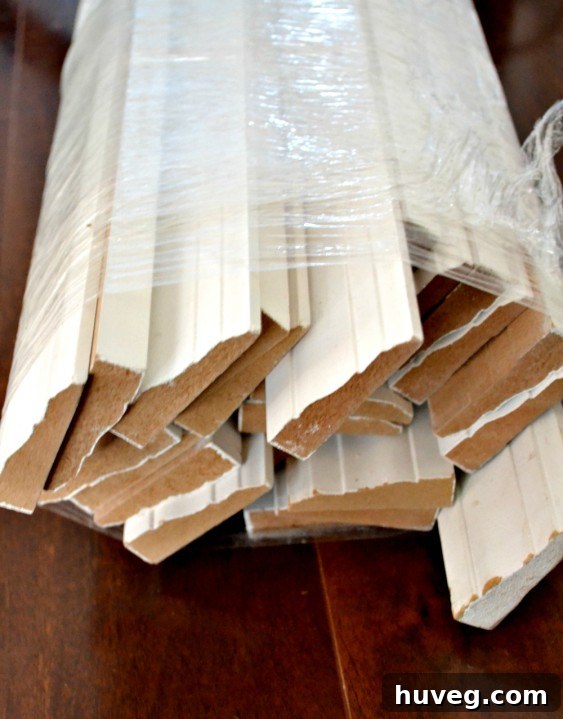
For some time now, a stack of window casing has been patiently waiting its turn in my hallway, a subtle reminder of a project yet to be tackled. It’s not a particularly large or complex undertaking, but the sheer joy of finally putting these pieces into place, transforming bare window frames into beautifully finished architectural features, is immense. This isn’t just about covering gaps; it’s about adding character, enhancing the aesthetic appeal, and contributing to the overall charm of the room.
The beauty of well-executed window casing lies in its ability to elevate the entire room’s design. It defines the windows, making them feel intentional and integrated into the wall structure, rather than just simple openings. For me, completing this task signifies a significant milestone: every window on the first floor of my home now boasts finished trim. Checking that off my never-ending to-do list feels incredibly gratifying and brings a sense of cohesion to the main living areas.
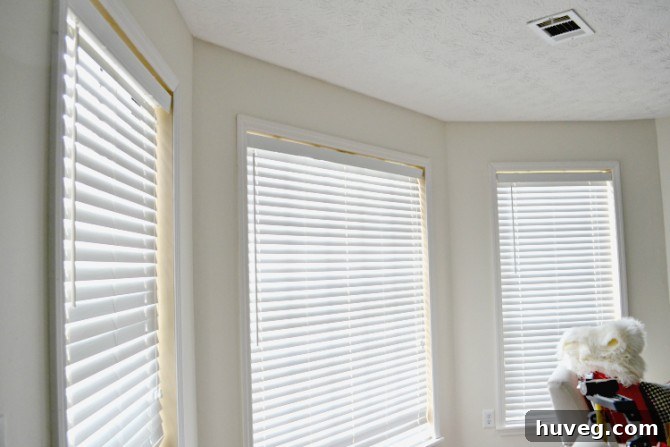
While this particular project focused on the living room, the journey isn’t entirely over. I strategically purchased enough casing in bulk to complete the remaining upstairs rooms as well, taking advantage of a bulk discount. So, while one pile has diminished, another awaits its transformation. It’s all part of the continuous process of turning a house into a home, one trim piece at a time.
Essential Preparation for Your Window Trim Project
Even for seemingly straightforward DIY tasks, thorough preparation is the key to a smooth and successful outcome. Since I tackled this project solo, having a clear plan and the right tools made all the difference. Here’s a rundown of how I prepared for the installation:
Clearing the Workspace: Making Room for Progress
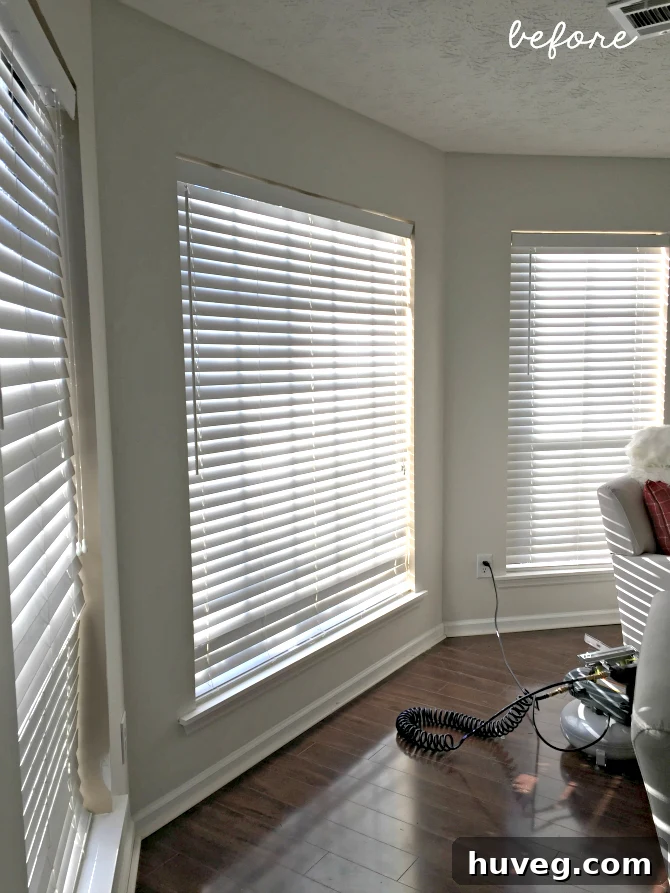
- My living room features a beautiful bay window, which, during the holiday season, becomes home to a festive Christmas tree and various decorations. My first step was to carefully relocate all furniture and decorative items to create ample space for my air compressor, miter saw, and ladder. Despite the temporary clutter it caused in the middle of the room (my new tree is still awaiting a proper storage bin!), ensuring a clear, unobstructed work area is paramount for safety and efficiency.
Your Trusty Project Supervisor (and Safety First!)
- Every good DIYer needs a project supervisor, and mine came in the form of my loyal companion, Charlie. While he excels at sitting precariously underfoot, his presence is always a comforting reminder to proceed with caution and take regular breaks.

- On a more serious note, safety is non-negotiable. Especially when working with power tools and generating sawdust, protective gear is essential. This time around, I was nursing a cold, which heightened my awareness of how irritating sawdust can be to a dry throat. Consequently, I wore a mask throughout the entire project. While masks should always be worn when cutting to prevent inhaling airborne particles, it’s particularly important when your respiratory system is already compromised. Eye protection, too, is a must whenever operating a miter saw or nail gun.

The Right Tools for the Job: Equipping Your DIY Arsenal
- Window casing installation is surprisingly approachable and doesn’t demand an extensive collection of specialized tools. Here’s what I used:
- Miter Saw: An absolute essential for clean, accurate 45-degree angle cuts. A standard miter saw is perfectly adequate; a compound miter saw isn’t strictly necessary for this type of trim.
- Tape Measure & Pencil: For precise measurements and marking cut lines.
- Nail Gun: Paired with an air compressor, this speeds up installation considerably. For window and door casing, which is relatively lightweight, finishing nails (I typically use 1-inch and 2 or 2 1/2-inch varieties, opting for the longer ones here for better hold) are ideal. While brad nails can work for lighter applications, finishing nails offer superior holding power for anything more substantial like baseboards or crown molding.
- Putty Knife: Invaluable for fine-tuning trim alignment against uneven walls.
- Mallet: For gently persuading trim pieces into place or flattening minor wall imperfections.
- Caulk Gun & Caulk: For sealing gaps and achieving a seamless finish.
- Wood Putty/Spackle: To fill nail holes.
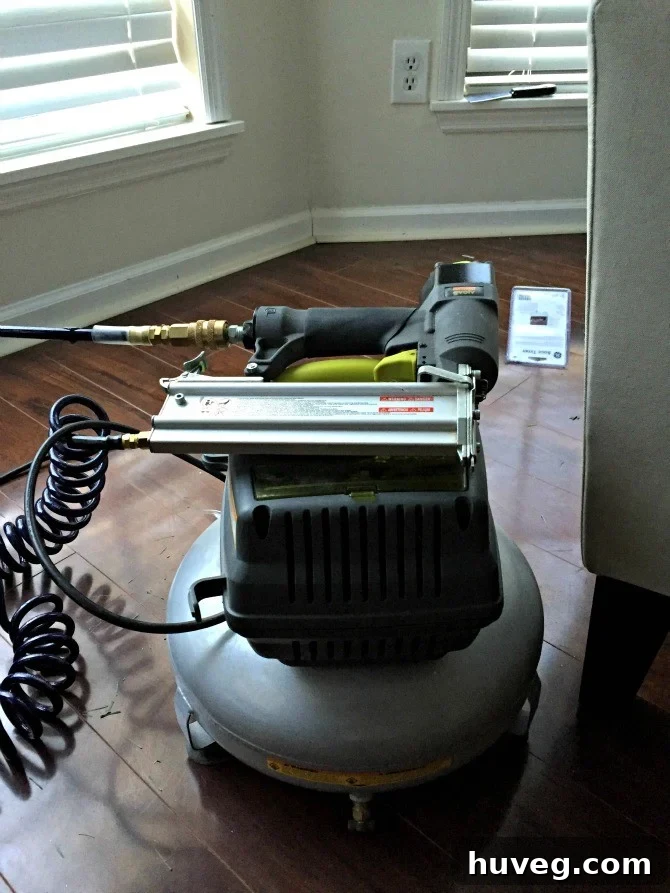
Step-by-Step Guide to Installing Window Casing
Once the workspace was clear and the tools were ready, it was time to get down to the actual installation. Here are the key steps and lessons learned:
1. Mastering Measurements and Miter Cuts
The foundation of professional-looking window trim lies in accurate measurements and precise miter cuts. Don’t be intimidated by the angles; it’s simpler than it seems.
- Measure Twice, Cut Once: Measure the length of each window opening with care. Remember that for mitered corners (where two pieces meet at a 45-degree angle to form a 90-degree corner), your measurement should account for the shorter side of the angle. For the top piece, this means measuring the distance between the two vertical side pieces where their inside edges will meet the top piece.
- The 45-Degree Angle: Set your miter saw to a 45-degree angle. When cutting the side pieces, the angle will slant outwards from the window, and for the top piece, the angles will slant inwards, creating a perfect frame.
- Cut Slightly Long: A common and highly recommended practice is to cut your pieces slightly longer than your initial measurement. It’s always easier to trim off a hair’s width (the thickness of a saw blade) at a time to achieve a snug fit than to deal with a piece that’s too short. I occasionally got lucky with an exact cut on the first try, but it was purely accidental! Err on the side of caution.
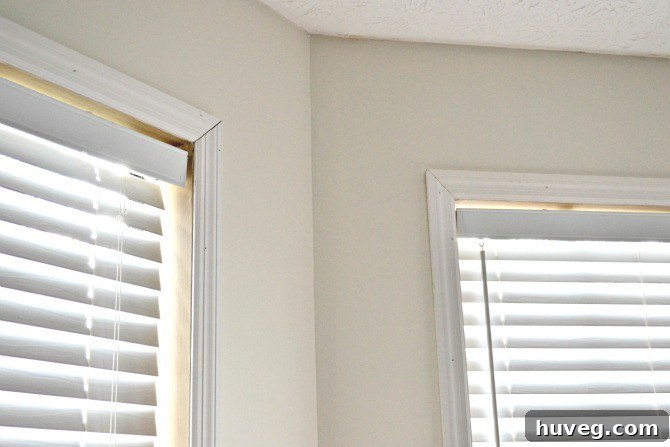
2. The Art of Nailing: Securing Your Trim for Longevity
Getting the trim securely fastened is crucial. Beyond simply driving nails, a smart technique can ensure your trim stays put for years.
- Opposing Angles for Enhanced Grip: During a Haven Conference, I learned a fantastic trick from Sandra and Brittany regarding crown molding, which applies beautifully to window casing. Instead of nailing straight in, drive nails at slightly opposing angles as you work along the trim. For instance, drive one nail slightly upward, the next slightly downward, then perhaps one angled to the left. This prevents the trim from pulling straight out of the holes over time, a common issue as walls and windows naturally flex and shift with temperature changes and settling. This creates a much stronger, more permanent hold.
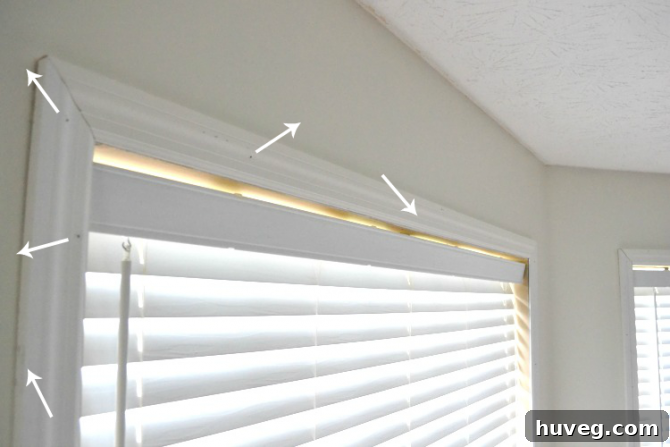
3. Overcoming Uneven Walls and Imperfections
Old houses, or even new ones, rarely have perfectly flat, straight walls. This project was no exception, requiring some on-the-fly problem-solving.
- Flattening Bumps with a Mallet: My walls and window frames had their share of bumps, likely from previous unsuccessful patching attempts. A heavy mallet proved effective in gently flattening these uneven areas. While aggressive tapping might cause minor paint cracks, these will be completely hidden by the new trim.
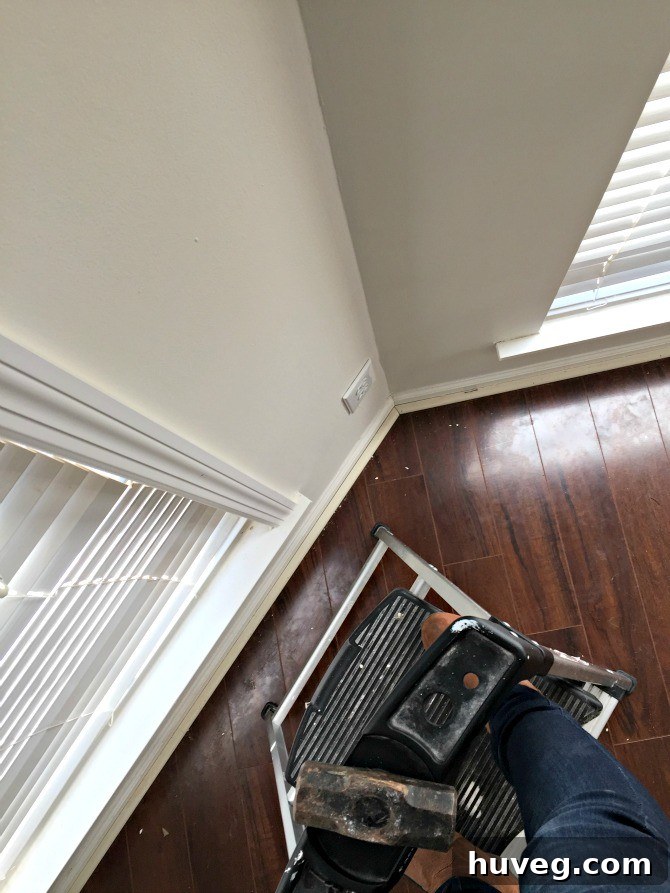
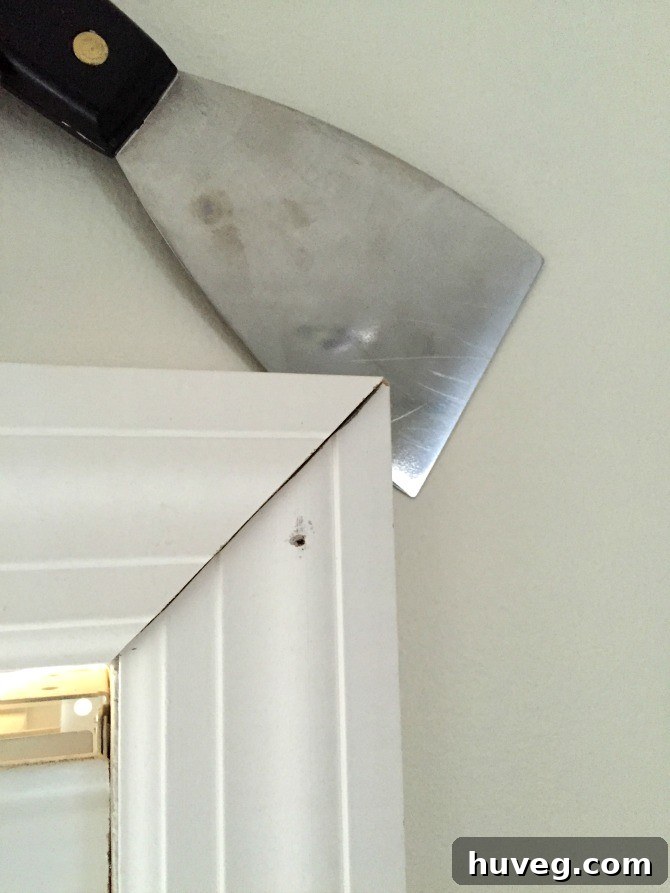
- Adjusting Depth with a Putty Knife and Shims: There were instances where one side of the trim would “sink” into the wall more than the other, preventing a flush alignment. My putty knife became my best friend here. By gently sliding it under the sunken edge and prying it out slightly, I could bring it flush with the other piece before nailing it securely. For more significant discrepancies, cardboard drywall shims (or even just thin scraps of cardboard) are excellent for providing subtle support behind the trim, pushing it forward. This is far safer than trying to force the protruding piece deeper into the wall, which risks damaging the trim.
4. Strategic Placement: The “Wiggle Room” Technique
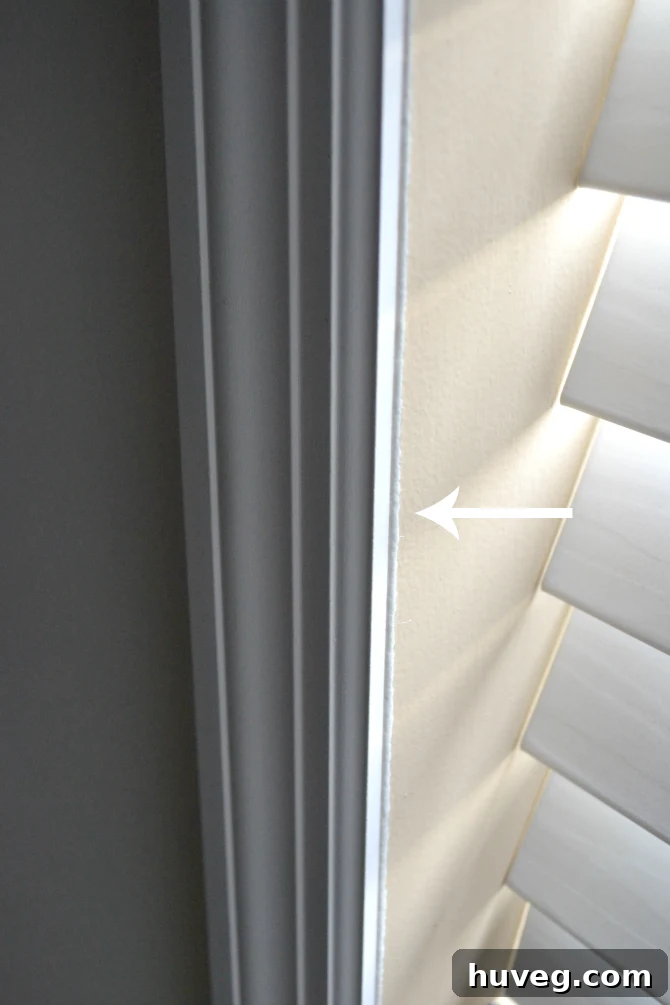
- I purposefully edged the trim ever so slightly away from the exact edge of the window opening where it met the drywall. This might seem counterintuitive, but it provides crucial “wiggle room.” Knowing that the drywall line itself wouldn’t be perfectly straight from top to bottom, this slight offset creates a consistent gap that can later be perfectly sealed with caulk. Once caulked and painted, these tiny discrepancies become invisible, resulting in a cleaner, more professional finish.
5. Installation Order: Sides First, Then Top
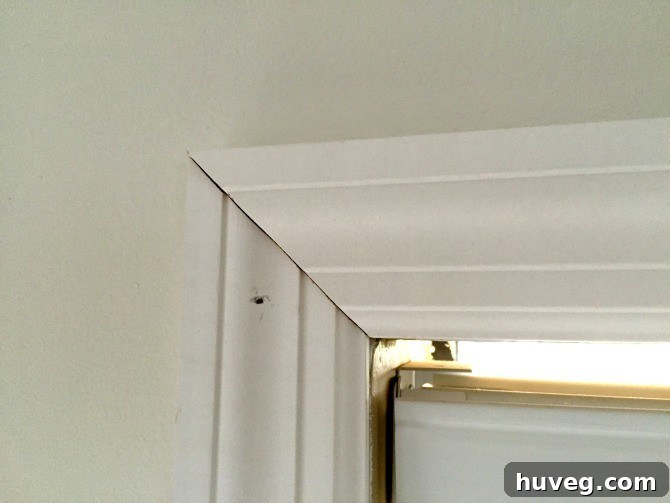
- A question often arises regarding the installation order for mitered trim: SIDE-TOP-SIDE or SIDE-SIDE-TOP? (The bottom sill was already in place on my windows). After some trial and error, I found it significantly easier to install both the left and right side pieces first. This approach allowed for less complicated measuring and math when it came time to cut and fit the top piece, ensuring a tighter fit at the corners. Similar to crown molding, it’s generally a good practice to cut the longest pieces first, as any mistakes on shorter pieces can often be recut from the longer offcuts.
6. Cutting Sides and Angles: A Focused Approach
- When cutting the side pieces, I found it most effective to cut the 45-degree angle on the “harder” end first. For me, as a right-handed person, this meant cutting the left-side angle on my miter saw (since my saw opens to the left and can obscure the blade slightly). Then, I would make any necessary adjustments and the final cut from the easier-to-cut side. This minimizes errors. Crucially, I only ever made cuts on a single side of the trim piece at a time to avoid confusion and mistakenly cutting the wrong end. This focused approach significantly reduced the chances of wasted material.
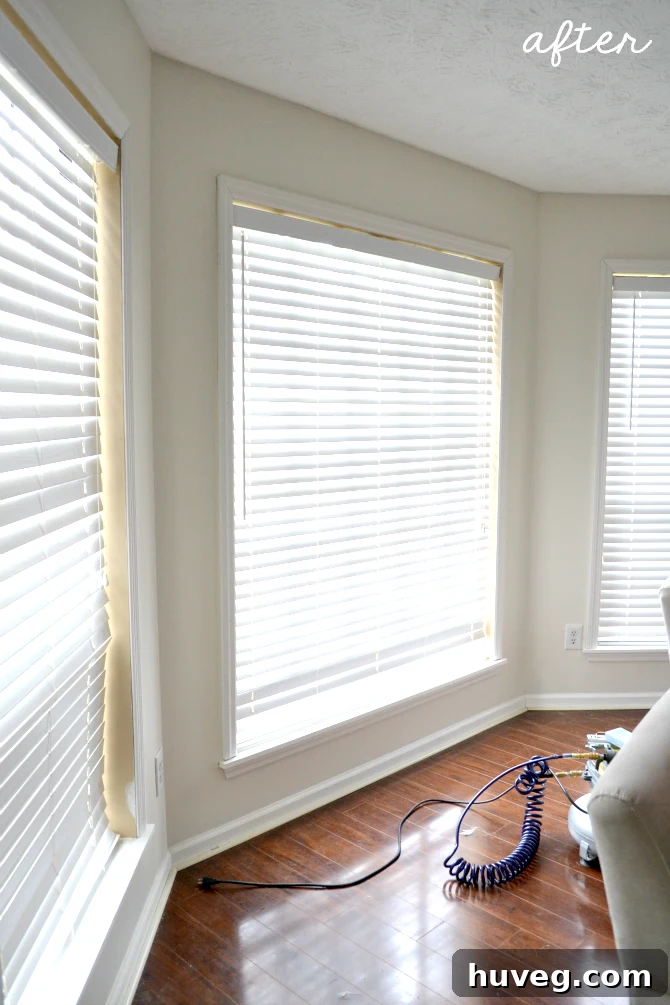
The Subtle Transformation: Before & After
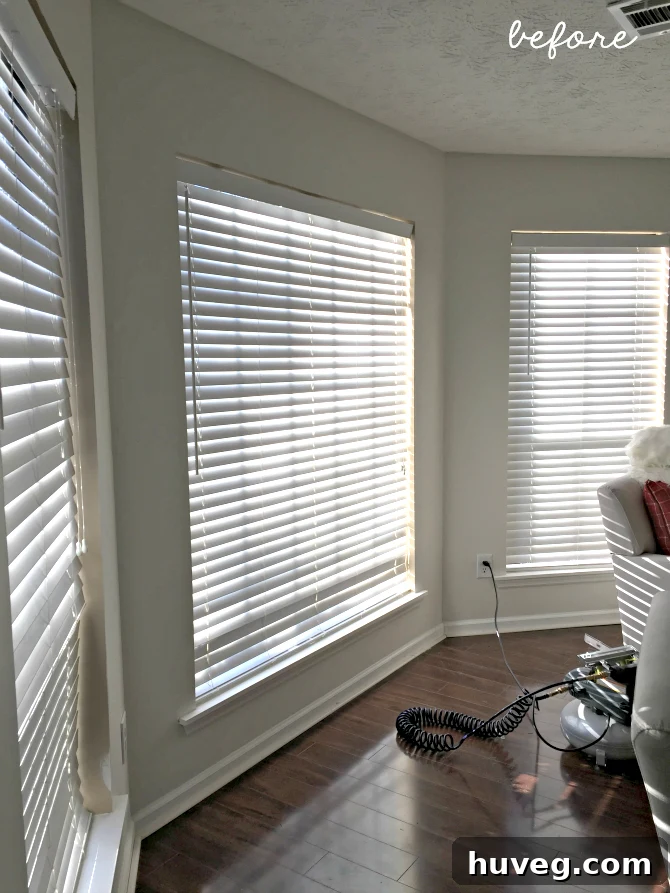
Sometimes the most impactful changes are also the most subtle. Here’s a quick side-by-side to appreciate the difference the new window casing makes:
The Finishing Touches and Beyond
With the trim firmly in place, the next crucial steps involve preparing it for a flawless painted finish. This includes filling all nail holes with wood putty, allowing it to dry, and then sanding it smooth. Following that, a meticulous application of caulk will seal any remaining gaps between the trim and the wall, creating those crisp, clean lines that define professional-looking trim work. Finally, a fresh coat of paint will unify the trim with the surrounding decor.
Ultimately, a few well-chosen curtains will complete the window treatment, adding softness and warmth to the newly defined space. This project, though tackled while battling a cold and often tempting me to stay glued to the couch, stands as a testament to the satisfying reward of DIY home improvement. What kind of projects have you been conquering lately?