Designing the Primary Closet Sanctuary

There are some home improvement projects that, despite your best intentions and initial excitement, just don’t stand the test of time. For me, that project was my primary bedroom closet. What once felt like a significant upgrade, a step towards better organization and functionality, has regrettably devolved into a frustrating, falling-apart mess. It’s a classic tale of getting what you paid for, and for years, I’ve been wrestling with its shortcomings.
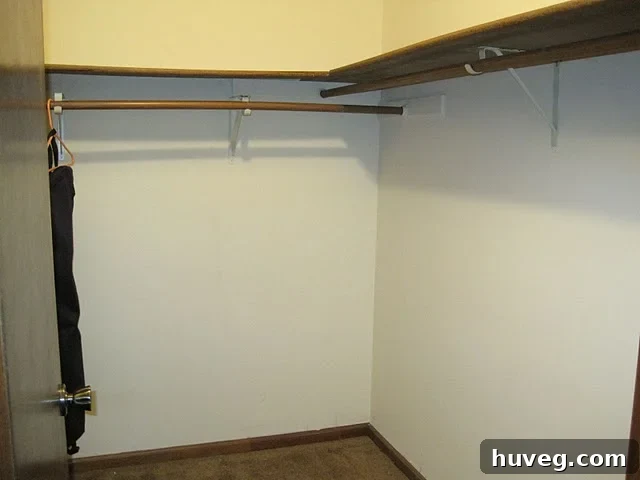
Early in my blogging journey, I extensively documented my ambition to transform my primary bedroom closet. It began as a basic space featuring three rather uninspiring hanging poles, typical of many homes. My vision was to convert this mundane area into a robust and efficient closet organization system, a dream for anyone seeking to maximize their storage and streamline their daily routine.
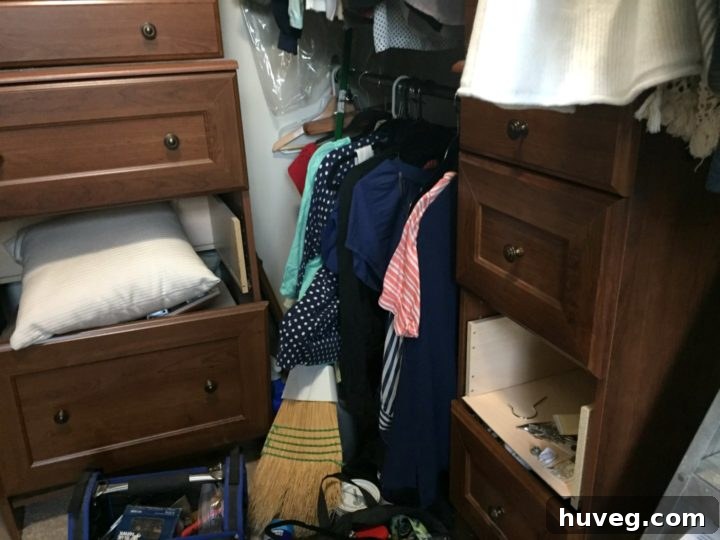
For a few years, it served its purpose adequately. However, the foundation of this initial master bedroom closet system was laid on a budget. I purchased all the components during a steep clearance sale at Lowe’s. While the savings were attractive at the time, the quality and fit were, shall we say, less than ideal. The entire assembly came together somewhat shabbily, a stark reminder that sometimes, the cheapest option isn’t the best long-term investment. I most definitely got what I paid for, and for years, I found myself constantly trying to “make it work,” compensating for its inherent flaws rather than truly enjoying a functional space.
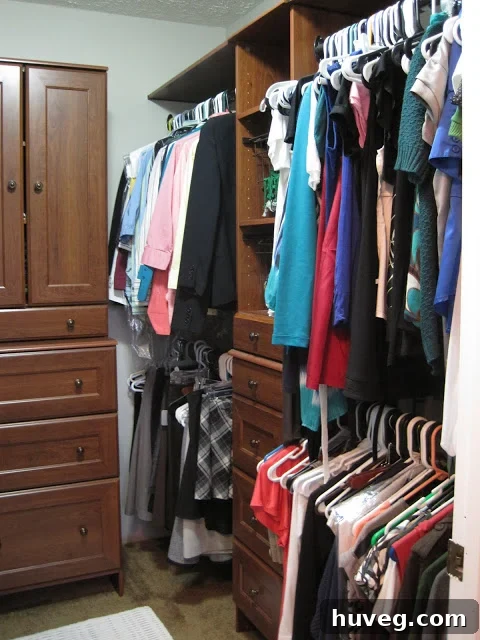
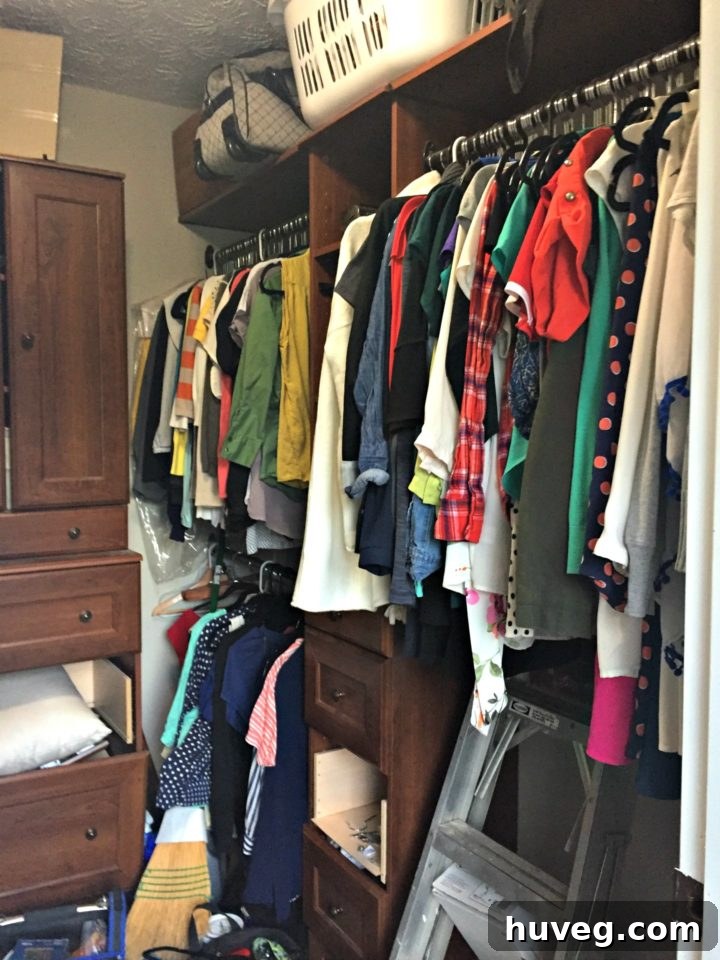
The problems began subtly but grew progressively worse. The bottom drawer along the back wall was a constant source of frustration, repeatedly falling out of its tracks. Upon closer inspection, I realized the frame was slightly too wide, causing undue stress and pulling the drawer components apart. Beyond the structural issues, I also discovered that I rarely utilized the upper cabinet space as I had envisioned. Soon enough, other pieces of the system started to show signs of wear and tear, loosening, cracking, or simply losing their integrity. The need for a comprehensive closet renovation became undeniable. The perfect excuse finally presented itself after redoing the tile in the primary bathroom and realizing that an access panel might be necessary in the wall separating the closet from the master bath. This provided an ideal opportunity to tackle the failing closet simultaneously, integrating two essential home improvement projects.
Deciding to Revamp My Primary Bedroom Closet: A Journey to Functional Storage
When it comes to the ongoing process of remodeling a house, certain projects inevitably emerge as candidates for a do-over. My primary bedroom closet is unequivocally one of them. I’ve touched on this topic before, but there’s a crucial distinction – one that many homeowners come to realize over time – between how you imagine you’re going to use a space and how you actually use it. This disconnect is often only fully understood after living in a home for a considerable period, when drawers sit perpetually empty, shelves prove inconveniently short, or access is surprisingly difficult. Such revelations often pave the way for a much-needed, old-fashioned project revamp.
And so, that’s precisely what I’ve finally committed to doing. It’s time to say “buh-bye” to the broken, inefficient old closet system. My goal now is to create a custom closet design that truly meets my needs, a system that I will build myself, rather than relying on pre-made units that simply won’t line up or baskets that remain perpetually unused. Fortunately, my DIY skills have significantly evolved over the years, placing me in a much better position to construct the master bedroom closet storage solution I truly desire and deserve. This time, quality and customization will be at the forefront of the design.
Designing for What I Really Need: The Foundation of a Functional Closet
The initial step in this comprehensive closet renovation was a thorough assessment of my actual needs and habits. One evening, armed with a pencil and paper, I began to sketch out what an ideal closet would look like, meticulously considering the types of clothes I own and my preferred methods of storing them. A fundamental revelation was my strong aversion to hanging clothing unless absolutely necessary. This immediately informed the need for ample drawer space, a crucial component of my new custom closet design.
My wardrobe includes a significant collection of bulky sweaters, which are best kept folded to preserve their shape and avoid stretching. Additionally, I somehow possess an astonishing amount of underwear, requiring dedicated and organized drawer space. The same goes for an extensive collection of t-shirts and tank tops; despite numerous attempts to purge and minimize, I’m still left with a considerable number of items I simply can’t part with, making accessible drawer storage a top priority for my master bedroom closet.
Another key consideration for this DIY closet remodel was the fact that my shoes are now stored in a completely separate, dedicated area within the home. This crucial detail meant that I no longer needed floor baskets for shoes inside the closet, freeing up valuable floor space that can now be utilized for other storage solutions. Furthermore, a significant design flaw in my previous system was a lower hanging pole that interfered with dresses. This time, I will ensure one dedicated section for longer hanging items like dresses, preventing them from dragging or becoming wrinkled. Finally, I needed to account for unique items like Christmas ornaments. I have some cherished old family ornaments, and I’ve learned that extreme temperatures can tarnish or dull glitter, so keeping them stored in the climate-controlled environment of the closet’s upper shelves provides optimal protection.
Sketching Out My Plans: Visualizing the Perfect Primary Bedroom Closet
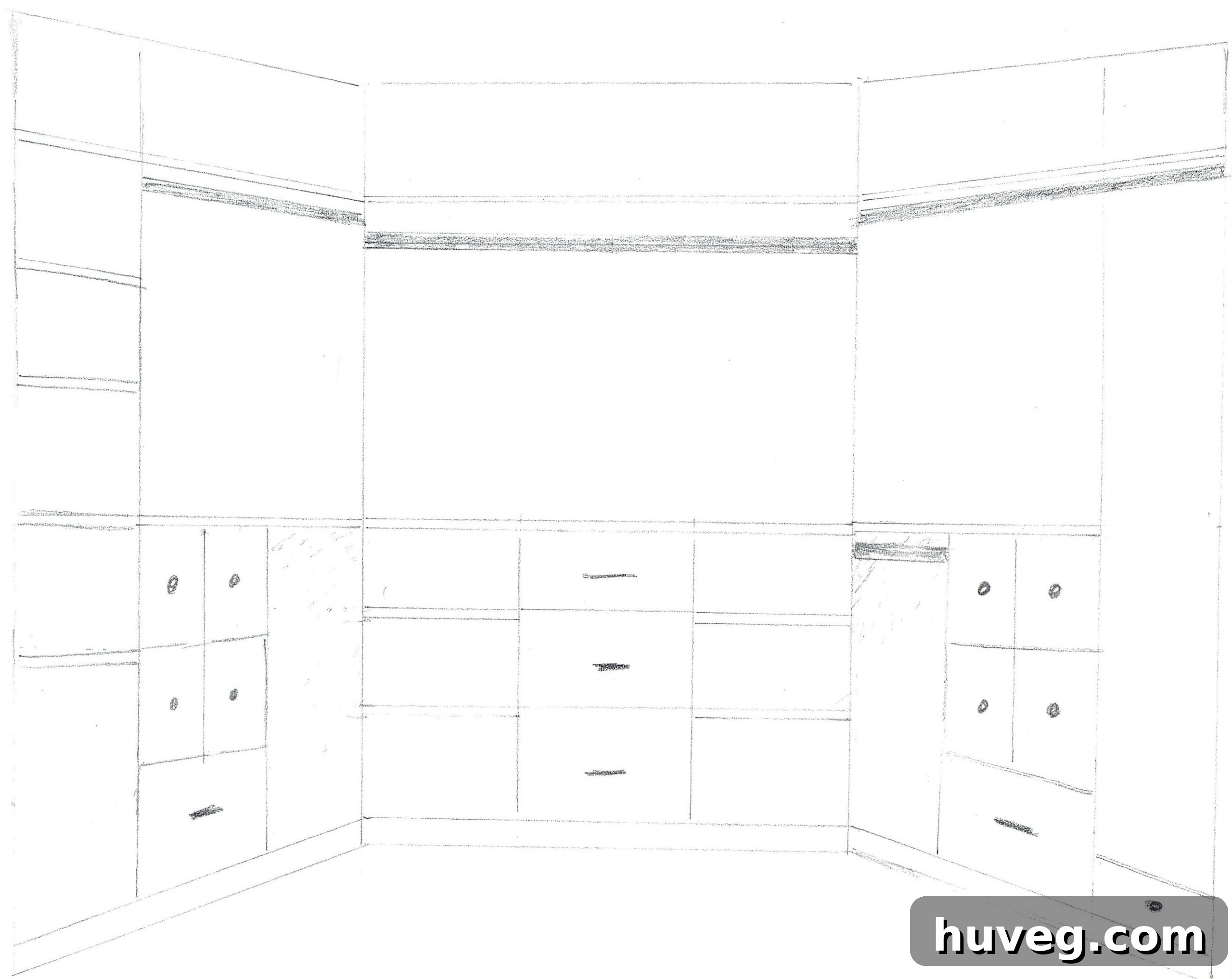
After immersing myself in countless online design options – from Pinterest boards showcasing dream closets to professional custom closet company portfolios and inspiring DIY blogs – I’ve distilled my findings into a personalized combination that perfectly addresses my needs. The core elements of this new master bedroom closet design include several larger, deep drawer spaces, strategically stacked open shelves on one side for folded items, and simplified, efficient hanging areas along the back wall. This thoughtful blend promises both accessibility and maximum storage capacity.
Left Side: Maximizing Open Shelving
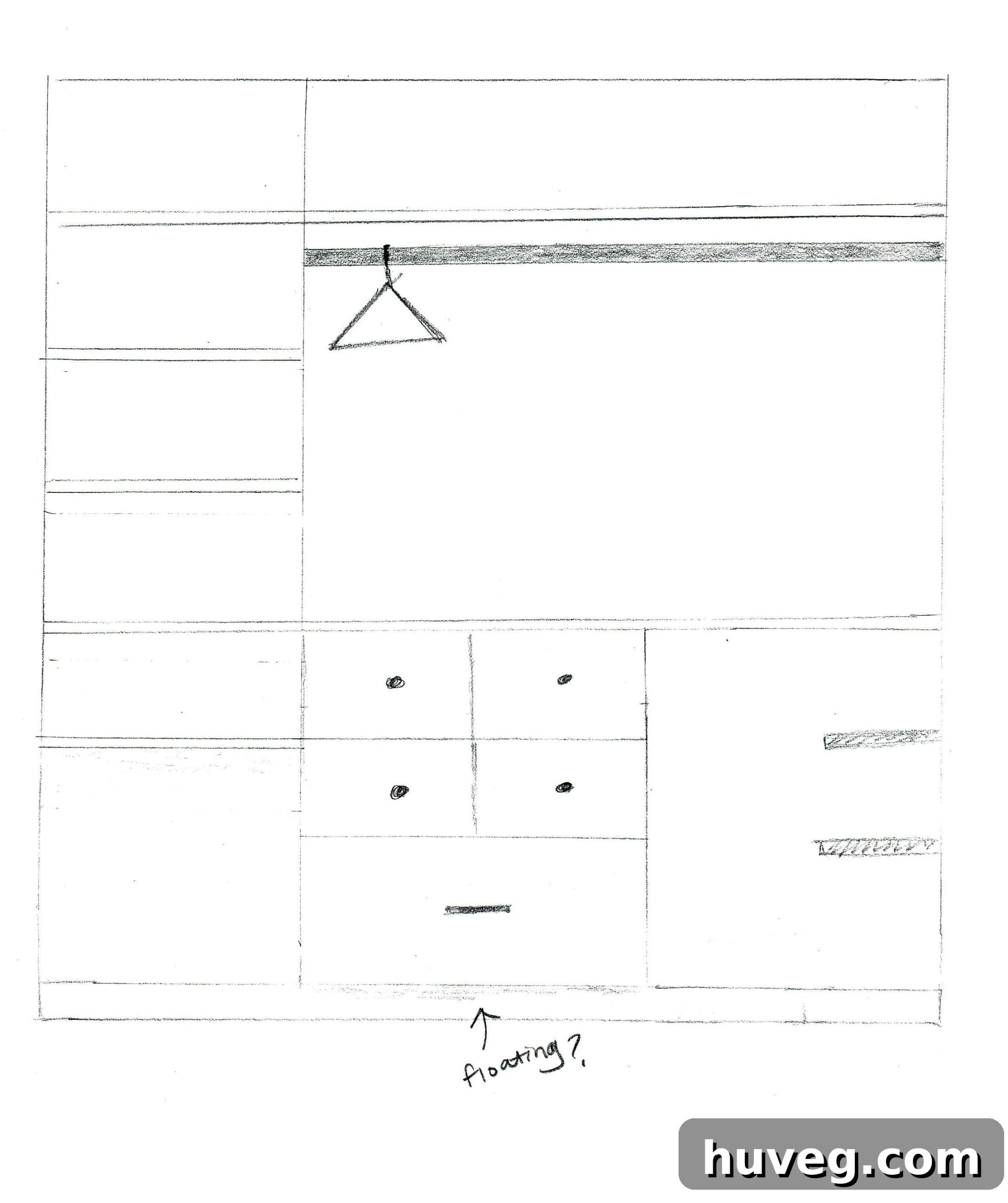
The left side of the closet will be primarily dedicated to open shelving. This area is perfect for folded sweaters, jeans, and other casual wear that doesn’t require hanging. The stacked design will allow for easy visibility and access, eliminating the need to rummage through piles. Varying shelf heights will accommodate different garment sizes, ensuring efficient use of every inch of vertical space. This strategic placement ensures that frequently accessed items are within easy reach.
Right Side: The Heart of Drawer Organization
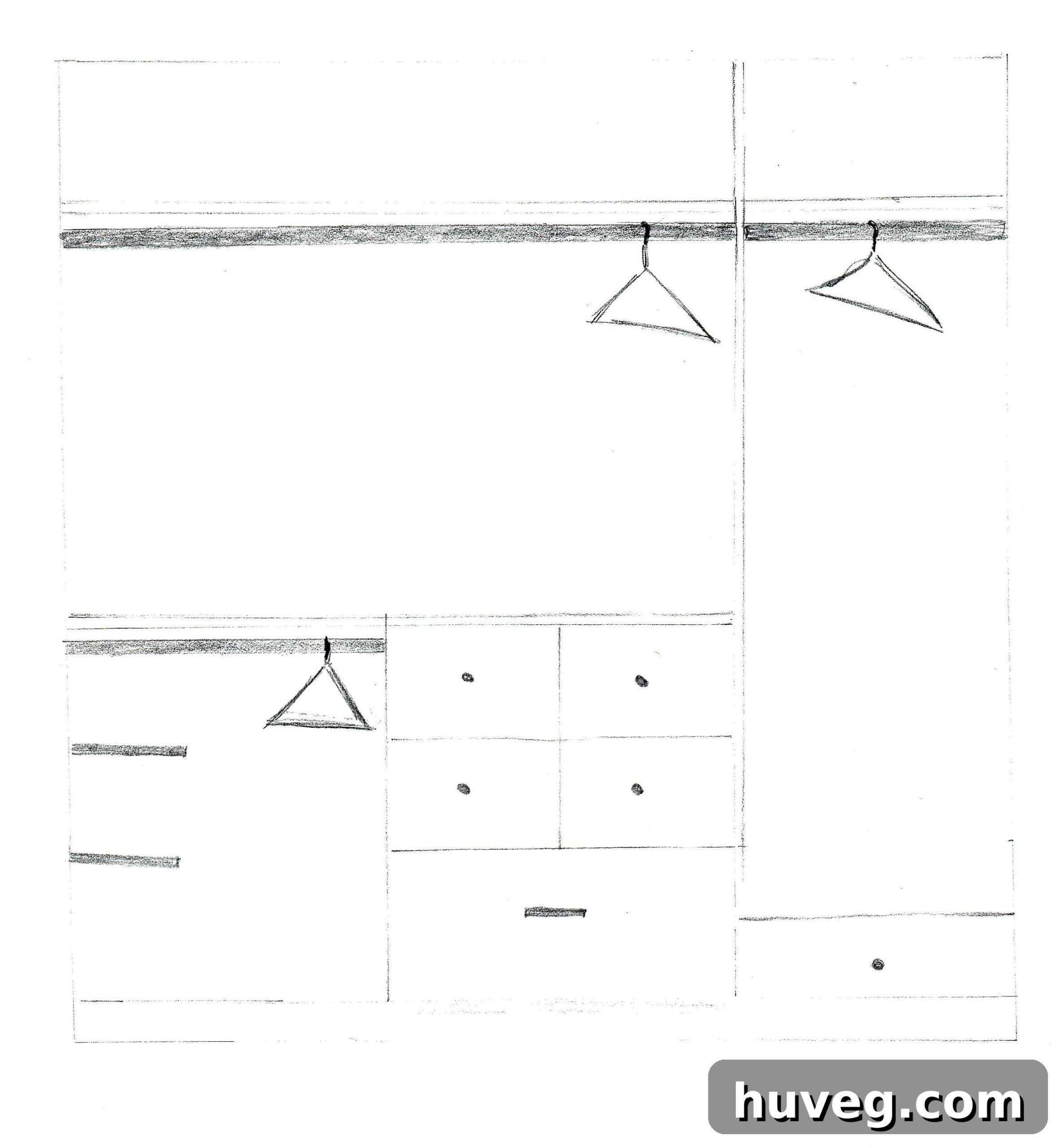
The right side is where the majority of my much-needed drawer space will reside. These will be robust, full-extension drawers designed to hold everything from undergarments and socks, possibly with internal dividers for extra organization, to t-shirts, tank tops, and other smaller folded items. The emphasis here is on deep, wide drawers that can comfortably accommodate my extensive collection, preventing clutter and making daily dressing a breeze. This is a crucial upgrade from my previous broken closet drawers.
Back Wall: Streamlined Hanging Solutions
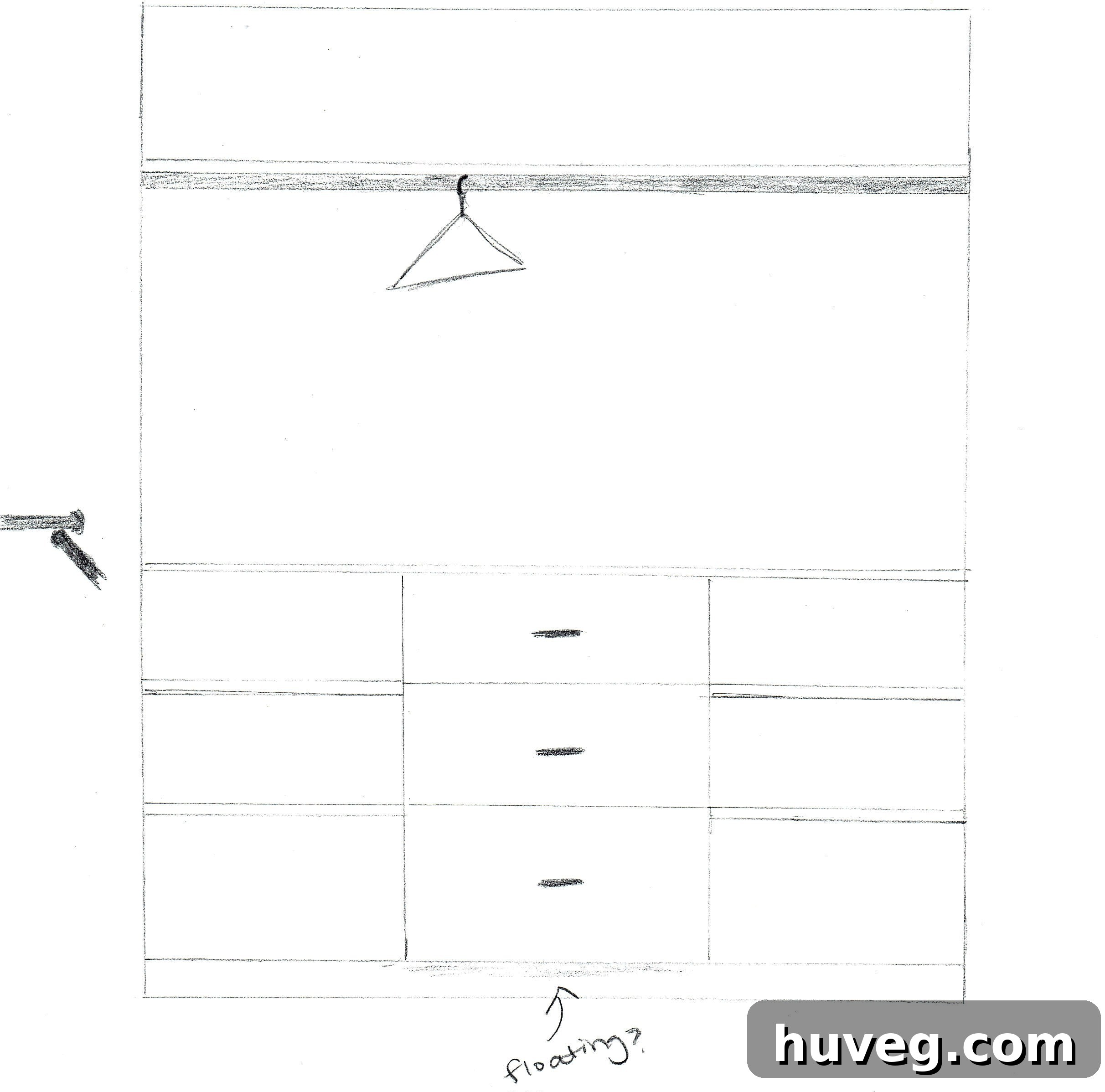
The back wall will feature simplified hanging areas. This section will include a single, longer hanging rod for dresses and coats, ensuring they have ample vertical clearance without obstruction. A shorter hanging rod positioned below it will be perfect for shirts, blouses, and skirts that genuinely benefit from being hung. The intelligent placement ensures that the top pole integrates smoothly underneath the side units, creating a continuous and aesthetically pleasing flow within the master bedroom closet. This minimalist approach to hanging prevents overcrowding and makes garment selection easy.
I carefully scanned these initial drawings and enhanced the contrast digitally, hoping they translate well enough for you all to visualize the new layout. Eventually, I plan to render these sketches in 3D for a more precise visualization, which will be invaluable for planning the construction phase. However, the process of simply sketching it out with pencil and paper felt surprisingly cathartic and productive. There’s a unique satisfaction in quietly drawing up a new design, allowing ideas to flow organically onto the page. It’s an essential first step in any successful DIY closet remodel project, moving from frustration to inspired creation.
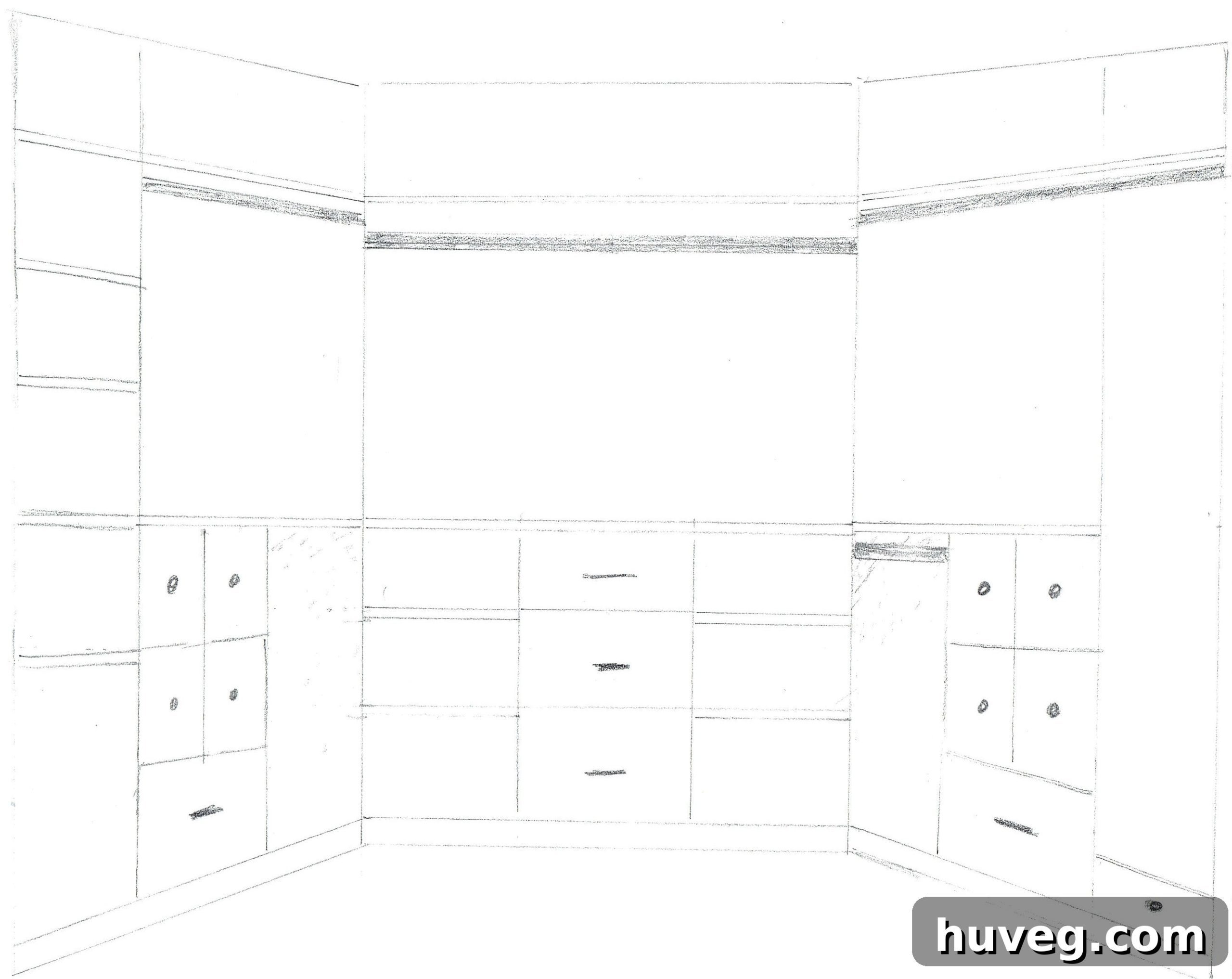
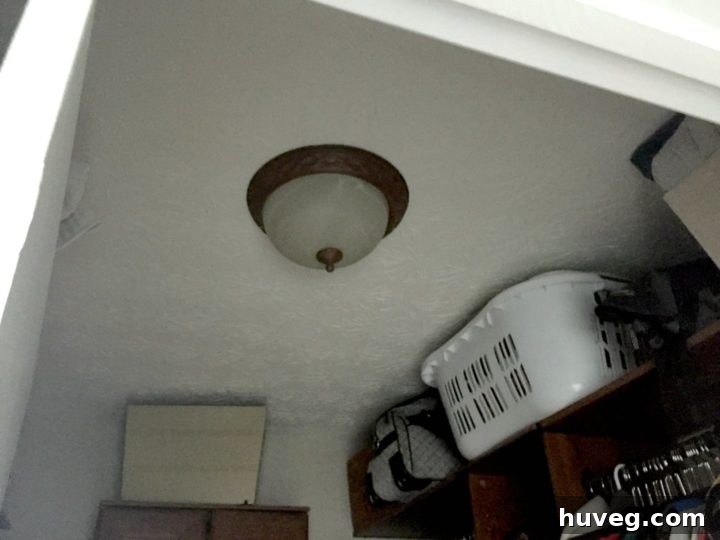
Beyond the structural elements, this closet renovation will also include an upgrade to the lighting. The existing “boob light” fixture is outdated and provides inadequate illumination for a functional closet space. A new, brighter, and more aesthetically pleasing light fixture will enhance both the usability and the overall ambiance of the custom closet. This small but impactful change is part of ensuring that every detail contributes to a superior primary bedroom closet experience.
Have any of you embarked on a significant closet revamp or master bedroom closet organization project? What were your biggest triumphs, or conversely, do you have anything you wish you would have accounted for during the design or construction phase? Share your insights and tips in the comments below! Happy Friday!
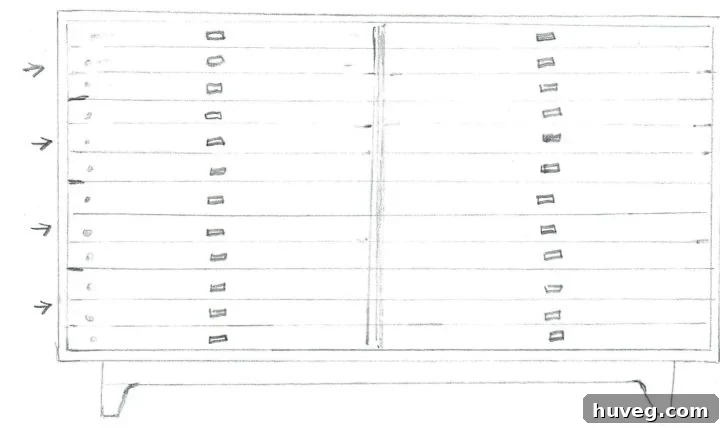
P.S. As part of my continuous quest for smart storage solutions, I’ve also been brainstorming a new idea for a taller dresser in the master bedroom, designed specifically to accommodate my need for #GiveMeAllTheDrawers. The inspiration for this piece comes from a fascinating photo of a cartographer’s flat file cabinet – an antique piece of furniture characterized by numerous shallow, wide drawers perfect for storing maps and documents. This aesthetic appeals to me immensely, combining vintage charm with immense practical storage. For those who want to get a better visual of this unique style, The Painted Hive features an absolutely gorgeous project in a similar vein that is definitely worth checking out. It perfectly illustrates how an unconventional design can be adapted to create highly functional and visually stunning furniture, complementing the overall aesthetic of a well-organized primary bedroom.