Designer-Inspired DIY Glass Pendant Light

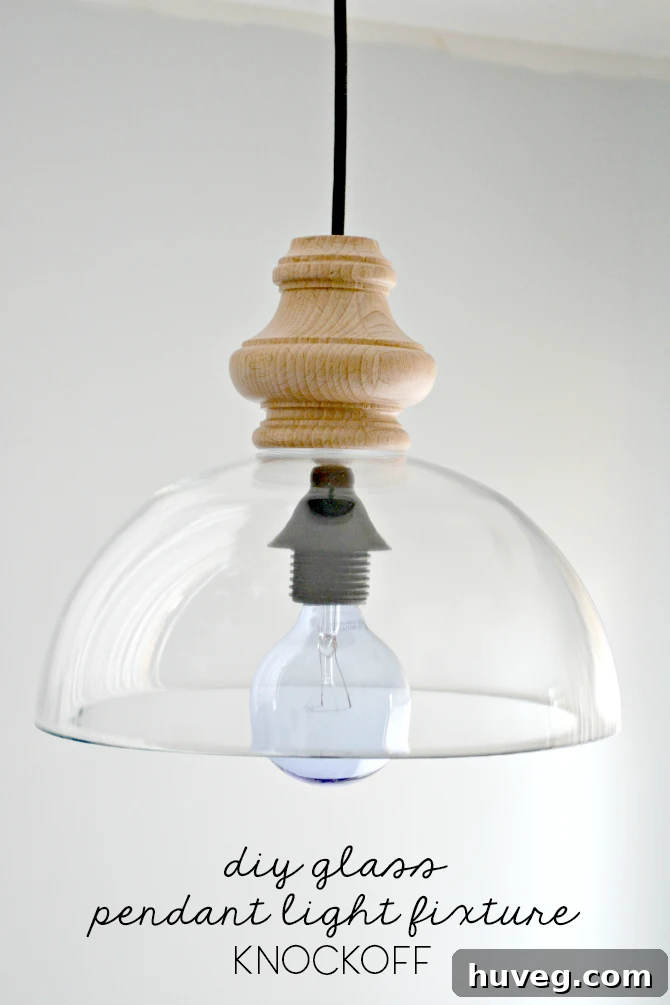
The quest for the perfect kitchen pendant light can often lead down unexpected paths. Months ago, the elegant glass pendant light I envisioned for my kitchen breakfast nook vanished from stock, leaving me with a familiar dilemma: compromise or create? Opting for the latter, I embarked on a DIY journey that not only resulted in a stunning custom light fixture but also saved me a considerable sum – roughly $100!
You might recall my previous updates on the remodeled kitchen and specifically, my breakfast nook. Initially, I had a clear vision for its lighting, but as often happens in design projects, what once seemed perfect can quickly lose its charm. This was precisely the case with the initial light fixture I chose for the space:
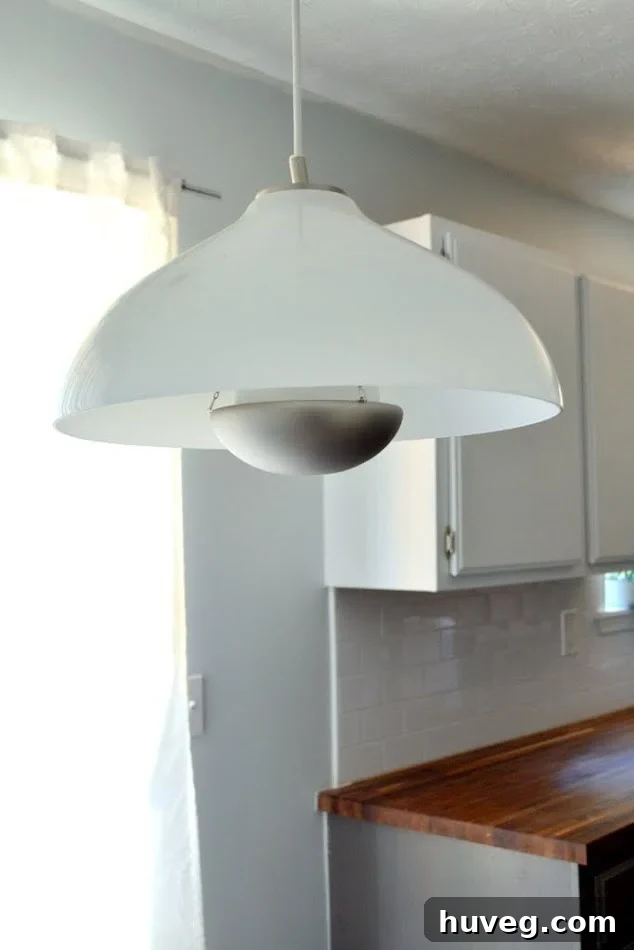
Despite the effort and struggle to install it, the outcome was profoundly disappointing. The light it emitted felt wrong, and I instantly regretted the time spent wrestling it into place, desperately trying to get it to hang correctly over the dining table (a futile endeavor, as it turned out). Like any disheartened DIY enthusiast, I promptly began my search for new lighting options. I shared some of these back in my breakfast nook update, but the sheer abundance of choices felt overwhelming rather than liberating. Having made a misstep once before, I was particularly hesitant to commit until I found “the one” – a truly perfect fit for my kitchen’s aesthetic.
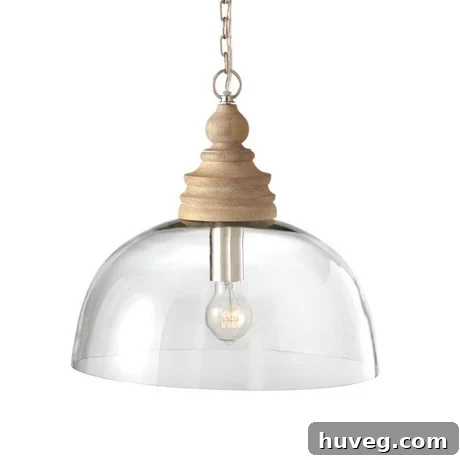
Have you ever experienced that magical moment when you encounter an item that is so perfectly suited to your needs that you swear you hear angels singing? It’s a rare occurrence, especially when shopping for my home, which usually involves a fair bit of trial and error. But when I laid eyes on this particular pendant light fixture, I was instantly smitten. Its sleek, silvery stainless steel-ish finish wasn’t an exact match for the black accents throughout my kitchen, but that was a minor detail. Every other aspect of its design was simply exquisite. In short, it was undeniably gorgeous. I was absolutely convinced this was the light I needed, credit card at the ready. There was just one infuriating obstacle: the light was completely SOLD OUT!
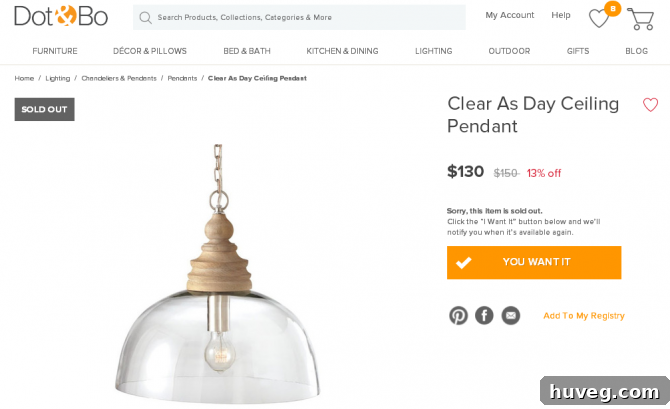
I waited patiently for several months, hoping it would return to stock. Many online retailers offer notification services for sold-out items, but despite my vigilance, it never reappeared. It became clear that if I truly wanted this stunning light, I would have to take matters into my own hands and figure out a way to craft it myself.
Then, as if the universe were conspiring in my favor, the stars aligned with Brittany from Pretty Handy Girl’s #DIYLightingChallenge. This initiative provided the perfect impetus to finally tackle the project. My initial plan was to post my creation alongside everyone else, but as often happens with ambitious DIYs, I found myself scrambling across town to source materials, only to miraculously secure everything at the eleventh hour. It was too late to join the blog hop, but the ultimate reward was far greater: a beautiful new light fixture for my kitchen, and a substantial saving of cash! Absolutely worth every bit of effort!
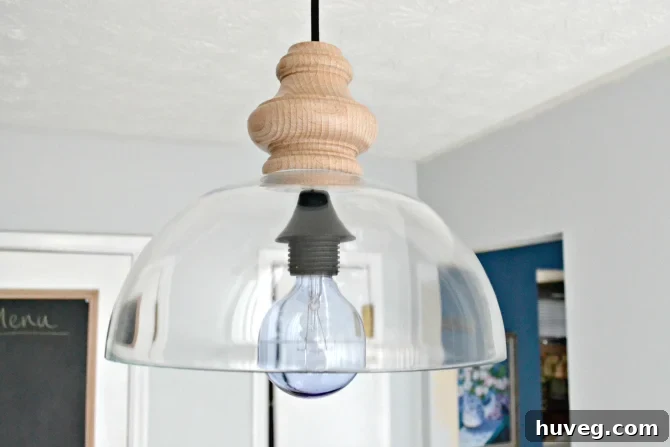
Every DIY project often comes with its own unique story, and this one is no exception. If you’re eager to jump straight to the construction, feel free to scroll down until you see the dashed line below. Otherwise, let’s begin with the initial, and arguably most challenging, part of this project: sourcing the perfect glass bowl.
——————————————–
The Glass Bowl Saga: Finding the Perfect Shade
Finding a suitable glass bowl for a pendant light seems deceptively simple, doesn’t it? That was certainly my initial thought. I began brainstorming various everyday objects that might yield a clear or seeded glass with the right size and shape to serve as the lamp shade. My mental list narrowed down to three primary possibilities:
- A glass mixing bowl or an elegant fruit bowl.
- A modern-style fish bowl, steering clear of the typical spherical designs.
- Repurposing a “boob light” fixture (those ubiquitous, often-maligned ceiling lights characterized by their dome shape and a finial at the bottom—ever since one blogger humorously coined them “boob lights,” it’s impossible to unsee!).
In theory, the “boob light” option held great promise. These fixtures are generally inexpensive, readily available, and already feature a central hole for the finial, which could easily be adapted for the light kit’s wiring. Crucially, they are designed to function as light covers. However, almost all of them come with frosted or textured glass, and my heart was set on a crystal-clear aesthetic. My search across several stores for a clear version proved fruitless.
The fishbowl idea also failed to yield the desired result, leaving me to focus my efforts on glass mixing bowls, salad bowls, or serving bowls. The main hurdle I encountered here was the common design of most mixing bowls: they feature a distinct lip around the edge (like this popular example), intended for easier handling. My design inspiration, however, called for a clean, uninterrupted edge. I did discover a few modern salad bowl options at World Market. While they didn’t perfectly match the rounded profile I had in mind, the price was right, and I thought I could potentially make them work. I purchased two different styles, bringing them home as prospective candidates for the project.
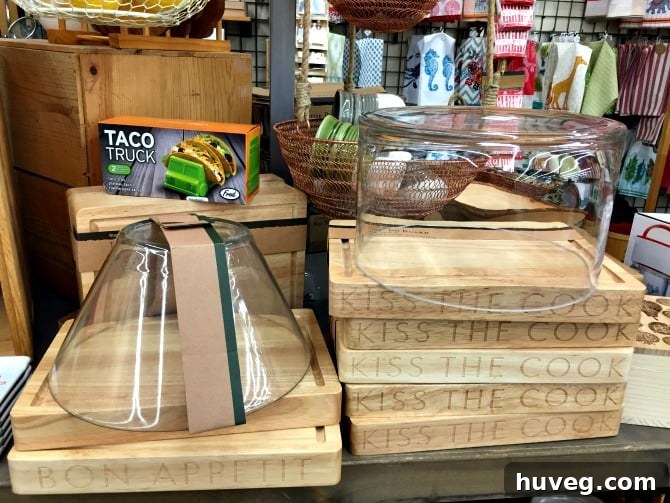
Just as frustration began to set in, luck intervened. After lamenting my material sourcing woes to a couple of friends, I received a text message containing a photo of exactly what I was searching for, accompanied by the humorous caption: “with bananas for size reference.” Classic!
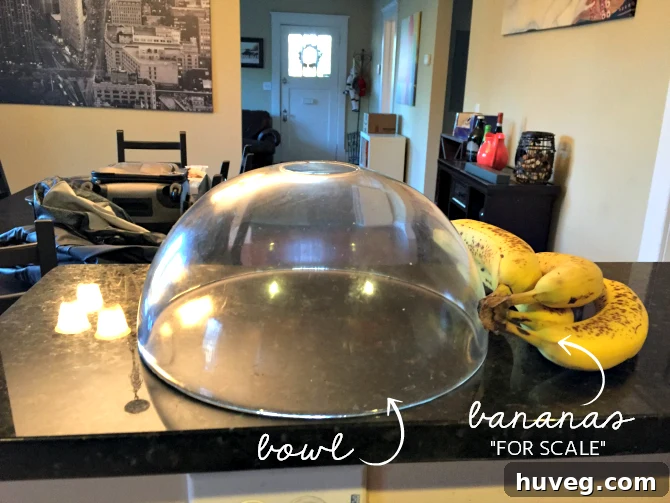
It turned out my friend had purchased this very bowl from Ikea (my favorite store) for a mere $10 a few months prior. To avoid simply “stealing” his fruit bowl, I offered him my two newly acquired World Market bowls as replacements. (I’ve actually since found a different, exciting use for the remaining one!). This anecdote highlights a valuable lesson for any DIYer: always check Ikea first for affordable and stylish basics! Knowing this can save you considerable time and hassle in your own projects.
Now, let’s dive into the comprehensive tutorial. While I used a glass bowl, don’t feel limited! This versatile method can be applied to a variety of unconventional “shades.” Consider repurposing a planter basket, a decorative globe, a vintage mason jar, old pickle jars, or even unique metal tins – anything that sparks your creativity and fits your desired aesthetic. While I chose to hang my light over my dining table, smaller glass items paired with a simple DIY pendant light kit would look fantastic over a kitchen island or a bedside table. The step-by-step instructions below are largely adaptable, regardless of your chosen shade. Embrace your creativity; this home decor DIY feels more like a unique craft project than a typical renovation task!
——————————————–
DIY Glass and Wood Pendant Light Fixture: A Step-by-Step Guide
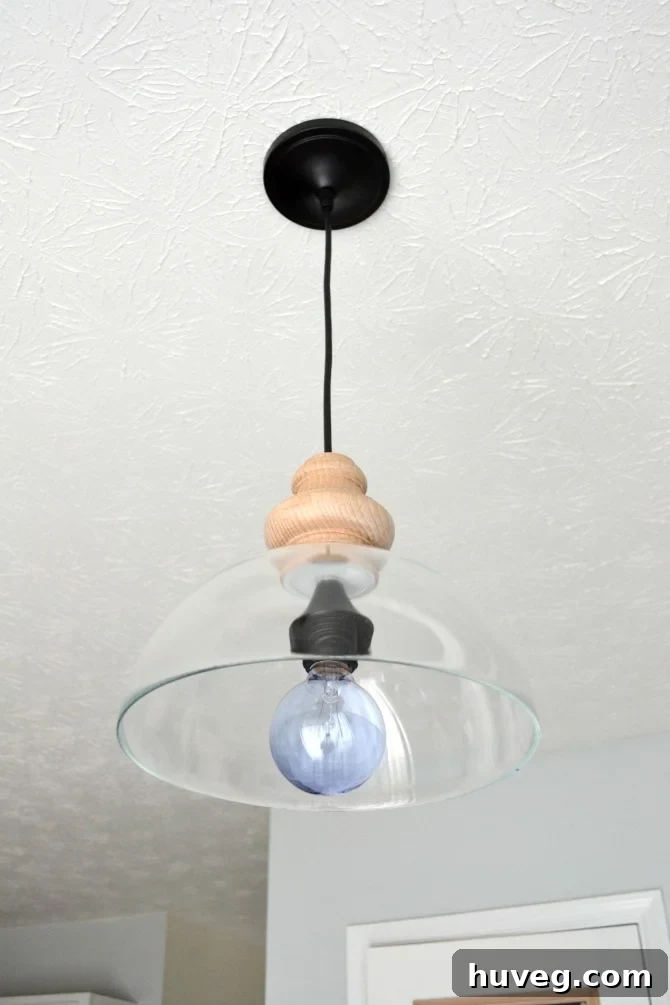
To recreate this elegant and budget-friendly pendant light, gather the following materials and tools:
Materials & Tools
- Pendant Light Cord Kit (also known as a “fitter”). This specific one was used in this project. You can often find these at local hardware stores, but online retailers frequently offer better pricing and selection.
- BLANDA glass bowl from Ikea (refer to the “Glass Bowl Saga” above for the full story on how I acquired mine!).
- Decorative Wooden Bun Foot. These are available at most hardware stores, with more intricate and varied designs found online.
- Wood stain of your preference (I achieved a neutral tone with Minwax Pickled Oak) and a wood polyurethane sealant for protection.
- Self-adjusting grip pliers.
- 1/2-inch glass drill bit (diamond-tipped for optimal results).
- 1/2-inch spade drill bit or a Forstner bit for drilling through wood.
- Assorted sandpaper for smoothing wood surfaces.
I previously raved about my new Forstner bits when creating those magnetic bottle openers for the fridge, and I was convinced they would be indispensable for drilling the hole through the bun foot for this project. Surprisingly, a spade bit proved significantly faster for the primary drilling. However, the Forstner bit still played a crucial role in initiating the hole, ensuring a cleaner, more precise start. We’ll delve into that process shortly.
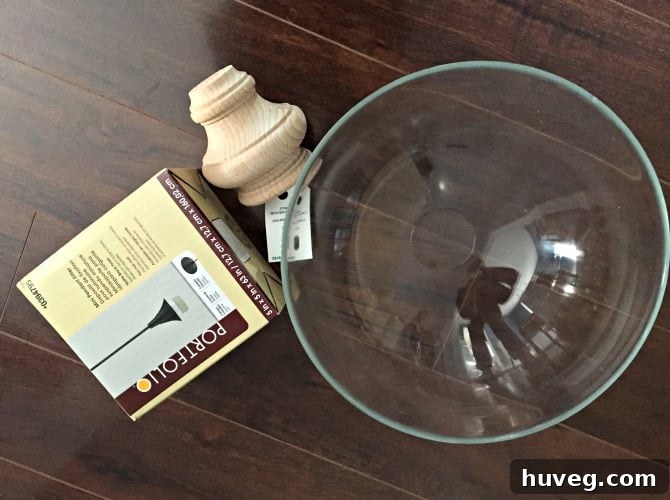
Step One: Disassemble the Pendant Light Kit and Understand Its Components.
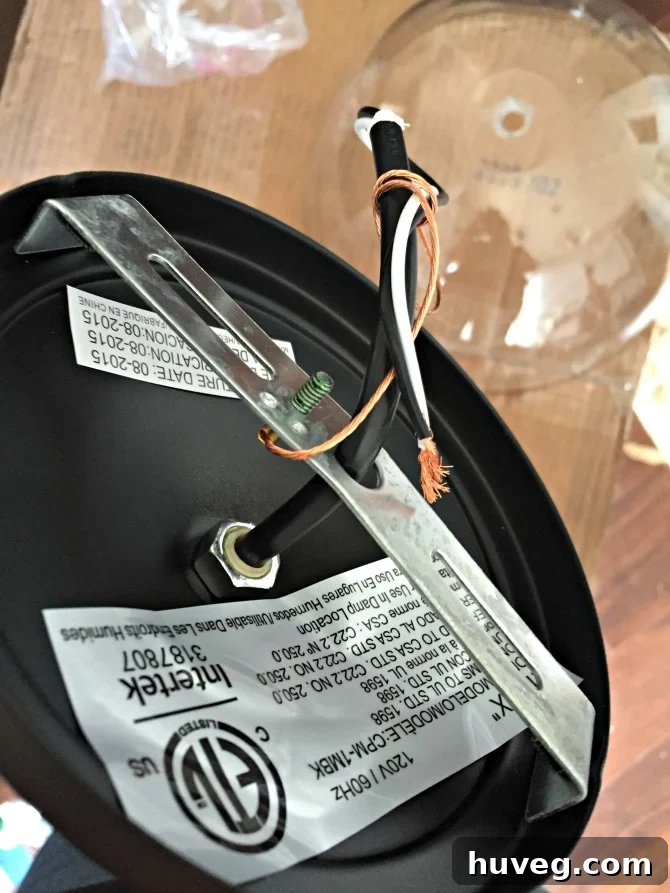
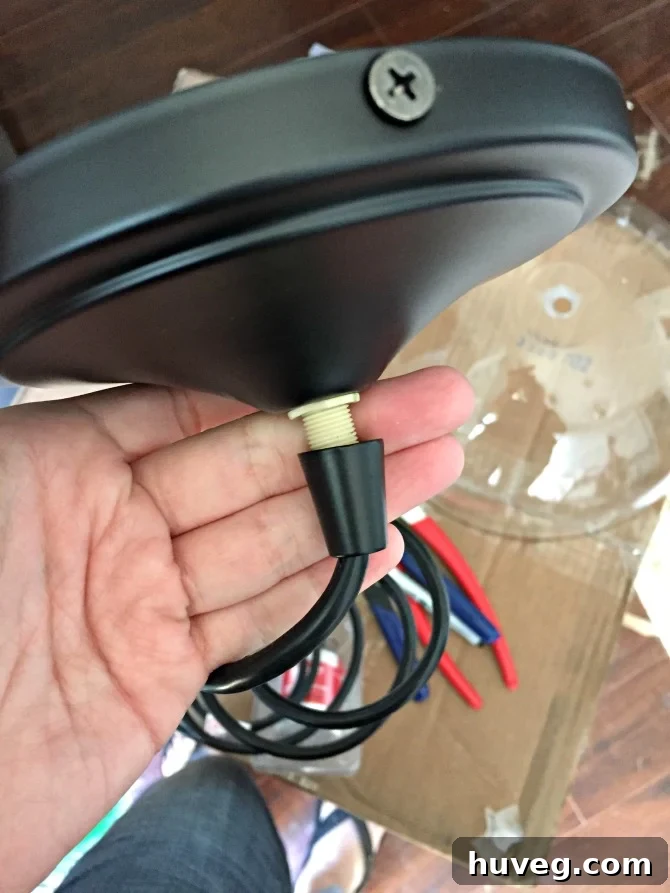
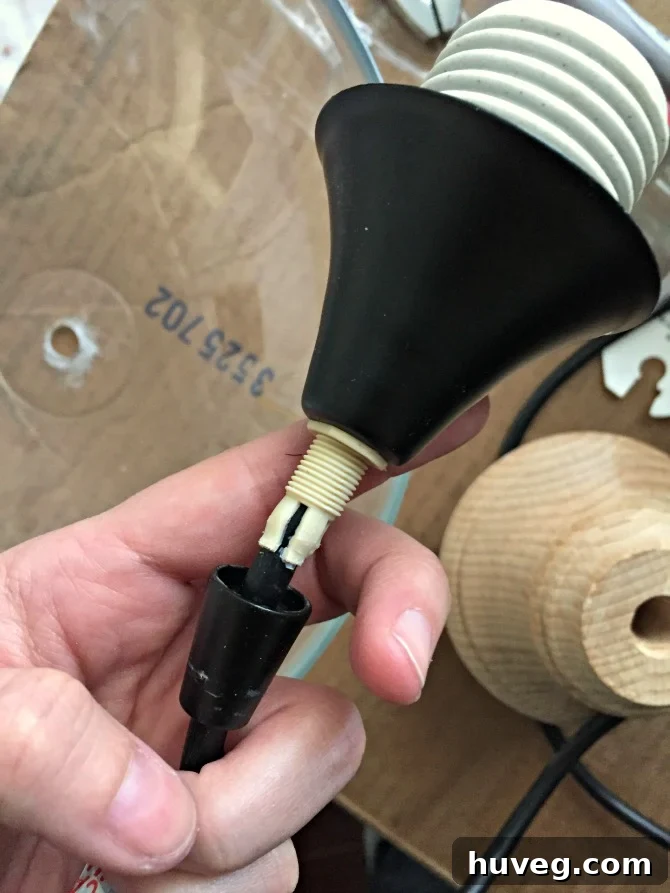
The foundation of this project is your chosen pendant light kit. Before making any modifications, it’s essential to carefully examine and disassemble it. Understanding the specific components—the thickness of the wire, the various tightening mechanisms, and how each piece fits together—will inform your drilling measurements and assembly strategy. My particular kit included several extra tightening pieces, which I cleverly repurposed to securely hold the glass shade in place. Take photos or draw a diagram as you disassemble, as this will be invaluable when it’s time to put everything back together.
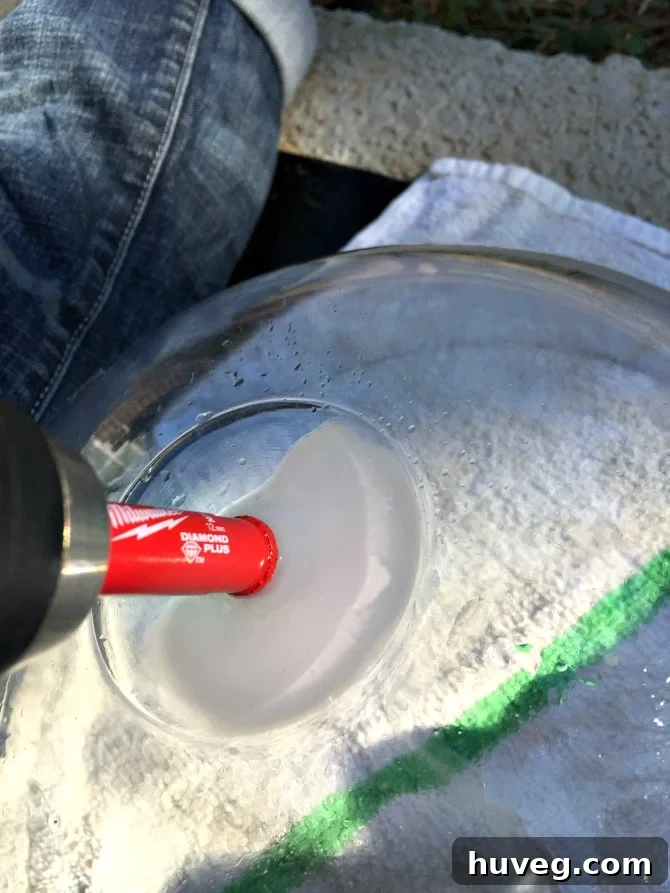
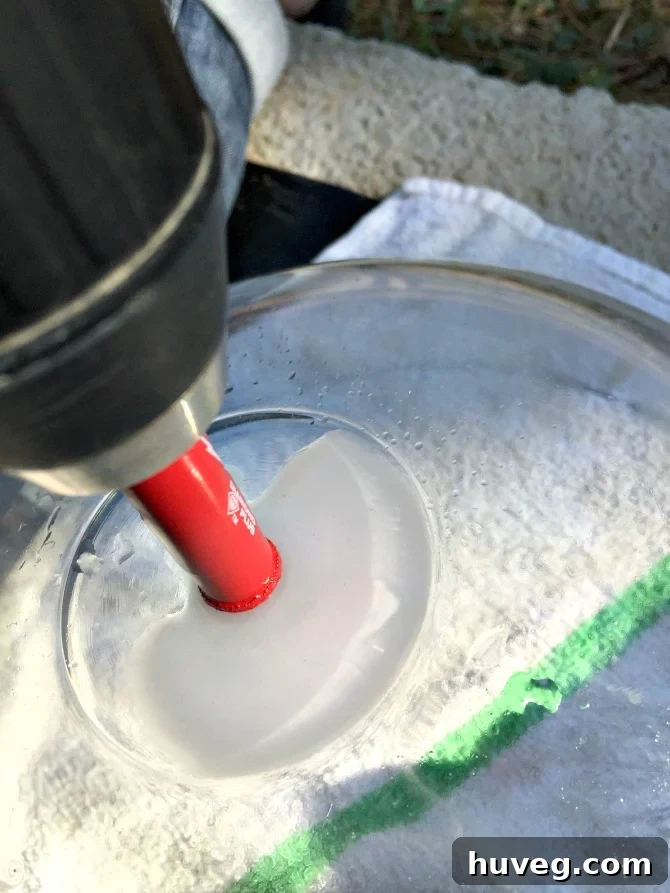
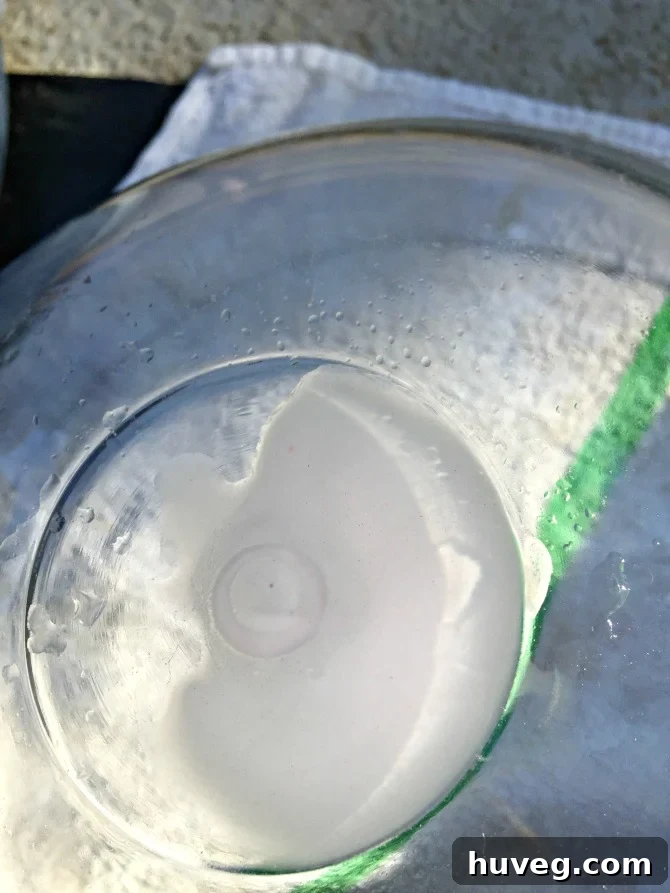
Step Two: Carefully Drill Through the Glass Bowl.
After carefully measuring the diameter needed for the pendant light’s wiring to pass through – in my case, 1/2 inch – I purchased a diamond-tipped drill bit specifically designed for drilling glass. This step requires patience and a precise technique. To ensure a smooth process and avoid frustrating mishaps, I highly recommend watching this informative video from Mandi at Vintage Revivals for expert tips. Here are a few crucial notes to keep in mind:
- Work Outdoors: Glass drilling can be messy, involving water and fine glass dust. Performing this task outdoors minimizes cleanup inside your home. I managed to soak my jeans, but it’s a small price to pay for a cleaner workspace.
- Protect Your Bowl: Place a thick towel or sturdy piece of cardboard beneath the bowl to prevent chipping its edge. My bowl, being a pre-owned item, already had a tiny chip, but protecting yours is paramount.
- Start at an Angle: Begin drilling with the bit held at a slight angle. This creates a small groove that prevents the bit from slipping and sliding across the smooth glass surface.
- Slowly Straighten: Once a groove is established, very gradually bring the drill bit to a 90-degree angle, maintaining gentle pressure.
- Keep it Wet: Continuously apply water to the drilling area. This cools the bit, lubricates the cut, and helps flush away glass particles, significantly reducing the risk of cracking.
- Patience is Key: Don’t rush! Glass drilling is a slow and deliberate process. While it might seem challenging initially, with patience and the right technique, it’s far more achievable than it first appears.
Step Three: Extract the Screw from the Wooden Bun Foot.
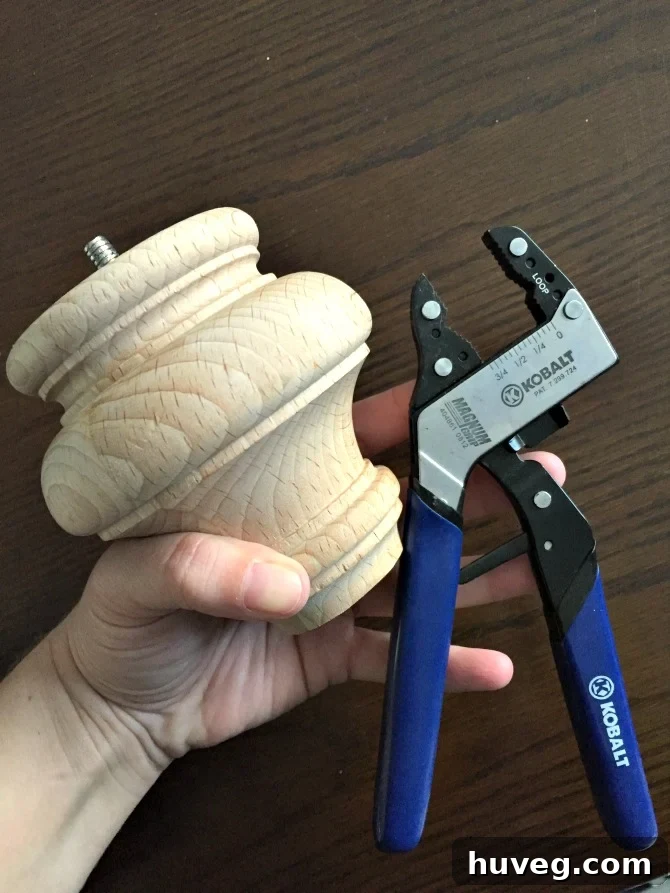
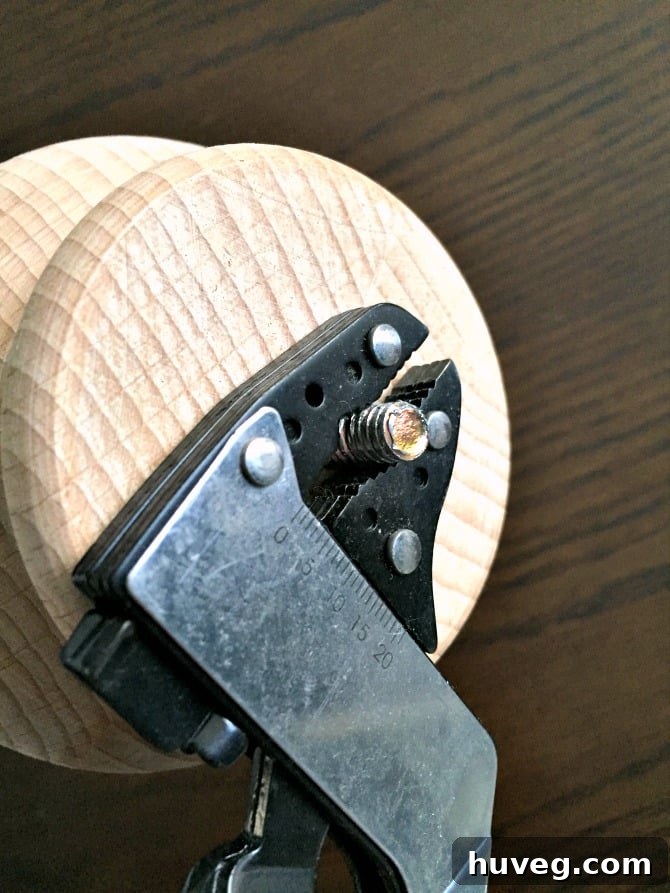
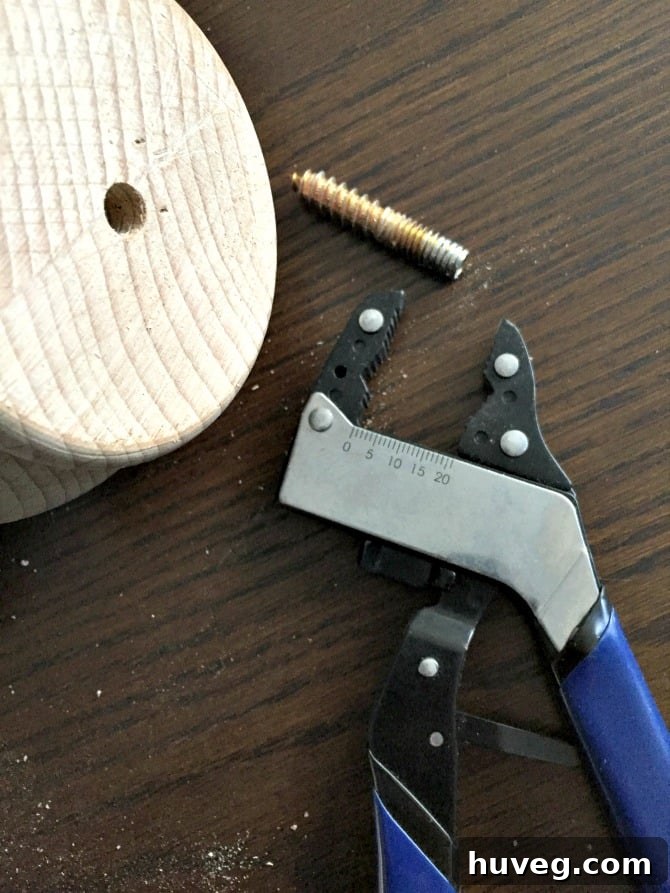
Decorative wooden bun feet were an ideal choice for replicating the carved wood element of my inspiration light fixture. However, these feet typically come equipped with a pre-installed hanger bolt or screw protruding from one end. To prepare the bun foot for drilling a central hole for the pendant light’s wiring, this screw must first be removed. To accomplish this, I utilized self-adjusting pliers. These pliers provide an exceptionally firm grip on the screw, allowing you to steadily rotate it counter-clockwise and extract it from the wooden foot without causing damage to the wood itself.
Step Four: Precisely Drill Through the Bun Foot.
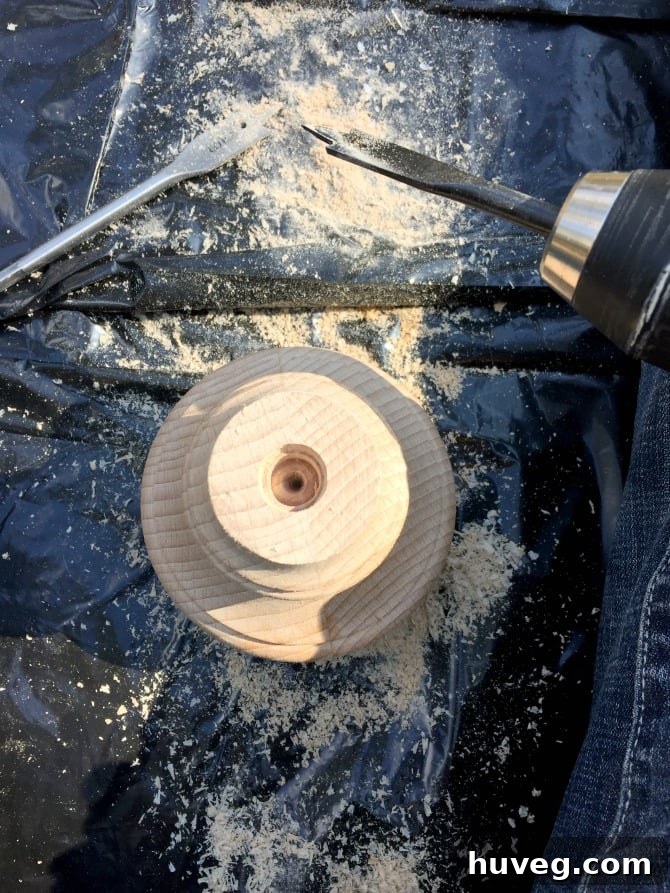
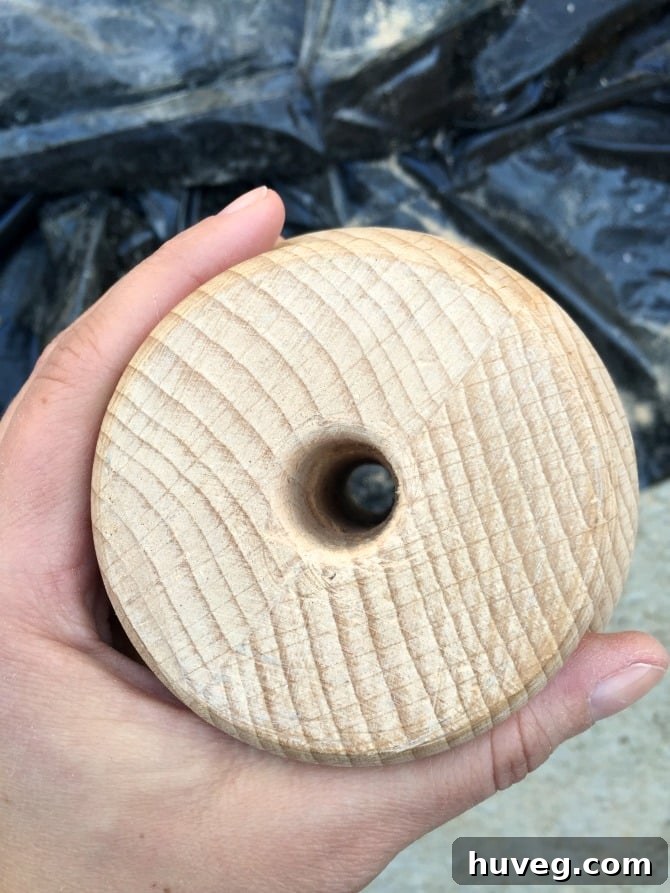
As previously mentioned, I began by using a 1/2-inch Forstner bit to initiate the hole on both ends of the bun foot. This technique is crucial for achieving clean, tear-out-free entry points. With the hanger bolt removed, starting the hole on one end was straightforward. However, exercise caution when starting on the other end, as the pre-existing, wider hole (where the screw was removed) offers no friction for the Forstner bit’s central tip to anchor into, making slippage a possibility. Once a clean starter hole was established on each side, I switched to a 1/2-inch spade bit. The spade bit proved to be significantly faster for drilling through the remainder of the wood, allowing me to complete the central channel with efficiency and precision. Remember to secure the bun foot firmly in a vise or with clamps before drilling to prevent movement and ensure safety.
Step Five: Sand, Stain, and Apply Polyurethane to the Wood Piece.
My preference was to ensure the drilling was successfully completed before proceeding with the finishing touches on the wood. However, you could just as easily sand, stain, and poly the bun foot before drilling, if that suits your workflow better. For this project, I aimed to maintain a somewhat natural wood appearance, echoing the aesthetic of the inspiration piece. I was concerned that simply applying polyurethane would result in an undesirable yellowish tint over time. To counteract this and preserve a more neutral tone, I applied a quick, single coat of Minwax stain in Pickled Oak. This stain appears milky white when wet, but if applied sparingly and wiped off promptly, it will subtly neutralize the wood’s natural warmth without making it overly light.
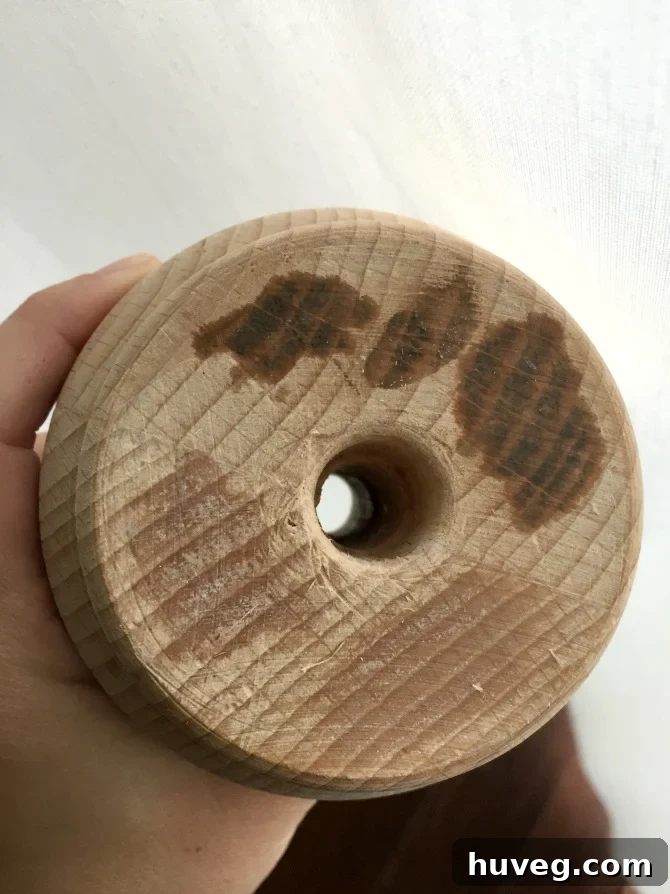
Before staining the entire piece, I tested a few different stain options on the bottom of the bun foot. This allowed me to select the perfect hue. During final assembly, I covered these test spots with a quick coat of paint, as they would have been visible when looking up at the installed light. If you stick with my recommended Pickled Oak stain and don’t need to test, you can skip painting the bottom entirely. After staining, apply a protective layer of polyurethane according to the product instructions to ensure durability and a lasting finish.
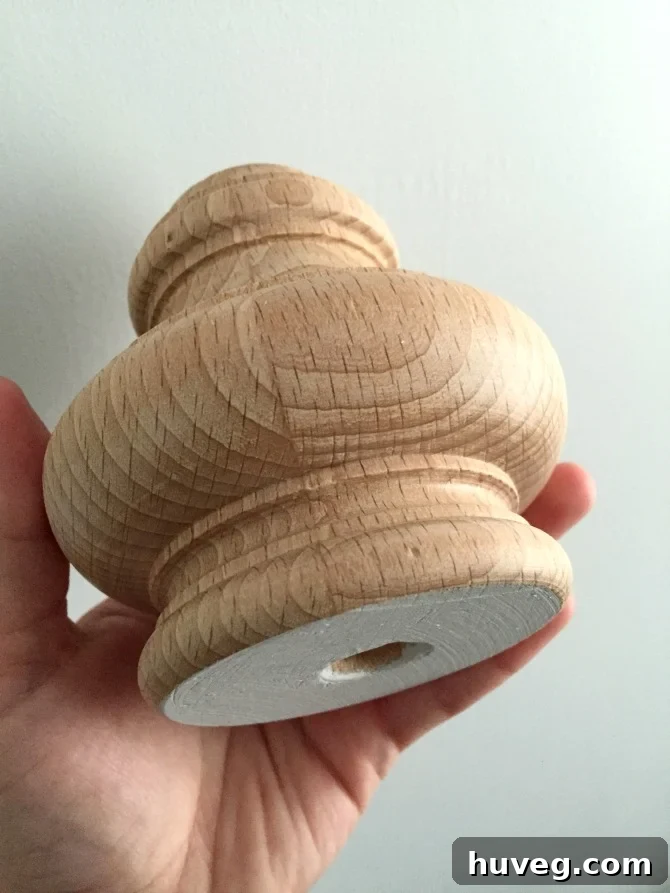
Step Six: Assemble the Pendant Light Fixture.
The assembly process involved a bit of trial and error to determine the optimal sequence. I found it best to first secure the glass bowl to the light fixture’s wiring. I achieved this by utilizing one of the wire caps that came with the pendant light kit – these caps are typically designed to secure the light socket along the wire, but they worked perfectly here to hold the bowl in place.
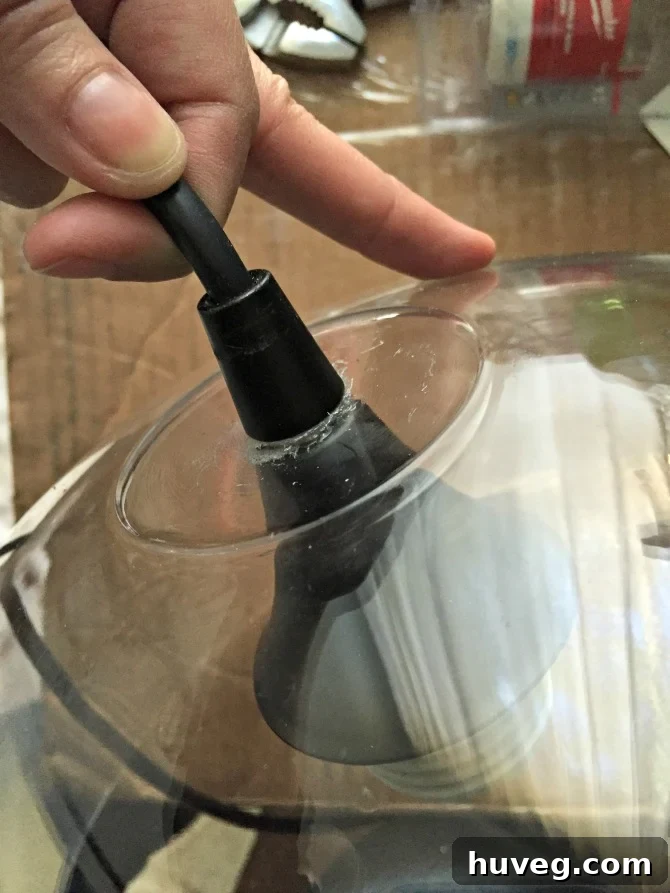
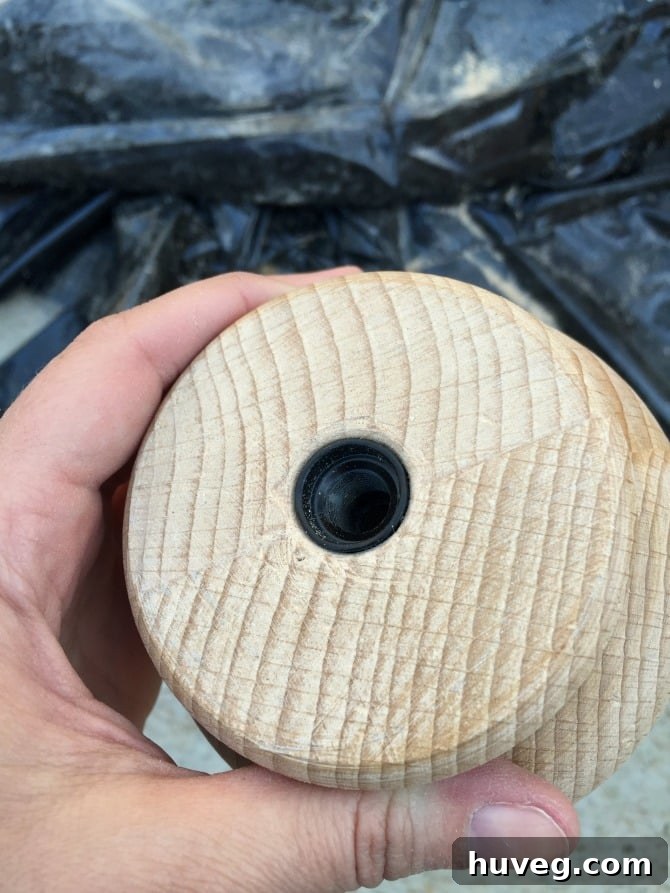
It quickly became apparent that the wooden bun foot needed to thread *over* this small black cap. To accommodate this, I returned outside and slightly widened the bottom opening of the bun foot using a 5/8-inch Forstner bit. This modification allowed the cap to fit snugly within the wooden piece, creating a secure and aesthetically pleasing connection. If you don’t have a 5/8-inch Forstner bit, you can patiently widen the opening using rough-grit sandpaper until the cap fits perfectly. It will take a little longer, but achieve the same result.
Step Seven: Safely Hang and Install Your New Light Fixture.
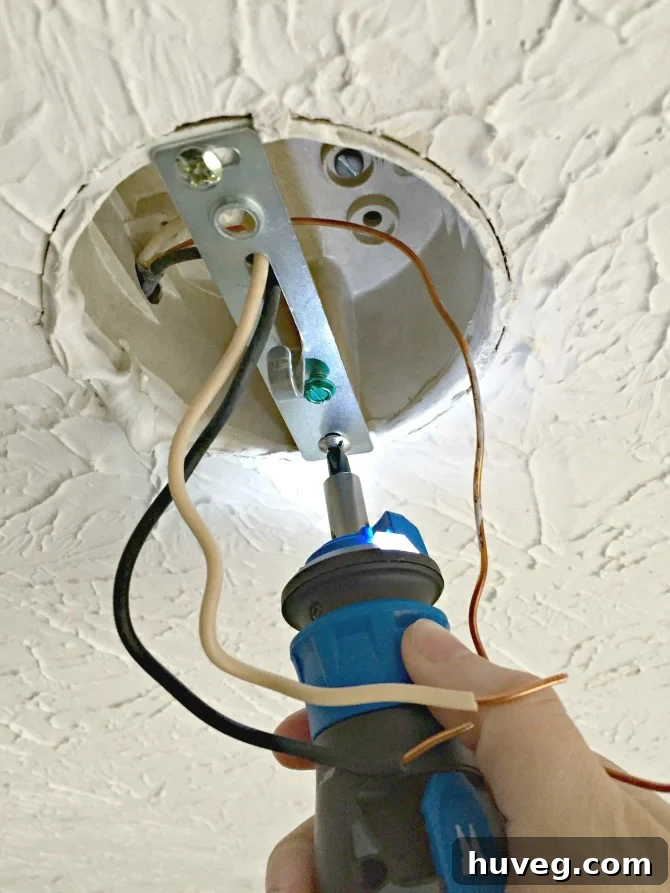
Installing the finished light fixture was a breeze, thanks in no small part to a fantastic gift from a friend: a Hammerhead cordless screwdriver. This was my inaugural opportunity to use it, and I can confidently say it’s an exceptional tool! It features a built-in wire stripper and circuit sensor, and its cordless, powered design made the entire installation process, including driving screws with one hand, far easier than previous experiences. I’m planning a separate, detailed review and possibly a YouTube demo video for this tool, simply because I truly appreciate when tools perform exceptionally well and simplify solo projects exponentially. It’s particularly effective at overcoming my natural procrastination tendencies, especially when a project initially seems like it will be a hassle!
Always prioritize safety when working with electrical components. Ensure the power to the circuit is turned off at the breaker box before beginning any installation. Follow the wiring instructions provided with your pendant light kit carefully. If you’re unsure about any step, it’s always best to consult a qualified electrician.
And now, for the exciting reveal of the finished result!
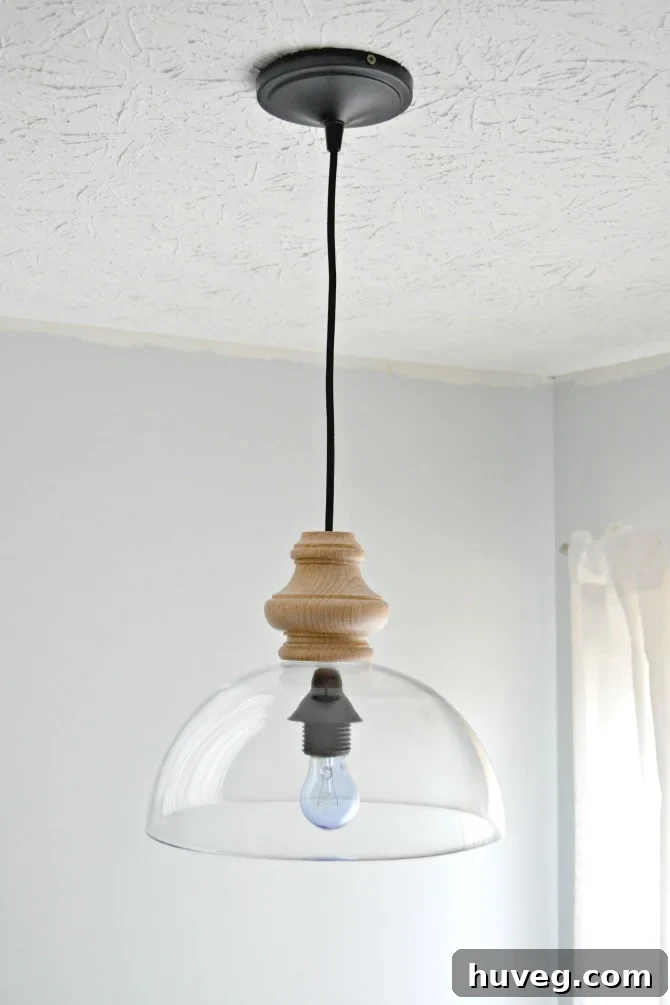
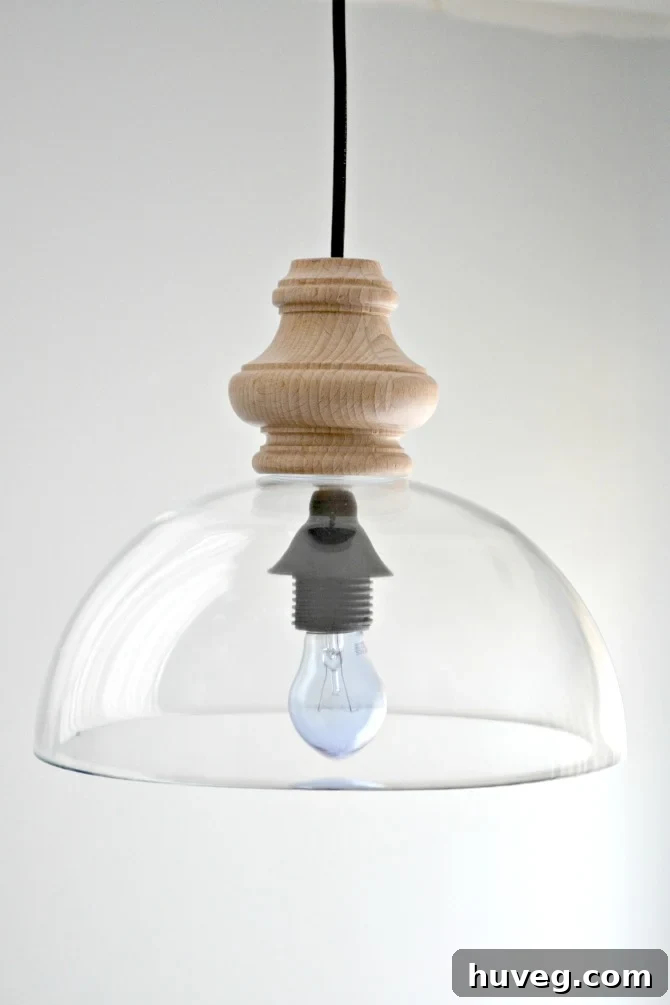
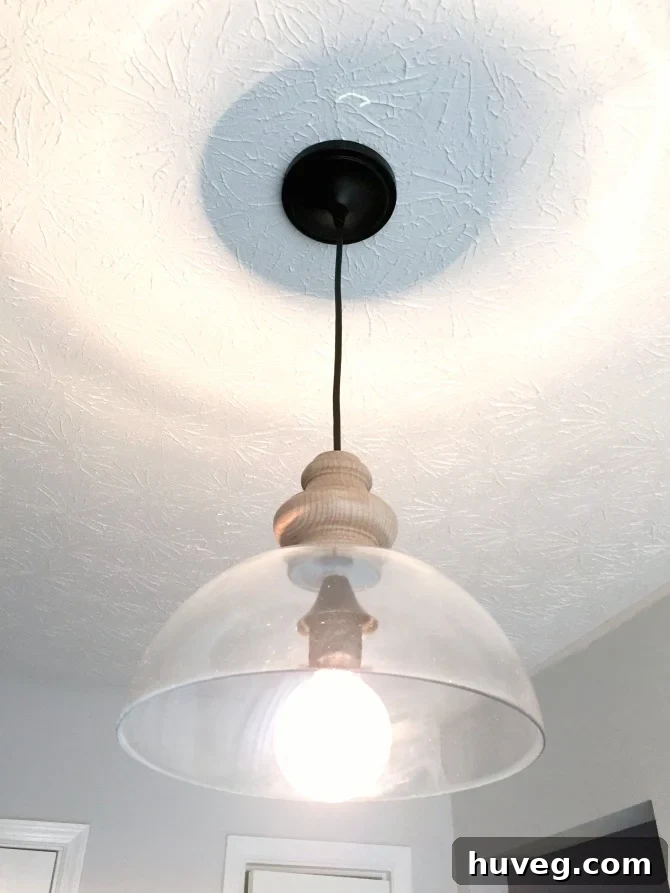
Initially, I experimented with a smaller light bulb. However, after trying out a larger, more prominent bulb, I concluded that the larger version significantly enhances the light’s overall presence and aesthetic appeal.
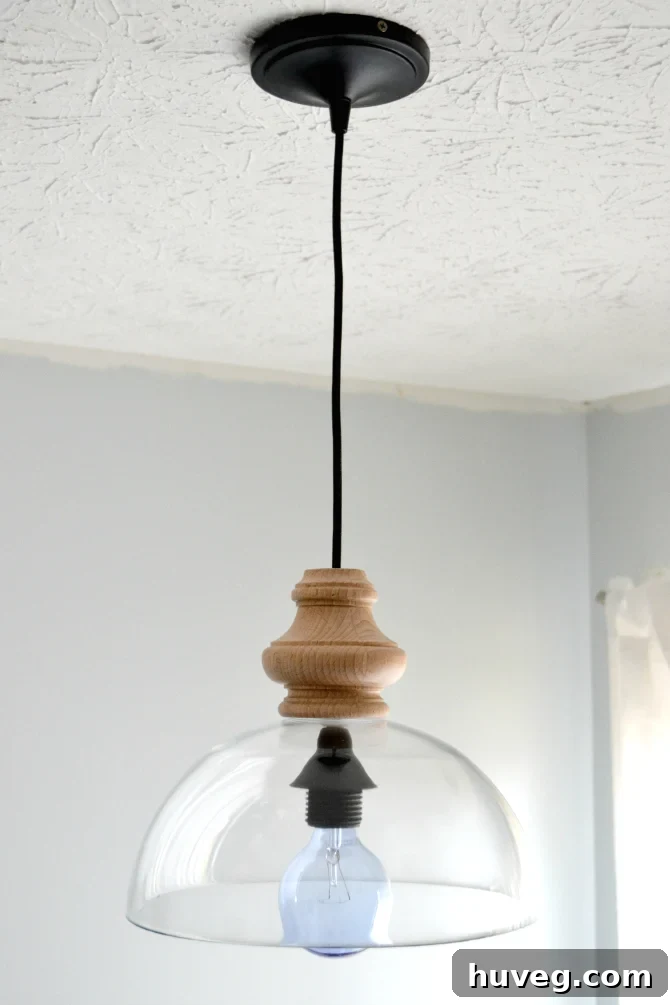
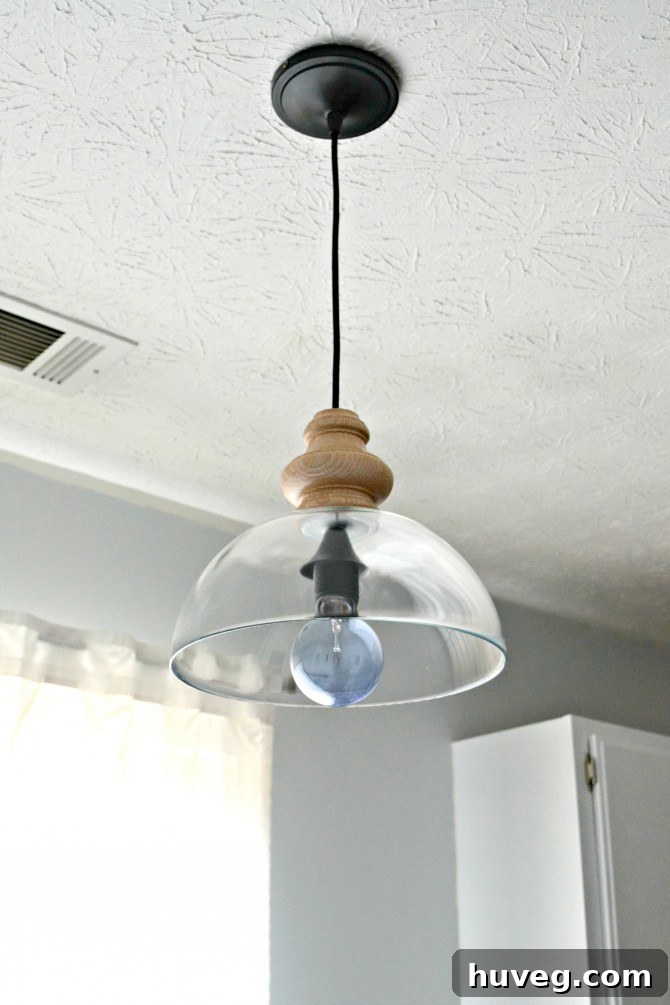
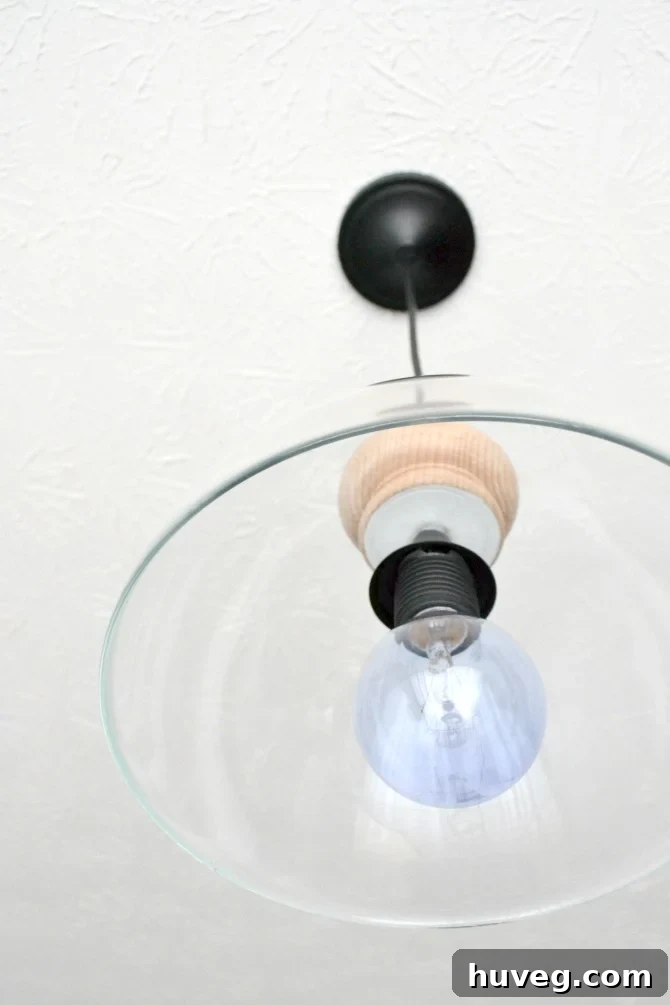
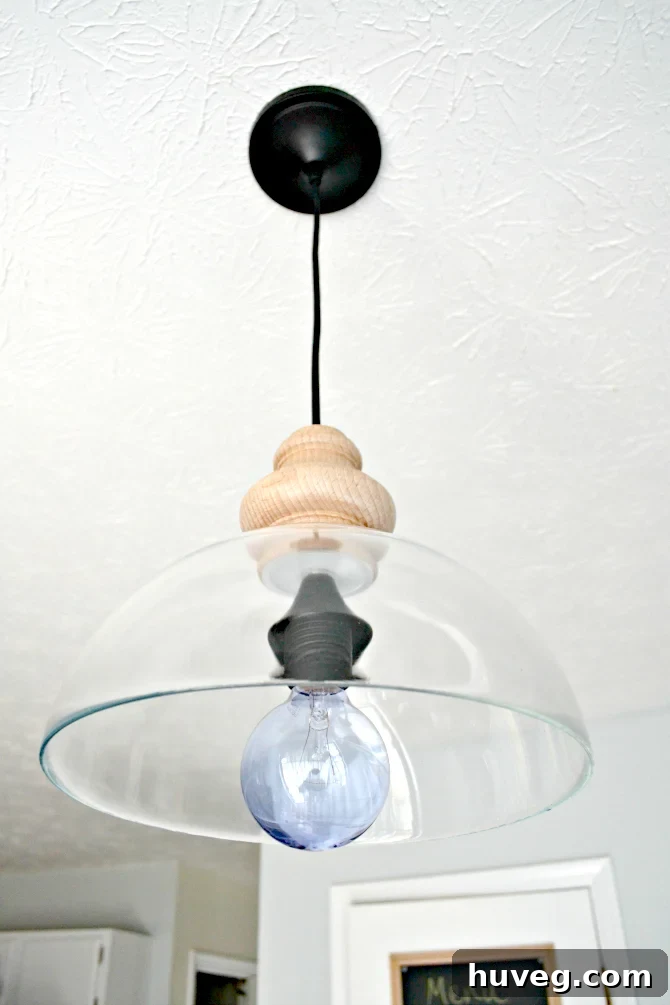
And finally, here it is, beautifully illuminated, casting a warm and inviting glow over the breakfast nook:
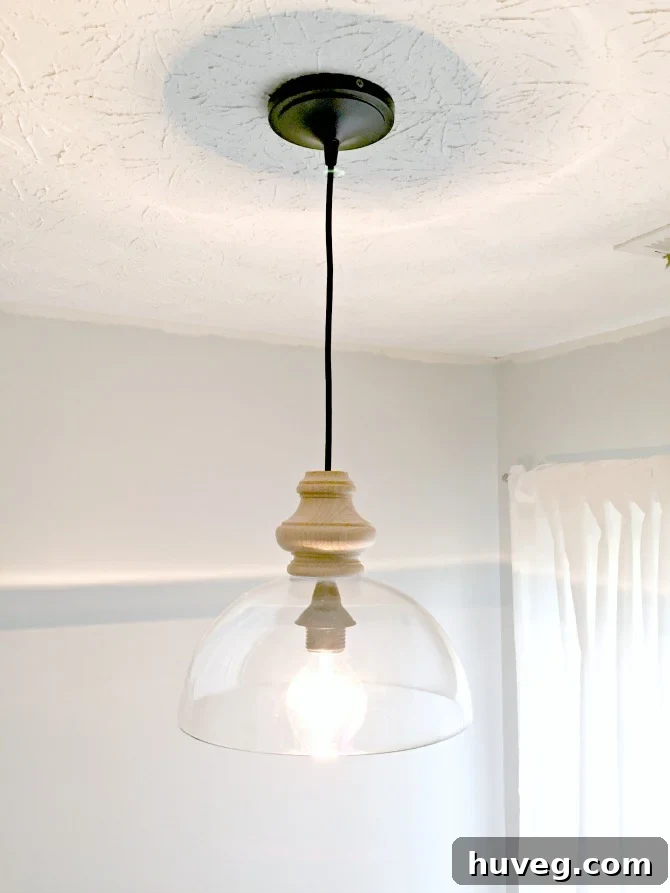
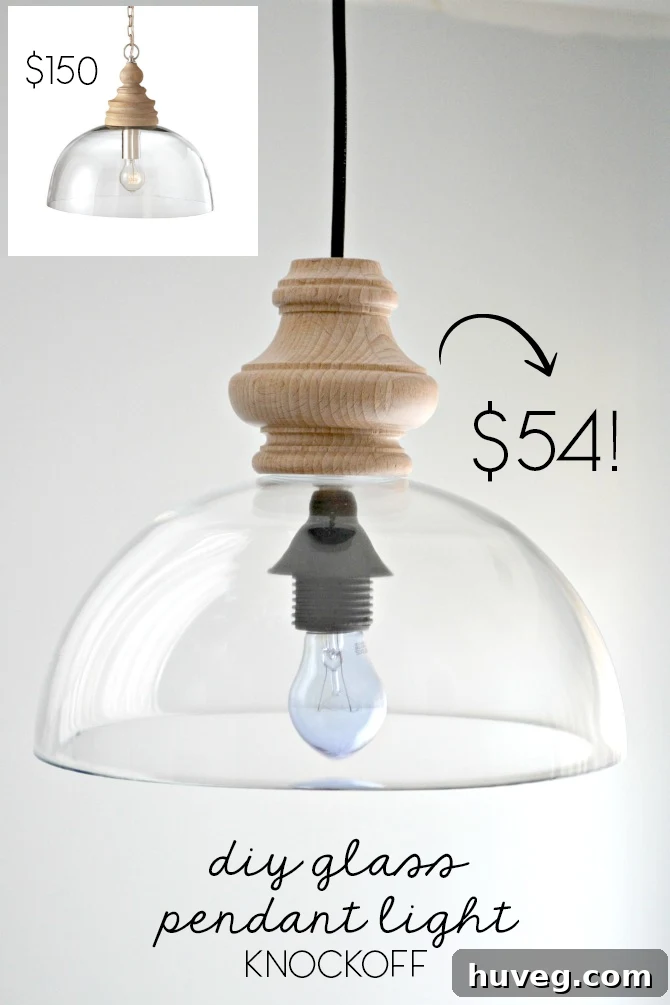
The original inspiration light fixture was priced at $150, or $130 with an elusive discount that never materialized. This DIY knockoff, however, came in at an astonishingly low total cost of just $54! This breaks down to approximately $10 for the Ikea BLANDA bowl (if purchased new), $9 for the decorative wooden bun foot, $15 for the pendant light kit, and $20 for the glass drill bit (a tool I foresee using for many more creative projects!). This remarkable saving highlights the incredible value and satisfaction that comes with tackling home improvement projects yourself.
If you’ve found inspiration in this project, you’re in luck! There are many more brilliant ideas from the #DIYLightingChallenge to explore below, and you’re welcome to link your own creations or share them on social media using the hashtag. Additionally, I have two more exciting lighting projects coming to the blog very soon. Stay tuned for an awesome giveaway next week! (Quick update: the giveaway has been moved to Monday, but a fresh post will be live before then). It’s been a while since our last one, so it feels like the perfect time for another. Be sure to check back tomorrow for more DIY inspiration!
UPDATE: Illuminating Your Space – A Closer Look at Bulb Choices A common question I’ve received focuses on the specific light bulb used in this pendant fixture. These are GE Reveal bulbs, and I’ve grown to truly appreciate their quality of light throughout my home. While they appear with a slight bluish tint when unlit, the light they emit is a remarkably pure white, falling perfectly between the warmth of “soft white” and the crispness of “daylight” bulbs. Many “daylight” brands can lean too blue, and “soft white” can feel overly warm. These Reveal bulbs strike an ideal balance, creating a beautifully balanced illumination that is particularly advantageous for photography. The only current drawback is the limited availability of LED versions that possess the aesthetic appeal required for a clear-shade fixture like this one, but I remain optimistic that stylish LED options will emerge soon!
*Just how many “that’s what she said” jokes did you catch in this post? Probably more than a few, right? I’d wager a lot.