Continuum Stumbles

Transforming Spaces: A Hallway Makeover and Tackling DIY Challenges Head-On
Ah, the sweet sound of Friday! For many, it signals the start of a well-deserved break, but for a dedicated DIY enthusiast, it often marks the beginning of an exciting weekend project. While the lure of relaxation is strong, there’s an undeniable satisfaction in dedicating a portion of your free time to transforming a neglected corner of your home. This past week, I decided to put my own advice into practice, trading immediate leisure for the gratifying pursuit of progress, starting with a surprisingly impactful chore and moving straight into a more ambitious home improvement endeavor. It’s all about building momentum, one small victory at a time, to achieve those bigger design dreams.
Before diving into the creative chaos, I made a significant dent in what I affectionately call “Mount Washmore” – that perpetually growing pile of laundry that seems to mock me from the utility room. Conquering a task like this, even a mundane one, provides an immediate sense of accomplishment and clears the mental clutter, paving the way for more enjoyable projects. With the laundry tamed, my focus immediately shifted to the next phase of our upstairs hallway renovation, a space long overdue for some much-needed attention and a touch of personal flair. It’s these small, consistent efforts that truly drive a home transformation forward, proving that even with a busy schedule, meaningful progress is always within reach.
The Hallway Transformation Begins: Unleashing Paint Stick Potential
Why the Hallway? Giving a Neglected Space a New Lease on Life
Every home has those areas that serve their purpose but lack character, often becoming forgotten zones in the grand scheme of interior design. For us, it’s the upstairs hallway. It’s a high-traffic area, a thoroughfare connecting bedrooms and bathrooms, yet it has remained largely untouched since we moved in. Functionality has always taken precedence, leaving the aesthetics to fall by the wayside. It’s time for that to change. My vision for this space is to inject personality, create visual interest, and transform it from a mere transitional zone into an integral part of our home’s style narrative. This isn’t just about painting walls; it’s about crafting an experience, making every step through the hallway feel intentional and inspiring.
The Humble Paint Stick: A DIYer’s Secret Weapon for Creative Reuse
My secret weapon for this particular project? A surprisingly large collection of paint sticks. Yes, those free wooden stirrers you pick up from the hardware store. But don’t let their humble origins fool you; these unassuming sticks hold incredible potential for creative reuse. With their simple, clean lines and uniform dimensions, they can be transformed into a myriad of decorative elements, from unique wall art and slat paneling to custom picture frames and even small furniture accents. For our hallway, I envision a modern, textured wall treatment that will add depth and architectural interest without breaking the bank. I spent a satisfying afternoon meticulously cutting off the handle-y ends, preparing them for their grand debut. Each cut piece represents a step closer to realizing the vision for a more dynamic and engaging hallway.
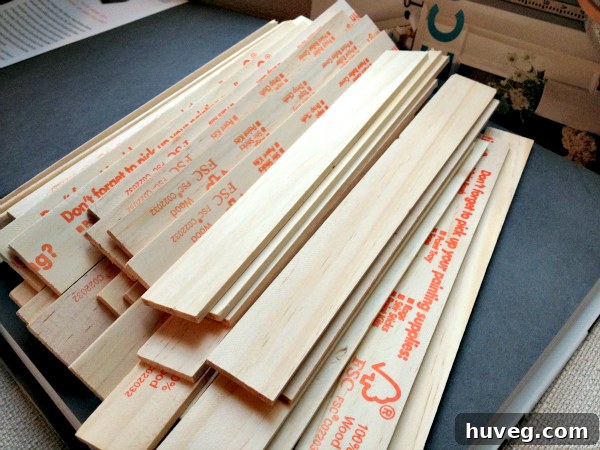
It’s truly amazing what you can achieve with readily available, often free, materials when you approach them with a creative mindset. I owe a massive fistbump to Home Depot for their incredible generosity, not only in allowing me to acquire such a significant quantity of paint sticks – clearly for purposes far beyond mere paint mixing – but also for actively encouraging such ingenious DIY projects on Instagram. It’s fantastic to see major retailers supporting the creative community and inspiring us to look at everyday items with fresh eyes. This kind of encouragement fuels the DIY spirit, empowering people to tackle projects that might otherwise seem daunting due to cost or complexity. These paint sticks are not just wood; they are a symbol of budget-friendly innovation and the endless possibilities of creative recycling in home decor.
Navigating DIY Hurdles: Tackling the Warped Board Dilemma
The Unforeseen Challenge: When Materials Don’t Cooperate
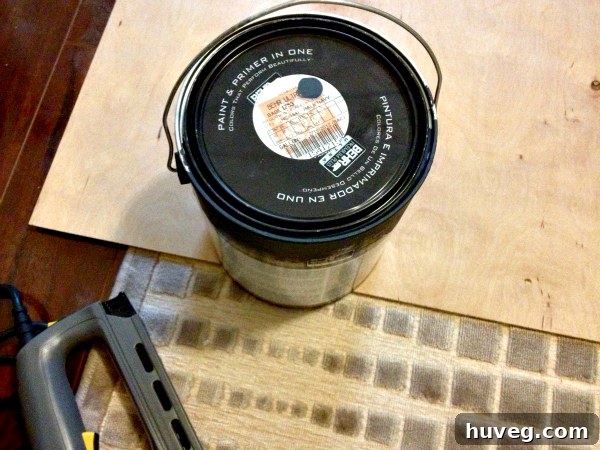
No DIY project, no matter how meticulously planned, is entirely immune to unexpected setbacks. Such was the case with the foundation board I picked up, which is destined to serve as the sturdy base for our paint stick creation. Fresh from the lumber aisle, it had the perfect dimensions and seemed ready for action. However, a crucial oversight in immediate storage led to an unfortunate outcome. Thanks to the relentless humidity accompanying all this summer rain, a single afternoon spent in the confines of my car was enough to cause significant warping. It’s a common yet frustrating issue: wood, being a natural material, reacts to changes in moisture and temperature, leading to bends and twists that can compromise the integrity and aesthetics of a project. This unexpected curveball reminded me that even the simplest steps in a DIY process require attention to detail, especially when it comes to material handling and preparation.
Practical Solutions for Warped Wood: Patience and Persistence
Faced with a noticeably bowed board, my immediate reaction wasn’t despair, but rather a resolve to find a solution. In DIY, problem-solving is just as crucial as creativity. My first approach, and often the easiest, is to try mechanical flattening. I’ve simply laid the warped board flat on a stable surface, strategically placing heavy weights across its length. The hope is that with consistent pressure over time, the wood will gradually conform back to its original, planar shape. This method relies on the wood’s inherent flexibility and the gentle persuasion of gravity and force. It requires patience, but it’s often successful for minor to moderate warping. I’ll be checking on it regularly, and if this initial attempt doesn’t yield sufficient results, I’m prepared to move on to more active measures. This might involve applying targeted moisture and then clamping, or even a more advanced technique involving kerfing the back of the board to relieve tension and allow it to straighten. The key is to avoid rushing and to approach the problem systematically, understanding the properties of the material you’re working with.
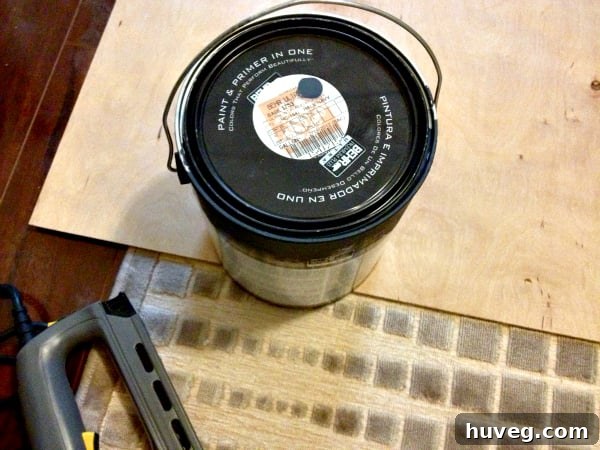
Dealing with warped materials is a common rite of passage for many DIY enthusiasts. It teaches valuable lessons about material selection, proper storage, and the importance of adapting your plans when things don’t go exactly as expected. While it adds a slight delay to the project timeline, overcoming such a challenge instills a deeper sense of satisfaction. It also opens up opportunities to learn new techniques and expand your problem-solving toolkit. Should this board prove too stubborn, I have backup plans, including sourcing a new, perhaps more weather-resistant, piece of lumber or even re-evaluating the design to accommodate a different base material. Flexibility and a willingness to learn are truly the hallmarks of a successful DIY journey. This minor hiccup won’t derail the exciting vision for our updated hallway.
The Art of Pacing in DIY: Small Steps, Big Dreams
Embarking on a significant home improvement project while juggling the demands of daily life, including the looming pressure of academic finals, can feel like a daunting task. Yet, it’s precisely during these busy periods that the concept of “small steps” becomes most powerful. Every cut paint stick, every moment spent researching solutions for a warped board, and every small victory, like tackling a mountain of laundry, is a meaningful stride forward. It’s a testament to the power of consistent effort, proving that progress doesn’t always have to be grand or immediate. The key is to celebrate these mini-milestones and to acknowledge that even the slowest pace is still forward momentum. This philosophy prevents burnout and keeps the motivation alive, especially when time is a precious commodity.
For busy DIYers, breaking down a large project into manageable, bite-sized tasks is essential. Instead of viewing the entire hallway makeover as one overwhelming entity, I focus on individual components: preparing the paint sticks, addressing the warped board, planning the layout, and so on. This approach makes the project feel less intimidating and more achievable. It also allows for flexibility in scheduling, enabling progress even during short bursts of free time. The ultimate goal for our home is a reflection of comfort, style, and personal expression, and each small project, no refreshed hallway, contributes to that overarching vision. It’s a journey of continuous improvement, where every effort, no matter how modest, builds towards something truly special.
I am incredibly eager to share more updates on this hallway project with you next week. While progress may seem slow with finals approaching, every small step in the right direction is still a step towards achieving our vision for a beautifully transformed home. It’s about patience, persistence, and finding joy in the creative process, even when faced with unexpected challenges. Until then, remember that dedication to a vision, coupled with the resilience to overcome obstacles, is what makes DIY truly rewarding. I encourage you to take on your own small projects this weekend, whatever they may be, and experience the satisfaction of creating and improving. Have a fantastic weekend, everyone!