Backsplash Tiling Made Simple

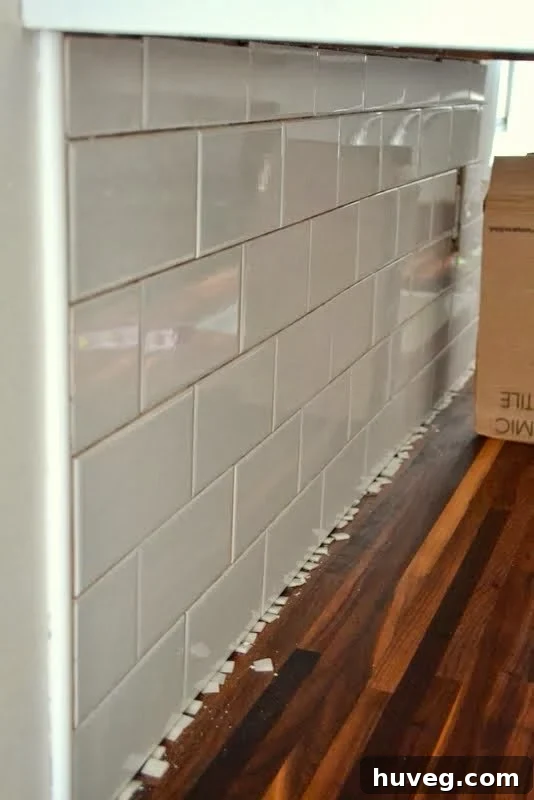
Are you ready to transform your kitchen with a beautiful new backsplash? Whether you’re a seasoned DIY enthusiast or a first-timer, installing a tile backsplash can significantly upgrade your space, adding both style and value. This comprehensive guide will walk you through every step of the process, from choosing the right materials and prepping your surfaces to mastering tile cuts around outlets and windows, and achieving a flawless finish. Say goodbye to guesswork and hello to a professional-looking kitchen backsplash, all done by you!
Just recently, I completed my own kitchen backsplash project using classic subway tiles, and the results are truly inspiring. The fresh, clean look it brings to the kitchen is undeniable, and the satisfaction of a DIY well done is unparalleled.
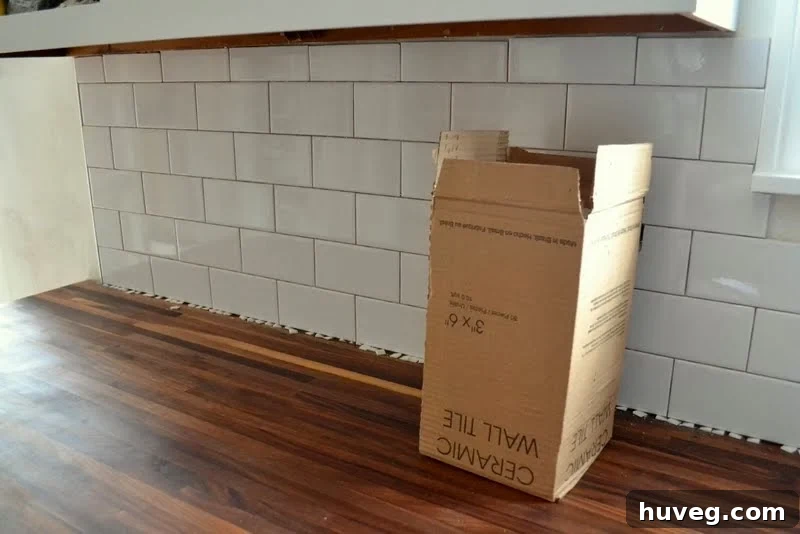
As promised, I’m sharing all the essential DIY details, including the tools I utilized, the techniques I learned, and a collection of handy tips to help you successfully install your own subway tile backsplash. This guide is packed with valuable information, so grab a cup of coffee and get comfortable – you’re about to become a backsplash tiling expert!
Your Ultimate Guide to Tiling a Kitchen Backsplash
Before any tile meets the wall, meticulous preparation is key to a long-lasting and aesthetically pleasing backsplash. Begin by clearing your countertops and covering all surrounding areas, including floors and cabinetry, with drop cloths or plastic sheeting to protect them from adhesive and grout. Tiling can be a messy job, and cleaning up dried thinset or grout is far more challenging than wiping it wet. Additionally, ensure your drywall or wall surface is clean, dry, and structurally sound. Any holes or imperfections should be patched and sanded smooth. For a detailed guide on wall preparation, refer to specific resources on drywall prep for tiling.
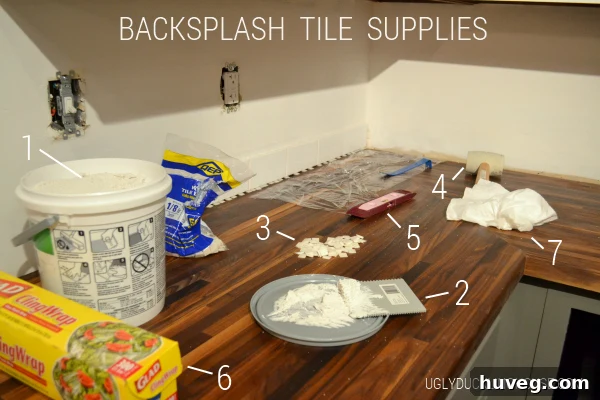
Essential Tools and Materials for Your Backsplash Project
Having the right tools and materials on hand will make your tiling project significantly smoother and more efficient. Here’s a comprehensive list of what you’ll need:
- Pre-mixed Thinset Mortar: For most kitchen backsplash applications, pre-mixed thinset (often a sanded mastic) is a convenient and effective choice. While professional tile setters might advocate for dry-mix thinset (which you mix with water for superior adhesion in wet environments like showers), pre-mixed options are perfectly adequate for kitchen backsplashes, offering ease of use and the ability to adjust tiles if needed. I personally found a large bucket to be sufficient, but always overestimate your needs. Always check the manufacturer’s instructions to ensure compatibility with your specific tile type and project requirements.
- Notched Trowel or 4-in-1 Tile Adhesive Spreader: The size of the notches on your trowel is crucial and depends on your tile size. For standard subway tiles, a smaller notch (e.g., 1/8″ or 3/16″) is usually recommended to ensure proper adhesive coverage without excessive squeeze-out. Interestingly, I found a 4-in-1 adhesive spreader to be incredibly versatile for my project, allowing me to handle both large areas and tight corners effectively, and it’s a budget-friendly option. For more details on choosing the right trowel, consult a mortar selection chart.
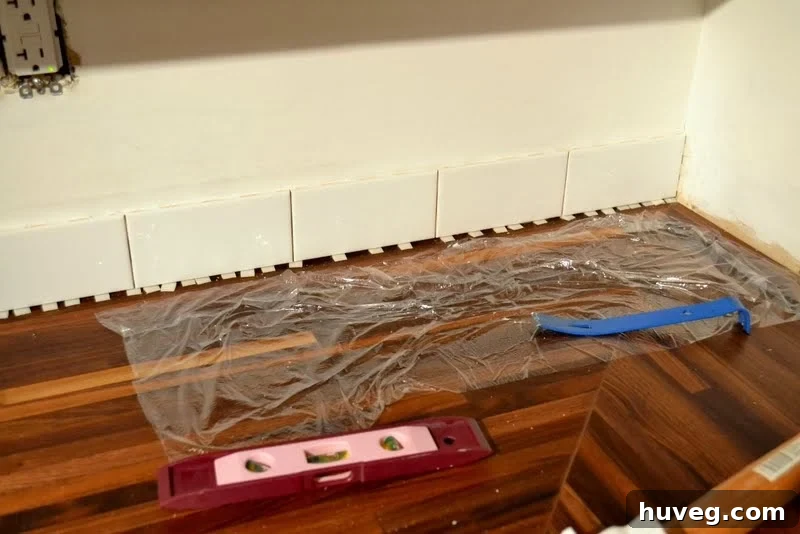
- Tile Spacers: Even if your tiles are “self-spacing” (more on this below), you’ll likely need spacers, especially for the crucial first row. 1/8″ wedge spacers are ideal for creating a consistent expansion gap between your countertop and the first row of tiles, accommodating for natural material expansion and contraction. This gap will later be filled with flexible silicone caulk.
- Rubber Mallet: An indispensable tool for gently tapping tiles into place, ensuring they are level and firmly set in the adhesive, especially if some tiles are stubborn or walls are slightly uneven.
- Level: A good quality level is non-negotiable. It’s your primary tool for ensuring every tile row is perfectly horizontal and vertical, preventing a crooked and unprofessional appearance.
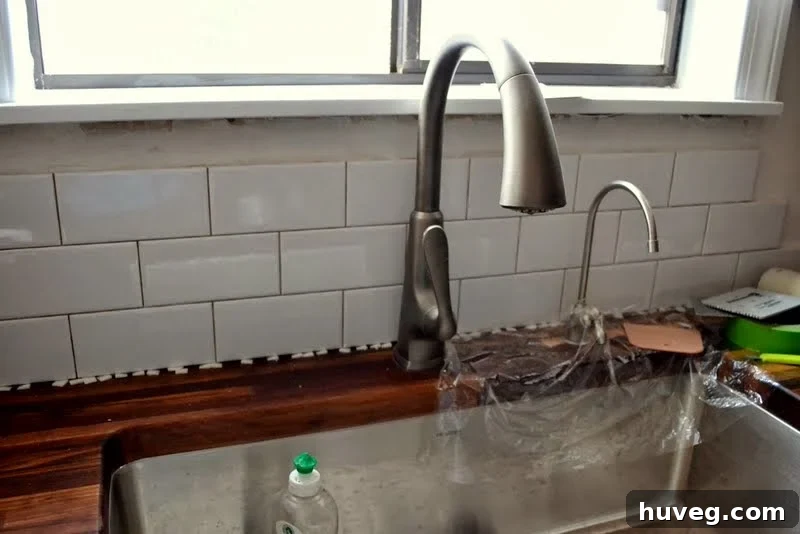
- Plastic Sheeting or Painter’s Tape: Protect your countertops, especially if they are wood or a delicate finish. For oiled or waxed wood countertops, plastic wrap secured with painter’s tape to the first set row of tile offers excellent protection, preventing adhesive drips from hardening onto the surface.
- Damp Paper Towels or Sponges: Essential for immediate cleanup. Wipe away any excess thinset that oozes between tiles or onto the tile surface *before* it dries. Dried adhesive is significantly harder to remove.
- Wet Tile Saw: A wet tile saw is your best friend for making precise, clean cuts, particularly for fitting tiles at the ends of runs, around windows, and especially for complex cuts around electrical outlets. While tile nippers can handle small, irregular cuts, a wet saw provides the most professional finish. Always use eye protection and gloves when operating.
- Putty Knife or Scraper: Highly versatile for a tiling project. Use it for scraping off dried thinset, adjusting misaligned tiles, or cleaning out grout lines before the adhesive fully cures. Its thin blade and comfortable grip make it invaluable for precision work.
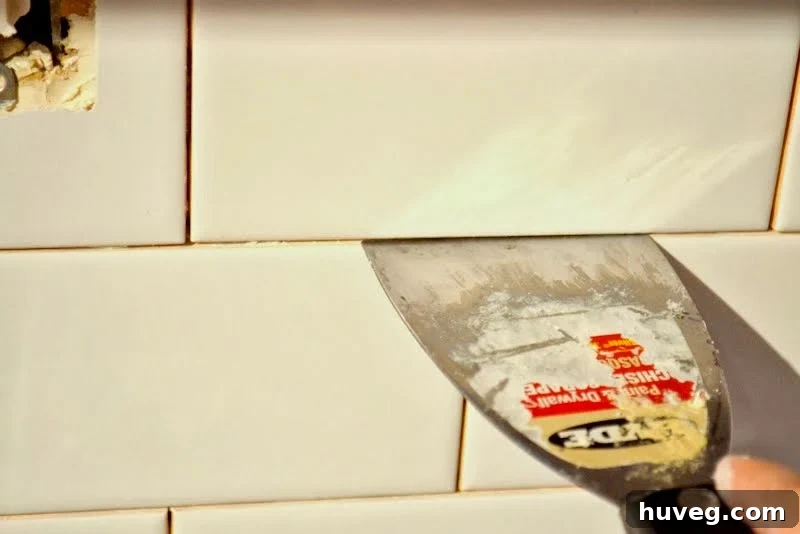
A small utility knife (like these multi-packs) is also incredibly useful for delicate tasks, such as meticulously clearing thinset from tight gaps between tiles without disturbing their placement. Its fine blade allows for precision cleaning, crucial for preparing uniform grout lines.
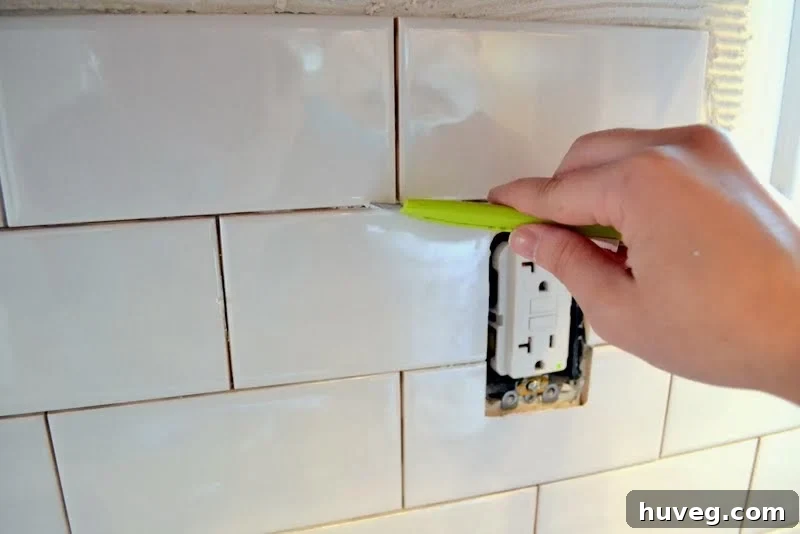
With your tools and materials ready, let’s dive into the installation process!
Understanding Self-Spacing Tiles
Some ceramic and porcelain tiles are designed with small protrusions, or “lugs,” along their edges. These lugs act as built-in spacers, ensuring a consistent 1/16″ grout line between tiles without the need for additional plastic spacers for horizontal and vertical alignment. While this feature simplifies the spacing process, it’s still crucial to use wedge spacers between the first row of tiles and the countertop to account for movement and provide a clean caulk line. Always inspect your chosen tiles closely or consult with your supplier to determine if they are self-spacing.
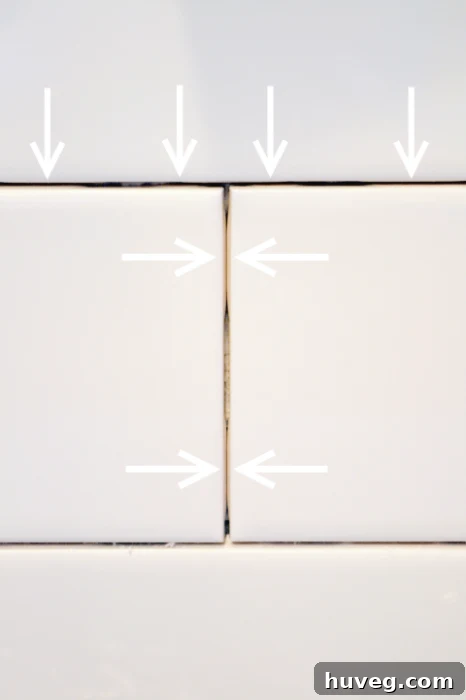
These lugs are often subtle and can be hard to spot at a glance. Running your fingers along the tile edges or looking for a slight coating on the edge can sometimes reveal them. While self-spacing tiles streamline the process, they don’t negate the need for careful layout planning and leveling, especially in older homes with potentially uneven walls.
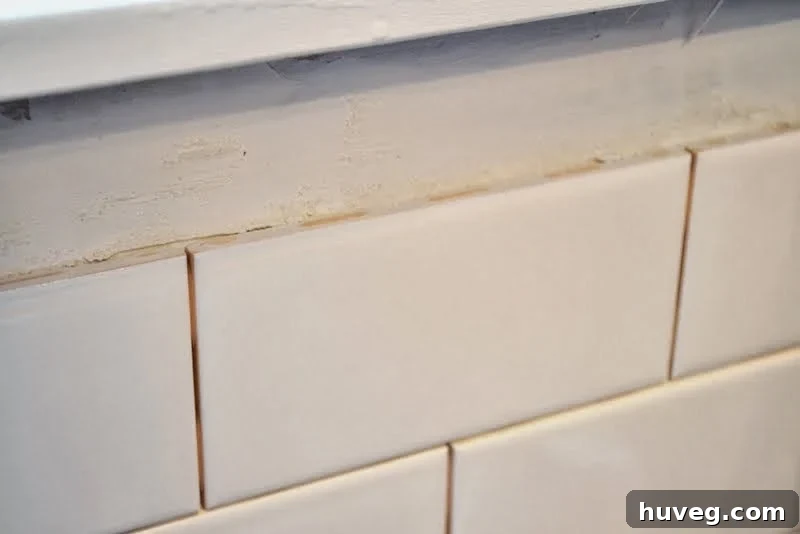
Establishing the Base: Spacing Above the Countertop
Even with self-spacing tiles, the gap between your countertop and the first row of tiles requires specific attention. I recommend using 1/8″ tile wedge spacers here. This critical gap serves as an expansion joint, accommodating any natural expansion and contraction of your countertop material (especially important for wood countertops like butcher block, which are sensitive to temperature and humidity fluctuations). This space will be filled with flexible silicone caulk after grouting, creating a waterproof and aesthetically pleasing seal that prevents cracking.
Strategic Layout Planning: Where to Begin Tiling
A well-planned layout is crucial for a professional-looking backsplash. For L-shaped kitchens or those with prominent focal points like a sink or stove, where to begin tiling can significantly impact the final aesthetic. I chose to start in a corner of my L-shaped kitchen. This approach helps ensure that any slight discrepancies in wall straightness are managed discreetly, rather than resulting in awkward slivers of tile in highly visible areas. By establishing a solid, level starting point in a corner, you can work your way out, adjusting as needed without compromising the overall symmetry.
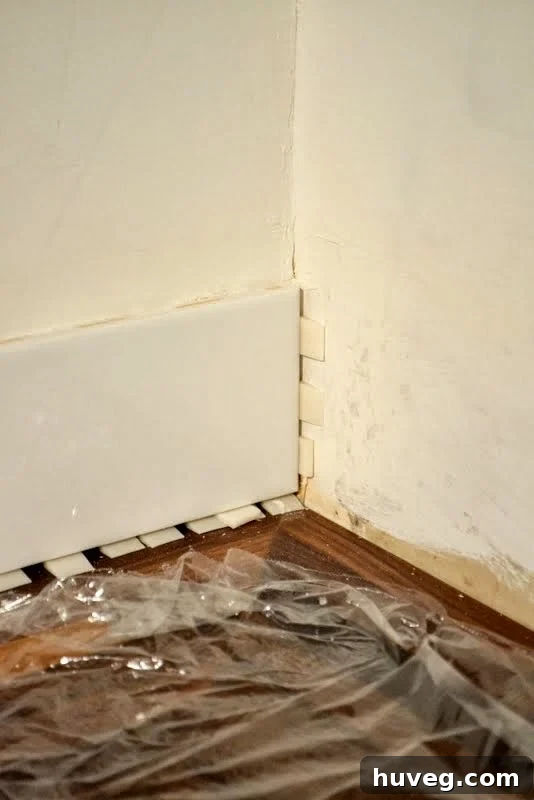
Once the first row along the countertop was securely set and level, I then began subsequent rows by working outwards from the center of the sink area. This method allowed me to maintain symmetry around a key focal point while ensuring that any minor deviations in tile spacing or wall imperfections didn’t accumulate to create a visibly uneven appearance at the ends of the tile run. Constantly using your level and checking alignment is paramount.
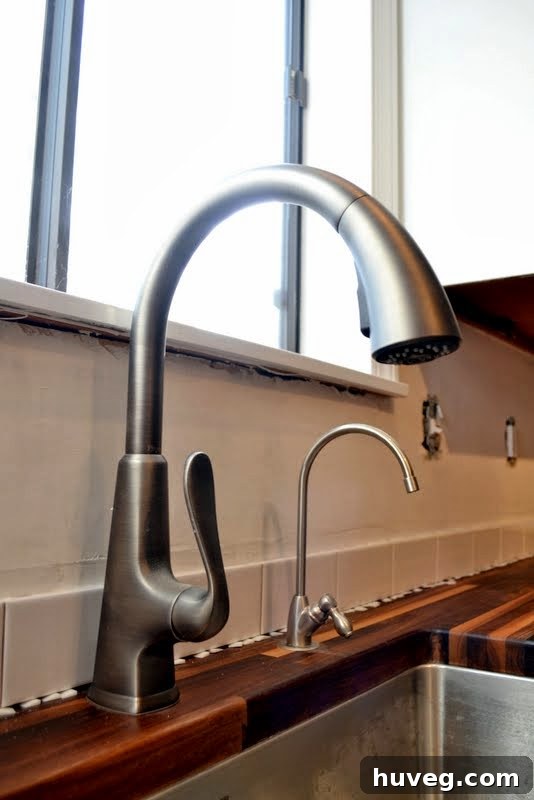
Tiling the Foundation: The First Row
The first row is arguably the most critical as it sets the foundation for everything that follows. I highly recommend applying adhesive to the back of each tile individually – a technique known as “back-buttering” – for the entire first row. This ensures maximum adhesion and allows you to precisely control the amount of thinset. After back-buttering, gently set the tiles in place, wiggling them slightly to ensure good contact with the wall and the adhesive. Use your level and spacers to confirm perfect alignment. Allowing this first row to fully set overnight (or for the time recommended by your adhesive manufacturer) is a wise decision, preventing it from shifting under the weight of subsequent rows and ensuring a perfectly straight baseline.
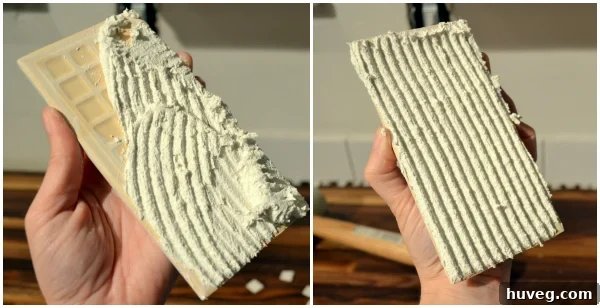
The back-buttering technique involves a few simple steps:
- Using your notched trowel or adhesive spreader, apply a consistent layer of thinset over the entire back surface of the tile.
- Hold your spreader at a 45-degree angle to create uniform grooves in the adhesive. These grooves are essential for promoting strong adhesion and allowing air to escape, preventing hollow spots.
- Carefully place the tile onto the prepared wall, pressing firmly and wiggling it slightly to ensure complete contact.
- Immediately check the tile with your level and adjust its position using spacers to achieve perfect horizontal and vertical alignment with adjacent tiles and the countertop gap.
Building Up: Second and Subsequent Rows
For a classic subway tile look, the brick pattern (also known as a running bond or offset pattern) is a popular and relatively straightforward choice for beginners. In this pattern, each subsequent row offsets the seams of the previous row. Typically, the second row’s tiles will be cut in half, aligning their centers with the grout lines of the first row. The third row will then align directly with the first, creating an alternating, staggered effect. This pattern is forgiving and visually appealing, making it a great starting point for DIY tiling projects.
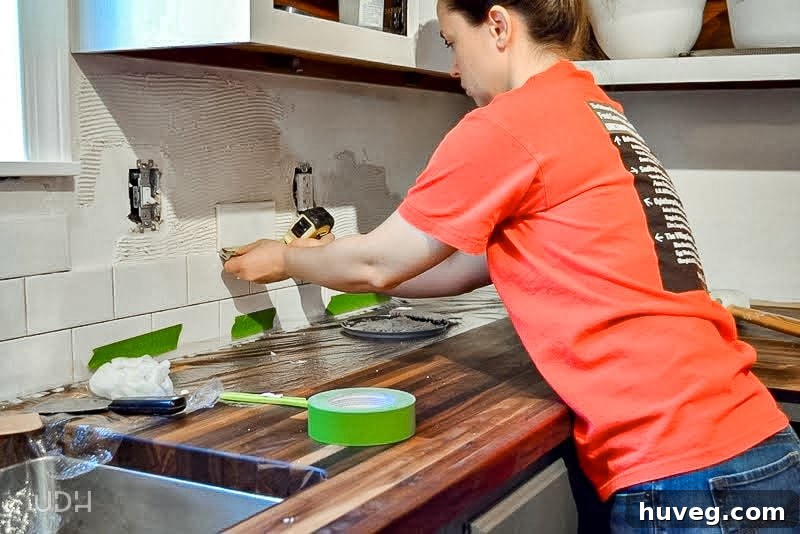
Developing Your Tiling Rhythm and Technique
As you progress beyond the first few tiles, you’ll naturally develop a rhythm and a feel for the process. For full tiles, spread a consistent layer of tile adhesive over a manageable section of the wall (typically one or two square feet at a time to prevent the thinset from drying out prematurely, especially in warmer conditions). Use your notched trowel at a 45-degree angle to create distinct, even grooves. Then, confidently place each tile, pressing it firmly into the adhesive and giving it a slight wiggle to ensure it’s fully seated and air pockets are minimized.
It’s common to find yourself needing to make micro-adjustments. You might press down on one corner to align it flush with an adjacent tile, or gently lift an opposite corner if it’s sitting too low. Don’t be afraid to use your rubber mallet for a soft, controlled tap if a tile needs a little persuasion to settle into place. Patience is your greatest asset here; focus on one tile at a time, ensuring it’s perfectly level and aligned before moving to the next. This iterative approach minimizes errors and helps you achieve a truly professional result.
Mastering Cuts Around Outlets and Light Switches
Cutting tiles to fit around electrical outlets and light switches might seem daunting, but with a wet tile saw, it becomes much more manageable. The simplest approach involves marking the tile precisely where the cuts are needed. Use a fine-tip marker to draw your cut lines, perhaps adding a small “X” on the waste side to avoid accidental over-cutting. Remember, it’s always safer to cut a little less and trim more if necessary than to cut too much. A water-soluble marker ensures that any stray marks can be easily wiped away if a tile needs to be re-used.
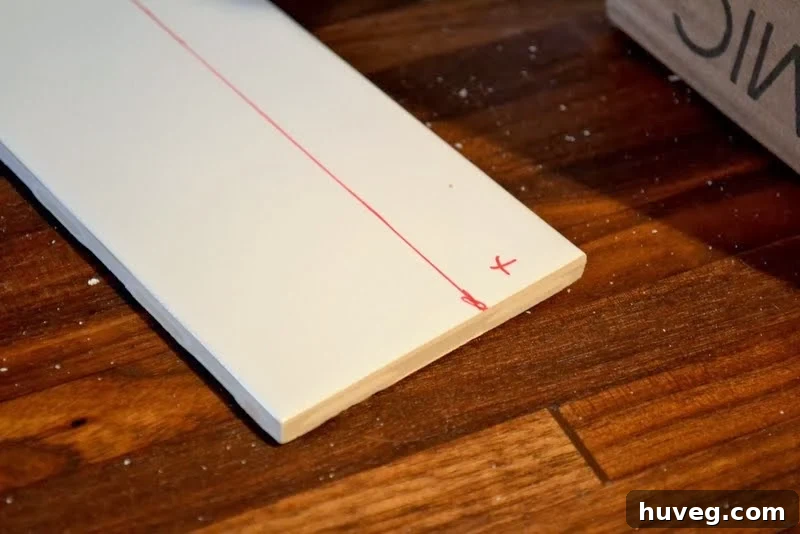
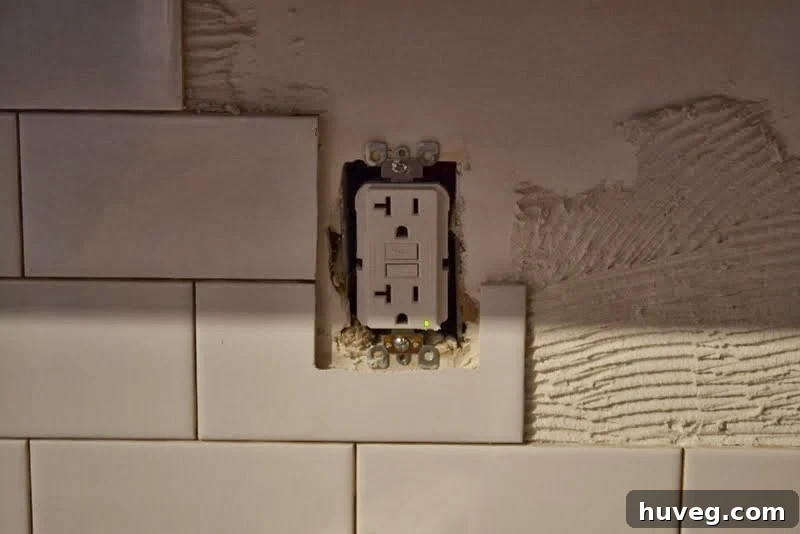
For simple straight cuts to accommodate the sides of outlets, your tile saw handles them with ease. For more complex interior cuts, such as creating a rectangular opening in the middle of a tile, a technique often referred to as “nibbling” or “multiple straight cuts” is effective. Make a series of parallel cuts, about half a centimeter apart, within the area you want to remove. Then, gently tap these small slivers of tile with a rubber mallet or the back of a utility knife handle. They should break away, leaving you with the desired opening. Exercise patience and go slowly to prevent cracking the tile.
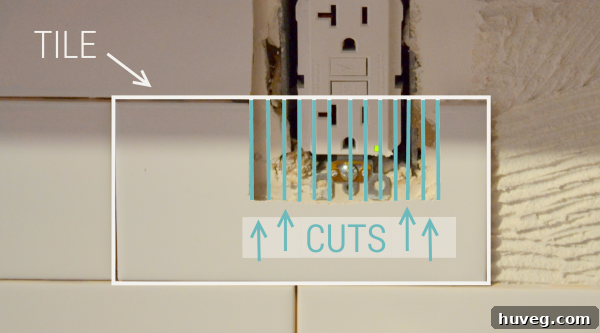
Important Note: Once your tiles are installed, the wall’s depth will increase. This means your electrical outlets and light switches will likely be recessed. You will need outlet extenders or spacers to bring the receptacles flush with the new tile surface, ensuring safety and allowing the cover plates to be reattached correctly. Plan for this during your cuts to ensure all screws and metal tabs remain accessible.
Seamless Transitions: Tiling Around Windows and Trim
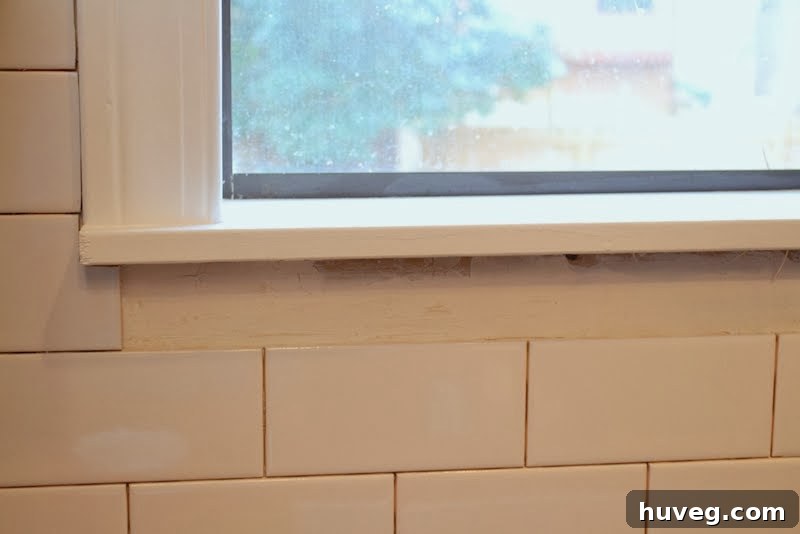
Integrating your backsplash around windows and existing trim requires careful consideration. You have two primary approaches: either cut the tiles precisely to fit around the trim, or undercut the trim itself to allow the tiles to slip underneath. The latter, often achieved with an oscillating multi-tool, can create a cleaner, more integrated look, similar to how flooring is laid under door jambs. However, if your cuts are straightforward and you plan to use caulk to finish the edges, cutting the tile corners precisely to meet the trim can also be an effective method, as I opted for in my project.
In some cases, especially when dealing with depth issues, you might need to temporarily remove or adjust window trim pieces. For instance, I carefully pried off the bottom piece of my window trim to prevent the new tile from sitting deeper than the molding, which would have created an unsightly visual discrepancy. This allows the tile to sit flush and the trim to be reattached over the finished tile, creating a seamless transition. Specific instructions for reattaching trim will often be a separate step in your project, but it’s important to consider this during your initial tiling phase.
Finishing Touches: Managing Exposed Backsplash Edges
When your tile backsplash ends abruptly where cabinets stop and the open wall begins, you need a neat and professional way to finish the exposed edges. While traditional bullnose tiles are an option, many DIYers (including myself) find their aesthetic less appealing, especially in modern kitchen designs. A fantastic alternative is using specialized tile edging profiles, often called “tile caps” or “tile trim” (like Schluter profiles or similar plastic/metal strips). These pieces offer a clean, crisp, and contemporary finish.
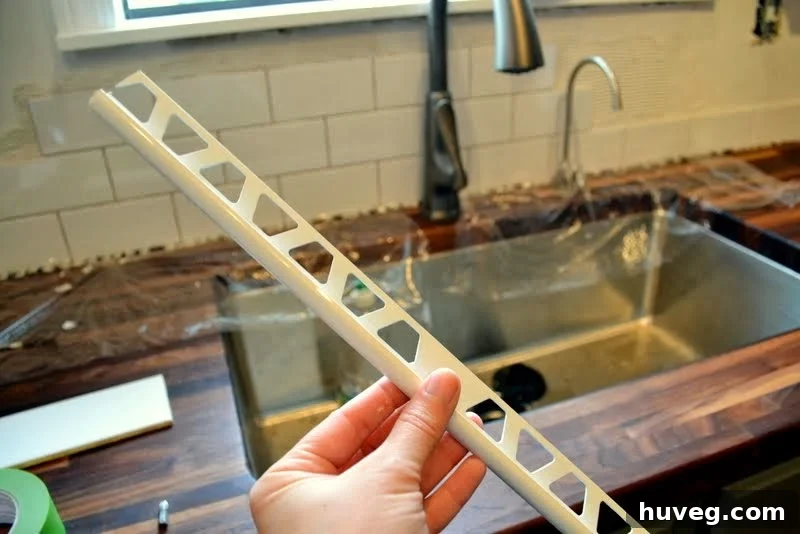
These tile edging strips are typically inexpensive and available in various colors and finishes to perfectly match or complement your tile. You can often find them at specialty tile stores or even large home improvement retailers like Home Depot. To install, simply measure and cut the trim to the required length with a hacksaw or snips. Apply a small amount of tile adhesive to the back of the trim and carefully press it into place along the exposed edge, ensuring it’s perfectly straight with a level. The last tile on each end will then butt up against or cover the bracing material of the trim, creating a seamless and finished look. Make sure to plan your layout so that you don’t end up with tiny, awkward slivers of tile at these critical edges.
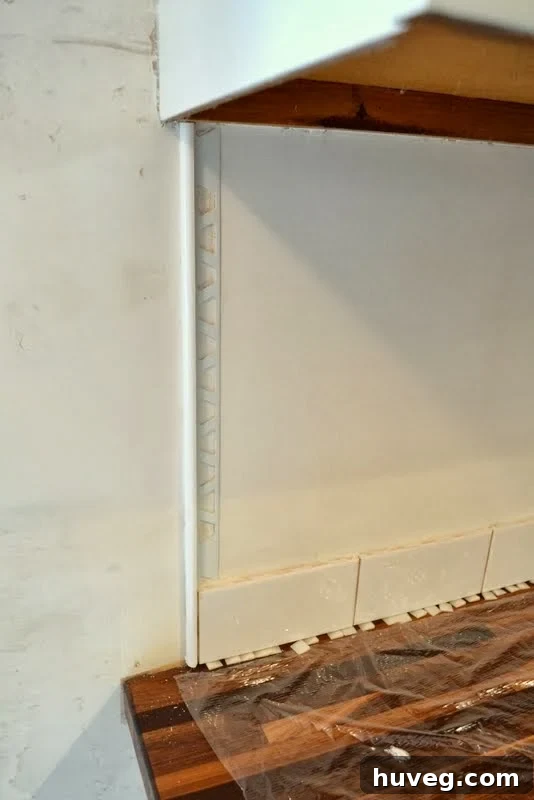
Once the adhesive for the trim and tiles has cured, grout will fill the remaining lines, further integrating the edging into the overall design. A final caulk line will provide a crisp, clean finish, enhancing the professional appearance.
Maintaining Cleanliness During Tiling
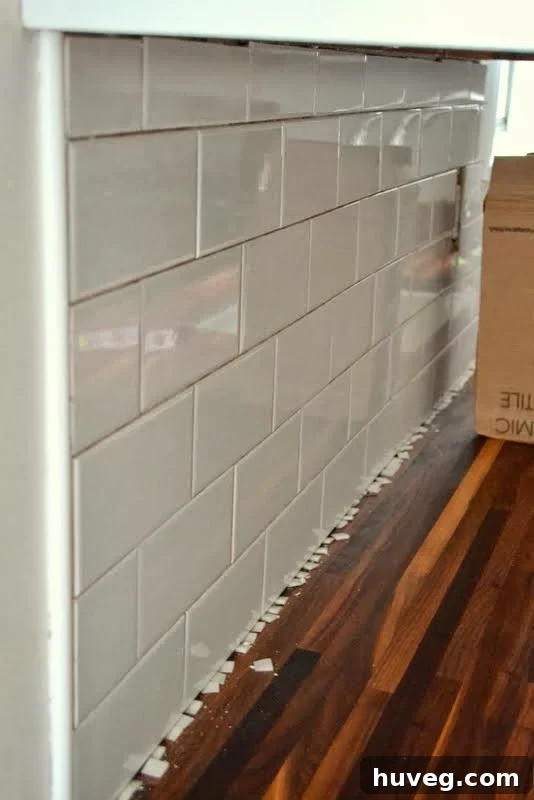
A crucial rule of thumb in tiling is to clean as you go. Any thinset that squeezes out between tiles or smears onto the tile surface should be wiped away immediately with a damp paper towel or sponge. If adhesive dries in the grout lines, it will prevent the grout from properly adhering and can create uneven, messy lines. Removing dried thinset from grout lines is significantly more challenging and time-consuming than cleaning it when it’s still wet. It can often lead to frustration and potentially damage your newly laid tiles.
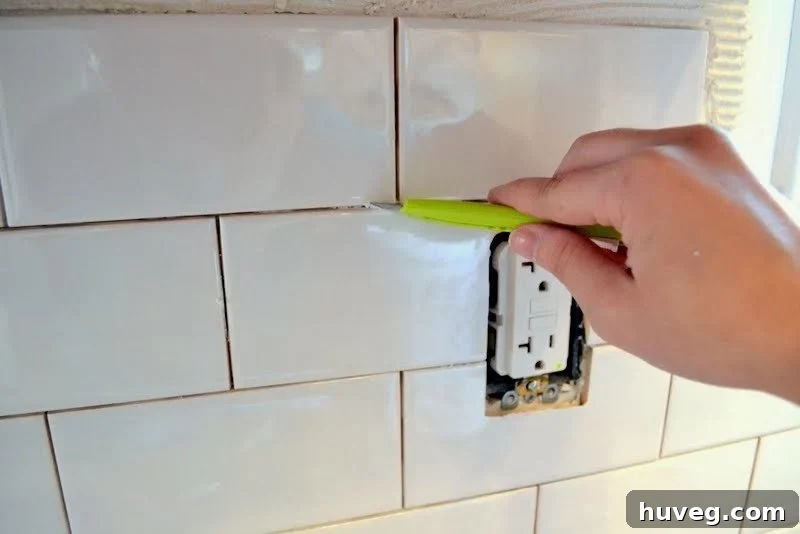
Keep a supply of damp paper towels nearby for your hands and for quickly wiping down the tile surfaces. Before stepping away from your project for a break or to let the thinset cure, always give the entire tiled surface a thorough wipe-down to ensure it’s free of any adhesive residue. This small effort upfront will save you considerable time and frustration later.
The Value of a Second Opinion
Even for experienced DIYers, a second pair of eyes can be invaluable. Before embarking on your tiling journey, discuss your game plan with a trusted friend, family member, or even an experienced hardware store employee. They might spot potential issues you overlooked or offer alternative solutions. During the installation, having someone occasionally check your progress for overall alignment and consistency can help catch minor mistakes before they become major problems. It’s easy to get absorbed in the detailed work of laying tile, so stepping back and getting an objective perspective is always beneficial.

Before you know it, with a little patience and perhaps a few sore muscles, you’ll have a beautifully tiled wall ready for grouting. The sense of accomplishment from completing a project like this yourself is truly rewarding, proving that you’re more than capable of tackling significant home improvements.
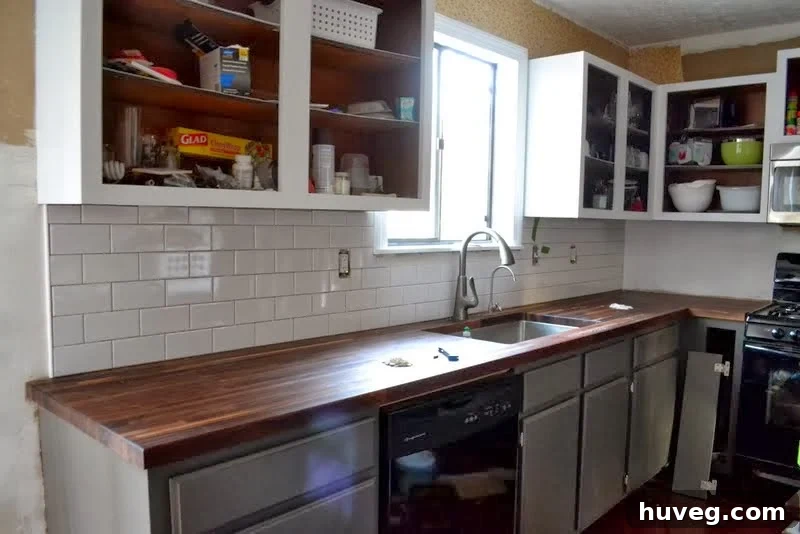
By now, you should feel confident and inspired to start your own kitchen backsplash project. This guide has laid out the crucial steps and considerations for a successful installation. Remember, while I’m not a professional contractor, the satisfaction of a DIY project completed with care is immense. There are still further steps, such as grouting, caulking, and possibly tiling behind the stove or re-attaching window molding, which I’ll cover in future posts. Don’t hesitate to leave any questions you might have!
Further Reading & Inspiration:
I utilized extra tiles from this project to update my laundry room upper wall, showcasing the versatility of simple subway tile. For more detailed instructions on navigating window areas, explore my insights on tiling around window ledges.
A special thank you to Katie from Bower Power Blog, Brittany from Pretty Handy Girl, and Cassity from Remodelaholic for their valuable insights and inspiration during my research phase!
Explore More Kitchen Remodeling Ideas
Looking for more ways to enhance your kitchen? From comprehensive tiling guides to countertop installations and various other projects, we’ve got the inspiration and instructions you need for your next kitchen transformation!
-
How to Tile a Backsplash (Step by Step Guide)
-
How to Protect Butcher Block Counters During Projects
-
How to Fix a Bad Cut in Butcher Block Counters with an Undermount Sink
-
No-Sew Faux Roman Shade and My Christmas Kitchen Window
-
How to Seal Damaged Drywall
-
How to Prep Kitchen Walls for a Tile Backsplash