And So It Goes

From Inspiration to Perspiration: Our Week of Real Home Transformations
The life of a home renovation blogger often walks a fine line between sharing aspirational content and showcasing the gritty reality of DIY projects. Just yesterday evening, this very dilemma sparked a lively discussion between Scott and me, highlighting a common question many of you might share about the direction of this blog.
Scott kicked things off: “I saw your blog post today. It was about a house from a magazine. What’s that got to do with *our* house?”
My immediate thought was, “Oh yeah? What’d you think?” hoping he’d appreciate the aesthetic, but his follow-up suggested a different perspective. “It just doesn’t show anything about what *we’re* doing to the house. Isn’t your blog only about *our* house?”
He had a point, a valid one that often resonates with readers seeking tangible progress on real homes. I clarified, “Yes, it is, but sometimes I take inspiration from other people’s homes. How else do you think I come up with the color scheme? Or some of the projects we’re working on, like the stairs?” The truth is, inspiration is the fuel for innovation. Whether it’s a specific paint color from a magazine spread or a clever storage solution spotted in a designer home, these ideas spark the creativity that ultimately translates into unique projects for our own space.
Scott conceded, “Okay. But you should post about what *we* did this week.” And he was absolutely right. While dreaming big is essential, documenting the tangible steps, the scraped knees, and the triumphant finishes is what truly defines a DIY journey. So, by popular demand (and a little spousal encouragement!), let’s dive into the real, hands-on progress we’ve made around our home this past week.
Taming the Wild: Our Backyard Battle Against Invasive Ivy
The outdoor spaces of a home are just as crucial as the interior, offering areas for relaxation, entertainment, and connection with nature. This week, a significant portion of our efforts has been dedicated to reclaiming our front and back yards. Scott has been an absolute superstar, tackling all those “yard-ish” tasks that, to be perfectly honest, I tend to feign ignorance about. You know, the essential but often less glamorous jobs like meticulous mowing, diligent weeding, and general landscape maintenance. My personal aversion to being outdoors during prime mosquito season in Georgia (read: summer evenings!) certainly plays a role, but in fairness, we each have our strengths.
And before you even think it, no, I don’t feel a speck of guilt! It’s a reciprocal arrangement. Scott, with dramatic flair, pretends to be utterly inept at painting, which inevitably means I become the designated painter for every wall, trim, and surface indoors. Plus, laundry, of course. It’s a partnership where our strengths complement each other, ensuring all aspects of our home improvement journey are covered.
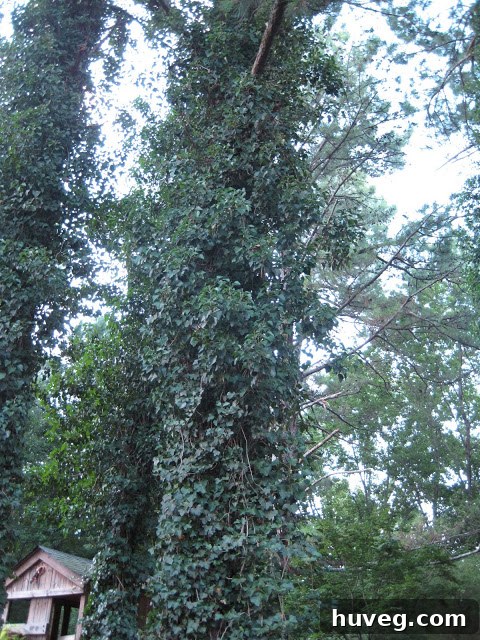
This week’s biggest outdoor conquest? The relentless ivy that had begun to assert its dominance over our backyard. Take a look at the image below – notice anything drastically different?
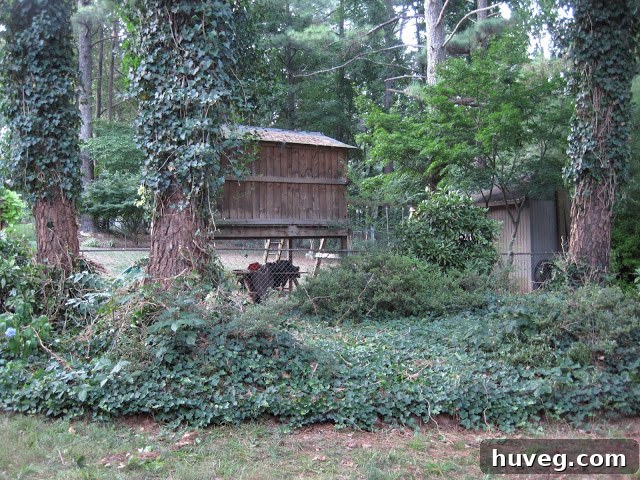
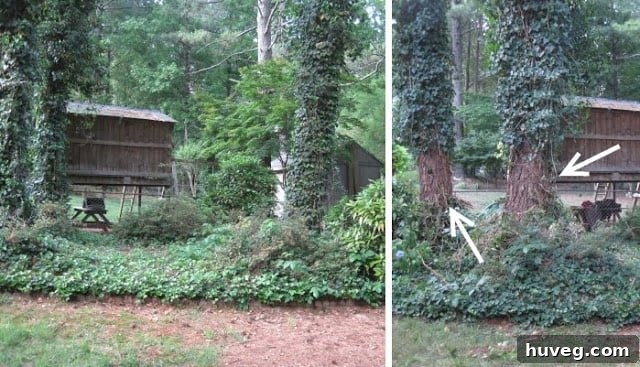
To truly appreciate the transformation, allow me to present the before and after side-by-side. The difference is night and day, and it represents hours of dedicated, laborious work.
The Strategic Battle Plan: Eradicating Invasive Ivy
Indeed, we are systematically eradicating our ivy problem! This week, Scott dedicated several hours to physically hacking away at the thick, intertwined vines that had begun to choke our backyard. Our primary concern was preventing the aggressive ivy from causing irreparable damage to our beautiful pine trees, which posed both an aesthetic and potential safety hazard. The strategy is to starve the ivy at its source: by cutting the main vines climbing up the trees, we effectively cut off their nutrient supply from the ground. Once these severed vines begin to wither and dry out, they will be much easier to pull off the tree trunks and dispose of permanently.
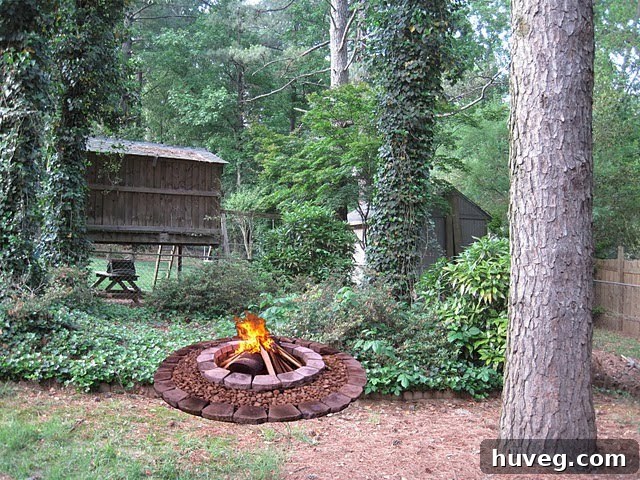
This initial phase is crucial, but it’s just the beginning. After clearing the trees, our next step will be to aggressively tackle the ivy on the ground. This area, once cleared, holds exciting potential. If you recall my previous post, despite my admittedly awful Photoshop skills, I have ambitious plans to install a cozy fire pit right here. Imagine crisp autumn evenings, gathered around a crackling fire with friends and family – that vision is a powerful motivator to get this stubborn ivy out of here for good.
Making Room for New Beginnings: Plant Inventory and Rehoming
The cleared area of our backyard also hosts a variety of other plants, some of which are quite lovely, and others I barely recognize. Our next project for this section involves a comprehensive plant inventory. We plan to identify and save a select few species that we genuinely wish to keep, perhaps after some much-needed pruning and rejuvenation. The rest? They’ll likely find new homes through the magic of Craigslist. Seriously, what did people *do* before Craigslist? It’s an indispensable tool for everything from finding obscure parts to rehoming plants. Its name, “Craigslist,” is far more elegant than what I probably would have dubbed it: “Crap I Don’t Want But I Hope You Do.” This platform not only helps us declutter but also provides an eco-friendly way to ensure perfectly good plants don’t go to waste, contributing to other people’s gardens and landscaping projects.
Clearing out the ivy and managing the existing flora is more than just an aesthetic upgrade; it’s about creating a healthier, safer environment for our existing trees and preparing the ground for the vibrant outdoor living space we envision. It’s a testament to the idea that even the most daunting outdoor tasks, tackled with a clear strategy and a bit of elbow grease, can yield incredibly satisfying results, paving the way for future enjoyment and increased curb appeal.
Stairway to Serenity: Preparing for a Flawless Finish
While Scott was busy battling the botanical beasts outdoors, I’ve been metaphorically (and sometimes literally) slaving away on our interior stairs. This isn’t just a simple paint job; it’s a meticulous preparation process designed to transform a worn, perhaps even slightly rickety, staircase into a durable, beautiful, and inviting feature of our home. My goal is a smooth, professional finish that will stand the test of time and countless footsteps.
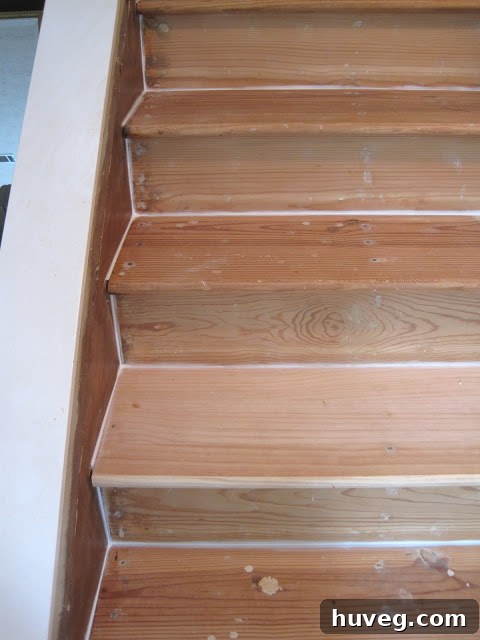
The journey began with the fundamental steps of filling and sanding. Our stairs, like many older staircases, had their share of imperfections: small dents, nicks, and inconsistencies in the wood. Each of these needed to be carefully addressed with wood putty. After applying the putty and allowing it to cure, countless hours were spent sanding each tread and riser to achieve a perfectly smooth surface. This stage, while tedious, is non-negotiable for a truly professional paint job. Any imperfections left at this stage will be magnified once paint is applied, so patience and diligence are key.
Having achieved a smooth foundation, my focus shifted to sealing the gaps. I’ve now begun the detailed work of filling in the inevitable gaps that appear along the sides and backs of each stair tread with caulk. Caulk has become one of my absolute favorite go-to items for home improvement – it’s incredibly versatile and delivers a clean, finished look. If you haven’t yet mastered this essential DIY skill, I highly recommend checking out my tutorial on caulking techniques; it’s a game-changer for many projects. Some of the gaps in our stairs are a bit more substantial, too wide for a single bead of caulk to fill effectively. For these stubborn areas, I’m planning a “two-part attack”: an initial, thicker application to build up the fill, followed by a second, smoothing pass once the first layer has partially cured. This ensures a robust and seamless seal, eliminating future creaks and dust traps, and providing a clean line for the upcoming paint.
The Art of Painting Stairs: Strategy and Patience
With the preparatory work nearing completion, tonight marks the exciting beginning of the painting process, starting with a crucial layer of Killz primer. And make no mistake, painting stairs is indeed a *process*, requiring careful planning and execution. Through extensive online research and a healthy dose of common sense, I’ve learned that you absolutely must plan your painting steps meticulously. The last thing you want is to paint yourself into a corner – or, in this case, find yourself trapped either upstairs or downstairs for several hours, waiting for paint to dry!
My strategy involves painting alternating treads, allowing them to dry completely before tackling the adjacent ones. This ensures that a walkable path is always available, minimizing disruption to our daily routine. The choice of Killz primer is deliberate; its excellent sealing properties will prepare the wood for a uniform topcoat and help prevent any old stains or imperfections from bleeding through. This multi-step approach, while requiring more time, guarantees a durable, long-lasting finish that can withstand the heavy traffic a staircase endures. I’ll be documenting this entire process, and a detailed tutorial on painting stairs, complete with logistical tips and tricks, will be coming your way very soon!
Both the outdoor landscaping and the indoor stair renovation perfectly embody the spirit of this blog: taking inspiration and translating it into tangible, value-adding improvements for our home. It’s about getting our hands dirty, learning new skills, and celebrating every small victory along the way. These projects not only enhance our living space but also weave deeper personal stories into the fabric of our home.
We hope everyone has a wonderful weekend, perhaps inspired to tackle a project of your own!