After the Long Silence


Reclaiming Our Home: Tackling Overgrown Trees with an Electric Pole Saw
Yesterday, I touched upon the ongoing saga of home maintenance. Beyond the routine tasks my Dad and our invaluable neighborhood friend, Tony, were assisting with, we also set our sights on a few items that had stubbornly lingered on our to-do list for far too long. Today, let’s dive into one of the most visually impactful projects we tackled: reclaiming our home from the clutches of an overly ambitious landscape.
The Challenge of Overgrowth: Before the Transformation

Take a good look at that image. Does anything stand out? If you noticed that roughly half of the house is almost entirely swallowed by a dense canopy of trees, then you’ve pinpointed our primary challenge. This wasn’t just an aesthetic concern; overgrown trees can pose numerous issues, from blocking natural light and encouraging mold growth to potentially damaging the roof or foundation with intrusive branches and roots. It was undeniably time for a change, and what better way to approach it than by trying out a brand-new tool?
Embracing Innovation: Our New Electric Pole Saw
My Dad, ever the practical problem-solver, arrived with a fantastic new gadget: a sleek electric pole saw. This wasn’t just any tool; it promised to make reaching those high, stubborn branches a much safer and more manageable task than struggling with a ladder and a hand saw. The excitement was palpable – not only were we getting crucial work done, but we were doing it with new equipment, which always adds an extra layer of motivation to any DIY project.
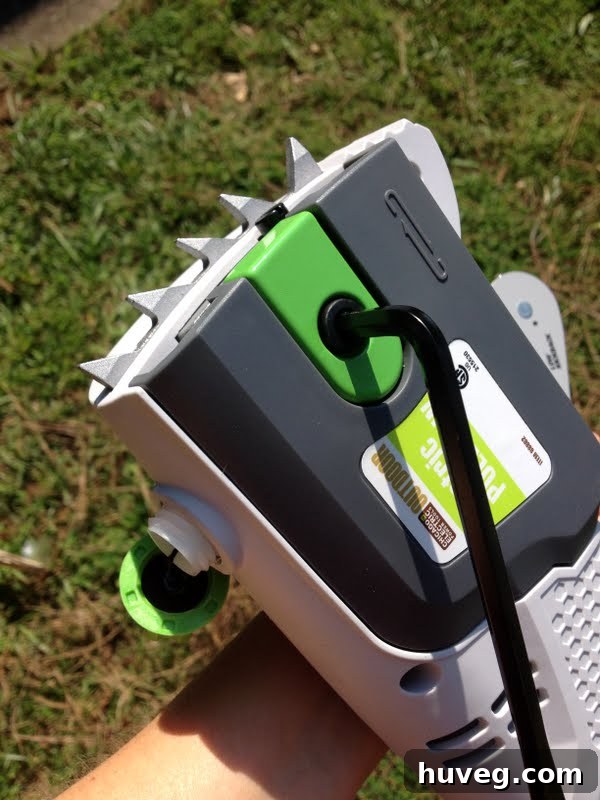
Assembling Your Pole Saw: A Step-by-Step Guide
Before we could unleash its branch-cutting power, the pole saw needed a bit of assembly and, importantly, a fill-up of chain oil. Unfortunately, the combination of messy chain oil and delicate smartphone cameras isn’t ideal, so I only managed to snap one quick picture during the process. However, I can walk you through the surprisingly straightforward steps:
- Open the Cover: Begin by using the provided Allen wrench to unscrew the top cover of the saw. This exposes the internal mechanism.
- Position the Chain: Locate the silver bar, often called the guide bar, which holds the chain. Carefully wrap the saw chain around it, ensuring the cutting teeth are facing the correct direction.
- Engage the Drive Sprocket: Once the chain is around the guide bar, loop it around the small wheel (the drive sprocket) located inside the main body of the saw. This sprocket powers the chain.
- Adjust Chain Tension: Using a screwdriver, tighten the chain until it’s snug but still allows a little flex. Proper chain tension is crucial for both efficient cutting and safety. Too loose, and it can derail; too tight, and it can overheat or damage the motor.
- Secure the Cover: With the chain correctly tensioned, replace the top cover. This step is much easier with a second set of hands, as it helps hold the chain and guide bar securely in place while you align the cover. Use the Allen wrench to screw everything back together firmly.
- Add Chain Oil: Finally, fill the oil reservoir with chain lubricant. This keeps the chain running smoothly, prevents excessive wear, and reduces heat build-up during operation. Never run a chainsaw or pole saw without proper lubrication!
The entire process is quite intuitive, but having an extra pair of hands makes aligning the cover and ensuring the chain is perfectly secure before reassembly significantly easier and safer. It’s always better to take your time and double-check everything when dealing with power tools.
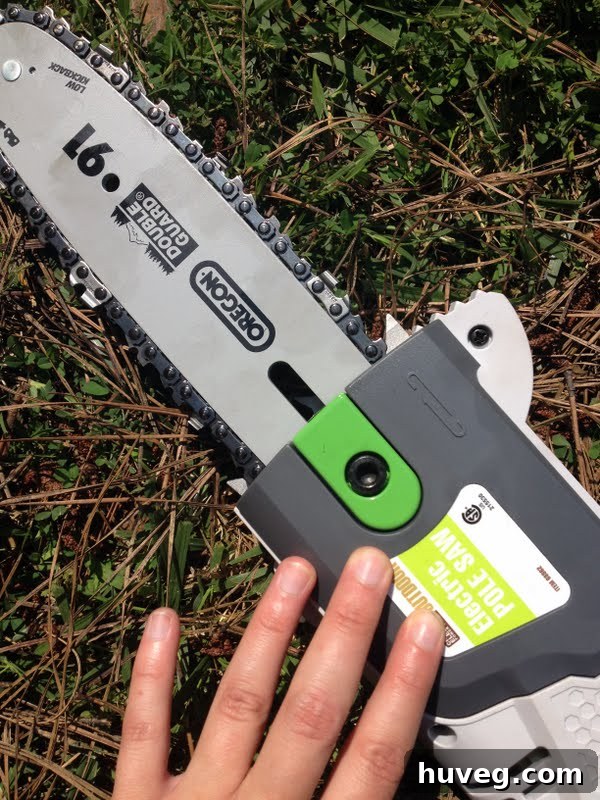
Safety First: Preparing for High-Altitude Trimming
With the pole saw assembled and ready, our next priority was safety. Working with power tools, especially overhead and from a ladder, demands careful preparation and strict adherence to safety protocols. We positioned a sturdy ladder beneath the largest tree, ensuring it was on solid, level ground and properly extended.
I climbed about halfway up, realizing quickly that the extension capability of the pole saw was incredibly generous. This meant I didn’t have to reach the absolute highest rungs of the ladder, significantly improving stability and reducing risk. Even though this particular pole saw was commendably lightweight, its top-heavy nature when extended means that maintaining excellent footing and balance is paramount. A slip could have serious consequences, so every step and movement was deliberate and cautious.
Essential Safety Precautions for Tree Trimming:
- Personal Protective Equipment (PPE): Always wear safety glasses or goggles to protect against flying debris. Gloves are crucial for grip and preventing blisters. Sturdy, closed-toe shoes are a must, and a hard hat is highly recommended, especially when working directly under branches.
- Ladder Stability: Ensure your ladder is placed on a firm, level surface. Have someone spot you if possible, and avoid overreaching.
- Check for Obstacles: Before making any cuts, survey the area for power lines, utility cables, and any structures that falling branches could damage.
- Clear the Drop Zone: Make sure no people, pets, or valuable items are in the area where branches are expected to fall.
- Understand Your Tool: Familiarize yourself with the pole saw’s controls, emergency shut-off, and potential kickback.
- Stay Hydrated and Take Breaks: Tree trimming is physically demanding. Prevent fatigue by taking regular breaks and drinking plenty of water, especially on hot days.
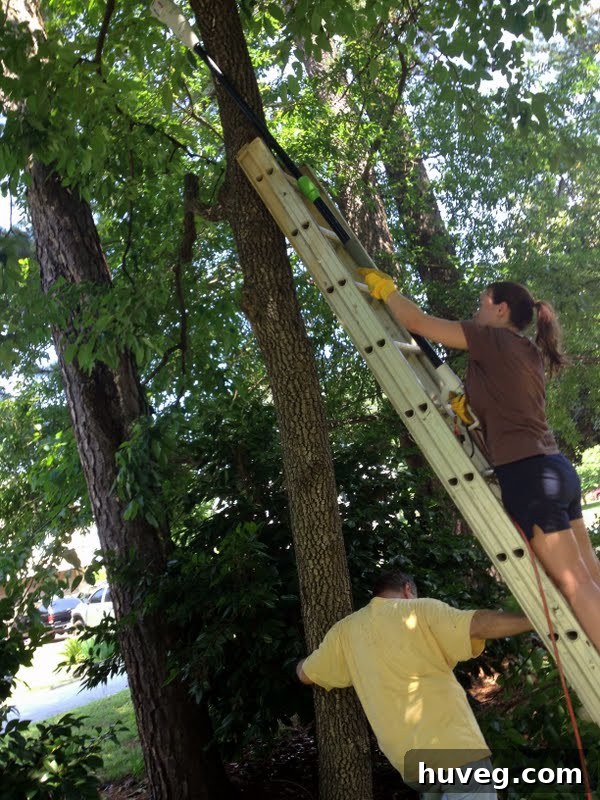
Mastering the Cut: Techniques for Efficient Branch Removal
With safety measures in place, it was time to get to work. The electric pole saw hummed to life, and I began tackling the offending branches. One immediate lesson learned: I absolutely should have worn proper safety glasses from the start! Wood chips flew relentlessly, making it impossible to look directly up at the cutting point for extended periods. A mental note was made for all future trimming endeavors.
As branch after branch descended, Dad captured the action with his camera, documenting our progress. It was during this phase that Tony, our experienced friend, shared an invaluable tip for safe and controlled branch removal:
Tony’s Branch Trimming Technique: When cutting a branch, saw about halfway through it from the underside or side. As the branch begins to show signs of falling, ease off the speed of the saw. Let gravity take over. The weight of the branch will naturally bend it downward, creating a hinge. Then, finish sawing through the branch from above. This two-step process prevents the branch from tearing bark down the trunk (known as ‘bark stripping’) and allows for a more controlled, gentler drop, lessening the impact. It’s especially crucial when working directly above your head or over vulnerable areas, protecting both property and people.
This technique proved incredibly effective, guiding the branches safely to the ground rather than letting them crash unpredictably. It’s a testament to the wisdom shared by those with practical experience, turning what could be a hazardous chore into a controlled, efficient operation.
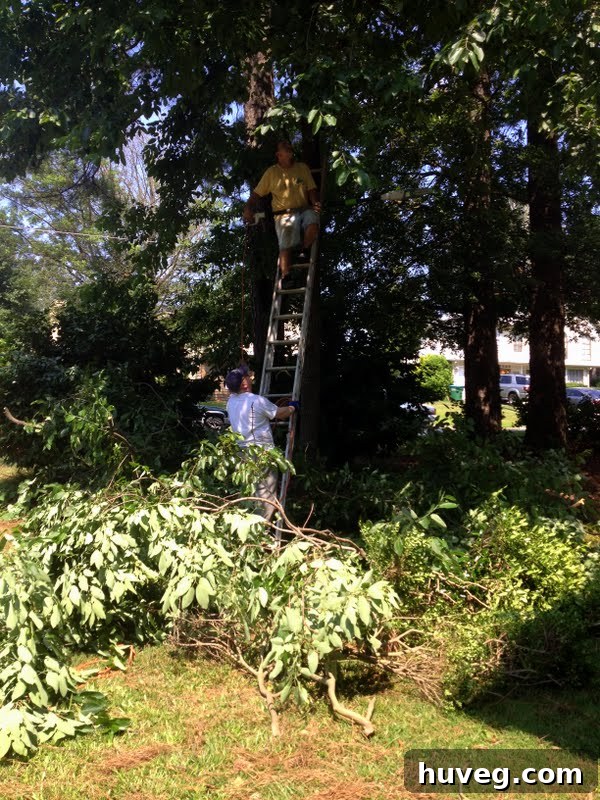
Teamwork Makes the Dream Work: Reaching New Heights
I diligently cleared every branch within my comfortable reach, carefully observing Tony’s technique and growing more confident with each cut. Once I had taken care of my section, Tony, with his extensive experience, climbed higher to tackle the uppermost branches that were still overshadowing the house. His ability to navigate the taller sections safely and effectively was truly impressive, demonstrating the value of having skilled hands on a project of this scale. The collaborative effort not only sped up the process but also ensured that even the most challenging parts of the job were handled with expertise.
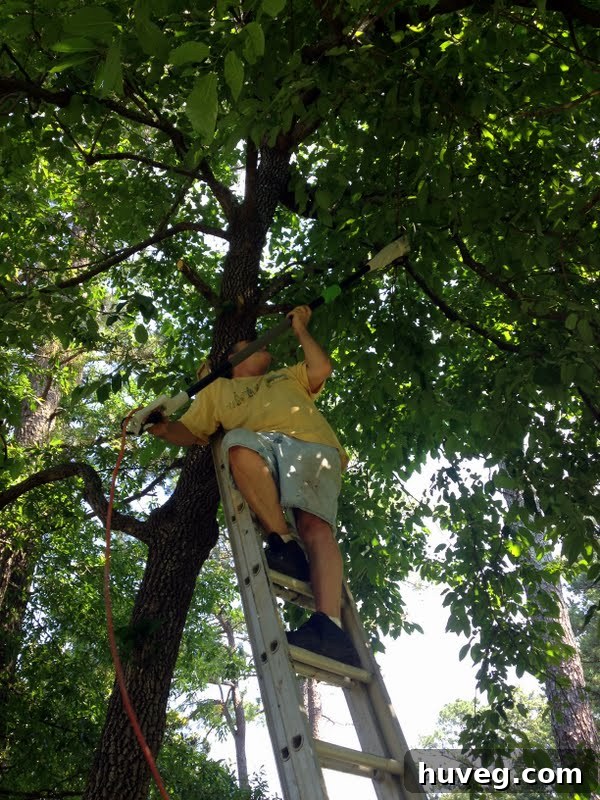
The Aftermath: Sweat, Chips, and Satisfaction
By the time we wrapped up, the afternoon sun had turned the air thick and heavy. Our muscles ached – arms sore from wielding the pole saw, backs stiff from hours of reaching and lifting. We were liberally covered in wood chips, clinging to our clothes, hair, and every exposed patch of skin. It wasn’t the most glamorous look, but it was a badge of honor for a job well done. There’s a particular kind of satisfaction that comes from physical labor, especially when you see the tangible results of your efforts.

The Result: Enhanced Curb Appeal and a Brighter Home
Looking back at the house, the transformation was undeniable. What was once a shrouded facade was now open and inviting. The house is significantly more visible from the street, immediately boosting its curb appeal and making the property feel much more welcoming. While you might spot some unfinished trim work – a separate project that I’ll delve into in a future post – the overall impact of the tree trimming was profound.
Beyond the aesthetic improvement, the cleared branches mean more sunlight streaming into the house, fewer leaves to clog gutters, and reduced risk of pest infestation or structural damage from branches rubbing against the roof. It’s a classic example of how a relatively straightforward DIY project can yield multiple benefits, enhancing both the beauty and the longevity of your home.
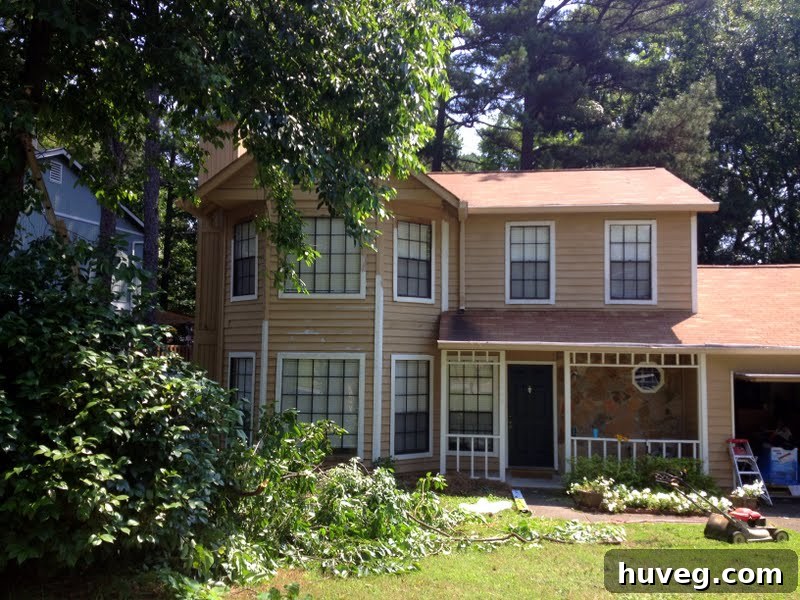
Reflections and Future Endeavors
Phew! This project was a significant undertaking, but the feeling of accomplishment is immense. It served as a powerful reminder of the importance of proactive home maintenance and the satisfaction derived from rolling up your sleeves and tackling tasks head-on. The value of good tools and experienced helpers like Dad and Tony cannot be overstated; their contributions were essential to both the success and the safety of this project.
We’ve certainly learned a lot, particularly about the critical role of proper safety gear and smart cutting techniques. While our arms might be a bit sore, and we might still be finding wood chips in unexpected places, the clearer view of our home makes it all worthwhile. There’s always more to do around the house, and I’ll be sharing updates on our next projects later this week. But for now, that’s a wrap on our tree trimming adventure!