A New Chapter Unfolds


Front Door Makeover: Navigating the White vs. Black Interior Color Dilemma
Every homeowner eventually finds themselves scrutinizing elements of their home, seeking opportunities for enhancement. For me, the focus has recently landed squarely on my front door. With exciting plans to host my very first wave of trick-or-treaters this Halloween season, swiftly followed by welcoming housewarming guests, I’ve been busy transforming my porch into a festive, inviting space. Yet, amidst the exterior decorating, I can’t help but notice the interior face of my front door. Against our home’s warm tan walls and crisp white trim, it’s currently looking undeniably, well, uninspired. This realization sparked a thought: a fresh coat of paint could be the key to unlocking its full potential, transforming a bland entrance into a truly captivating gateway that sets the tone for my entire home.
The current state of the front door, seeking a fresh identity amidst existing interior tones.
The Undeniable Impact of Your Front Door’s Interior
While discussions around curb appeal often center on the exterior of your front door, its interior counterpart plays an equally, if not more, personal role in your home’s aesthetic. It’s the very first design element you and your guests encounter upon stepping inside, instantly shaping perceptions and setting the mood for the entire interior. A well-chosen interior door color isn’t merely decorative; it’s a powerful tool that can tie together an entryway’s decor, optimize the perception of natural light, and even influence the perceived size and intimacy of the space. To overlook this critical surface is to miss a significant opportunity to infuse character, warmth, and a touch of deliberate design into one of your home’s most frequently used and seen areas. It’s a relatively small change with monumental visual and emotional returns.
White vs. Black: Unpacking the Ultimate Interior Door Color Debate
My current predicament boils down to a classic, yet compelling, design challenge: should I opt for the crisp purity of white or the sophisticated depth of black for the interior of my front door? Each choice embodies a distinct personality and promises a unique impact on the surrounding space. Given the existing backdrop of tan walls and bright white trim, and now the added dynamic of new flooring, this decision is far from straightforward. Let’s explore the compelling arguments for each of these timeless options.
Option 1: The Enduring Charm of a White Interior Door
Choosing white for the interior surface of the front door holds an immediate, undeniable appeal. This classic hue would seamlessly match my existing white trim, forging a cohesive and visually uninterrupted flow around the doorway. White is universally associated with notions of cleanliness, expansive space, and inherent brightness. It possesses an incredible ability to reflect natural light, a significant advantage in entryways that might otherwise feel dim or constrained. Opting for white could effortlessly make the foyer feel more open, airy, and inviting, cultivating a truly fresh and welcoming atmosphere. It’s a perennially safe and elegant choice that seldom disappoints and offers a versatile, neutral canvas that effortlessly adapts to any future decorative shifts or seasonal themes.
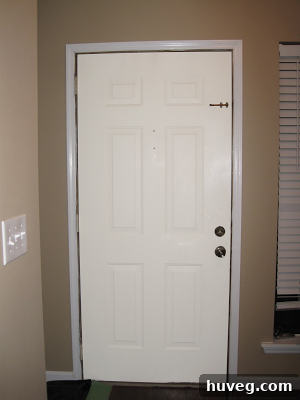
A visual representation of the front door in crisp white, creating harmony with the surrounding trim.
Option 2: The Striking Sophistication of a Black Interior Door
Conversely, embracing black for the interior door ushers in an entirely distinct aesthetic. A black interior door instantly establishes a dramatic, sophisticated focal point within the entryway. It creates a stark, elegant contrast against the light tan walls and pristine white trim, immediately elevating the space with either a contemporary chic vibe or a sense of classic grandeur, depending on the home’s prevailing architectural and design style. Black inherently conveys strength, depth, and a touch of luxury. It effectively grounds the space and can beautifully frame the exterior view, subtly drawing the eye outward. While it’s true that darker colors absorb more light, in a well-lit foyer or one enhanced with thoughtful lighting fixtures, a black door can make an incredibly powerful design statement, projecting confidence, character, and an air of refined elegance.
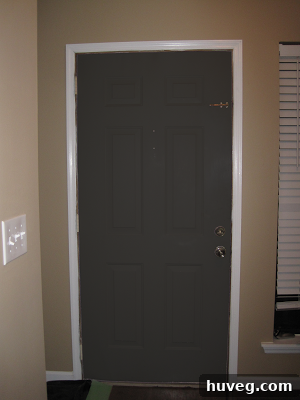
Envision the front door transformed into a dramatic black focal point, exuding modern sophistication.
It’s an important detail that this interior painting endeavor will not impact the exterior of my door. The outside currently features a vibrant, eye-catching red hue, a color that will likely remain unchanged until a more comprehensive exterior home refresh, perhaps involving a vigorous scrub brush attack! Therefore, the decision regarding the interior color can be made with complete independence, allowing me to focus exclusively on how it harmonizes with the indoor environment and the recently installed flooring.
Critical Factors for Selecting Your Ideal Interior Door Color
Beyond the compelling white-or-black conundrum, choosing the truly perfect interior front door color involves a thoughtful assessment of several key factors. These considerations are essential for ensuring a result that is not only aesthetically pleasing but also seamlessly integrated into your home’s overall design narrative.
1. Harmonizing with Your Home’s Interior Design Style
Begin by considering the overarching interior style of your home. Is your decor minimalist, leaning towards bohemian chic, steeped in tradition, exuding farmhouse charm, or embracing a sleek modern aesthetic? A black door, for instance, often complements modern, industrial, or even certain traditional styles with a contemporary twist. White, on the other hand, is universally adaptable, fitting effortlessly into virtually any design scheme. The objective is to select a door color that feels like an organic, integrated component of your home’s story, rather than an afterthought.
2. The Impact of Natural Light in Your Entryway
Evaluate the amount of natural light your entryway receives throughout the day. If it’s a naturally dimly lit space, a lighter color such as white will perform wonders by reflecting available light, thereby making the area feel significantly brighter and more expansive. Conversely, in an entryway bathed in abundant sunlight, a darker color like black can introduce much-needed depth and prevent the space from appearing washed out or overly sterile. Make an effort to observe the light’s behavior at various times to fully grasp its dynamic effect.
3. Matching or Contrasting with Existing Trim and Wall Colors
My situation presents a clear scenario with tan walls and pristine white trim. White doors frequently blend seamlessly with white trim, creating a clean, uniform, and subtle appearance. Black doors, however, offer a dramatic contrast, immediately drawing attention and transforming the door into a striking design feature. Your choice hinges on whether you desire the door to subtly integrate into its surroundings or to boldly stand out as a focal point.
4. Durability and Ease of Maintenance Considerations
Entry doors are inherently high-traffic areas, frequently subjected to fingerprints, scuffs, and general wear and tear. While both white and black can reveal marks, black often proves more forgiving with minor scuffs, although dust may become more noticeable. White, conversely, tends to highlight dirt more readily but conveys an undeniable sense of cleanliness. Irrespective of your color choice, opting for a durable, high-quality paint finish—such as a semi-gloss or satin—is paramount. These finishes are not only aesthetically pleasing but also significantly simplify cleaning and ensure the longevity of your painted surface.
5. Reflecting Your Personal Style and Home’s Unique Character
Ultimately, your front door serves as an extension of your personality and a reflection of your home’s unique character. Do you gravitate towards understated elegance, or do you prefer to make a bold, dramatic entrance? Consider the emotion and feeling you wish to evoke each time you, or your guests, step through that threshold. Don’t shy away from experimenting with paint samples; applying them to a small, inconspicuous section of the door or on a large piece of poster board can provide invaluable insight into how the chosen color truly appears within your specific space and lighting conditions.
A Step-by-Step Guide to Painting Your Interior Front Door Flawlessly
Once the pivotal color decision has been made, the actual process of painting your interior front door transforms into a wonderfully rewarding DIY project. Following these detailed steps will help you achieve a smooth, professional-looking finish that will enhance your entryway for years to come.
1. Meticulously Gather All Necessary Supplies
Thorough preparation begins with assembling every tool and material you’ll need:
- High-quality interior paint: Opt for a durable finish such as semi-gloss or satin for enhanced cleanability and resilience.
- Primer: Absolutely essential if you’re transitioning between significantly different colors (e.g., dark to light), or if the existing door has a glossy or difficult-to-adhere-to finish.
- Painter’s tape: Crucial for precisely masking off hinges, doorknob hardware, and the surrounding trim or walls.
- Drop cloths or plastic sheeting: To meticulously protect your flooring and any nearby furniture from accidental drips or splatters.
- Screwdriver set: For the careful removal of all door hardware.
- Cleaning supplies: A mild household detergent, clean sponges, and several lint-free cloths for thorough surface preparation.
- Sandpaper (120-220 grit): To create an optimal surface “tooth” for primer and paint adhesion, and for smoothing imperfections.
- Angled paintbrush: Ideal for precision work around recessed panels, intricate moldings, and edges where a roller can’t reach.
- Small foam roller or fine-finish roller: For achieving an exceptionally smooth, even, and consistent finish on flat, larger surfaces of the door.
- Putty knife or spackle: For addressing any minor dents, holes, or surface imperfections before painting.
2. Preparation: The Foundation for a Flawless Finish
This stage is arguably the most critical for ensuring a professional and long-lasting result.
- Remove All Hardware: Using your screwdriver, meticulously unscrew and remove the doorknob, lock mechanism, hinges, and any other decorative hardware. Store all screws and small parts together in a labeled baggie to prevent loss and simplify reassembly.
- Thoroughly Clean the Door: Prepare a solution of mild detergent and warm water. Use a sponge to meticulously clean both sides of the door, ensuring all dirt, grime, grease, and fingerprints are completely removed. Rinse the door thoroughly with clean water and allow it to dry completely.
- Sand the Entire Surface: Lightly sand the entire door surface using 120-220 grit sandpaper. This crucial step creates a microscopically rough “tooth,” allowing the primer and subsequent paint layers to adhere far more effectively. Pay close attention to any rough patches, existing paint drips, or minor imperfections. After sanding, meticulously wipe away all dust with a damp cloth, followed by a dry, clean cloth to ensure no residue remains.
- Mask Off Adjacent Areas: If you are painting the door while it remains in its frame, carefully apply painter’s tape along the precise edges of the door frame, any adjacent walls, and around any glass inserts or panels. Lay down drop cloths generously to protect your flooring from any potential paint splatters.
3. Priming: Laying the Groundwork for Perfection
Applying a high-quality primer is a non-negotiable step, particularly when undertaking a significant color transformation or if the door has a pre-existing glossy finish. Primer serves multiple vital functions: it significantly improves paint adhesion, provides a uniformly consistent base color, and acts as a barrier to prevent any previous colors from bleeding through the new topcoat.
- Apply a thin, consistent coat of primer. Utilize your angled brush for detailed areas like recessed panels and edges, and switch to your foam roller for the broader, flat surfaces.
- Allow the primer to dry completely, strictly adhering to the manufacturer’s recommended drying times (which typically range from a few hours to overnight).
- Once dry, lightly sand the primed surface with very fine-grit sandpaper (e.g., 220 grit) to eliminate any visible brush strokes or minor imperfections, creating an ultra-smooth base. Wipe away all sanding dust.
4. Applying the Paint: The Art of the Topcoat
This is where your vision truly comes to life!
- First Coat Application: Begin by using your angled brush to carefully paint all recessed panels, intricate moldings, and the inner edges of the door. Work with steady, even strokes.
- Immediately follow this by using your foam roller to apply paint to the larger, flat sections of the door. Slightly overlap your roller strokes to ensure seamless coverage and minimize roller marks.
- Don’t forget to paint the top, bottom, and hinge-side edges of the door, ensuring full, uniform coverage, especially if the door remains hinged during the process.
- Allow Sufficient Drying Time: It is absolutely critical to allow the first coat to dry completely before applying subsequent coats. Rushing this step can lead to bubbling, peeling, or an uneven finish. Always consult your paint can for specific recommended drying times between coats.
- Second Coat (and Potentially Third): Once the first coat is thoroughly dry, lightly sand the door again with fine-grit sandpaper if you notice any minor imperfections or texture, then wipe it clean. Apply a second coat of paint using the exact same technique as before. For colors that are either very dark or very light, a third coat may be necessary to achieve full, opaque, and perfectly even coverage.
5. The Finishing Touches and Curing Process
You’re almost there! These final steps ensure your hard work results in a durable and beautiful finish.
- Understand the Cure Time: While the paint may feel dry to the touch within a few hours, it takes several days—and sometimes even weeks, depending on humidity levels and the specific paint type—for the paint to fully cure and harden. Be exceptionally gentle with the door during this crucial curing period to avoid nicks or damage.
- Carefully Remove Tape: Gently peel off the painter’s tape either while the paint is still slightly tacky (but not wet to prevent smudges) or once it is fully cured. Removing it too late on fresh paint can sometimes cause the paint film to tear.
- Reinstall Hardware: Once you are confident that the paint is completely dry and adequately cured, meticulously reattach the doorknob, hinges, and any other hardware you removed earlier.
- Clean Up: Properly dispose of all used drop cloths and thoroughly clean your brushes and rollers according to the paint type (water for latex paints, mineral spirits for oil-based paints).
The Remarkable Transformative Power of a Freshly Painted Door
A newly painted front door, whether adorned in a welcoming white or a dramatic black, delivers a myriad of benefits that extend far beyond mere visual enhancement. This seemingly simple upgrade truly elevates your home’s character and functionality.
- Boosted Curb Appeal and Interior Flow: Even as an interior element, a carefully chosen and expertly applied paint color significantly contributes to the overall appeal of your home. It creates a harmonious and inviting flow from your entryway into the surrounding living spaces, offering a polished look that impacts guests from the moment they step inside.
- Potential Increase in Home Value: A well-maintained and stylish entry point can profoundly influence the perceptions of potential buyers. A fresh, appealing door signals attention to detail and care for the home, often translating into a tangible increase in perceived and actual home value.
- Authentic Reflection of Personal Style: Your front door is an exceptional canvas. Painting it allows you to infuse your unique personality and make a distinctive statement, ensuring your home truly feels like a bespoke reflection of your individual taste and style.
- Cultivates a Welcoming and Inviting Atmosphere: The right door color possesses an inherent ability to evoke feelings of warmth, safety, and genuine welcome. It effectively sets the initial stage for the hospitality and comfort that guests can expect to experience throughout your home.
- Highly Cost-Effective Renovation: In comparison to many other home improvement projects, painting your front door is an incredibly affordable and accessible way to achieve a remarkably high-impact transformation. It’s typically a weekend project that yields stunning and satisfying results.
Seeking Your Expert Wisdom: What’s Your Vote for My Front Door?
With the new flooring now seamlessly integrated, adding yet another layer to the visual puzzle, I genuinely find myself at a crossroads, unable to definitively picture which color will achieve the optimal aesthetic. Should I embrace the timeless, bright, and expansive appeal of white, creating a perfect harmony with the existing trim? Or should I lean into the bold, sophisticated statement of black, forging a striking and dramatic contrast that commands attention? Your insights, experiences, and design recommendations would be immensely valuable in helping me make this crucial decision. Please share your thoughts and help me choose the perfect shade to truly welcome my upcoming guests and delightful spooky visitors alike!