Maximize Craigslist Finds With Spelling Errors

Unlocking Hidden Bargains: The Secret Art of Misspelled Craigslist Searches
Ever heard of “chester drawers” instead of a chest of drawers? Or perhaps an “armwar” when you’re diligently searching for an armoire? What about an “interainment” center that perfectly fits your living room aesthetic? These peculiar misspellings aren’t just typographical errors; they are often the secret keys to unlocking incredible bargains on online classifieds platforms like Craigslist. While many shoppers stick to perfectly spelled keywords, a savvy few know that the real treasures often hide behind these linguistic slips.
Shopping on platforms like Craigslist, particularly in vast regions with diverse online users, can be a fascinating endeavor. Each time you set out to find a specific item, you’re not just searching for the correct term; you’re also anticipating the myriad ways someone might mistakenly spell what you’re looking for. Why embark on this linguistic scavenger hunt? The answer is simple and profoundly rewarding: sellers who inadvertently misspell their item descriptions often list their gently used furniture and other goods for surprisingly cheap prices. This phenomenon creates a significant advantage for the discerning buyer.
Contrast this with sellers who meticulously craft their listings. These individuals typically know the correct way to describe their items, often providing extensive details such as whether a piece is made of real wood or composite, its specific wood species, or any identifiable stamps or markers from the original maker. Such detailed and accurately spelled listings tend to attract a wider audience, leading to higher prices and more competitive bidding. By seeking out the misspelled listings, you effectively bypass this competition, opening the door to substantial savings and more room for negotiation.
Why Misspellings Lead to Unbeatable Bargains
The correlation between misspellings and lower prices isn’t coincidental; it stems from fundamental aspects of online selling behavior. Understanding these underlying reasons can further refine your bargain-hunting strategy:
- Lack of SEO Awareness: Many casual sellers are not familiar with search engine optimization (SEO) principles. They simply post their item without considering how specific keywords or accurate spelling affect search visibility.
- Urgency and Time Constraints: Sellers who are moving, decluttering rapidly, or in urgent need of cash often prioritize speed over perfection. Their listings might be hastily put together, leading to typos and minimal details.
- Limited Technical Proficiency: Not everyone is a skilled typist, especially when using mobile devices. Fat fingers, autocorrect mishaps, or simply a rush to post can result in numerous spelling errors.
- Unaware of Item Value: A seller who doesn’t take the time to accurately spell or describe their item might also be less informed about its true market value, leading to underpricing.
- Reduced Visibility: The most crucial factor is visibility. Standard searches for correctly spelled terms will not display misspelled listings. This drastically reduces the number of potential buyers who see the item, thus lowering demand and giving the savvy buyer immense leverage.
When fewer eyes see an item, competition dwindles, and the seller becomes more amenable to accepting a lower offer. It’s a classic economic principle playing out in the digital classifieds world, offering a distinct advantage to those willing to dig a little deeper.
Mastering the Misspelled Search: Your Strategic Playbook
To effectively uncover these hidden deals, you need a systematic and creative approach to searching. It’s about anticipating human error and thinking outside the box. Here’s how to sharpen your misspelled search skills:
1. Brainstorm Common Typographical Errors
Start by listing the correct spelling of the item you want, then brainstorm every conceivable way someone might misspell it. Consider different types of errors:
- Phonetic Misspellings: How would it sound if someone just wrote it how it sounds? Examples: “nite stand” for nightstand, “draws” for drawers, “komode” for commode.
- Typing Errors (QWERTY Keyboard):
- Transposed Letters: ‘desser’ instead of ‘dresser’, ‘piture’ instead of ‘picture’.
- Missing Letters: ‘drwer’ instead of ‘drawer’, ‘cabinat’ instead of ‘cabinet’, ‘funiture’ for furniture.
- Extra Letters: ‘boookcase’ instead of ‘bookcase’.
- Adjacent Keys: ‘tabel’ instead of ‘table’ (due to ‘a’ being near ‘s’), ‘sofe’ instead of ‘sofa’ (e adjacent to a), ‘coutch’ for couch.
- Common Confusions: Sometimes words are simply confused or have tricky spellings. “Bureau” often becomes “buro,” “hutch” might be “hutsh.”
- Number Substitutions: Occasionally, numbers replace words (e.g., “4” instead of “for”).
2. Leverage Search Operators
Many online search engines, including Craigslist to some extent, allow for Boolean operators. The “OR” operator is your best friend here. It allows you to search for multiple variations simultaneously. For example, if you’re looking for a “dresser,” your search query might look like this:
dresser OR dreser OR desser OR draws OR drawer OR dressoir
If the platform’s search function is too basic for “OR” commands, simply perform individual searches for each misspelling from your brainstormed list.
3. Broaden, Then Refine Your Search
Begin with a broad search using the correct term to gauge the general market. Then, systematically apply your list of misspellings. Also, consider searching for related or synonymic terms and applying misspellings to those too. For example, if you want a “bookshelf,” also search for “bookcase” and then run all your misspelling variations for both terms.
4. Utilize Category-Specific Searches
Sometimes, a misspelled item might be listed under a very general category (e.g., “misc. for sale”). However, often, items are placed in broader categories like “furniture,” “household items,” or “antiques.” Focusing your misspelled searches within these specific categories can help filter out irrelevant results and make your hunt more efficient.
5. Consider Regional and Slang Variations
Beyond misspellings, local slang or regional terminology can also limit search results. A “settee” might be listed as a “small couch,” a “wardrobe” as an “armoire” or “clothes cabinet,” or a “credenza” as a “sideboard.” Combining these alternative keywords with potential misspellings can open up even more avenues for finding overlooked items.
Illustrative Examples: The Tangible Savings of a Typo
To truly grasp the impact of this strategy, let’s revisit and expand upon the earlier examples, demonstrating the tangible price differences:
Example 1: The “Bench” Bargain
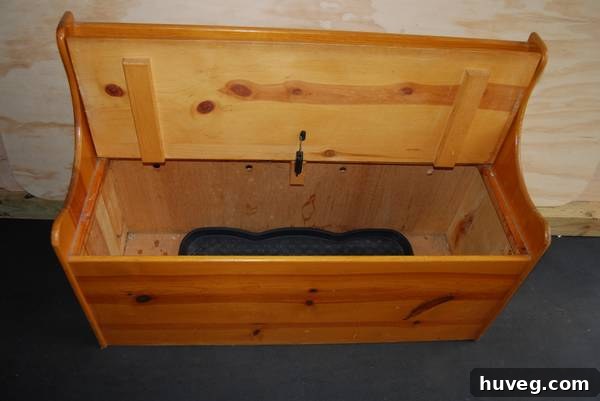
A standard, correctly spelled search for “bench” might reveal this appealing piece for just $40:
This item is clearly undervalued, likely because the seller used only the most basic keyword, “bench.” A more seasoned seller, aiming for maximum visibility and price, would have optimized the listing with additional descriptive terms like “mudroom bench,” “solid wood,” “storage bench,” “entryway furniture,” or “farmhouse style.” Because this specific listing appears under so few keywords, it garners minimal attention from the wider buyer pool. Fewer views translate directly into less competition, which in turn means a lower asking price and significant room for you to negotiate an even better deal. This is a prime example of a hidden gem ripe for a quick sale, possibly even for a simple DIY makeover project.
Example 2: The “Mudroom” Premium
Now, consider if you specifically searched for “mudroom bench” or simply “mudroom” expecting to find a piece with more detailed functionality. You might encounter a comparable item, perhaps like this one, but listed at a steeper price of $125:
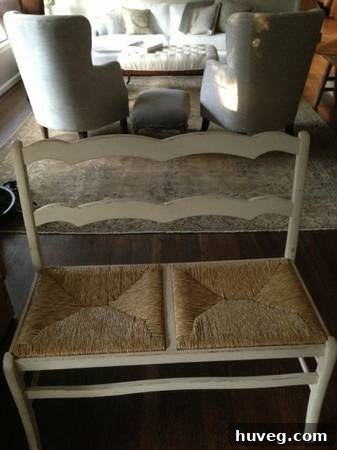
Here, you’re essentially paying an additional $85 for the seller’s effective use of keywords and their likely awareness of the item’s market value. Assuming similar material quality and condition, the intrinsic value between the $40 “bench” and the $125 “mudroom bench” might not justify such a drastic price difference. This stark contrast powerfully illustrates how a seller’s listing acumen directly influences the asking price and, consequently, your potential for savings.
Additional Misspelling Goldmines to Explore:
- Dresser / Chest of Drawers: Search for “dreser,” “draws,” “drawers,” “chess of drawers,” “chest of draws,” “dresser.”
- Armoire / Wardrobe: Try “armwar,” “wardrob,” “close cabinet,” “cloths cabinet,” “armoir.”
- Entertainment Center / TV Stand: Look for “interainment,” “tv stand,” “entertianment,” “media center,” “televsion stand.”
- Sofa / Couch: “sofah,” “sofe,” “kouch,” “couche,” “soffa.”
- Table (Dining/Coffee): “tabel,” “tabl,” “dinning table,” “coffe table,” “end tabel.”
- Bookcase / Bookshelf: “bookcas,” “bookshelfe,” “book shelve,” “book shelf,” “bookshelf.”
- Cabinet / Cupboard: “cabnet,” “cabbinet,” “cubbard,” “cupboard.”
- Vintage / Antique: “vinage,” “antque,” “vintag,” “antiek.”
Each seemingly minor misspelling is a potential gateway to a significant discount. The more variations you try, the higher your chances of uncovering an overlooked bargain.
Beyond Misspellings: Other Indicators of a Hidden Deal
While mastering misspelled searches is a powerful technique, truly savvy bargain hunters also look for other subtle “red flags” that often accompany hastily listed or undervalued items:
- Poor Quality Photos: Listings with blurry, dark, badly lit, or cluttered background images often signal a seller who is either in a rush, lacks photography skills, or simply doesn’t care much about presentation. These listings tend to deter the average buyer.
- Minimal or Vague Descriptions: Listings that offer little to no detail about an item’s dimensions, material composition, brand, condition, or age. This forces potential buyers to ask more questions, a step many won’t bother with, leading to fewer inquiries.
- Generic or Unspecific Titles: Titles like “Furniture for Sale,” “Moving Sale Item,” or simply “Stuff” without any specific item names. These are SEO nightmares for the seller but a dream come true for the persistent buyer.
- Unfavorable Timing of the Listing: Items posted at the end of the month (when leases expire and people are moving), during major holidays (when people are often decluttering), or during periods of bad weather (when fewer buyers are willing to travel for pickup) often see reduced buyer activity and increased seller motivation.
- Inconvenient Location or Pickup: Items located in less accessible areas, far from population centers, or those requiring difficult pick-up logistics (e.g., heavy items on a third floor with no elevator) tend to deter some buyers, making the seller more eager to get rid of them.
- Bundle Deals: Sellers offering multiple items as a single “bundle” (“moving sale, everything must go!”) are typically highly motivated to clear everything out quickly and are often very open to significant discounts.
The Art of Negotiation: Sealing the Bargain
Once you’ve identified a promising, potentially undervalued item, the next crucial step is negotiation. Remember, sellers who have poorly listed items are frequently more flexible on price because they haven’t received widespread interest. Here’s how to approach the negotiation process effectively:
- Always Be Polite and Respectful: Start with a courteous and friendly inquiry. A pleasant demeanor can significantly influence the seller’s willingness to negotiate.
- Make a Reasonable Opening Offer: Avoid extreme lowballing, which can offend the seller. A good starting point might be 15-30% below the asking price, leaving room to meet somewhere in the middle.
- Gently Point Out Minor Flaws: If the item has any minor scratches, dings, or signs of wear not explicitly mentioned, you can politely bring them up as part of your rationale for a slightly lower offer, but avoid being overly critical.
- Offer Prompt Pickup: Being able to pick up the item quickly, especially if the seller is eager for a fast transaction, can be a powerful bargaining chip.
- Have Cash in Hand: Offering to pay in cash upon pickup is often preferred by sellers and can solidify your offer, making you a more attractive buyer than someone who might need to arrange electronic payment.
- Show Genuine Interest: Ask relevant questions about the item’s history, dimensions, or the reason for selling. This builds rapport and demonstrates you are a serious and engaged buyer.
Prioritizing Safety: Smart Shopping Practices on Craigslist
While the thrill of finding a fantastic deal is exhilarating, your safety should always be the top priority when engaging with sellers from online classifieds platforms like Craigslist:
- Choose Public Meeting Places: For smaller items, always arrange to meet in a well-lit, busy public location (e.g., a coffee shop, grocery store parking lot, or designated safe transaction zones at police stations).
- Bring a Companion: For larger items that require a home pickup, or any transaction where you feel uncomfortable, always bring a friend or family member with you.
- Thoroughly Inspect Before Payment: Before handing over any cash, carefully inspect the item in person to ensure it matches the description and photos provided in the listing. Don’t feel pressured to rush this step.
- Trust Your Gut Feeling: If any aspect of the interaction or meeting makes you feel uneasy or unsafe, it’s perfectly acceptable to walk away from the deal. Your intuition is a valuable safety tool.
- Inform Someone of Your Plans: Let a trusted friend or family member know where you are going, who you are meeting, and approximately how long you expect to be.
Conclusion: Your Next Incredible Bargain Awaits!
The quest for exceptional deals on platforms like Craigslist doesn’t require complex algorithms or exclusive insider knowledge. Instead, it demands a keen eye for detail, a touch of creative thinking, and the willingness to explore beyond the obvious. By embracing the imperfections of human typing and understanding the various motivations behind sellers’ listings, you unlock a hidden world of opportunity that most shoppers simply overlook.
So, the next time you embark on a search for that perfect piece of furniture, a unique decorative item, or even functional equipment, remember to cast a wider net. Don’t let a simple misspelling stand between you and an incredible bargain. Whether you’re eagerly hunting for “chester drawers,” a charming “armwar,” or an “interainment” center, the thrill of discovery and the profound satisfaction of saving money are truly unparalleled. Happy hunting – may your misspelled searches lead you to your next great find!