The Ultimate Guide to Stress-Free Wallpaper Removal

Effortless Wallpaper Removal: My Journey from Frustration to Flawless Walls
Stripping in the bathroom. Got your attention? Good. Now, let’s get our minds out of the gutter and focus on the real task at hand: the often-dreaded, yet ultimately rewarding, process of removing wallpaper. For many homeowners, this phrase conjures images of endless scraping, damaged drywall, and sheer frustration. I know because I’ve been there, battling stubborn wallpaper for what felt like an eternity.
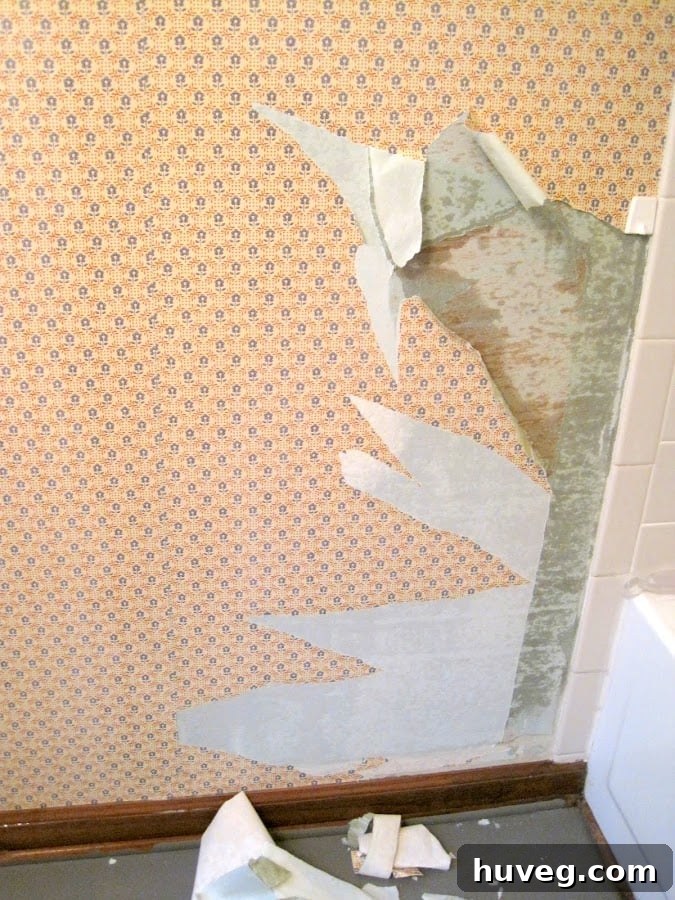
When I first bought my house, the idea of removing the hideous wallpaper adorning five rooms seemed like a minor hurdle. “No big deal,” I confidently thought. “A bit of hot water, maybe some fabric softener, or a specialized stain remover, and it’ll be smooth sailing.” Oh, how famously wrong those last words turned out to be. My initial optimism quickly dissolved into a prolonged saga of failed attempts and profound disappointment.
The Nightmare of Stubborn Wallpaper: Years of Frustration
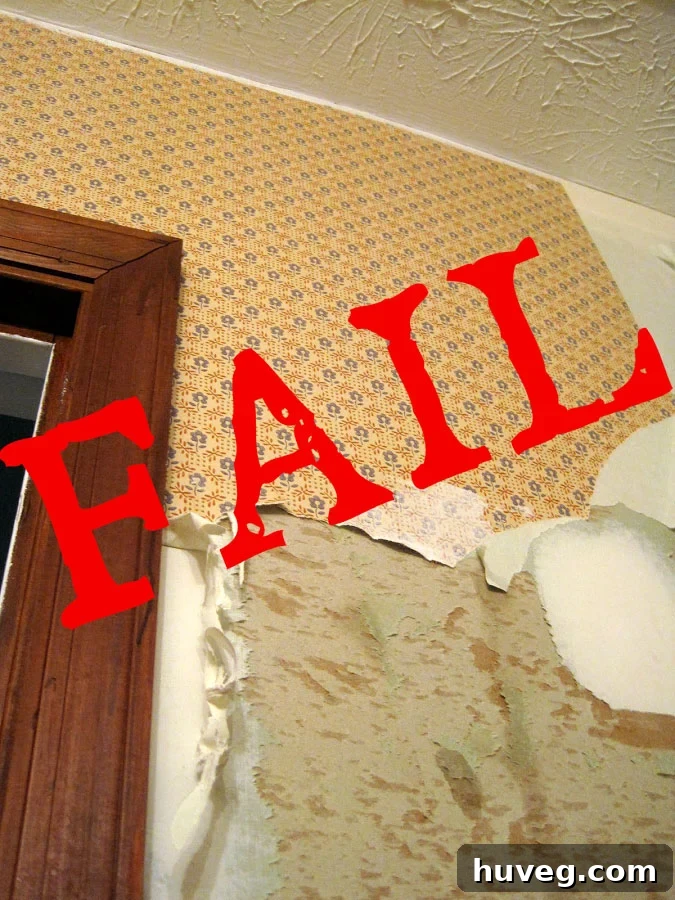
For a year and a half, my efforts to banish the unsightly wallpaper were largely futile. I managed to clear a single wall in the guest bedroom, a small victory overshadowed by the four other rooms—both upstairs bathrooms, my kitchen, and the dining room—where the wallpaper seemed hopelessly fused to the drywall. The “dry peel” method, my first naive approach, typically resulted in tearing off quarter-sized pieces, each rip a tiny blow to my morale. Occasionally, I’d get lucky and a palm-sized section would peel away, sparking a fleeting moment of hope. But inevitably, this fragile progress would lead to disaster: large, gouged strips of wallpaper pulling chunks of drywall along with them, leaving behind a scarred and uneven surface.
I tried every trick in the book, or so I thought. I used scoring tools to perforate the surface, soaked the walls with white vinegar and even fabric softener solutions, and resorted to tearing at the paper in a blind, exasperated rage. Each attempt left me utterly defeated, furious, and covered in tiny, irritating pieces of paper stuck to my bare feet. I’d stomp out of the room, cursing the wallpaper’s very existence, feeling like a complete failure. It was certainly not a good way to start or end a day, constantly reminded of a project I just couldn’t conquer.
Eventually, I simply gave up. My attention shifted to other rooms in the house, those without a stubborn paper barrier thwarting every attempt at modernization. Yet, the neglected wallpaper remained a persistent, silent reproach. Every morning, as I brushed my teeth, my reflection stared back at the visible evidence of my past failures, eliciting a long, sad, defeated sigh. How could I ever achieve the vision I had for my home if I couldn’t even overcome this foundational hurdle?
Unlocking the Secret to Seamless Wallpaper Removal: A Real Solution Emerges
Despite my history of setbacks, a glimmer of hope appeared a year and a half into my wallpaper ordeal. I can’t quite recall how I stumbled upon it, but the name “Safe and Simple” stuck with me. The concept of a non-toxic, effective solution for removing wallpaper sounded almost too good to be true, especially given my prior experiences. “Why not?” I reasoned. “The gamble would cost me less than $10, a small price to pay for potential relief.” It was a slight inconvenience that the product wasn’t readily available at my local hardware store or the usual online retailers. However, the overwhelmingly positive reviews convinced me it was worth the extra effort to track down a product that might actually deliver on its promises.
When the package finally arrived, my skepticism still lingered. I left the box unopened for two whole months, convinced I was destined to be the unlucky individual with the world’s most ineradicable wallpaper. I dreaded the inevitable crying fit and the ultimate concession to simply painting over the existing paper. The thought of permanent, painted-over wallpaper haunted me, urging me to delay the inevitable disappointment just a little longer. It’s hard to imagine, but the fear of another failure was almost worse than the wallpaper itself.
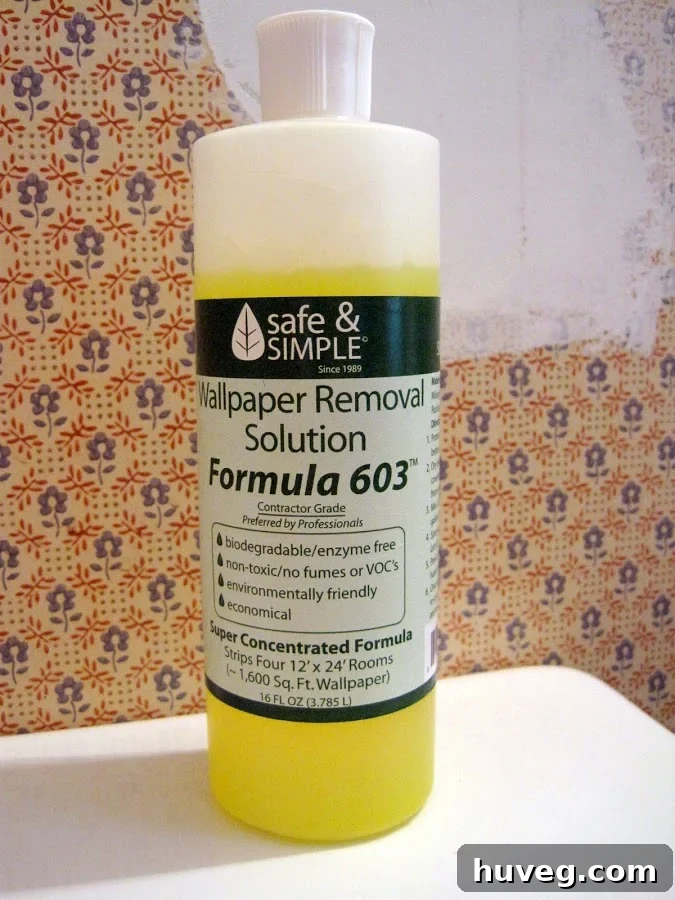
But the day eventually came when I could no longer make excuses. With a deep breath, I retrieved the bottle. Following the instructions carefully, I poured a small amount of the concentrated solution into a spray bottle and added a generous amount of water. Dilution is critical for this product, as its high concentration requires proper suspension in water to activate its powerful, glue-dissolving properties. Emboldened by the “non-toxic” and “biodegradable” labels prominently displayed on the bottle, I admittedly skipped the rubber gloves and eye protection, a shortcut I wouldn’t necessarily recommend for everyone. Since I was mixing it in the primary bathroom sink, I simply turned to the nearest wall, too lazy (or perhaps too eager) to even lift my feet.
I began to spray, targeting a visible seam in the wallpaper directly across from the vanity and toilet. Then, I waited. Not for the full 15 minutes recommended on the bottle, but I managed a small degree of patience – a significant improvement from my usual frustrated tearing. This initial pause was crucial, allowing the solution to begin its work.
Step 1: Strategically Peel the Top Layer of Wallpaper
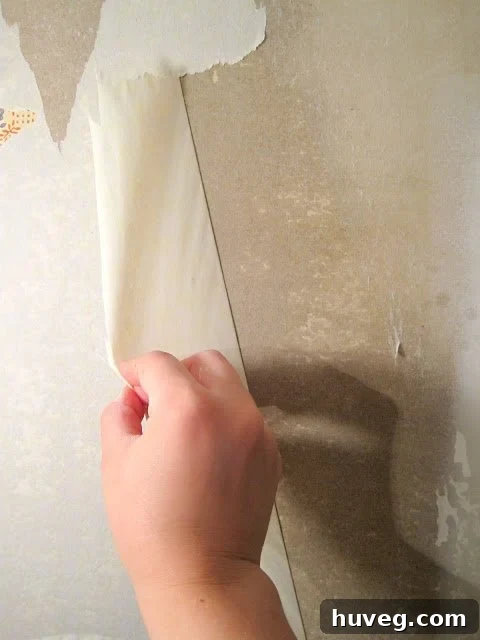
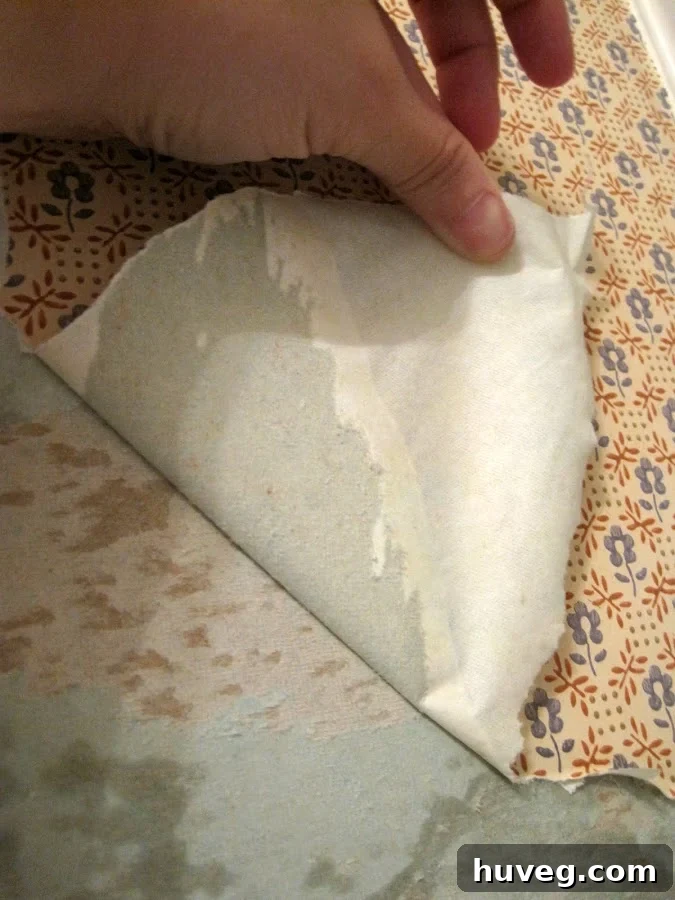
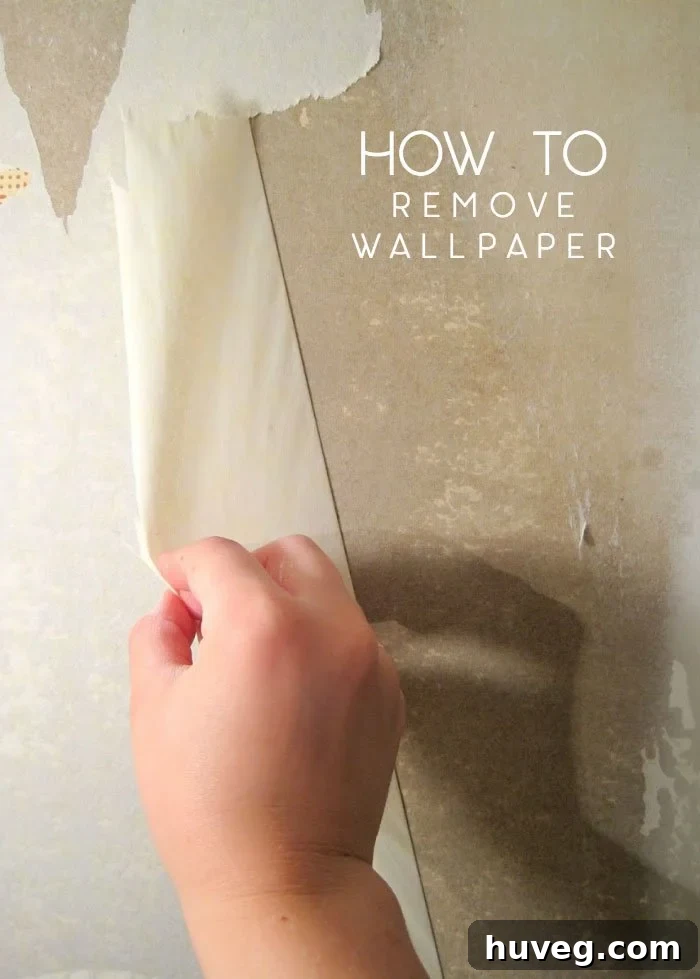
After a short wait, I cautiously snagged a small piece of the wallpaper with my fingernail and pulled. To my surprise, the top layer of the paper peeled away relatively cleanly, leaving behind a fuzzy bottom layer still stuck firmly to the wall. This residual layer reminded me of old sticker residue or the soft edge of torn construction paper. It appeared the solution hadn’t yet penetrated deeply enough to affect the glue bond at this stage. However, the technique of pulling the paper at a gentle, approximately 45-degree angle, and doing so slowly (fueled by cautious hope rather than frustration), seemed to make a difference. By focusing on removing just the decorative top layer and avoiding the glue-to-drywall interface, I minimized any potential gouging or damage to the wall surface, a common pitfall with traditional removal methods. This initial separation is a critical step, especially for multi-layered or vinyl wallpapers, as it exposes the absorbent backing that the remover solution truly needs to penetrate.
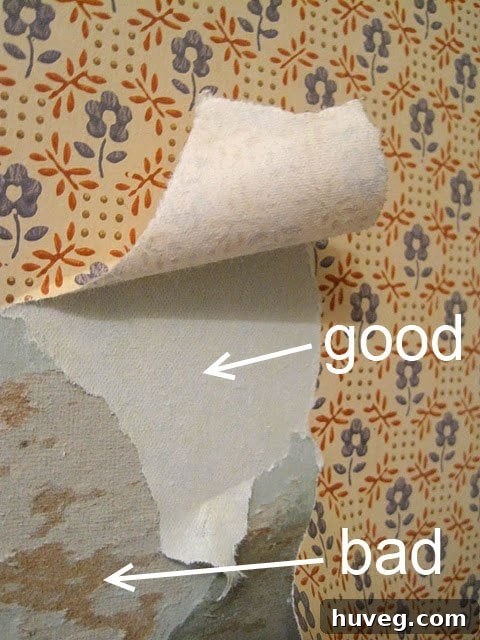
The manufacturer’s instructions confirmed a crucial insight: you want that bottom paper layer to remain. This absorbent layer is where the remover solution performs its true magic. While the topmost layer of wallpaper is often more durable and water-resistant, the remaining paper backing is porous. This porosity allows the specialized solution to fully soak in, directly reaching and breaking down the stubborn glue proteins that bind the wallpaper to the drywall. The key is to thoroughly saturate this remaining paper backing. Ensure every inch is covered, allowing the solution ample time to penetrate and effectively dissolve the adhesive. This deep saturation is paramount for achieving a clean, damage-free removal.
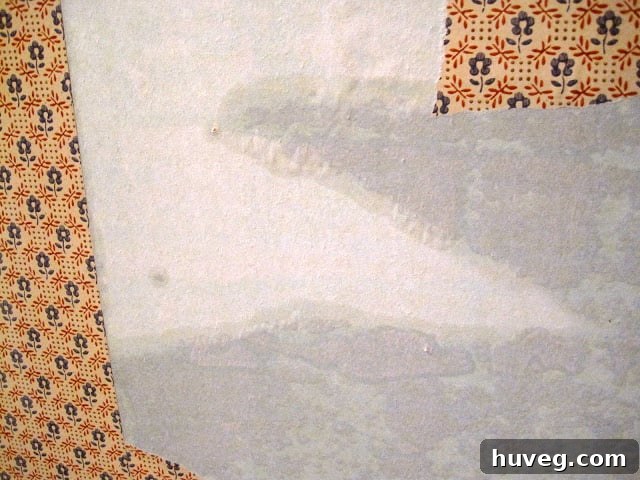
As I sprayed, I let the solution drip where it may, covering the wall liberally. A word of caution here: while the product is non-toxic, it’s designed to disintegrate glue proteins. Therefore, taking more precautions than I did is highly advisable. Always cover your floors, baseboards, and any nearby fixtures with drop cloths or old towels. Just because it’s labeled non-toxic doesn’t mean it won’t dissolve other adhesives or damage surfaces you intend to keep intact!
Step 2: Double-Soak for Optimal Glue Breakdown
With the paper backing now fully exposed and saturated, I allowed it to sit, giving the solution time to work its way through the adhesive. While waiting for the first section to penetrate, I moved to an adjacent area, peeling off its top layer and then spraying it down. This workflow allowed me to maintain continuous progress, working in small, manageable sections. Often, by the time I finished carefully peeling and soaking a new section, the first area I had sprayed was ready for a second soaking. This “double-soak” method proved incredibly effective in ensuring the glue was thoroughly compromised. I admit, I skipped laying down drop cloths around my baseboards (again, either laziness or the mindset of having nothing to lose on a floor that also needed replacing). However, for most DIYers, I strongly recommend protecting your floors and surrounding areas. I found that applying two generous coats of the solution to each section before attempting to peel off the remaining paper yielded the best results.
After the second soaking, I held my breath, a familiar mix of anticipation and dread, and slowly peeled the now-wet paper layer off the wall. What happened next was truly astonishing.
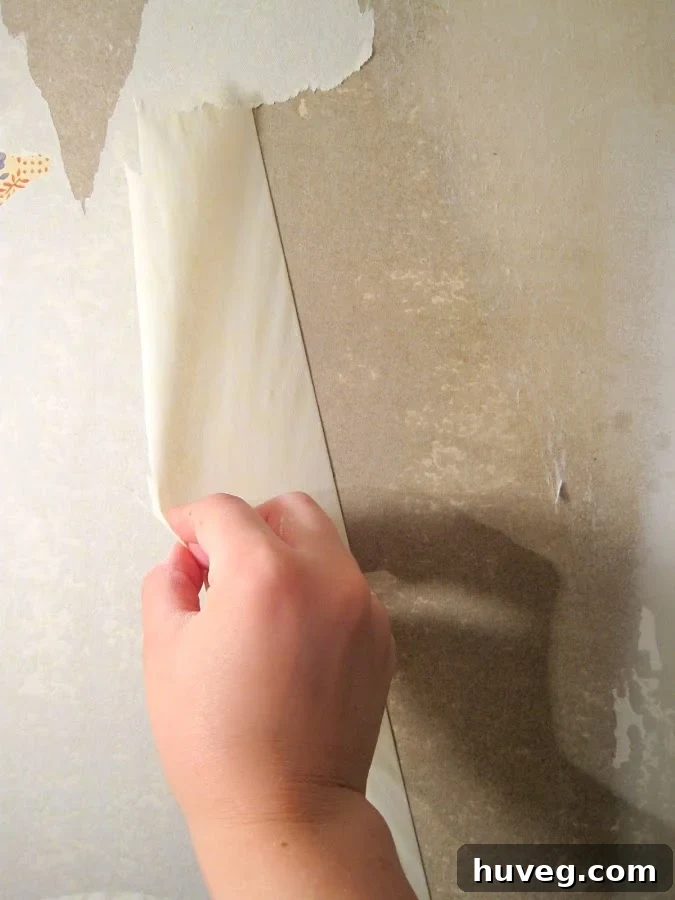
To my utter astonishment, the paper came off clean! No scraping tool, no putty knife, no cursing, and no walking away in a frustrated huff. Just smooth, clean drywall underneath. It was truly a moment for a happy dance. The solution itself didn’t feel like a harsh chemical stripper; there was a slight residue on my bare hands, but absolutely no skin sensitivity, reinforcing its non-toxic claim. This method truly felt like a breakthrough, transforming a once-dreaded task into a surprisingly satisfying experience.
Step 3: Optimize Peeling from the Bottom Up
Through trial and error, I discovered a small but significant technique that further streamlined the removal process: starting the peel from the bottom edge of the soaked paper and pulling upwards. This approach seemed to facilitate faster and easier removal compared to pulling from any other direction. By the end of my second evening dedicated to the bathroom, the once-overwhelming task was finally getting done, and done right.
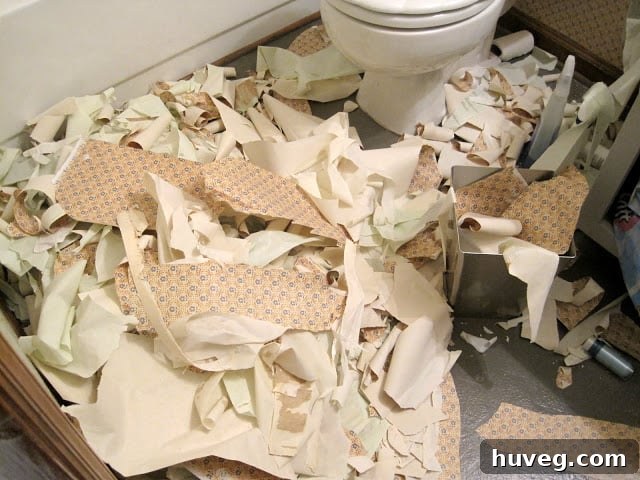
With the bulk of the wallpaper gone, my immediate to-do list involves tackling the last few stubborn bits in the primary bathroom. Following this, the walls will require some attention: covering previous damage with joint compound, meticulous sanding to achieve a smooth finish, followed by priming and painting. Once this bathroom is complete, I’ll move on to the guest bath. My full-time job necessitates a functional shower at all times, so completing one bathroom before starting another is essential. From there, the dining room and kitchen wallpaper await their transformation.
The small bottle of Safe and Simple 603 I purchased is theoretically enough for four rooms. However, given my successful (and thorough) double-soak method, I anticipate needing a little more product by the end. If that’s the case, it’s only another $10, an investment well worth the immense satisfaction and peace of mind I feel right now. This product truly transformed my most dreaded DIY task into a manageable and even enjoyable project, proving that the right solution can make all the difference in home renovation.
Disclaimer: While I wholeheartedly endorse this product, I was not compensated for this review. Word-of-mouth is truly the sincerest form of marketing, and when I discover a product that genuinely works, I believe in sharing it with others! For your absolute safety, it is critically important that you read all of the label instructions before attempting to use this or any product. And please, protect your eyes. You only have two, and they look much better in pairs. Understand?
More Drywall Tips
EXPLORE ALL DRYWALL RESOURCES
Drywall can be intimidating, but with the right guidance, it doesn’t have to be. Luckily, I’ve got more posts to help you learn what you need to know about repairing, prepping, and perfecting your walls. Check them out below for more insights and tutorials:
-
Painting Prep after Drywall Repair
-
Skim Coating Tips: Bubbles, My Favorite Primer, and More
-
DIY Drywall Over Wood Paneling
-
How to Seal Damaged Drywall
-
How to Prep Kitchen Walls for a Tile Backsplash
-
How to Seamlessly Transition Crown Molding Where Tile Meets the Wall